Multi-variant: One Chatbot for Many Locations or Courses
How one chatbot answers for the right location, course or plan, compares across all of them, and asks which one when a question doesn't say.

TL;DR: Every Hyperleap chatbot answers accurately from its knowledge base out of the box. But when that knowledge base holds many near-identical sources (one page per hotel, clinic or course that differ only in address, hours or fees), the hard part isn't finding the answer; it's finding it for the right one. The Multi-variant (locations, courses, etc) add-on, formerly called Hierarchical RAG, handles exactly that: one chatbot answers from the right location, compares across all of them, and asks which one when a question doesn't say, instead of you running separate bots per property. It's a paid add-on on Pro and Max: $40/month + 2x credits per request.
New to the fundamentals? Start with our RAG chatbot guide. The Multi-variant add-on builds on that same document-grounded approach for businesses with several similar locations, courses or plans.
Why We Built Multi-variant: The Right Answer for the Right Location
When we started building Hyperleap AI, we kept hearing the same problem from hotel chains, franchise networks, and multi-location businesses: "One chatbot can't keep our locations straight."
A guest asks a simple question—"What time does breakfast start at your Plano hotel?"—and the chatbot answers with the Round Rock property's schedule, because the two hotel pages read almost the same. Or a guest asks "what time is breakfast?" without naming a hotel, and gets one property's hours presented as if they applied everywhere.
This wasn't a minor annoyance. A correct answer for the wrong property still reads as a wrong answer to the guest, and it erodes trust quickly.
We built the Multi-variant add-on for this one shape of knowledge base. Here's why a plain similarity search gets stuck on near-identical sources, and what the add-on does differently.
The Problem with Near-Identical Sources
RAG (Retrieval-Augmented Generation) is the foundation of most modern AI chatbot systems. Instead of relying solely on the AI model's training data, RAG retrieves relevant information from your documents and uses that to ground the AI's responses.
Standard RAG works like this:
- User asks a question
- System searches your knowledge base for relevant content
- Retrieved content is provided to the AI model as context
- AI generates a response based on that context
This approach works well for most knowledge bases, and it's what every Hyperleap chatbot does by default. The one shape it handles poorly is many near-identical sources.
Where a Plain Search Gets Stuck
Problem 1: The wrong sibling
When you have 20 hotel properties, each page lists pool hours, checkout time and parking in nearly the same words. A question about "pool hours at the Plano hotel" can pull the passage from whichever property page reads most similar, not necessarily Plano's.
Problem 2: Shared and per-location information side by side
Multi-location businesses have both shared information (brand policies, loyalty programs, general FAQs) and location-specific information (addresses, local amenities, specific pricing). A plain search doesn't know which location a passage belongs to; it just sees similar text.
Problem 3: Management overhead
The obvious workaround—run separate chatbots for each location—creates its own problems:
- 20 locations = 20 chatbots to manage
- Brand consistency becomes difficult to maintain
- Shared information must be duplicated everywhere
- Updates require changes across all instances
Problem 4: Questions across locations
Customers often ask questions that span locations: "Which of your Texas properties has a spa?" A plain search tends to return the two or three most similar pages, not every property, so the answer can silently leave some out.
How the Multi-variant Add-on Works
The add-on treats "which location (or course, or plan) is this about?" as its own step, instead of leaving it to text similarity:
1. Pick the right source first
Every source in your knowledge base has a name, and the name usually says which variant it is ("Plano Hotel", "Round Rock Hotel", "6-Month Medical Billing Certificate"). Before answering, the chatbot looks at those names and the question, and picks the right location's source.
2. Work out what the question is about
- One variant — "What are the pool hours at the Plano hotel?" → answered from the Plano source.
- Several or all variants — "Which of your hotels has a spa?" or "Compare the 6-month and 9-month certificate programs" → every relevant source is checked, not just the top two.
- Variant not named — "What time is breakfast?" when breakfast differs by hotel → the chatbot asks "Which hotel are you asking about?" instead of guessing.
3. Answer from what it found
The chatbot then answers from the passages in the chosen sources, the same way every Hyperleap chatbot answers from your documents.
4. Follow the conversation
If a guest asks about Plano and then says "…and the Round Rock one?", the chatbot switches to Round Rock instead of staying on Plano.
Shared information (brand policies, loyalty program, general FAQs) stays in the same knowledge base as ordinary sources, so it's still found for every property. There's nothing extra to build or maintain.
Under the Hood (for Technical Readers)
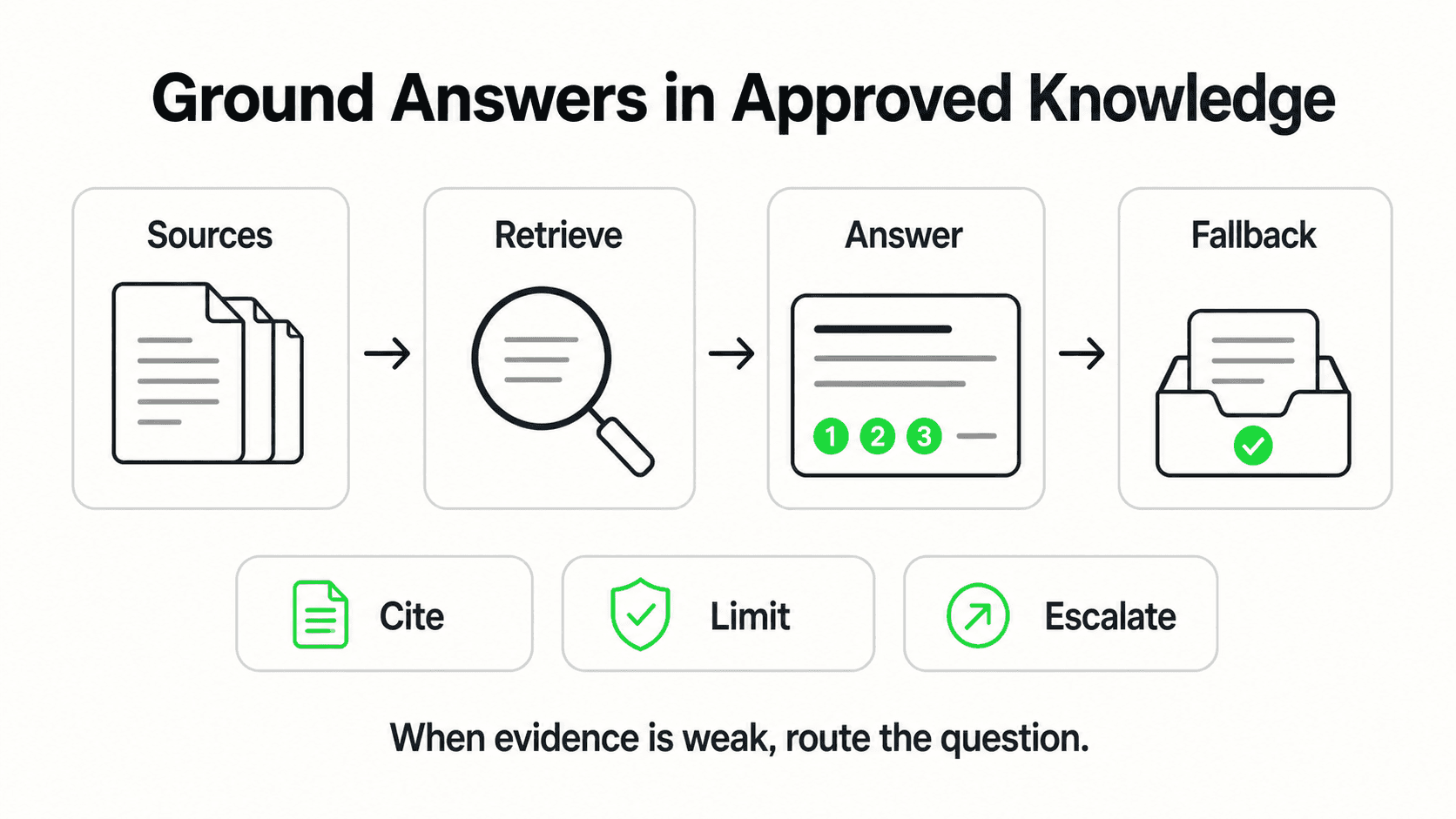
The per-question pipeline
1. Catalog: source id, type and name for every source in the chatbot's knowledge base
2. Route: a small, fast model returns {scope: single | multiple | all | unspecified, sourceIds: [...]}
3. Retrieve:
   - single / unspecified: search inside the routed sources, plus the top results of a normal search as a safety net
   - multiple / all: search every routed source and interleave results so each variant gets context
4. Select: deduplicate and fit the context budget
5. Answer: facts are labeled with their source name; for "unspecified" the model is told to ask which variant the user means
The model answering the question sees each passage labeled with its source name, so "10 PM" is clearly the Plano hotel's pool hours and not another property's. The normal search across everything still runs alongside, so a routing mistake can't hide an obvious answer.
Pricing: the Multi-variant (locations, courses, etc) add-on
The Multi-variant (locations, courses, etc) add-on is a paid add-on for Pro and Max plan customers: $40/month + 2x credits per request. It is not included in the base Plus, Pro, or Max plans.
One Chatbot for Every Location
Answers from the right location, compares across all of them, and asks which one when unclear. Available as the Multi-variant add-on ($40/mo + 2x credits) on Pro and Max plans.
Explore AI AgentsWhat Changes in Practice
Take a hotel group with 15 near-identical property pages on one chatbot:
- "What are the pool hours at the Plano hotel?" — answered from the Plano page, not from whichever property page reads most similar.
- "Which of your hotels allow pets?" — every property page is checked, instead of the top two or three matches.
- "What time is checkout?" (checkout differs by property) — the chatbot asks which hotel the guest means.
- "…and the Round Rock one?" — the follow-up switches to Round Rock.
Everything else — answering from your documents, citing the right policy, staying within what's in the knowledge base — is what every Hyperleap chatbot already does without the add-on.
Further Reading
Authoritative external sources used and recommended for further research on this topic:
See Multi-variant in Action
See Hyperleap AI answer for the right location, compare across all of them, and ask which one when unclear — no separate chatbots needed. Available as the Multi-variant add-on on Pro and Max plans.
Start for freeWhen to Use the Multi-variant Add-on
It's worth adding when you have:
Multi-Location Businesses
- Hotel chains and resort networks
- Franchise systems
- Multi-branch service businesses
- Property management companies
Several Near-Identical Variants
- One page per location that differ in address, hours or pricing
- Course or program brochures that differ in duration and fees
- Plans or product lines that differ in a few features
One Chatbot Instead of Many
- Managing separate chatbots per location isn't practical
- Customers ask questions across locations ("which branches are open Sunday?")
- Customers often don't say which location they mean
"We built Multi-variant because we watched hotel chains struggle with a no-win choice: accept wrong-location answers from a single chatbot, or manage 20 separate chatbots. One chatbot should be able to keep its locations straight, and that's what we set out to build." — Gopi Krishna Lakkepuram, Founder & CEO of Hyperleap AI
Building for Many Locations: Lessons Learned
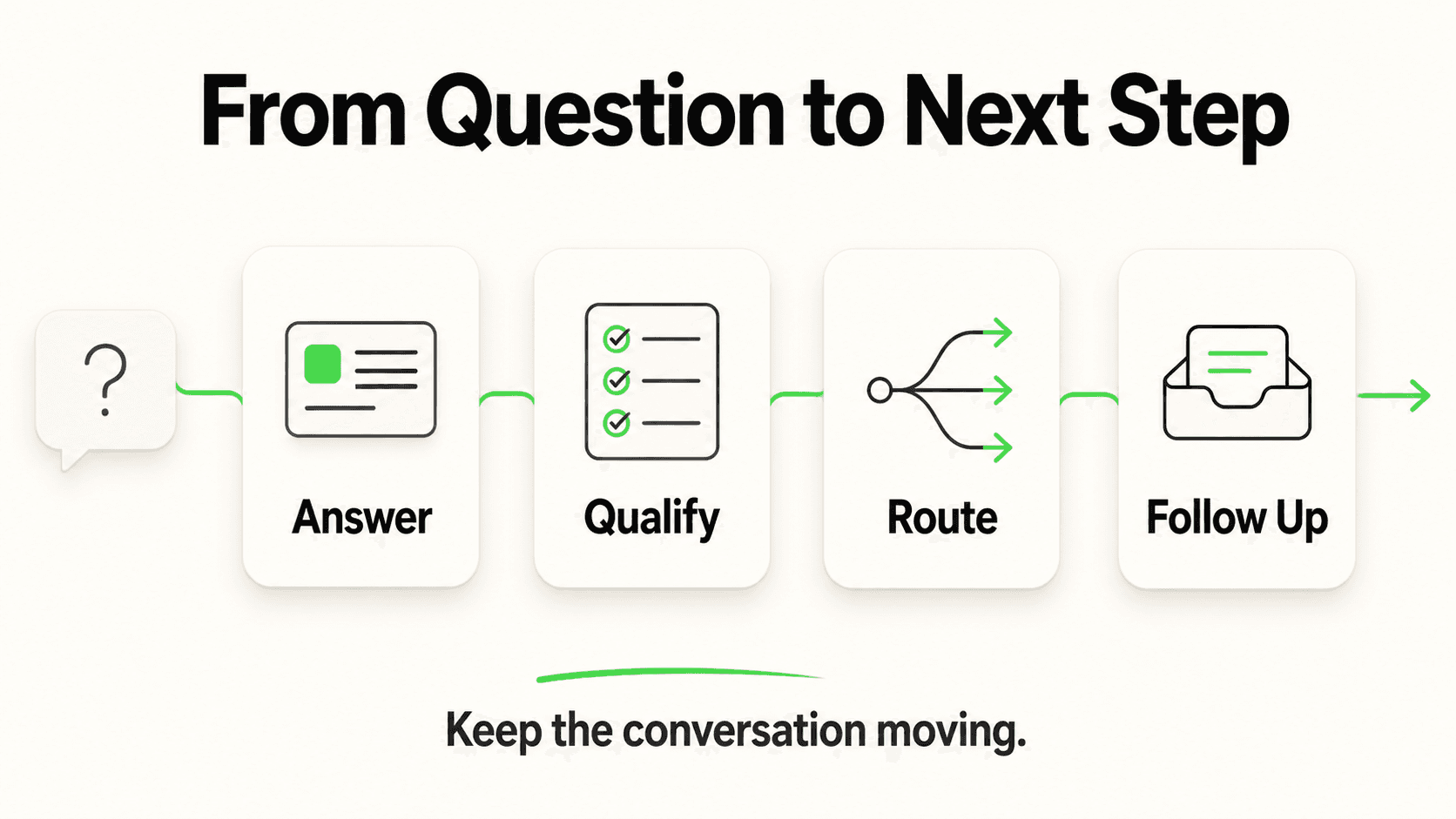
Building the Multi-variant add-on taught us several things:
Lesson 1: Names Do the Heavy Lifting
The add-on works from the names of your sources. "Plano Hotel" and "Round Rock Hotel" are easy to tell apart; "Property Page 3" and "Property Page 7" are not. Clear source names matter more than how the documents are formatted.
Lesson 2: Context Is Everything
The same question means different things in different contexts. "What time is checkout?" needs different answers for different properties. Keeping track of which location the conversation is about is critical.
Lesson 3: Ask Rather Than Guess
When the question doesn't say which location and the answer differs between them, the chatbot should ask. A clarifying question ("Which property are you asking about?") is better than a wrong answer.
Lesson 4: Keep Shared Information Shared
Most information is the same across locations. Keeping it in one shared source, and only the differences in each location's source, reduces duplication and makes updates a single edit.
Lesson 5: Read the Conversations
Review real conversations by location. If a location keeps getting mixed up with another, the fix is usually a clearer source name or a page that actually states the detail customers ask about.
Frequently Asked Questions
Do I need to organize my knowledge base into levels?
No. Keep one source per location, course or plan, and name each source clearly ("Plano Hotel", "Round Rock Hotel"). Shared policies can live in their own sources. The add-on works from those names.
What happens if location context is unclear?
The chatbot asks a clarifying question rather than guessing. For example: "I'd be happy to help! Which property are you asking about?" This is better than a potentially wrong answer.
Does the chatbot ask when a question could mean any location?
Yes, when the answer differs between locations and the question doesn't name one, it asks which location the user means. When the answer is the same everywhere, it just answers.
How do updates work?
Edit a source and the change applies wherever that source is used. Updating a shared policy source updates the answer for every location; updating one location's source only changes that location's answers.
What's the performance impact?
Picking the right source adds one quick step before the answer, so replies can take slightly longer. On Hyperleap, each request with the add-on uses 2x credits.
Do You Need It? Multi-variant vs the Standard Knowledge Base
Not every business needs the add-on. Here's how to tell.
The Standard Knowledge Base Is Enough When
Your business operates from a single location or sells a single product line, or your content varies by topic (pricing, policies, FAQs) rather than by location. A standalone restaurant, a single-product software company, or a local service provider is well served by a well-maintained knowledge base on any plan.
The Multi-variant Add-on Helps When
You have several near-identical variants: hotel properties with different amenities, franchise locations with their own menus or hours, clinic groups where each clinic offers different services, or course catalogs where programs differ in duration and fees. The trigger is near-identical variants, not the size of your knowledge base.
The Decision Criteria
Three questions drive the decision. First, could your sources be confused with each other? If two pages read almost the same apart from the address or the fees, the add-on keeps them apart. Second, is one chatbot per location practical? If you have more than a handful of locations, one chatbot with the add-on is simpler to run. Third, what does a wrong-location answer cost you? A guest heading to the wrong hotel or a patient calling the wrong clinic is a real cost.
A useful litmus test: if your own team has ever answered a customer with details from the wrong location or course, your chatbot will face the same trap.
The Future of Multi-Location AI
As more businesses adopt AI for customer conversations, handling several locations well will matter more. Customers expect location-specific information—not generic responses or wrong-property details.
The Multi-variant add-on is our answer for the cases where sources are near-identical: hotel chains, franchise networks, clinic groups and course catalogs. If your knowledge base has one location or product, the standard knowledge base is all you need.
If you're running a multi-location business and evaluating AI chatbots, ask vendors how they handle near-identical locations: how the chatbot picks the right one, whether it checks every location for "which branches…" questions, and what happens when a customer doesn't say which.
Want to see Multi-variant in action? The Multi-variant add-on ($40/month + 2x credits per request) is available for Pro and Max plan customers. Start your 7-day free trial of Hyperleap AI and talk to our team about enabling it for your multi-location deployment.
Keep exploring
- AI agents for your business - Deploy retrieval-grounded agents across your locations
- Conversational AI for customer service - See accurate, document-grounded answers in production
Related Resources
- Best No-Code Chatbot Builders 2026 - Platform comparison
- Best Multi-Channel Chatbots 2026 - Omnichannel solutions
- Best AI Chatbots for Lead Generation 2026 - Lead capture focus
- How to Choose an AI Chatbot Platform - Selection guide
Industry Applications
- Best AI Chatbots for Hotels 2026 - Hospitality
- Best AI Chatbots for Healthcare 2026 - Healthcare
- Best AI Chatbots for Real Estate 2026 - Real estate
Glossary
- AI Chatbot for Multi-Location Businesses - Where the Multi-variant add-on earns its keep
- What is RAG? - Retrieval-Augmented Generation
- Multi-variant (locations, courses, etc) - One chatbot for several similar locations, courses or plans
- What is an AI Agent? - AI agent fundamentals
- Knowledge Base Grounding - Answering from your own documents
Related Articles

RAG vs Fine-Tuning vs Prompt Engineering: The Business Guide
Plain-English guide to the three ways to teach AI your business — RAG, fine-tuning, and prompt engineering — for SMB owners.

Build a Sales Agent with Hyperleap MCP (Read-Only, Scheduled, Safe)
A hands-on guide to building a non-interactive sales agent on top of Hyperleap's read-only MCP server — the agent loop, the tools it uses, example prompts, and how to schedule or trigger it.

Hyperleap MCP API Reference: Schemas, Examples, and Rate Limits
Complete developer reference for the Hyperleap MCP server. Tool schemas, parameters, response shapes, authentication, pagination, and rate limits.

Multi-MCP Workflows: Hyperleap + HubSpot + Linear in Claude
How to combine multiple MCP servers — Hyperleap, HubSpot, Linear — into a single Claude workflow that turns chatbot leads into enriched CRM records and follow-up tickets.