10 AI Chatbot Use Cases for Dental Clinics in 2026
How dental practices use AI chatbots for appointment requests, no-show reduction, and 24/7 patient questions — 10 practical use cases with setup guidance.
TL;DR: AI chatbots help dental clinics automate appointment booking, reduce no-shows, and capture after-hours patient inquiries 24/7 across WhatsApp and web. The top 10 use cases -- from scheduling and emergency routing to patient reactivation -- can meaningfully cut routine front-desk call volume and operational costs (typical results vary by practice size and call mix).
10 AI Chatbot Use Cases for Dental Clinics in 2026
Dental practices lose 15+ hours every week handling routine patient calls, answering the same insurance questions, and playing phone tag for appointment confirmations. Meanwhile, approximately 40% of patient inquiries come in after business hours—calls that go straight to voicemail and often result in patients booking with competitors who respond faster (Source: TrueLark).
The modern dental patient expects instant responses. They message businesses on WhatsApp, send Instagram DMs, and expect real-time answers at 10 PM on a Saturday. For dental practices still relying solely on front desk staff during business hours, this creates a significant gap between patient expectations and practice capabilities.
AI chatbots are closing this gap. Dental clinics implementing conversational AI report fewer routine phone calls, lower no-show rates, and the ability to capture appointment requests around the clock (typical results vary by practice). Here are the ten most impactful ways dental practices are using AI chatbots to transform patient engagement.
Why Dental Clinics Need AI Chatbots Now
The dental industry faces unique challenges that make AI chatbots particularly valuable:
- After-hours demand: Approximately 40% of patient inquiries occur outside standard business hours (Source: TrueLark)
- High inquiry volume: The average dental practice receives 50+ calls daily, with 60% being routine questions (Source: ADA / Dental Economics)
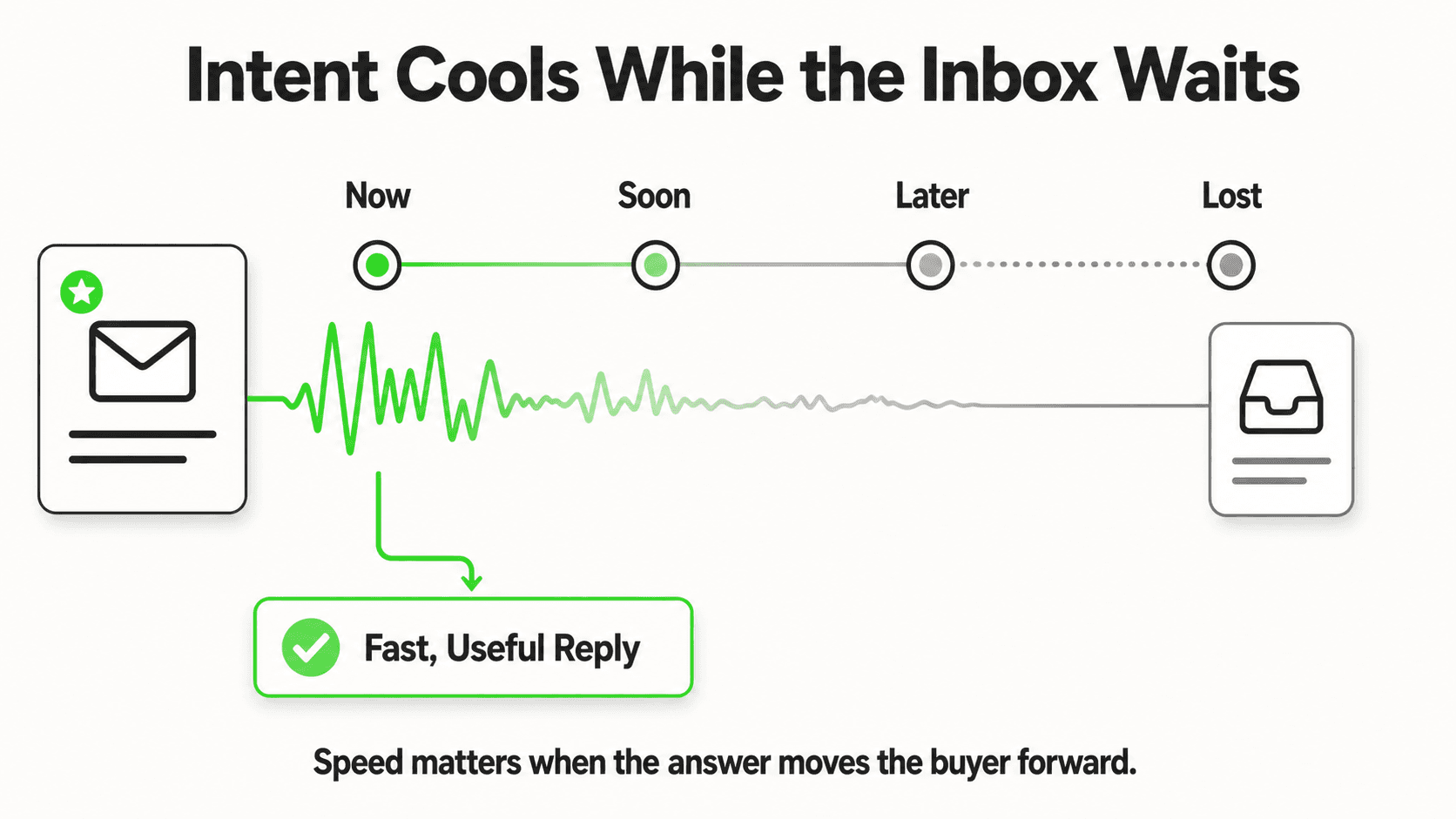
- Patient expectations: 82% of patients expect a response within one hour of reaching out (Source: Salesforce State of Service, 2024)
- Staff burnout: Front desk staff juggle check-ins, insurance verification, and constant phone interruptions
- Competition: Corporate dental chains with 24/7 call centers are capturing patients from independent practices
Patient Expectations
82% of patients expect a response within one hour of reaching out to a healthcare provider (Source: Salesforce State of Service, 2024). Practices that respond within 5 minutes are 100x more likely to convert that inquiry into a booked appointment (Source: InsideSales.com / Lead Connect).
The 10 Most Impactful Use Cases
1. Appointment Booking and Scheduling
The most immediate value of dental AI chatbots comes from handling appointment requests 24/7. When a patient messages at 9 PM asking about availability for a cleaning, the chatbot can:
- Collect patient information (name, phone, email)
- Ask about preferred days and times
- Inquire about the type of appointment needed
- Gather insurance information
- Confirm the request and set expectations for follow-up
Here's what this looks like in practice:
Patient: "Hi, I need to schedule a teeth cleaning"
AI Assistant: "I'd be happy to help you schedule a cleaning! Routine cleanings typically take 45-60 minutes. Do you have a preferred day of the week or time that works best for you?"
Patient: "Sometime next week in the morning would be ideal"
AI Assistant: "Perfect! To complete your appointment request, I'll need your name and phone number. Our scheduling team will call you tomorrow to confirm an available morning slot."
This interaction captures the appointment request instantly, ensuring the patient doesn't move on to another practice.
2. Appointment Reminders and No-Show Reduction
No-shows cost dental practices an average of $200 per missed appointment (Source: ADA / Dental Economics). AI chatbots integrated with WhatsApp or SMS can send automated reminders at strategic intervals:
- 1 week before: Initial reminder with easy rescheduling option
- 2 days before: Confirmation request with one-tap response
- Day of: Morning reminder with directions and parking information
The key advantage over traditional reminder calls? Patients can respond and reschedule instantly without phone tag via WhatsApp or website chat. A simple "I need to reschedule" triggers an immediate conversation to find a new time.
40%
Reduction in No-Shows
85%
Reminder Read Rate
$200
Saved Per Prevented No-Show
3. Emergency Routing
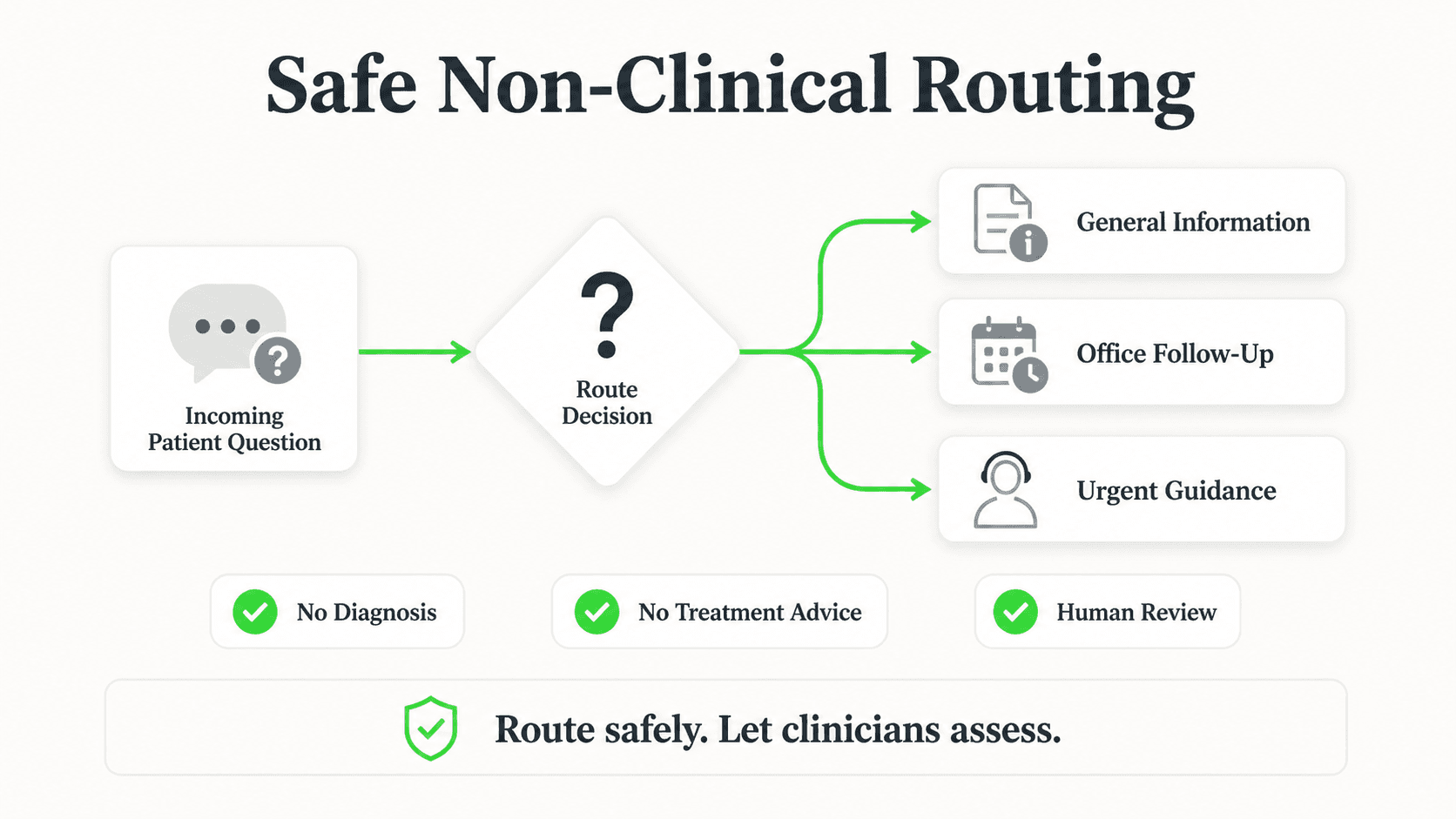
When a patient messages at midnight with severe tooth pain, an AI chatbot provides immediate value by:
- Acknowledging the emergency and expressing empathy
- Collecting the details your team needs (pain level, swelling, bleeding)
- Routing urgent cases to your on-call staff or emergency line
- Providing appropriate guidance (emergency care vs. next-day appointment)
- Collecting contact information for urgent follow-up
This serves two critical purposes: patients feel heard immediately rather than waiting until morning, and the practice captures emergency appointment opportunities that might otherwise go to urgent care centers or competitors.
Patient: "I have severe tooth pain and my face is swelling"
AI Assistant: "I'm sorry you're experiencing this—swelling with severe pain needs prompt attention. To help route you appropriately, is the pain constant or does it come and go? And when did the swelling start?"
Patient: "It's constant and started this morning. Getting worse."
AI Assistant: "With constant pain and increasing swelling, this should be seen urgently. Let me get your contact information so we can arrange an emergency appointment first thing tomorrow morning, or I can provide the nearest emergency dental clinic if you need care tonight."
4. Insurance and Payment Questions
"Do you accept Delta Dental?" "How much does a crown cost?" "Do you offer payment plans?"
These questions consume significant front desk time. An AI chatbot trained on your practice's specific insurance and pricing information can handle these inquiries instantly:
- List accepted insurance providers
- Provide general cost ranges for common procedures
- Explain payment plan options
- Offer to verify specific benefits before appointments
This doesn't replace detailed insurance verification, but it immediately answers the threshold question that determines whether a patient books or moves on.
5. New Patient Intake
New patients require extensive information collection: medical history, current medications, allergies, previous dental records, and insurance details. An AI chatbot can start this process before the appointment:
- Send digital intake forms via WhatsApp or email
- Answer questions about what documents to bring
- Collect basic medical history through conversational Q&A
- Request insurance card photos for pre-verification
This saves 15-20 minutes per new patient appointment—time that would otherwise be spent in the waiting room with a clipboard. Patients appreciate the convenience, and staff can focus on verification rather than data entry.
Transform Your Dental Clinic's Patient Experience
From appointment booking to post-treatment follow-up, AI chatbots handle it all. See how dental clinics reduce front desk calls by 70%.
See Pricing6. Post-Treatment Care Instructions
After procedures like extractions, root canals, or implant placements, patients often have questions:
- "Is this amount of swelling normal?"
- "When can I eat solid food?"
- "Should I be taking ibuprofen or acetaminophen?"
An AI chatbot can provide procedure-specific aftercare guidance 24/7. When a patient messages at 8 PM asking if their extraction site looks normal, the chatbot can:
- Provide standard post-operative expectations
- List warning signs that require immediate attention
- Offer reassurance for normal healing progression
- Escalate to on-call staff if symptoms suggest complications
This reduces after-hours calls to personal cell phones while ensuring patients receive timely, accurate guidance.
7. Treatment Education
Many patients feel anxious about dental procedures they don't understand. AI chatbots can serve as patient education resources:
- Explain what happens during a root canal in simple terms
- Compare filling materials (amalgam vs. composite)
- Describe what to expect from Invisalign treatment
- Address common fears about specific procedures
When a patient understands their treatment options, they're more likely to proceed with recommended care. A chatbot that patiently answers questions at 11 PM—when the patient is researching and considering their options—can significantly impact treatment acceptance rates.
Anticipate Patient Questions
Explore our free growth tools to plan for the questions patients commonly ask about dental procedures.
8. Review and Feedback Collection
Online reviews significantly impact dental practice growth. AI chatbots can systematically:
- Send post-visit satisfaction surveys via WhatsApp
- Route happy patients to Google or Yelp review pages
- Capture negative feedback privately before it becomes a public review
- Thank patients for their feedback and address concerns
This creates a consistent review generation system rather than relying on occasional requests from busy front desk staff.
Review Impact
Practices with significantly more Google reviews consistently attract more appointment requests. Consistent post-visit feedback requests through AI chatbots can dramatically accelerate review accumulation.
9. WhatsApp and Social Media Engagement
Patients increasingly reach out through WhatsApp, Instagram DMs, and Facebook Messenger rather than calling. An AI chatbot that operates across all these channels ensures:
- Consistent response quality regardless of channel
- Instant replies at any hour
- Seamless handoff to staff when needed
- Unified conversation history across platforms
For practices in regions where WhatsApp dominates communication—including much of Asia, Latin America, and Europe—this channel capability is essential for patient acquisition.
10. Reactivation of Dormant Patients
Most dental practices have a significant percentage of patients who are overdue for cleanings or checkups. AI chatbots can proactively reach out:
- "Hi [Name], we noticed it's been 8 months since your last cleaning. Would you like to schedule your next visit?"
- Offer convenient scheduling options
- Mention any current promotions or availability
- Make rebooking as frictionless as possible
This systematic reactivation fills empty appointment slots with existing patients who already trust the practice—far more efficient than acquiring new patients.
The ROI of Dental AI Chatbots
Let's quantify the impact for a typical dental practice:
| Metric | Before AI Chatbot | After AI Chatbot |
|---|---|---|
| Weekly phone calls | 250+ | 75 |
| Staff time on calls | 20 hrs/week | 6 hrs/week |
| After-hours inquiries captured | 10% | 95% |
| No-show rate | 15% | 9% |
| New patient intake time | 20 min | 5 min |
70%
Fewer Phone Calls
15 hrs
Staff Time Saved Weekly
40%
Reduction in No-Shows
24/7
Patient Support
For a practice with 1,500 active patients, this translates to:
- $3,000-5,000/month in reduced no-show costs
- $2,500/month in staff time savings
- 10-15 additional appointments/month from after-hours capture
- Improved patient satisfaction leading to more referrals
Calculate Your Practice ROI
Use our free ROI Calculator to see the specific savings for your dental practice.
Getting Started: Implementation Tips
If you're considering AI chatbots for your dental practice, here's a practical approach:
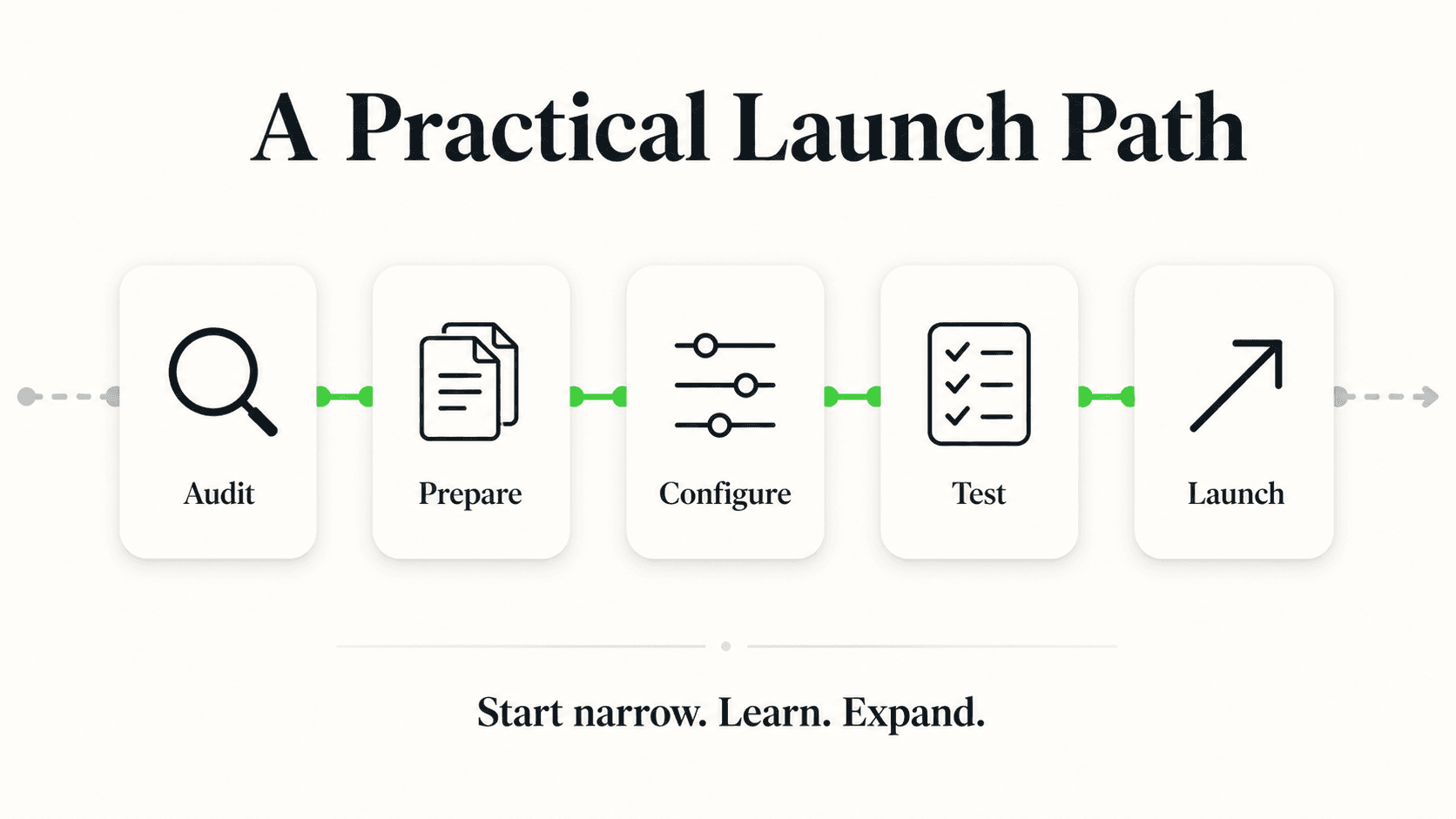
- Start with appointment booking: This delivers immediate ROI and is the most straightforward use case
- Train on your specific information: Insurance accepted, pricing ranges, location details, and common procedure questions
- Connect to WhatsApp Business API: This is where many patients prefer to communicate
- Connect to your scheduling workflow: Enable the chatbot to capture appointment requests and route them to your team or booking system — look for platforms that offer API or webhook connectivity to your PMS
- Monitor and refine: Review conversations weekly to improve responses and identify gaps
The practices seeing the best results start simple, prove value quickly, and expand capabilities over time.
"Dental clinics are a perfect fit for AI chatbots because the inquiry patterns are highly predictable -- the same 20-30 questions account for the vast majority of calls. When you automate those, your front desk staff can finally focus on the patients standing right in front of them," says Gopi Krishna Lakkepuram, Founder & CEO of Hyperleap AI and former Microsoft engineer.
Transform Your Dental Practice
The gap between patient expectations and practice capabilities continues to widen. Patients expect instant, 24/7 responses across their preferred channels. Practices still relying solely on business-hours phone support are losing patients to competitors who respond faster.
AI chatbots bridge this gap without requiring additional staff. They handle the routine inquiries that consume front desk time, capture after-hours opportunities, reduce no-shows through intelligent reminders, and improve patient satisfaction through instant responsiveness.
The technology has matured to the point where implementation is straightforward and ROI is measurable within weeks. Dental practices adopting AI chatbots today are positioning themselves for success as patient communication preferences continue to evolve.
Further Reading
Authoritative external sources used and recommended for further research on this topic:
- American Dental Association practice resources
- ADA Health Policy Institute research
- HIPAA Privacy Rule (HHS.gov)
Ready to Automate Your Dental Practice?
See how AI chatbots can reduce your front desk calls by 70% and provide 24/7 patient support across WhatsApp, Instagram, and your website.
Try for FreeKeep exploring
- AI agents for dental practices - Answer patient questions and book appointments 24/7
- Conversational AI for customer service - Document-grounded AI for front-desk conversations
Healthcare & Dental Resources
- Best AI Chatbots for Healthcare 2026 - Platform comparison
- Best AI Chatbots for Dental Practices 2026 - Dental solutions
- AI Chatbot Statistics 2026 - Industry benchmarks
- How to Choose an AI Chatbot Platform - Selection guide
Related Comparisons
- Best No-Code Chatbot Builders 2026 - No-code platforms
- Best Multi-Channel Chatbots 2026 - Omnichannel solutions
Frequently Asked Questions
What are the best use cases for dental chatbots?
The highest-impact use cases are appointment scheduling, automated reminders, and patient intake form collection, which together can reduce front-desk workload by 40-60%. Other valuable applications include insurance verification, post-procedure care instructions, and after-hours routing that gets urgent cases to your team quickly.
What are patient adoption rates for dental chatbots?
Dental practices report patient adoption rates of 65-80% within the first six months of deployment. Younger patients (18-45) adopt almost immediately, while older demographics typically need 2-3 interactions before becoming comfortable. Practices that introduce the chatbot during in-office visits see the fastest adoption curves.
Can dental chatbots integrate with practice management software?
Integration capability varies by platform. When evaluating dental chatbot vendors, ask specifically which PMS systems they support and whether the connection is bidirectional. Some platforms offer direct integrations with Dentrix, Eaglesoft, or Open Dental; others use middleware connectors or API/webhook-based approaches that require custom setup. Even without a native PMS integration, a chatbot can capture patient details and appointment requests, which your team then books in your scheduling system — a workflow that still saves significant front desk time compared to phone-based scheduling.
How do dental chatbots handle emergencies?
Dental chatbots are designed to recognize emergency keywords (severe pain, trauma, uncontrolled bleeding) and immediately route the conversation to human staff or share the practice's emergency contact number. The AI does not assess symptoms clinically — it recognizes urgency signals and makes sure critical cases reach your team rather than waiting for automated handling.
How much does a chatbot cost for a dental practice?
Most dental practices spend $100-300/month on chatbot solutions, depending on features and patient volume. When factoring in reduced no-show rates (typically 25-40% fewer missed appointments), decreased phone call volume, and improved patient acquisition, the average dental practice sees a return of 5-8x their monthly investment.
Can dental AI chatbots handle insurance verification questions?
Yes, dental AI chatbots can be trained on your practice's specific insurance information to answer common verification questions instantly. They can confirm which insurance providers your practice accepts, explain general coverage levels for procedures like cleanings, fillings, and crowns, and collect insurance details from new patients before their first visit. For detailed benefits verification, the chatbot captures the patient's insurance ID and group number, then flags the request for your billing team to complete a full eligibility check prior to the appointment.
How do dental chatbots handle emergency appointment requests?
Dental chatbots use keyword detection and symptom-based routing to identify emergency situations such as severe pain, facial swelling, knocked-out teeth, or uncontrolled bleeding. When an emergency is detected, the chatbot collects the patient's contact information and symptom details, then escalates the case to on-call staff via email or notification alert. For after-hours emergencies, the chatbot can provide your practice's emergency contact number or direct patients to the nearest emergency dental clinic while simultaneously logging the case for first-thing-in-the-morning follow-up.
Glossary
- What is a Chatbot? - Chatbot fundamentals
- OTP Validation - Verified patient capture
- Knowledge Base Grounding - Ensuring AI accuracy
Can the chatbot diagnose or assess dental issues?
No — and it should not. Hyperleap is configured to capture symptom information and route to your clinical team. It does not make clinical assessments or provide medical advice. This scope discipline is what keeps the deployment compliant and trustworthy.
How does emergency routing work?
The bot detects emergency keywords (knocked-out tooth, severe pain, swelling, bleeding) and routes immediately to your designated emergency contact — phone number, on-call dentist, or after-hours line — rather than scheduling a regular appointment.
Is the chatbot HIPAA-compliant for patient information?
For HIPAA-covered workflows (PHI handling, EHR integration), pair the chatbot with your existing HIPAA-compliant systems and configure scope to capture identifiers only when needed. Hyperleap routes — it does not store full medical records. Work with your compliance team for your specific configuration.
Industry Solutions
See how AI chatbots work for these industries:
Related Articles
Automate Dental Appointment Scheduling with AI
Learn how AI-powered appointment scheduling can reduce no-shows, fill schedule gaps, and free your front desk from phone tag.
AI Chatbot for Med Spas: Convert Inquiries to Bookings
Med spa clients research treatments after hours. An AI chatbot answers Botox, filler, and laser questions 24/7 and converts inquiries into booked consultations.
AI Receptionist for Dental Clinics: Safe Emergency Routing
How dental clinics use AI receptionists to answer FAQs, book appointments, and route emergencies to the on-call team — without clinical triage.

AI Chatbot for Vet Clinics: 24/7 Emergency Triage
How vet clinics use AI chatbots for after-hours emergency guidance, appointment booking, and FAQs so staff focus on care.