AI Lead Capture for SMBs: First-Party Data Advantage
How SMBs are using AI conversations to collect valuable first-party customer data — without long forms, conversion friction, or third-party cookie privacy headaches.

TL;DR: Traditional lead capture forms have a 68% abandonment rate, and 96% of first-time visitors are not ready to buy. AI-powered conversational assistants can collect more leads than static forms by gathering contact details and qualification data through natural dialogue that provides immediate value, while building a first-party data asset that grows more valuable over time.
See the full capture-to-CRM lifecycle in our chatbot lead generation guide.
Every website visitor who leaves without sharing their contact information is a missed opportunity — and for small businesses, those missed opportunities compound fast. Research shows that 96% of first-time website visitors aren't ready to buy (based on industry research), but only 2-3% of businesses capture enough information to follow up effectively.
The problem isn't that visitors don't want to engage. It's that traditional lead capture — static forms asking for name, email, phone, and "how can we help?" — feels like a transaction, not a conversation. People abandon forms at alarming rates: 81% have abandoned at least one form after starting it, and the average form abandonment rate sits at 68% (Source: Zuko Analytics / The Manifest, 2023).
Meanwhile, the data landscape is shifting dramatically. Third-party cookies are disappearing. Privacy regulations are tightening. The businesses that thrive in the next decade will be those who build direct relationships with customers and collect first-party data through genuine value exchange.
For small businesses without marketing teams or data infrastructure, this sounds overwhelming. But here's the opportunity: AI-powered conversations are making first-party data collection not just possible for SMBs, but actually easier than it was for enterprises with massive budgets.
Who This Guide Is For
This guide is written for small business owners and operators who want to capture more leads, understand their customers better, and build a data asset that grows more valuable over time — without needing technical expertise or expensive tools.
What Is First-Party Data and Why Should SMBs Care?
First-party data is information you collect directly from your customers and prospects through your own channels — your website, your conversations, your transactions. Unlike third-party data (purchased from data brokers) or second-party data (shared by partners), first-party data belongs entirely to you.
Types of first-party data SMBs can collect:
- Contact information (email, phone, location)
- Behavioral data (pages visited, products viewed, questions asked)
- Preference data (budget range, timeline, specific needs)
- Qualification data (company size, industry, decision-making role)
- Intent signals (comparing options, asking about pricing, requesting demos)
Why first-party data matters now more than ever:
-
Third-party cookies are dying. Google Chrome, Safari, and Firefox are all restricting tracking. The era of following visitors around the internet is ending.
-
Privacy regulations are expanding. GDPR, CCPA, and similar laws make purchased data risky. First-party data collected with consent is your safest asset.
-
Customers expect personalization. 71% of consumers expect personalized interactions, but 76% get frustrated when they don't receive them (Source: McKinsey). You can't personalize without data.
-
It's a competitive moat. Your first-party data is unique to your business. No competitor can buy or replicate the relationships you build with your customers.
For small businesses, the shift from third-party to first-party data is actually good news. You don't need expensive data partnerships or complex tracking infrastructure. You just need to have better conversations with the people who are already showing interest in your business.
Why Traditional Lead Capture Fails Small Businesses
Most small business websites rely on the same lead capture approach that's been used since the early 2000s: a contact form, maybe a newsletter signup, perhaps a "Request a Quote" button. These methods aren't broken — they're just not working as well as they used to.
Form Fatigue Is Real
Your potential customers fill out forms all day long. Sign up for this service. Register for that webinar. Enter your email for a discount code. By the time they reach your website, they've developed form fatigue.
The data tells the story:
- 27% of people abandon forms because they're too long (Source: Zuko Analytics / The Manifest, 2023)
- 29% abandon due to security concerns about their data
- The average web form has 11 fields, but conversion rates improve with each field removed
- Mobile users abandon forms at even higher rates due to small screens and typing friction
For a small business with limited traffic, a 68% form abandonment rate (Source: Zuko Analytics / The Manifest, 2023) is devastating. If you get 100 website visitors per week and only 32 complete your form, you're losing nearly 70 potential conversations.
Static Forms Miss the Context
A contact form captures a moment, not a journey. Someone fills out "I'm interested in your services" — but you don't know:
- What specific problem brought them to your site
- Which pages they viewed before reaching out
- What questions they couldn't find answers to
- Whether they're comparing you to competitors
- What their budget or timeline looks like
Without context, your follow-up is generic. And generic follow-up gets ignored.
Timing Kills Conversion
When someone fills out a form at 10 PM on a Sunday, they're interested right now. By Monday morning when you see the submission, they've moved on. Research from InsideSales shows that leads contacted within 5 minutes are 100x more likely to convert than those contacted after 30 minutes (Source: Harvard Business Review / InsideSales.com).
Most small businesses can't respond to inquiries at 10 PM on Sunday. So they lose those leads to competitors who can — or increasingly, to competitors whose AI can. See the deeper dive in slow response times cost businesses.
You're Asking Before Giving
Traditional lead capture is transactional: "Give me your information, and I'll give you... something, eventually." This feels lopsided to visitors who've been burned before.
The businesses winning at lead capture today flip this script: "Let me answer your questions, help you figure out what you need, and along the way, if you want me to follow up, here's how." The exchange feels fair because value was delivered first.
7 Ways AI Lead Capture Transforms First-Party Data Collection
AI-powered conversational assistants fundamentally change how small businesses can collect first-party data. Instead of asking visitors to fill out forms, you're having conversations that naturally surface information while providing immediate value.
1. Conversational Data Collection
What this looks like in practice: A visitor lands on your website at 9 PM with a question about your pricing. A short pre-chat form takes their name, email, and phone — then they start a conversation with your AI assistant instead of hunting through your site or waiting on a "Request a Quote" callback. Within two minutes, they've gotten answers to their questions — and the conversation has surfaced their business type, approximate budget, and timeline.
Real-world impact: Businesses report meaningfully higher engagement when lead capture is woven into a helpful conversation rather than presented as a standalone form request. The exchange feels helpful rather than extractive — which is why well-designed pre-chat forms (with a clear value statement above the fields) consistently outperform generic contact forms that ask for information with no stated benefit.
Why it works: People are comfortable sharing information in conversation. We do it every day — at stores, restaurants, with service providers. "What's your budget?" feels natural when an assistant is helping you find the right option. The same question in a form field feels intrusive — and it converts better than a static contact form or live chat tool.
Key data captured:
- Contact information (requested after value is delivered)
- Specific needs and pain points (from their questions)
- Budget and timeline (from natural conversation flow)
- Qualification indicators (from context of questions)
2. Progressive Profiling Through Conversation
What this looks like in practice: Your AI doesn't ask for all information upfront. In the first interaction, it might learn their name and what they're looking for. In subsequent conversations (recognized via browser or returning visitor patterns), it builds on that knowledge — learning more about their situation each time without repeating questions.
Real-world impact: Progressive profiling can increase conversion rates by 20% compared to asking for all information at once. Visitors don't feel interrogated.
Why it works: Think about how you build relationships in real life. You don't ask someone their budget, timeline, and buying authority in the first meeting. You learn over multiple conversations. AI can do this at scale, remembering every visitor and building richer profiles over time.
Key data captured:
- Evolving needs over time
- Engagement frequency and depth
- Decision stage progression
- Multiple stakeholder inputs (when different people from the same company engage)
3. Intent Signals from Question Patterns
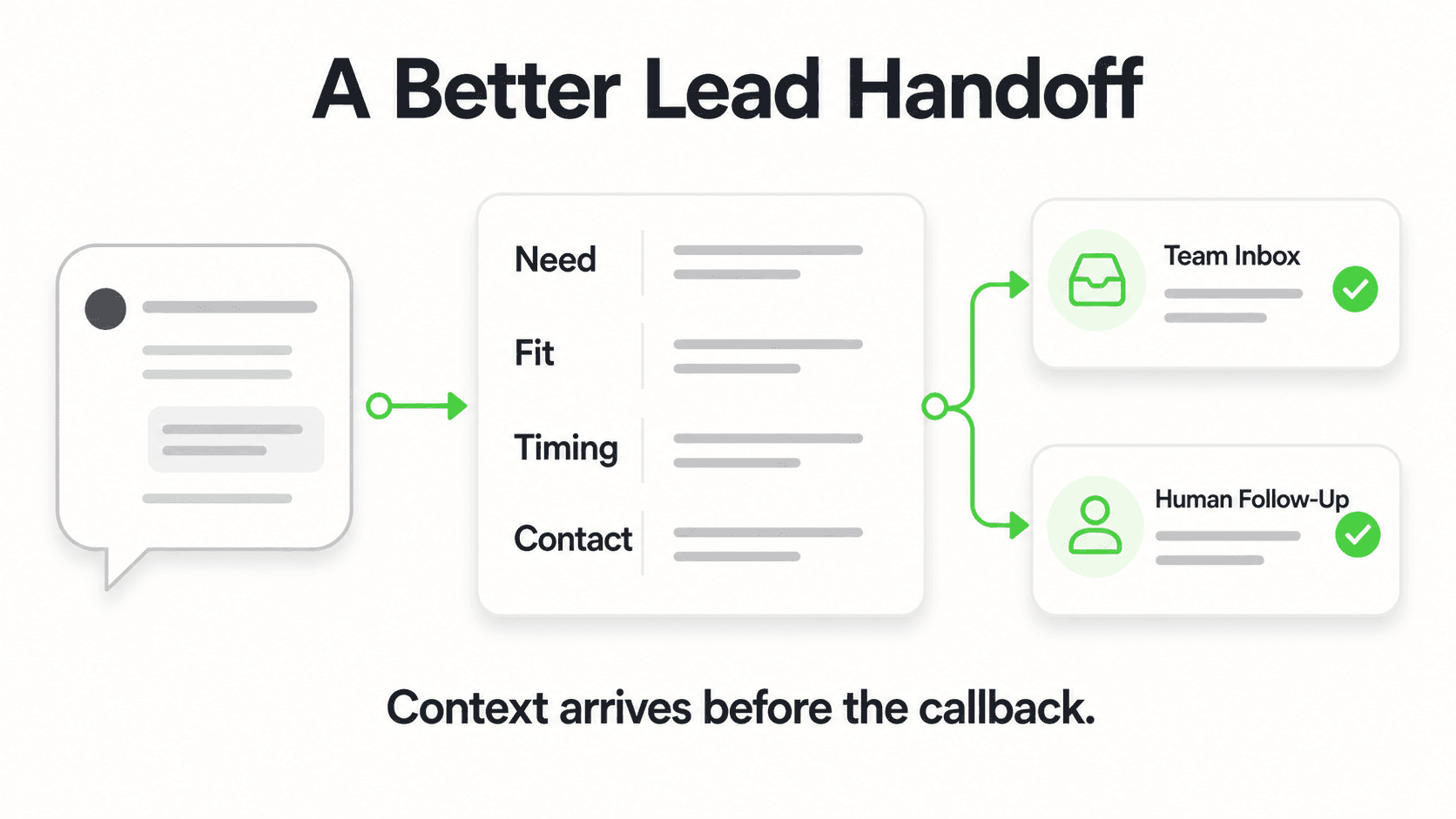
What this looks like in practice: A visitor asks your AI: "Do you integrate with Salesforce?" followed by "What's your annual pricing?" followed by "Can I schedule a demo?" These three questions signal high buying intent — more than any form response could.
Real-world impact: AI can score leads based on conversation patterns, automatically prioritizing hot prospects for immediate human follow-up while nurturing warmer leads through automation. The lead generation chatbot playbook covers the qualification patterns in depth.
Why it works: Questions reveal intent better than form fields. Someone asking about integrations, pricing, and implementation is further along than someone asking "What do you do?" The AI captures these signals automatically.
Key data captured:
- Buying stage indicators
- Specific feature interests
- Competitive comparison signals
- Implementation readiness
4. Natural Language Qualification
What this looks like in practice: Instead of form fields asking "Company Size: 1-10 / 11-50 / 51-200 / 200+", your AI has a natural conversation: "To make sure I recommend the right option for your team — are you looking for something for yourself, a small team, or a larger organization?"
Real-world impact: You get qualification data in the customer's own words instead of a forced choice between your predefined boxes, so details like team size, timeline, and what prompted the search come through intact.
Why it works: Humans are terrible at self-categorizing, but excellent at describing. "We're a 25-person accounting firm that's growing fast and just opened a second office" tells you more than any dropdown could.
Key data captured:
- Detailed business context
- Growth signals
- Multi-location complexity
- Industry-specific needs
5. Behavioral + Conversational Data Fusion
What this looks like in practice: Your AI knows the visitor spent 4 minutes on your pricing page before asking "Is there a discount for annual billing?" This context shapes the conversation and the data you collect.
Real-world impact: Combining behavioral signals (what they viewed) with conversational signals (what they asked) creates a 360-degree understanding of each prospect.
Why it works: Actions and words together tell the full story. Someone who views your pricing page three times and asks about payment options is different from someone who lands on your homepage and asks a general question — even if they both eventually request a demo.
Key data captured:
- Page-level engagement mapped to questions
- Content effectiveness signals
- Friction points in the buyer journey
- Feature interest correlation
6. Zero-Friction Data Updates
What this looks like in practice: A prospect's situation changes — they get budget approval, their timeline accelerates, or a new decision-maker joins. Instead of hoping they fill out a new form, your AI naturally captures updates through ongoing conversation.
Real-world impact: Traditional CRM data decays at 30% annually (Source: Salesforce). Conversational data stays current because the relationship is ongoing, not transactional.
Why it works: Conversations are continuous; forms are one-time. When your AI is the ongoing point of contact, it naturally collects updates without requiring explicit "please update your information" requests.
Key data captured:
- Timeline changes
- Budget updates
- Stakeholder additions
- Competitive dynamics shifts
7. Consent-Embedded Collection
What this looks like in practice: Your AI builds data collection into the natural flow of help: "I can send you a summary of what we discussed — what's the best email to reach you?" This feels like service, not data extraction.
Real-world impact: Consent-embedded approaches see 60% higher opt-in rates compared to "Subscribe to our newsletter" forms (based on industry research), because the value exchange is immediate and clear.
Why it works: People share information when they understand the benefit. "Give me your email so I can market to you" gets ignored. "Let me send you the specific pricing you asked about" gets an immediate response.
Key data captured:
- Verified contact information (they want to receive the follow-up)
- Explicit consent for communication
- Topic-specific interests
- Preferred communication channels
Ready to Transform Your Lead Capture?
See how AI conversations can collect better data with less friction — while providing 24/7 availability.
Get StartedWhat Changes: How SMBs Are Building Data Advantages
Moving from forms to AI conversations changes what you capture at every stage of the customer journey.
Lead Volume Increases
- A lower-effort first step: asking a question costs a visitor nothing, so people who would never fill in a form still start a conversation
- 24/7 lead collection captures after-hours interest that previously disappeared
- Less left to abandon: when the AI has already answered questions and collected details in conversation, any form at the end is short or unnecessary
- Easier on mobile: short replies in a chat are less work than typing into form fields on a small screen
Data Quality Improvements
- Richer qualification data in the customer's own words, instead of self-reported dropdown choices
- Context-rich lead records that include specific needs, questions asked, and pages viewed
- Automatic deduplication and enrichment as the same prospect returns for multiple conversations
- Reduced junk leads from bots and tire-kickers who self-select out of conversations
Sales Efficiency Gains
- Shorter discovery calls because basic qualification already happened in the AI conversation
- Prioritized follow-up based on intent signals, not just form submission order
- Personalized outreach using specific language and concerns the prospect expressed
- Faster sales cycles because prospects arrive pre-educated on offerings
Long-Term Data Asset Growth
- Customer profiles that deepen with every interaction
- Trend insights across all conversations (common questions, feature requests, objections)
- Competitive intelligence from "how do you compare to X?" questions
- Product development signals from unmet needs expressed in conversation
24/7
Lead Collection
100+
Languages
4
Channels, One Inbox
Beyond Lead Capture: How Conversations Become Business Intelligence
Here's what most businesses miss about AI conversations: the aggregate insights are often more valuable than any individual lead. Every conversation is a data point about what your market actually cares about — unfiltered, unprompted, in their own words.
Discover What Customers Actually Want
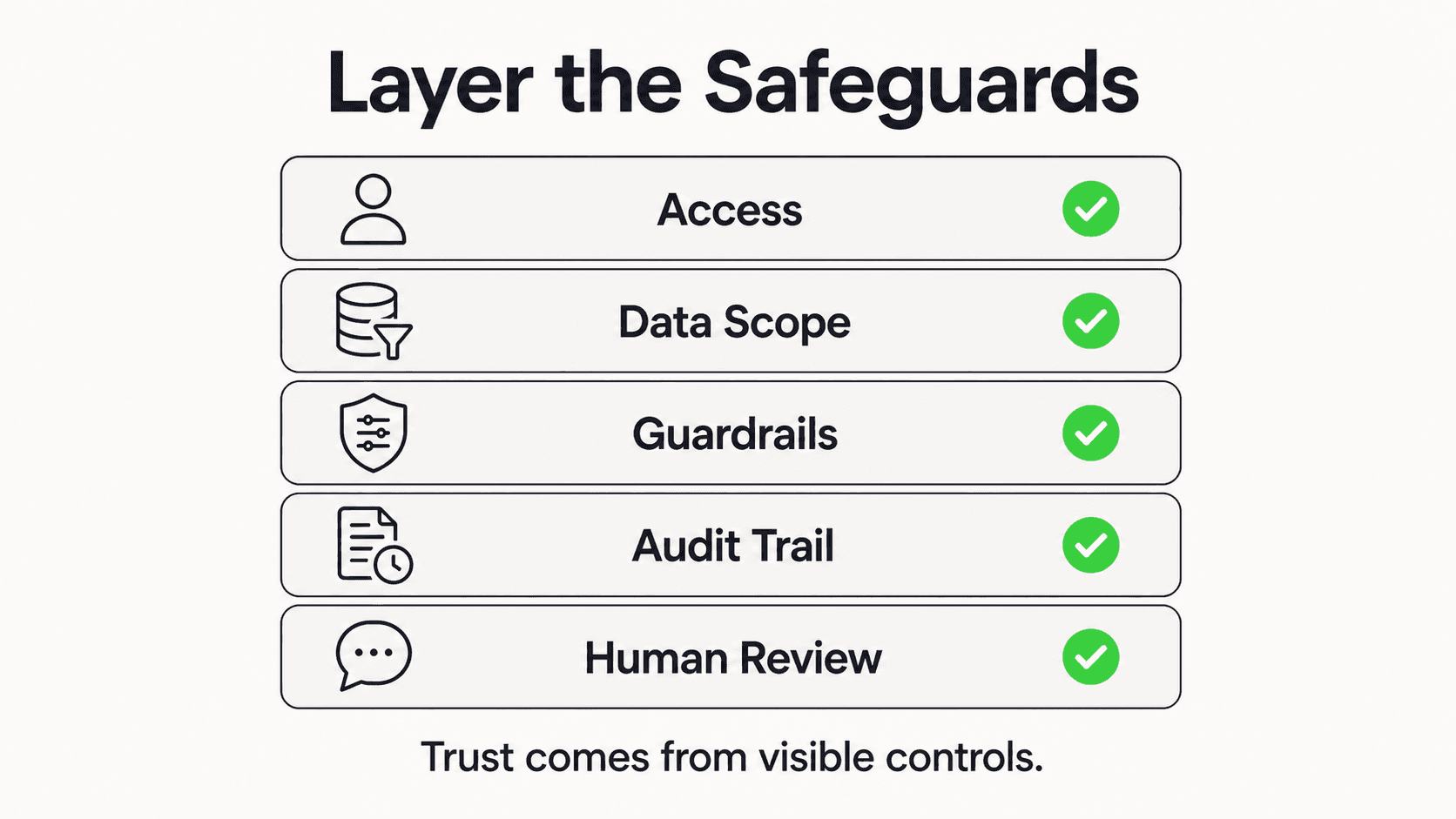
Forget surveys. Surveys ask the questions you think are important. Conversations reveal what customers think is important.
When you analyze hundreds of AI conversations, patterns emerge:
- The questions you didn't expect — "Do you offer [service you never considered]?" asked repeatedly signals market demand
- The features that matter most — What people ask about first tells you what to emphasize in marketing
- The concerns that stop purchases — Objections raised in conversation are objections your website isn't addressing
One home services company discovered that 40% of their conversations included questions about emergency availability — something they offered but barely mentioned. A simple website update highlighting "24/7 emergency service" increased conversions by 23%.
Improve Your Website and Content
Your AI becomes a real-time feedback loop for your marketing:
Content gaps: If visitors frequently ask questions your website doesn't answer, that's a content gap. Every unanswered question is a page you should create.
Confusing messaging: When visitors ask "So do you actually do X?" about something you clearly offer, your messaging isn't landing. Conversation data shows you exactly where.
SEO opportunities: The exact phrases customers use in conversation are the exact phrases they're typing into Google. Your AI gives you keyword research from your actual audience.
FAQ accuracy: Stop guessing which questions are "frequently asked." Your AI knows exactly which questions come up daily, weekly, monthly — and can even tell you which answers satisfy visitors versus which lead to follow-up questions.
Train Your Sales Team on Real Customer Language
Most sales training uses hypothetical scenarios. AI conversations give you real ones.
Objection patterns: Instead of role-playing imaginary objections, your team can review actual objections from real prospects — and see which responses worked.
Winning language: When certain explanations lead to demo requests and others don't, you can identify what's working and standardize it.
Competitor positioning: "How are you different from [competitor]?" questions reveal exactly which competitors you're being compared to, and what aspects of comparison matter most.
Pricing conversations: How do prospects react to your pricing? What questions do they ask? Where do they hesitate? This intelligence is gold for sales enablement.
Competitive Intelligence at Scale
Your AI hears things your sales team might miss:
- Which competitors get mentioned most frequently
- What specific features prospects are comparing
- What they liked about competitors (that you could offer)
- What frustrated them about competitors (that you could solve)
- Whether they're evaluating you first or last in their process
This isn't speculation — it's direct market intelligence from people actively shopping your category.
Product and Service Development Signals
The best product ideas come from customer pain points, and conversations surface pain points constantly.
Unmet needs: "Can you also do X?" is a product expansion signal. Track which "also" requests come up repeatedly.
Bundling opportunities: When prospects frequently ask about two services together, there's a bundle waiting to be created.
Pricing model feedback: Conversations reveal whether customers prefer monthly vs annual, per-user vs flat-rate, and which pricing tiers actually make sense.
New market segments: When you start getting questions from an industry you don't serve, that's a market signal worth investigating.
Turn Insights Into Action
The businesses getting the most value from conversation data build regular feedback loops:
Weekly: Review top questions and identify any new patterns Monthly: Analyze objection trends and update marketing/sales materials Quarterly: Deep-dive into conversation themes for product and positioning decisions
This isn't extra work — it's replacing guesswork with data. Instead of debating what customers want in meetings, you're reading what they actually said.
The Compound Effect
Every conversation makes your business smarter. After 6 months, you'll understand your customers better than competitors who've been in market for years — because you're listening at scale, 24/7, to every question, concern, and buying signal.
Implementation Roadmap for Small Businesses
Getting started with AI-powered data collection doesn't require a massive project. Here's a practical 30-60-90 day approach.
Days 1-30: Foundation
Week 1-2: Choose your starting point
- Identify your highest-traffic page (often homepage, pricing, or a key service page)
- Document the 10-20 most common questions you receive
- Define what "qualified lead" means for your business
Week 3-4: Initial deployment
- Deploy AI assistant on your primary pages
- Train it on your FAQ, pricing, and basic business information
- Set up conversation handoff to email or your CRM
Key milestone: AI is live and capturing basic conversational data from visitors.
Days 31-60: Optimization
Week 5-6: Refine conversations
- Review AI conversation logs for gaps in knowledge
- Add training for questions it couldn't answer well
- Implement progressive profiling (don't ask everything upfront)
Week 7-8: Connect the data
- Integrate conversation data with your CRM or email system
- Set up lead scoring based on conversation signals
- Create follow-up workflows triggered by specific conversation patterns
Key milestone: AI is not just answering questions, but collecting structured data that feeds your sales process.
Days 61-90: Scale
Week 9-10: Expand coverage
- Add AI to additional pages (service pages, blog posts, landing pages)
- Implement WhatsApp, Facebook Messenger, or Instagram DM channels
- Create conversation flows for different visitor segments
Week 11-12: Measure and iterate
- Compare conversion rates: AI conversations versus forms
- Analyze which conversation patterns correlate with closed deals
- Identify opportunities to collect additional data points
Key milestone: AI-powered data collection is your primary lead capture mechanism, outperforming traditional forms.
What Success Looks Like
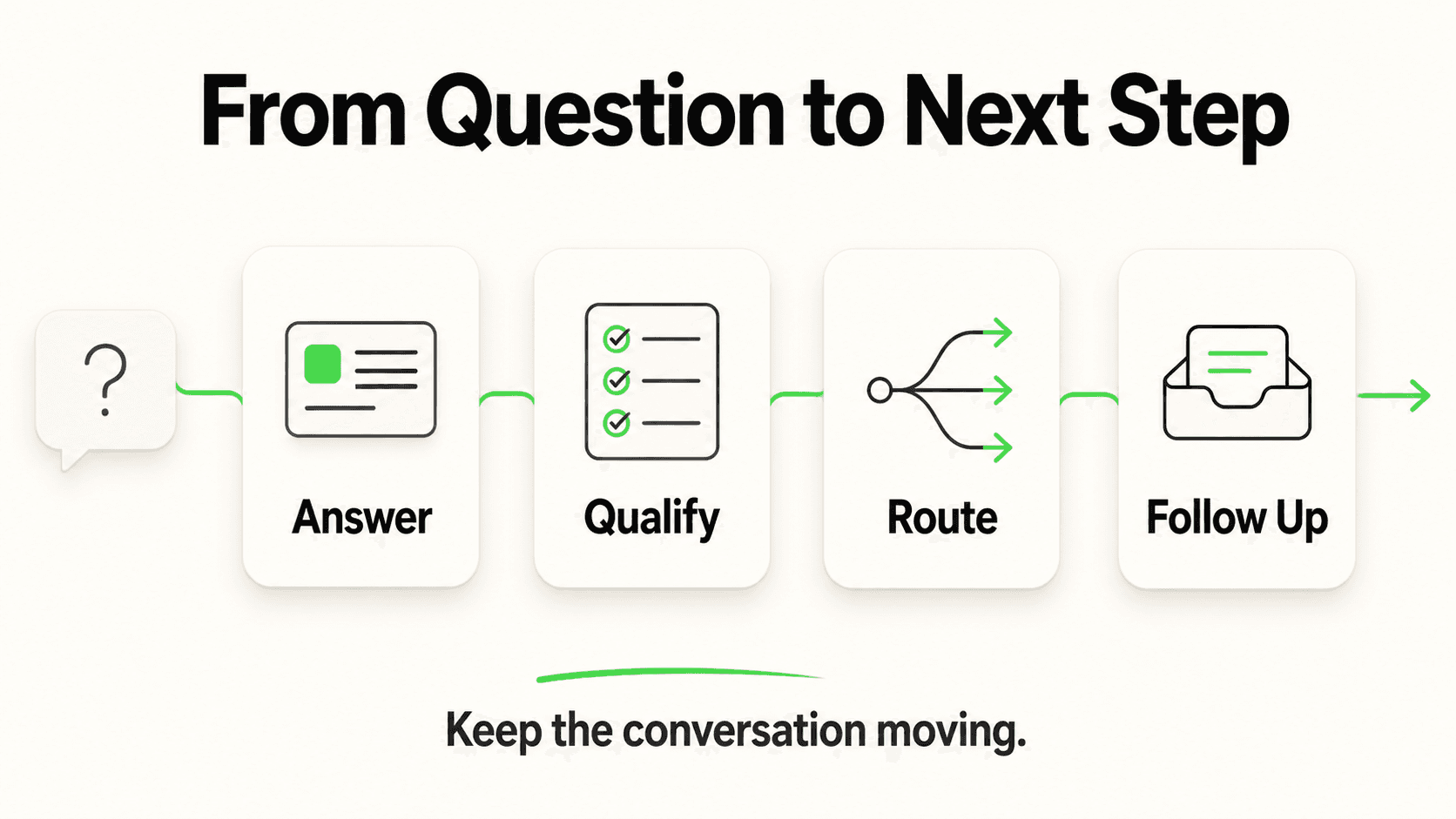
By 90 days, a typical small business should see:
- Lead volume: 2-3x more captured leads per month
- Data richness: Lead records include specific needs, timeline, and qualification indicators
- Response time: 100% of inquiries answered instantly, 24/7
- Sales efficiency: Follow-up calls are shorter and more productive
Building Your First-Party Data Advantage
The businesses that win in the next decade will be those with the richest understanding of their customers — not from purchased data or tracking scripts, but from direct relationships built on genuine value exchange.
For small businesses, this is actually encouraging news. You don't need enterprise data infrastructure or teams of analysts. You need better conversations with the people already interested in your business. AI makes those conversations possible at scale, 24/7, on every channel where your customers want to engage.
The shift from forms to conversations isn't just a tactic for capturing more leads. It's a fundamental change in how businesses build customer relationships. Every conversation makes your data richer, your understanding deeper, and your competitive position stronger.
Your competitors are already exploring this. The question isn't whether to start — it's how quickly you can build your first-party data advantage before they do.
Further Reading
Authoritative external sources used and recommended for further research on this topic:
Frequently Asked Questions
Will customers actually share information with an AI?
Yes — often more freely than with forms or even humans. Conversations feel natural, and AI doesn't judge. Studies show people disclose more openly to AI in certain contexts because there's no social pressure. The key is that the AI provides value (answers their questions) before asking for information.
What about privacy regulations like GDPR and CCPA?
AI-powered data collection can actually improve compliance because consent is built into the conversation flow. Instead of pre-checked boxes and lengthy privacy policies, the AI asks "Can I send this to your email?" and the visitor explicitly agrees. You collect less data more intentionally, with clearer consent.
How does this integrate with my existing CRM?
AI platforms typically connect with CRMs via REST API and webhooks. Conversation summaries, contact information, and qualification data can flow into lead records through these integrations. Many businesses find their CRM data improves because AI-collected data is more complete and accurate. Check with your specific platform for supported integration methods.
Do I need technical skills to set this up?
Modern AI assistants are designed for business users, not developers. If you can write an FAQ document, you can train an AI assistant. Setup typically takes days, not months. The technical complexity is handled by the platform — you focus on the business logic of what questions to answer and what data to collect.
What if the AI collects wrong information?
AI assistants can be configured to confirm critical information: "Just to make sure I have this right, you're looking for [service] for a team of [size], with a budget around [range]?" This mirrors good sales practice and catches errors before they enter your system. You can also flag high-value leads for human verification.
How is this different from the chatbots that annoyed customers in the past?
Dramatically different. Rule-based chatbots from 2015-2020 followed rigid scripts and failed spectacularly when visitors went off-script. Modern AI (since GPT-3/4 generation) actually understands language and context. It can handle follow-up questions, understand nuance, and have genuinely helpful conversations. The technology is a generational leap.
Can AI handle complex or sensitive questions?
Yes, within the boundaries you set. AI can be trained on detailed product information, pricing structures, and common objections. For truly complex or sensitive situations, it can smoothly hand off to humans: "That's a great question that deserves a detailed answer from our team — can I have someone reach out to you today?" This ensures nothing falls through the cracks while protecting customer experience.
"The biggest missed opportunity for small businesses isn't marketing spend or sales headcount. It's the 96% of website visitors who leave without a conversation. AI makes it possible to engage every single one of them in a way that feels helpful rather than extractive, and the data you collect becomes your most valuable business asset over time." — Gopi Krishna Lakkepuram, Founder & CEO of Hyperleap AI
Start Building Your Data Advantage
See how Hyperleap AI helps small businesses capture better leads through intelligent conversations.
Get Started FreePut this into practice
Related Articles

What Missed Calls Really Cost Your Small Business
A worked example of what missed calls cost small businesses in lost jobs, plus where inquiries actually arrive now and what to do about it.

AI Receptionist Cost in 2026: What You Actually Pay
AI receptionist cost ranges from $20/month for automated voice AI to $300+/month for live-agent phone answering. Full breakdown by category.

AI Chatbot vs Receptionist: Cost Comparison for SMBs
Should your small business hire a receptionist or deploy an AI chatbot? A practical cost comparison covering salary, availability, scalability, and ROI.

How to Build a Business Case for AI Chatbots: ROI Framework
A practical ROI framework for SMBs evaluating AI chatbots — calculate costs, measure returns, and build a convincing business case.