What SMB Customers Expect from Messaging in 2026
Customer messaging expectations have shifted dramatically. Here's what the data shows about response times, channel preferences, and the self-service standard.
TL;DR: Your customers now expect instant replies, channel choice, and 24/7 self-service as the baseline — not a bonus. Research shows 60% of customers define "immediate" as under 10 minutes, 81% want more self-service options, and 75% want to message businesses the same way they message friends. If your small business still relies on phone calls and email alone, you are losing customers to competitors who meet them where they are.
Your customers' messaging expectations have changed. Not gradually, not subtly — they have shifted in ways that would be unrecognizable to someone running a business five years ago.
In 2020, a customer would call your office, leave a voicemail, and wait a day for a callback. That was normal. In 2026, that same customer sends a WhatsApp message at 10 PM on a Saturday and expects an acknowledgment within minutes. If they don't get one, they message your competitor instead. Research from Sinch shows that 75% of consumers now want to message businesses the same way they message friends and family. Meanwhile, 46% of customers expect a reply within four hours, and a growing share demand responses within minutes.
For small and medium-sized businesses, this shift creates both a challenge and an opportunity. The challenge is obvious: you don't have a 50-person support team operating around the clock. The opportunity? Neither do most of your competitors. The businesses that adapt to these new expectations first will capture the customers that others lose. This article breaks down exactly what customers expect from business messaging in 2026, backed by recent research and data, so you can close the gap before it costs you revenue.
The Messaging Shift: How Customer Expectations Have Changed
The past five years have fundamentally rewritten the rules of business communication. Three macro trends are converging to reshape what customers expect from every business they interact with.
Messaging has overtaken calling as the default. US smartphone users now send and receive texts at a rate five times higher than making or receiving phone calls daily (Source: Notifyre). While 57% of customers still rank phone support as their first preference for complex issues, the day-to-day reality is that most customer interactions begin with a text, a chat message, or a DM. The global conversational commerce market was valued at over $11 billion in 2025 and is projected to nearly double by 2030.
Self-service is no longer optional. Self-service is a support model in which customers resolve their own questions — through FAQs, chatbots, or account portals — without needing to contact a live agent, and it has moved from a nice-to-have to a baseline expectation. A Salesmate survey found that 81% of customers want brands to provide more self-service options. Seventy percent expect your website to have at least a self-service portal or FAQ section. The kicker? According to research cited by Nextiva, 77% of consumers say a poor self-service experience — like an unhelpful FAQ or a bot that loops — is worse than no self-service at all. Getting it right matters as much as offering it.
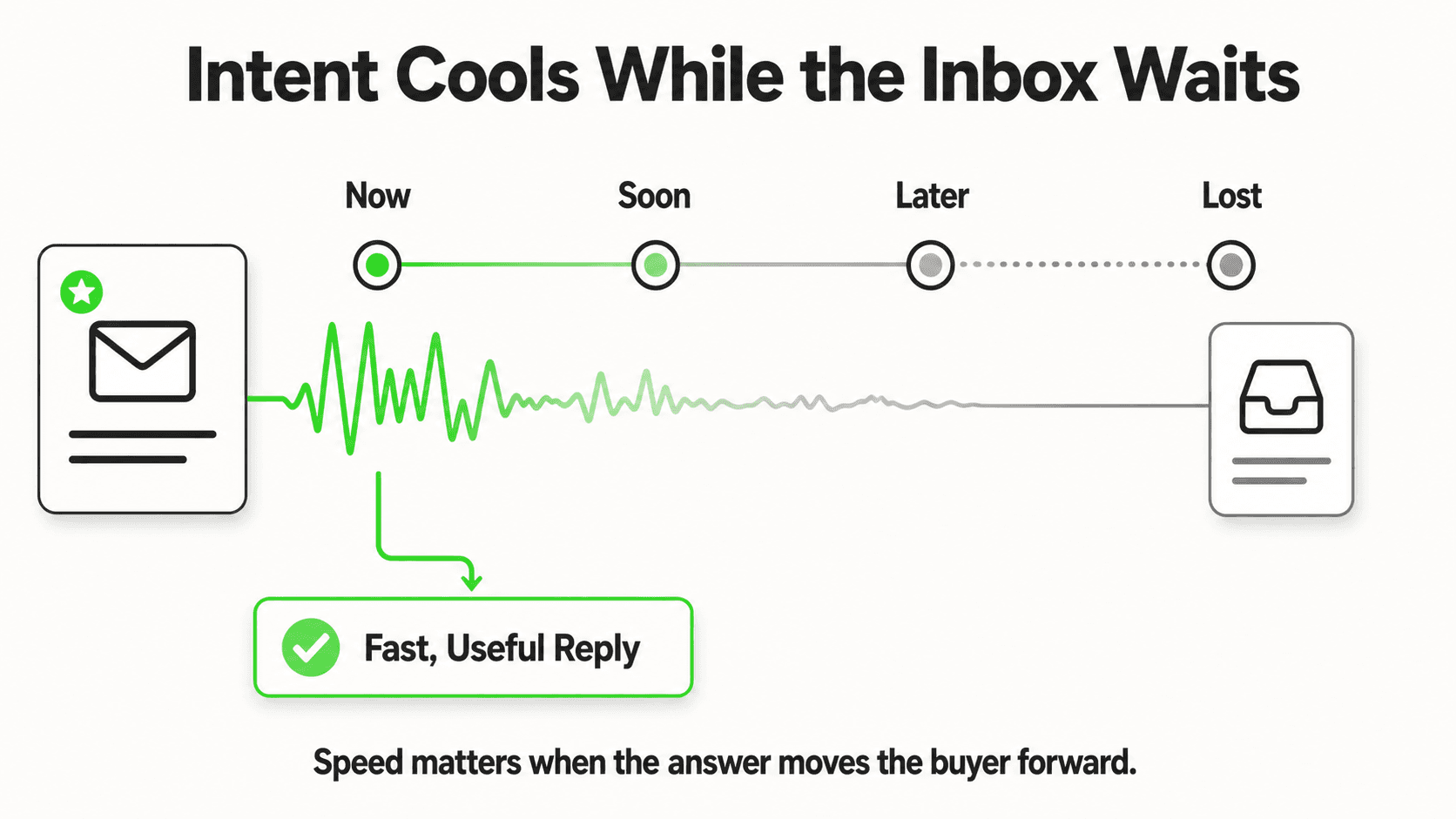
Instant is the new standard. About 60% of customers define "immediate" as 10 minutes or less, according to HubSpot's 2025 State of Marketing research (Source: HubSpot, 2025). Customers now rank speed of response (63%) as the single most important factor in a support interaction, followed by speed of resolution (57%) and availability (49%). The rise of AI chatbots, real-time messaging, and always-on support teams has made "instant" the baseline expectation, not a premium feature.
For SMBs, the takeaway is clear: customers no longer differentiate between large enterprises and small businesses when it comes to response time expectations. They expect the same speed, the same availability, and the same channel flexibility — regardless of your team size.
Response Time Expectations by Channel
Response time expectations vary sharply by channel: customers expect a reply within minutes on WhatsApp and live chat, but tolerate up to an hour on email and social DMs. Understanding these differences is critical for prioritizing where you invest your resources.
WhatsApp: Under 5 Minutes
WhatsApp has become the primary business messaging channel in markets like India, Brazil, and Southeast Asia. Customers treat WhatsApp the way they treat texting a friend — and they expect the same pace. Research shows that a good average first-response time on WhatsApp is under 5 minutes. The stakes are high: 73% of WhatsApp users say a slow response will convince them not to engage with a brand at all (Source: Gallabox). With 98% open rates and click-through rates up to 60%, WhatsApp messages get seen almost immediately — and customers expect you to match that speed. For more data on this channel, see our deep dive into WhatsApp statistics shaping business in India.
Website Live Chat: Instant
Live chat is the channel with the highest speed expectation. Customers expect a response within seconds during a live chat session — not minutes, seconds. Top-performing businesses maintain average chat response times under 30 seconds. The logic is simple: if someone clicked the chat widget, they want to talk right now. Any delay feels like a broken promise. This is the channel where AI chatbots deliver the most immediate ROI, because they eliminate wait time entirely.
Email: Under 1 Hour
Email carries a slightly longer expectation, but not by much. Research from LiveChatAI found that 89% of customers expect businesses to respond to emails within one hour, with 31% wanting a response in 15 minutes or less. The industry reality? Most businesses take 12 or more hours to reply. This gap is where leads go cold and customers switch to competitors who respond faster.
Phone: Immediate Pickup
Despite the rise of messaging, phone support still matters — especially for complex or high-stakes issues. Customers expect pickup within two minutes. Beyond that threshold, frustration sets in rapidly. And here is the uncomfortable truth for most small businesses: 60% of inbound calls go to voicemail. Every missed call is a potential lost customer. A common pattern for SMBs using AI is to deploy a chatbot that handles initial inquiries and only routes to phone for issues that genuinely require a human voice.
Instagram DM: Under 1 Hour
Social media messaging expectations have tightened considerably. On Instagram, customers now expect a business response within one hour. For brands that actively market on Instagram — especially in retail, beauty, food service, and hospitality — ignoring DMs for hours or days actively undermines the trust you built with your content. The average business still takes 4 to 5 hours to respond on social media, leaving a significant window for competitors.
Facebook Messenger: Under 15 Minutes
Facebook Messenger sits between WhatsApp and email in terms of urgency. Customers expect responses within 15 minutes to one hour. Facebook even rewards fast-responding businesses with a "Very Responsive" badge when they reply to 90% or more of messages within 15 minutes. Businesses without this badge are at a measurable disadvantage, as customers increasingly use it as a trust signal before engaging.
The Response Time Gap
Across every channel, there is a significant gap between what customers expect and what most small businesses deliver. The businesses that close this gap — even partially — gain a meaningful competitive advantage. AI-powered chatbots are the most practical way for SMBs to deliver instant responses on WhatsApp, website chat, Instagram, and Messenger without hiring a 24/7 team.
Channel Preferences by Generation
Your customers are not monolithic. A 22-year-old Gen Z customer and a 60-year-old Boomer have fundamentally different expectations about how they want to communicate with your business. Understanding these generational preferences helps you allocate your messaging resources effectively.
Gen Z (Born 1997-2012): Digital-First, Visual, Instant
Gen Z is the first generation that grew up entirely with smartphones. Their communication style is concise, informal, and text-first. According to research from Deskbird, Gen Z prefers instant messaging, social media DMs, and chat over email or phone calls. They trust messages received via video (56%) and phone messaging (44%) more than other channels.
For businesses, this means Gen Z customers are most likely to reach you through Instagram DMs, WhatsApp, or your website chat widget — and they expect near-instant responses. Email feels slow and formal to this generation. Phone calls feel intrusive. If you want Gen Z customers, you need to be on the channels they already use daily. Notably, 83% of Gen Z and younger Millennials say it is important for brands to understand them (Source: NielsenIQ), and channel choice is a core part of that understanding.
Millennials (Born 1981-1996): Multi-Channel, Tech-Savvy, Efficiency-Focused
Millennials are comfortable across channels but lean heavily toward digital-first communication. They favor messaging platforms like WhatsApp and Messenger, email for more formal interactions, and live chat for quick questions. Research from Sprout Social shows Millennials and Gen Z are involved in over 70% of B2B buying decisions, especially in tech and service-driven industries.
Millennials value efficiency above all. They want the fastest path to resolution, whatever channel that requires. They are comfortable starting on chat, escalating to email, and finishing on the phone — as long as they don't have to repeat themselves at each transition. For SMBs, this generation rewards businesses that offer seamless multi-channel support.
Gen X (Born 1965-1980): Pragmatic, Email-Comfortable, Value Phone for Complex Issues
Gen X bridges the analog and digital worlds. They are comfortable with email (their primary channel), increasingly active on messaging platforms, and still value phone support for complex or high-value interactions. According to the DMA's generational research, Gen X is slightly more skeptical of new channels but adopts them once proven reliable.
For SMBs targeting Gen X customers, email responsiveness is critical. This generation also appreciates having a phone number available, even if they rarely use it — its presence signals legitimacy. They are less likely than younger generations to use Instagram DMs for business communication but increasingly active on WhatsApp in markets where it is dominant.
Baby Boomers (Born 1946-1964): Phone and Email Dominant, Growing Digital Comfort
Boomers show the strongest preference for email (88%) and physical mail (52%), according to DMA research. They are the generation most likely to pick up the phone for a business inquiry. However, the gap is closing: Boomers are adopting WhatsApp and text messaging at increasing rates, especially for transactional interactions like appointment confirmations and order updates.
Boomers are less trusting of messages across most digital channels, except for mail and face-to-face interactions. For SMBs, the practical implication is clear: you need email and phone covered, with messaging as a secondary channel. But do not assume Boomers will never use chat — many already do, especially when self-service options are well-designed and clearly labeled.
Generational Strategy for SMBs
You don't need to be on every channel for every generation. Prioritize based on your customer demographics. A dental practice with mostly Gen X and Boomer patients should invest in email and phone responsiveness first. A DTC fashion brand targeting Millennials and Gen Z should prioritize Instagram DM and WhatsApp. The key is to be excellent on your primary channels rather than mediocre on all of them.
7 Things Customers Expect from Business Messaging Today
Beyond channel choice and speed, customers have developed specific expectations about how business messaging should work. These are not nice-to-haves — they are the baseline that separates businesses customers trust from businesses they abandon.
1. Instant Acknowledgment (Even If the Full Answer Comes Later)
The single most frustrating messaging experience for customers is silence. When a customer sends a message and gets nothing back — no confirmation, no estimated wait time, nothing — they assume you either didn't receive it or don't care.
What this looks like in practice: A customer messages your business at 9 PM asking about appointment availability. Within seconds, they receive an automated acknowledgment: "Thanks for reaching out! We've received your message and will get back to you within 2 hours. In the meantime, you can check available times here: [link]." The customer knows they were heard, has a timeframe, and has a self-service option to get their answer faster.
Why it matters: Research shows that 28% of consumers feel annoyed when they can't even ask a question in response to a business message (Source: Sinch). The bar is not perfection — it is acknowledgment. Customers are far more forgiving of a delayed full response when they know their message was received. This is one of the simplest automations any SMB can implement, and it has an outsized impact on customer satisfaction.
2. Channel Choice (Meet Them Where They Are)
Customers expect to communicate with your business on the channel they already use — not the channel that is most convenient for you. Research shows 85% of consumers expect businesses to offer a blend of communication channels (Source: MHC Automation). This is especially true across generations: Gen Z expects Instagram and WhatsApp, Boomers expect email and phone, and Millennials move fluidly between all of them.
What this looks like in practice: A restaurant offers booking via WhatsApp, website chat, Instagram DM, and phone. A customer who discovers the restaurant on Instagram can book a table without leaving the app. A regular customer who prefers WhatsApp can message directly. A Boomer who found the restaurant in a Google search can call.
Why it matters: Forcing customers onto a single channel creates friction, and friction costs you revenue. Every additional step between "I want to buy" and "I bought" is an opportunity for the customer to abandon the process. The businesses winning in 2026 are those that allow customers to choose their preferred channel and deliver a consistent experience across all of them. Hyperleap AI Agents support multi-channel deployment across website chat, WhatsApp, Instagram DM, and Facebook Messenger, making it practical for SMBs to offer this level of channel flexibility.
3. 24/7 Availability (Not Just Business Hours)
The 9-to-5 support window is dead. Customers research, shop, and make decisions at all hours — 67% of consumers expect to communicate with businesses via messaging apps rather than waiting for business hours to call (Source: Gallabox). For small businesses, this is perhaps the most challenging expectation to meet without automation.
What this looks like in practice: A potential client visits a law firm's website at 11 PM on Sunday, reads about their services, and has a question about consultation fees. An AI chatbot greets them, answers the fee question from the firm's knowledge base, and offers to book a consultation slot. By Monday morning, the firm has a qualified lead on their calendar — without anyone losing a night's sleep.
Why it matters: Research from Harvard Business Review and InsideSales.com shows that leads contacted within 5 minutes are dramatically more likely to convert than those contacted after 30 minutes — a gap that compounds every hour of delay. When a customer reaches out at midnight and your business responds at 9 AM, you have already lost 9 hours — and likely the customer. AI chatbots solve this by providing instant, document-grounded responses around the clock. For the full breakdown by industry, see our analysis of how slow response times cost businesses.
4. Personalization (Know Their Context, Don't Ask Them to Repeat)
Seventy-three percent of customers expect brands to provide personalized experiences as technology advances (Source: Nextiva). Yet only 47% of business leaders say their customer service is highly personalized. This gap represents one of the biggest opportunities for SMBs willing to invest in the right tools.
What this looks like in practice: A returning customer messages a clinic on WhatsApp asking about their upcoming appointment. The system recognizes them, pulls up their appointment details, and responds with the date, time, and preparation instructions — without asking for their name, phone number, or account number. The customer feels known and valued.
Why it matters: Nothing erodes trust faster than making a customer repeat information they already provided. Every time a customer has to re-explain their issue, re-state their account number, or re-describe their previous interaction, your business signals that their time does not matter. Personalization is not about marketing gimmicks — it is about operational respect for your customer's time.
5. Self-Service Options (FAQs, Booking, Tracking Without Calling)
Self-service has moved from a feature to an expectation. Research shows 61% of customers prefer self-service for simple issues rather than contacting a live agent. Meanwhile, 72% have already used self-service portals, and 55% have interacted with self-service chatbots. The trend is accelerating, not plateauing.
What this looks like in practice: A dental patient wants to reschedule an appointment. Instead of calling the front desk, waiting on hold, and going through a phone tree, they message the practice on WhatsApp. The AI chatbot shows available slots, confirms the reschedule, and sends a calendar invite — all within 90 seconds.
Why it matters: Self-service reduces your team's workload while improving customer satisfaction. The critical nuance: 77% of consumers say a bad self-service experience is worse than no self-service at all (Source: Nextiva). A chatbot that loops, gives wrong answers, or cannot find basic information actively damages your brand. The quality of your self-service matters as much as its existence. This is why document-grounded AI chatbots — trained on your actual business knowledge — outperform generic FAQ bots that rely on rigid keyword matching.
Want to See What Modern Self-Service Looks Like?
Hyperleap AI Agents deliver instant, document-grounded responses across WhatsApp, web chat, Instagram, and Messenger — 24/7.
Start Your Free Trial6. Seamless Handoff (Bot to Human Without Starting Over)
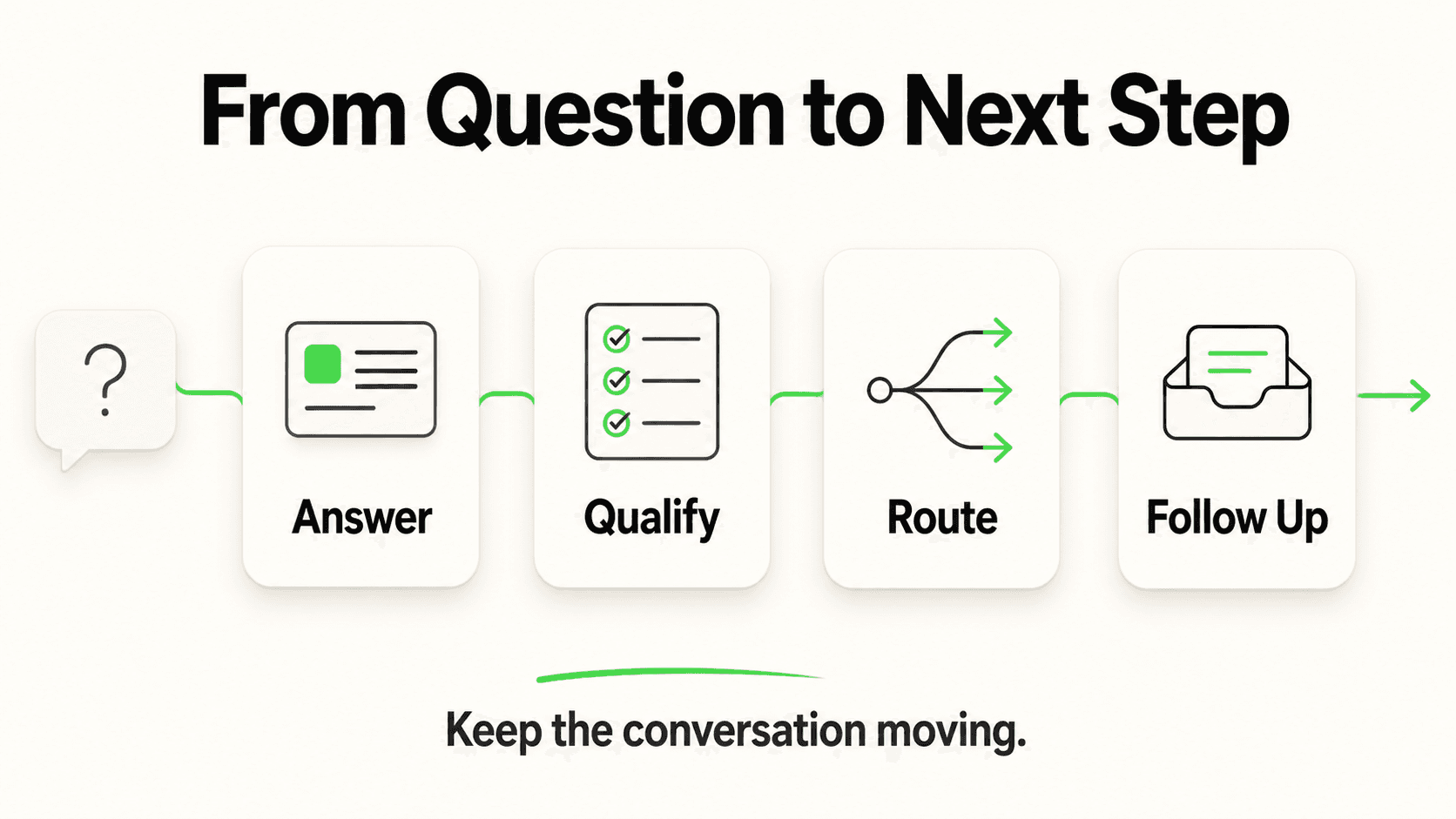
This is where most businesses fail. Customers overwhelmingly accept — and even prefer — AI chatbots for simple questions. Research shows 82% of consumers prefer instant chatbot responses for straightforward inquiries. But the moment a question gets complex, they want a human. And they want that transition to be seamless.
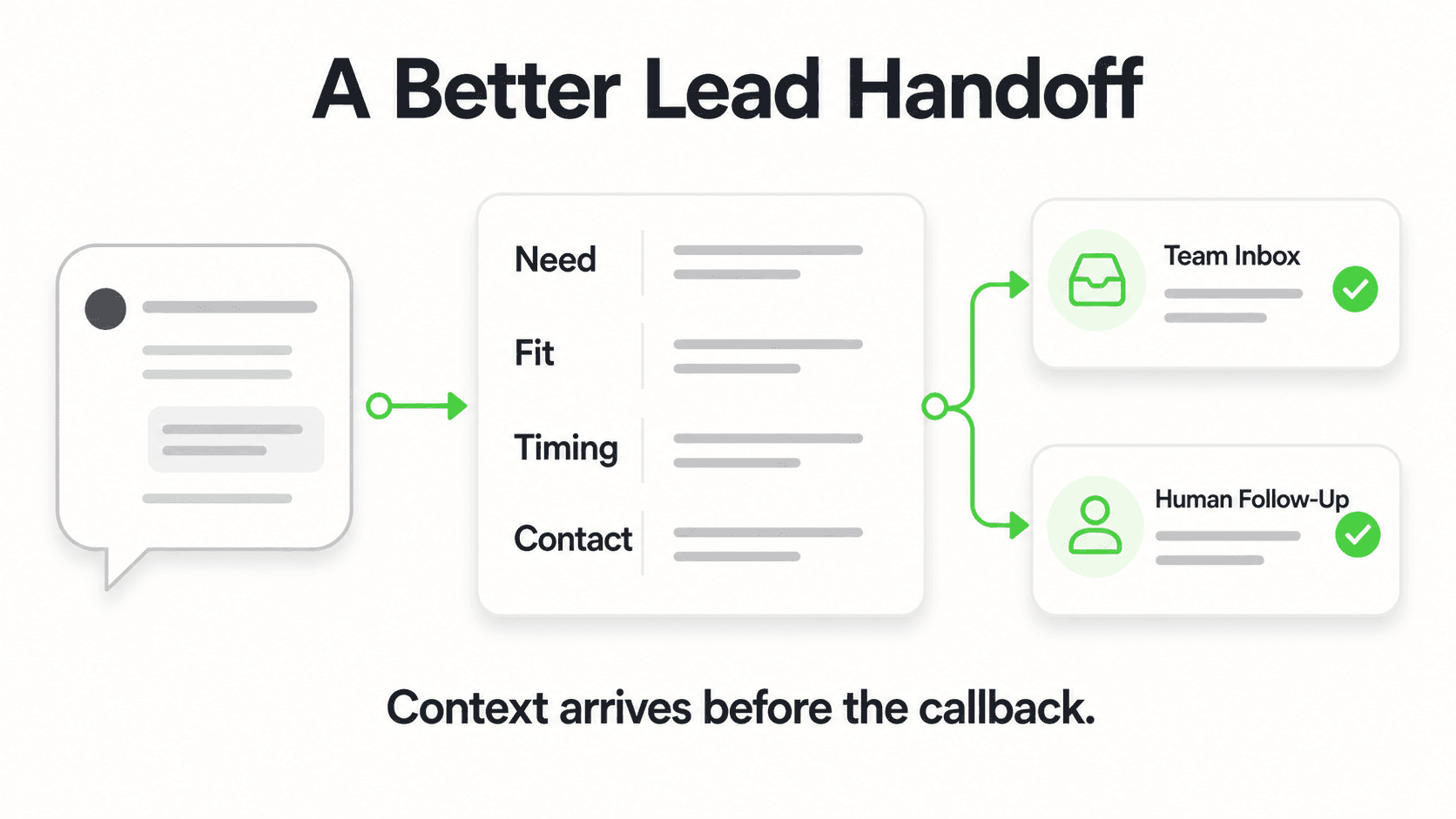
What this looks like in practice: A customer asks an AI chatbot about product specifications and gets a clear, accurate answer. They then ask a follow-up about a custom configuration that falls outside the chatbot's knowledge. The chatbot recognizes this, says "Let me connect you with our team for this one," and transfers the conversation — along with the full chat history — to a human agent. The customer does not repeat a single detail.
Why it matters: The data is stark. According to SurveyMonkey research, 80% of customers will only use chatbots if they know a human option exists. Seventy-eight percent say it is important to be able to switch from AI to a human agent. Yet only 15% of consumers report experiencing a seamless handoff. This means 85% of businesses are failing at one of the most critical moments in the customer journey. And the consequences are real: 30% of consumers would switch to a competitor after a single bad chatbot experience. Getting the handoff right is not optional — it is the difference between a chatbot that builds trust and one that destroys it.
7. Multilingual Support (Especially in Diverse Markets)
As businesses serve increasingly diverse customer bases, the expectation for communication in the customer's preferred language has grown sharply. Research shows 75% of consumers prefer brands that offer information in their native language, and roughly 74% are more likely to return for support delivered in their language (Source: Agents Republic). Perhaps most strikingly, nearly 90% of consumers will not even consider purchasing from an English-only website.
What this looks like in practice: A real estate agency in Dubai serves clients who speak English, Arabic, Hindi, and Urdu. Their AI chatbot detects the customer's language from their first message and responds in kind — providing property details, answering questions about payment plans, and scheduling viewings, all in the customer's native language.
Why it matters: In linguistically diverse markets like India (22 official languages), the UAE, Singapore, and multilingual regions of Europe and Africa, English-only support is a revenue ceiling. The multilingual customer support platform market was valued at $2.3 billion in 2024 and is growing at 14% annually. Conversational AI for customer service has made multilingual support accessible to businesses of any size — you no longer need a team of multilingual agents to serve a diverse customer base.
How Messaging Expectations Differ Across Regions
While the seven expectations above are universal, the way they play out varies significantly across the major SMB markets — the US, the EU, the UK, Brazil, India, and Southeast Asia.
WhatsApp-first markets. Across Brazil, India, Indonesia, the Middle East, and much of the EU, WhatsApp is the primary interface for business communication. With 2+ billion users globally and the highest density in these regions, customers expect to inquire about products, make bookings, receive order updates, and get support all within WhatsApp. WhatsApp Business API per-message pricing in emerging markets is among the lowest globally, making the channel economically viable even for very small businesses. In these markets, not being on WhatsApp is like not having a phone number in 2010.
The US is web-chat and SMS-first. WhatsApp penetration in the US remains surprisingly low — only about 29% of American adults use the app, and fewer than 30% use it daily. The reason is structural: decades of affordable flat-rate SMS plans removed the cost-saving incentive that drove WhatsApp adoption elsewhere. American consumers default to website live chat, SMS, and email for business communication, with Facebook Messenger as a secondary channel. Apple's iMessage ecosystem and the strength of incumbents like Facebook Messenger further limit WhatsApp's US growth.
Price sensitivity shapes channel strategy. Consumers in emerging markets are typically more price-conscious, making cost-per-interaction a key consideration for SMBs — WhatsApp's low per-message pricing aligns with this reality. In the US, the emphasis is less on per-message cost and more on integration with existing workflows — CRM systems, email platforms, and scheduling tools.
Language diversity demands different approaches. Many regions face significant multilingual support challenges. An EU-based SMB may need to support English, German, French, and Spanish; a US business in a city like Houston might need English and Spanish; a business in Miami may need English, Spanish, and Haitian Creole. Each market has its own language mix, but the underlying need is the same: customers want to communicate in the language they think in. AI-powered chatbots with automatic language detection (covering 100+ languages) are particularly valuable for any business serving multilingual customer bases.
The bottom line for SMBs operating globally: there is no one-size-fits-all messaging strategy. Your channel mix, language support, and automation approach should be calibrated to the markets you serve. What works in São Paulo will not work in Seattle, and vice versa.
Meeting the Messaging Standard in 2026
The data is clear: customer messaging expectations in 2026 center on speed, availability, personalization, and channel choice. These are not aspirational goals — they are the baseline that customers use to evaluate whether a business is worth their time and money.
For small and medium-sized businesses, the gap between customer expectations and current capabilities represents the single largest competitive vulnerability. But it is also the largest opportunity. The SMBs that invest in meeting these expectations — through multi-channel presence, AI-powered automation, and smart self-service — will capture the customers that slower competitors lose.
You don't need a massive support team to deliver on these expectations. You need the right tools deployed on the right channels with the right handoff to your human team when it matters.
Further Reading
Authoritative external sources used and recommended for further research on this topic:
- Anthropic research and product documentation
- Google Search Central documentation
- Gartner customer service research
Frequently Asked Questions
What is the most important messaging channel for small businesses in 2026?
It depends on your market. In India, Southeast Asia, Brazil, and much of Africa, WhatsApp is the dominant business messaging channel with the highest customer engagement rates. In the US and Canada, website live chat and SMS remain primary, with Facebook Messenger as a strong secondary channel. The most effective approach for any SMB is to identify the 2 to 3 channels your specific customers prefer and invest in delivering excellent response times on those channels rather than spreading thin across every platform.
How fast should a small business respond to customer messages?
Customers expect responses within minutes, not hours. The benchmarks vary by channel: under 5 minutes for WhatsApp, instant for live chat, under 1 hour for email, and under 15 minutes for Facebook Messenger. Research shows 60% of customers define "immediate" as under 10 minutes. For small businesses without 24/7 staff, AI chatbots provide the most practical path to meeting these expectations — they deliver instant automated responses around the clock and escalate complex issues to your team during business hours.
Do customers actually want to talk to chatbots instead of humans?
Customers prefer chatbots for simple, repetitive tasks — checking hours, getting pricing, scheduling appointments, tracking orders. Research shows 82% of consumers prefer instant chatbot responses for straightforward questions. However, 89% of consumers also believe companies should always offer the option to speak with a human. The winning model is a hybrid approach: AI handles the routine 70 to 80% of inquiries instantly, and human agents handle the complex 20 to 30% that require judgment, empathy, or specialized knowledge.
How much does it cost for an SMB to offer multi-channel messaging?
The cost varies based on channels and volume, but it has become significantly more accessible. AI chatbot platforms like Hyperleap AI offer multi-channel support — website chat, WhatsApp, Instagram DM, and Facebook Messenger — starting at $40 per month. This is a fraction of the cost of hiring even one additional support agent. The ROI typically materializes within 30 to 60 days through faster response times, reduced missed inquiries, and improved conversion rates.
Is multilingual support really necessary for small businesses?
If you serve a linguistically diverse customer base, yes. Research shows 75% of consumers prefer brands that communicate in their native language, and nearly 90% will not purchase from an English-only website. This is especially critical in markets like India, the UAE, and multilingual regions of Europe. Modern AI chatbots can detect customer language automatically and respond accordingly, making multilingual support feasible even for businesses without multilingual staff.
Ready to Meet Your Customers' Messaging Expectations?
Deploy AI Agents across WhatsApp, website chat, Instagram, and Messenger in minutes. Instant responses, 24/7 availability, seamless human handoff (Pro and Max).
Start Your Free TrialIndustry Solutions
See how AI chatbots work for these industries:
Related Articles
The State of AI Customer Service for Small Businesses 2026
50+ sourced statistics on AI chatbot adoption, response times, ROI, and customer preferences — the definitive 2026 data guide for small business owners and operators.
What Missed Calls Really Cost Your Small Business
A worked example of what missed calls cost small businesses in lost jobs, plus where inquiries actually arrive now and what to do about it.
AI Receptionist Cost in 2026: What You Actually Pay
AI receptionist cost ranges from $20/month for automated voice AI to $300+/month for live-agent phone answering. Full breakdown by category.
AI Chatbot vs Receptionist: Cost Comparison for SMBs
Should your small business hire a receptionist or deploy an AI chatbot? A practical cost comparison covering salary, availability, scalability, and ROI.