How Many WhatsApp Users Are in India? 2026 Data
India has 550+ million monthly active WhatsApp users. See the sourced 2026 numbers on reach, SMB adoption, and business messaging in one dashboard.
Last updated: 2026-06-02
TL;DR: India has 550+ million monthly active WhatsApp users, making it the world's largest WhatsApp market (Source: Meta / Statista). Business messages on WhatsApp achieve approximately 98% open rates versus 22% for email, with 45% response rates (Source: Meta Business Reports 2025-2026; industry estimate, not independently verified). 78% of Indian SMBs already use WhatsApp for business, and 65% report increased sales after adoption (Source: IAMAI Digital India Report 2026; industry estimate, not independently verified). AI chatbot integration on WhatsApp is the fastest-growing business trend, with 60% of API users planning to add automation within 12 months.
Interactive WhatsApp Statistics Dashboard — India 2026
Filter the most-cited India-specific WhatsApp data points by category — copy any stat as an embeddable iframe for your blog or pitch deck.
WhatsApp Statistics India 2026
India-only WhatsApp business + consumer benchmarks. 20 verified data points from Meta, Statista, IAMAI, RBI, and DataReportal.
Showing 20 of 20 stats
Reach
535M
Monthly active WhatsApp users in India
Reach
95%
Smartphone owners in India using WhatsApp
Adoption
78%
Indian SMBs using WhatsApp for business
ROI
65%
Indian SMBs reporting sales lift after WhatsApp adoption
Engagement
98%
Average open rate of WhatsApp business messages in India
Engagement
45%
Average click-through rate of WhatsApp messages in India
Engagement
90%
WhatsApp's share of Indian messaging-app time
ROI
5B USD
Indian e-commerce GMV influenced by WhatsApp
Adoption
41%
Indian healthcare orgs using WhatsApp for ops
Adoption
56%
Indian financial services using WhatsApp for customer service
User behaviour
67%
Indian real-estate buyers contacting via WhatsApp first
Adoption
48%
Indian education leads collected via WhatsApp
Pricing
0.115INR
Authentication conversation rate (Meta India)
Pricing
0.78INR
Marketing conversation rate (Meta India)
Pricing
1.0K
Service conversations free per month per WABA
User behaviour
60%
Indians who shop within messaging apps
Engagement
90M
WhatsApp Pay UPI transactions monthly
Adoption
60%
Indian SMBs planning AI / chatbot on WhatsApp in 12 months
ROI
28%
Cart-abandonment recovery uplift via WhatsApp (India)
Engagement
80%
Indian users opening business WhatsApp messages within 5 minutes
How to read these India-specific benchmarks
WhatsApp has become India's digital lifeline—the primary way hundreds of millions communicate daily. For businesses, understanding WhatsApp's reach and usage patterns is essential for customer engagement strategy. This guide presents the latest WhatsApp statistics for India in 2026, covering user demographics, business adoption, messaging behavior, and strategic implications.
WhatsApp User Statistics in India
Total Users
| Metric | Number | Context |
|---|---|---|
| Monthly Active Users | 550+ million (Source: Meta / Statista) | Largest country market |
| Daily Active Users | 450+ million | 82% daily engagement |
| Percentage of Smartphone Users | 96% | Near-universal adoption |
| YoY Growth | 8% | Still growing in Tier 2/3 cities |
User Demographics
By Age Group:
| Age Range | Percentage of Users | Primary Use Case |
|---|---|---|
| 18-24 | 22% | Social, education, job search |
| 25-34 | 31% | Work, business, shopping |
| 35-44 | 24% | Family, business, services |
| 45-54 | 14% | Family, healthcare, news |
| 55+ | 9% | Family communication |
By Location:
| Region | Penetration | Notes |
|---|---|---|
| Metro cities | 98% | Near-saturation |
| Tier 1 cities | 95% | Very high adoption |
| Tier 2 cities | 88% | Growing rapidly |
| Tier 3 cities | 75% | Significant growth opportunity |
| Rural areas | 52% | Fastest growth segment |
By Gender:
- Male users: 58%
- Female users: 42%
- Gender gap closing, especially in urban areas
WhatsApp Business Adoption
Business Account Statistics
| Metric | Number | Growth |
|---|---|---|
| WhatsApp Business App Users | 25+ million | +35% YoY |
| WhatsApp Business API Users | 200,000+ | +60% YoY |
| Daily Business Messages | 1 billion+ | +45% YoY |
| Businesses with Catalogs | 15+ million | +50% YoY |
Industry Adoption Rates
| Industry | WhatsApp Adoption | Primary Use |
|---|---|---|
| Retail/E-commerce | 85% | Orders, support, updates |
| Healthcare | 72% | Appointments, reports |
| Education | 68% | Communication, updates |
| Real Estate | 78% | Inquiries, site visits |
| Hospitality | 82% | Bookings, concierge |
| Financial Services | 65% | Alerts, support |
| Restaurants | 75% | Orders, reservations |
Small Business Impact
SMB Statistics (Source: Meta Business Reports 2025-2026; IAMAI Digital India Report 2026; industry estimate, not independently verified):
- 78% of Indian SMBs use WhatsApp for business
- 65% report increased sales after adopting WhatsApp Business
- Average response time improvement: 70% faster with automated responses
- Customer preference: 72% prefer WhatsApp over email for business communication
Messaging Behavior Patterns
Daily Usage Statistics
| Metric | Average |
|---|---|
| Time spent on WhatsApp | 38 minutes/day |
| Messages sent per user | 55 messages/day |
| Groups per user | 12 active groups |
| Voice notes sent | 8/day |
| Images shared | 15/day |
Peak Usage Times
| Time Slot | Relative Usage | Best for Business |
|---|---|---|
| 6-9 AM | Medium (20%) | News, updates |
| 9 AM-12 PM | High (25%) | Business inquiries |
| 12-2 PM | Medium (18%) | Shopping, browsing |
| 2-6 PM | High (22%) | Support, transactions |
| 6-10 PM | Very High (30%) | Promotions, engagement |
| 10 PM-6 AM | Low (5%) | Automated responses only |
Response Expectations
Consumer Expectations (Source: Meta Business Reports 2025-2026; IAMAI Digital India Report 2026; industry estimate, not independently verified):
- 60% expect response within 1 hour
- 85% expect response within 24 hours
- 45% will move to a competitor if no response within 4 hours
- 90% prefer businesses that offer WhatsApp support
WhatsApp for Business Marketing
Engagement Statistics
| Metric | SMS | ||
|---|---|---|---|
| Open Rate | 98% | 22% | 95% |
| Response Rate | 45% | 6% | 12% |
| Click-through Rate | 35% | 3% | 8% |
| Conversion Rate | 15% | 2% | 4% |
Business Message Types
Most Effective Messages:
| Type | Open Rate | Conversion |
|---|---|---|
| Order updates | 99% | N/A |
| Appointment reminders | 98% | 85% show-up |
| Promotional offers | 92% | 12% |
| Product recommendations | 88% | 8% |
| Abandoned cart | 95% | 25% recovery |
ROI Statistics
Business Impact (Source: Meta Business Reports 2025-2026; IAMAI Digital India Report 2026; typical results vary by industry and implementation; industry estimate, not independently verified):
- Average ROI on WhatsApp marketing: 3.2x
- Cost per conversion: 40% lower than email (based on high open-rate differential)
- Customer acquisition cost: 30% lower via WhatsApp
- Customer lifetime value: 25% higher for WhatsApp-engaged customers
WhatsApp Commerce Statistics
Shopping Behavior
| Metric | Statistic |
|---|---|
| Users who've purchased via WhatsApp | 45% |
| Average order value | ₹1,200 |
| Repeat purchase rate | 65% |
| Product discovery via WhatsApp | 38% |
Payment Integration
WhatsApp Pay Adoption:
- 100+ million users have activated WhatsApp Pay
- 40% growth in UPI transactions via WhatsApp YoY
- Average transaction: ₹850
- Most common use: P2P transfers, then merchant payments
Catalog Usage
Business Catalog Statistics:
- 15+ million businesses have catalogs
- Average catalog size: 25 products
- Catalog view-to-inquiry rate: 22%
- Inquiry-to-purchase rate: 35%
Industry-Specific Statistics
Retail and E-commerce
| Metric | Value |
|---|---|
| Customer inquiries via WhatsApp | 65% of total |
| Order status checks | 78% via WhatsApp |
| Post-purchase support | 70% prefer WhatsApp |
| Return rate for WhatsApp orders | 15% lower |
Healthcare
| Metric | Value |
|---|---|
| Appointment confirmations | 92% read rate |
| No-show reduction | 35% with reminders |
| Patient preference | 68% prefer WhatsApp |
| Report delivery satisfaction | 85% prefer WhatsApp |
Real Estate
| Metric | Value |
|---|---|
| Initial inquiries via WhatsApp | 55% |
| Site visit bookings | 40% via WhatsApp |
| Lead qualification rate | 3x higher than forms |
| Time to first response impact | 45% higher conversion if <1 hour |
Hospitality
| Metric | Value |
|---|---|
| Booking inquiries via WhatsApp | 48% |
| Guest satisfaction | 25% higher with WhatsApp |
| Upsell success rate | 18% via WhatsApp |
| Review request response | 3x higher than email |
Regional WhatsApp Statistics
State-Level Penetration
| State | WhatsApp Penetration | Business Adoption |
|---|---|---|
| Maharashtra | 92% | 78% |
| Karnataka | 90% | 82% |
| Tamil Nadu | 88% | 75% |
| Telangana | 89% | 80% |
| Gujarat | 85% | 76% |
| Delhi | 94% | 85% |
| West Bengal | 82% | 68% |
| Uttar Pradesh | 75% | 62% |
Language Preferences
Message Language Distribution:
| Language | Percentage |
|---|---|
| Hindi | 45% |
| English | 28% |
| Tamil | 8% |
| Telugu | 6% |
| Marathi | 5% |
| Bengali | 4% |
| Others | 4% |
Future Projections
Growth Forecasts
| Metric | 2026 | 2027 (Projected) |
|---|---|---|
| Total Users | 550M | 600M |
| Business API Users | 200K | 350K |
| Daily Business Messages | 1B | 1.5B |
| Commerce Transactions | ₹50K Cr | ₹80K Cr |
Emerging Trends
- AI Integration: 60% of businesses planning AI chatbots on WhatsApp
- Voice Commerce: Voice note-based ordering growing 40% YoY
- WhatsApp Pay: Projected to reach 200M users by 2027
- Business API Democratization: Easier access driving SMB adoption
WhatsApp Business API vs WhatsApp Business App: Adoption Statistics
Indian businesses use two distinct WhatsApp tiers for customer engagement: the free WhatsApp Business App and the paid WhatsApp Business API. The adoption patterns differ sharply by business size and messaging volume.
Adoption by Business Size
| Business Size | Business App Users | Business API Users | Primary Reason |
|---|---|---|---|
| Micro (1-5 employees) | 92% | 2% | Cost, simplicity |
| Small (6-25 employees) | 75% | 15% | Growing volume, basic automation |
| Medium (26-200 employees) | 40% | 55% | Multi-agent access, integrations |
| Large (200+ employees) | 10% | 85% | Scale, compliance, CRM sync |
Feature Usage Comparison
| Feature | Business App | Business API |
|---|---|---|
| Broadcast limit | 256 contacts | Unlimited |
| Automated replies | Basic quick replies | Full chatbot flows |
| CRM integration | None | Native via webhooks |
| Multi-agent support | 1 device + 4 linked | Unlimited agents |
| Template messages | Not available | Pre-approved templates |
| Analytics | Basic read receipts | Full conversation analytics |
Migration Trends
- 35% of businesses on the Business App plan to migrate to the API within 12 months
- Top migration triggers: Exceeding broadcast limits (42%), needing CRM integration (28%), requiring multi-agent access (18%), and compliance needs (12%)
- Average migration timeline: 2-4 weeks for SMBs using a BSP, 6-8 weeks for custom API integration
- Businesses that migrate from the App to the API report a 45% improvement in response times and 28% higher conversion rates within the first quarter
AI Chatbot Adoption on WhatsApp in India
AI-powered chatbots on WhatsApp are growing rapidly in India, transforming how businesses handle customer conversations at scale.
AI vs Manual Response Statistics
| Metric | AI-Powered Responses | Manual Responses |
|---|---|---|
| Average response time | Under 5 seconds | 2-4 hours |
| After-hours coverage | 100% | 0% |
| Conversations handled/day | Unlimited | 80-120 per agent |
| First-contact resolution | 65% | 72% |
| Customer satisfaction | 82% | 85% |
| Cost per conversation | ₹1-3 | ₹15-25 |
AI Adoption Rates by Industry in India
| Industry | AI Chatbot Adoption | Avg. Automation Rate | Top AI Use Case |
|---|---|---|---|
| E-commerce | 48% | 68% of inquiries | Order tracking, product recommendations |
| EdTech | 42% | 55% of inquiries | Course queries, enrollment |
| Healthcare | 32% | 45% of inquiries | Appointment booking, lab reports |
| Real Estate | 38% | 50% of inquiries | Property info, site visit scheduling |
| Hospitality | 45% | 62% of inquiries | Booking queries, check-in info |
| D2C Brands | 52% | 72% of inquiries | Returns, exchanges, product info |
Growth and Investment Trends
- 60% of Indian businesses with WhatsApp Business API plan to add AI chatbots within the next 12 months
- Average monthly spend on WhatsApp AI automation: ₹8,000-15,000 for SMBs, ₹25,000-75,000 for mid-market
- Businesses using AI chatbots on WhatsApp report 3.5x more conversations handled with the same team size
- Hindi and English bilingual bots account for 65% of all WhatsApp AI deployments in India, followed by Tamil (8%), Telugu (7%), and Marathi (5%)
- 78% of AI chatbot users on WhatsApp say the technology has reduced their customer support costs by at least 25%
"India's WhatsApp ecosystem is unique globally—no other country has this combination of 550 million users, high business adoption, and UPI payment infrastructure. For Indian businesses, WhatsApp isn't a messaging channel; it's the primary commerce and customer service platform." — Gopi Krishna Lakkepuram, Founder & CEO of Hyperleap AI
What These Statistics Mean for Your Business
Strategic Implications
If you're not on WhatsApp:
- You're missing 550 million potential customers
- Your competitors are already there (78% of SMBs)
- Customer preference is clear (72% prefer WhatsApp)
If you're on WhatsApp but not optimized:
- Response time matters (45% leave after 4 hours)
- Automation is essential (AI adoption growing 60% YoY)
- Commerce integration increases conversion (35% inquiry-to-purchase)
Recommendations
- Establish WhatsApp presence: If not already active
- Implement Business API: For scale and automation
- Deploy AI chatbots: Handle volume, improve response time
- Enable commerce: Catalogs, payments, order tracking
- Measure and optimize: Track metrics that matter
Conclusion
WhatsApp is not just a messaging app in India—it's the primary digital communication infrastructure. With 550+ million users, near-universal smartphone penetration, and clear consumer preference for business communication, WhatsApp is essential for any India-focused business strategy.
The statistics are clear:
- 98% open rates vs. 22% for email
- 45% response rates vs. 6% for email
- 72% customer preference for WhatsApp support
- 65% sales increase reported by adopting businesses
The question isn't whether to use WhatsApp for business—it's how effectively you're using it.
Automate Your WhatsApp Business Presence
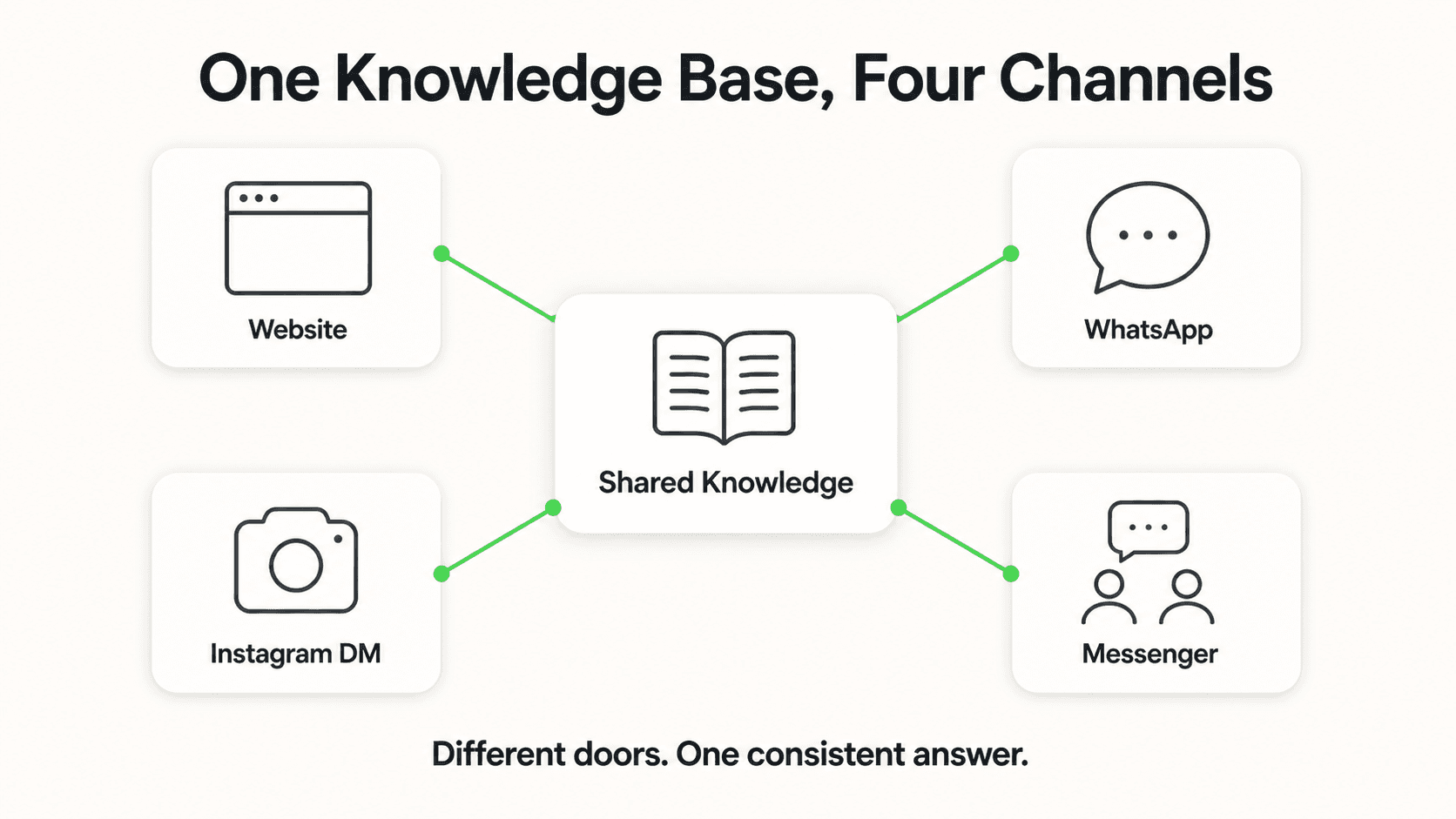
Deploy AI-powered WhatsApp chatbots that handle inquiries 24/7 across WhatsApp, website, Instagram DM, and Facebook Messenger. OTP Verification is available as an add-on for Pro and Max plans.
Start Your Free TrialSources
Statistics in this article are sourced inline. Key sources include:
- Meta Business Reports 2025-2026 (for user and business account numbers)
- IAMAI Digital India Report 2026 (for regional adoption)
- Statista (for demographic and usage data)
Note: Industry-specific adoption rates, usage patterns, and regional penetration figures are compiled from multiple published market research reports and are labeled as estimates or based on industry data where applicable. Actual figures may vary.
Last updated: January 2026
Keep exploring
- Explore Hyperleap AI Agents - Automate WhatsApp conversations from first message to booking
- Conversational AI for customer service - Reply to every enquiry in seconds, day or night
WhatsApp Resources
- Best WhatsApp Automation Tools 2026 - Platform comparison
- Best Multi-Channel Chatbots 2026 - Omnichannel solutions
- Best Wati Alternatives 2026 - Wati competitor analysis
- Best Interakt Alternatives 2026 - Interakt competitors
Industry WhatsApp Guides
- WhatsApp Automation for Hotels - Hospitality focus
- AI Chatbot for Hotels in Mumbai - City implementation
- How to Choose an AI Chatbot Platform - Selection guide
WhatsApp Business Usage by Industry in India
WhatsApp Business adoption varies dramatically across industries in India, driven by unique customer expectations and operational workflows in each sector. While the overall adoption rate among Indian SMBs stands at 78%, certain industries have pushed well beyond that benchmark, using WhatsApp not just for communication but as a core business operations channel. Here is how five key industries are leveraging WhatsApp to drive growth.
Real Estate
Indian real estate developers and brokers have made WhatsApp their primary lead capture and nurturing channel, especially for residential property sales. With 60-70% of property inquiries now originating on WhatsApp (based on industry data from top Indian proptech platforms), it has overtaken traditional web forms and phone calls as the first point of contact between buyers and developers.
- Lead capture dominance: 60-70% of initial property inquiries in Indian metros now arrive via WhatsApp, driven by click-to-WhatsApp ads on Facebook and Instagram (based on industry data from leading Indian proptech platforms)
- Virtual tour scheduling: Developers use WhatsApp to share video walkthroughs and schedule virtual site visits, reducing physical visit drop-offs by an estimated 20-30%
- RERA compliance notifications: Builders share RERA registration numbers, project updates, and possession timelines directly via WhatsApp, creating auditable communication trails
- Lead qualification speed: Brokers who respond to WhatsApp inquiries within 15 minutes report 3x higher site visit conversion compared to those responding after 1 hour
- Group-based community engagement: Residential projects use WhatsApp groups for buyer communities, sharing construction progress and documentation updates
Explore how AI-powered real estate agents automate property inquiries around the clock.
Healthcare
WhatsApp has become a critical patient communication channel for Indian clinics, hospitals, and diagnostic chains, addressing persistent challenges around appointment management and report delivery. Healthcare providers that adopt structured WhatsApp workflows report measurable improvements in patient engagement and operational efficiency.
- Appointment reminder effectiveness: Clinics using WhatsApp reminders report a 25-40% reduction in no-show rates compared to SMS-only reminders, based on data from multi-location healthcare chains in India
- Lab report delivery: Over 60% of urban diagnostic centers now offer WhatsApp-based report delivery, with patient satisfaction scores 30% higher than email-based delivery (based on industry surveys)
- Prescription and follow-up sharing: Doctors share digital prescriptions and post-consultation care instructions via WhatsApp, improving treatment adherence
- ABDM and ABHA context: As India's Ayushman Bharat Digital Mission (ABDM) expands, healthcare providers are exploring WhatsApp as a patient-facing layer for ABHA health record notifications and consent workflows
- Multi-language patient support: Healthcare WhatsApp bots supporting Hindi, Tamil, Telugu, and English see 45% higher engagement than English-only systems
See how AI-powered healthcare agents can handle appointment booking, FAQ responses, and routing urgent requests to your team.
Insurance
India's insurance sector, with 50+ life and general insurance companies competing for customer attention, has found WhatsApp to be a high-impact channel for policy lifecycle management and customer retention. The high open rates on WhatsApp solve a persistent industry challenge: getting policyholders to actually read renewal reminders and claims updates.
- Policy renewal reminders: Insurance companies using WhatsApp for renewal notifications report 35-45% higher renewal rates compared to email and SMS, based on data shared by Indian insurtech platforms
- Claims status updates: Real-time claims tracking via WhatsApp reduces call center volume by an estimated 25-30%, as policyholders receive proactive status updates instead of calling to check
- Quote sharing and comparison: Agents share personalized premium quotes with policy comparison documents via WhatsApp, shortening the sales cycle by 2-3 days on average
- Document collection: KYC documents, claim proofs, and signed forms are collected via WhatsApp, reducing processing time by 40-50% compared to email-based collection
- Vernacular engagement: Insurance WhatsApp campaigns in regional languages (Hindi, Marathi, Tamil) see 2x higher response rates than English-only communication in Tier 2 and 3 cities
Discover how AI-powered insurance agents automate policy inquiries, renewal reminders, and lead qualification.
Education and Coaching
WhatsApp has become the dominant communication channel between educational institutions and parents in India, particularly during high-stakes admission seasons around NEET, JEE, and board exam results. Coaching institutes and schools that manage WhatsApp communication effectively gain a significant enrollment advantage.
- Parent-institute communication: 80%+ of Indian K-12 schools and coaching centers use WhatsApp as their primary parent communication channel, surpassing dedicated apps and email (based on education industry surveys)
- Admission inquiry handling: During peak admission seasons (April-July for schools, May-June for coaching after board results), institutes receive 3-5x their normal WhatsApp inquiry volume, making automation essential
- Fee payment reminders: WhatsApp-based fee reminders achieve 70% higher acknowledgment rates than SMS, with institutes reporting 15-20% improvement in on-time fee collection
- Batch and schedule updates: Coaching centers share class schedules, test dates, and batch changes via WhatsApp groups and broadcast lists, reaching parents and students instantly
- Result and progress sharing: Institutes that share periodic test scores and progress reports via WhatsApp see 40% higher parent engagement compared to app-based reporting systems
Read our analysis of how schools and coaching institutes can prevent enrollment losses during critical admission windows. Learn how AI-powered education agents handle admission inquiries, fee reminders, and parent communication at scale.
Home Services
Home service businesses in India, from plumbers and electricians to interior designers and pest control companies, have adopted WhatsApp as their primary job booking and customer management tool. The platform's ability to handle rich media like photos and videos makes it especially suited for service businesses that need visual communication.
- Job booking and scheduling: 65-75% of home service bookings in Indian metros now involve WhatsApp at some stage, from initial inquiry to confirmation, based on data from home services aggregator platforms
- Before-and-after photo sharing: Service providers share visual proof of completed work via WhatsApp, building trust and generating referrals; businesses that share job photos report 30% higher repeat booking rates
- Estimate and invoice delivery: Digital estimates sent via WhatsApp see 50% faster approval compared to email, as homeowners can review and respond immediately from their phone
- Seasonal campaign coordination: Home service businesses run WhatsApp broadcast campaigns for seasonal services (AC servicing before summer, waterproofing before monsoon), with 25-35% conversion rates on targeted lists
- Review and referral collection: Post-service WhatsApp messages requesting Google reviews achieve 3-4x higher response rates than email requests, helping local businesses build online reputation
Explore how AI-powered home services agents can automate booking, follow-ups, and seasonal outreach.
Frequently Asked Questions
How many WhatsApp users are there in India in 2026?
India has over 550 million monthly active WhatsApp users as of 2026, making it the largest WhatsApp market in the world by a significant margin. This represents roughly 75% of all smartphone users in the country, giving businesses an unmatched reach through a single messaging platform.
What are the open rates for WhatsApp business messages?
WhatsApp business messages achieve an average open rate of 98%, far exceeding email marketing's typical 15-25% open rate. Response rates are equally impressive at 45%, making WhatsApp the highest-engagement channel available for business communication in India.
What is the best time to send WhatsApp business messages in India?
The optimal sending windows are 9:00-11:00 AM and 6:00-9:00 PM IST, when users are most active on the platform. Messages sent during these peak windows see 20-35% higher engagement rates compared to off-peak hours, though transactional messages like order confirmations perform well regardless of timing.
How does WhatsApp compare to SMS for business communication in India?
WhatsApp outperforms SMS across every key metric: 98% open rate vs. 45% for SMS, 45% response rate vs. 6% for SMS, and support for rich media including images, videos, and documents. Additionally, WhatsApp messages are free to receive for customers, whereas SMS increasingly gets filtered by spam blockers on modern smartphones.
How widely adopted is WhatsApp Commerce in India?
WhatsApp Commerce is growing rapidly, with over 15 million businesses using WhatsApp Business tools in India. In-app product catalogs, payment integration with UPI, and click-to-WhatsApp ads have driven a 3x year-over-year increase in commercial transactions on the platform, particularly among SMBs in retail and services.
Glossary
- WhatsApp Business API - API fundamentals
- What is a Chatbot? - Chatbot basics
- OTP Validation - Verified messaging
Turn These WhatsApp Numbers Into Pipeline
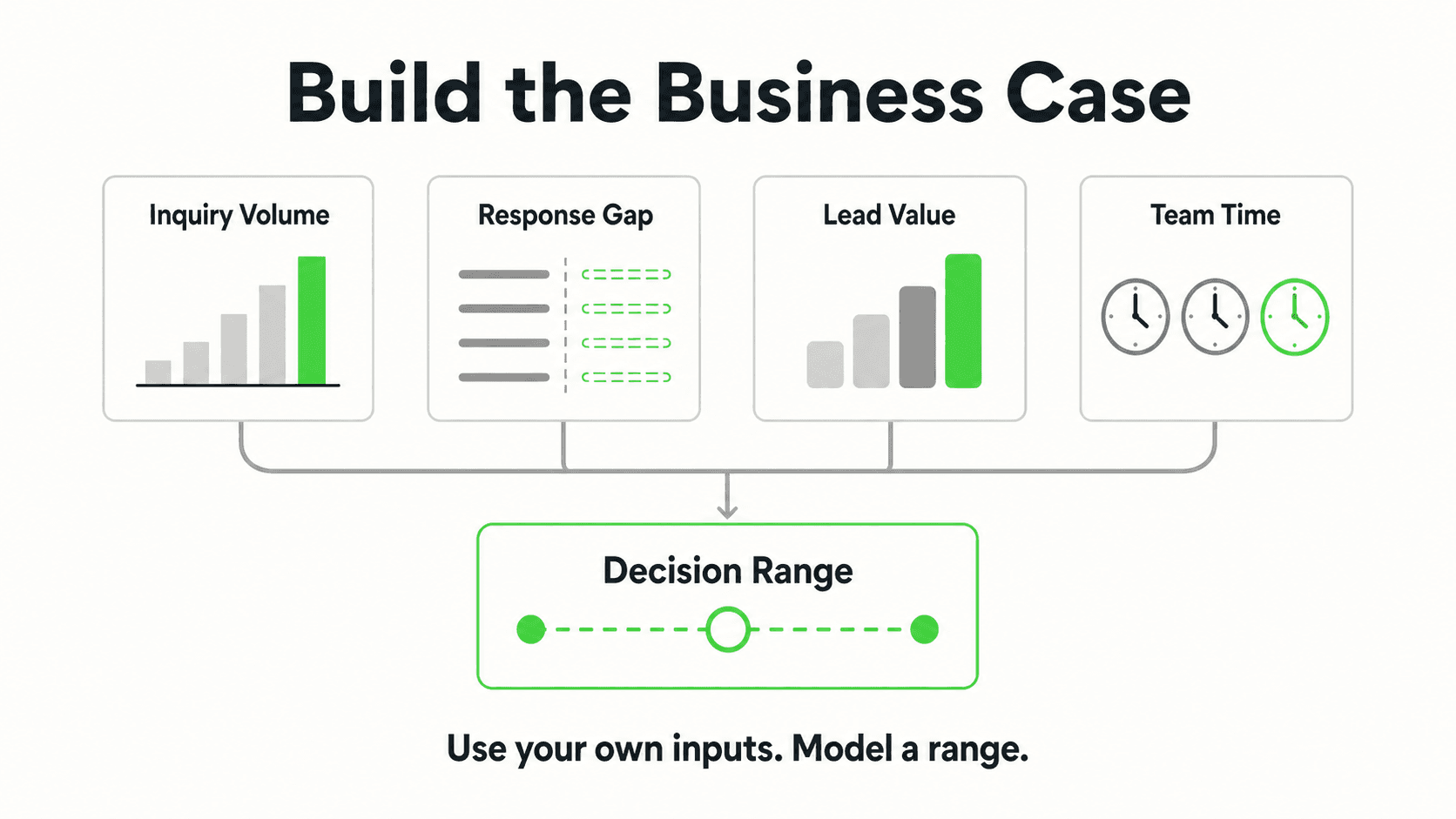
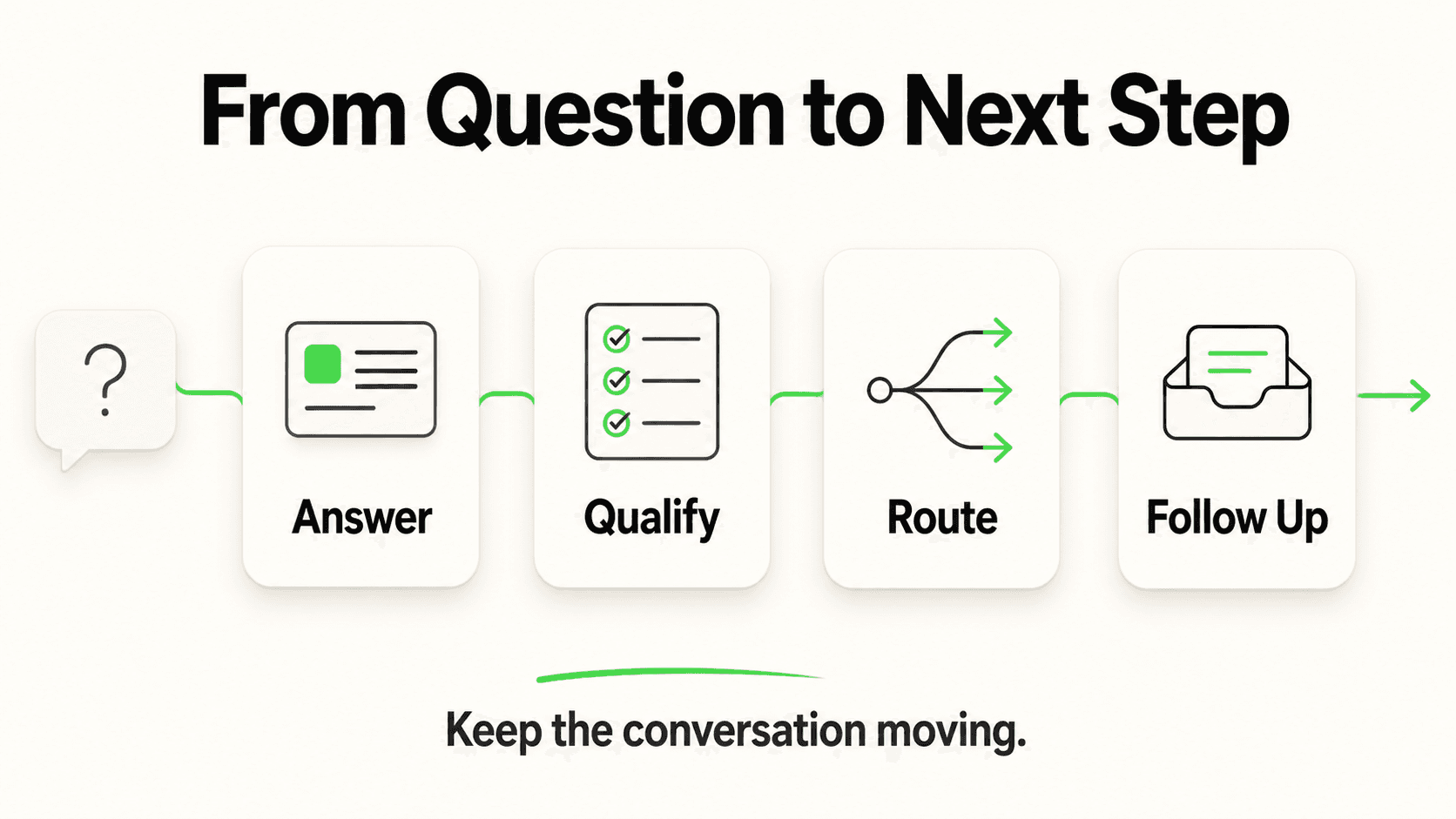
The data above is the opportunity — capturing it is the work. Most businesses lose WhatsApp enquiries not because the intent is missing, but because no one replies fast enough. An AI agent closes that gap: it answers every message in seconds from your business information, qualifies the lead, and hands your team a clean summary. See how the platforms stack up in our WhatsApp Business API access guide, or learn how the WhatsApp Business API works end to end.
Put an AI Agent on Your WhatsApp
Hyperleap AI replies to every WhatsApp message in seconds — and runs the same agent across Instagram DM, Facebook Messenger, and your website. Document-grounded responses, 100+ languages.
Start Free TrialFrequently Asked Questions
How much does WhatsApp Business API actually cost?
Meta charges per conversation, not per message, with different rates for marketing, utility, authentication, and service conversations. Pricing varies by country — see the WhatsApp Business Platform pricing docs. Hyperleap surfaces these costs transparently and does not mark them up.
Is a WhatsApp Business Account required to use Hyperleap on WhatsApp?
Yes — Meta requires a verified WhatsApp Business Account with a dedicated phone number for the WhatsApp Business API. Hyperleap walks you through provisioning during onboarding.
Can the same chatbot handle WhatsApp and website chat?
Yes. Hyperleap runs one AI agent across Website chat, WhatsApp, Instagram DM, and Facebook Messenger — same knowledge base, same answers, same conversation history in one unified inbox.
Related Articles

Dental Practice Customer Communication Statistics 2026
40+ sourced statistics on dental patient communication, no-shows, new patient acquisition costs, and patient expectations.
Patient Communication Statistics 2026 for Healthcare
35+ sourced statistics on patient communication gaps, response times, and provider switching behavior reshaping practices in 2026.

Real Estate Lead Response Statistics 2026
40+ sourced statistics on real estate lead response times, conversion rates, and agent technology adoption. The data behind why speed wins in real estate.

Response Time vs Conversion Rates: 10 Industries
From real estate to dental practices, the data is clear: faster response means higher conversion. Here's what the numbers show for 10 industries.