Real Estate Lead Response Statistics 2026
40+ sourced statistics on real estate lead response times, conversion rates, and agent technology adoption. The data behind why speed wins in real estate.
Last updated: 2026-05-03
TL;DR: Real estate has the highest chatbot adoption of any industry at 28%, and the data shows why: agents who respond within 5 minutes are 21x more likely to qualify a lead, yet the average agent takes over 15 hours to respond. This article compiles 40+ sourced statistics on lead response times, conversion rates, cost per lead, buyer behavior, and technology adoption -- the complete data picture on why speed-to-lead defines success in real estate.
Real Estate Lead Response Statistics 2026: What the Data Shows
Real estate leads are perishable. Unlike most industries where a prospect might wait days for a quote or proposal, homebuyers are making one of the largest financial decisions of their lives -- and they want answers now. The data consistently tells the same story: the agent who responds first wins the client.
What makes real estate unique is the convergence of high transaction values, emotional decision-making, and an increasingly digital buyer journey. When a prospect submits an inquiry at 9 PM on a Tuesday after browsing listings on their phone, the clock starts ticking. Research from MIT and InsideSales.com, analyzing over 1.25 million sales leads, established that responding within 5 minutes makes you 100x more likely to connect and 21x more likely to qualify that lead compared to waiting just 30 minutes (Source: MIT/InsideSales.com Lead Response Management Study).
And yet, the industry average response time sits at over 15 hours. That gap between best practice and actual performance represents billions of dollars in lost commission annually. It also explains why real estate leads the world in chatbot adoption at 28% -- the highest of any industry (Source: Master of Code, Chatbot Statistics 2026).
This article compiles 40+ real statistics from NAR, Zillow, MIT, HousingWire, and other authoritative sources to give you the complete data picture. Whether you are a solo agent, team leader, or brokerage owner, these numbers will shape how you think about lead response, technology investment, and competitive advantage in 2026. When you're ready to act on them, our AI agents for real estate page shows how to turn the data into a working system.
Key Findings
15 hrs
Average Agent Response Time
21x
More Likely to Qualify (5-Min Response)
78%
Buyers Choose First Responder
28%
Industry Chatbot Adoption (Highest)
2-3%
Average Internet Lead Conversion
Lead Response Time Statistics
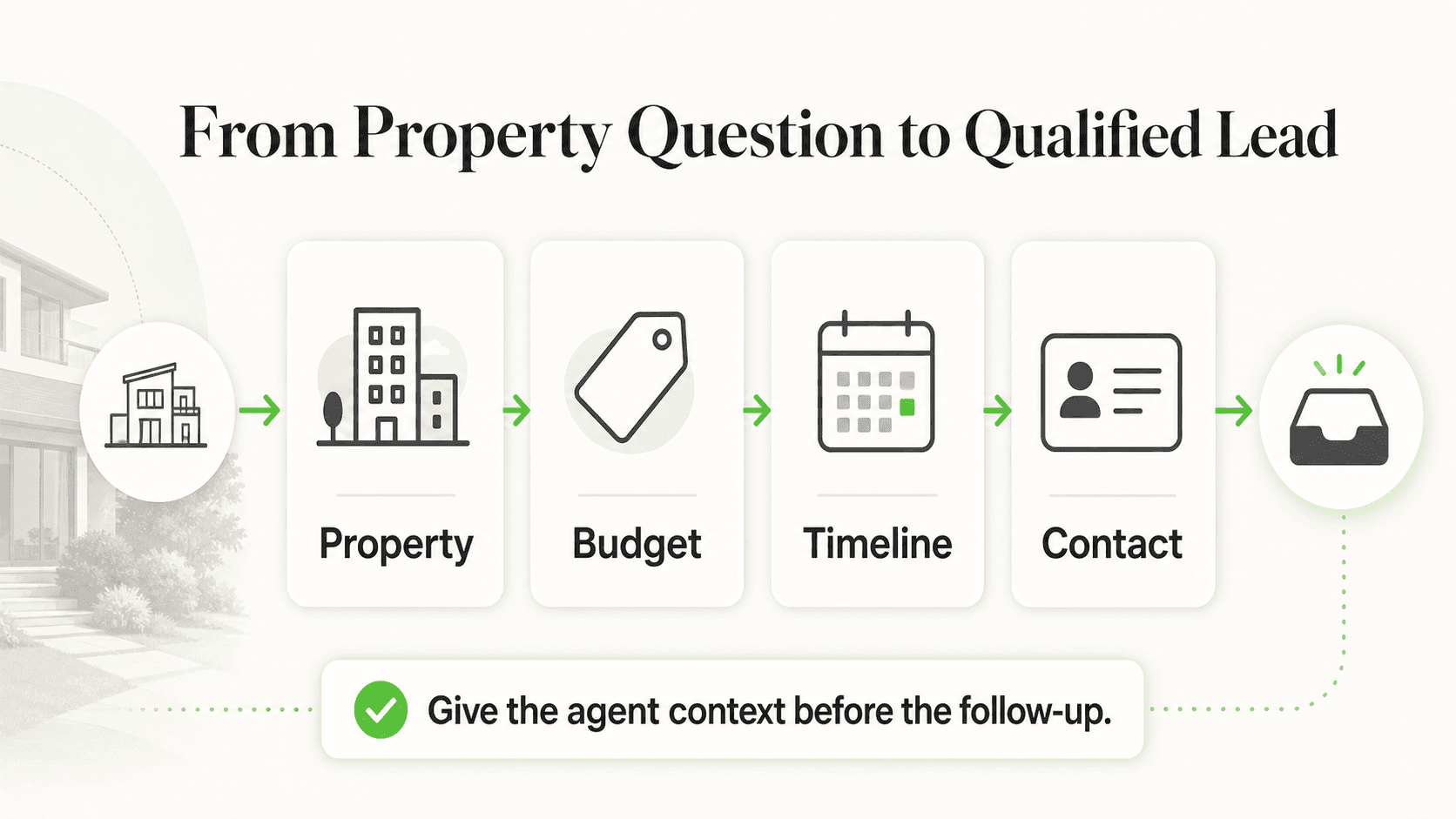
Speed-to-lead is the single most predictive metric in real estate sales. The research is unambiguous: every minute of delay reduces your probability of conversion. Here are the numbers that define the response time gap in the industry.
1. The average real estate agent takes 917 minutes (over 15 hours) to respond to a new lead
According to Inman's Real Estate Technology Survey, the median agent response time to a new web inquiry is 917 minutes -- more than 15 hours after the initial contact (Source: Inman Real Estate Technology Survey, via Roof AI). For context, most buyers expect a response within minutes, not the next business day.
2. Agents who respond within 5 minutes are 21x more likely to qualify the lead
The landmark MIT/InsideSales.com study of 1.25 million leads found that the odds of qualifying a lead are 21 times greater when contact is made within 5 minutes versus 30 minutes (Source: MIT/InsideSales.com Lead Response Management Study).
3. Contact probability is 100x higher in the first 5 minutes
The same MIT study found that the odds of making successful contact with a lead are 100 times greater when the first attempt happens within 5 minutes compared to 30 minutes after submission (Source: MIT/InsideSales.com).
4. 78% of buyers work with the first agent who responds
NAR data from the 2025 Home Buyers and Sellers Generational Trends Report shows that 78% of homebuyers end up purchasing through the first real estate agent who responds to their inquiry (Source: NAR, 2025 Home Buyers and Sellers Generational Trends Report).
5. Conversion rates drop 400% after 5 minutes of delay
If companies do not respond to leads within five minutes, their chances of converting that lead decrease by 400% (Source: InsideSales.com).
6. Only 0.1% of inbound leads are engaged within 5 minutes
Despite the overwhelming evidence favoring fast response, only 0.1% of inbound leads actually receive a response in under 5 minutes (Source: InsideSales.com).
7. 41% of brokerages never respond to inquiries at all
A study of the top 74 real estate brokerages in the U.S. found that 41% did not respond to a test inquiry at all, and only 9% responded within the critical 5-minute window (Source: Roof AI Brokerage Response Study).
8. Only 9% of brokerages respond within 5 minutes
Of the brokerages that did respond in the Roof AI study, just 9% managed to reply within the recommended 5-minute threshold -- meaning 91% of even responsive brokerages are losing the speed-to-lead race (Source: Roof AI).
9. 80% of sales require 5 or more follow-up attempts
Persistence matters as much as speed. Research shows that 80% of sales require approximately 5 follow-up attempts or more, yet most agents stop after 1-2 attempts (Source: The Close).
10. Leads receiving 6+ contact attempts convert at 70% higher rates
Real estate leads who receive six or more contact attempts convert at rates 70% higher than those who receive fewer touches (Source: Ylopo).
11. Each missed lead represents $7,500+ in potential commission loss
Based on NAR data on average commission rates (2.5-3% on the median home price of approximately $400,000), each missed or poorly handled lead represents a potential loss of $7,500 or more in commission income (Source: NAR, via Real Trends).
The 5-Minute Rule
The data is clear: respond within 5 minutes or lose the lead. Yet 91% of brokerages fail to meet this threshold. This is precisely why AI-powered lead response has become the fastest-growing technology category in real estate -- it closes the gap between what buyers expect and what agents can humanly deliver.
For a deeper dive into how slow response times translate to lost revenue, see our analysis of AI chatbot statistics across industries.
Lead Conversion Statistics
Understanding conversion rates at each stage of the real estate funnel -- from initial inquiry to closed transaction -- reveals where agents lose the most opportunities and where technology can have the greatest impact.
12. Average internet lead conversion rate: 2-3%
Industry-wide data from multiple sources including NAR and Real Trends shows that internet leads convert at an average rate of 2-3% from inquiry to closed transaction (Source: The Close).
13. Top-performing teams convert 7-9% of internet leads
While the average hovers at 2-3%, top-performing real estate teams convert between 7% and 9% of internet leads into closed transactions -- roughly 3-4x the industry average (Source: Follow Up Boss).
14. The overall industry conversion rate is 4.7%, with organic search at 3.2%
Across all lead sources, the real estate industry averages a 4.7% conversion rate. Organic search achieves 3.2%, paid search 1.5%, and email marketing 1.4% (Source: Ruler Analytics).
15. Phone interactions account for 38% of all successful conversions
Despite the digital shift, phone conversations remain dominant in real estate closings, accounting for 38% of all successful transactions (Source: Ruler Analytics).
16. Zillow leads convert at approximately 5% on average
Zillow-sourced leads have an average conversion rate of approximately 5%, with top-performing agents and teams achieving rates as high as 10% (Source: Ylopo).
17. Referral leads convert at 30%+ rates
Referrals and sphere-of-influence leads typically convert at rates above 30% from lead to close -- 10-15x higher than internet leads (Source: The Close).
18. 82% of transactions come from referrals or repeat business
Overall, 82% of all real estate transactions are the direct result of a referral or repeat business, underscoring the importance of client relationship management (Source: iXact Contact; industry estimate, not independently verified).
19. Only 8% of prospects act within 30 days
Only 8% of real estate prospects act within 30 days of initial contact. Another 27% convert within 2-3 months, and a substantial 65% require longer-term nurturing extending 6 months or more (Source: Placester; industry estimate, not independently verified).
20. Over 24 months, 12% of leads convert into transactions
An audit of 5,000 real estate leads found that 12% converted over a period of 24 months, demonstrating the value of sustained follow-up (Source: Real Geeks).
21. 66% of sellers find their agent through a referral or past relationship
According to NAR, 66% of home sellers found their agent through a referral from a friend or family member, or from an agent they had used in a previous transaction (Source: NAR, 2025 Profile of Home Buyers and Sellers).
22. 88% of buyers would recommend their agent
NAR reports that 88% of home buyers said they would use their agent again or recommend them to others, highlighting how lead quality compounds over time through excellent service (Source: NAR, 2025 Profile of Home Buyers and Sellers).
Long-Term Nurture Pays Off
With 65% of real estate leads requiring 6+ months of nurturing, automated follow-up isn't a luxury -- it's a mathematical necessity. Agents who rely on manual follow-up simply cannot sustain the 20-25 touchpoints required to convert long-cycle leads. This is where AI-powered lead nurture delivers outsized ROI.
Cost Per Lead Statistics
Understanding what you pay to acquire a lead -- and how that cost varies by source -- is critical for optimizing marketing spend. The gap between the cheapest and most expensive lead sources is staggering, but cost alone does not tell the full story. Intent and conversion rate matter just as much.
23. Average real estate CPL ranges from $20-$100 across all channels
The average cost per lead in real estate ranges from $20 to $100 depending on the platform, market, and campaign structure. In competitive metro areas like New York City and San Francisco, CPL can exceed $350 (Source: Fetch Funnel).
24. Zillow leads cost $20-$60 on average, up to $223 in metro areas
Zillow reports the average cost of a lead is $181 overall, but the range spans from $20-$60 in smaller markets to an average of $223 in major metro areas (Source: Thunderbit).
25. Zillow generated 16.9 million leads for agent advertisers in a single year
The platform's scale is unmatched: Zillow generated 16.9 million leads for agent advertisers, with 214 million unique monthly users accessing Zillow Group websites and portals (Source: iProperty Management).
26. Google Ads CPL for real estate: $50-$150 per lead
Google Ads deliver high-intent leads at an average of $50-$150 per lead for real estate, though some sources report averages as high as $416-$480 in competitive markets (Source: CINC Pro).
27. Facebook leads cost $5-$25 per lead -- the lowest CPL in real estate
Facebook delivers the lowest cost per lead in real estate at an average of $16.61, with a CTR of 3.75% -- one of the highest of any industry. However, these are typically lower-intent leads compared to search-based sources (Source: WordStream, 2025 Facebook Ads Benchmarks).
28. Realtor.com leads cost $25-$45 per lead (non-exclusive)
Realtor.com typically charges $25-$45 per lead for non-exclusive leads shared with multiple agents. Exclusive leads, sent to only one agent, cost significantly more at approximately $1,000 per month (Source: Sierra Interactive).
29. The average agent spends $12,000 per year on marketing
Real estate agents allocate 10-20% of their annual budget to marketing and lead generation, with the average spend around $12,000 per year. The median spend is likely closer to $3,000-$6,000 for the typical agent (Source: Amra and Elma).
30. 92% of U.S. realtors use Facebook for lead generation
Facebook dominates social media lead generation for real estate, with 92% of U.S. realtors using the platform. Additionally, 46% of realtors consider social media the best tool for generating quality leads (Source: REsimpli).
| Lead Source | Average CPL | Conversion Rate | Intent Level |
|---|---|---|---|
| Referrals/SOI | $0-$50 | 30%+ | Very High |
| Zillow | $20-$223 | 5-10% | High |
| Realtor.com | $25-$45 | 3-7% | High |
| Google Ads | $50-$150 | 1.5-5% | High |
| Facebook Ads | $5-$25 | 1-3% | Low-Medium |
| Organic/Content | $5-$15 | 3.2% | Medium |
Home Buyer Behavior Statistics
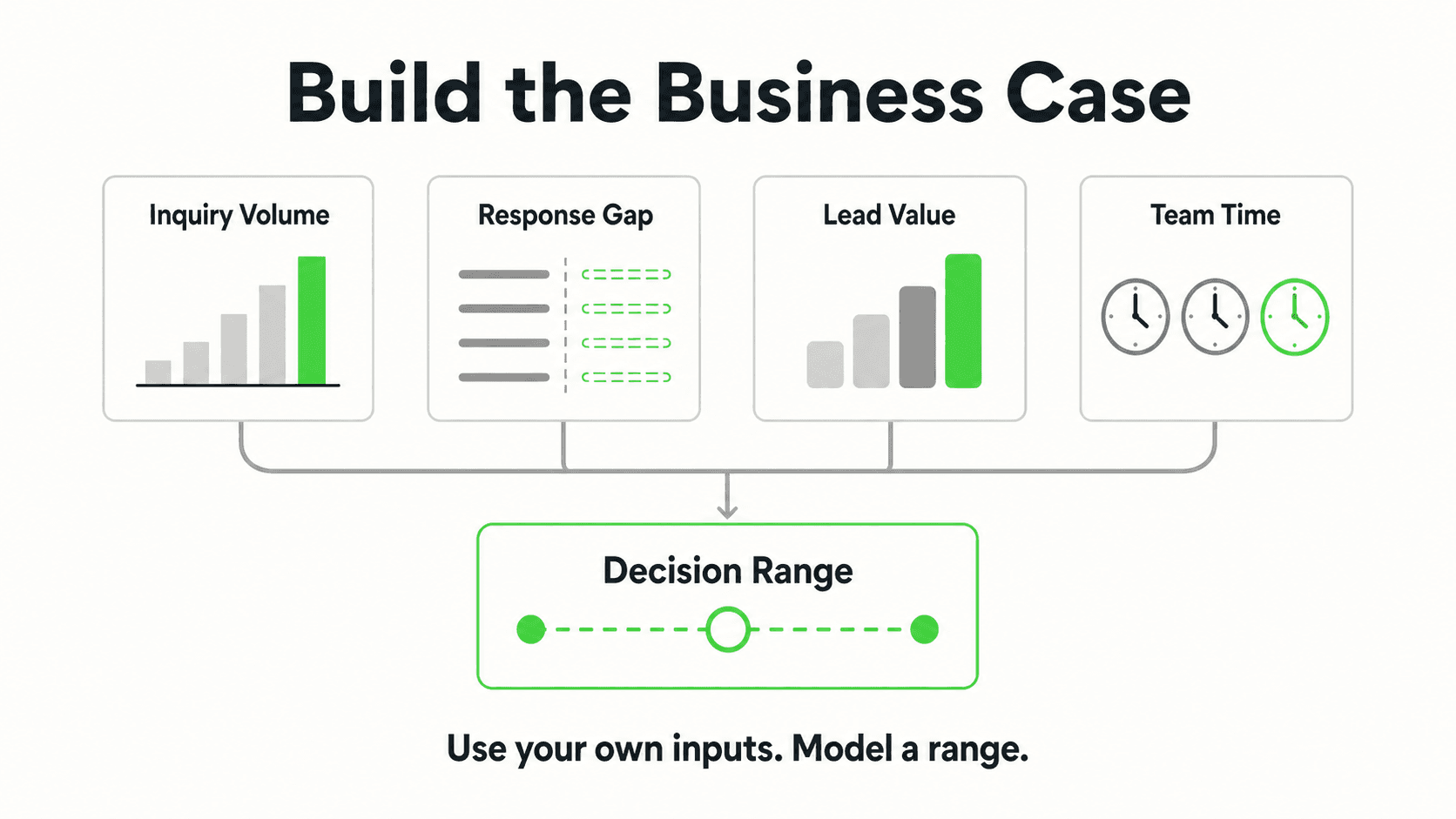
Understanding when, where, and how buyers search for properties reveals why traditional 9-to-5 agent availability is fundamentally misaligned with buyer behavior. The data paints a clear picture: buyers search on their own schedule, predominantly on mobile, and expect instant engagement.
31. 100% of buyers use the internet during their home search
NAR's 2025 data shows that every buyer in the survey used the internet during their home search process, up from 97% in 2020. Online search is now universal across all age groups (Source: NAR, 2025 Profile of Home Buyers and Sellers).
32. 52% of buyers found their home online
More than half of all buyers (52%) found the home they ultimately purchased through an online search, according to NAR's 2025 data. This underscores how critical digital presence and immediate online engagement have become (Source: NAR, 2025 Profile of Home Buyers and Sellers).
33. 70% of buyers used mobile or tablet devices during their search
Seven in ten buyers relied on mobile or tablet devices during the home search process, making mobile-optimized communication channels essential (Source: NAR, 2025 Profile of Home Buyers and Sellers).
34. 43% of buyers say looking online was their first step
Nearly half of all buyers (43%) indicated that their very first step in the home buying process was to look for properties on the internet -- before contacting an agent, visiting a bank, or attending an open house (Source: NAR, 2025 Profile of Home Buyers and Sellers).
35. 50% of real estate leads arrive after business hours
Industry data from multiple sources consistently shows that approximately 50% of real estate inquiries are submitted outside traditional business hours, with evenings (6-9 PM) and weekends being peak inquiry periods (Source: Envisionsfc).
36. 88% of buyers purchased through an agent or broker
Despite the prevalence of online research, 88% of buyers still purchased their home through a real estate agent or broker in 2025. The agent role has shifted from information gatekeeper to trusted advisor (Source: NAR, 2025 Profile of Home Buyers and Sellers).
37. Buyers spend a median of 10 weeks searching and view 7 homes
The typical buyer spends 10 weeks searching for a home and views seven properties, with two of those viewings happening online only (Source: NAR, 2025 Profile of Home Buyers and Sellers).
38. Buyers spend 60% of browsing time on images, 20% on descriptions
When browsing property listings online, buyers spend 60% of their time viewing images and only 20% on descriptions -- highlighting the visual-first nature of real estate search and the importance of immediate engagement when interest peaks (Source: Virtual Staging).
39. 99% of buyers aged 24-57 used the internet in their home search
Across the core home-buying demographic of 24 to 57 year-olds, internet usage during the search process is virtually universal at 99% (Source: NAR, 2025 Home Buyers and Sellers Generational Trends Report).
The After-Hours Gap
With 50% of inquiries arriving after business hours and 78% of buyers choosing the first agent who responds, the math is straightforward: agents without automated after-hours response capability are losing roughly half of their potential clients to competitors. Learn how AI chatbots for real estate address this gap.
Real Estate Technology Adoption
The real estate industry's relationship with technology is rapidly evolving. AI adoption has surged from a niche experiment to a mainstream business tool, and agents who embrace technology are outperforming those who do not. Here is what the latest surveys reveal.
40. Real estate has the highest chatbot adoption of any industry at 28%
The top five industries by chatbot adoption are real estate (28%), travel (16%), education (14%), healthcare (10%), and finance (5%). Real estate's lead is driven by the high value of leads combined with the after-hours inquiry pattern (Source: Master of Code, Chatbot Statistics 2026).
41. 82% of real estate agents have integrated AI tools into their business
A survey of 225 real estate professionals by Realtor Property Resource (RPR) found that 82% have adopted at least one AI tool. Writing and marketing are the primary use cases (Source: HousingWire / RPR).
42. 47% of agents use chatbots or AI assistants
Among real estate professionals, chatbots or AI assistants are the second most popular type of AI tool (47.03%), following AI writing tools (77.93%) (Source: NAR, 2025 Technology Survey).
43. 24% of agents spend more than $500/month on technology
The 2025 NAR Technology Survey found that 24% of agents spend more than $500 per month on technology tools, 20% spend $251-$500, and 34% spend $50-$250 (Source: NAR, 2025 Technology Survey).
44. 72.5% of real estate agents use a CRM system
CRM adoption in real estate has reached 72.5%, with 21% of those agents reporting that their CRM includes AI-powered insights for lead scoring and follow-up prioritization (Source: LLC Buddy).
45. The real estate AI market is projected to reach $41.5 billion by 2033
The real estate AI market was valued at $2.9 billion in 2024 and is projected to expand to $41.5 billion by 2033, reflecting a 30.5% compound annual growth rate (Source: Citrusbug).
46. AI-qualified leads convert at significantly higher rates than unqualified form submissions
Leads that have been pre-qualified by AI — assessed for timeline, budget, and intent — consistently convert at higher rates than raw form submissions that receive no automated qualification. The exact multiplier varies by agency and lead source; industry practitioners typically report 2–4x improvement when AI qualification is paired with fast human follow-up (based on platform operator observations; individual results vary).
47. Agents save an average of 12 hours per week with AI tools
Real estate professionals using AI for repetitive property queries, lead qualification, and follow-up report saving an average of 12 hours per week -- time that can be redirected to high-value activities like showings and negotiations (Source: HousingWire).
48. 58% of ChatGPT usage among agents; only 20% use AI daily
The most common AI tool among agents is ChatGPT (58%), followed by Gemini (20%) and Copilot (15%). However, only 20% of agents use AI tools daily, with 32% having never used AI at all (Source: NAR, 2025 Technology Survey).
For a broader look at AI and chatbot trends shaping the industry, see our 47 AI Chatbot Statistics for 2026.
Benchmarks: Top Agents vs. Average Agents
The gap between top-performing and average real estate agents is not just about talent or experience -- it is largely defined by systems, speed, and technology adoption. The following benchmarks show how the two groups differ across key metrics.
| Metric | Top Agents (Top 10%) | Average Agents | Source |
|---|---|---|---|
| Lead response time | Under 5 minutes | 15+ hours | MIT/InsideSales.com |
| Internet lead conversion | 7-9% | 2-3% | Follow Up Boss |
| Follow-up attempts | 6-8+ per lead | 1-2 per lead | The Close |
| CRM usage | 90%+ | 72.5% | NAR / LLC Buddy |
| AI tool adoption | Daily usage | Never or rarely | NAR Tech Survey 2025 |
| After-hours coverage | 24/7 (AI-assisted) | Business hours only | Roof AI |
| Annual marketing spend | $12,000+ | $3,000-$6,000 | Amra and Elma |
| Referral business share | 50%+ | 30-40% | iXact Contact |
| Lead nurture duration | 12-24 months | 30 days or less | Real Geeks |
| Monthly tech spend | $500+ | $50-$250 | NAR Tech Survey 2025 |
The pattern is consistent across every metric: top agents respond faster, follow up more persistently, invest more in technology, and maintain longer nurture cycles. The question for most agents is not whether these practices work -- the data confirms they do -- but whether they have the systems in place to execute them consistently.
This is where AI-powered tools shift from "nice to have" to competitive necessity. A single agent physically cannot respond to every lead within 5 minutes, follow up 6-8 times, and maintain 24-month nurture sequences for hundreds of leads simultaneously. But an AI chatbot integrated with a CRM can do exactly that.
Explore how leading brokerages are implementing these systems in our guides on AI for real estate brokerages and AI agents for real estate.
Frequently Asked Questions
What is the average response time for real estate leads?
The average real estate agent takes 917 minutes -- over 15 hours -- to respond to a new lead inquiry, according to Inman's Real Estate Technology Survey. This is dramatically slower than the recommended 5-minute window established by the MIT/InsideSales.com study. The research is clear: responding within 5 minutes makes you 100x more likely to make contact and 21x more likely to qualify the lead. Agents and brokerages looking to close this gap are increasingly turning to AI-powered lead response tools that can engage prospects instantly, 24/7.
What is a good conversion rate for real estate leads?
The average internet lead conversion rate in real estate is 2-3%, meaning you need roughly 40-50 leads to close one transaction. Top-performing teams convert at 7-9%, while referral leads convert at 30% or higher. The key factors that separate top converters from average performers are speed of initial response, persistence of follow-up (6+ attempts), and length of nurture cycle (12-24 months versus 30 days). AI qualification tools can help agents focus their time on the highest-intent leads while maintaining automated nurture for longer-cycle prospects.
How much does a real estate lead cost?
Cost per lead varies dramatically by source. Facebook delivers the lowest CPL at $5-$25, while Google Ads range from $50-$150 and Zillow averages $20-$223 depending on market size. Referrals remain the most cost-effective lead source with near-zero acquisition cost and 30%+ conversion rates. The most important metric is not CPL alone but cost per acquisition -- a $200 Zillow lead that converts at 5% ($4,000 CPA) may outperform a $15 Facebook lead that converts at 1% ($1,500 CPA), depending on average transaction value.
What percentage of real estate leads come after hours?
Approximately 50% of real estate inquiries are submitted outside traditional 9-to-5 business hours, with peak activity during evenings (6-9 PM) and weekends. Since 78% of buyers work with the first agent who responds, agents without automated after-hours response systems are effectively conceding half their potential business to competitors. This gap is the primary driver behind real estate's industry-leading 28% chatbot adoption rate.
How long should you nurture a real estate lead?
The data supports nurturing leads for 12-24 months. Only 8% of prospects act within 30 days, while 27% convert within 2-3 months and 65% require longer-term engagement. Over a 24-month period, studies show 12% of leads will eventually convert. The key is maintaining consistent contact: leads receiving 6+ touchpoints convert at 70% higher rates, and 20-25 total touchpoints may be needed before conversion. Automated AI chatbot systems make this sustained nurture economically viable by handling repetitive follow-ups at scale while freeing agents to focus on active buyers and sellers.
Conclusion: The Data Points to Speed and Systems
The statistics presented in this article converge on a single theme: real estate success in 2026 is defined by the ability to respond fast, follow up consistently, and maintain engagement over months or years.
The agents and brokerages winning today are not necessarily the ones with the biggest advertising budgets or the most listings. They are the ones who have built systems -- combining AI-powered instant response, CRM-driven follow-up sequences, and multi-channel engagement -- that ensure no lead falls through the cracks.
The math is unforgiving. If 78% of buyers choose the first responder, and 50% of inquiries arrive after hours, then any agent operating without automated response technology is structurally disadvantaged regardless of skill, experience, or market knowledge.
The good news: the technology to close this gap is accessible and affordable. AI chatbots that qualify leads, answer property questions, and schedule showings 24/7 are no longer enterprise-only tools. They are available to solo agents, small teams, and growing brokerages -- often at a fraction of the cost of a single lost commission.
Ready to see how AI-powered lead response can work for your real estate business?
Can the chatbot integrate with my MLS or Zillow account?
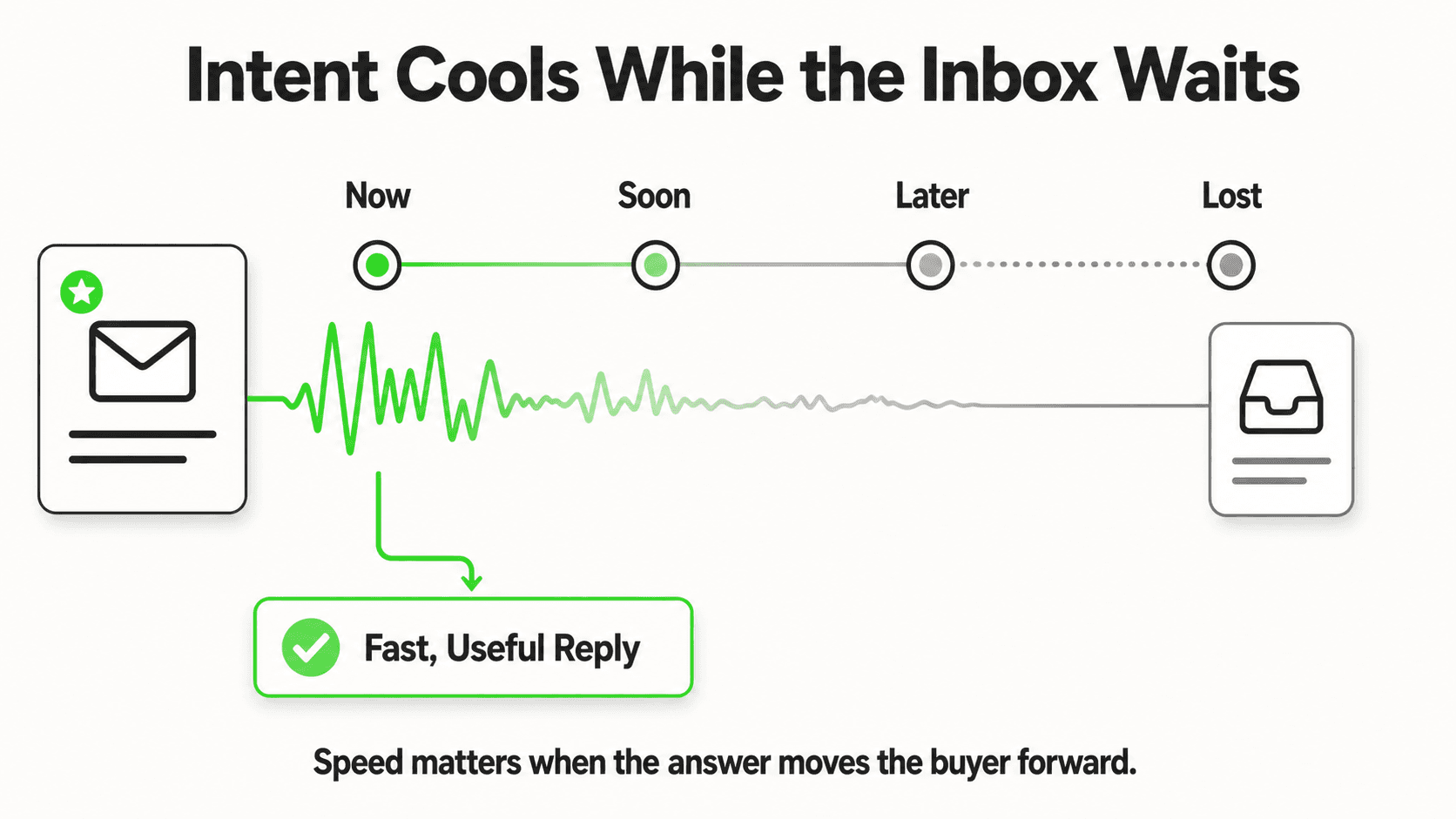
Hyperleap does not have a native MLS or Zillow API integration today. The chatbot captures buyer / seller intent, qualifies leads, and shares your listing pages or booking link — agents follow up using their existing MLS tools.
How does the chatbot qualify real estate leads?
It asks for the essentials in a natural conversation — budget range, locations of interest, timeline, financing status — and hands a structured lead summary to your team via REST API or webhook so reps can prioritize follow-up.
How long does it take to set up an AI chatbot with Hyperleap?
Most SMBs go live in 3–5 days for self-serve setup. With Managed Setup ($299 Free, available on every plan), Hyperleap builds the bot for you on your content and channels. A 7-day free trial is included on every plan.
Capture Every Real Estate Lead — Day or Night
Hyperleap AI responds to property inquiries in seconds across website, WhatsApp, Instagram DM, and Facebook Messenger. Qualify buyers, schedule showings, and never miss an after-hours lead again.
Start Your 7-Day Free TrialIndustry Solutions
See how AI chatbots work for these industries:
Related Articles

Dental Practice Customer Communication Statistics 2026
40+ sourced statistics on dental patient communication, no-shows, new patient acquisition costs, and patient expectations.

Response Time vs Conversion Rates: 10 Industries
From real estate to dental practices, the data is clear: faster response means higher conversion. Here's what the numbers show for 10 industries.
Insurance Chatbot Statistics 2026: $1.3B in Savings Data
40+ sourced statistics on insurance chatbot adoption, lead response times, and automation ROI. The data behind the industry's $1.3B chatbot savings.

Law Firm Intake Stats 2026: 26% Never Respond to Leads
40+ sourced statistics on law firm response times, lead conversion rates, and client expectations. The data shows why the fastest firms win the best cases.