AI Receptionists for Real Estate: 24/7 Inquiry Handling
Discover how real estate professionals use AI to capture after-hours leads, qualify prospects instantly, and close 40-60% more transactions.

TL;DR: 78% of buyers work with the first agent who responds (Source: NAR, 2024), yet 60-70% of real estate inquiries arrive after hours (Source: NAR / Zillow). AI receptionists for real estate capture these leads instantly, qualify prospects, and schedule showings 24/7 — helping agents respond faster, recover previously-missed inquiries, and focus their time on the highest-value opportunities. Results vary by market, inquiry volume, and implementation quality.
For how an AI receptionist works across every industry, see our AI receptionist guide.
AI Receptionists for Real Estate: How Top Brokerages Handle 24/7 Inquiries
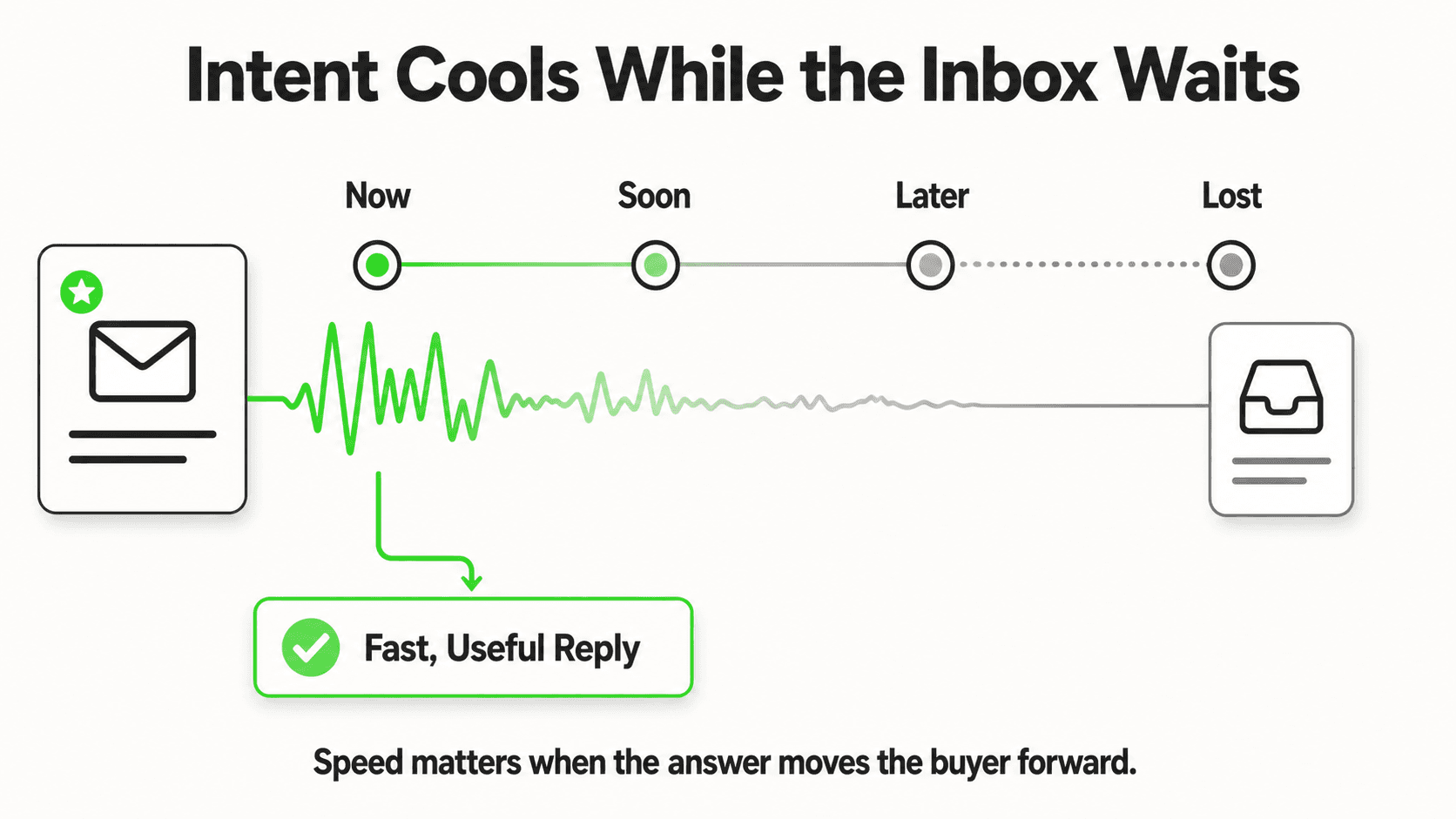
In the high-stakes world of luxury real estate, speed isn't everything—it's the only thing. Research from the National Association of Realtors shows that 78% of buyers work with the first agent who responds to their inquiry (Source: NAR, 2024), and leads contacted within 5 minutes are 100x more likely to convert than leads contacted after 30 minutes (Source: InsideSales.com / Lead Connect).
Yet most brokerages and agents are systematically missing their highest-value opportunities. The numbers reveal a troubling pattern: 60-70% of real estate inquiries occur outside traditional business hours—evenings after work, weekends when buyers are house-hunting, and late nights when they're researching listings online. During these peak inquiry periods, calls go to voicemail, website forms sit unanswered, and text messages remain unread for hours or days.
The result? Six-figure and seven-figure deals walking away to competitors who answer their phones and respond to inquiries instantly, regardless of time or day.
For top-producing agents and luxury brokerages, this isn't just an operational inconvenience—it's a revenue crisis. Every missed inquiry represents an average potential commission of $15,000-$50,000 or more, depending on market and price point. Scale that across dozens or hundreds of daily inquiries, and the annual opportunity cost easily reaches millions of dollars.
The solution isn't hiring more administrative staff or working 24/7 yourself. It's implementing AI-powered receptionist systems specifically designed for real estate professionals. But implementation quality determines whether AI becomes your competitive advantage or an embarrassing liability.
What Is an AI Receptionist for Real Estate?
An AI receptionist for real estate is an intelligent virtual system that handles the complete spectrum of client communication traditionally managed by human receptionists and sales assistants—but with 24/7 availability, unlimited capacity, and sophisticated property knowledge. For real estate specifically, this means technology that understands:
- Property-specific terminology, features, and market dynamics
- How to qualify buyer and seller leads based on timeline, motivation, and capability
- The difference between different property types (single-family, condos, luxury estates, commercial)
- Property searches and showing coordination based on your knowledge base
- How to communicate in ways that build trust with high-net-worth clients
- When situations require licensed agent expertise versus routine information sharing
- Lead source attribution and CRM integration for proper tracking
Modern AI receptionists use natural language processing (NLP), integration with real estate tech stacks (CRMs, MLS, scheduling systems), and conversational intelligence to create experiences that feel genuinely personal—operating seamlessly across phone, SMS, website chat, email, and social media.
How it differs from basic auto-responders
The automated systems of the past frustrated prospects with rigid, unhelpful responses. Modern AI receptionists engage naturally:
Basic auto-responder: "Thank you for your inquiry. We'll respond within 24 hours. Press 1 for listings, 2 for showings..." AI receptionist: "I'd be happy to help you find the perfect home! I see you're interested in the property on Maple Drive. What features are most important to you, and when would you like to schedule a viewing?"
The AI understands context, maintains natural conversation flow, provides comprehensive property information, asks intelligent qualifying questions, and seamlessly transitions to human agents when appropriate—creating experiences buyers describe as "surprisingly helpful" rather than "obviously automated."
Why Real Estate Professionals Are Losing Commissions
The commission leakage in real estate is massive but often invisible because it happens in the gaps where traditional operations have blind spots:
The speed-to-lead crisis
Industry research consistently shows staggering conversion differences based on response speed:
Within 5 minutes: 100x more likely to convert than 30+ minute response (Source: InsideSales.com / Lead Connect) Within 1 hour: Capture 60-70% of potential conversions After 24 hours: Only 2-5% of leads will still engage
Yet the typical real estate professional takes 4-24 hours to respond to new inquiries, and many never respond to after-hours inquiries at all.
The math on a typical month:
- Marketing generates 100 new leads
- 65 inquiries (65%) arrive outside business hours (evenings, weekends)
- Agent responds next business day, 12-36 hours later
- By then, 60 of those 65 leads (92%) have already connected with faster-responding agents
- If average commission is $25,000, that's $1.5 million in lost annual commission from one agent's delayed responses alone
For brokerages with 10-50 agents, multiply this loss across the entire team. The opportunity cost becomes staggering.
The after-hours opportunity gap
Modern buyer behavior has fundamentally shifted away from traditional business hours:
- Peak inquiry time: 6 PM - 11 PM weekdays (after work)
- Highest engagement: Saturday and Sunday 10 AM - 8 PM
- Serious buyers: Research extensively late at night when they can focus
- Dual-income families: Only available evenings and weekends
Over 70% of serious real estate inquiries now happen when most agents are off-duty (Source: NAR / Zillow), yet the vast majority of professionals still operate within traditional 9 AM - 6 PM Monday-Friday windows. This timing misalignment creates a massive opportunity gap where motivated buyers encounter silence instead of service.
Agents who provide instant responses during these high-intent periods capture disproportionate market share while competitors lose opportunities they don't even know existed.
Lead qualification time drain
Top producers report spending 50-70% of their time on unqualified leads (Source: NAR / Zillow):
- Tire-kickers who "just want to look"
- Buyers without financing approval or clarity
- Unrealistic expectations about budget vs. requirements
- Inquiries about properties already sold or not actually available
- People months or years away from serious buying
Meanwhile, serious, qualified buyers—pre-approved, motivated, ready to view properties and make offers—wait for responses and callbacks that come too slowly because agents are underwater with low-quality inquiries.
The irony: agents work exhausting hours yet remain perpetually behind because they can't distinguish signal from noise until they've invested significant time in each inquiry.
Never Miss Another Lead
Capture and qualify every after-hours inquiry automatically. AI that responds instantly, schedules showings 24/7, and routes hot leads to your agents.
See How It WorksMulti-channel inquiry chaos
Today's buyers contact real estate professionals through increasingly fragmented channels:
- Phone calls (declining but still significant)
- Text messages (now the preferred channel for 60%+ of buyers under 40)
- Website inquiry forms
- Social media DMs (Instagram, Facebook, TikTok)
- Real estate portal messages (Zillow, Realtor.com, Redfin)
Without centralized systems, leads get lost, responses are inconsistent, follow-ups fail, and buyers receive different information depending on which channel they used. This fragmentation creates poor experiences that high-net-worth clients interpret as disorganization and lack of professionalism.
The luxury client trust problem
Luxury real estate clients—buying $2 million+ properties—have fundamentally different expectations:
- Immediate responsiveness (they're accustomed to concierge-level service)
- Discretion and privacy (automated responses can feel impersonal or insecure)
- Personalized attention (generic templates damage credibility)
- Professional polish (any hint of disorganization is disqualifying)
Traditional automation solutions designed for mass-market real estate fail catastrophically in luxury segments because they can't balance efficiency with the personalized touch these clients require. Yet human-only approaches can't provide the 24/7 availability and instant response these same clients also expect.
The 7 Essential Capabilities of Effective Real Estate AI Receptionists
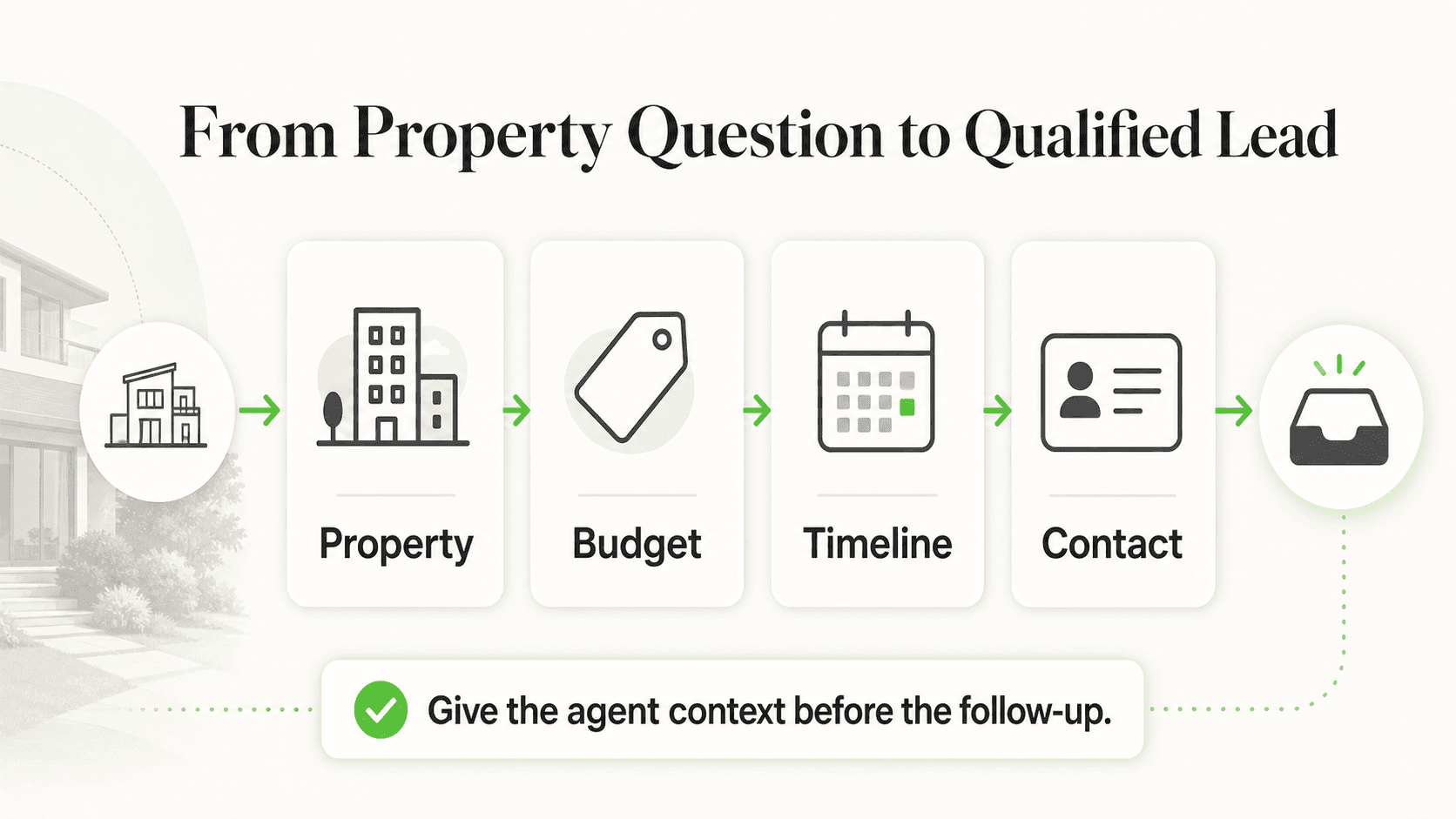
Not every AI system will work for your real estate business. Here are the critical capabilities that separate effective solutions from expensive mistakes:
1. Intelligent lead qualification and prioritization
AI should distinguish between serious prospects and casual browsers, routing your time to opportunities most likely to convert.
What this looks like in practice:
A website visitor submits an inquiry about a $3.5 million property. The AI immediately engages:
- "Thanks for your interest in 123 Oak Lane. Are you currently working with another agent?"
- "What's your timeline for making a purchase?"
- "Have you been pre-approved for financing?"
- "What features are most important to you?"
- "Have you viewed similar properties in this neighborhood?"
Based on responses, the AI scores the lead:
- A-level (hot): Pre-approved, actively looking, 30-60 day timeline → Immediate notification to agent, priority scheduling
- B-level (warm): Serious interest, 60-120 day timeline → Scheduled callback, entered in nurture sequence
- C-level (cool): Early research, 6+ months out → Added to long-term drip campaign, periodic check-ins
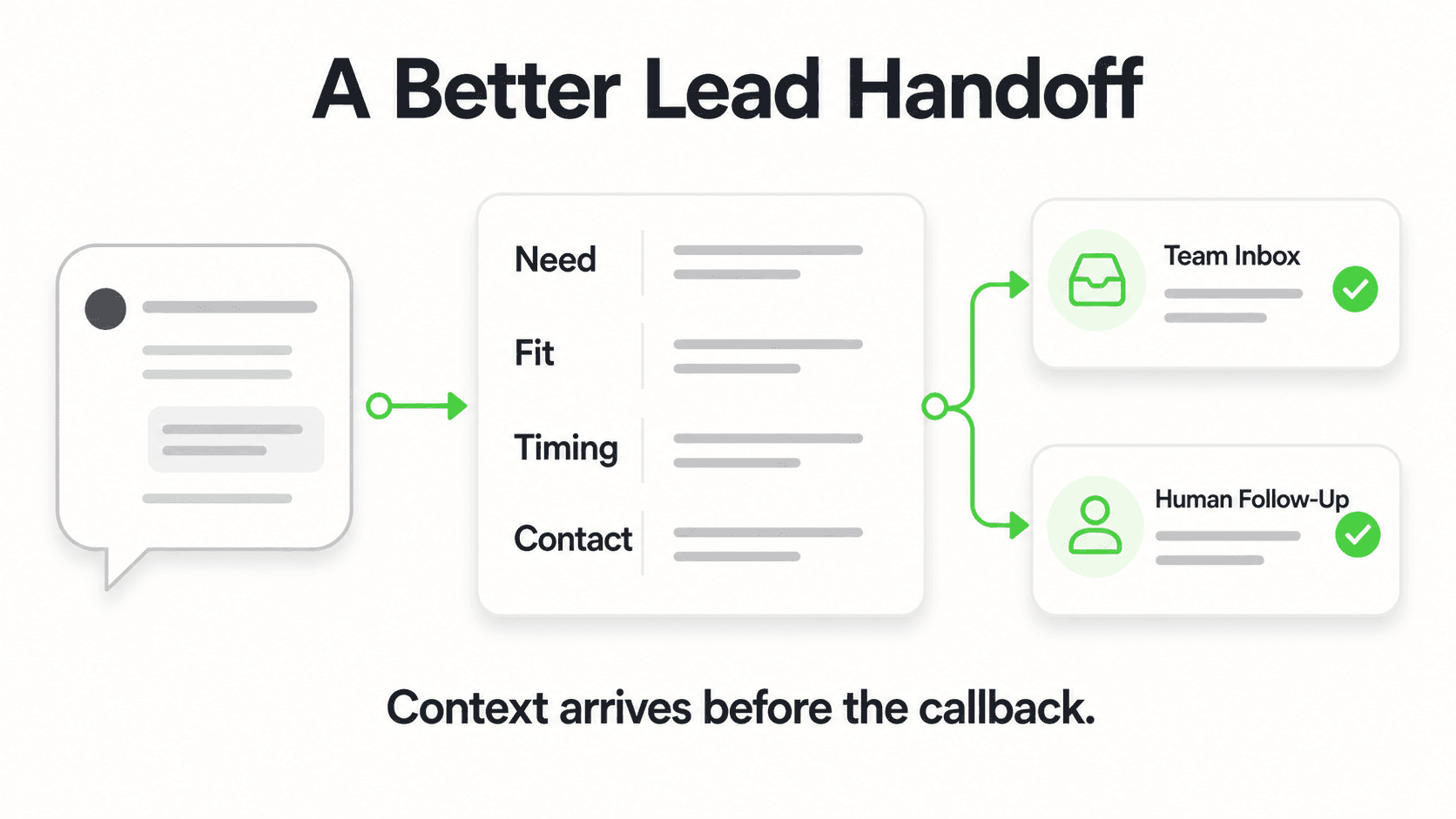
Your phone rings only for A-level and selected B-level leads, with complete context on buyer situation, motivation, and qualification.
Real-world impact:
Intelligent lead qualification drives value by:
- Reducing time wasted on unqualified inquiries through upfront screening
- Improving conversion focus by surfacing the highest-intent leads first
- Handling higher inquiry volume without proportional increases in agent time
Why it works:
Your time is your most valuable asset. AI that filters signal from noise and provides complete context transforms your productivity by matching your effort to opportunity value. You work smarter, not just harder.
2. Natural, trust-building communication for high-value clients
Luxury and high-value real estate requires communication that builds confidence and trust, not robotic efficiency.
What this looks like in practice:
A potential buyer texts about viewing a $5 million estate. The AI responds:
- Warm, professional tone that matches your brand voice
- Acknowledges the significance of the purchase
- Asks intelligent questions about their requirements
- Provides comprehensive property information
- Offers multiple viewing options with flexibility
- Confirms privacy and discretion
The conversation feels like interacting with a highly competent assistant, not a cheap chatbot.
Key communication capabilities:
- Empathetic language patterns adapted to luxury markets
- Ability to convey exclusivity and premium positioning
- Sophisticated vocabulary matching client expectations
- Discretion about sensitive information
- Seamless escalation to you for personal touch when needed
Why it matters:
High-net-worth clients can instantly detect low-quality automation. AI that sounds cheap or robotic damages your brand and loses opportunities with buyers who interpret it as lack of professionalism. Premium AI communication maintains or enhances your positioning.
3. 24/7 availability across every channel buyers use
Your AI receptionist should meet buyers wherever they prefer to communicate, any time they're ready to engage.
What this looks like in practice:
Scenario 1: Saturday 10 PM, buyer browses Zillow and texts about a property. AI responds instantly with details, availability, and scheduling options.
Scenario 2: Sunday afternoon, couple driving through neighborhood calls about "for sale" sign. AI answers, provides information, captures their details, and schedules Tuesday showing.
Scenario 3: Thursday 11 PM, international buyer emails about luxury condo. AI responds immediately (crucial for different time zones), qualifies interest, and arranges virtual tour.
The best AI systems handle multiple channels from one platform — maintaining conversation context regardless of where the buyer reached out. Channel support varies by platform: Hyperleap AI supports website chat, WhatsApp, Facebook Messenger, and Instagram DM. Evaluate which channels your buyer segments actually use before selecting a platform.
Real-world impact:
24/7 AI enables:
- Consistent response to after-hours inquiries that previously went unanswered until next business day
- More showings scheduled from leads who engaged outside business hours
- International buyer reach across time zones without staffing overnight
Actual capture rates and revenue impact vary based on current inquiry volumes, markets, and how well the AI is configured.
Why it works:
Buyers don't care about your business hours—they're researching and ready to act on their schedule. Missing after-hours inquiries means forfeiting market share to competitors who answer instantly.
4. Property-specific knowledge and listing data access
Generic responses about "properties" frustrate buyers who want specific information about listings they're viewing.
What this looks like in practice:
Buyer asks about 456 Maple Street. An AI with access to your property knowledge base:
- Shares price, beds/baths, square footage, lot size from your uploaded listings
- Provides high-quality photos and virtual tour links
- Explains key features and recent renovations
- Shares school districts and walkability scores
- Offers similar listings matching their criteria
- Schedules showing at buyer's preferred time
The depth of property knowledge depends on how thoroughly the AI's knowledge base is populated with your listings and market data.
Technical requirements to evaluate:
- How property data is loaded and kept current (MLS feed vs. manual upload vs. API)
- Property search capability based on buyer criteria
- Neighborhood and location knowledge
- School district and amenity information
- Understanding of property types and features
Why it matters:
Buyers who receive instant, comprehensive property information stay engaged and move forward. Those who get generic "we'll send you information" responses lose momentum and engage with more responsive competitors.
5. Seamless showing and appointment coordination
Converting inquiries to in-person showings is critical, yet scheduling has traditionally required frustrating back-and-forth communication.
What this looks like in practice:
During a conversation, when buyer expresses strong interest, the AI:
- Checks your real-time calendar availability
- Offers next available showing slots
- Books preferred time directly in your calendar
- Sends immediate confirmation via text and email
- Includes property address, directions, and your contact
- Sends reminder 24 hours before showing
- Sends reminder 2 hours before with your ETA
- Provides easy rescheduling if buyer needs to change
The entire scheduling process completes in 60-90 seconds with zero back-and-forth.
Real-world impact:
Automated scheduling delivers:
- More showings scheduled per inquiry by removing back-and-forth friction
- Significantly reduced scheduling time (from multi-step phone/text exchanges to seconds)
- Better show-up rates from automated reminders and easy rescheduling
- Ability to schedule even when you're in other showings or meetings
Why it works:
Friction kills conversion. Every extra step, phone call, voicemail, or text exchange reduces the probability of a showing actually happening. Instant, automated scheduling captures motivation at peak moment.
6. Intelligent escalation to human agents
AI should recognize situations requiring your personal attention and facilitate smooth handoffs.
What this looks like in practice:
Scenario 1 - High-value opportunity: Buyer pre-approved for $4M asks detailed questions about off-market pocket listing. AI recognizes both high value and need for discretion, immediately notifies you, provides full context, and offers to connect buyer directly.
Scenario 2 - Complex situation: Buyer with unique needs (commercial conversion, trust transaction, 1031 exchange) triggers escalation. AI gracefully transitions: "This is a situation where my expertise [your name] should speak with you directly. I can connect you now or schedule a call at your convenience."
Scenario 3 - Emotional client: Seller distressed about pricing or timeline expresses frustration. AI detects emotional cues and immediately loops you in with full context.
Escalation triggers:
- High-value opportunities above threshold ($X+ properties)
- Complex transaction structures
- Emotional or distressed clients
- Complaints or service issues
- Specific agent requests
- Situations requiring licensed professional judgment
Why it matters:
Trying to automate everything creates terrible experiences. AI must know its limitations and facilitate smooth transitions to human expertise. The goal isn't replacing you—it's maximizing your effectiveness by giving you time for situations where your expertise drives value.
7. Complete lead tracking and CRM integration
Standalone AI creates data silos and manual work. Effective systems integrate seamlessly with your existing tech stack.
What this looks like in practice:
Your AI receptionist:
- Automatically creates lead records in your CRM
- Updates contact information and conversation history
- Tags leads with source, interest level, and qualification
- Triggers appropriate follow-up sequences
- Schedules appointments directly in your calendar
- Logs all interactions for compliance and reference
- Provides complete visibility into inquiry-to-close journey
Monday morning, you see overnight inquiries already qualified, scheduled, and entered in your CRM—ready for your attention without any manual data entry.
Integration requirements to evaluate:
- CRM connectivity (Follow Up Boss, Contactually, LionDesk, KW Command) — check whether your AI platform offers native, webhook-based, or API-based integration
- Property data access through your knowledge base or MLS data feeds
- Calendar management via booking link tools (Calendly, Cal.com) or direct calendar APIs
- Email platform integration
- Transaction management system connectivity
Why it matters:
Integration eliminates double entry, ensures data consistency, enables automation workflows, and provides complete visibility. Without it, AI becomes just another system to manage rather than a true productivity multiplier.
Capture More Real Estate Leads
Never miss another after-hours inquiry. Qualify leads instantly, schedule showings 24/7, and close 40-60% more transactions with AI built for real estate.
Try for FreeReal Results from Top-Performing Real Estate Professionals
The transformation isn't theoretical. Here's the business logic behind what professionals who implement AI receptionists experience:
Commission and revenue impact
The math is straightforward: if 60-70% of inquiries arrive after hours (Source: NAR / Zillow) and each missed inquiry represents a potential commission of $15,000-$50,000, capturing even a fraction of those previously-lost leads creates meaningful revenue. The specific revenue gains vary based on market, price point, inquiry volume, and conversion rates — results differ significantly by agent and brokerage.
Practices that deploy AI for after-hours inquiry capture report recovering bookings and leads that previously went unanswered. The magnitude depends on current missed-inquiry rates and average transaction values.
Productivity and efficiency gains
Beyond revenue, professionals see operational improvements across:
- Reduced administrative time on routine inquiries (qualifying questions, property info, scheduling)
- Ability to handle higher inquiry volume without proportional increases in work hours
- More time available for showings, negotiations, and relationship building
- Reduced evening/weekend interruptions for questions the AI can handle
The core principle: AI handles high-volume, repetitive communication so agents focus on the work that actually requires their expertise and relationship.
Client satisfaction improvements
Instant response — regardless of time of day — is the primary satisfaction driver. Buyers who submit an inquiry at 9 PM and receive helpful information within seconds experience meaningfully better service than those who wait until next-morning callbacks. This faster responsiveness tends to produce better reviews and stronger referrals compared to delayed responses.
Higher satisfaction translates directly to better reviews, stronger referrals, and enhanced professional reputation.
Frequently Asked Questions
Will clients be upset about AI instead of talking to me?
Modern AI has reached sophistication where 80%+ of clients prefer instant, helpful AI responses over waiting hours for human callbacks (Source: McKinsey, 2023)—as long as they can reach you when needed. Clients care about getting their questions answered quickly and scheduling showings easily. They're less concerned about whether AI or humans provide those services, especially for routine matters. The key is offering choice: AI for immediate help, humans for complex situations.
How does AI handle fair housing compliance?
Quality AI platforms designed for real estate include fair housing compliance features:
- Never asking discriminatory questions
- Treating all inquiries equally
- Maintaining complete conversation records
- Avoiding steering or discriminatory language
- Compliance training and regular updates
Choose vendors who understand real estate regulations and have proven compliance frameworks. This is non-negotiable.
What about luxury and high-net-worth clients?
Luxury clients actually benefit most from premium AI systems because they deliver concierge-level responsiveness these clients expect. The key is high-quality AI with sophisticated communication—cheap chatbots will absolutely damage luxury positioning. Premium AI that responds instantly, intelligently, and gracefully while maintaining easy access to you personally creates exceptional experiences luxury clients value.
How much does real estate AI receptionist cost?
Pricing varies by platform. Hyperleap AI plans start at $40/month (Plus), with Pro at $100/month and Max at $200/month — all including a 7-day free trial (credit card required). These plans include different limits on AI responses, chatbots, and channels.
Enterprise-focused real estate AI platforms designed specifically for large brokerages may charge significantly more based on inquiry volume and agent count. Evaluate based on your actual inquiry volume and average commission to calculate realistic ROI potential.
How long does implementation take?
Timeline depends on complexity:
- Individual agents: 2-3 weeks setup, immediate results
- Small teams: 3-4 weeks including coordination
- Brokerages: 4-6 weeks with proper training and rollout
Most professionals see measurable impact within 30 days of go-live, with continuous improvement as AI learns from interactions and receives ongoing optimization.
Can AI work with my existing CRM and MLS?
Integration capabilities vary significantly by platform. When evaluating any AI solution, verify:
- CRM connectivity: Whether the platform offers native integrations with your CRM (Follow Up Boss, LionDesk, KW Command, Salesforce, etc.), webhook-based connections, or REST API access for custom integration
- Property data: Whether it supports your MLS data feeds or requires manual knowledge base upload
- Calendar management: Whether it integrates with your calendar system directly or via booking link tools like Calendly or Cal.com
- Communication channels: Which channels are supported (web chat, WhatsApp, Facebook Messenger, Instagram DM are common)
Hyperleap AI provides REST API and webhooks for custom integrations, and books appointments inside conversations through Calendly or Cal.com, using live availability (other scheduling tools: it shares your booking link). Verify specific integration capabilities with any vendor before committing.
Further Reading
Authoritative external sources used and recommended for further research on this topic:
Stop Missing After-Hours Real Estate Leads
Top-producing agents use AI to capture every after-hours inquiry, qualify prospects instantly, and schedule showings around the clock. See how it works for real estate.
View Pricing"Real estate is the ultimate speed-to-lead business. At Microsoft, we learned that milliseconds matter in user experience. In real estate, minutes matter in commission checks. An AI receptionist that responds in 5 seconds while you're in a showing is the difference between winning and losing a $25,000 commission," says Gopi Krishna Lakkepuram, Founder & CEO of Hyperleap AI and former Microsoft engineer.
The Future of Real Estate Professional Success
AI receptionists aren't experimental technology—they're rapidly becoming standard infrastructure for top-performing agents and competitive brokerages. Professionals implementing these systems now are building insurmountable advantages in client service, market share, and commission income.
The evidence is overwhelming: AI dramatically improves lead capture, accelerates conversion, and enhances client experience—all while being highly cost-effective compared to hiring administrative staff.
Your next month of leads will arrive regardless of whether you have AI. The question is whether you'll face it missing 60-70% of inquiries, responding slowly to the rest, and losing commissions to faster competitors—or with an AI receptionist ensuring every prospect gets instant, intelligent, helpful responses 24/7 across every channel.
The competitive gap is widening. Agents with AI respond to after-hours inquiries in seconds while competitors respond the next morning. Buyers who receive instant, helpful responses from one agent won't tolerate waiting hours for others — and they don't have to.
Start by calculating what your current inquiry handling is costing you. Count the after-hours inquiries never returned, the delayed responses that let buyers slip away, the routine questions consuming your prime selling hours. The opportunity cost is measured in hundreds of thousands of dollars annually, not thousands.
Then evaluate AI solutions designed specifically for real estate professionals, prioritizing those with proven results from top producers, robust integration capabilities, and luxury-market sophistication if you serve premium segments.
Your clients expect instant responsiveness, comprehensive information, and effortless scheduling. You deserve to focus on relationship building, negotiation, and closing rather than answering the same questions 50 times per day. Your business deserves to capture every opportunity that comes your way.
Keep exploring
- AI agents for real estate - Qualify buyers and book showings without lifting a finger
- Conversational AI for customer service - Never miss a lead with 24/7 automated responses
Real Estate Resources
- Best AI Chatbots for Real Estate 2026 - Platform comparison
- Best AI Chatbots for Lead Generation 2026 - Lead capture focus
- AI Chatbot Statistics 2026 - Industry benchmarks
- How to Choose an AI Chatbot Platform - Selection guide
- Slow Response Times Cost Businesses - Response time impact
Related Comparisons
- Best No-Code Chatbot Builders 2026 - No-code platforms
- Best Multi-Channel Chatbots 2026 - Omnichannel solutions
Glossary
- What is a Chatbot? - Chatbot fundamentals
- WhatsApp Business API - Popular real estate channel
- OTP Validation - Verified lead capture
- AI Agent - Next-gen conversational AI
Related Articles
AI Receptionist for Landscaping Businesses
An AI receptionist for landscaping businesses answers quote and service questions 24/7, qualifies property details, and shares your booking link.

AI Receptionist for Restaurants: Chat-First Guide
An AI receptionist for restaurants answers menu and hours questions, qualifies reservation and private-dining requests, and shares your reservation link 24/7.
AI Receptionist for Veterinary Clinics: A Guide
An AI receptionist for veterinary clinics answers intake and pricing questions, routes emergencies to your team, and shares your booking link 24/7.
Chat vs Voice AI Receptionists: An Honest Comparison
Chat vs voice AI receptionists compared honestly: cost, setup, lead quality, and which fits phone-first vs message-first small businesses.