7 Questions Before Adding AI to Your Real Estate Biz
Not all AI tools are built for real estate. Ask these 7 questions to protect your leads, your client relationships, and your commission checks.

TL;DR: Before adding AI to your real estate business, ask seven critical questions covering lead response speed, MLS and CRM integration, after-hours handling, Fair Housing compliance, personalization, human handoff protocols, and ROI measurement. The wrong AI tool can alienate prospects, create compliance risk, and waste money. The right one captures leads around the clock, qualifies buyers instantly, and pays for itself within 60-90 days.
7 Questions to Ask Before Adding AI to Your Real Estate Business
You have decided your real estate business needs AI. The case is compelling: 78% of buyers work with the first agent who responds to their inquiry, yet the average agent takes over 15 hours to respond to a new lead (Source: MIT/InsideSales.com Lead Response Management Study). With portal leads from Zillow, Realtor.com, and Redfin costing $200-$450 each, every hour of silence is money burning.
But here is where most agents and brokerages go wrong. They pick an AI solution based on a flashy demo, a colleague's recommendation, or the vendor with the slickest booth at the NAR conference, without asking the questions that actually determine whether the tool will work in a real estate context. Not all AI platforms are built the same, and in an industry where a single missed lead can cost $10,000 or more in lost commission, choosing wrong is expensive.
The real estate technology market is crowded. A 2025 T3 Sixty/Real Estate Almanac report found that there are over 900 proptech vendors serving the real estate industry, with new AI-powered tools launching every month. That abundance creates opportunity, but it also means more chances to make a costly mistake.
Before you sign a contract or start a free trial, ask these seven questions. They will help you evaluate any AI tool for real estate, whether it is a chatbot, a lead qualification system, or a full-service virtual assistant, and protect your business from the risks that most evaluation checklists overlook.
Who This Guide Is For
This guide is written for real estate agents, team leaders, and brokerage owners evaluating AI tools for the first time or replacing an existing solution. It applies to residential and commercial real estate professionals across the United States, with principles that translate globally.
What Is AI Evaluation for Real Estate Businesses?
AI evaluation for real estate is the process of systematically assessing whether an artificial intelligence tool fits the specific demands of property sales, lead management, and client communication. It goes far beyond comparing feature lists or reading vendor reviews.
Real estate operates differently from most industries. Transactions are high-value and infrequent, the sales cycle can last weeks or months, and the relationship between agent and client is deeply personal. An AI tool that works well for an e-commerce store or a SaaS company may fail completely in a real estate context because the requirements are fundamentally different.
What real estate AI evaluation must account for:
- Lead perishability: Real estate leads have an extremely short shelf life. Research shows leads contacted within 5 minutes are 21x more likely to qualify than those contacted at 30 minutes (Source: InsideSales.com). Your AI needs to deliver sub-minute responses.
- Property-specific knowledge: Buyers ask about school districts, HOA fees, lot sizes, property taxes, and neighborhood demographics. Generic chatbots cannot answer these questions.
- Multi-channel inquiry patterns: Prospects reach out via website chat, WhatsApp, Instagram DMs, Facebook Messenger, and email. Your AI must meet them where they are.
- Regulatory requirements: Fair Housing Act compliance is non-negotiable. Any AI that touches client communication must be evaluated for discriminatory language or steering risks.
- CRM and MLS integration: An AI tool that does not connect to your existing systems creates data silos and double entry that negate the time savings.
The difference between evaluating AI for real estate and evaluating it for other industries is that the stakes are higher per interaction. A missed chat message on an e-commerce site might cost a $50 sale. A missed real estate inquiry can cost a $12,000 commission. That changes the math on what "good enough" looks like.
Why Real Estate Agents Struggle to Choose the Right AI Solution
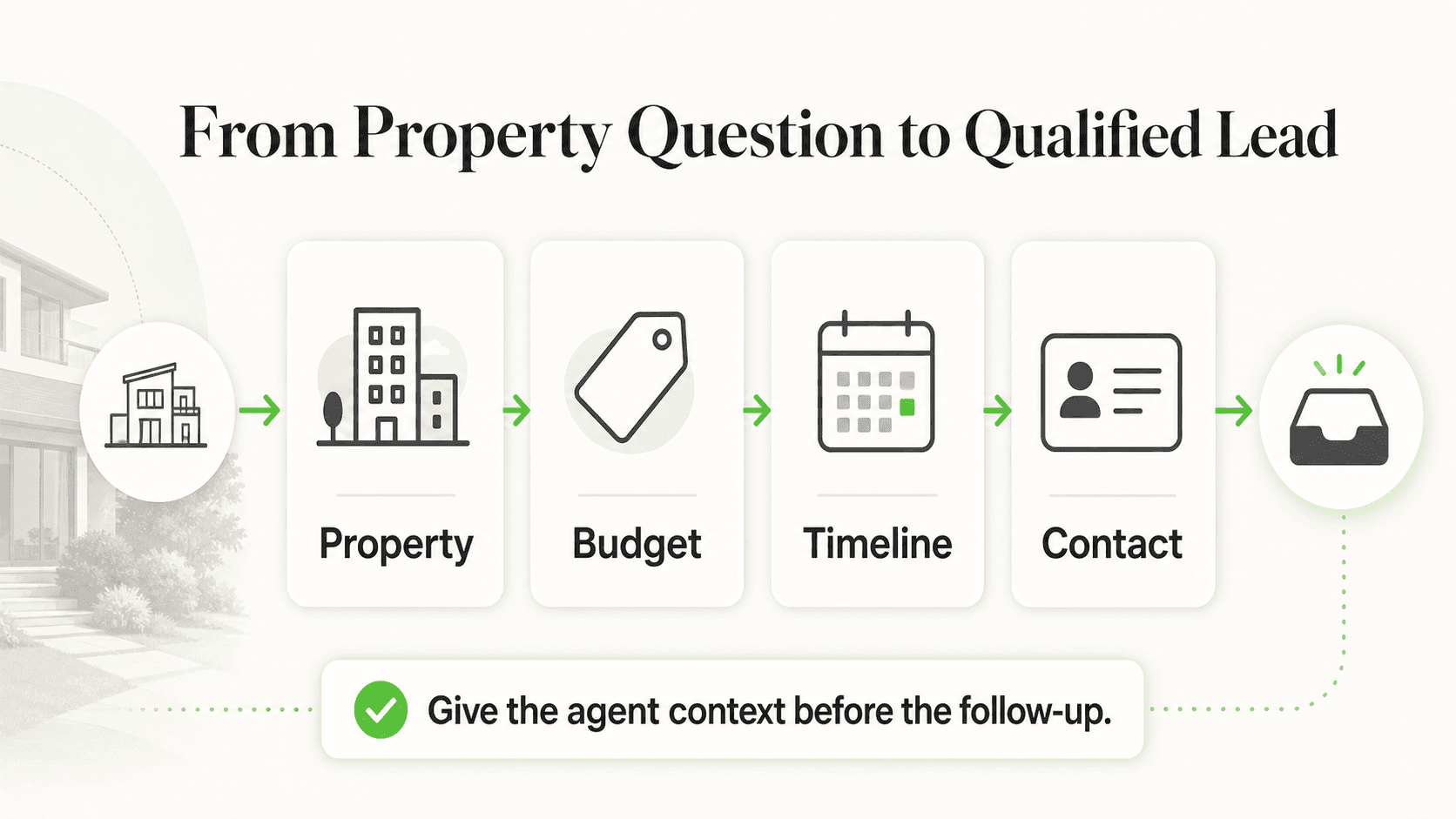
Despite the clear need for faster response times and better lead management, most real estate professionals find the AI selection process overwhelming. The reasons are structural, not personal.
The demo-to-reality gap
Every AI vendor's demo looks impressive. The chatbot answers questions flawlessly, the integration works seamlessly, and the analytics dashboard is clean and intuitive. But demos are scripted environments. In the real world, prospects ask unexpected questions, misspell addresses, switch topics mid-conversation, and test your system in ways no demo anticipates.
According to a 2025 Gartner survey, 40% of AI projects fail to move beyond the pilot stage (Source: Gartner, 2025). In real estate specifically, the gap between what vendors promise and what agents experience is often wider because few AI tools are purpose-built for property transactions.
Comparing apples to algorithms
The AI market lacks standardized evaluation criteria for real estate. One vendor calls their product an "AI assistant," another calls it a "smart chatbot," and a third calls it an "automated ISA" (inside sales agent). They may all do roughly the same thing, or they may be fundamentally different products. Without a common framework, agents end up comparing marketing language instead of actual capabilities.
The switching cost trap
Once you commit to an AI platform, switching is painful. You have trained the system on your listings, connected it to your CRM, customized your conversation flows, and gotten your team accustomed to the workflow. A 2024 HubSpot State of Marketing report found that businesses spend an average of 3-6 months implementing a new marketing technology tool. In real estate, that timeline often coincides with peak selling season, making the switching cost even higher.
Feature overload vs. actual needs
Many AI platforms market themselves with dozens of features, from predictive analytics to social media automation to market forecasting. The result is that agents pay for capabilities they never use while missing the one feature that would actually move the needle: responding to leads fast, with relevant property information, around the clock.
7 Questions to Ask Before Adding AI to Your Real Estate Business
1. Can It Respond to Leads in Under Two Minutes, Around the Clock?
Speed is not a nice-to-have in real estate. It is the single most important factor in lead conversion. The data is unambiguous: the MIT/InsideSales.com study found that leads contacted within 5 minutes are 100x more likely to be reached and 21x more likely to qualify compared to leads contacted at 30 minutes.
What this looks like in practice: A buyer submits an inquiry on your website at 10:30 PM on a Saturday. Within 60 seconds, your AI responds with a personalized greeting, confirms the property they asked about, shares key details (price, bedrooms, square footage, open house dates), and asks a qualifying question about their timeline and pre-approval status. By the time a competing agent checks their phone on Sunday morning, your system has already scheduled a showing.
Real-world impact: According to NAR's 2024 Home Buyers and Sellers Generational Trends Report, 60-70% of real estate inquiries arrive outside traditional business hours, evenings after work, weekends during house-hunting, and late nights during online browsing sessions. If your AI cannot handle these peak inquiry windows, you are losing the majority of your opportunities before you even see them.
Why it works: Instant response eliminates the biggest bottleneck in real estate lead conversion: the gap between inquiry and first contact. Research from the National Association of Realtors shows that 70% of buyers only interview one agent. If your AI is the first to respond, there is a strong chance you are the only agent the buyer considers.
Key features to evaluate:
- Sub-2-minute response time across all channels (website, WhatsApp, Facebook, Instagram)
- 24/7/365 availability with no degradation in response quality after hours
- Automatic property detail retrieval so responses are specific, not generic
- Immediate notification to the agent when a high-intent lead is identified
2. Does It Integrate with Your MLS and CRM?
An AI tool that lives in isolation is an AI tool that creates more work, not less. The real estate technology stack is already fragmented, with agents typically juggling an MLS platform, a CRM, an email marketing tool, a transaction management system, and various portal accounts. Adding another disconnected tool is the last thing you need.
What this looks like in practice: A prospect asks your AI chatbot about a listing at 123 Oak Street. The AI pulls current data from your MLS feed, including price, days on market, listing photos, and virtual tour links, and shares it in the conversation. When the prospect provides their contact information and preferences, that data flows directly into your CRM without anyone copying and pasting.
Real-world impact: According to a 2024 NAR Technology Survey, 72% of real estate professionals consider CRM integration as essential when evaluating new technology (Source: NAR, 2024). Yet many AI tools offer only surface-level integrations, like Zapier connections that require manual configuration and break when fields change.
Why it works: Integration eliminates the data re-entry that kills productivity. When lead information flows automatically from the AI conversation to your CRM (whether that is Follow Up Boss, kvCORE, Sierra Interactive, Chime, BoomTown, LionDesk, or another platform), your team spends time closing deals instead of updating spreadsheets.
Key features to evaluate:
- Native or API-level integration with your specific CRM platform
- MLS data feed connection for real-time property information in conversations
- Bi-directional sync so updates in one system reflect in the other
- Lead source tracking that attributes conversions back to the AI channel
- Support for custom fields and tags that match your existing lead workflow
3. Can It Answer Property-Specific Questions Accurately?
Generic AI chatbots are trained on general knowledge. They can tell you what a "cape cod style home" is, but they cannot tell a prospect whether the house at 456 Elm Street has a finished basement, what the property taxes are, or whether the school district recently changed boundaries. In real estate, generic answers are worse than no answer at all, because they erode trust.
What this looks like in practice: A buyer asks, "Does this property have a garage?" Your AI checks the listing data, confirms there is a two-car attached garage, and adds that the property also includes a separate workshop space. It does not guess. It does not hallucinate details. If the information is not in the listing data, it says so and offers to connect the buyer with an agent who can find out.
Real-world impact: Trust is the currency of real estate. A 2025 NAR survey found that 89% of buyers rated trustworthiness and honesty as the most important qualities in an agent (Source: NAR Profile of Home Buyers and Sellers). An AI that provides inaccurate property information destroys that trust before the agent even meets the prospect.
Why it works: The best real estate AI tools use document-grounded responses, pulling answers exclusively from your listing data, property documents, and knowledge base rather than making up information. This approach, often called RAG (Retrieval-Augmented Generation), is designed to minimize hallucinations by restricting the AI to verified information sources. When the AI cannot find the answer in your data, it acknowledges the limitation rather than fabricating a response.
Key features to evaluate:
- Document-grounded responses tied to your MLS data and listing sheets
- Ability to upload and reference property-specific documents (disclosures, HOA rules, floor plans)
- Clear fallback behavior when information is not available (acknowledges limitation, offers human connection)
- Regular data refresh to ensure listing information stays current
- Configurable confidence thresholds that determine when to defer to a human agent
Watch for Hallucination Risk
No AI system can guarantee perfect accuracy. Be skeptical of any vendor that claims "zero hallucinations" or "100% accuracy." Instead, look for platforms that are designed to minimize hallucinations through document-grounded responses and that gracefully handle questions they cannot answer. Ask vendors to demonstrate what happens when the AI does not know the answer, because that behavior reveals more than any scripted demo.
4. How Does It Handle Fair Housing Compliance?
Fair Housing compliance is not optional. The Fair Housing Act of 1968 prohibits discrimination in housing based on race, color, national origin, religion, sex, familial status, and disability. Many states and municipalities add additional protected classes. Any AI that communicates with prospects on your behalf must be evaluated through a compliance lens.
What this looks like in practice: A prospect asks your AI chatbot, "What is the racial makeup of the neighborhood?" or "Are there many families with kids in this area?" The AI should handle these questions carefully, redirecting to neutral, publicly available data sources like census.gov without making recommendations based on demographic composition. It should never steer a prospect toward or away from a neighborhood based on protected characteristics.
Real-world impact: Fair Housing violations carry severe penalties. The Department of Justice can impose fines of up to $100,000 for a first offense, and individual agents can face lawsuits, license suspension, and reputational damage. In 2024, the DOJ's Operation Fair Housing initiative brought enforcement actions in multiple states. An AI tool that inadvertently engages in steering, blockbusting, or discriminatory language creates liability for you, your brokerage, and the vendor.
Why it works: Purpose-built real estate AI tools include Fair Housing guardrails at the conversation level. They are trained or configured to recognize questions that touch on protected classes and respond appropriately, neither refusing to engage nor providing information that could be construed as steering. This is a level of industry-specific training that general-purpose chatbots simply do not have.
Key features to evaluate:
- Built-in Fair Housing language filters and guardrails
- Audit trails that log every conversation for compliance review
- Ability to customize responses to align with your brokerage's compliance policies
- Regular updates to reflect changes in fair housing law and enforcement priorities
- Training or documentation on how the AI handles sensitive inquiries
5. What Happens When a Lead Needs to Talk to a Human?
No AI can close a real estate deal. Buying a home is a deeply emotional, high-stakes decision that ultimately requires a human relationship built on trust, empathy, and local expertise. The question is not whether your AI will need to hand off to a human, but how seamlessly it does so when the moment arrives.
What this looks like in practice: A pre-approved buyer has been chatting with your AI for five minutes. They have asked about three listings, confirmed their budget and timeline, and now they say, "I would love to see the house on Maple Street this weekend. Can I talk to someone?" Within seconds, the AI connects them to the listing agent or the next available team member. The agent receives the full conversation transcript, the buyer's preferences, their pre-approval status, and the specific properties they are interested in. The buyer does not repeat a single detail.
Real-world impact: According to a 2024 Salesforce State of the Connected Customer report, 86% of consumers say that the experience a company provides is as important as its products (Source: Salesforce). A clunky handoff where the buyer has to repeat their information, or worse, gets told to "call back during business hours," is a dealbreaker. For a deeper look at how automating follow-ups can maintain that personal touch, see our step-by-step guide.
Why it works: The best AI tools treat the handoff as a warm transfer, not a cold redirect. They pass complete context to the human agent, flag the lead's qualification level, and even suggest talking points based on the conversation. This means the agent's first words to the prospect are relevant and informed, not "So, how can I help you?"
Key features to evaluate:
- Configurable escalation triggers (specific keywords, buyer intent signals, explicit requests for a human)
- Full conversation context passed to the receiving agent
- Real-time notification via push notification, email, or integration with your CRM
- After-hours queuing with priority ranking so your hottest leads get called first
- Ability to set routing rules based on property type, location, or team member availability
See How AI Lead Response Works for Real Estate
Hyperleap AI agents respond to property inquiries in seconds, qualify leads, and hand off to your team with full context (Pro and Max). Start your 7-day free trial.
Try for Free6. Does It Work Across the Channels Your Leads Actually Use?
Real estate leads do not come from a single source. They come from Zillow, Realtor.com, your website, Instagram DMs, Facebook Messenger, WhatsApp, and Google Business Profile messages. If your AI only works on your website chat widget, you are covering a fraction of your lead sources.
What this looks like in practice: A first-time buyer DMs your Instagram account at 8 PM after seeing a property tour Reel. Your AI responds on Instagram, qualifies their interest, shares additional listing photos, and offers to schedule a showing. The same AI handles a WhatsApp message from a relocation buyer the next morning and a website chat inquiry from an investor that afternoon. All three conversations appear in a single dashboard with unified lead profiles.
Real-world impact: The National Association of Realtors' 2024 report found that 52% of buyers found the home they purchased online, and social media usage for real estate has grown significantly among agents under 40 (Source: NAR, 2024). A multi-channel AI ensures you capture leads wherever they naturally engage with your brand rather than forcing them to visit your website.
Why it works: Different buyer demographics use different channels. Millennials and Gen Z lean toward Instagram and WhatsApp. Baby Boomers may prefer website chat or Facebook Messenger. International buyers and luxury clients often communicate via WhatsApp. A single AI that works across all these channels means one knowledge base, one set of listing data, and one conversation history, regardless of where the conversation started.
Key features to evaluate:
- Native support for website chat, WhatsApp, Instagram DM, and Facebook Messenger
- Unified conversation history across channels (a lead that starts on Instagram and continues on WhatsApp maintains full context)
- Channel-specific formatting (rich media on Instagram, quick replies on WhatsApp)
- Easy deployment across channels without separate configuration for each
- Centralized analytics showing lead volume and conversion by channel
7. How Will You Measure ROI?
AI is an investment, and like every investment in your real estate business, whether it is portal advertising, farming, or a new CRM, it needs to deliver measurable returns. Before you deploy any solution, define the metrics you will track and establish baseline numbers so you can calculate actual ROI rather than relying on vendor promises.
What this looks like in practice: Before deploying AI, you document your current metrics: average response time (8 hours), after-hours lead capture rate (20%), lead-to-appointment conversion rate (12%), and cost per acquired client ($1,800). Ninety days after deployment, you compare: response time dropped to 45 seconds, after-hours capture rose to 85%, lead-to-appointment conversion climbed to 22%, and cost per acquired client fell to $950. You can now calculate a precise ROI based on real numbers, not estimates.
Real-world impact: Real estate lead response data consistently shows that faster response times correlate with higher conversion rates. But correlation is not causation for your specific business. The only way to know whether AI is working for you is to measure before and after with the same methodology.
Why it works: ROI measurement keeps you honest about the tool's performance and gives you leverage in vendor negotiations. If the AI is delivering, you have data to justify the investment to your brokerage or team. If it is underperforming, you have data to request improvements or switch providers before the sunk cost grows.
Key features to evaluate:
- Built-in analytics dashboard tracking response times, lead volume, and conversion rates
- Attribution reporting that ties closed deals back to AI-captured leads
- Cost-per-lead and cost-per-acquisition calculations
- Exportable reports for team meetings and brokerage leadership
- A/B testing capabilities to optimize conversation flows over time
| Metric | Before AI (Typical) | After AI (Target) |
|---|---|---|
| Average response time | 8-15 hours | Under 2 minutes |
| After-hours lead capture | 15-25% | 80-95% |
| Lead-to-appointment rate | 10-15% | 20-30% |
| Cost per acquired client | $1,500-2,500 | $700-1,200 |
| Agent hours on initial screening | 15-20 hrs/week | 3-5 hrs/week |
Track Before You Deploy
Establish your baseline metrics at least 30 days before deploying any AI tool. Track response times, after-hours inquiries, lead sources, and conversion rates manually. Without a baseline, you cannot prove ROI, and you cannot identify which improvements came from the AI versus market conditions or other changes in your business.
Real Results: What Real Estate Professionals Are Achieving
The impact of AI on real estate lead management is showing up in industry-wide data across several key dimensions.
Faster Response, Higher Conversion
- Leads contacted within 5 minutes are 21x more likely to qualify compared to those contacted at 30 minutes (Source: InsideSales.com)
- 78% of buyers work with the first agent who responds, making response speed the primary competitive differentiator (Source: NAR, 2024)
- Real estate has the highest chatbot adoption of any industry at 28%, according to Master of Code's 2026 chatbot statistics report, reflecting the industry's recognition that speed matters
- Agents using AI-powered lead response tools report reducing average response time from hours to under 2 minutes, based on industry benchmarks
Around-the-Clock Lead Capture
- 60-70% of real estate inquiries arrive outside business hours, during evenings, weekends, and late nights when buyers are actively browsing
- Traditional after-hours solutions (answering services, voicemail) capture basic contact information but cannot qualify leads or share property details
- AI-powered solutions maintain full qualification capabilities 24/7, handling the property-specific questions that move prospects from inquiry to showing
Operational Efficiency
- Agents typically spend 15-20 hours per week on initial lead screening, follow-up messages, and appointment scheduling, time that AI can handle
- Automating these tasks frees agents to focus on showings, negotiations, and relationship building, the high-value activities that directly generate commission
- Teams report that AI handles 60-80% of initial inquiries without human intervention, with the remaining 20-40% escalated to agents with full context
Competitive Positioning
- In a market where NAR reported approximately 1.5 million Realtor members in 2024, differentiation is increasingly technology-driven
- Early AI adopters gain a structural advantage: they capture leads that slower competitors miss, not by being better agents, but by being faster responders
- This advantage compounds over time as AI systems learn from each interaction and improve qualification accuracy
Getting Started: A Step-by-Step Implementation Roadmap
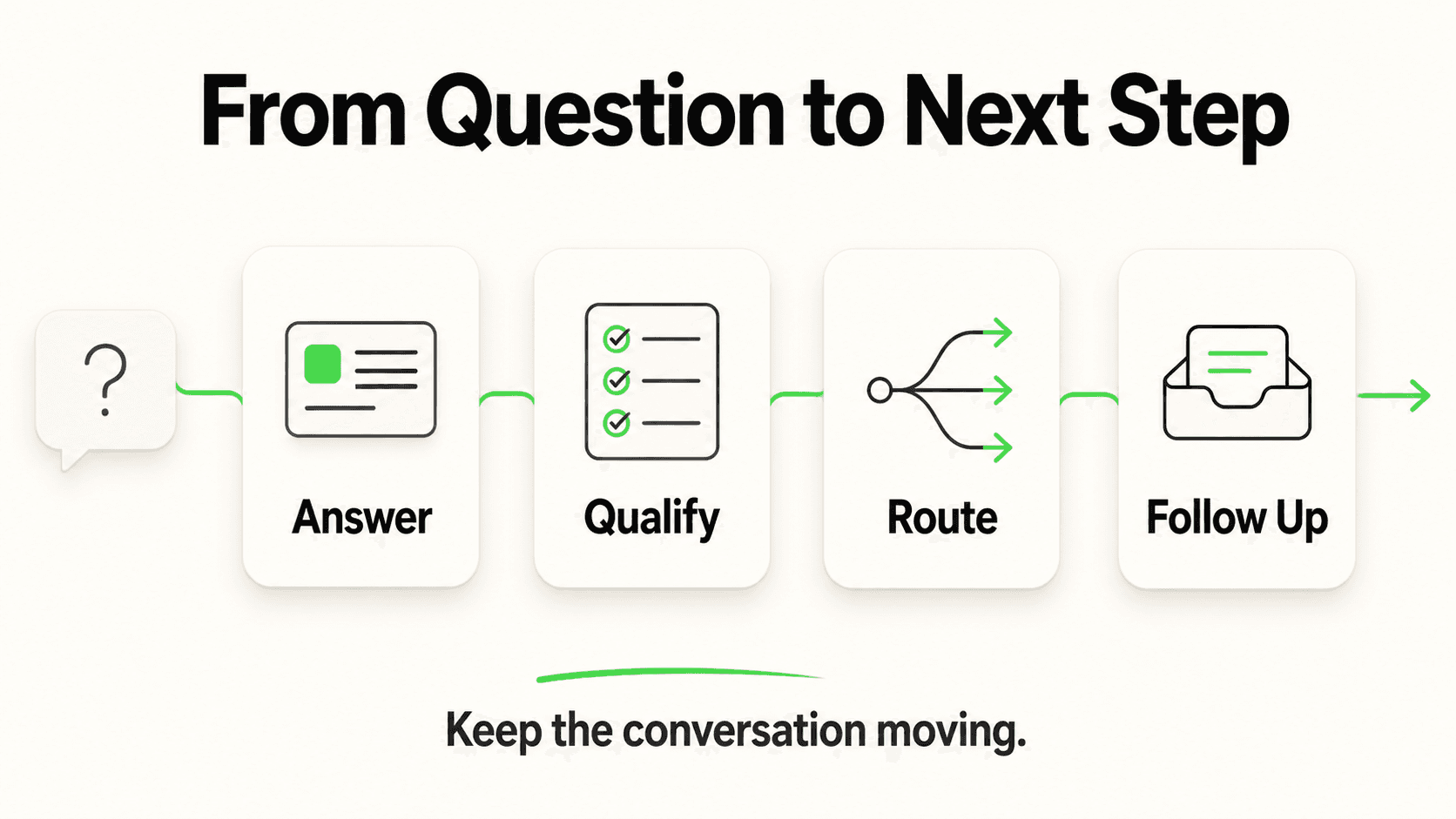
Implementing AI for your real estate business does not need to be a six-month project. Here is a practical timeline based on what works for solo agents, small teams, and mid-size brokerages.
Phase 1: Foundation (Days 1-14)
Week 1: Audit and Baseline
- Document your current lead sources, response times, and conversion rates
- Map your technology stack (CRM, MLS, email, transaction management) and identify integration requirements
- Define your top 3 use cases (typically: after-hours response, lead qualification, and appointment scheduling)
Week 2: Vendor Evaluation
- Use the seven questions from this guide to evaluate 2-3 AI platforms
- Request demos using your actual listings and real prospect scenarios, not scripted presentations
- Check vendor references from other real estate professionals, not just case studies on the vendor's website
Phase 2: Launch (Days 15-30)
Week 3: Configuration
- Connect the AI to your MLS data feed and CRM
- Customize conversation flows for your most common inquiry types (buyer inquiries, seller leads, rental prospects)
- Set up your branding and tone so the AI feels like an extension of your team, not a generic widget
Week 4: Soft Launch
- Deploy on your website first as a single-channel test
- Route a subset of leads through the AI while maintaining your existing process for comparison
- Monitor conversations daily, reviewing every AI interaction for accuracy, tone, and compliance
Phase 3: Optimization (Days 31-60)
- Expand to additional channels (WhatsApp, Instagram, Facebook Messenger)
- Refine conversation flows based on real interaction data
- Train your team on the handoff process so transitions from AI to human are seamless
- Begin comparing AI-period metrics against your pre-deployment baseline
Phase 4: Scale (Days 61-90)
- Roll out across all lead sources and channels
- Implement advanced features like multi-language support, custom property knowledge bases, and automated follow-up sequences
- Share ROI data with your team or brokerage to validate the investment
- Evaluate whether to expand usage (additional chatbots, team members, or use cases)
Start Small, Prove Fast
The most successful AI implementations in real estate start with a single channel and a single use case, typically website chat for buyer inquiries. Prove the ROI there first, then expand. Trying to deploy AI across every channel and use case simultaneously increases complexity and makes it harder to measure what is working.
Frequently Asked Questions
Will AI replace real estate agents?
No. AI handles the tasks that agents are structurally unable to do well, responding instantly at 10 PM, answering the same property question for the 50th time, and qualifying leads while you are in a showing. The relationship, negotiation, local expertise, and emotional support that define a great agent cannot be automated. AI is a leverage tool that frees you to do more of the work that earns commission and less of the work that just keeps the lights on.
How much does AI for real estate typically cost?
Costs vary depending on the platform and scope. Basic chatbot tools start at $50-150 per month. AI-powered lead qualification and response platforms typically range from $100-400 per month. Enterprise solutions with custom MLS integrations and dedicated support can run $500-1,500 per month. When evaluating cost, weigh it against the commission value of leads you are currently losing to slow response times. If your average commission is $8,000 and AI helps you capture even one additional deal per month, the ROI is significant. See our pricing page for Hyperleap AI's current plans.
How long does it take to set up AI for a real estate business?
Most real estate professionals can be up and running within 1-3 weeks. The first week involves connecting the AI to your listings data and CRM, customizing conversation flows, and setting up your branding. The second week is typically spent on testing with real leads, refining responses, and training your team on the handoff process. More complex deployments involving multiple offices, custom MLS integrations, or extensive knowledge bases may take 4-6 weeks.
Can AI handle both buyer and seller inquiries?
Yes, most real estate AI platforms support multiple conversation flows. A buyer inquiry triggers questions about budget, timeline, pre-approval status, and property preferences. A seller inquiry asks about the property address, motivation for selling, desired timeline, and whether they have had a recent home valuation. The key is choosing a platform that lets you create distinct flows for different inquiry types rather than forcing every conversation through a single path.
Does AI work with my existing real estate CRM?
This depends on the platform. Some AI tools offer native integrations with popular real estate CRMs; others connect through API-level integrations that may require configuration. Before committing to any platform, verify that the specific integration with your CRM is production-ready — not just "coming soon" on a roadmap — and test it with real data in a sandbox environment. Hyperleap AI connects to your CRM through REST API and webhooks, giving you real-time data flow without requiring a pre-built native connector. For a detailed guide on evaluating platform integrations, see our chatbot platform selection guide.
Do I need technical skills to set up and manage AI?
No. Modern real estate AI platforms are designed for agents and brokers, not software engineers. Setup typically involves connecting your data sources, customizing pre-built conversation templates, and configuring your notification preferences through a visual interface. That said, some initial configuration time is required, plan for 5-10 hours in the first two weeks to get the system dialed in. After that, ongoing management is typically 1-2 hours per week for reviewing conversations, updating listings data, and refining responses.
What if AI gives a prospect wrong information about a property?
This is a legitimate concern, and it is why the question about accuracy (Question 3 above) matters so much. The best AI platforms use document-grounded responses that pull information exclusively from your listing data and uploaded documents, which significantly reduces the risk of inaccurate answers. When the AI encounters a question it cannot answer from available data, it should acknowledge the limitation and offer to connect the prospect with a human agent. No AI system is infallible, so look for platforms that provide conversation logs and audit trails so you can review what was communicated and correct any issues quickly.
Making the Right AI Decision for Your Real Estate Business
The real estate agents and brokerages that thrive in 2026 will not be the ones who adopted AI first. They will be the ones who adopted it thoughtfully, with the right questions answered, the right integrations in place, and the right expectations set from day one.
The seven questions in this guide are not theoretical. They represent the real evaluation criteria that separate a productive AI investment from an expensive distraction. Lead response speed determines whether you even get a chance to compete. Integration determines whether the AI saves time or creates it. Accuracy determines whether prospects trust you. Compliance protects your license. Human handoff preserves the personal connection that closes deals. Multi-channel coverage meets buyers where they are. And ROI measurement tells you whether the whole thing is working.
If you are ready to evaluate AI for your real estate business, start with these questions. Ask them of every vendor you consider. The ones who answer clearly and specifically, with real estate expertise rather than generic AI marketing, are the ones worth your time.
Can the chatbot integrate with my MLS or Zillow account?
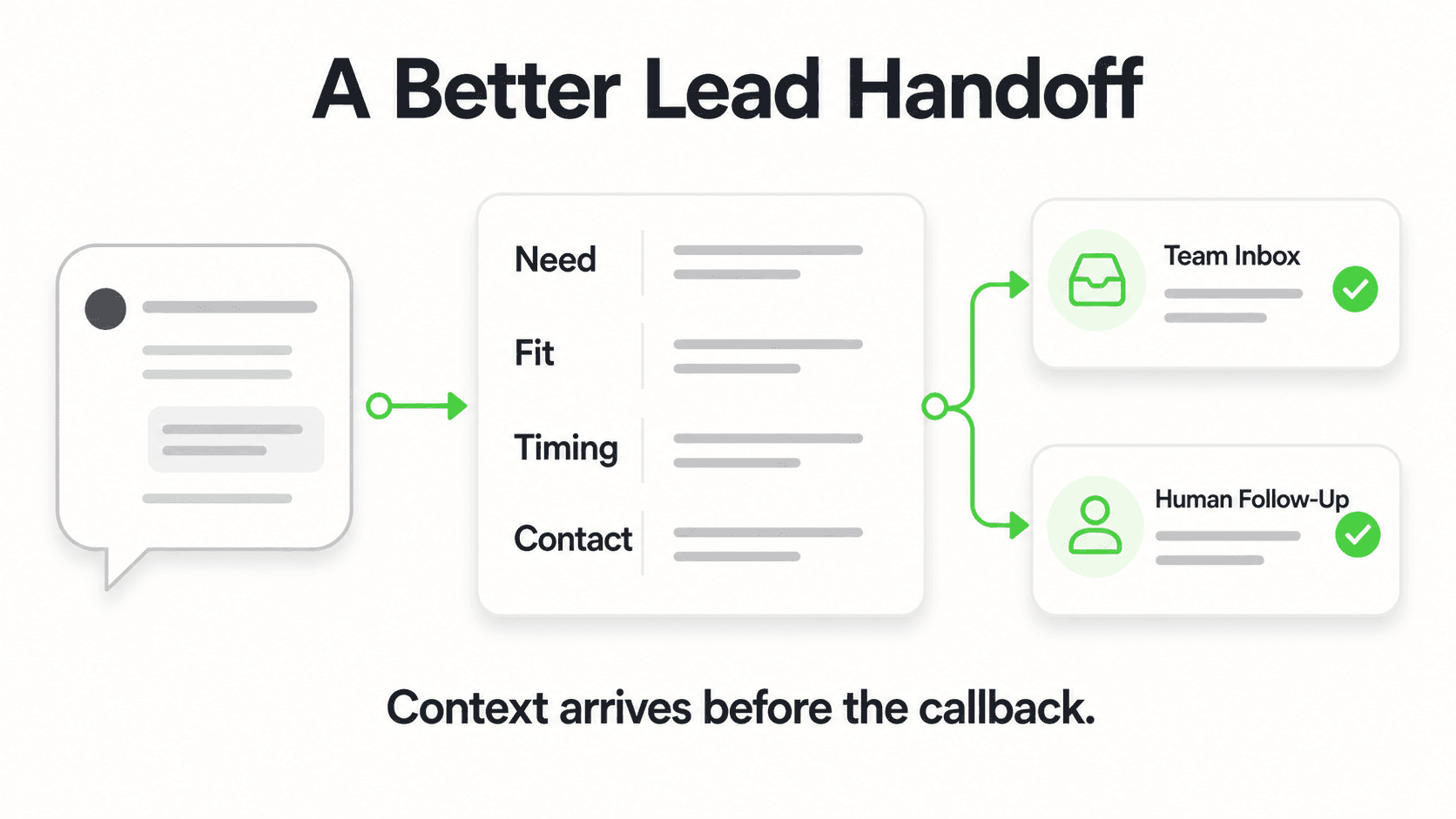
Hyperleap does not have a native MLS or Zillow API integration today. The chatbot captures buyer / seller intent, qualifies leads, and shares your listing pages or booking link — agents follow up using their existing MLS tools.
How does the chatbot qualify real estate leads?
It asks for the essentials in a natural conversation — budget range, locations of interest, timeline, financing status — and hands a structured lead summary to your team via REST API or webhook so reps can prioritize follow-up.
How long does it take to set up an AI chatbot with Hyperleap?
Most SMBs go live in 3–5 days for self-serve setup. With Managed Setup ($299 Free, available on every plan), Hyperleap builds the bot for you on your content and channels. A 7-day free trial is included on every plan.
Ready to Capture Every Real Estate Lead?
Hyperleap AI agents respond to property inquiries in seconds, qualify buyers with document-grounded accuracy, and hand off to your team with full context (Pro and Max). Deploy on your website, WhatsApp, Instagram, and Facebook Messenger.
Start Your 7-Day Free TrialIndustry Solutions
See how AI chatbots work for these industries:
Related Articles

AI Chatbot for Real Estate: Capture Leads 24/7
An AI chatbot for real estate qualifies buyers and sellers around the clock, capturing leads before agents ever pick up the phone.

5 Questions Insurance Agencies Must Ask Before a Chatbot
Insurance isn't like other industries. Here are the 5 questions that separate the right chatbot from an expensive mistake for your agency.

7 Questions Before Automating Law Firm Client Intake
Not all intake automation is created equal. Ask these 7 questions to protect your firm's ethics, security, and client experience.

Patient Communication Platform for Dental Practices
A practical evaluation guide for dental practices choosing a patient communication platform. 7 must-have capabilities from PMS integration to HIPAA compliance.