Speed to Lead in Real Estate: 78% Pick First Responder
Real estate leads cost $200-$450 each. When 78% of buyers choose the first agent who responds, every minute of delay costs you commissions.
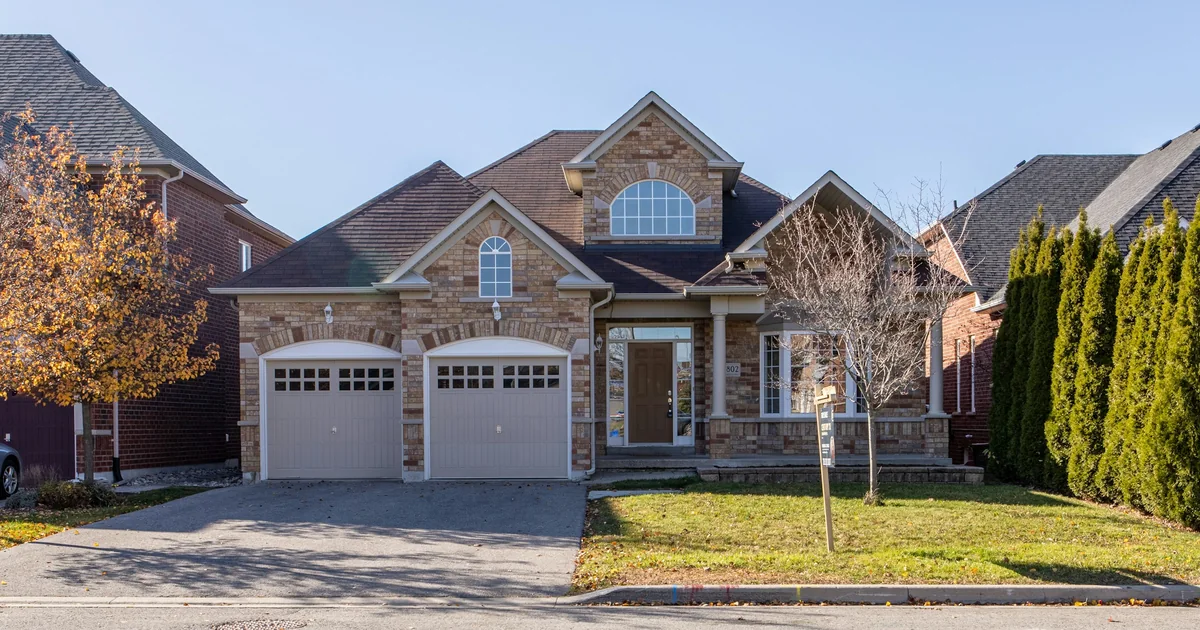
TL;DR: The average real estate agent takes over 15 hours to respond to a new lead inquiry. Meanwhile, 78% of buyers work with the first agent who responds, and leads contacted within 5 minutes are 21x more likely to convert. With portal leads costing $200-$450 each, slow response time is the single most expensive problem in real estate lead generation.
Why Real Estate Agents Lose Leads by Responding Too Slowly
It is 9:14 PM on a Tuesday night. Sarah, a pre-approved buyer in Austin, just found a listing on Zillow that checks every box -- updated kitchen, good school district, under budget. She submits an inquiry. Zillow routes her contact information to three Premier Agents in the area. Agent one has an automated system that responds in 90 seconds, asks about her timeline, and offers to schedule a showing for tomorrow evening. Agent two is at dinner with family. Agent three is watching TV and plans to call back in the morning. By 9:20 PM, Sarah has confirmed a showing with agent one. She never opens the emails from agents two and three. Agent one earns a $12,500 commission on a $450,000 home. Agents two and three spent $300 each on that Zillow lead and got nothing. This scenario plays out thousands of times every night across the United States. The agents who lose are not bad at their jobs -- they are simply slow.
The Speed-to-Lead Problem in Real Estate
Real estate has always been a relationship business, but the way relationships begin has fundamentally changed. A decade ago, a buyer might drive past an open house sign, call the number, and wait for a callback. Today, that buyer is browsing Zillow, Realtor.com, Redfin, and Homes.com simultaneously from their couch at 10 PM, submitting inquiries on multiple properties and to multiple agents within minutes.
Here is the critical detail most agents miss: portal leads are shared leads. When a buyer inquires about a listing on Zillow, that lead often goes to multiple Premier Agents in the area. On Realtor.com, the same lead can be routed to several agents competing for the same buyer. The buyer does not know this. They submitted one inquiry and assume one agent will respond.
The agent who responds first frames the entire relationship. According to NAR's 2024 Home Buyers and Sellers Generational Trends Report, 78% of homebuyers end up working with the first real estate agent who responds to their inquiry (Source: NAR, 2024). Even more telling, 70% of buyers only interview one agent before deciding to work with them. First contact is not just an advantage -- it is often the only chance you get.
The MIT/InsideSales.com Lead Response Management Study, which analyzed over 1.25 million sales leads, found that responding within 5 minutes makes you 21 times more likely to qualify a lead compared to responding in 30 minutes (Source: InsideSales.com / MIT). After 30 minutes, your odds of ever connecting with that lead drop by over 100x.
This is not a minor competitive edge. This is the difference between building a pipeline and burning money.
Why Real Estate Agents Keep Losing Leads
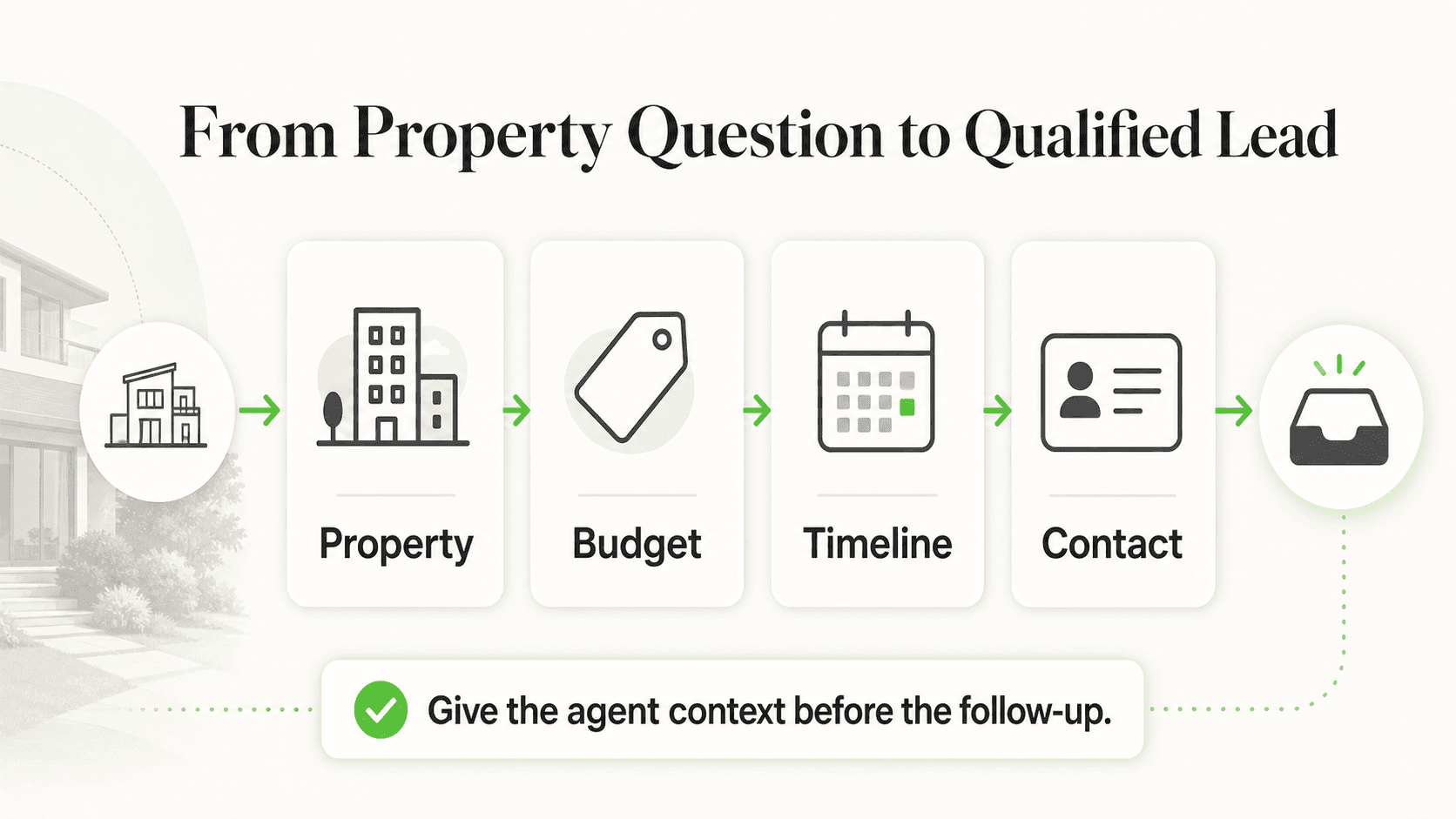
Understanding the problem is straightforward. Fixing it is harder because the reasons agents respond slowly are deeply embedded in how the business operates.
Showings and appointments consume the entire day
A productive agent might run 4-6 showings per day, each lasting 30-60 minutes with travel time in between. During a showing, you cannot answer the phone, respond to a Zillow notification, or reply to a text from a new lead. By the time you check your phone after a two-hour showing marathon, three new leads have come in -- and all three have already connected with a faster agent.
The irony is painful: the better you are at your job (more showings, more active listings, more closings), the worse your response time becomes. Success literally prevents you from capturing new business.
After-hours browsing is when buyers are most active
According to NAR and Zillow Group research, over 60% of real estate inquiries are submitted outside traditional business hours (Source: NAR / Zillow Group). Peak inquiry times are weekday evenings from 6 PM to 11 PM and weekends from 10 AM to 8 PM -- exactly when most agents are off duty or spending time with family.
This timing mismatch is not a coincidence. Buyers have day jobs too. They browse listings after work, after the kids go to bed, and during weekend downtime. The highest-intent inquiries -- from pre-approved buyers who just found a listing they love -- happen precisely when agents are least available.
Lead costs are too high to waste
Real estate portal leads are expensive. Zillow Premier Agent leads average $223 per lead in major metro areas, and in competitive ZIP codes, agents report costs exceeding $450 per lead (Source: Clever Real Estate). Zillow Flex programs take 15-40% of your commission instead. Realtor.com subscriptions run $200-$1,000 per month depending on market size and exclusivity.
When you spend $300 on a lead and then take 15 hours to respond, you are not just losing a lead -- you are paying $300 to hand a qualified buyer to your competitor.
Portal lead fatigue sets in
Agents who invest in portal leads often experience a frustrating cycle: spend money on leads, respond too slowly, fail to convert, conclude that "portal leads are garbage," and either stop investing or continue the same pattern. The leads are not the problem. The response gap is the problem. Portal leads from Zillow and Realtor.com convert at 5-9% for top-performing teams -- but that requires responding within minutes, not hours (Source: Real Geeks).
CRM follow-up workflows are too slow
Many agents rely on CRM systems like Follow Up Boss or kvCORE to manage leads. These tools are excellent for long-term nurturing, but most agents configure them to send a follow-up email -- not an instant, conversational response. A drip email that arrives 15 minutes after an inquiry is better than nothing, but it does not match the experience of a real conversation that starts in under 2 minutes.
The Real Cost of a 15-Hour Response Time
The average real estate agent takes 917 minutes (over 15 hours) to respond to a new lead inquiry (Source: Inman, 2025). At an average portal lead cost of $223 and a 78% first-responder advantage, agents are collectively wasting billions of dollars per year on leads they pay for but never convert.
7 Ways Slow Response Costs Real Estate Professionals
The financial damage of slow response time extends far beyond the obvious missed phone call. Here are seven specific ways delayed responses drain revenue from your real estate business.
1. Lost buyer leads on portal inquiries
This is the most visible and most expensive cost. A buyer submits an inquiry on Zillow or Realtor.com. The lead goes to 2-3 agents. The first agent to respond with a personalized, helpful message wins the relationship 78% of the time. The other agents paid the same lead cost and got nothing.
The math: If you receive 40 portal leads per month at $250 each, that is $10,000 in monthly lead spend. At a typical 15-hour response time, you are likely losing 60-70% of those leads to faster-responding agents before you ever make contact. That is $6,000-$7,000 per month in wasted lead spend -- $72,000-$84,000 per year.
With a median US home price of approximately $357,000 (Source: NAR, 2024) and an average buyer's agent commission of 2.75%, each converted buyer lead is worth roughly $9,800 in gross commission. Losing even 5 additional deals per year to slow response time costs you nearly $50,000 in commission income.
2. Seller listing presentations going to faster agents
Speed matters on the listing side too. When a homeowner decides to sell, they typically contact 2-3 agents for listing presentations. The agent who responds first gets to set the agenda: they provide the initial CMA, establish rapport, and position themselves as the proactive, organized professional.
Agents who respond within an hour to a seller inquiry are significantly more likely to win the listing than those who call back the next day. Sellers interpret fast response as a signal of how you will market their home. If it takes you 12 hours to return a call, the seller assumes it will take you 12 hours to respond to a buyer interested in their property.
A single missed listing at the median price of $357,000 with a 2.82% listing commission (Source: Clever Real Estate) costs you approximately $10,000. For luxury agents working in the $1M+ market, a missed listing can mean $25,000-$40,000 in lost commission from a single slow response.
3. Wasted portal and advertising spend
Real estate agents spend aggressively on lead generation. Between Zillow Premier Agent, Realtor.com, Google Ads, Facebook Ads, and other platforms, a typical agent in a competitive market might spend $2,000-$5,000 per month on lead generation. Brokerages spend far more.
Every dollar of that spend assumes a certain response workflow. When leads arrive and sit in a CRM untouched for hours, the return on that advertising investment drops toward zero. You are not just losing leads -- you are actively subsidizing your competitors' business by paying to generate leads that they convert.
78%
Buyers Choose First Responder
15 hrs
Avg. Agent Response Time
$223
Avg. Cost Per Portal Lead
21x
Better Conversion at 5 Min
4. Open house follow-up delays lose warm leads
Open houses generate some of the warmest leads in real estate. These are people who physically showed up, walked through the property, and shared their contact information. Their intent level is high and their interest is fresh.
Yet most agents follow up with open house leads the next day -- or worse, the following Monday if the open house was on a weekend. By then, the visitor has toured other properties, spoken with other agents, and the emotional connection to the home has faded.
Industry data shows that open house leads convert at higher rates than online leads when follow-up is immediate, with top agents reporting conversion rates of 4-7% from open house contacts (Source: The Close). But that window closes fast. An open house visitor who receives a personalized follow-up text within 30 minutes of leaving the property is far more likely to schedule a second showing than one who gets a generic email the next morning.
If you host two open houses per month and collect 20 visitor contacts at each, that is 40 warm leads. Losing even 3-4 conversions per year due to slow follow-up costs $30,000-$40,000 in commission at the median price point.
5. International buyer time zones create 24-hour blind spots
International buyers purchased $56 billion worth of US homes from April 2024 through March 2025, a 33% increase year-over-year, with 78,100 properties purchased (Source: NAR, 2025). The top five buyer countries -- China, Canada, Mexico, India, and the United Kingdom -- span nearly every time zone on the planet.
When a buyer in Shanghai is researching luxury condos in Miami at 2 PM their time, it is 2 AM Eastern. When a family in London is comparing homes in the New York suburbs at 8 PM GMT, it is 3 PM Eastern -- but you might be in a showing. When a Canadian buyer in Vancouver inquires about a property in Florida at 9 PM Pacific, it is midnight Eastern.
The median purchase price for international buyers hit a record $494,400, and 47% paid all cash (Source: NAR, 2025). These are high-value, motivated buyers who expect immediate, professional communication regardless of your local time zone. Agents in Florida (21% of international purchases), California (15%), and Texas (10%) are leaving millions on the table if they cannot respond to inquiries around the clock.
6. Team lead routing bottlenecks slow everyone down
For team leaders and broker-owners, the response time problem multiplies. A brokerage receiving 200 leads per month needs a system for lead routing -- assigning each lead to the right agent based on geography, property type, price range, language, and availability. Manual routing creates bottlenecks:
- The team leader is the bottleneck: If all leads flow through one person who then assigns them, response time depends entirely on when that person checks their phone
- Round-robin delays: Simple rotation systems send leads to agents who are in showings, on vacation, or asleep
- Cherry-picking: When leads are posted to a group and agents claim them, the best leads get claimed quickly but lower-priority leads sit for hours or days
- No accountability: Without tracking who responded and when, there is no way to identify or fix response time gaps
A brokerage with 10 agents, each losing $50,000 per year in commission due to slow response, is collectively losing $500,000. The broker's share of that lost revenue (typically 20-30%) represents $100,000-$150,000 in annual brokerage income that simply evaporates.
7. Reputation and review impact compounds over time
Slow response does not just cost you the immediate lead -- it damages your long-term reputation. Buyers who never hear back from you do not forget. They tell friends, leave reviews, and form opinions about your professionalism that persist for years.
In an era where 97% of consumers read online reviews before choosing a local business, a pattern of unresponsiveness creates a compounding reputation problem. Every missed lead is a potential negative review or, at minimum, a lost referral opportunity. Given that referrals remain the highest-converting lead source in real estate, with NAR reporting that 43% of buyers select agents recommended by friends or family, the downstream cost of a slow-response reputation is incalculable.
Consider: a buyer who had a great experience with a responsive agent will refer an average of 2-3 people over the following years. A buyer who could not even get a callback will warn 5-10 people away from you. The asymmetry of negative word-of-mouth means that slow response creates a reputation deficit that gets harder to overcome with each missed interaction.
The Compounding Cost
Slow response time is not a one-time cost. Each missed lead represents lost commission today, lost referrals for the next 3-5 years, and potential negative word-of-mouth that deters future prospects. A single slow response to a $400,000 buyer could cost $10,000 in immediate commission plus $20,000-$30,000 in lifetime referral value.
Stop Losing Leads to Slow Response Times
Respond to every inquiry in under 2 minutes, 24/7. Qualify buyers, answer property questions, and schedule showings automatically -- even at 11 PM on a Sunday.
See How It WorksReal Results: What Top-Performing Agents Achieve
The good news is that the speed-to-lead gap is a solvable problem, and agents who fix it see dramatic improvements.
Top-performing agents and teams who respond to leads within 5 minutes consistently report conversion rates of 7-9% on portal leads, compared to the industry average of 0.5-1.2% (Source: Follow Up Boss). That is a 6-8x improvement from the same lead sources that other agents dismiss as "low quality."
The response time benchmarks for top producers look very different from the industry average:
| Metric | Industry Average | Top Performers |
|---|---|---|
| First response time | 15+ hours | Under 5 minutes |
| After-hours response | Next business day | Instant (automated) |
| Lead-to-appointment rate | 2-5% | 15-25% |
| Portal lead conversion | 0.5-1.2% | 7-9% |
| Open house follow-up | Next day | Within 30 minutes |
What changed for these top performers? In most cases, it was not more hours worked or more staff hired. It was implementing systems -- AI-powered response tools, an AI receptionist that answers after-hours inquiries, automated qualification workflows, and intelligent routing -- that ensure every lead gets an instant, personalized response regardless of when the inquiry arrives.
Agents using instant-response systems report recovering leads they previously would have lost entirely. The buyer who inquires at 10 PM and gets an immediate, helpful response is genuinely surprised -- and that surprise translates into loyalty. They did not expect a real estate professional to be available at that hour, and the experience sets the tone for the entire relationship.
For brokerages, the impact multiplies across the team. When every agent's leads get instant responses, the entire brokerage's conversion rate rises, marketing ROI improves, and agents spend more time on high-value activities (showings, negotiations, closings) instead of chasing cold leads.
For a deeper look at the data behind response time economics across all industries, see our analysis of how slow response times cost businesses. And if you want to understand the broader ROI picture, our AI chatbot ROI calculator and case studies walk through the numbers in detail.
Getting Started: Fixing Your Lead Response Gap
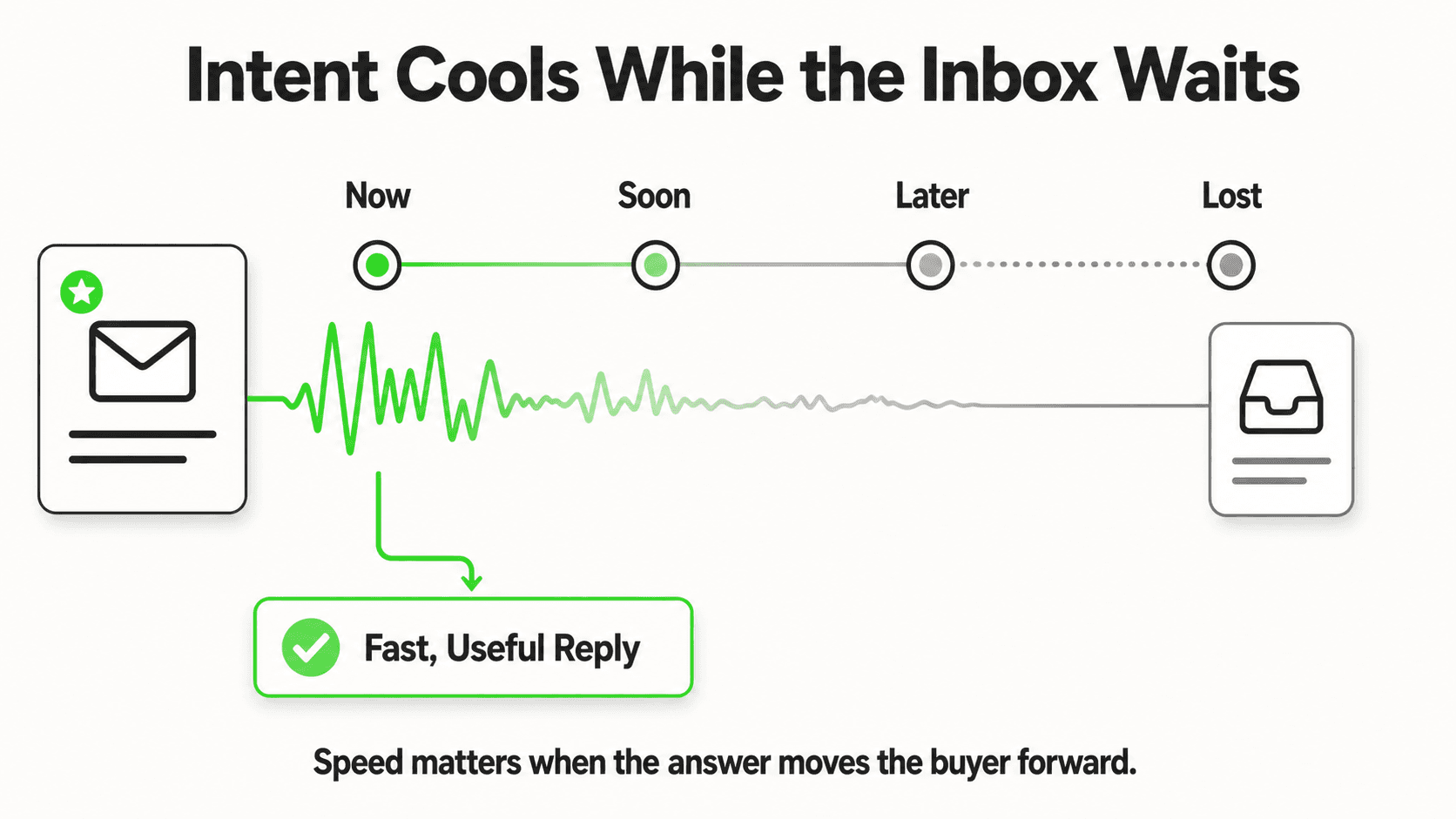
Fixing your response time does not require a complete business overhaul. Start with a focused audit and build from there.
Step 1: Audit your current response times
Before you can improve, you need to know where you stand. Pull data from your CRM (Follow Up Boss, kvCORE, LionDesk, or whatever system you use) and calculate your average first-response time for the past 90 days. Break it down by lead source, time of day, and day of week. Most agents are shocked by the results.
Key questions to answer:
- What is your average response time during business hours?
- What is your average response time for after-hours leads?
- What percentage of leads never receive a response at all?
- Which lead sources have the longest response delays?
Step 2: Set up instant response for after-hours leads
The single highest-impact change you can make is ensuring that every lead gets an instant, personalized response -- after-hours lead capture especially. This is where AI-powered chatbots built for real estate deliver the most value. Unlike generic auto-responders that send a templated "we will get back to you" email, a well-configured AI agent can:
- Greet the prospect by name and reference the specific property they inquired about
- Ask qualifying questions (timeline, pre-approval status, budget range, must-have features)
- Answer common questions about the listing, neighborhood, or buying process
- Schedule a showing or callback at a time that works for the buyer
- Route qualified leads to the appropriate agent with full context
This turns a 15-hour response gap into a 90-second conversation -- and it works at 2 AM on a holiday just as well as it works at 10 AM on a Tuesday.
Step 3: Integrate with your existing CRM and workflow
An instant response system only works if it connects to your existing tools. Look for solutions that integrate with your real estate CRM so that lead data, conversation history, and qualification details flow automatically. This prevents double entry, ensures nothing falls through the cracks, and gives your agents full context when they follow up with a warm lead.
The best implementations also connect to your scheduling tools and communication channels -- so a prospect who starts a conversation on your website can seamlessly book a showing without switching platforms.
For a comprehensive look at how brokerages are implementing these systems and what to evaluate when choosing a platform, read our guide to AI receptionists for real estate brokerages.
Ready to Capture Every Lead?
Start responding to real estate inquiries in under 2 minutes, 24/7. No coding required. Set up in an afternoon.
Start Your Free TrialFrequently Asked Questions
Does this integrate with my existing real estate CRM?
Hyperleap AI connects to your existing CRM through REST API and webhook integrations, so lead data and conversation details sync automatically without manual copy-paste. When a prospect is qualified by the AI, the full conversation transcript and qualification data can be pushed to your CRM pipeline via webhook events (webhooks are on Pro and Max). Before choosing any AI platform, verify that its integration approach matches your CRM's capabilities — some platforms offer native connectors while others (including Hyperleap AI) use webhooks and REST API for flexible, real-time data flow.
How much does an AI response system cost compared to hiring an ISA?
An inside sales agent (ISA) typically costs $3,000-$5,000 per month in salary, plus benefits, training, and management overhead -- and they can only work limited hours. AI chatbot solutions for real estate start at a fraction of that cost, with plans starting at $40/month, and they work 24/7 without breaks, sick days, or turnover. For most individual agents, the math overwhelmingly favors AI for initial lead response, with human follow-up reserved for qualified, high-intent prospects.
Can AI handle after-hours leads without sounding robotic?
Modern AI agents are trained on natural conversational patterns and can be customized with your brand voice, property knowledge, and qualifying criteria. A well-configured AI agent for real estate sounds conversational and helpful -- not like a phone tree or a scripted bot. It can reference specific property details, ask relevant follow-up questions, and adapt its responses based on what the prospect says. Most prospects do not realize they are interacting with AI, and those who do are impressed that the agent's business is responsive enough to provide instant help at any hour.
How does team lead routing work?
For teams and brokerages, AI response systems can route qualified leads based on rules you configure: geography, price range, property type, language preference, agent availability, or round-robin rotation. The AI handles the initial response and qualification, then routes the lead to the most appropriate agent with full context. This eliminates the bottleneck of a single team leader distributing leads manually and ensures that lead routing happens in seconds, not hours.
How do I measure ROI on a faster response system?
Track three primary metrics: (1) Response time reduction -- measure your average first-response time before and after implementation. (2) Lead-to-appointment conversion rate -- track what percentage of incoming leads convert to showings or listing presentations. (3) Cost per acquisition -- divide your total lead generation and response system costs by the number of closed transactions. Most agents see meaningful improvement within the first 30 days. A single additional closed transaction per quarter at the median commission value ($9,800) more than covers the annual cost of any AI response system.
What channels does the AI respond on?
A comprehensive response system should cover every channel where leads arrive. Hyperleap AI supports website chat, WhatsApp, Instagram DM, and Facebook Messenger -- covering the primary channels through which modern real estate prospects communicate. Website chat captures portal visitors and direct traffic. WhatsApp and Facebook Messenger handle the growing volume of social-first buyers who prefer messaging over phone calls. The AI provides a consistent, instant response across all channels so no lead falls through the cracks regardless of how they choose to reach you.
The Bottom Line
In real estate, the agent who responds first wins. Not sometimes -- 78% of the time. Every hour of delay on a $250 portal lead chips away at your ROI. Every after-hours inquiry that goes unanswered is a commission walking to a competitor. Every open house lead that does not get a same-day follow-up is a warm prospect going cold.
The data is unambiguous. The MIT/InsideSales study, NAR buyer surveys, and conversion benchmarks from top-performing teams all tell the same story: speed to lead is the single most controllable factor in real estate lead conversion. You cannot control interest rates, inventory levels, or market conditions. You can control how fast you respond.
The agents who will thrive in the coming years are not necessarily the ones with the biggest advertising budgets or the most experience. They are the ones who ensure that every prospect -- at any hour, on any channel -- gets an instant, helpful, personalized response. The technology to do this exists today, it costs less than a single missed commission, and it works while you sleep.
The question is not whether you can afford to implement instant lead response. The question is how many more commissions you can afford to lose before you do.
Start capturing every lead with instant AI response -- try it free for 7 days.
Can the chatbot integrate with my MLS or Zillow account?
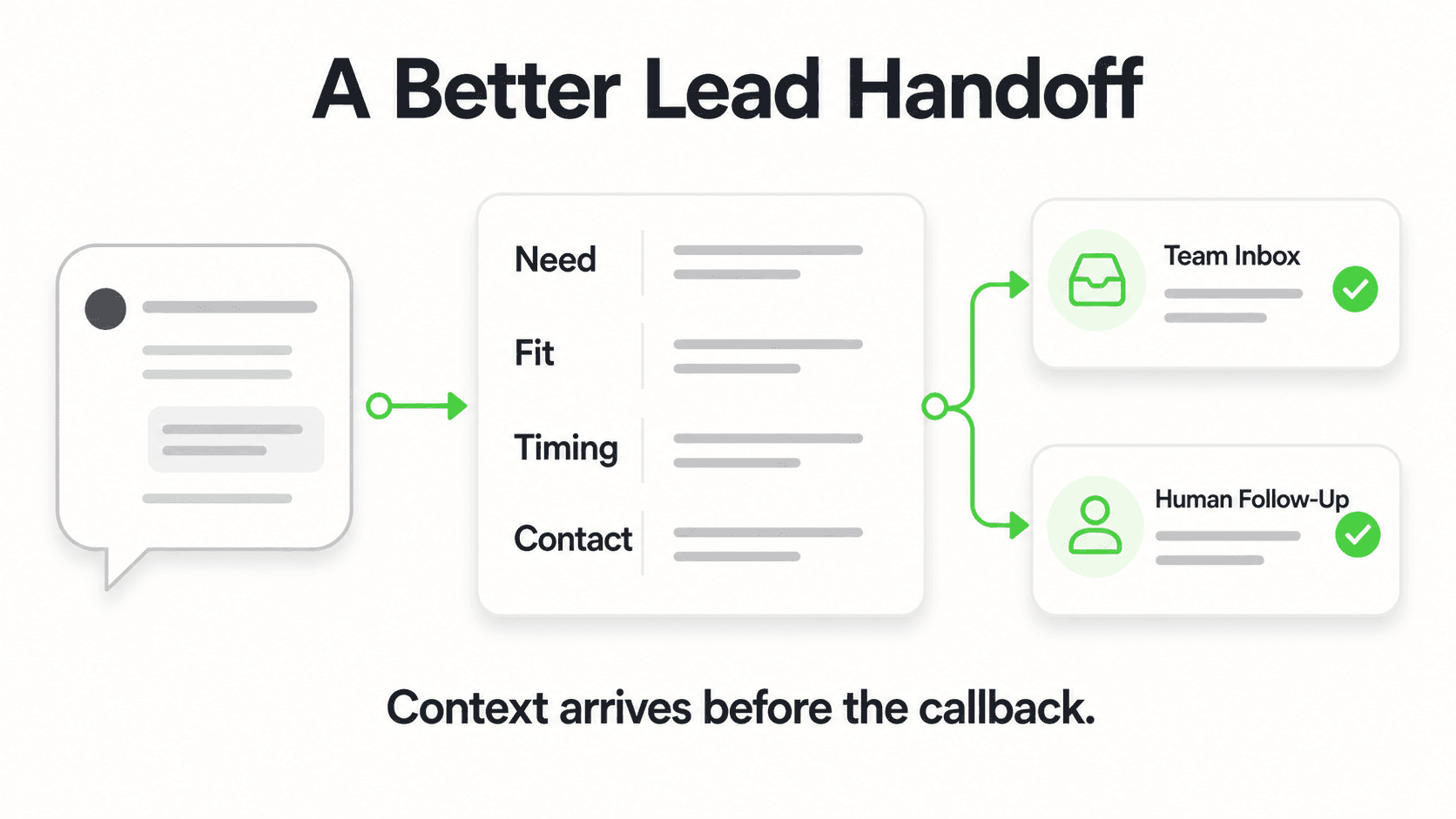
Hyperleap does not have a native MLS or Zillow API integration today. The chatbot captures buyer / seller intent, qualifies leads, and shares your listing pages or booking link — agents follow up using their existing MLS tools.
How does the chatbot qualify real estate leads?
It asks for the essentials in a natural conversation — budget range, locations of interest, timeline, financing status — and hands a structured lead summary to your team via REST API or webhook so reps can prioritize follow-up.
How long does it take to set up an AI chatbot with Hyperleap?
Most SMBs go live in 3–5 days for self-serve setup. With Managed Setup ($299 Free, available on every plan), Hyperleap builds the bot for you on your content and channels. A 7-day free trial is included on every plan.
Industry Solutions
See how AI chatbots work for these industries:
Related Articles

Why Home Service Businesses Lose Jobs to Faster Rivals
Homeowners contact 3–5 contractors per job, and the data shows the first responder wins most. How home service businesses fix slow response and keep the work.

Why Auto Dealerships Lose After-Hours Online Buyers
70%+ of car shopping happens online after hours. A 9-5 BDC loses $5K-$25K gross-profit buyers to dealers who respond instantly.

Why Dental Clinics Lose Patients to Faster Practices
New patients call 2-3 practices and book with whoever answers. With $2,500-$15,000 LTV, every missed call costs real revenue.
Why Insurance Agencies Lose Quotes to Faster Agents
Insurance prospects request quotes from 3-4 agencies at once. The data shows the first responder wins over 50% of the time—here's what that costs you.