Why Auto Dealerships Lose After-Hours Online Buyers
70%+ of car shopping happens online after hours. A 9-5 BDC loses $5K-$25K gross-profit buyers to dealers who respond instantly.
TL;DR: Between 45% and 60% of dealership leads arrive after business hours, yet most BDCs operate 9-to-5. A lead contacted within 5 minutes is 21x more likely to enter the sales cycle than one contacted at 30 minutes. With average new-vehicle gross profit at $2,247 per unit (NADA, 2024), every lost after-hours lead erodes thousands in margin. An AI receptionist that answers online buyers closes the gap 24/7.
Why Auto Dealerships Lose Buyers Who Browse Online After Hours
It's 9:47 PM on a Tuesday. A buyer has spent 14 hours researching SUVs online over the past two weeks. They've narrowed it down to two models on your lot. They submit a lead form, expecting a quick answer on availability and pricing. Your BDC closed four hours ago. By morning, they've already booked a test drive at a competitor who responded in three minutes.
Research from the 2025 DAS Technology Lead Response Study, analyzing over 1,700 dealerships, found that 19% of dealers still take over an hour to respond to leads and 4% never respond at all. Meanwhile, buyers spend an average of 14 hours and 19 minutes researching online before making contact (Source: Cox Automotive Car Buyer Journey Study). The majority of that research happens outside your 9-to-5 operating window. The result is a predictable, preventable revenue leak worth thousands per missed buyer.
What After-Hours Lead Response Means for Dealerships
After-hours lead response is the ability to engage car buyers who submit inquiries, chat messages, or form fills outside of standard BDC operating hours, typically before 8 AM, after 6 PM, and on weekends. For dealerships, this means maintaining instant, intelligent communication during the exact hours when buyers are most actively shopping.
Modern after-hours response goes far beyond an autoresponder email. It involves:
- Answering specific inventory questions (Is this VIN still available? What's the OTD price?)
- Qualifying buyer intent (Are they ready to buy this week? Do they have a trade-in?)
- Scheduling test drives and appointments by sharing your booking link or collecting preferred times for BDC follow-up
- Providing financing pre-qualification information
- Capturing trade-in details to prepare accurate offers before the buyer arrives
The difference between a generic "Thanks for contacting us, we'll get back to you during business hours" and a substantive, personalized response is the difference between a warm lead and a lost sale.
Why Dealerships Bleed Leads After Hours
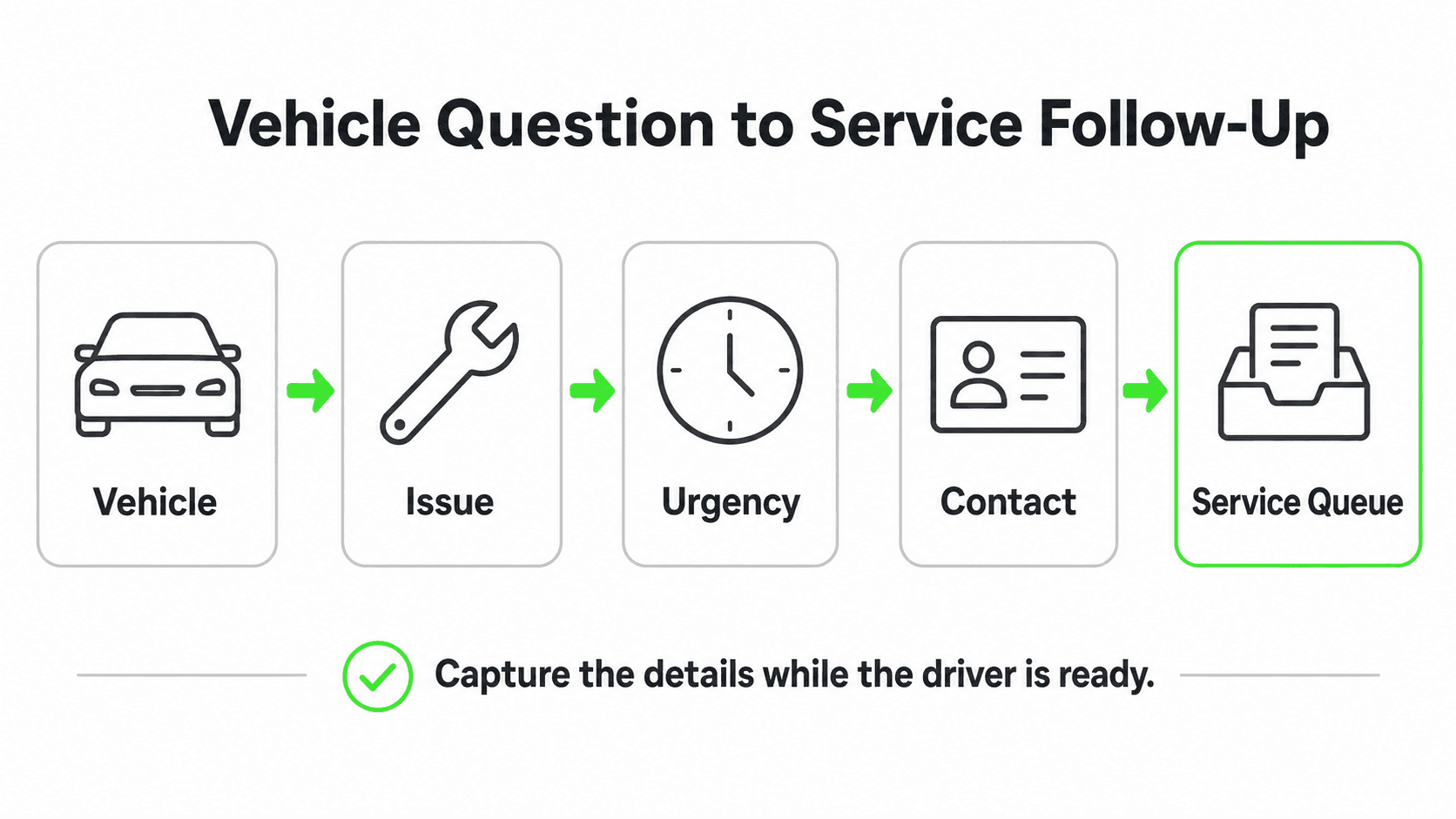
56-60% of Leads Arrive When Your BDC Is Closed
According to Better Car People's analysis of dealership lead patterns, 56-60% of dealership leads come in after business hours. This makes intuitive sense: working adults research cars during lunch breaks, after dinner, and on weekends. When your BDC operates Monday through Friday, 9 AM to 6 PM, you're unstaffed during the majority of your lead flow.
The math is painful. If your dealership generates 400 leads per month and 55% arrive after hours, that's 220 leads sitting unanswered overnight. Even if only 10% would have converted with a fast response, that's 22 lost units per month at an average gross profit of $2,247 per new vehicle (NADA 2024 data), meaning $49,434 in monthly gross profit walking out the door.
Buyers Shop Multiple Dealers Simultaneously
Car buyers don't submit one lead and wait. 92% of consumers use digital channels to research vehicles before purchase (Source: Cox Automotive). They're comparing your inventory, pricing, and responsiveness against three to five other dealers simultaneously.
The first dealer to respond with a substantive answer, not a template, wins the appointment. Research shows that responding within 5 minutes makes a business 100x more likely to convert compared to a 30-minute response (Source: InsideSales.com / Harvard Business Review). After hours, the dealers with AI-powered instant response are capturing appointments while traditional BDCs sleep.
The $2,247 to $5,679 Cost Per Missed Lead
Average gross profit per new vehicle was $2,247 in 2024, with luxury stores averaging $5,679 per unit (Source: Haig Partners Q2 2025 Report). Used vehicle gross averaged $1,399. A single missed after-hours lead doesn't just cost you one sale; it costs you the lifetime value of that customer, including future service revenue, trade-in cycles, and referrals.
The Compounding Cost
A lost buyer doesn't just represent one missed sale. The average customer purchases 9.4 vehicles in their lifetime. Losing a buyer to a faster-responding dealer means losing decades of potential revenue from sales, service, parts, and referrals.
74% of Dealers Don't Include Pricing in Their Response
The 2025 DAS Technology study revealed that 74% of dealers did not include a price quote in their lead response, up from 66% the prior year. After hours, this problem compounds: not only is the response delayed, but when it finally arrives the next morning, it often lacks the specific pricing information the buyer asked for. This double failure, slow and incomplete, virtually guarantees the buyer will choose a competitor.
Weekend Leads Get Monday-Morning Treatment
Saturday and Sunday represent peak browsing hours. Buyers have time to research, compare, and make decisions. Yet many dealerships reduce or eliminate BDC coverage on weekends. Leads submitted Saturday evening often don't receive a response until Monday morning, a 36-to-48-hour delay that makes conversion nearly impossible.
7 Ways After-Hours Gaps Cost Your Dealership
1. Lost First-Response Advantage
What this looks like in practice: A buyer submits a lead at 8:15 PM asking about a specific truck on your lot. Your autoresponder fires a generic "thanks for your interest" email. Meanwhile, the dealer across town has an AI agent that responds in 30 seconds with the truck's availability, current incentives, and three available time slots for a test drive.
Real-world impact: A lead contacted within 5 minutes is 21 times more likely to enter the sales cycle than one contacted at 30 minutes (Source: InsideSales.com). After hours, most dealers don't respond for 8-12 hours. The first-response advantage is massive, and it belongs to whoever responds first with a useful answer.
Why it works: Buyer intent peaks at the moment of inquiry. Every minute that passes, intent decays. By responding instantly with vehicle-specific information, you catch the buyer at maximum motivation.
Key features:
- Instant response to form fills, chat, and messaging inquiries
- Vehicle-specific answers pulled from live inventory
- Personalized engagement rather than template replies
2. Appointment No-Shows from Stale Leads
What this looks like in practice: A lead comes in at 10 PM. Your BDC rep calls at 9 AM the next morning and books an appointment for Saturday. By then, the buyer has already visited another dealer, received a competitive quote, and is only half-interested in your appointment. They no-show or cancel.
Real-world impact: Dealership appointment no-show rates range from 30% to 50%, and a significant contributing factor is the time gap between initial inquiry and appointment booking. Leads that are engaged instantly and booked within minutes show dramatically higher show rates.
Why it works: When a buyer books an appointment during the peak of their interest, they've made a psychological commitment. When they're called back hours later and agree to an appointment out of politeness rather than enthusiasm, follow-through drops.
Key features:
- Appointment collection via booking link sharing or preferred-time capture
- Automatic booking confirmations via chat channel
- Pre-appointment information collection (trade-in details, financing preferences)
3. Trade-In Buyers Defect to Instant-Offer Tools
What this looks like in practice: A buyer wants to know what their 2021 Camry is worth as a trade-in toward a new vehicle on your lot. They submit the inquiry at 7 PM. By the time your manager appraises it the next day, the buyer has already received an instant offer from Carvana, CarMax, or a competing dealer's digital retailing tool.
Real-world impact: Digital retailing tools have been adopted by 70% of dealerships (Source: Cox Automotive Digitization Report 2023), and 67% of those dealers saw improved gross profit per deal. Dealers who can provide instant trade-in estimates, even ballpark ranges, capture more of these high-intent buyers.
Why it works: Trade-in buyers represent the highest-value leads because they're actively ready to transact. They have a vehicle to sell and want to buy a replacement. Losing them to a digital-first competitor because you couldn't provide a timely estimate is preventable.
Key features:
- Capture trade-in details (year, make, model, mileage, condition) for morning follow-up by your team
- Photo collection for preliminary appraisal
- Structured lead hand-off so your appraiser has everything needed to respond quickly
4. F&I Revenue Left on the Table
What this looks like in practice: A buyer who submits a lead after hours is interested in financing options. They want to know monthly payment estimates, available rates, and whether they'll qualify. Without an after-hours response, they start running their own numbers on bank and credit union websites, pre-qualifying elsewhere. By the time they visit your dealership, they already have an outside financing commitment, reducing your F&I penetration.
Real-world impact: F&I profit per vehicle averages $1,500 to $2,500 for many dealerships. When a buyer comes in pre-approved from an outside lender, your F&I team has significantly less room to present in-house financing, warranty products, and protection packages. Capturing the financing conversation early, even after hours, preserves this profit center.
Why it works: Providing basic payment estimates and asking pre-qualification questions after hours anchors the buyer to your financing process. Even a simple "Based on your credit profile, we typically see rates between X% and Y% on this model" keeps the buyer in your pipeline.
Key features:
- Payment calculator integration
- Basic pre-qualification questionnaire
- F&I product introduction during initial engagement
5. Service Department Revenue Erosion
What this looks like in practice: An existing customer notices their check-engine light on the way home from work at 6:30 PM. They try to call your service department, but it closed at 6 PM. They google "auto repair near me" and book with an independent shop that has online scheduling available 24/7. You've lost the service visit, the diagnostic fee, the repair revenue, and potentially the customer's loyalty.
Real-world impact: Service and parts departments generate significant fixed operations revenue. Automated appointment reminders alone reduce no-shows by 30-50% (Source: Auto Care Association). When customers can't reach your service department after hours, they defect to competitors who make booking easier.
Why it works: Service customers often need to act in the moment. When their car makes a noise or a warning light appears, they want to schedule immediately. After-hours accessibility for service captures these urgent, emotionally-driven booking decisions.
Key features:
- 24/7 service appointment scheduling
- Maintenance reminder automation
- Recall notification and scheduling
Never Miss Another After-Hours Lead
See how Hyperleap AI responds to dealership inquiries in seconds, 24/7, across your website, WhatsApp, and social channels.
Get Started6. Reputation Damage from Slow Responses
What this looks like in practice: A frustrated buyer who waited 14 hours for a response leaves a Google review: "Submitted an online inquiry and didn't hear back until the next afternoon. Went to [competitor] instead. Don't waste your time." This review is now visible to every future buyer researching your dealership.
Real-world impact: 93% of consumers say online reviews influence their purchasing decisions. For dealerships, where buyers research extensively before visiting, a pattern of slow-response reviews can suppress lead volume over time. One negative review costs an average of 30 lost customers (Source: Convergys research).
Why it works: Speed of response directly correlates with customer satisfaction scores. Buyers who receive instant, helpful responses rate their experience significantly higher, even if they haven't visited the dealership yet. Positive early interactions create positive review momentum.
Key features:
- Instant response prevents frustration-driven negative reviews
- Professional, branded engagement at every hour
- Consistent experience whether it's 2 PM or 2 AM
7. Competitive Intelligence Leakage
What this looks like in practice: A buyer asks your dealership about pricing on a specific model at 9 PM. They don't hear back. They then submit the same inquiry to three competing dealers. One responds instantly with a competitive quote and an appointment. That dealer now has insight into local demand for that model. Your dealership has no data on the inquiry because it died in an unworked lead queue.
Real-world impact: Every after-hours inquiry is a data point: what models are in demand, what price points buyers are targeting, what features they're asking about, and what competitors they're considering. When you don't engage these leads, you lose not just the sale but the market intelligence embedded in the conversation.
Why it works: AI-powered lead engagement captures every inquiry detail, trade-in information, financing preferences, and competitive mentions, feeding your team with actionable intelligence each morning. Your BDC doesn't start the day cold; they start with warm leads and rich context.
Key features:
- Complete conversation transcripts for morning review
- Lead scoring based on buyer signals and intent
- Competitive mention tracking and reporting
Real Results: What Dealerships Are Achieving
Revenue Recovery
- Dealerships responding within 5 minutes see conversion rates up to 900% higher than those responding after 30 minutes (Source: InsideSales.com)
- 67% of dealers using digital retailing report improved gross profit per deal (Source: Cox Automotive)
- Capturing after-hours leads that previously went unanswered directly adds to monthly unit volume — the math depends on your current after-hours lead volume and conversion rate (illustrative example: see the calculation in the "Why Dealerships Bleed Leads After Hours" section above)
Operational Efficiency
- BDC reps arrive each morning to pre-qualified, appointment-ready leads instead of cold follow-ups
- AI handles routine questions (inventory availability, pricing, hours) at scale, freeing your BDC to focus on high-value conversations
- Dealerships using structured AI triage report meaningful reductions in BDC cost per lead (typical results vary by deployment)
Customer Experience
- Buyers rate instant responses significantly higher in satisfaction surveys, even before visiting the dealership (Source: Fullview)
- Consistent after-hours engagement creates an "always-on" brand perception
- Pre-visit information exchange (trade-in details, financing preferences) shortens the in-store discovery process
Implementation Roadmap for Dealerships
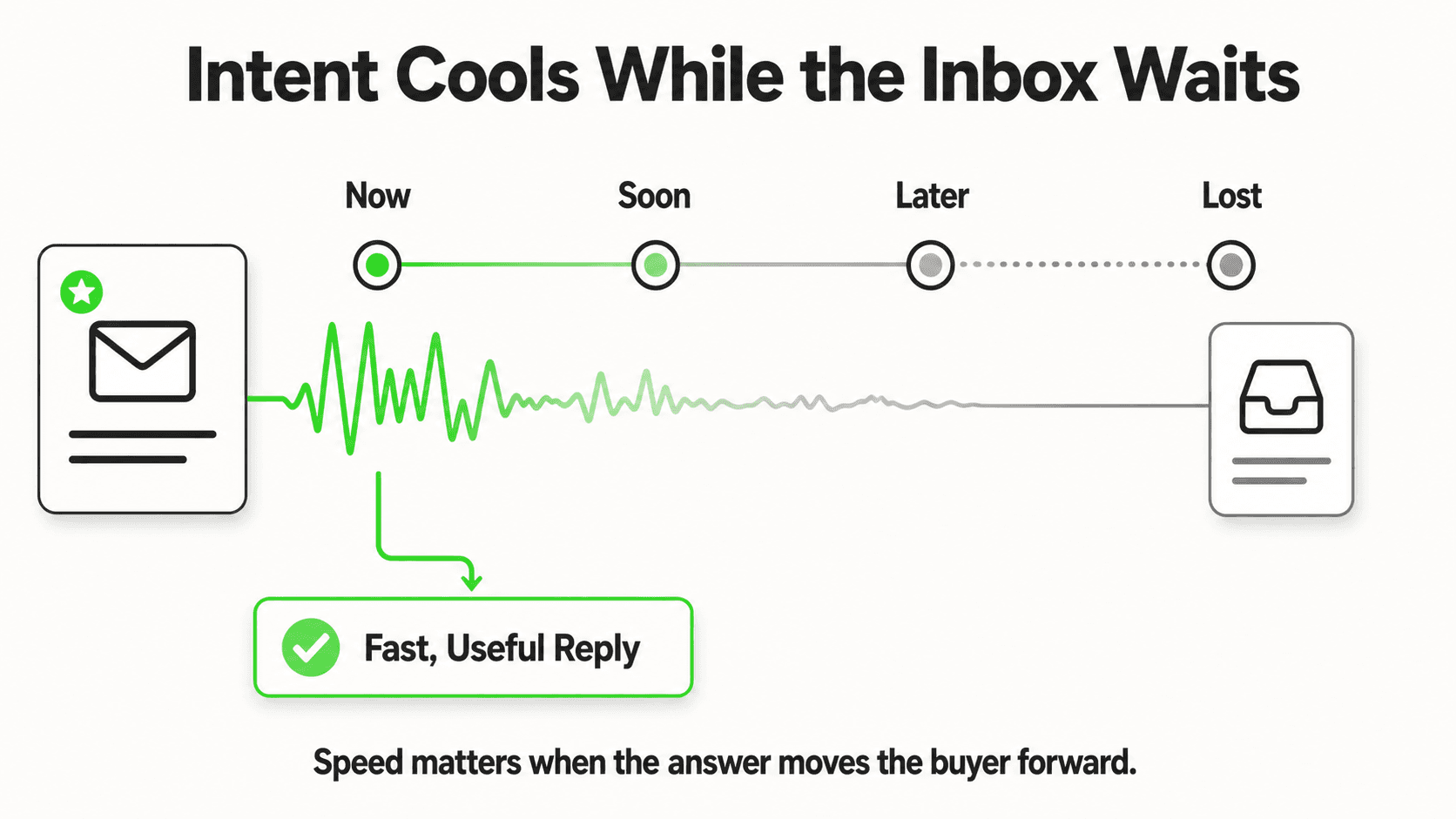
Phase 1: Audit Your After-Hours Gap (Week 1)
Start by measuring what you're losing. Pull your CRM data for the last 90 days and answer these questions:
- What percentage of leads arrive outside BDC hours?
- What is your average response time for after-hours leads?
- What is the conversion rate for leads responded to within 5 minutes vs. next-day?
- How many after-hours leads were never contacted?
Most dealerships are shocked by the answers. This data builds the business case.
Phase 2: Deploy AI-Powered After-Hours Response (Weeks 2-3)
Select an AI agent platform that fits your existing workflow. Key requirements:
- REST API and webhooks to push lead data into your CRM or DMS (evaluate each platform for specific compatibility)
- Live inventory sync so the AI can answer "Is this VIN still available?" based on your uploaded inventory data
- Appointment scheduling via booking link sharing or calendar integration
- Multi-channel support (website chat, Facebook Messenger, Instagram DM, WhatsApp)
- Trade-in question capture for morning follow-up by your team
With a platform like Hyperleap AI, deployment takes days, not months. You upload your inventory data, configure your branding and response guidelines, and connect your booking link for appointment capture.
Phase 3: Optimize and Expand (Weeks 4-8)
- Review AI conversation transcripts daily for the first two weeks
- Refine responses based on common buyer questions
- Expand from website-only to WhatsApp, Facebook Messenger, and Instagram DM
- Set up escalation rules for high-value leads that warrant a personal call
- Track appointment show rates from AI-booked vs. BDC-booked leads
Phase 4: Measure ROI (Month 3)
Calculate your return by comparing pre-deployment and post-deployment metrics:
- After-hours lead response time
- After-hours lead conversion rate
- Appointments booked after hours
- Appointment show rate
- Units sold from after-hours leads
Dealerships typically see full ROI within 30-60 days of deployment. Read more about calculating AI chatbot ROI.
Frequently Asked Questions
Will an AI agent replace my BDC team?
No. AI after-hours response supplements your BDC, it does not replace it. The AI handles the initial engagement, qualification, and appointment scheduling during hours when your BDC is unavailable. Your team then picks up warm, pre-qualified leads each morning instead of cold follow-ups. Most dealerships find their BDC becomes more productive, not smaller, because reps spend time on high-value conversations rather than initial triage.
How much does after-hours AI response cost compared to extending BDC hours?
Extending BDC coverage to evenings and weekends typically costs $4,000-$8,000 per month in additional staffing. AI-powered after-hours response through platforms like Hyperleap AI starts at $40/month for the Plus plan, making it a fraction of the cost. Even with higher tiers for multiple channels and chatbots, the cost is significantly lower than additional headcount.
Can AI really answer specific inventory and pricing questions?
Yes, when you upload your inventory data to the AI's knowledge base. Modern AI agents provide document-grounded responses based on the inventory information you supply — answering questions about specific VINs, trim levels, pricing, and availability from that content. For real-time inventory sync with your DMS, evaluate each platform for specific integration capabilities. For complex negotiation scenarios, the AI captures the buyer's requirements and routes to your sales team.
How long does it take to set up after-hours AI for my dealership?
Most dealerships can be live within 3-5 days. Setup involves uploading your inventory data, configuring your branding and response guidelines, and connecting your booking link for appointment scheduling. No technical expertise is required from your team. Hyperleap AI handles the configuration and training process.
Will buyers know they're talking to AI?
Transparency is important. The AI should identify itself as an AI assistant while maintaining a professional, helpful tone. Research shows that buyers prefer an instant, accurate AI response over waiting hours for a human. The key is providing substantive, helpful answers rather than generic templates. When a conversation requires human judgment, the AI escalates to your team with full context.
What channels does after-hours AI cover?
Effective after-hours AI covers every channel where buyers reach out: website chat, Facebook Messenger, Instagram DM, WhatsApp, and lead form submissions. The goal is to be present wherever buyers are, especially on mobile where over 70% of car research happens (Source: Cox Automotive). Each channel receives the same quality of instant, inventory-aware response.
How do I measure whether after-hours AI is working?
Track these core metrics monthly: after-hours response time (target: under 60 seconds), after-hours lead-to-appointment conversion rate, appointment show rate from AI-booked leads, and units sold from after-hours leads. Compare to your pre-deployment baseline. Most dealerships see measurable improvement within the first 30 days.
Close the After-Hours Gap Before Your Competition Does
The data is clear: the majority of your leads arrive when your BDC is closed, and the dealers who respond instantly are capturing the sales you're losing. This isn't a theoretical problem. It's a measurable, quantifiable revenue leak that compounds every night your showroom goes dark.
The dealerships winning in 2026 aren't the ones with the biggest BDC teams. They're the ones that respond to every lead in seconds, at every hour, on every channel. AI-powered after-hours response is no longer a nice-to-have; it's the difference between growing your market share and watching it erode.
The technology exists today. The ROI is proven. The only question is whether your dealership will be the one responding at 10 PM, or the one losing the sale to the dealer who does. Learn more about how slow response times cost businesses real revenue.
How does an AI chatbot qualify leads?
It asks the essentials in a natural conversation — intent, budget, timeline, decision authority, contact info — and assembles a structured lead summary with priority signals. Reps see qualified intent before they pick up the phone instead of after a cold call.
Should I ask for an email first or last?
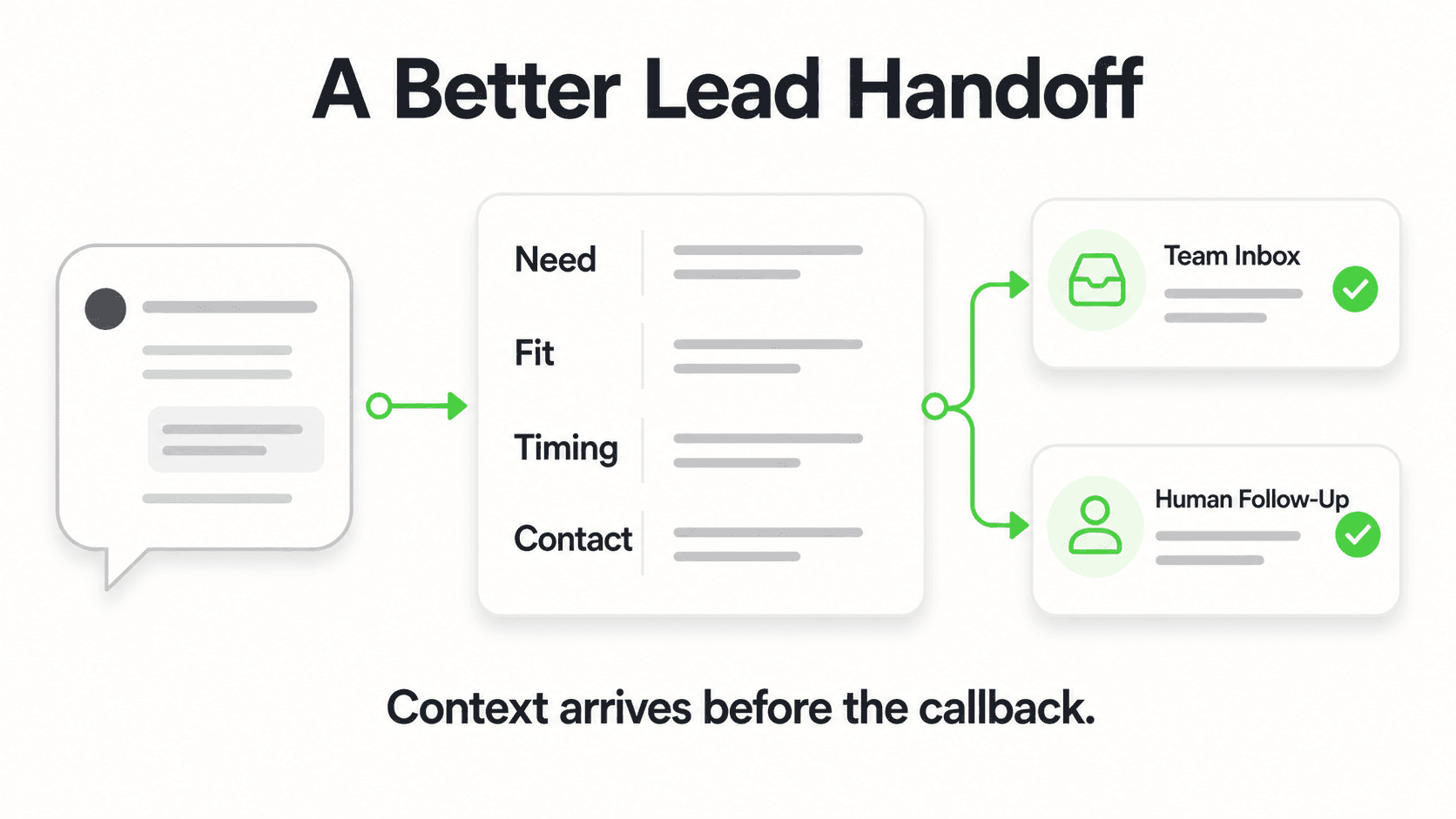
Last. Asking for email upfront kills conversion. Provide value first (answer their question, share relevant info), then ask for email once the visitor is engaged. Hyperleap conversation flows are designed around this principle by default.
How long does it take to set up an AI chatbot with Hyperleap?
Most SMBs go live in 3–5 days for self-serve setup. With Managed Setup ($299 Free, available on every plan), Hyperleap builds the bot for you on your content and channels. A 7-day free trial is included on every plan.
Further Reading
Authoritative external sources used and recommended for further research on this topic:
Ready to Capture Every After-Hours Lead?
Hyperleap AI responds to dealership inquiries instantly, 24/7 — answering inventory questions, booking test drives (Pro and Max), and qualifying buyers while your team sleeps.
Start Your Free TrialIndustry Solutions
See how AI chatbots work for these industries:
Related Articles

Why Home Service Businesses Lose Jobs to Faster Rivals
Homeowners contact 3–5 contractors per job, and the data shows the first responder wins most. How home service businesses fix slow response and keep the work.

Why Dental Clinics Lose Patients to Faster Practices
New patients call 2-3 practices and book with whoever answers. With $2,500-$15,000 LTV, every missed call costs real revenue.
Speed to Lead in Real Estate: 78% Pick First Responder
Real estate leads cost $200-$450 each. When 78% of buyers choose the first agent who responds, every minute of delay costs you commissions.

How Law Firms Lose Cases on After-Hours Inquiries
Legal leads cost $250-$1,000+ each. When 40% arrive after hours and hit voicemail, firms lose cases worth $5K-$500K to faster-responding competitors.