Response Time vs Conversion Rates: 10 Industries
From real estate to dental practices, the data is clear: faster response means higher conversion. Here's what the numbers show for 10 industries.

TL;DR: The 5-minute rule applies everywhere, but the stakes vary wildly by industry. Real estate agents lose commissions on leads that sit for 15 hours. Dental practices lose patients worth $8,000 in lifetime value to the clinic next door. Insurance agencies lose multi-quote shoppers to whichever competitor picks up first. This article breaks down the response time data for 10 industries, with specific benchmarks and revenue impact for each.
Every business knows speed matters. But here is what most businesses do not know: the specific cost of delay varies dramatically by industry.
A plumber who responds in 10 minutes instead of 2 faces a different penalty than a real estate agent who responds in 10 minutes instead of 2. The homeowner with a burst pipe calls the next plumber immediately. The home buyer might browse three more listings first, but the agent who responds fastest still wins the showing.
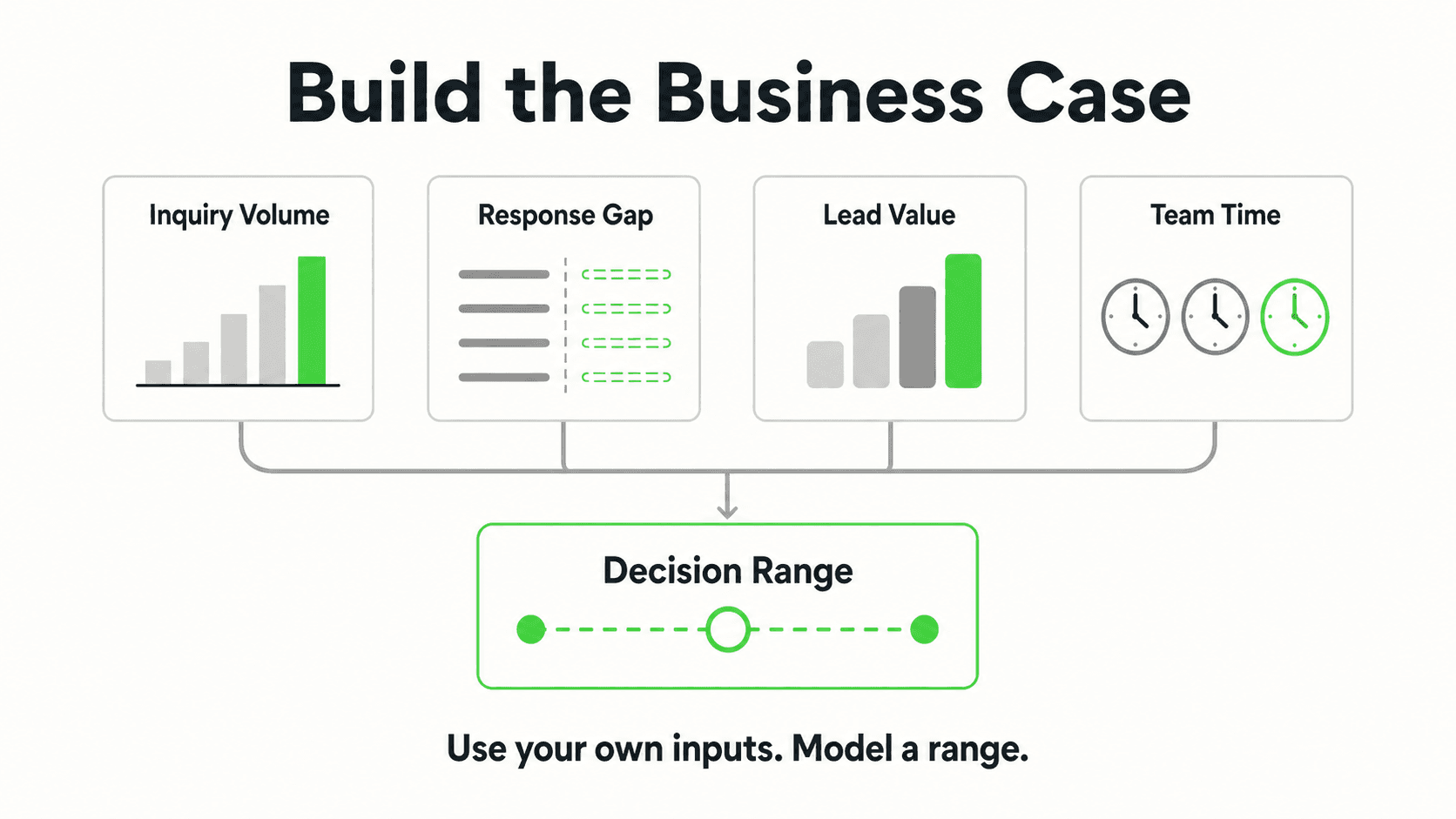
Research from Harvard Business Review and InsideSales.com established the universal baseline: leads contacted within 5 minutes are 21 times more likely to be qualified than those contacted after 30 minutes. A 2024 study by RevenueHero found that the average business response time is over 29 hours — and over 63% of businesses never respond at all.
Those numbers tell the macro story. But the micro story — how response time plays out in your specific industry — is what actually changes behavior. Here is the data across 10 industries, with the specific numbers that matter for each.
21x
More likely to qualify at 5 min vs 30 min
29 hrs
Average business response time
63%
Of businesses never respond at all
The Universal Pattern: Why Speed Wins
Before diving into industry-specific data, it helps to understand the psychology behind why response speed has such an outsized impact on conversion.
The foundational research comes from a 2011 study published in the Harvard Business Review, which analyzed 2.24 million sales leads across organizations. The findings were stark: firms that contacted potential customers within one hour were nearly 7 times more likely to qualify the lead than those that waited even 60 minutes longer, and 60 times more likely than those that waited 24 hours or more.
MIT and InsideSales.com expanded on this with their own analysis, finding that the odds of qualifying a lead drop by 400% when response time goes from 5 minutes to 10 minutes. Not from 5 minutes to an hour. From 5 to 10 minutes.
Why does this happen? Three forces converge:
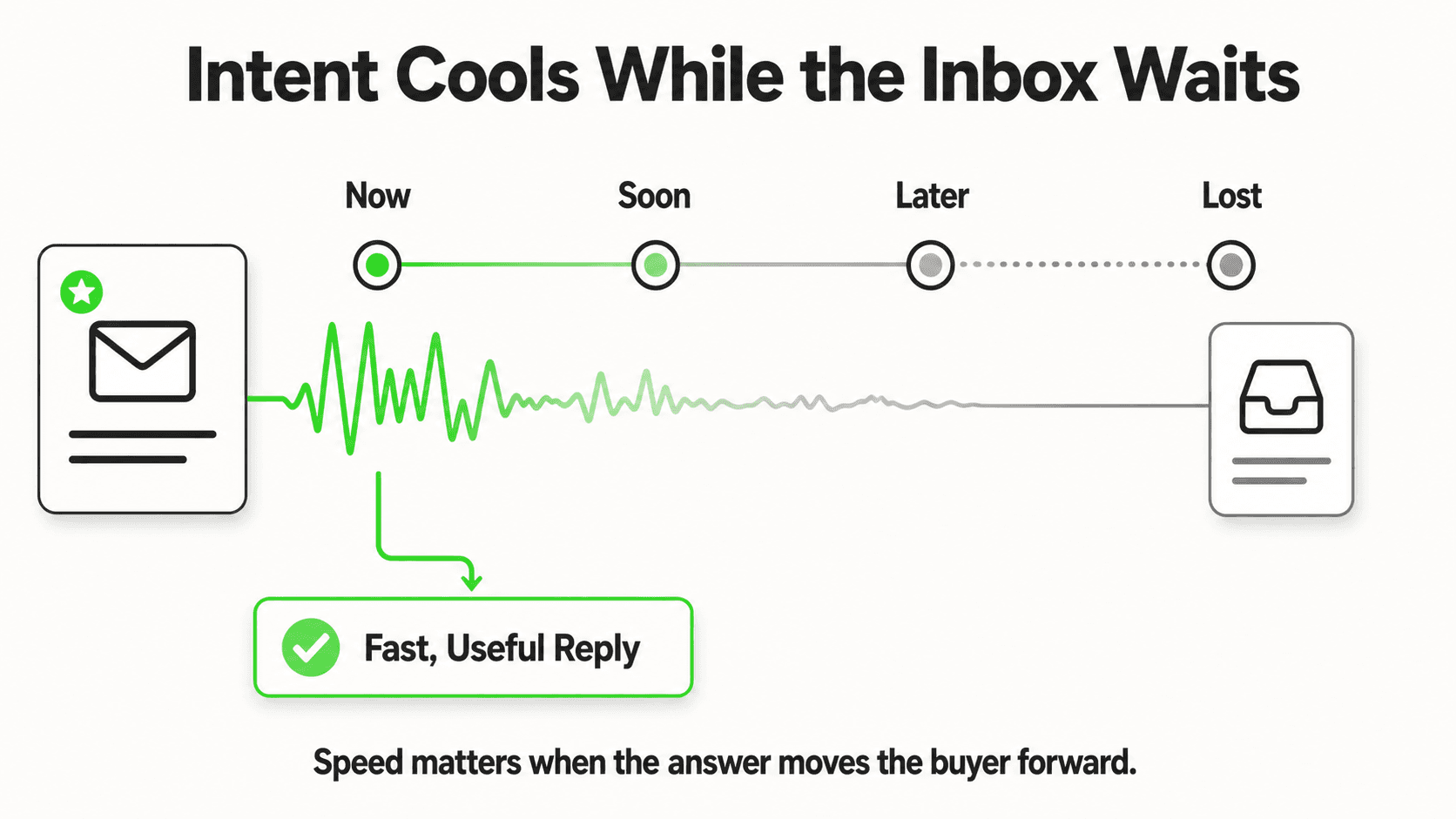
- Intent decay — The moment someone submits an inquiry, their buying intent is at its peak. Every minute that passes, that intent fades as other priorities take over.
- Competitive shopping — In most industries, prospects contact multiple providers simultaneously. The first to respond frames the conversation and sets the benchmark.
- Perception of service quality — Prospects extrapolate. If a business takes 6 hours to respond to a sales inquiry, the prospect assumes the post-sale service will be equally slow.
A 2024 study by Forbes and multiple research firms confirmed that lead value decays approximately 50% within 48 hours without contact, with the steepest decline occurring in the first hour. The first vendor to respond wins 35% to 50% of all sales, according to data compiled by LeadAngel and Kixie.
With that universal pattern established, let's examine how it plays out — with very different stakes — across 10 industries.
Real Estate: Where Minutes Mean Commissions
Average industry response time: 47 hours. Top performers: under 5 minutes.
Real estate is perhaps the most-studied industry for lead response time, and the data is brutal. According to research compiled by Follow Up Boss and The Close, the average real estate agent takes 47 hours to respond to an online lead. Nearly half of all leads never receive a response at all.
| Metric | Data Point | Source |
|---|---|---|
| Average response time | 47 hours | Follow Up Boss |
| Leads never contacted | ~50% | The Close |
| Conversion lift at 5 min | 10x more likely | PrimeStreet |
| Average lead conversion rate | 2-3% (online leads) | Real Geeks |
| Top-performer conversion rate | 7-9% | Follow Up Boss |
| Follow-ups needed to convert | 8-12 touches | The Close |
The financial math is straightforward. On a $400,000 home sale with a 3% buyer's agent commission, that is $12,000 per transaction. If faster response rates increase conversion from 2% to 5% across 100 monthly leads, that is 3 additional closings per month — $36,000 in incremental commission revenue.
Why Real Estate Is Especially Sensitive
Real estate leads are high-intent but low-loyalty. A buyer browsing listings at 9 PM on a Tuesday will submit inquiries on 3-4 properties simultaneously. The agent who responds first gets the showing, and the agent who gets the showing wins the relationship. Research from PrimeStreet shows that agents who respond within 5 minutes are 10 times more likely to convert that lead into a client appointment.
The challenge is structural: most agents are solo practitioners juggling showings, open houses, and paperwork. They cannot physically respond to every web inquiry within 5 minutes. This is exactly why AI-powered response systems for real estate have gained traction — they provide instant engagement while the agent finishes their current showing.
The After-Hours Factor
A significant share of real estate inquiries arrive outside business hours — evenings and weekends when buyers have time to browse listings (industry data from Follow Up Boss and Real Geeks consistently shows after-hours as a peak inquiry window). An inquiry that sits unanswered overnight is an inquiry your competitor answered at 10 PM.
Healthcare: When Patients Cannot Wait
Average industry response time: 2+ hours for calls, 48+ hours for web inquiries. Top performers: under 10 minutes.
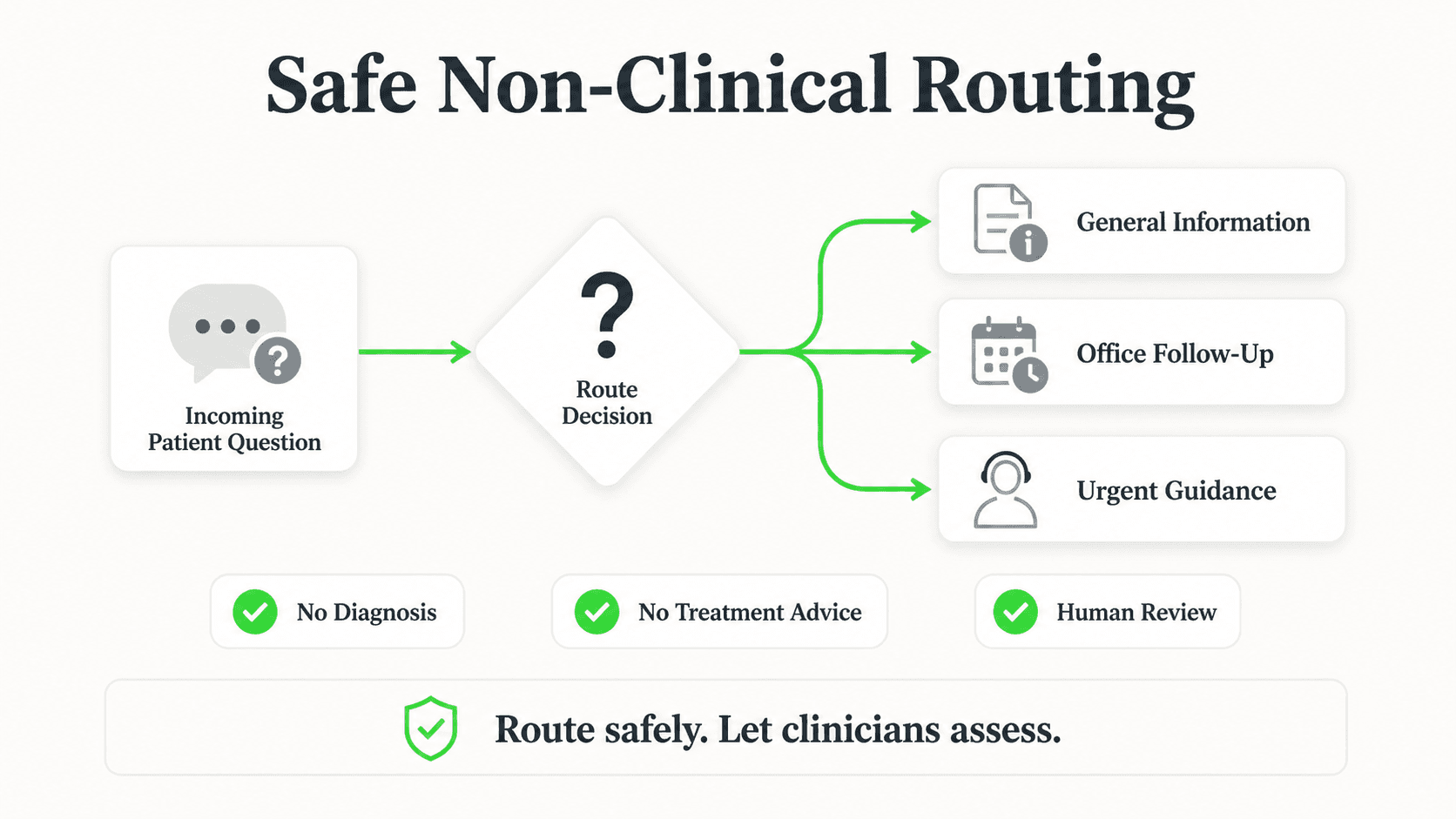
Healthcare presents a unique response time challenge because the stakes extend beyond revenue to patient outcomes. Research from Keona Health and T2 Group shows that the average healthcare practice misses 29% of incoming calls, and each missed call represents a patient who may delay necessary care.
| Metric | Data Point | Source |
|---|---|---|
| Average calls missed | 29% of inbound calls | Keona Health |
| Monthly missed calls (avg practice) | 100+ calls | T2 Group |
| Revenue loss from missed calls | Up to $950K/year (12-provider practice) | T2 Group |
| Callers who won't call back | Over 50% | Practice Builders |
| Patients preferring online booking | 80% | Healthgrades |
| No-show reduction with reminders | 29% | LLCBuddy |
The revenue impact is staggering. A 12-provider medical practice in Ohio documented $950,000 in annual lost revenue from approximately 20 missed calls per day, according to research published by T2 Group. Each missed new patient call represents not just one appointment but an entire patient lifetime value.
The Patient Shopping Behavior
Modern patients behave like consumers. When a healthcare practice does not answer the phone or respond to a web form promptly, more than half of callers will not attempt to reach that practice again — they simply move to the next provider in their search results.
Research from MGMA shows that missed or delayed inquiries reduce annual revenue by 15-24% depending on specialty. For healthcare practices competing for patients in the same geography, this creates a stark divide: practices that answer every inquiry quickly grow, while practices that rely on voicemail and callbacks slowly lose market share.
29%
Of healthcare calls go unanswered
$950K
Annual revenue lost (12-provider practice)
50%+
Of callers won't try again after a missed call
Insurance: The Multi-Quote Race
Average industry response time: multiple hours. First responder wins 35-50% of all quotes.
Insurance is one of the purest tests of speed-to-lead, because the buying behavior is inherently comparative. When a consumer requests an insurance quote, they almost always request quotes from 3 to 5 providers simultaneously. The agency that responds first does not just get first-mover advantage — they frame the entire evaluation.
| Metric | Data Point | Source |
|---|---|---|
| Quotes requested per buyer | 3-5 simultaneously | LIMRA / Insurance Information Institute |
| First responder win rate | 35-50% | LeadAngel / Kixie |
| Lead value decay at 48 hours | ~50% | Forbes / Teamgate |
| Final expense conversion benchmark | 10-12% on exclusive leads | Stallion Leads |
| Term life conversion benchmark | 5-8% on exclusive leads | Stallion Leads |
| Response within 5 min vs 30 min | 21x qualification difference | InsideSales.com |
Why First Response Wins in Insurance
Insurance products are complex and often feel interchangeable to consumers. The first agent to respond does something critical: they educate the prospect on what to look for. This subtle framing advantage means that subsequent quotes from competitors are evaluated through the lens the first agent established.
For property and casualty insurance, the effect is even more pronounced. A homeowner requesting quotes after a life event (new home purchase, new car, marriage) has a narrow window of buying urgency. Research shows that leads contacted within 5 minutes convert at dramatically higher rates than those contacted even 10 minutes later.
Insurance agencies using AI-powered response systems report that instant quote acknowledgment — even before the full quote is prepared — keeps the prospect engaged and reduces the likelihood that they commit to a competitor's quote before yours is ready. The key insight is that the first meaningful response does not need to be the full quote — it needs to demonstrate attentiveness and set expectations for the quote delivery timeline.
Legal: High-Value Cases Will Not Wait
Average industry response time: 17 hours. Top performers: under 5 minutes.
Legal intake may have the highest per-lead financial stakes of any industry. A single personal injury case can be worth tens of thousands of dollars in fees. Yet research from Hennessey Digital's 2024 Lead Form Response Time Study found that the average law firm takes 17 hours to respond to a web lead.
| Metric | Data Point | Source |
|---|---|---|
| Average response time | 17 hours | Hennessey Digital (2024) |
| Firms responding in under 5 min | 28% (up from 18% in 2023) | Hennessey Digital |
| Firms responding in under 10 min | 35% | Hennessey Digital |
| Conversion lift at 5 min response | 300% increase | Law Firm Marketing Pros |
| Average conversion rate (legal) | 5-20% (varies by practice area) | Legal Brand Marketing |
| Prospects who leave for competitor | 30% if no response | Gabbi AI |
The improvement trend is notable: 28% of law firms now respond within 5 minutes, up 10 percentage points from just 18% in 2023. But that still means 72% of firms leave leads waiting longer than the critical window.
The Financial Stakes of Legal Response Time
Consider the math for a personal injury firm. If the average case value is $15,000 in fees and the firm receives 200 web leads per month with a baseline conversion rate of 8%, that is 16 signed clients producing $240,000 in monthly revenue. Research from Law Firm Marketing Pros shows that responding within 5 minutes can increase conversion by 300%. Even a more conservative doubling of conversion rate would mean 16 additional clients — $240,000 more per month.
If a firm fails to respond at all, research from Gabbi AI shows that 30% of prospects immediately turn to a competitor. In high-value practice areas like personal injury, medical malpractice, and commercial litigation, each lost prospect represents significant lifetime revenue.
Legal practices implementing AI-powered intake systems gain a structural advantage because they can qualify leads, ask initial case questions, and schedule consultations instantly — even when every attorney in the firm is in court or depositions. The initial intake conversation does not require legal judgment; it requires speed and attentiveness.
Home Services: The Emergency Factor
Average industry response time: varies widely. Emergency calls convert 40-70% higher with rapid response.
Home services is unique because it spans both emergency and routine work, and the response time expectations differ dramatically between the two. A homeowner with a burst pipe at 11 PM has zero tolerance for delay. A homeowner requesting a quote for a kitchen remodel next spring will wait days.
| Metric | Data Point | Source |
|---|---|---|
| Homeowners choosing first responder | 78% | RapidWire |
| Calls missed (avg plumbing business) | 28% | Suzee AI |
| Callers who hang up on voicemail | 85% | Suzee AI |
| Emergency call conversion rate | 65-80% with rapid response | EstateHub |
| Routine maintenance conversion rate | 4-6% baseline | EstateHub |
| Conversion lift at 60-second response | Up to 391% | DCM Moguls |
The data from RapidWire is particularly revealing: 78% of homeowners choose the first contractor to respond. Combined with the fact that 85% of callers who reach voicemail simply hang up and call the next provider, the message is clear — in home services, you either answer or you lose.
Emergency vs. Routine: Two Different Games
For emergency services (plumbing leaks, HVAC failures, electrical issues), response time is essentially binary: you either answer the call or you do not get the job. Research from Suzee AI found that the average plumbing business misses approximately 28% of incoming calls, and each missed emergency call represents $200 to $500 in immediate revenue, plus the lifetime value of that customer relationship.
For routine services (remodeling estimates, seasonal maintenance, new installations), the dynamic shifts toward follow-up speed. The homeowner submitting a form for a roof replacement quote on Saturday morning is comparing 3-4 contractors. The one who responds with a quote acknowledgment and scheduling link within minutes wins the appointment.
The Revenue Impact of Missed Calls
Analysis by Suzee AI estimates the average plumbing business can lose over $50,000 per year to missed calls, based on typical call volume and average job values in the industry. For HVAC companies during peak season (summer/winter), the number can be significantly higher because each emergency call during extreme weather converts at 65-80% when answered immediately.
Education: The Admissions Season Bottleneck
Average industry response time: hours to days. Up to 70% of inquiries never receive a direct human response.
Higher education faces a unique response time challenge: inquiry volume is not evenly distributed. During admissions season, inquiry floods can overwhelm even well-staffed teams. Research compiled by Element451 and LeadSquared shows that up to 70% of student inquiries never receive a direct human response because admissions teams are overwhelmed.
| Metric | Data Point | Source |
|---|---|---|
| Inquiries without human response | Up to 70% | Element451 |
| Lead-to-enrollment conversion (full funnel) | 3-5% | Reshape OS |
| Applicant-to-enrollment conversion | ~20% | Element451 |
| Yield rate (admitted to enrolled) | 20-40% | Ruffalo Noel Levitz |
| Conversion lift at 5 min response | Up to 21x | InsideSales.com |
| Students evaluating multiple institutions | Standard behavior | Edvisorly |
Why Response Speed Determines Enrollment
Prospective students evaluate multiple institutions simultaneously — this is standard behavior, not the exception. When a student submits an inquiry to five universities, the institution that responds first with personalized, helpful information gains a significant advantage. Research from BrightCall AI confirms that responding within 5 minutes can be up to 21 times more effective than waiting longer.
The bottleneck is seasonal. During peak admissions periods (October through January for fall enrollment, March through May for final decisions), inquiry volumes can spike several hundred percent above baseline. Admissions counselors who are already managing campus tours, application reviews, and decision committees simply cannot respond to every web form and email in real time.
For educational institutions, AI-powered response systems serve a specific role: they handle the initial acknowledgment, answer common questions (tuition, deadlines, program requirements), and route qualified prospects to the right admissions counselor. This ensures that no inquiry goes unanswered during the critical first minutes, even during peak season floods.
Hospitality: Direct Bookings vs. OTA Commissions
Average response time for direct inquiries: 6+ hours. Hotels using AI see 20-40% more direct bookings.
In hospitality, the response time conversation is fundamentally a revenue conversation. When a potential guest inquires directly through a hotel website and does not receive a prompt response, they do not simply wait — they book through an OTA (online travel agency) like Booking.com or Expedia, costing the hotel 15-25% in commission fees.
| Metric | Data Point | Source |
|---|---|---|
| OTA market share of bookings | ~55% | Mastercard Services |
| OTA commission rate | 15-25% | Industry standard |
| Direct bookings from OTA discovery | 65% | Hospitality Net |
| Guests citing fast response in booking decision | 47% | Chipp AI / HiJiffy |
| Direct booking lift with AI response | 20-40% | HiJiffy / Asksuite |
| Guest inquiries handled by AI | ~80% of routine questions | Hotel Tech Report |
Research from Mastercard Services shows that OTAs currently hold approximately 55% of hotel booking market share. But here is the nuance: 65% of all direct bookings come from guests who initially found the property through an OTA. This means the guest discovered you on Booking.com, then visited your website to check for a better rate — and whether they book direct or return to the OTA often depends on whether they get an immediate answer to their question.
The After-Hours Booking Window
Hotels face a specific timing problem. A significant portion of booking inquiries arrive during evenings and weekends — when travelers are researching their next trip from their couch. Research from HiJiffy and Asksuite shows that 47% of consumers say fast responses on digital channels play a major role in their booking decision.
If a guest asks "Is the pool heated?" or "Do you offer airport transfers?" at 10 PM and gets a response at 9 AM the next morning, they have likely already booked elsewhere. Hotels implementing AI-powered concierge systems report that chatbots handle approximately 80% of routine guest inquiries instantly, freeing staff for complex requests while capturing direct bookings that would otherwise flow to OTAs.
For a 100-room hotel with an average nightly rate of $150 and 70% occupancy, converting even 10% of OTA bookings to direct bookings saves over $115,000 annually in commission fees. Speed of response is the primary lever.
Stop Losing Leads to Slow Responses
See how Hyperleap AI Agents respond to customer inquiries instantly, 24/7, across WhatsApp, web chat, Instagram, and Facebook Messenger.
Start Your Free TrialDental: The Practice Next Door
Average industry response time: 2+ hours. Top 10% of practices convert 75% of answered calls.
Dental is one of the most competitive local service industries, and the data reflects it. Analysis of over 10,000 dental practice calls by Resonate App shows that only 23% of total calls convert to booked appointments when factoring in both answered and missed calls. The breakdown tells the story: only 68% of calls are answered, and of those answered calls, only 42% result in booked appointments.
| Metric | Data Point | Source |
|---|---|---|
| Total calls converting to appointments | 23% | Resonate App |
| Calls answered (avg practice) | 68% | Resonate App |
| Answered calls converting to appointments | 42% (avg), 53% (above avg) | Resonate App |
| Top 10% conversion rate | 75% of answered calls | Resonate App |
| Conversion lift at 1-min response | 391% | DCM Moguls |
| Lifetime patient value | ~$8,000 | T2 Group |
| Revenue loss from delayed inquiries | 15-24% annually | MGMA |
Why Dental Is a Speed Game
Dental patients shop. When someone searches "dentist near me" and calls two or three practices, the one that answers, sounds welcoming, and offers availability wins. Research from DCM Moguls confirms that responding to inquiries within 1 minute increases conversion rates by 391% — and that waiting just five extra minutes causes conversion rates to drop by nearly 8 times.
The financial impact compounds over time. Each new patient represents approximately $8,000 in lifetime value to a dental practice, according to T2 Group. A practice that misses 5 new patient calls per week loses $40,000 in lifetime patient value weekly — over $2 million annually.
The top 10% of dental practices have figured this out: they answer 95% of calls and convert 75% of answered calls into scheduled appointments. The rest miss 20-30% of calls and convert less than half of the ones they do answer. The gap between top performers and average performers is enormous, and it starts with response speed.
The Practice Next Door Problem
In urban and suburban areas, the average patient has 5-10 dental practices within a 10-minute drive. Research shows that patients who reach voicemail do not leave a message — they call the next practice on the list. Every missed call is a patient your competitor answers.
Automotive: After-Hours Browsers
Average industry response time: 61% respond within 15 minutes, but 19% take over an hour. The 10-30 minute window is critical.
Automotive dealerships have made significant progress on response time — but the data shows the gap between top performers and laggards is still enormous. Research from Foureyes and DemandLocal found that 61% of dealers now respond to internet leads within 15 minutes, but nearly 40% still take longer, and 4% never respond at all.
| Metric | Data Point | Source |
|---|---|---|
| Dealers responding within 15 min | 61% | Foureyes |
| Dealers taking over 1 hour | 19% | Foureyes |
| Dealers who never respond | 4% | DemandLocal |
| Conversion lift at 5 min response | 100x vs 30 min | InsideSales.com |
| Visit likelihood at 10-30 min response | 3x more likely | Giosg |
| Average internet lead close rate | 10-15% (target) | DealerRefresh |
| Appointment set rate (high performers) | Up to 40% | Foureyes |
The After-Hours Shopping Pattern
The critical insight for automotive dealerships is timing. The majority of online car shopping happens after dealership hours — evenings and weekends when consumers have time to research, compare, and submit inquiries. An inquiry submitted at 8 PM on a Thursday that is not acknowledged until 9 AM on Friday has already gone cold.
Research from Giosg shows that dealerships responding within the 10-30 minute window are 3 times more likely to get a visit from the buyer. But the gold standard remains under 5 minutes, where conversion likelihood increases by up to 100x compared to a 30-minute delay.
The financial stakes are proportional to the transaction size. If the average car sale generates $2,000 in gross profit and a dealership receives 500 internet leads per month, improving close rate from 10% to 15% through faster response represents 25 additional sales per month — $50,000 in incremental gross profit.
High-performing dealerships achieve appointment set rates as high as 40%, compared to the industry average of 10-15%. The primary differentiator is not the salesperson's skill — it is whether the lead received a timely, personalized response before the prospect moved on.
Beauty and Salons: Missed Calls During Appointments
Average missed call rate: significant. 80% of callers will not leave a message — they book elsewhere.
The beauty and salon industry has a structural response time problem that differs from every other industry on this list: the service provider and the salesperson are the same person. When a stylist is mid-appointment, they cannot answer the phone. When an esthetician is performing a facial, they cannot respond to a DM. This creates a built-in response gap that costs the industry billions in lost bookings annually.
| Metric | Data Point | Source |
|---|---|---|
| Callers who won't leave a message | 80% | HeyRosie |
| Client calls outside business hours | 81% | Zenoti |
| Appointments booked outside office hours | ~40% | Zenoti |
| Clients who abandon if booking is difficult | 71% (79% for medspas) | Mangomint |
| No-show rate (salons/spas) | 15-30% | Vocaly AI |
| Med spa appointment cancellation rate | 22.25% | Mangomint |
The Stylist-Is-Busy Problem
Research from Zenoti's 2025 consumer survey found that 81% of salon and spa clients call outside normal business hours. This is not a coincidence — clients think about booking haircuts and facials during their commute, during lunch breaks, or in the evening. If the salon is closed or the staff is with clients, those calls go unanswered.
The data from HeyRosie is stark: 80% of people looking to book a last-minute appointment will not leave a message if they reach voicemail. They simply call or book with the next salon that answers. For beauty and salon businesses, this means every unanswered call during peak service hours is revenue walking to a competitor.
Mangomint's research on med spas adds another dimension: 71% of clients abandon bookings if the process is difficult or slow, rising to 79% for medspa clients who tend to be higher-value customers. The friction is not just about phone calls — it extends to slow DM responses on Instagram, delayed text replies, and cumbersome online booking forms.
The solution increasingly adopted across the industry is AI-powered booking assistants that respond instantly on WhatsApp, Instagram DM, and web chat — capturing bookings while the stylist finishes their current client, even at 9 PM on a Saturday.
Cross-Industry Benchmarks
The data across all 10 industries reveals both universal patterns and industry-specific dynamics. The table below summarizes the key metrics side by side:
| Industry | Avg. Response Time | Top-Performer Response | First-Response Win Rate | Revenue at Risk |
|---|---|---|---|---|
| Real Estate | 47 hours | Under 5 min | 10x conversion lift | $36K+/mo in commissions |
| Healthcare | 2+ hours (calls) | Under 10 min | 50%+ callers lost | $950K/year (12-provider) |
| Insurance | Multiple hours | Under 5 min | 35-50% win rate | Entire policy lifetime value |
| Legal | 17 hours | Under 5 min | 300% conversion lift | $240K+/mo (PI firm) |
| Home Services | Varies | Under 1 min | 78% choose first responder | $50K+/year missed calls |
| Education | Hours to days | Under 5 min | 21x qualification lift | Tuition revenue per student |
| Hospitality | 6+ hours | Under 1 min | 47% cite speed in decision | $115K+/year OTA savings |
| Dental | 2+ hours | Under 1 min | 391% conversion lift | $2M+/year in patient LTV |
| Automotive | 15 min to 1 hr+ | Under 5 min | 100x at 5 min vs 30 min | $50K/mo gross profit |
| Beauty/Salons | Often unanswered | Instant | 80% won't leave message | Ongoing client revenue |
Three Universal Takeaways
1. The 5-minute threshold is real across every industry. Whether you are selling $400,000 homes or $50 haircuts, the data consistently shows that response within 5 minutes dramatically outperforms any longer delay. The specific multiplier varies (10x in real estate, 21x in education, 100x in automotive), but the direction never changes.
2. The gap between top performers and average performers is widening. In every industry studied, the top 10-20% of businesses have figured out fast response. They are capturing disproportionate market share while the majority of businesses still respond in hours or days. This is not a marginal advantage — it is a structural one.
3. After-hours response is the biggest untapped opportunity. Across real estate, hospitality, beauty, automotive, and education, a significant portion of inquiries arrives outside business hours. Businesses that can respond at 9 PM on a Saturday have functionally no competition from businesses that only respond during weekday office hours.
Faster Response Starts Now
The data across 10 industries tells a consistent story: speed of response is not a nice-to-have — it is the single highest-leverage conversion improvement most businesses can make. The specifics vary by industry, but the pattern does not. Five minutes beats thirty minutes. Thirty minutes beats two hours. And any response beats no response at all.
The businesses winning in each of these industries have not hired armies of staff to sit by the phone 24/7. They have implemented systems — primarily AI-powered response tools — that provide instant, personalized engagement at any hour. The technology exists today to respond to every lead within seconds, across every channel, with answers grounded in your actual business information.
The question is not whether faster response will improve your conversion rates. The data makes that unambiguous. The question is whether you close that gap before your competitors do.
Further Reading
Authoritative external sources used and recommended for further research on this topic:
Frequently Asked Questions
What is the ideal response time for business leads?
Research consistently shows that responding within 5 minutes produces the highest conversion rates across all industries. The Harvard Business Review and InsideSales.com studies found that leads contacted within 5 minutes are 21 times more likely to be qualified than those contacted at 30 minutes. While the specific conversion multiplier varies by industry, no research has ever found that slower response outperforms faster response.
Does response time matter more than response quality?
Both matter, but speed has a larger measurable impact on conversion. A fast, adequate response consistently outperforms a slow, excellent response because of intent decay and competitive shopping behavior. The ideal approach is a fast initial response that acknowledges the inquiry and sets expectations, followed by a high-quality detailed follow-up. This is why many businesses use AI agents for the initial response and human staff for the detailed consultation.
How can a small business respond within 5 minutes without hiring more staff?
AI-powered chatbots and automated response systems are the most cost-effective solution. These tools provide instant responses to common inquiries 24/7, qualify leads, and route urgent requests to the appropriate team member. The technology has matured significantly — modern AI agents built on retrieval-augmented generation (RAG) can answer questions from your specific business documents, book appointments, and capture lead information without generic or inaccurate responses.
Which industry loses the most revenue from slow response times?
The absolute dollar amount varies by transaction size. Legal firms (particularly personal injury) and real estate agencies face the highest per-lead losses because individual transaction values are very high. However, healthcare and dental practices may lose the most in aggregate because of the compounding effect of lifetime patient value — a single lost dental patient represents approximately $8,000 in lifetime revenue, and practices lose multiple patients every day to slow responses.
What is the average business response time in 2026?
Research from RevenueHero analyzing over 1,000 companies found that the average business response time is over 29 hours, and over 63% of businesses never respond at all. This represents a significant gap between what consumers expect (minutes) and what most businesses deliver (hours or days). The businesses that close this gap first within their industry gain a durable competitive advantage. You can see pricing plans for AI response tools that help bridge this gap.
Respond to Every Lead in Seconds
Hyperleap AI Agents provide instant, document-grounded responses across WhatsApp, web chat, Instagram, and Facebook Messenger — 24/7, starting at $40/month.
Start Your 7-Day Free TrialIndustry Solutions
See how AI chatbots work for these industries:
Related Articles
Patient Communication Statistics 2026 for Healthcare
35+ sourced statistics on patient communication gaps, response times, and provider switching behavior reshaping practices in 2026.
Real Estate Lead Response Statistics 2026
40+ sourced statistics on real estate lead response times, conversion rates, and agent technology adoption. The data behind why speed wins in real estate.

Law Firm Intake Stats 2026: 26% Never Respond to Leads
40+ sourced statistics on law firm response times, lead conversion rates, and client expectations. The data shows why the fastest firms win the best cases.
How Slow Response Times Cost Your Business in Sales
Research shows responding within 5 minutes makes you 100x more likely to convert leads. Here's what slow response times actually cost—and how to fix it.