Why Schools Lose Enrollments in Peak Admissions
Peak-admissions coaching institutes get 1,000+ daily inquiries and lose 40-60% of enrollments to slow responses and overwhelmed staff.

TL;DR: India's coaching institute market is projected to reach USD 17.4 billion by 2033, yet most institutions lose 40-60% of potential enrollments during peak admissions because they cannot respond fast enough. With over 22 lakh NEET aspirants and 13 lakh JEE aspirants competing each year, the admissions window is short and unforgiving. Institutions that respond within 5 minutes are 21x more likely to convert inquiries than those that wait 30 minutes.
Every unanswered WhatsApp message during admissions season is a student enrolling at your competitor. India's education sector, valued at over USD 225 billion (Source: IBEF), generates a staggering volume of admissions inquiries between January and July each year. Coaching institutes preparing students for JEE, NEET, UPSC, and other competitive exams receive 500 to 1,000+ inquiries daily during peak windows. Schools across CBSE, ICSE, and state boards face a similar flood as parents scramble to secure seats.
Research consistently shows that 78% of customers buy from the first company that responds to their inquiry (Source: LeadAngel). In education, where decisions involve lakhs of rupees and a child's future, this pattern is even more pronounced. Parents who receive a prompt, helpful response form an immediate impression of the institution's professionalism and care.
Yet most schools and coaching institutes still rely on overwhelmed front-desk staff, busy phone lines, and manual WhatsApp replies. The result is predictable: delayed responses, frustrated parents, and enrollments lost to competitors who simply answered faster.
The solution is not hiring more temporary staff every admissions season. It is building systems that can handle 1,000+ inquiries simultaneously, 24 hours a day, without compromising the quality of each interaction.
Who This Article Is For
This article is written for admissions heads, institute directors, and school principals in India who experience the annual chaos of peak admissions and want to understand exactly where and why enrollments are being lost.
What Causes Enrollment Leakage During Peak Admissions?
Enrollment leakage refers to the gap between the number of inquiries an institution receives and the number of students who actually enroll. During peak admissions, this gap widens dramatically because the volume of inquiries overwhelms the capacity of admissions teams.
For coaching institutes like Allen, FIITJEE, Aakash, and Resonance, peak admissions coincide with exam results and registration windows. A mid-sized coaching institute might handle 50-100 inquiries daily during off-season. When JEE or NEET results are announced, this number can spike to 500-1,000+ inquiries in a single day. Each inquiry involves questions about batches, fees, faculty, study materials, hostel facilities, and scholarship eligibility.
For schools, admissions season (typically January to April) brings a similar surge. With over 28,900 CBSE-affiliated schools and 2,750+ CISCE-affiliated schools in India (Source: CBSE), the competition for quality enrollments is intense. Parents research multiple schools simultaneously, and the institution that provides the most responsive, informative experience wins.
The core problem is not a lack of demand. India has over 2.5 crore students enrolled in CBSE schools alone. Over 22 lakh students appeared for NEET 2025 (Source: Careers360), and approximately 13 lakh students sit for JEE Main annually. The demand is massive. The problem is that institutions cannot process this demand fast enough during the narrow windows when decisions are being made.
Why Schools and Coaching Institutes Fail During Peak Admissions
The enrollment losses during peak season are not random. They follow predictable patterns that compound into significant revenue impact.
The response time gap
The most critical factor in admissions conversion is speed. Research shows that responding within 5 minutes makes you 21x more likely to qualify a lead than waiting 30 minutes (Source: Kixie). In education, where parents are emotionally invested and researching multiple options simultaneously, this window is even tighter.
Consider a typical scenario: a parent sends a WhatsApp message at 8 PM asking about Class 6 admissions at your school. Your office is closed. The message sits unanswered until 9 AM the next morning. By then, the parent has already received responses from two other schools, scheduled a campus visit at one of them, and mentally narrowed their shortlist. Your 13-hour delay did not just lose one inquiry. It lost the compound value of that family's enrollment fees, referrals, and sibling enrollments over the next 5-10 years.
Phone lines that cannot scale
During admissions season, the front desk phone becomes the biggest bottleneck. A single receptionist can handle one call at a time, with each call lasting 5-15 minutes. At peak times, that means 4-12 calls per hour. When 200+ families are trying to call simultaneously, the math is unforgiving.
The numbers: If a coaching institute receives 300 phone inquiries daily during peak admissions and each call takes an average of 8 minutes, that requires 40 hours of phone time per day. Even with 5 dedicated phone counselors working 8-hour shifts, you can only handle 240 calls. The remaining 60 callers get busy signals, are put on hold, or give up entirely.
WhatsApp message backlogs
With over 537 million WhatsApp users in India (Source: Statista), WhatsApp has become the dominant channel for education inquiries. Schools and coaching institutes receive hundreds of WhatsApp messages daily during peak season. But unlike phone calls, unanswered WhatsApp messages create a visible backlog that grows exponentially.
A counselor handling WhatsApp manually can respond to 15-20 detailed inquiries per hour. During peak admissions, when 200+ messages arrive daily, the backlog quickly becomes unmanageable. Messages from Monday remain unanswered on Wednesday. By then, the parent has enrolled their child elsewhere.
Parents enrolling at the competitor who responded first
30% of leads who do not receive a fast response will seek information from competitors (Source: ICEF Monitor). In the Indian education market, where parents typically shortlist 3-5 institutions, your competitors are literally one WhatsApp message away.
The decision-making process for education in India is family-driven. Parents, grandparents, and sometimes extended family members research together, often during evenings and weekends. If your response arrives 12-24 hours after the inquiry, the family has already moved on to discussing the institutions that responded promptly.
Revenue impact that compounds over time
A mid-range coaching institute in a city like Kota, Hyderabad, or Delhi charges ₹1-3 lakhs per year for a 2-year JEE or NEET preparation course. If the institute loses just 10 enrollments per day during a 60-day peak admissions window due to slow responses, that is 600 lost enrollments, representing ₹6-18 crores in lost revenue. For a premium school charging ₹2-5 lakhs annually, the calculation is similarly sobering.
7 Ways Slow Admissions Response Costs Your Institution
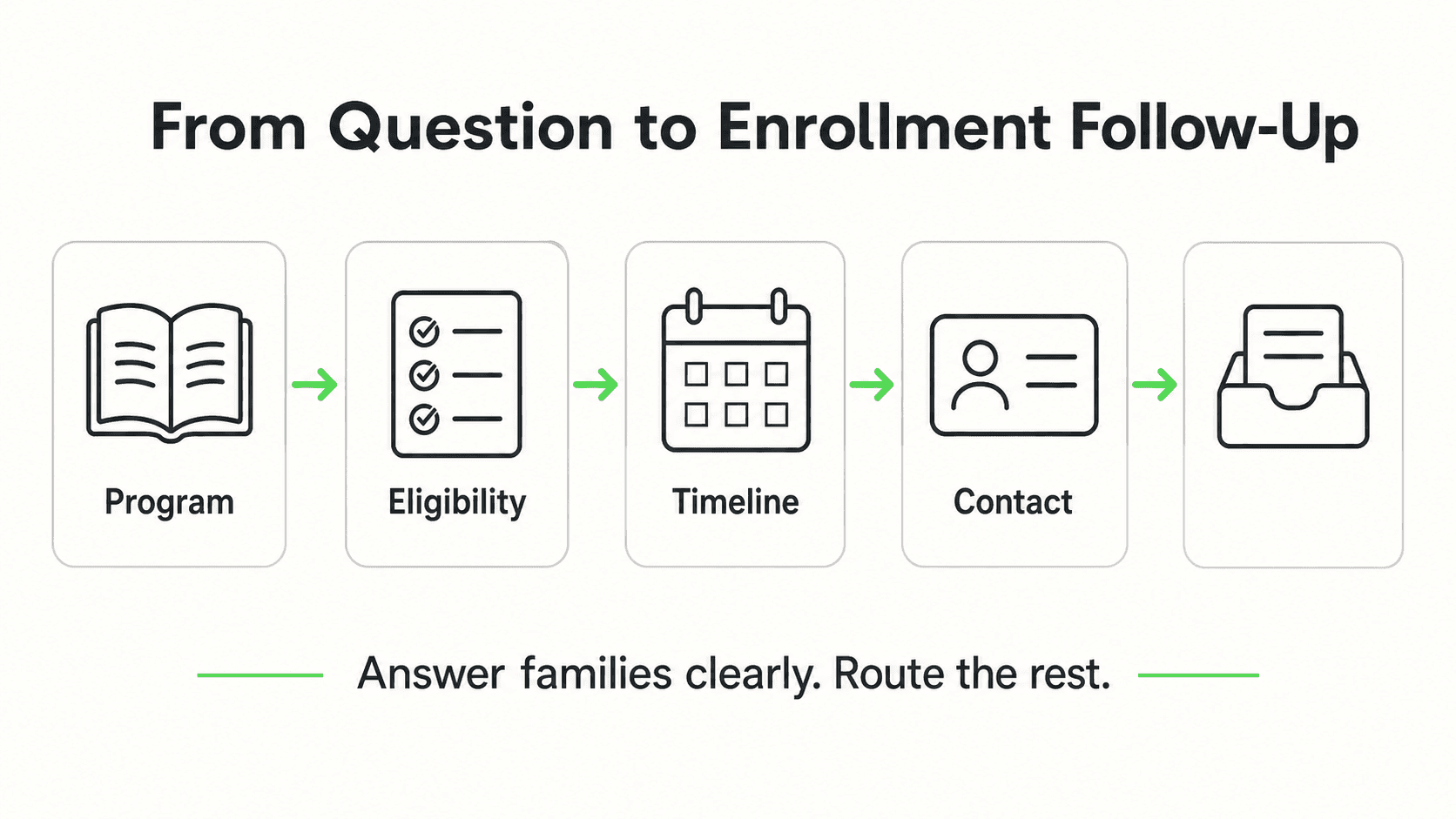
The impact of slow admissions response goes far beyond individual lost enrollments. Here are seven specific ways it damages your institution's growth and reputation.
1. Missed inquiries during the golden window
What this looks like in practice: Your institute runs a ₹5 lakh Google Ads campaign for JEE coaching admissions. The ads generate 150 clicks per day, resulting in 40-50 inquiry form submissions and WhatsApp messages. But your admissions team of 3 counselors can only process 60-70 inquiries per day during the 8-hour window. By the time they get to the remaining inquiries the next morning, the student has already visited a competitor's centre.
Real-world impact: Research from UniQuest shows that students who receive a great inquiry experience accept admissions offers more than twice as often as others (Source: ICEF Monitor). Every hour of delay during peak season directly reduces your admissions yield.
Why it matters: The admissions window for competitive exams is remarkably short. JEE Main results trigger a 2-3 week decision window. NEET results create a similar rush. Schools have a 3-4 month window. Missing inquiries during these windows means waiting an entire year for another chance.
Key consequences:
- Inquiries received after 6 PM go unanswered until the next morning
- Weekend inquiries pile up for Monday processing
- Students who inquire during exam result announcements face the longest wait times
2. Wasted marketing spend on ads you cannot service
What this looks like in practice: Digital ad spending in India's education sector jumped from ₹819 crore in 2024 to ₹1,228 crore in 2025, a nearly 50% increase (Source: Exchange4media). Coaching institutes and schools invest heavily in Google, Meta, and YouTube ads to drive inquiries during peak season.
Real-world impact: If your institute spends ₹50,000 per day on digital ads during peak admissions and generates 100 inquiries daily, but your team can only handle 60 of those inquiries effectively, you are wasting ₹20,000 per day on ads that generate inquiries you cannot service. Over a 60-day peak window, that is ₹12 lakhs wasted.
Why it matters: The cost per lead in education advertising ranges from ₹200-₹800 depending on the exam category and location. When you generate a lead through paid advertising and then fail to respond in time, you have paid to deliver that student to a competitor.
Key consequences:
- Cost per acquisition increases as conversion rates drop
- Marketing ROI appears poor, leading to budget cuts that actually make the problem worse
- Competitors with better response systems get better ad performance at lower costs
3. Competitor advantage through faster response
What this looks like in practice: A parent sends the same inquiry to three coaching institutes via WhatsApp. Institute A responds in 3 minutes with a detailed, personalised answer. Institute B responds in 4 hours with a generic reply. Institute C responds the next day. Institute A gets the campus visit. Institute A gets the enrollment.
Real-world impact: In the Indian coaching institute market, projected to reach USD 17.4 billion by 2033 (Source: IMARC Group), competition is intensifying. Institutes that adopt automated response systems can handle 3x more inquiries during peak season without adding staff, creating a structural advantage that compounds over time.
Why it matters: Speed of response is becoming a proxy for institutional quality in parents' minds. A school that responds instantly signals efficiency, organisation, and care. A school that takes days to reply signals disorganisation, which raises questions about the quality of education.
Key consequences:
- First-mover advantage in admissions is winner-take-most
- Institutes with AI-powered responses create a perception of premium service
- The gap between responsive and unresponsive institutions widens each year
4. Parent trust erosion through inconsistent information
What this looks like in practice: A parent calls the front desk and is told the fee for the 2-year NEET batch is ₹2.5 lakhs. They then message on WhatsApp and another counselor quotes ₹2.8 lakhs. They visit the centre and hear ₹2.6 lakhs with different scholarship criteria. Each inconsistency erodes trust.
Real-world impact: In India, where education decisions are high-value family decisions, trust is the foundation of enrollment. Parents discuss their experiences with other parents in apartment complexes, WhatsApp groups, and parent communities. One inconsistent interaction can influence 10-15 other families through word of mouth.
Why it matters: During peak season, when multiple counselors handle inquiries across multiple channels, information inconsistency becomes almost inevitable without centralised systems. Different staff members quote different fees, share different batch timings, and provide different scholarship criteria.
Key consequences:
- Parents feel the institute is disorganised or dishonest
- Word-of-mouth referrals decline as parents share negative experiences
- Trust deficit makes it harder to justify premium pricing
5. Seasonal staff costs that eat into margins
What this looks like in practice: To handle peak admissions volume, coaching institutes hire 5-10 temporary counselors for 3-4 months. At ₹25,000-40,000 per month per counselor, this adds ₹3.75-12 lakhs in seasonal staffing costs. These temporary staff require training, make more errors, and rarely match the quality of permanent team members.
Real-world impact: Seasonal staff often lack deep knowledge of programs, faculty, and institutional culture. They give generic answers that fail to differentiate your institute from competitors. The money spent on temporary staffing could be invested in systems that perform better at a fraction of the cost.
Why it matters: Margins in education are already under pressure. The India school market is growing at 9.79% CAGR (Source: IMARC Group), but costs are growing faster. Seasonal staffing is an expensive band-aid that does not solve the underlying capacity problem.
Key consequences:
- Training costs for staff who leave after 3-4 months
- Quality inconsistency between permanent and temporary staff
- Higher error rates in fee quotes, batch assignments, and documentation
6. Follow-up failures with undecided parents
What this looks like in practice: A parent visits your school campus and expresses interest but wants to discuss with their spouse before deciding. Your admissions team makes a note to follow up in 3 days. But during peak season, with 200 new inquiries arriving daily, that follow-up note gets buried. Two weeks later, when someone finally calls, the parent has already enrolled at another school.
Real-world impact: Only 3-5% of education inquiries convert to enrollment on the complete funnel (Source: Reshape). The majority of conversions happen through systematic follow-up. During peak season, when admissions teams are overwhelmed with new inquiries, follow-up with existing prospects falls to zero.
Why it matters: The admission decision in India often involves multiple family members and takes 1-3 weeks. Parents need nurturing through this decision period with timely information, reminders about deadlines, and answers to new questions that arise during family discussions. Without systematic follow-up, you lose the majority of your warm leads.
Key consequences:
- Warm leads go cold because no one follows up
- Application deadlines pass without reminders being sent
- Parents who were 80% decided end up at competitors who stayed in touch
7. Long-term reputation damage
What this looks like in practice: A frustrated parent who waited 3 days for a response posts about their experience in a local parents' WhatsApp group with 200+ members. Other parents share similar experiences. The narrative forms that your institute is "difficult to get in touch with" and "not well organised." This perception persists long after admissions season ends.
Real-world impact: In the age of Google reviews and social media, one negative admissions experience can influence hundreds of prospective families. Parents trust peer recommendations over advertising, and a pattern of poor responsiveness during admissions creates a reputation deficit that expensive marketing campaigns cannot easily overcome.
Why it matters: The lifetime value of a single student is significant. For a coaching institute offering a 2-year JEE program at ₹2 lakhs per year, each student represents ₹4 lakhs in revenue. For a K-12 school, a single student who stays from Class 1 to Class 12 represents ₹24-60 lakhs in cumulative fees. Reputation damage that deters even 50 families per year represents crores in lost lifetime revenue.
Key consequences:
- Google reviews and social media posts create permanent negative signals
- Parent community word-of-mouth amplifies individual negative experiences
- Rebuilding reputation takes years, while destroying it takes one admissions season
Stop Losing Enrollments to Slow Responses
Respond to every admission inquiry instantly, 24/7, across WhatsApp, website, and social media. No more missed inquiries, no more overwhelmed staff.
See How It WorksReal Results: What Responsive Institutions Are Achieving
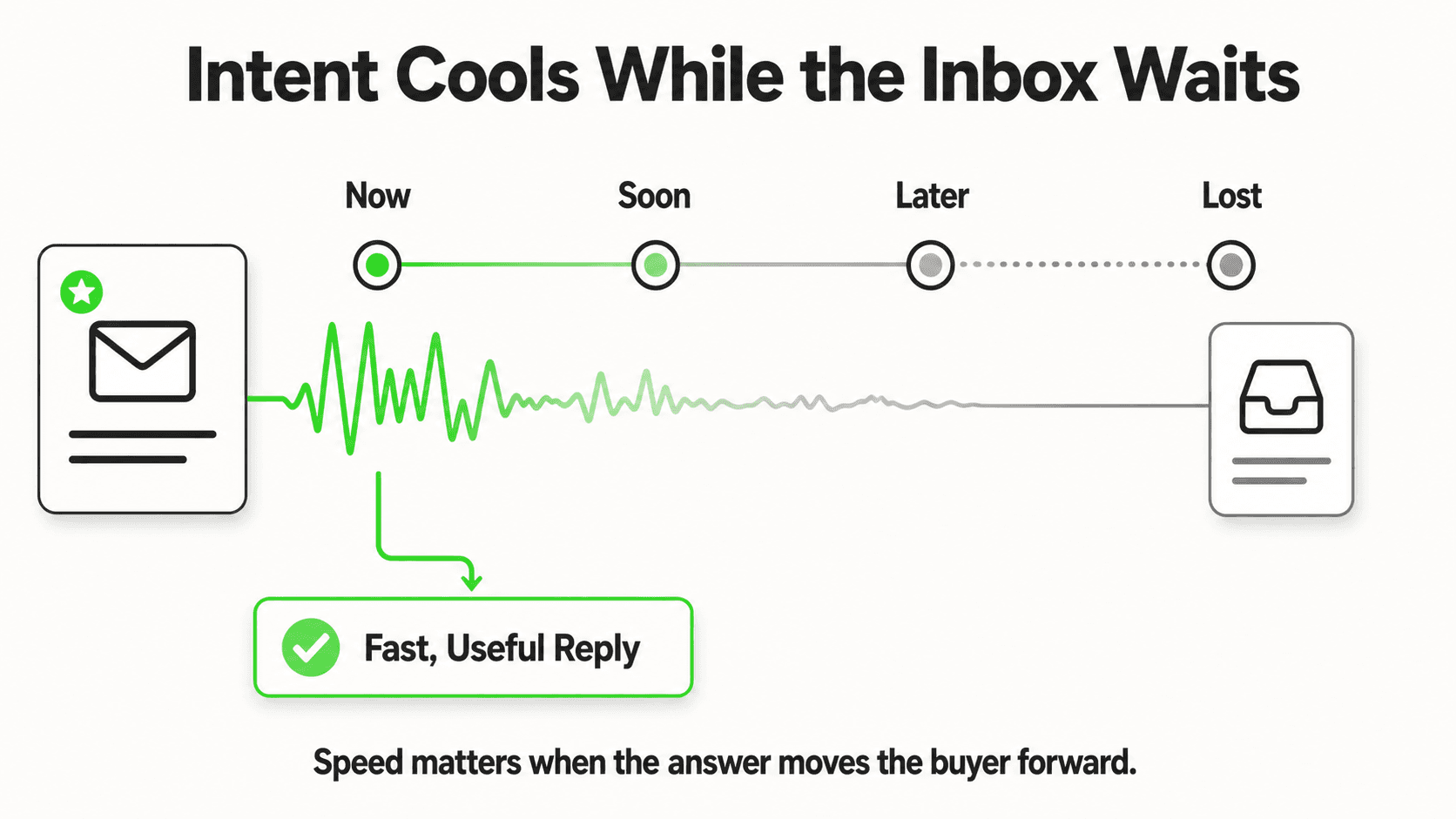
Institutions that have addressed the admissions response problem are seeing measurable improvements across their enrollment funnels.
Revenue and enrollment impact
- Inquiry-to-application conversion rates improve from 15-25% to 30-50% when response times drop below 5 minutes (Source: Reshape)
- Institutions using AI-powered response systems process 3x more inquiries during peak season without additional staff (Source: DemandSage)
- Marketing ROI improves by 40-60% when every ad-generated inquiry receives an instant response
- Seasonal staffing costs reduce by 50-70% as automation handles routine inquiries
Operational efficiency
- 70-80% of routine admissions questions (fees, eligibility, batch timings, documentation) are resolved without human intervention
- Admissions counselors focus on high-value activities: campus tours, personalised counseling, scholarship assessments
- Information consistency across channels eliminates trust-eroding contradictions
- Follow-up sequences run automatically, ensuring no warm lead goes cold
Parent satisfaction and reputation
- Parents report significantly higher satisfaction when they receive responses within minutes rather than hours
- Consistent, accurate information across WhatsApp, website, and phone builds institutional credibility
- Positive admissions experiences generate word-of-mouth referrals that reduce future marketing costs
- Google review ratings improve as the admissions experience improves
Implementation Roadmap for Schools and Coaching Institutes
Fixing the admissions response problem does not require replacing your entire admissions team. It requires augmenting them with systems that handle volume while they handle complexity.
Phase 1: Audit your current response gaps (Week 1-2)
Start by measuring your current state:
- What is your average response time during peak admissions?
- How many inquiries go unanswered each day?
- What percentage of inquiries arrive after office hours?
- What are the top 20 questions parents ask repeatedly?
- Which channels (WhatsApp, phone, website, walk-in) generate the most inquiries?
This audit reveals exactly where enrollments are leaking and quantifies the revenue impact.
Phase 2: Automate routine inquiries (Week 2-4)
Deploy an AI-powered response system that can:
- Answer the top 20-30 frequently asked questions instantly (fees, eligibility, curriculum, facilities, batch timings)
- Operate 24/7 across WhatsApp, website chat, Instagram, and Facebook
- Provide consistent, accurate information regardless of when or where the inquiry arrives
- Collect lead information and qualification data before routing to human counselors
Platforms like Hyperleap AI allow you to set up an education-focused chatbot in days, not months, trained on your specific institution's information.
Phase 3: Optimize and scale (Week 4-8)
With automated responses handling routine inquiries:
- Route qualified, complex inquiries to your best counselors
- Set up automated follow-up sequences for undecided parents
- Track conversion at each stage of the admissions funnel
- A/B test response messages to improve engagement rates
- Integrate with your student management system for seamless enrollment
The goal is a system where every inquiry receives an instant, helpful response, and your human team focuses exclusively on the high-value interactions that require empathy, judgment, and expertise.
For a step-by-step guide on managing high-volume inquiries without adding staff, see our detailed guide on handling 1,000+ admission inquiries.
Stop the Enrollment Leak Before Next Admissions Season
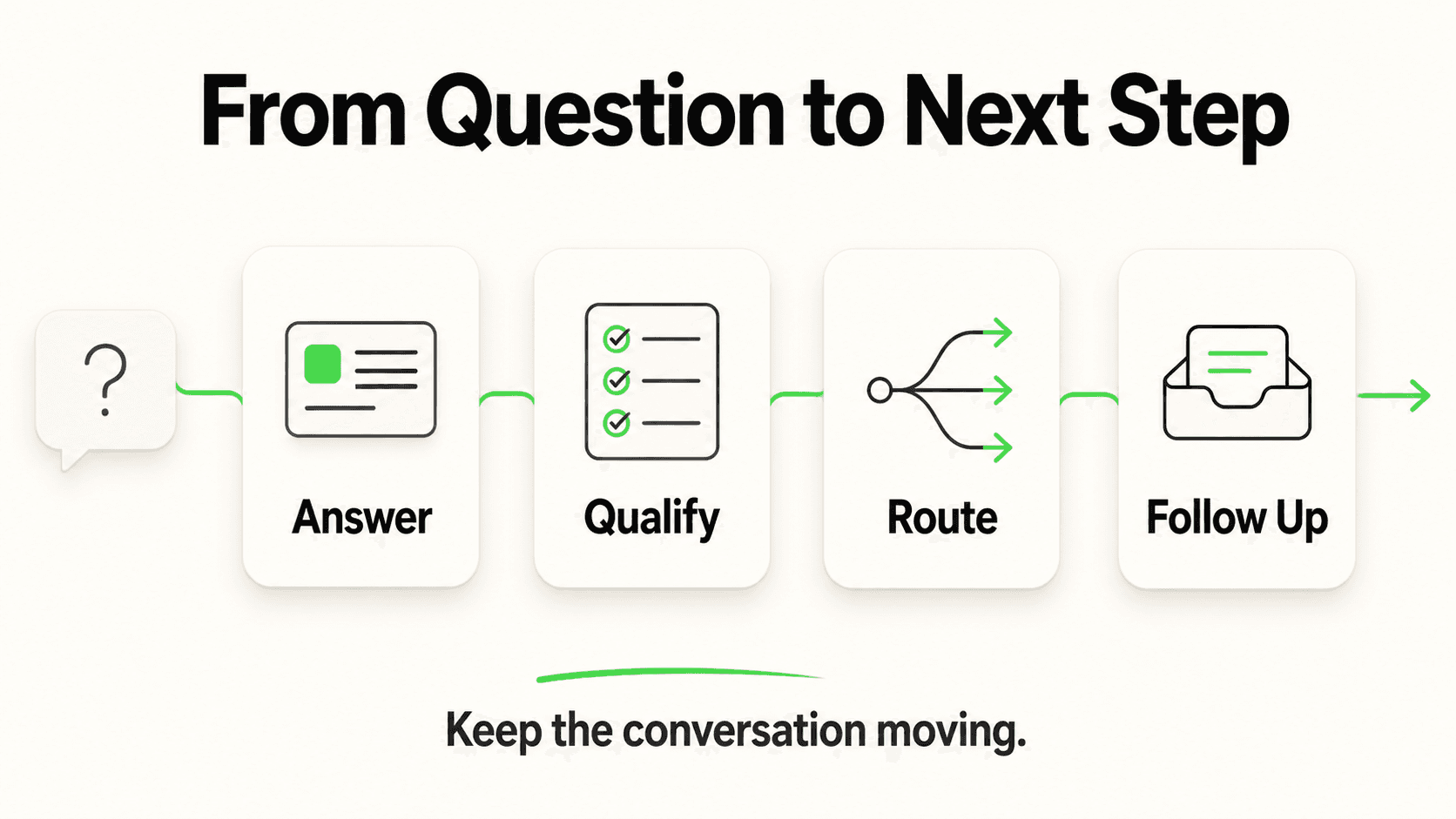
The pattern is clear: India's education sector is growing rapidly, with the school market projected to reach USD 138 billion by 2034 and the coaching institute market reaching USD 17.4 billion by 2033. The demand for quality education is not the problem. The ability to respond to that demand during peak admissions is.
Every admissions season, institutions that rely solely on manual processes lose enrollments to competitors who respond faster, more consistently, and around the clock. The cost compounds. Lost enrollments mean lost revenue, lost referrals, and lost reputation.
The institutions that will thrive are those that recognise slow response times as a structural problem, not a seasonal inconvenience, and invest in systems that ensure every inquiry receives an instant, helpful response regardless of volume, time of day, or channel.
Frequently Asked Questions
Will automated responses make our institution feel impersonal?
No. Modern AI systems are designed to communicate naturally and warmly, matching the tone parents expect from educational institutions. The AI handles routine questions (fees, timings, eligibility) instantly, freeing your counselors to provide deeply personal attention to families who need it. Parents actually report higher satisfaction because they get immediate answers rather than waiting days for a human to respond with the same information.
How much does it cost to automate admissions responses?
AI-powered chatbot solutions for education typically start at ₹3,000-8,000 per month, which is a fraction of the cost of hiring even one temporary admissions counselor at ₹25,000-40,000 per month. Platforms like Hyperleap AI offer plans starting at $40/month (approximately ₹3,300) with a 7-day free trial. The ROI is typically realized within the first week of peak admissions when the system prevents even a handful of lost enrollments.
Can an AI chatbot handle complex questions about scholarships and batch selection?
AI chatbots excel at providing detailed information about scholarship criteria, eligibility requirements, batch comparisons, and fee structures, as long as this information is in the knowledge base. For truly complex situations requiring judgment, such as evaluating a student's preparation level for advanced vs regular batches, the AI qualifies the inquiry and routes it to a senior counselor with all context intact. This ensures the counselor spends time on decisions, not data collection.
How long does it take to set up an AI admissions assistant?
Most institutions can have a functional AI admissions assistant operational within 3-7 days. The process involves uploading your institution's information (prospectus, fee structure, FAQ document, batch details), configuring response tones and escalation rules, and connecting to your WhatsApp Business account and website. No technical skills are required. See our guide on AI for school admissions for detailed implementation steps.
Will this work for regional language inquiries?
Yes. Modern AI chatbots support multiple Indian languages including Hindi, Tamil, Telugu, Kannada, Malayalam, Bengali, Marathi, and Gujarati. This is particularly important for coaching institutes and schools in Tier-2 and Tier-3 cities where parents may prefer communicating in their regional language. The AI detects the language of the inquiry and responds accordingly.
What happens during technical issues or downtime?
Reputable AI platforms maintain 99.9% uptime with automatic failover systems. In the rare event of a disruption, inquiries are queued and processed as soon as the system recovers, with no messages lost. Additionally, your human admissions team continues to operate normally, so there is always a fallback. The AI augments your team; it does not replace the human safety net.
How do we measure the impact of automated admissions responses?
Track three key metrics: response time (should drop from hours to seconds), inquiry-to-application conversion rate (should increase by 25-40%), and the number of inquiries handled per day without adding staff (should increase by 3-5x). Most AI platforms provide built-in analytics dashboards that show these metrics in real-time, allowing you to quantify the ROI during your first admissions season.
Ready to Capture Every Admission Inquiry?
Join schools and coaching institutes using Hyperleap AI to respond instantly to every parent and student inquiry, 24/7. Start your 7-day free trial today.
Get StartedIndustry Solutions
See how AI chatbots work for these industries:
Related Articles

Education and Admissions Customer Service Statistics 2026
30+ sourced statistics on enrollment melt, response times, and communication gaps reshaping education admissions in 2026.
How Coaching Institutes Use AI for 1000+ Daily Inquiries
Learn how coaching institutes use AI to manage overwhelming inquiry volumes, respond 24/7, and convert more students during peak admission seasons.
How Many WhatsApp Users Are in India? 2026 Data
India has 550+ million monthly active WhatsApp users. See the sourced 2026 numbers on reach, SMB adoption, and business messaging in one dashboard.
What Missed Calls Really Cost Your Small Business
A worked example of what missed calls cost small businesses in lost jobs, plus where inquiries actually arrive now and what to do about it.