How Coaching Institutes Use AI for 1000+ Daily Inquiries
Learn how coaching institutes use AI to manage overwhelming inquiry volumes, respond 24/7, and convert more students during peak admission seasons.

TL;DR: Coaching institutes receive 300-1000+ daily inquiries during peak admissions, with over 60% arriving outside business hours. AI inquiry management systems resolve 65% of inquiries without human intervention, improve counselor productivity by 40-50%, and increase enrollment conversion by 25-40% -- all while operating 24/7 across WhatsApp, website, and social media.
How Coaching Institutes Are Using AI to Handle 1000+ Daily Inquiries
Every inquiry that goes unanswered is a potential student lost to a competitor. For coaching institutes preparing students for competitive exams like JEE, NEET, SAT, or professional certifications, the admissions season brings an avalanche of questions that can overwhelm even the most organized administrative teams.
According to education industry research (Source: ICEF Monitor), coaching institutes receive 300-1000+ inquiries daily during peak admission periods, with questions ranging from course details and fee structures to batch timings and faculty credentials. More telling is that over 60% of these inquiries come outside standard business hours—evenings, weekends, and late nights when prospective students and parents are researching options.
The traditional approach of handling inquiries through phone calls and email creates impossible bottlenecks. Admission counselors spend hours answering the same questions repeatedly, response times stretch to days rather than hours, and qualified leads slip away to more responsive competitors.
The solution? AI-powered inquiry management systems specifically designed for educational institutions. But implementation matters—the wrong approach can frustrate prospects and damage your institute's reputation.
What Is AI Inquiry Management for Coaching Institutes?
AI inquiry management uses intelligent chatbots and virtual assistants to handle the flood of questions that coaching institutes receive about admissions, courses, fees, schedules, and facilities. Unlike basic FAQ bots that frustrate users with rigid responses, modern AI systems for education can:
- Understand complex, multi-part questions about course offerings and eligibility
- Provide detailed information about different batches, streams, and specializations
- Explain fee structures, payment plans, and scholarship opportunities
- Help prospects compare programs and make informed decisions
- Schedule counseling appointments and campus visits
- Collect lead information and route qualified prospects to admissions teams
- Handle inquiries in multiple languages (critical for international reach)
- Operate 24/7 across website chat, WhatsApp, and social media
The difference from traditional systems
Old-school automated response systems forced prospects through rigid menu trees and canned responses. Modern AI inquiry systems engage in natural conversations:
Traditional system: "Press 1 for admissions, 2 for fees, 3 for course details..." Modern AI: "I can help you find the right program. What exam are you preparing for, and when do you plan to start?"
The AI understands context, remembers previous parts of the conversation, asks clarifying questions, and provides comprehensive answers—creating experiences that feel like talking to a knowledgeable counselor rather than a machine.
Why Coaching Institutes Are Overwhelmed (And Losing Students)
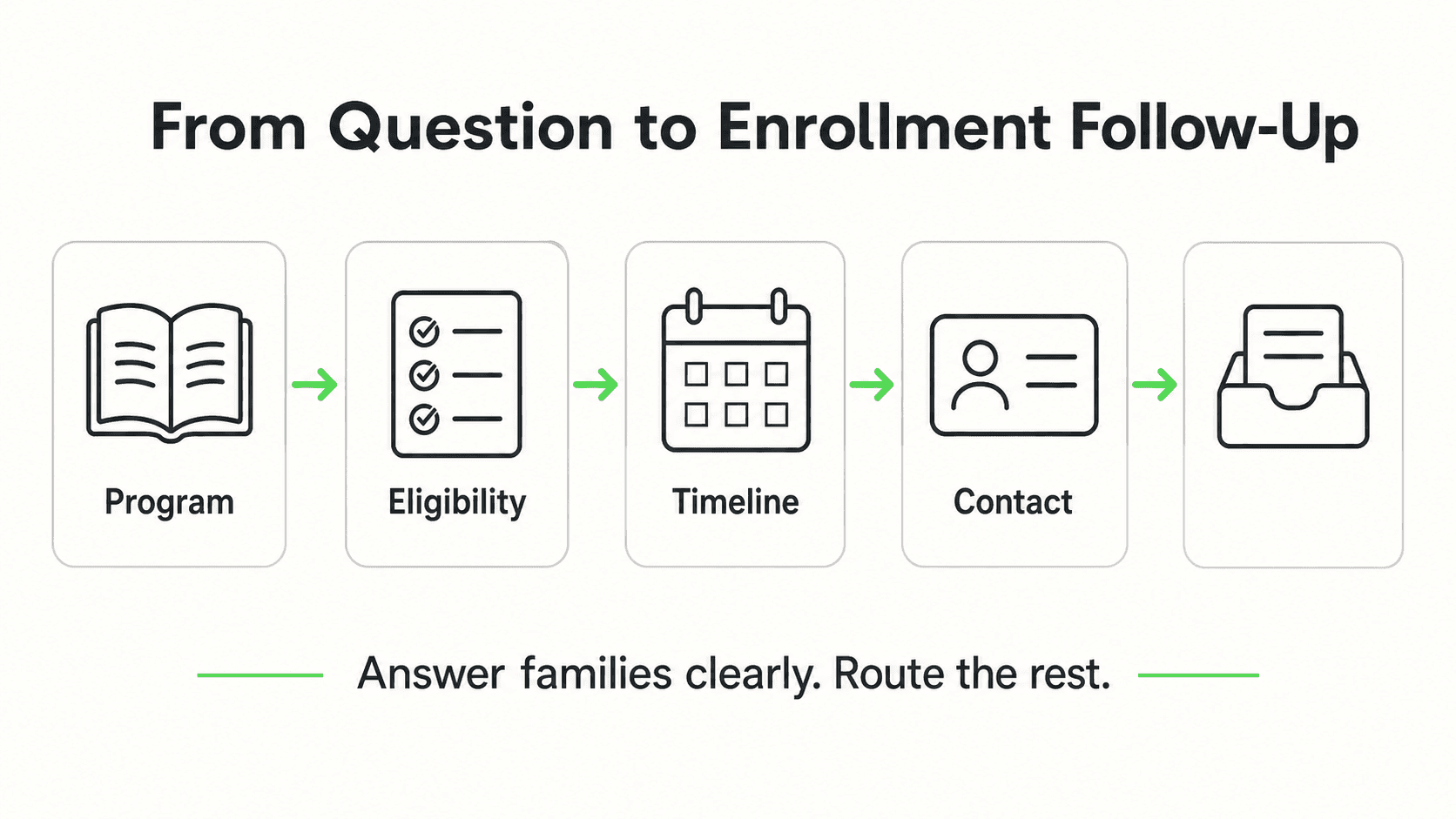
The inquiry management crisis isn't new, but it's getting worse as competition intensifies and student expectations rise. Here's why traditional approaches are failing:
Impossible inquiry volumes during admission season
Peak admission periods create inquiry surges that no human team can handle effectively:
- A mid-sized coaching institute might receive 50-100 daily inquiries during off-season
- During admission peaks, this explodes to 500-1000+ daily inquiries
- Each inquiry requires 5-15 minutes of counselor time for thorough responses
- Simple math: 600 inquiries × 10 minutes = 100 hours of counselor time needed per day
Even with a team of 10 counselors working 10-hour days, you can't keep up. Response times stretch from hours to days, and prospects move on to competitors who respond faster.
The 60% after-hours problem
Research shows that over 60% of education inquiries happen outside standard business hours (Source: ICEF Monitor):
- Students research after school/college (6 PM - 11 PM)
- Parents research after work (evenings and weekends)
- International prospects contact from different time zones
- Late-night decision-making sessions when families discuss options
If your institute only responds during 9 AM - 6 PM office hours, you're missing more than half your opportunities. Those evening and weekend inquiries are going to competitors with 24/7 availability.
Repetitive questions consume counselor time
Admission counselors report that 70-80% of inquiries ask the same 20-30 questions (Source: ICEF Monitor):
- "What are your fee structures?"
- "Which batch should I join for the March exam?"
- "Do you provide study materials?"
- "What's the difference between your regular and crash courses?"
- "Can I get a scholarship?"
- "Where are your centers located?"
Valuable counselors with deep program knowledge spend hours answering basic questions that could be automated, leaving no time for high-value activities like personalized guidance for serious prospects or student mentorship.
Multi-channel inquiry chaos
Today's prospects contact coaching institutes through multiple channels:
- Website inquiry forms
- Phone calls
- WhatsApp messages
- Facebook and Instagram DMs
- Walk-in visits
Without centralized management, inquiries get lost, responses are inconsistent, follow-ups fail, and prospects receive different answers depending on which channel they used. This fragmentation creates poor experiences and lost conversions.
Language and geographic barriers
Coaching institutes targeting national or international markets face additional challenges:
- Prospects speak different languages (Hindi, English, regional languages)
- Time zone differences complicate real-time responses
- Cultural nuances affect communication styles and expectations
- Scaling human teams across languages and regions is expensive
These barriers prevent institutes from effectively serving diverse markets, limiting growth potential.
Stop Losing Students to Slow Responses
Handle 1000+ daily inquiries instantly across WhatsApp and web. Qualify leads automatically and route serious prospects to your counselors.
See How It WorksThe 7 Ways Leading Coaching Institutes Use AI for Inquiry Management
The most successful coaching institutes aren't just using AI—they're using it strategically across their entire prospect journey. Here's how:
1. 24/7 instant response to basic inquiries
AI systems provide immediate answers to common questions any time of day or night, ensuring no prospect waits for basic information.
What this looks like in practice:
A student researching NEET coaching at 11 PM on a Sunday visits your website and asks about batch timings for the upcoming session. The AI instantly provides detailed information about all available batches, their schedules, faculty, and fee structures. It asks about the student's current preparation level, suggests appropriate batches, and offers to schedule a counseling call for Monday morning—all within a 3-minute conversation.
Real-world impact:
One large coaching institute handling 600+ daily inquiries reports that their AI system resolves 65% of inquiries completely without human intervention. The remaining 35% get routed to counselors with full context, making those conversations far more efficient.
Why it works:
Instant gratification matters enormously in admissions. When a prospect is actively researching and ready to make decisions, they'll choose the institute that gives them answers immediately. Competitors who make prospects wait 24-48 hours for email responses lose those opportunities.
2. Intelligent lead qualification and routing
Not all inquiries represent equal opportunity. AI systems can identify serious prospects and prioritize them appropriately.
What this looks like in practice:
The AI asks qualifying questions during conversations:
- When does the student plan to start preparation?
- What's their current education level?
- Have they taken the exam before?
- What's their target score or institution?
- Are they comparing multiple coaching institutes?
Based on responses, the AI assigns lead scores and routes high-intent prospects (starting within 2 months, serious about enrollment) to senior counselors for immediate attention, while nurturing early-stage prospects (just researching, exam is 12+ months away) with relevant content and periodic follow-ups.
Real-world impact:
Coaching institutes using intelligent routing report 40-50% improvement in counselor productivity because they spend time on qualified leads most likely to convert, rather than fielding early-stage inquiries better handled by AI.
Why it works:
Human counselors are expensive resources. Using them efficiently means matching their time investment to opportunity value. AI handles the initial screening and qualification that previously consumed 70% of counselor time.
3. Personalized course and batch recommendations
Different students need different programs, and AI can guide them to the best fit based on their specific situations.
What this looks like in practice:
A student asks about JEE preparation. The AI asks:
- "What's your current class/education level?"
- "Have you started JEE preparation already?"
- "When are you planning to take the exam?"
- "Are you also preparing for board exams?"
- "Do you prefer weekday or weekend batches?"
Based on responses, the AI recommends specific batches designed for their situation—perhaps a two-year integrated program for Class 11 students, or an intensive crash course for droppers. It explains why each recommendation fits their needs and shows success rates for similar student profiles.
Real-world impact:
Personalized recommendations increase conversion rates by 25-35% compared to generic course listings because prospects feel understood and see programs tailored to their specific needs.
Why it works:
Students and parents are overwhelmed by options. Generic information leaves them confused about which program to choose. AI-powered guidance helps them navigate choices and builds confidence in their decisions, making enrollment more likely.
4. Multi-language support for diverse markets
AI systems can communicate fluently in multiple languages, breaking down barriers that prevent many prospects from getting information.
What this looks like in practice:
A parent from a Hindi-speaking region visits your website and begins chatting in Hindi. The AI seamlessly responds in Hindi, explaining programs, fees, and admission processes. If the conversation switches to English (common in bilingual exchanges), the AI adapts immediately. The same system handles inquiries in Tamil, Telugu, Bengali, or other regional languages without requiring separate staff for each language.
Real-world impact:
Institutes implementing multi-language AI report 30-40% increase in inquiries from non-English-speaking regions because prospects who previously felt uncomfortable are now confident engaging in their preferred language.
Why it works:
Language is often the first barrier to inquiry. When prospects can communicate comfortably in their native language, they're more likely to ask detailed questions, engage deeply with your offerings, and ultimately enroll. Hiring counselors for every language is prohibitively expensive; AI makes it economically viable.
5. Admission process guidance and documentation support
The admission process involves multiple steps and documentation requirements that confuse many prospects. AI can guide them through this complexity.
What this looks like in practice:
A qualified student is ready to enroll but unsure about next steps. The AI provides a clear checklist:
- Documents required (ID proof, educational certificates, photos)
- Application form link with instructions
- Fee payment options and deadlines
- Entrance test scheduling (if applicable)
- Orientation or first class dates
The AI can answer questions about each step, send reminder notifications about pending items, and even track progress through the enrollment funnel, alerting counselors when students stall at any stage.
Real-world impact:
Coaching institutes report 15-25% reduction in enrollment drop-off after implementing AI-powered process guidance, because fewer prospects get lost or frustrated navigating admission requirements.
Why it works:
Friction in the enrollment process causes abandonment. Every confusing step or unanswered question is an opportunity for prospects to delay decisions or choose competitors with smoother processes. AI removes friction by providing clarity and support at every stage.
6. Automated appointment scheduling and reminders
Converting interested prospects to enrolled students often requires counseling sessions or campus visits, and AI can streamline this scheduling.
What this looks like in practice:
During a conversation, the AI determines a prospect needs to speak with a counselor for detailed guidance. Rather than telling them to "call during business hours," the AI:
- Shows available time slots in the prospect's time zone
- Books appointments directly into counselor calendars
- Collects phone number or meeting preferences
- Sends immediate confirmation with details
- Sends reminder notifications 24 hours and 1 hour before the appointment
- Allows easy rescheduling if needed
Real-world impact:
Automated scheduling increases show-up rates by 40-50% compared to manual scheduling because confirmations are instant, reminders are consistent, and prospects can book at their convenience rather than during office hours.
Why it works:
Manual appointment scheduling creates delays (prospects must wait for callback), often requires multiple back-and-forth communications (checking availability, confirming times), and frequently fails due to forgotten appointments. Automation eliminates these failure points.
7. Data collection and insights for continuous improvement
AI systems generate valuable data about prospect behavior, common questions, pain points, and decision factors that inform strategic improvements.
What this looks like in practice:
Your AI dashboard shows that:
- 40% of inquiries ask about scholarship availability (opportunity to promote scholarships more prominently)
- Inquiries spike 300% between 8-11 PM on weekdays (confirms need for after-hours coverage)
- "Comparison with [competitor name]" appears in 25% of conversations (signals competitive pressure)
- Questions about online vs. offline batches increased 200% year-over-year (market shift to hybrid models)
- Prospects from certain regions have 2x higher conversion rates (informs marketing budget allocation)
Real-world impact:
Data-driven coaching institutes use these insights to refine messaging, adjust course offerings, optimize marketing spend, and train counselors on common objections—improvements that compound over time.
Why it works:
You can't improve what you don't measure. Traditional inquiry management provides no visibility into patterns, trends, or opportunities. AI-generated analytics transform inquiry handling from a reactive administrative task into a strategic growth driver.
Automate Your Inquiry Management
Handle 1000+ daily inquiries instantly with AI that qualifies leads, answers questions 24/7, and routes serious prospects to your counselors.
Try for FreeReal Results: What Coaching Institutes Are Achieving
The theoretical benefits are compelling, but what outcomes are institutes actually experiencing? Here's the data:
Operational efficiency gains
Coaching institutes implementing AI inquiry management report:
- 50-70% reduction in counselor time spent on routine inquiries
- 3-5x increase in inquiry handling capacity without adding staff
- 80-90% faster initial response times (instant vs. hours/days)
- 30-40% reduction in cost per lead by automating qualification
- Elimination of inquiry backlog during peak periods
One mid-sized coaching institute calculated that AI handling 400 of their 600 daily inquiries saved 50+ hours of counselor time daily—equivalent to hiring 6-7 additional full-time staff, without the associated recruitment, training, and management costs.
Conversion and enrollment improvements
Beyond efficiency, AI drives measurable revenue impact:
- 25-40% improvement in inquiry-to-enrollment conversion rates
- 35-50% increase in after-hours inquiry capture (previously lost opportunities)
- 20-30% higher show-up rates for counseling appointments
- 15-25% reduction in enrollment drop-off during admission process
- 30-40% improvement in response to marketing campaigns (AI handles surge volume)
A large competitive exam coaching institute reported capturing an additional $180,000 in annual revenue within the first year of implementing AI—primarily from after-hours inquiries and improved conversion of high-intent prospects.
Student and parent satisfaction
Experience metrics show significant improvements:
- 90%+ of inquiries resolved without waiting for office hours
- 4.5+ out of 5 average satisfaction ratings for AI interactions
- Consistent information quality across all inquiry channels
- Reduced frustration from being "unable to reach anyone"
- Better word-of-mouth from positive enrollment experiences
These satisfaction improvements translate to better online reviews, stronger referrals, and enhanced brand reputation—benefits that compound over time.
Competitive advantages
Institutes with AI inquiry management gain strategic market position:
- Faster prospect response than competitors still relying on manual processes
- Better geographic reach through multi-language and 24/7 capabilities
- Ability to scale marketing without proportional operations growth
- Superior data insights for strategic decisions
- Professional image that signals innovation and student-centricity
In competitive coaching markets where course quality and faculty are comparable, operational excellence in the enrollment experience becomes the differentiator. AI creates sustainable competitive advantages.
Common Implementation Mistakes to Avoid
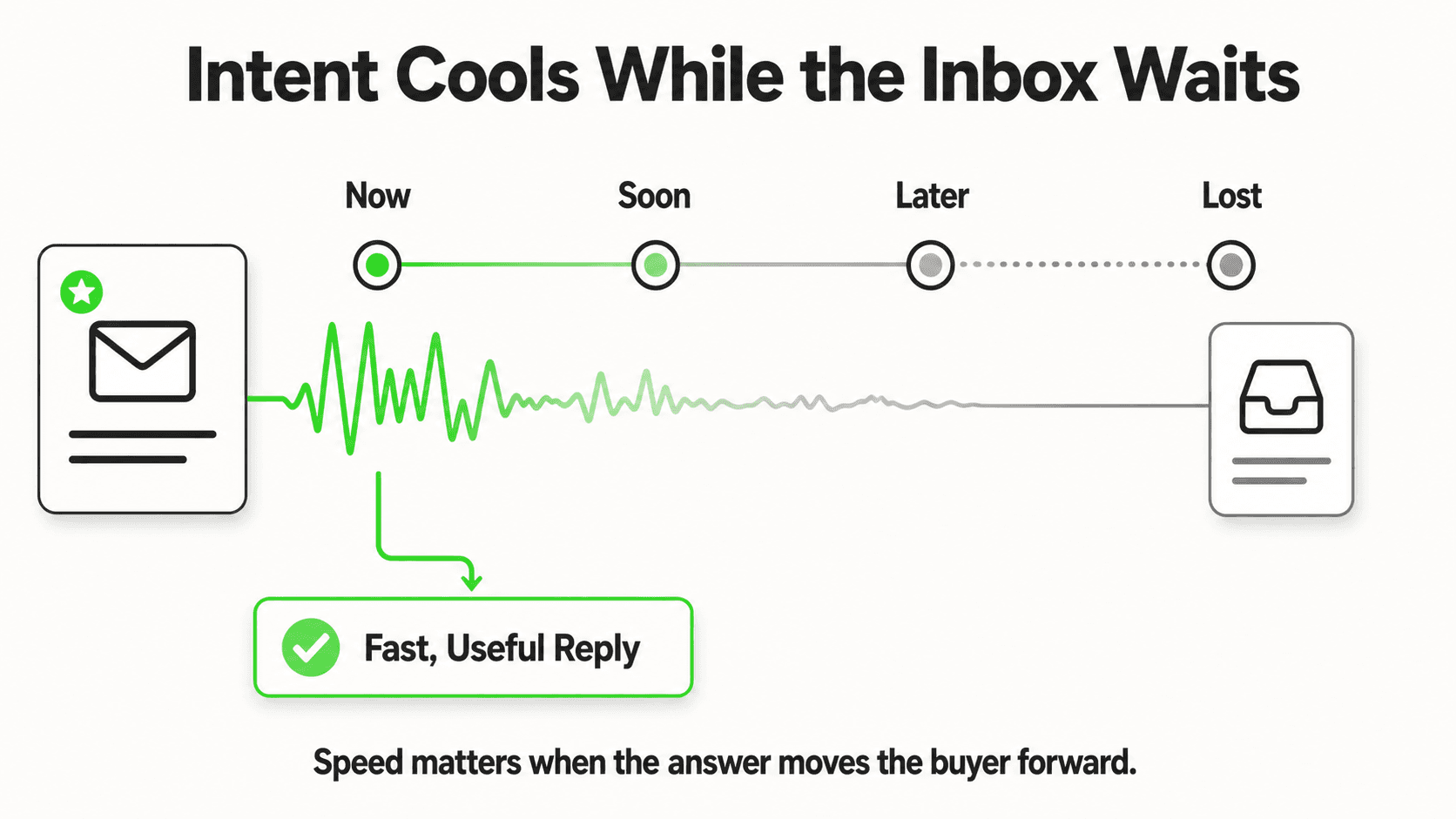
Not every AI implementation succeeds. Here are the most common failures and how to avoid them:
Choosing generic chatbots not built for education
The mistake: Implementing general-purpose chatbots that don't understand education terminology, program structures, or admissions processes.
The result: Frustrating prospect experiences with incorrect information, inability to handle education-specific questions, and damage to institutional credibility.
How to avoid it: Select AI solutions specifically designed for educational institutions, with pre-trained knowledge about admissions, course structures, and education industry terminology. Verify that the system can handle complexity like batch comparisons, eligibility criteria, and program recommendations.
Insufficient training on your specific programs
The mistake: Expecting AI to work perfectly without comprehensive information about your specific courses, batches, fees, policies, and processes.
The result: Generic responses that don't match your offerings, wrong information about your programs, and inability to answer specific questions prospects care about most.
How to avoid it: Invest significant time uploading detailed program information, creating response templates for common questions, and testing the AI with real scenarios from your inquiry history. Plan for ongoing updates as programs evolve.
Over-automating without human backup
The mistake: Trying to automate 100% of inquiries without maintaining human escalation for complex situations, emotional prospects, or high-value opportunities.
The result: Frustrated prospects who need human guidance, missed opportunities with serious candidates, and potential enrollments lost to competitors offering personal attention.
How to avoid it: Maintain clear escalation paths to human counselors for complex questions, serious prospects, or situations where personal touch matters. Use AI to enhance counselors, not replace them entirely.
Poor integration with existing systems
The mistake: Implementing AI that doesn't connect to your CRM, student management system, or marketing platforms, creating data silos and manual work.
The result: Duplicate data entry, inconsistent information across systems, inability to track prospect journeys, and missed follow-up opportunities.
How to avoid it: Prioritize integration capabilities during vendor selection. Ensure the AI can sync with your CRM, trigger follow-up workflows, and provide unified visibility into all prospect interactions.
Neglecting ongoing optimization
The mistake: Setting up AI once and assuming it will continue working optimally indefinitely without monitoring, refinement, or updates.
The result: Degraded performance over time as programs change, accumulation of prospect complaints, and missed opportunities for improvement based on actual usage patterns.
How to avoid it: Schedule regular reviews of AI performance metrics, analyze conversations to identify gaps, update AI knowledge as programs evolve, and continuously refine based on prospect feedback and counselor input.
Ready to Transform Your Admissions Process?
Coaching institutes using Hyperleap AI resolve 65% of inquiries without human intervention. See what it can do for your institute.
View PricingImplementation Roadmap: Getting AI Running in 30 Days
Ready to implement AI inquiry management? Here's a proven timeline:
Week 1: Foundation and planning
Day 1-2: Audit current state
- Document typical inquiry volumes and patterns
- Identify most common questions (from emails, calls, chat logs)
- Map your current admission process and pain points
- Define success metrics (response time, conversion rate, counselor time saved)
Day 3-4: Vendor selection
- Evaluate AI platforms with education focus
- Check integration capabilities with your systems
- Review pricing and scalability
- Request demos with education-specific scenarios
Day 5-7: Kick-off and setup
- Select vendor and begin implementation
- Assign team members to the project
- Create initial program information database
- Set up basic AI configuration
Week 2: Configuration and content
Day 8-11: Program information upload
- Input detailed course descriptions
- Upload fee structures and payment options
- Configure batch schedules and availability
- Add faculty information and credentials
- Document admission requirements and processes
Day 12-14: Conversation design
- Create response templates for common questions
- Design conversation flows for different prospect types
- Configure lead qualification questions
- Set up escalation triggers and rules
- Define multi-language settings if applicable
Week 3: Testing and refinement
Day 15-17: Internal testing
- Staff role-play common prospect scenarios
- Test edge cases and unusual questions
- Verify accuracy of information provided
- Check integration with CRM/systems
- Identify gaps and refine responses
Day 18-21: Pilot with real prospects
- Deploy AI to handle 25-50% of incoming inquiries
- Monitor conversations closely
- Gather feedback from prospects and counselors
- Make rapid adjustments based on real interactions
- Build confidence before full launch
Week 4: Launch and optimization
Day 22-24: Full deployment
- Activate AI across all channels (website, WhatsApp, etc.)
- Train counselors on working with AI-qualified leads
- Set up monitoring dashboards
- Establish regular review processes
Day 25-28: Monitor and refine
- Analyze first week of full operation
- Address any recurring issues or gaps
- Optimize conversation flows based on data
- Gather prospect satisfaction feedback
Day 29-30: Review and plan next phase
- Evaluate progress toward goals
- Document lessons learned
- Plan feature expansions (additional languages, channels, etc.)
- Set up ongoing improvement schedule
Ongoing: Continuous optimization
Weekly activities:
- Review inquiry volumes and AI resolution rates
- Analyze escalated conversations for patterns
- Update AI knowledge as programs change
- Monitor prospect satisfaction
Monthly activities:
- Comprehensive performance review
- Strategic refinement of conversation flows
- Counselor feedback sessions
- Plan enhancements for next month
How to Choose the Right AI Solution for Your Coaching Institute
With numerous AI platforms available, selection requires careful evaluation:
Must-have capabilities
Don't compromise on these essentials:
- Education-specific knowledge and terminology understanding
- Multi-language support for your target markets
- 24/7 availability across multiple channels (website, WhatsApp, Instagram)
- Integration with your CRM and student management systems
- Lead qualification and intelligent routing
- Human escalation with context transfer
- Comprehensive analytics and reporting
- Mobile-friendly interface (many prospects browse on phones)
Evaluation criteria
When comparing vendors, assess:
Technology maturity:
- How long has the company served educational institutions?
- How many coaching institutes currently use the system?
- What's the product roadmap for education features?
Implementation support:
- What's included in setup and training?
- How much configuration assistance provided?
- What's typical time to go live?
Ongoing support:
- What support channels are available?
- What are response times for issues?
- Is there a dedicated account manager?
- What does the customer community look like?
Pricing structure:
- Setup and implementation costs
- Monthly subscription fees
- Per-inquiry or per-conversation charges
- Contract terms and flexibility
- ROI projections
References and results:
- Can they provide references from similar coaching institutes?
- What results have other institutes achieved?
- Are case studies with data available?
- What do customer reviews say?
Critical questions to ask vendors
During evaluation, ask:
- How does your AI handle complex education-specific questions about eligibility, course comparisons, and program recommendations?
- What coaching institute or education clients do you currently serve, and what results have they seen?
- How does integration work with [your specific CRM/student management system]?
- What languages do you support, and how natural is the conversation quality in each?
- Can you show me actual conversation examples from education clients?
- How do you handle escalations to human counselors?
- What metrics and analytics do you provide specifically for education?
- What's your typical implementation timeline for a coaching institute our size?
- How do you handle updates and maintenance during peak admission seasons?
- What happens when program information changes—how quickly can we update the AI?
Red flags to watch for
Be cautious of vendors who:
- Can't demonstrate education-specific capabilities
- Offer "one-size-fits-all" solutions without customization
- Have no experience with coaching institutes or education
- Can't provide integration details for your existing systems
- Promise unrealistic results or implementation timelines
- Lack references from institutions similar to yours
- Have rigid pricing without clear ROI projections
- Don't offer adequate training and support
- Can't show conversation examples from education contexts
Frequently Asked Questions
Will AI replace our admission counselors?
No—AI augments and empowers counselors rather than replacing them. Successful implementations use AI to handle routine, repetitive inquiries (course details, fees, schedules) that consume 70-80% of counselor time, freeing counselors to focus on high-value activities like personalized guidance for serious prospects, relationship building with parents, and mentoring enrolled students. Most institutes maintain similar staffing levels but dramatically improve productivity and job satisfaction.
How accurate is AI with complex education questions?
Modern AI systems designed for education can handle complex questions with high accuracy when properly configured with your specific program information. They excel at structured information (fees, schedules, eligibility criteria) and are less suited to highly subjective questions (which program is "best" without context). The key is proper training and maintaining human escalation for questions requiring nuanced judgment.
What does AI inquiry management cost for coaching institutes?
Pricing varies based on inquiry volume, features, and institute size:
- Basic systems: $200-$500/month for small institutes (100-300 inquiries/day)
- Mid-tier solutions: $500-$1,500/month for medium institutes (300-700 inquiries/day)
- Enterprise systems: $1,500-$5,000+/month for large institutes (700+ inquiries/day)
Most institutes see ROI within 2-4 months through increased enrollments and reduced staffing costs. An AI handling 400 inquiries daily saves roughly 40-50 hours of counselor time—equivalent to 5-6 full-time staff members without the associated costs.
How long does implementation take?
Timeline varies by system complexity and institute readiness:
- Basic setup: 2-3 weeks for simple inquiry handling
- Standard deployment: 4-6 weeks for comprehensive multi-channel AI
- Complex integration: 6-8 weeks with custom integrations and multi-language
Most institutes see meaningful results within 30-45 days of going live, with continuous optimization improving performance over subsequent months.
What if prospects don't like talking to AI?
Research shows 75%+ of education prospects prefer instant AI responses over waiting hours or days for human responses (Source: McKinsey, 2023)—as long as the AI is helpful and can escalate to humans when needed. Key strategies:
- Always offer easy escalation to counselors
- Be transparent about AI (don't try to deceive)
- Ensure AI provides accurate, helpful information
- Gather feedback and continuously improve
- Maintain human touch for complex situations
The negative perception of "talking to robots" has largely disappeared as AI quality has improved and prospects prioritize speed and convenience.
Can AI handle inquiries in regional languages?
Yes—modern AI systems can communicate fluently in multiple languages including Hindi, Tamil, Telugu, Bengali, Marathi, and others, alongside English. The AI can even handle code-switching (mixing languages within a conversation), which is common in multilingual regions. This capability is critical for reaching diverse markets without hiring counselors for each language.
How does AI integrate with our existing systems?
Quality AI platforms connect to popular education CRMs and student management systems through REST APIs and webhooks. When evaluating vendors, confirm which integrations are available today versus on their roadmap. The AI can typically:
- Sync lead data automatically via API or webhooks
- Update prospect records with conversation history
- Trigger follow-up workflows
- Share booking links (e.g., Calendly or Cal.com) for counselor appointments
- Track prospect journey across touchpoints
Integration is crucial—without it, you create data silos and manual work that defeats the purpose of automation. Always verify what your chosen platform has shipped versus what is planned.
"In India's coaching industry, the admissions window is incredibly compressed -- you might have 6-8 weeks to convert an entire year's worth of students. AI doesn't just help you respond faster; it ensures that no inquiry falls through the cracks during those critical weeks," says Gopi Krishna Lakkepuram, Founder & CEO of Hyperleap AI and former Microsoft engineer.
The Future of Coaching Institute Admissions
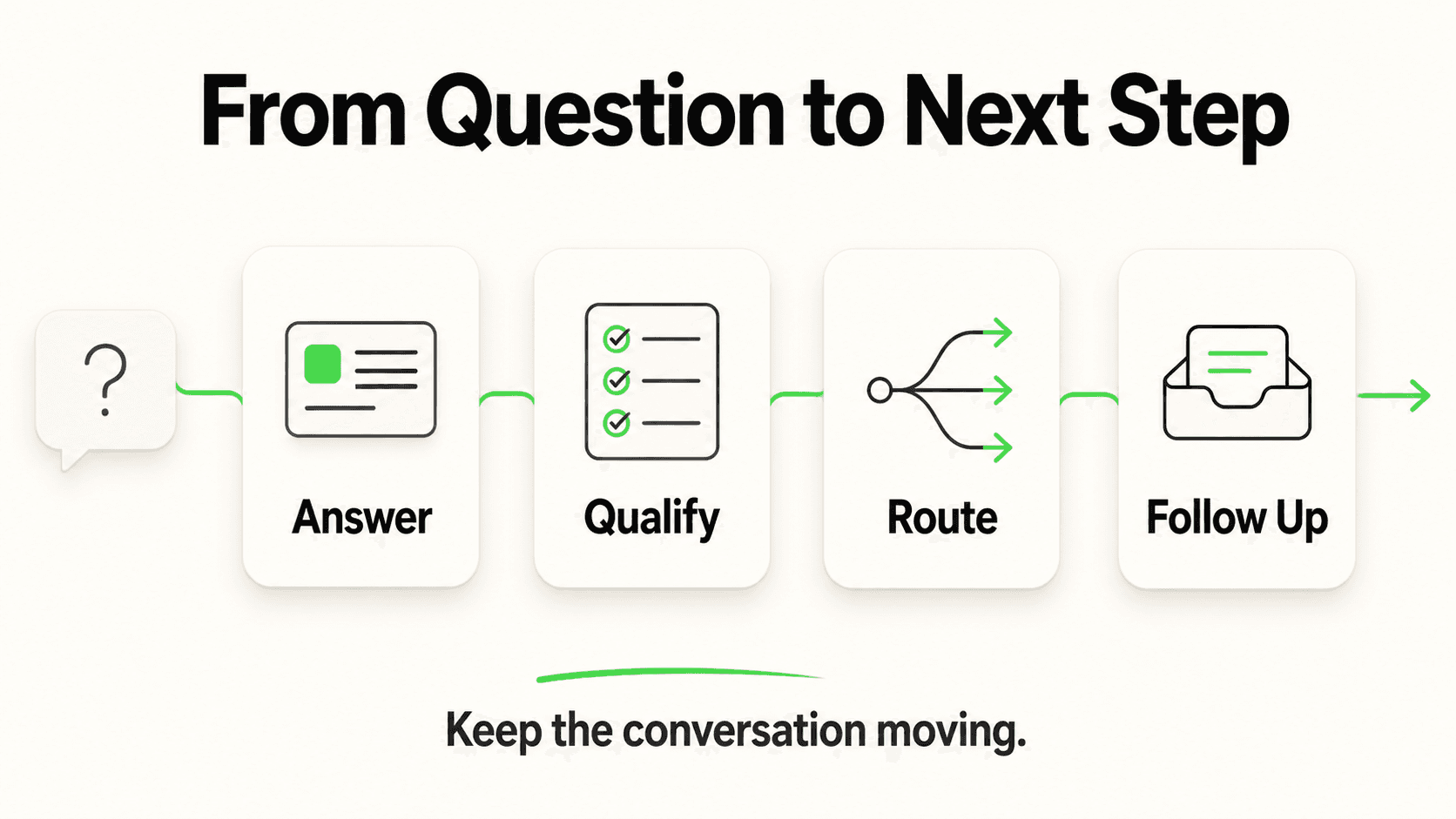
AI inquiry management isn't a temporary trend—it's the foundation of modern coaching institute operations. Institutes that implement these systems now are building competitive advantages that compound over time, while those delaying adoption risk becoming permanently disadvantaged as student expectations evolve.
The technology has matured beyond experimental risk. Proven systems with documented results from similar institutes are available, implementation is straightforward, and ROI is measurable within months.
The question isn't whether AI inquiry management makes sense—it's how quickly you can implement it to stop losing prospects to competitors who've already made the shift.
Start by calculating what your current inquiry handling approach is costing you in lost enrollments, overwhelmed staff, and missed opportunities. Then evaluate AI solutions designed specifically for coaching institutes, prioritizing those with education expertise, strong integration capabilities, and proven results from similar organizations.
Your prospective students expect instant responses, 24/7 availability, and personalized guidance. Your counselors deserve relief from repetitive questions and the ability to focus on high-value relationship building. Your institute needs efficient operations and maximized enrollment conversions.
AI inquiry management delivers all three—if you choose the right system and implement it thoughtfully.
Keep exploring
- AI agents for education - Capture admissions inquiries and guide prospective students 24/7
- Conversational AI for customer service - Instant, always-on responses across every channel
Education Resources
- Best AI Chatbots for Schools & Universities 2026 - Platform comparison
- AI Chatbot Statistics 2026 - Industry benchmarks
- How to Choose an AI Chatbot Platform - Selection guide
- Getting Started with AI Agents - Implementation guide
Related Comparisons
- Best No-Code Chatbot Builders 2026 - No-code platforms
- Best Multi-Channel Chatbots 2026 - Omnichannel solutions
- Best WhatsApp Automation Tools 2026 - WhatsApp for education
Glossary
- What is a Chatbot? - Chatbot fundamentals
- WhatsApp Business API - Popular education channel
- OTP Validation - Verified lead capture
Industry Solutions
See how AI chatbots work for these industries:
Related Articles

AI Admissions Assistant: What Works for Schools in 2026
Learn how K-12 schools use AI to handle 200-500% more inquiries during admission season, improve conversion by 30-45%, and enhance parent satisfaction.

100+ Customer Support Chatbot Templates (Free Scripts)
Copy-paste chatbot templates for customer support, service requests, call centers, help desks, billing, bookings, and after-hours lead capture.

WhatsApp Chatbot Pricing in India 2026: Cost Breakdown
Understand the true cost of WhatsApp chatbots in India. Meta's conversation pricing, platform fees, hidden costs, and ROI calculator for Indian businesses.

Handle 1,000+ Admission Inquiries Without New Hires
Learn how schools and coaching institutes manage 1,000+ admission inquiries during peak season without hiring extra staff using AI-powered automation.