WhatsApp for Home Services in India: Lead Guide
How Indian home service businesses use WhatsApp to capture leads, book jobs instantly, and convert 3x more inquiries into completed work orders.
TL;DR: India's home services market is growing at 30%+ year-on-year, and WhatsApp is how customers find and hire contractors. With 550+ million WhatsApp users in India and homeowners messaging 3-5 service providers for every job, the business that responds first wins the work. This guide covers 7 practical ways Indian home service businesses -- plumbers, electricians, AC technicians, pest control operators, interior designers, and cleaning services -- can use WhatsApp to capture more leads, book jobs faster, and build repeat customer relationships.
Who This Guide Is For
This guide is for Indian home service business owners, field service managers, and operations heads running plumbing, electrical, HVAC, pest control, cleaning, painting, interior design, or general contracting businesses. Whether you are a solo technician in a tier-2 city or a 50-person operation in Mumbai, these WhatsApp strategies apply to your business.
Every missed WhatsApp message from a homeowner with a leaking pipe, a broken AC, or a pest infestation is a job that goes to the contractor who answers first. Research shows that 78% of customers hire the first service provider who responds (Source: LeadSimple), regardless of pricing or reviews. Yet the average Indian home service business takes 4-6 hours to respond to inquiries -- and many never respond at all.
India's home services market was valued at approximately USD 14.5 billion in 2024 and is projected to grow at a CAGR of over 30% through 2030 (Source: Mordor Intelligence / IMARC Group). Platforms like Urban Company have trained millions of Indian consumers to expect instant booking, transparent pricing, and real-time communication. But for independent home service businesses -- the backbone of the industry -- customer communication still happens through a chaotic mix of personal WhatsApp messages, missed phone calls, and JustDial listings that lead nowhere.
The opportunity is enormous. India has over 550 million WhatsApp monthly active users (Source: Meta / Statista), and for the vast majority of homeowners, WhatsApp is the first channel they use when they need a service provider. The businesses that systematize their WhatsApp communication are winning more jobs, commanding better prices, and building the kind of repeat customer base that makes their revenue predictable.
What Is WhatsApp-Based Lead Capture for Home Services?
WhatsApp-based lead capture for home service businesses is a structured system for receiving, qualifying, and converting service inquiries through WhatsApp Business API. Instead of relying on phone calls that go to voicemail, website forms that nobody fills, or JustDial leads where you compete against 10 other providers simultaneously, WhatsApp lead capture puts you in a direct, instant conversation with homeowners at the exact moment they need your service.
For Indian home service businesses, a WhatsApp lead capture system includes:
- Instant automated responses to service inquiries (availability, pricing estimates, service areas)
- Service-specific qualification -- understanding the problem scope before dispatching a technician
- Photo and video sharing -- customers send photos of the issue, you send before/after work samples
- Real-time job scheduling integrated with your technician calendar and route planning
- Automated quote generation based on service type, location, and job complexity
- Multi-language support -- responding in Hindi, Tamil, Telugu, Kannada, or Bengali based on customer preference
- Follow-up and review collection after job completion
How it differs from traditional lead handling
| Aspect | Traditional Approach | WhatsApp Lead Capture |
|---|---|---|
| Response time | 4-6 hours (or never) | Under 60 seconds, 24/7 |
| Inquiry channel | Missed calls, JustDial, word-of-mouth | Centralized WhatsApp conversations |
| Problem diagnosis | Multiple phone calls, guesswork | Customer shares photos/videos instantly |
| Pricing | "I'll call you back with a quote" | Instant estimates based on service type |
| Scheduling | Manual coordination, back-and-forth | Automated slot selection and confirmation |
| Follow-up | Depends on individual technician | Automated review requests and maintenance reminders |
| Repeat business | Hope the customer saved your number | Systematic seasonal reminders and offers |
The shift is significant because Indian consumers have been trained by aggregator platforms like Urban Company and NoBroker Home Services to expect instant booking, upfront pricing, and professional communication. Independent home service businesses that match this experience on WhatsApp compete effectively against aggregators -- without giving up 20-30% commissions.
Why Indian Home Service Businesses Lose Jobs Without WhatsApp
The gap between customer expectations and how most Indian home service businesses operate is widening every year. Understanding these pain points is the first step toward fixing them.
The missed-call problem
An estimated 27% of inbound calls to service businesses go unanswered (Source: Invoca). For home service businesses in India, the reality is often worse. A plumber on a job site cannot answer the phone. An electrician working on a wiring project has dirty hands. A pest control technician is mid-spray. Every unanswered call during business hours is a lost job, and the customer has already messaged the next provider on their list before you can call back.
The math for a typical Indian home service business:
- You receive 15-20 inquiry calls daily
- 5-6 go unanswered (technicians on job sites)
- Average job value: ₹2,000-5,000
- Monthly lost revenue: ₹3-9 lakhs from missed calls alone
- Annual impact: ₹36 lakhs - ₹1 crore+ in missed business
The after-hours urgency gap
Home emergencies do not follow business hours. A burst pipe at 11 PM, an electrical short circuit during a thunderstorm, a cockroach infestation discovered on a Sunday morning -- these are the highest-urgency, highest-value jobs, and they happen precisely when most home service businesses are offline. Research from industry benchmarks suggests that 50-60% of emergency service inquiries occur outside standard business hours (Source: ServiceTitan). In India, where many home service businesses operate 9 AM - 7 PM, six days a week, this creates a massive gap.
The aggregator commission trap
Platforms like Urban Company, Housejoy, and NoBroker Home Services charge service providers 15-30% commission per job. For a painting contractor earning ₹50,000 on a project, that is ₹7,500-15,000 going to the platform. Worse, you do not own the customer relationship -- the platform does. When the customer needs painting again next year, they go back to the app, not to you. Building a direct WhatsApp channel with your customers breaks this cycle permanently.
The trust deficit in tier-2 and tier-3 cities
In cities like Jaipur, Lucknow, Coimbatore, Bhopal, and Indore, homeowners are even more reliant on personal recommendations and direct communication. They want to message a service provider, see their work samples, check reviews, and get a personal response before inviting someone into their home. WhatsApp provides exactly this kind of trust-building, intimate channel that a website or aggregator listing cannot replicate.
550M+
WhatsApp users in India
78%
Customers hire the first responder
₹36L+
Annual revenue lost to missed calls
7 Ways Home Service Businesses Use WhatsApp to Capture More Jobs
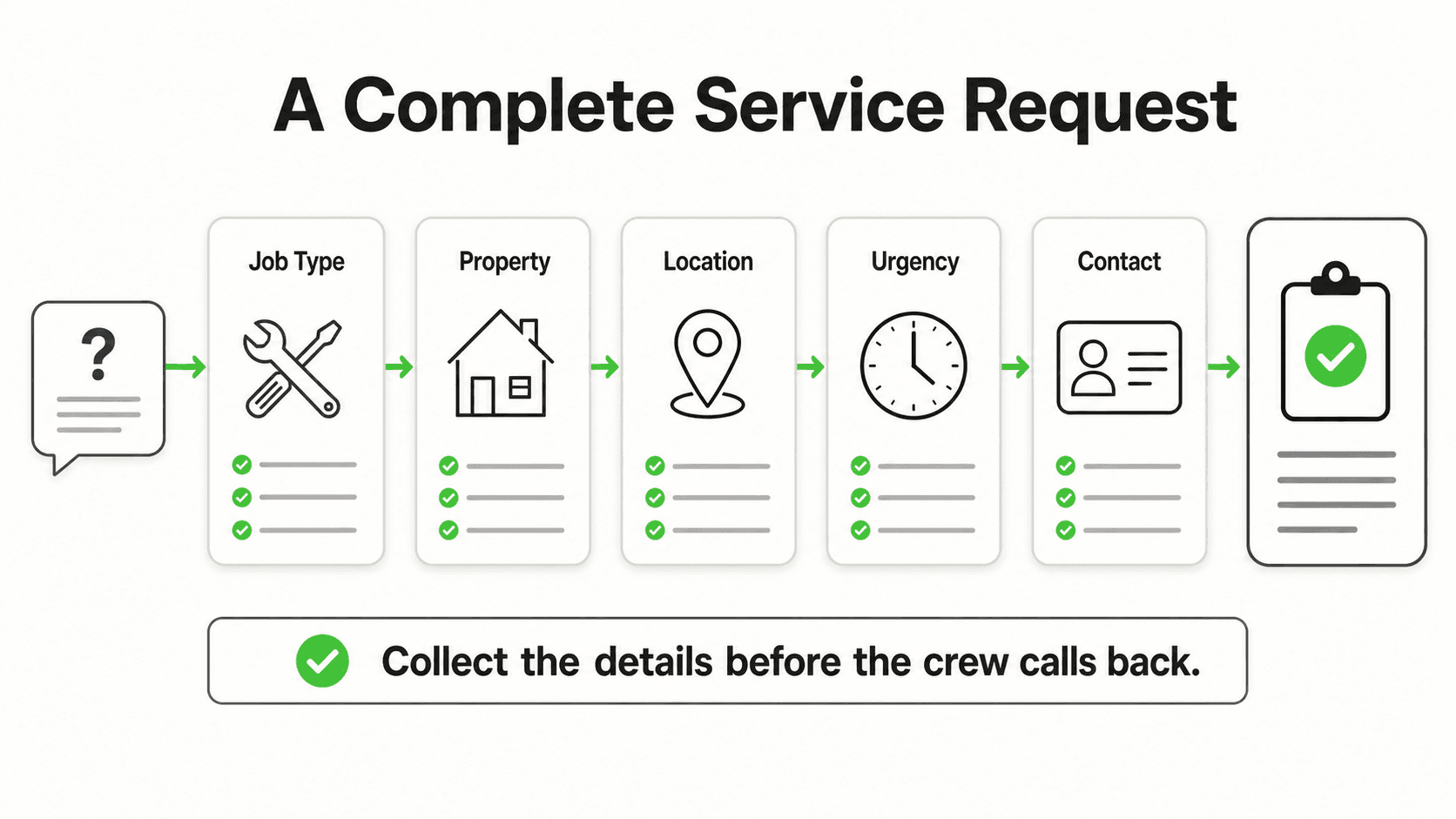
1. Instant Inquiry Response with Service-Specific Qualification
What this looks like in practice: A homeowner in Pune messages your WhatsApp number at 9 PM: "AC not cooling, 1.5 ton split AC, Daikin." Within seconds, they receive an automated response acknowledging the issue, asking two clarifying questions (how old is the unit, is it making unusual sounds?), and providing a service fee estimate of ₹500-1,500 depending on the issue -- all without any human involvement.
Real-world impact: Leads contacted within 5 minutes are 21x more likely to convert than leads contacted after 30 minutes (Source: MIT / Harvard Business Review). For home service businesses handling 15-30 daily inquiries, instant automated responses ensure zero leads fall through the cracks -- especially during peak summer (AC) or monsoon (plumbing/waterproofing) seasons when inquiry volumes spike 3-5x.
Why it works: When a homeowner's AC stops working in May in Hyderabad, they are not casually browsing -- they need a technician urgently. The service provider who responds instantly with a clear next step wins the job, period. Automated WhatsApp qualification handles this at scale, even when your entire team is out on jobs.
Key features:
- Service-category-specific question flows (AC, plumbing, electrical, pest control)
- Instant pricing estimates based on common service types
- Emergency vs. scheduled service routing
- Location-based technician availability checks
- Automatic escalation for urgent requests
2. Visual Problem Diagnosis via Photo and Video Sharing
What this looks like in practice: Instead of a 10-minute phone call trying to describe a water leak, the homeowner sends a 30-second video showing water dripping from the ceiling. Your system receives it, and either the AI or your technician reviews the visual evidence and provides a preliminary diagnosis: "This appears to be a concealed pipe leak. Our waterproofing team can inspect and fix this. Estimated cost: ₹3,000-8,000 depending on the extent. Available tomorrow morning between 9-11 AM."
Real-world impact: Visual diagnosis before dispatching a technician reduces unnecessary site visits, improves first-visit fix rates, and allows more accurate quoting. Customers appreciate the professionalism of a provider who can assess the issue remotely before showing up — rather than arriving unprepared with the wrong parts.
Why it works: Indian homeowners often struggle to describe technical problems over the phone -- "the AC is making a tik-tik sound" or "there is water coming from somewhere." WhatsApp's media-sharing capability turns every customer into a visual reporter, giving your team the context they need to prepare the right tools, parts, and expertise before the visit.
Key features:
- Photo and video intake with automatic categorization
- Before/after photo documentation for completed work
- Parts identification from customer-shared images
- Visual quoting with annotated images showing scope of work
- Work-in-progress photo sharing to build customer confidence
3. Automated Job Scheduling and Technician Assignment
What this looks like in practice: After qualification, the homeowner selects from available time slots displayed in the WhatsApp conversation: "Tomorrow 10 AM - 12 PM" or "Wednesday 2 PM - 4 PM." They receive an instant confirmation with the assigned technician's name, photo, and a live tracking link for the day of the appointment. Automated reminders go out 24 hours and 2 hours before the visit.
Real-world impact: Manual scheduling through phone calls creates bottlenecks, double-bookings, and no-shows. Businesses using automated WhatsApp scheduling report reductions in scheduling-related phone calls, fewer no-shows thanks to automated reminders, and better technician utilization since jobs are slotted based on location and skill match.
Why it works: The biggest friction point in home services is not the service itself -- it is coordinating when the technician will arrive. Indian homeowners, especially dual-income families, cannot wait around for vague "between 10 and 5" windows. WhatsApp scheduling gives them control and certainty, which directly improves satisfaction and conversion.
Key features:
- Real-time slot availability based on technician calendars and location
- Skill-based routing (AC technician vs. general electrician)
- Location-optimized scheduling to minimize travel time between jobs
- Automated appointment reminders with rescheduling option
- Day-of-service live updates ("Your technician Raju is 15 minutes away")
Peak Season Readiness
Indian home service businesses face extreme seasonal demand -- AC services spike 3-5x in April-June, waterproofing inquiries surge during monsoon (June-September), and pest control demand peaks post-monsoon. WhatsApp automation scales instantly to handle these volume spikes without hiring temporary call center staff.
4. Transparent Pricing and Instant Quote Generation
What this looks like in practice: A homeowner messages: "Full house deep cleaning, 3BHK, 1800 sq ft, Whitefield Bangalore." The system instantly generates a quote: "3BHK deep cleaning (1800 sq ft): ₹4,500-6,000. Includes kitchen deep clean, bathroom descaling, floor scrubbing, fan/light cleaning. Balcony cleaning: ₹500 extra. Sofa shampooing: ₹1,500 extra for 5-seater. Want to book?"
Real-world impact: Transparent, instant pricing eliminates the biggest trust barrier in Indian home services. When customers get vague "depends on the situation" responses, they immediately contact competitors for a clearer answer. Businesses that provide upfront estimates on WhatsApp see higher conversion rates because they remove price uncertainty from the decision.
Why it works: Urban Company's biggest innovation was not the service quality -- it was showing the price upfront. Independent home service businesses can replicate this on WhatsApp. When a homeowner sees a clear price range immediately, their decision shifts from "should I hire someone?" to "should I hire this person?" -- a much easier conversion.
Key features:
- Service-type pricing catalogs with instant lookups
- Location-based pricing adjustments (metro vs. tier-2 vs. tier-3 rates)
- Add-on service suggestions with transparent pricing
- Bundle pricing for multi-service packages
- EMI/payment plan options for large projects (interior design, renovation)
5. Multi-Language Communication for Pan-India Reach
What this looks like in practice: A homeowner in Chennai messages in Tamil: "AC service vennum, 2 ton split, Samsung." The system responds in Tamil with service details, pricing, and scheduling options. A customer in Kolkata messages in Bengali and receives the same quality experience in their language. Meanwhile, your back-office team operates entirely in English or Hindi.
Real-world impact: India has 22 officially recognized languages and hundreds of dialects. In tier-2 and tier-3 cities, customers strongly prefer communicating in their regional language rather than English or even Hindi. Home service businesses that can engage customers in their preferred language see higher trust, better conversion, and stronger retention -- particularly for high-consideration services like interior design, renovation, and annual maintenance contracts.
Why it works: When a homeowner is describing a plumbing emergency, they do not want to translate their problem into English. They want to describe it naturally, in the language they think in. AI-powered WhatsApp systems can understand and respond in multiple Indian languages, making your business accessible to customers who would otherwise default to a local provider they can speak with directly.
Key features:
- Automatic language detection from incoming messages
- Responses in Hindi, Tamil, Telugu, Kannada, Bengali, Marathi, Malayalam, and Gujarati
- Transliteration support (Hindi in English script, Tamil in English script)
- Language preference memory for returning customers
- Back-office dashboard in English regardless of customer language
Capture Every Service Inquiry, 24/7
See how Hyperleap AI helps home service businesses respond instantly to WhatsApp inquiries, qualify leads automatically, and book more jobs around the clock.
Get Started6. Post-Service Follow-Up and Review Collection
What this looks like in practice: Two hours after an AC service is completed, the homeowner receives a WhatsApp message: "Hi, Raju completed your AC service today. How was your experience? Reply 1-5 (5 = excellent)." If they reply 4 or 5, a follow-up asks them to share a Google review with a direct link. If they reply 1-3, an apology and a manager callback is triggered immediately.
Real-world impact: Google reviews are the single most important trust signal for local service businesses in India. Businesses that systematically collect reviews after every job build a review volume that dominates local search results. A pest control company going from 15 to 150+ Google reviews in six months sees measurably higher inquiry volumes from Google Maps and "near me" searches.
Why it works: Most homeowners are happy to leave a review -- they just forget or do not have the link handy. A well-timed WhatsApp message with a direct Google review link, sent while the positive experience is still fresh, makes leaving a review effortless. Negative feedback captured privately on WhatsApp gives you a chance to resolve the issue before it becomes a public complaint.
Key features:
- Automated satisfaction surveys at job completion
- Direct Google review links for positive experiences
- Negative feedback escalation to management
- Service quality tracking and technician performance scoring
- Photo-based work documentation shared with customer post-service
7. Seasonal Maintenance Reminders and Repeat Business Automation
What this looks like in practice: A homeowner who had their AC serviced in March receives a WhatsApp message in September: "Hi, it has been 6 months since your last AC service. Pre-winter maintenance ensures efficient heating performance and extends your unit's life. Book a service: ₹600 (regular customers get 10% off). Reply YES to schedule." For pest control customers, a quarterly reminder arrives automatically.
Real-world impact: Acquiring a new customer costs 5-7x more than retaining an existing one (Source: Bain & Company). For home service businesses, repeat customers represent the most profitable segment -- they trust you, they do not negotiate as hard on pricing, and they refer you to neighbours and family. Automated WhatsApp reminders convert one-time jobs into recurring revenue without any manual follow-up effort.
Why it works: The Indian home services market is heavily seasonal. AC servicing peaks pre-summer, waterproofing before monsoon, pest control post-monsoon, deep cleaning before Diwali. Businesses that proactively remind customers about seasonal maintenance before the customer feels the pain capture bookings early -- when technicians are still available and pricing is not inflated by peak demand.
Key features:
- Service-type-specific maintenance schedules (quarterly, bi-annual, annual)
- Festival and season-linked promotions (Diwali deep cleaning, pre-summer AC tune-ups)
- Annual maintenance contract (AMC) enrollment via WhatsApp
- Referral program management ("Refer a neighbor, get ₹200 off your next service")
- Customer lifecycle tracking for cross-selling related services
Real Results: What Home Service Businesses Are Achieving
Faster response and higher conversion
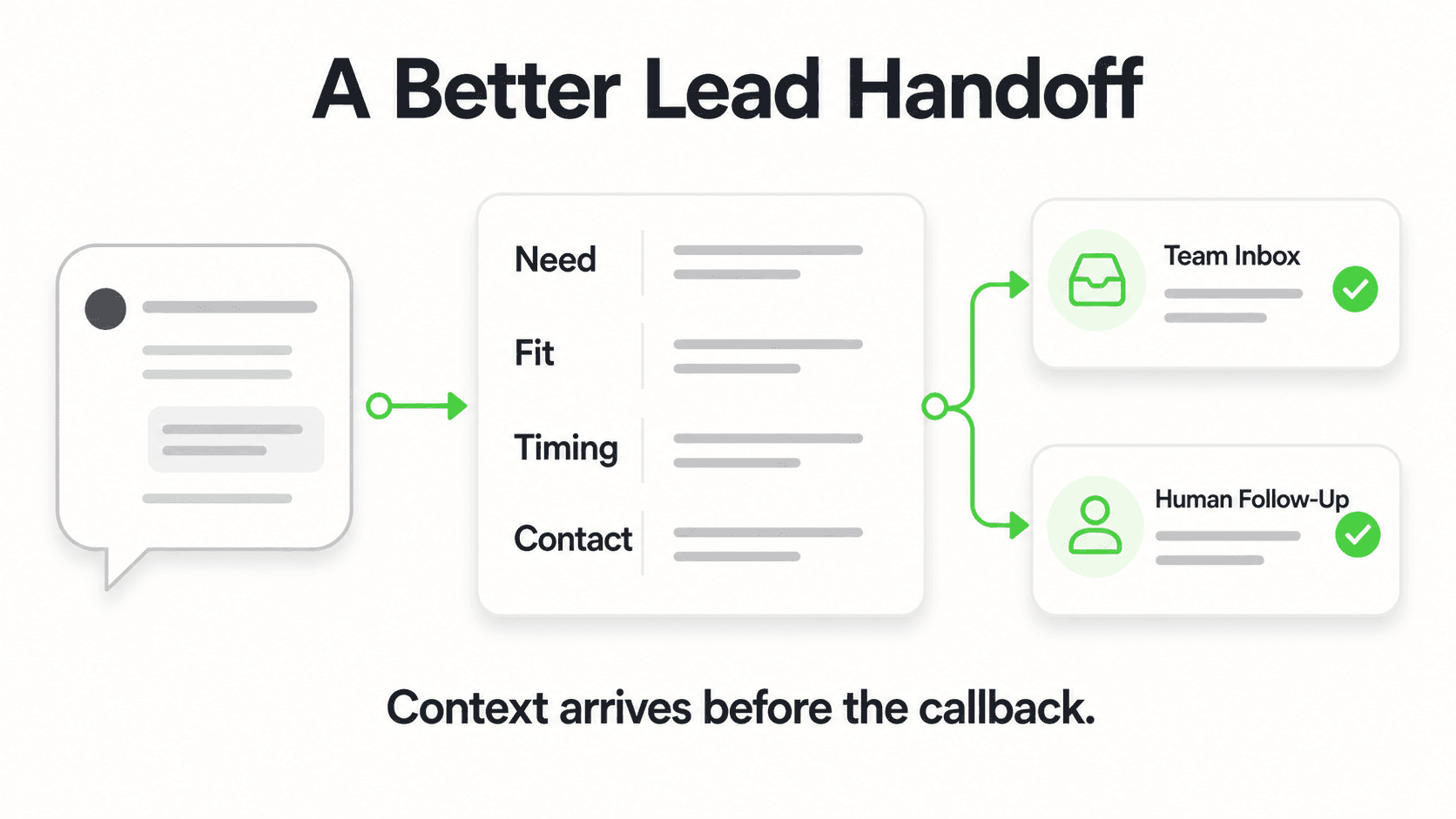
- Response time reduction: From 4-6 hours to under 60 seconds for initial inquiry handling — every inquiry gets an instant, accurate reply regardless of time or day
- Inquiry-to-booking improvement: Instant WhatsApp response and self-service scheduling removes friction between inquiry and booked job, meaningfully improving conversion compared to phone-tag follow-ups
- After-hours capture: Inquiries that previously went unanswered during off-hours are now handled automatically, 24/7
- No-show reduction: Automated appointment reminders sent 24 hours and 2 hours before a job reduce no-shows by keeping customers engaged and giving them an easy rescheduling option
Revenue and efficiency improvements
- Technician utilization: Location-optimized scheduling and reduced back-and-forth coordination frees technicians to complete more jobs per day
- Average ticket value: Systematic add-on service suggestions during WhatsApp conversations (e.g., waterproofing add-on after a plumbing job) increase average job value
- Repeat business rate: Automated seasonal reminders and maintenance follow-ups convert one-time customers into recurring revenue without any manual effort
- Aggregator dependency reduction: Businesses that build a direct WhatsApp channel with customers progressively shift repeat jobs away from commission-heavy platforms — owning the customer relationship rather than renting it
Customer satisfaction and reputation
- Google review volume: Automated post-service review requests sent via WhatsApp, with a direct review link while the positive experience is fresh, substantially increase review volume compared to hoping customers remember to leave one
- Negative feedback recovery: Catching low satisfaction scores privately on WhatsApp — before they become public one-star reviews — gives businesses a chance to resolve issues and retain the customer
- Referral rate: Customers with a good direct communication experience on WhatsApp are more likely to share the business number with neighbours and family, compounding new customer acquisition
- Customer lifetime value: Direct WhatsApp relationships remove platform intermediaries, making repeat bookings and referrals significantly more profitable than aggregator-acquired customers
<60s
Response time (vs. 4-6 hrs manual)
78%
Customers hire the first responder (LeadSimple)
21x
Conversion lift: 5-min vs 30-min response (MIT/HBR)
Implementation Roadmap for Home Service Businesses
Getting WhatsApp lead capture right does not require a large team or a massive budget. Here is a practical 30-60-90 day plan sized for Indian home service businesses.
Phase 1: Foundation (Days 1-30)
Week 1-2: WhatsApp Business API Setup
- Apply for WhatsApp Business API through an official Business Solution Provider (BSP)
- Prepare documentation: GST registration, business PAN, trade license, and address proof
- Set up Meta Business Manager and verify your business entity
- Choose a dedicated business phone number (separate from personal WhatsApp)
- Create a professional WhatsApp Business profile with services, hours, and service area
For a detailed walkthrough, see our step-by-step WhatsApp chatbot setup guide.
Week 3-4: Service Knowledge Base
- Document your complete service catalog with pricing for each service type
- Create FAQ responses for the 20-30 most common questions (pricing, service area, warranty, timing)
- Prepare photo/video portfolios of completed work organized by service category
- Set up initial greeting messages and automated responses for after-hours inquiries
Phase 2: Automation and Integration (Days 31-60)
- Deploy AI-powered inquiry handling across all service categories
- Integrate job scheduling with your technician calendar and dispatch system
- Set up lead qualification flows (service type, urgency, location, budget)
- Configure multi-language responses for your primary service regions
- Connect WhatsApp data to your job management system for unified tracking
- Launch automated quote generation for standard service types
Phase 3: Growth and Optimization (Days 61-90)
- Activate post-service review collection automation
- Set up seasonal maintenance reminder campaigns
- Implement referral program tracking via WhatsApp
- Analyze inquiry patterns to optimize response content and pricing
- Build reporting dashboards for WhatsApp-specific metrics (response time, conversion rate, customer satisfaction)
- Train technicians on updating job status via WhatsApp for real-time customer communication
Investment Context
WhatsApp Business API conversations are priced at ₹0.30-0.80 per conversation (Source: Meta). For a home service business handling 500 conversations monthly, that is ₹150-400 per month in WhatsApp costs -- less than a single lost job. AI chatbot platforms like Hyperleap AI start at approximately ₹3,300/month ($40/month) including WhatsApp integration. Compare that to the ₹3-9 lakhs in monthly revenue lost to missed calls and slow responses.
Your Customers Are Already on WhatsApp -- Meet Them There
The Indian home services market is in the middle of a fundamental transformation. Homeowners who once relied on word-of-mouth and the local "electrician bhaiya" now search online, compare providers, and expect instant, professional communication. The businesses that win in this market are not necessarily the cheapest or even the most skilled -- they are the ones that respond fastest, communicate most professionally, and make booking effortless.
WhatsApp is where this communication happens for 550+ million Indians. Every home service business -- from a solo AC technician in Indore to a 100-person cleaning company in Mumbai -- has the opportunity to systematize their WhatsApp presence and turn it from a chaotic personal chat into a professional lead capture and job booking machine.
The data is clear: first responders win 78% of jobs, and the gap between customer expectations and traditional service provider communication is only growing. Businesses that close this gap with WhatsApp automation gain a structural advantage that compounds over time -- more jobs, more reviews, more referrals, more repeat business.
Platforms like Hyperleap AI enable home service businesses to deploy WhatsApp-integrated AI agents that handle service inquiries 24/7, qualify leads, schedule jobs, and follow up automatically -- in Hindi, English, and regional languages. To understand the full scope of WhatsApp's reach in India, explore our WhatsApp Statistics India 2026 report.
Further Reading
Authoritative external sources used and recommended for further research on this topic:
Frequently Asked Questions
How much does WhatsApp Business API cost for home service businesses in India?
WhatsApp Business API pricing is conversation-based, ranging from ₹0.30 to ₹0.80 per conversation depending on the type (marketing, utility, authentication, or service). You receive 1,000 free service conversations per month. For most home service businesses, the monthly WhatsApp API cost is ₹500-3,000 depending on volume. The AI platform to automate responses starts at approximately ₹3,300/month. Combined, this is typically less than the revenue from two or three recovered jobs per month that would otherwise have been lost to slow response.
Will WhatsApp automation replace my technicians or office staff?
No. WhatsApp automation handles the initial inquiry response, qualification, and scheduling -- the work that currently falls through the cracks when your team is out on jobs. Your technicians still perform the actual service work, and your office staff focus on complex quotes, customer escalations, and business development instead of answering the same 20 questions repeatedly. Think of it as adding a 24/7 receptionist that never misses a message.
How long does it take to set up WhatsApp lead capture for my home service business?
Most home service businesses can go live with basic WhatsApp automation in 2-4 weeks. Phase 1 (API setup and basic auto-responses) takes 1-2 weeks. Phase 2 (full automation with scheduling and quoting) takes another 2-4 weeks. You do not need technical skills to set this up -- platforms like Hyperleap AI provide no-code configuration tools and pre-built templates for home service businesses.
Can WhatsApp handle emergency service requests differently from routine inquiries?
Yes. AI-powered WhatsApp systems can classify inquiry urgency based on keywords, time of day, and service type. A message saying "gas leak" or "water flooding" at 2 AM gets flagged as an emergency and routed immediately to your on-call technician with a phone call alert. A message asking about "house painting quote" gets a detailed automated response with scheduling for a convenient time. This intelligent routing ensures emergencies get human attention instantly while routine inquiries are handled automatically.
Do I need to stop using JustDial, Urban Company, or other platforms?
Not at all. WhatsApp lead capture is complementary to your existing lead sources. The strategy is to gradually shift your best customers to direct WhatsApp communication so that you own the relationship. Continue using aggregator platforms for new customer acquisition, but once a customer has used your service, add them to your WhatsApp follow-up system for repeat business, referrals, and seasonal reminders -- without paying platform commissions on subsequent jobs.
How do I handle multiple service types on a single WhatsApp number?
AI-powered WhatsApp systems categorize inquiries automatically based on the service mentioned. Whether a customer messages about AC repair, plumbing, electrical work, or deep cleaning, the system routes the conversation to the right qualification flow, pricing catalog, and technician schedule. Your customers experience a single, convenient WhatsApp number, while your back-end processes each service type with the appropriate logic and team assignment.
What about customers who prefer phone calls over WhatsApp?
WhatsApp lead capture does not replace your phone line -- it supplements it. Customers who call and reach voicemail can receive an automatic WhatsApp message: "We missed your call. Describe your service need here and we will respond within minutes." This converts missed calls into WhatsApp conversations where they can be handled asynchronously. Industry data shows that younger homeowners (under 40) increasingly prefer messaging over calling (Source: Salesforce State of the Connected Customer), and this trend is accelerating in India. You can read more about how slow response times cost home service businesses jobs.
Ready to Capture Every Service Inquiry?
Hyperleap AI helps home service businesses respond to WhatsApp inquiries instantly, qualify leads, and book more jobs. Start your 7-day free trial.
Start Free TrialIndustry Solutions
See how AI chatbots work for these industries:
Related Articles

WhatsApp for Real Estate Developers in India
How Indian real estate developers use WhatsApp to capture project inquiries, schedule site visits, and convert leads 3x faster than traditional methods.
AI Receptionist for Landscaping Businesses
An AI receptionist for landscaping businesses answers quote and service questions 24/7, qualifies property details, and shares your booking link.
AI Receptionist for Roofing Companies: Never Miss a Lead
An AI receptionist for roofing companies answers storm-damage and estimate questions 24/7, qualifies homeowners, and routes leads to your team.

AI Chatbot for Moving Companies: Win the Quote Race
A chatbot for moving companies qualifies quote requests instantly — origin, destination, home size, date — so you respond before rival estimates land.