WhatsApp for Auto Dealerships and Workshops in India
How Indian dealerships and workshops use WhatsApp to capture leads, book services, and drive repeat business from buyers.
TL;DR: India has over 535 million WhatsApp monthly active users, representing 97% penetration among internet-connected populations (Source: Statista, 2025). For auto dealerships and workshops, WhatsApp isn't optional; it's where your customers already are. This guide covers 7 practical ways to use WhatsApp Business API for test drive bookings, service scheduling, spare parts inquiries, delivery updates, exchange quotes, insurance reminders, and building long-term customer relationships.
WhatsApp for Auto Dealerships and Workshops in India
Your next car buyer isn't calling your showroom. They're scrolling through your inventory on their phone at 10 PM, sharing photos of models they like in their family WhatsApp group, and expecting to get answers on the same platform. In India, where 535.8 million people use WhatsApp monthly (Source: Statista, 2025) and WhatsApp Business has been downloaded over 291 million times (Source: Statista, Q4 2024), the automotive buying journey now starts, progresses, and often closes on WhatsApp.
Whether you're a Maruti Suzuki authorized dealer in Hyderabad, a Hyundai showroom in Bengaluru, a Tata Motors workshop in Mumbai, or a multi-brand used car dealership in Delhi, WhatsApp is the channel your customers prefer. Around 60% of car buyers under 45 in India prefer online-first interactions before visiting a dealership (Source: Autocar India). In cities like Hyderabad and Bengaluru, 65-70% of buyers research online before stepping into a showroom.
The dealerships and workshops capturing this demand are the ones using WhatsApp strategically, not just as a broadcast tool for festival offers, but as a full-service communication platform for sales, service, and retention.
Who This Guide Is For
This guide is for authorized new car dealerships (Maruti, Hyundai, Tata, Mahindra, Toyota, Kia), multi-brand used car dealerships, independent auto workshops and service centers, and multi-brand spare parts retailers across India.
What WhatsApp Business API Means for Auto Dealerships
WhatsApp Business API is the enterprise version of WhatsApp that allows businesses to send automated messages, integrate with CRM systems, deploy AI-powered chatbots, and handle hundreds of simultaneous conversations without a single human operator watching the phone.
For auto dealerships and workshops in India, this enables:
- Automated test drive booking with real-time slot availability
- Service appointment scheduling for routine maintenance and repairs
- Instant responses to inventory queries (Is the Creta SX(O) available in Titan Grey?)
- Post-purchase communication (delivery updates, registration status, insurance renewal reminders)
- AI-powered conversations that handle common questions 24/7, escalating to your sales or service team when needed
The difference from regular WhatsApp Business (the free app) is scale and automation. The API lets you build intelligent workflows, connect to your dealer management system, and handle volume that would overwhelm a team of executives manually typing responses. For a detailed setup walkthrough, see our step-by-step WhatsApp chatbot setup guide.
Why Indian Auto Dealerships Need WhatsApp
The Customer Journey Has Shifted to Mobile
In FY2024, India's passenger vehicle market registered record sales of approximately 4.23 million units, growing 8.75% year-on-year (Source: Autocar Professional). The buying journey for these millions of vehicles increasingly starts on mobile. Buyers compare models, read reviews, check prices, and shortlist dealers before ever walking into a showroom.
WhatsApp is the natural place for these buyers to reach out. Unlike filling a form on a website (which feels formal and slow) or making a phone call (which many younger buyers avoid), WhatsApp feels familiar, instant, and conversational. A buyer can message "I'm interested in the Hyundai Creta 1.5 SX" and expect a response within minutes, not a callback after 4 hours.
Used Car Market Demands Instant Communication
India's used car market is experiencing rapid growth, with the market expected to grow significantly through the decade (Source: Persistence Market Research). Platforms like Spinny, Cars24, and CarDekho have raised the bar for instant communication. Buyers browsing used car listings expect WhatsApp-level responsiveness: photos within minutes, price confirmation in real time, and inspection reports shared as PDFs on the same chat.
If your used car dealership still relies on "call for price" listings, you're losing buyers to competitors who share everything on WhatsApp before the buyer even visits.
Service Customers Prefer Messaging Over Calling
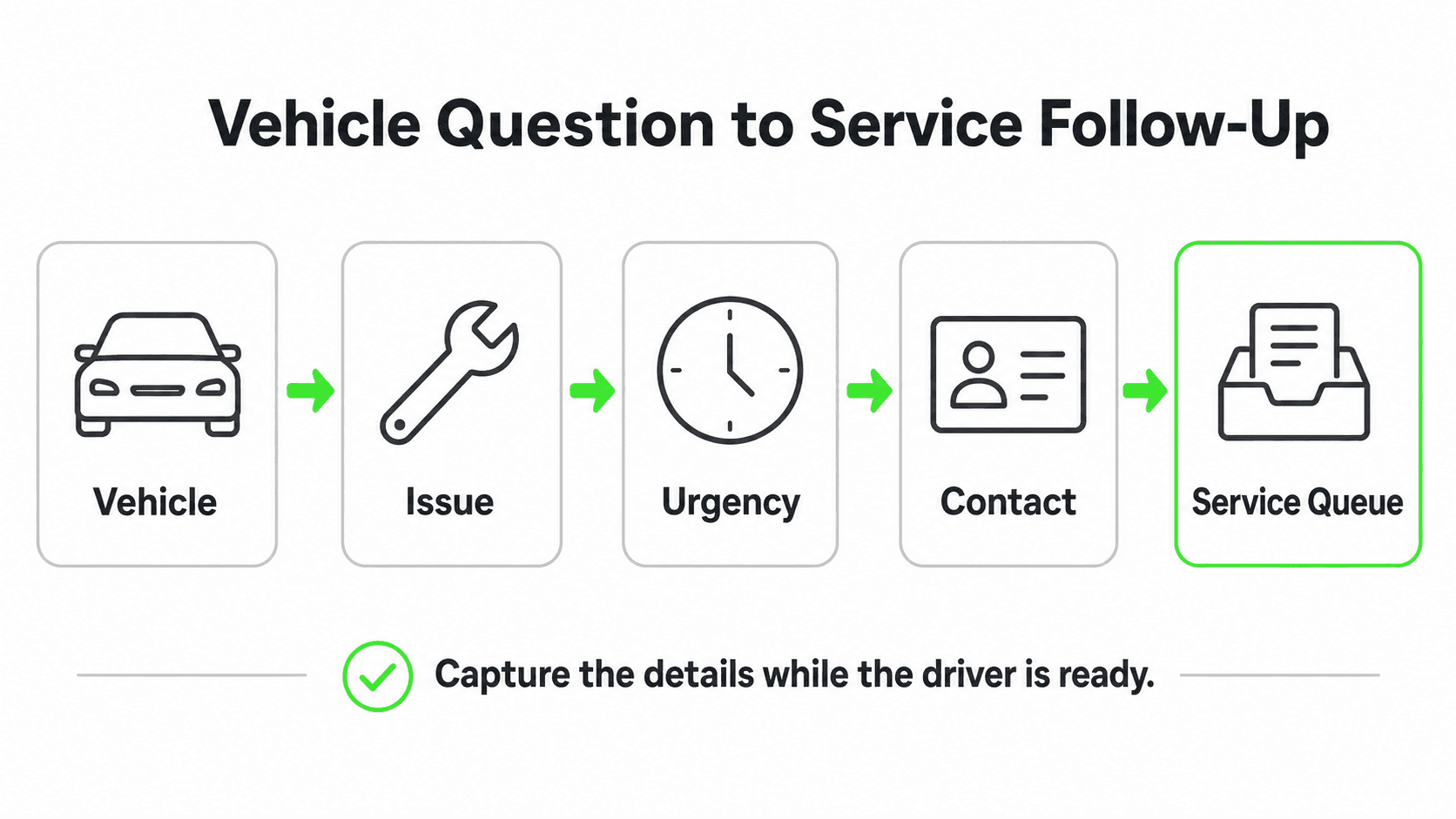
For workshops and service centers, WhatsApp solves a fundamental problem: customers can't call when they're at work, but they can send a WhatsApp message during a break. Service scheduling via WhatsApp allows customers to describe their vehicle issue, attach photos or videos, and receive a slot confirmation, all asynchronously and at their convenience.
This is especially valuable for working professionals in metro cities who need to fit service appointments around demanding work schedules.
WhatsApp in India: The Numbers
India leads globally in WhatsApp usage with 535.8 million monthly active users, representing approximately 97% penetration among internet-connected populations. WhatsApp Business has been downloaded 291.58 million times in India alone. Messages sent on WhatsApp have a 98% open rate, compared to 20-25% for email and 45% for SMS (Source: Statista, 2025).
7 Ways Dealerships and Workshops Use WhatsApp to Grow
1. Test Drive Booking and Follow-Up
What this looks like in practice: A buyer messages your WhatsApp number: "I want to test drive the Tata Nexon EV in Faridabad." An AI-powered chatbot immediately confirms the model availability, shows available test drive slots for the next 3 days, and books the appointment with a confirmation message, all within 60 seconds. The buyer also receives an automated reminder 24 hours before the test drive with showroom directions and parking information.
Real-world impact: Dealerships using automated WhatsApp test drive booking report higher show rates because the barrier to booking is so low (a single message) and reminders keep the appointment top-of-mind. When a buyer doesn't show, the system follows up with "We missed you today! Would you like to reschedule?" rather than letting the lead go cold.
Why it works: Indian car buyers often test drive 2-3 models across different showrooms. The dealer who makes booking easiest and follows up most consistently wins the visit. WhatsApp's 98% open rate means your reminders are actually seen.
Key features:
- AI chatbot handles model selection, variant queries, and color availability
- Real-time slot booking integrated with showroom calendar
- Automated reminder sequence (24h, 2h before)
- Post-test-drive follow-up with quote and financing options
2. Service Appointment Scheduling
What this looks like in practice: An existing customer sends a message: "My Maruti Baleno is due for its 20,000 km service. Can I get a slot for Saturday?" The chatbot confirms the service type, checks available slots at the preferred service center, and books the appointment. It also proactively suggests additional items: "At 20,000 km, we also recommend brake fluid change and AC filter replacement. Would you like to add these?"
Real-world impact: Service departments that offer WhatsApp scheduling see a significant reduction in phone call volume, freeing service advisors to focus on in-person customers. The proactive upsell during booking increases average service order value by ₹500-₹1,500 per visit.
Why it works: Most customers delay service because calling during working hours is inconvenient. WhatsApp removes this friction entirely. The customer messages at 11 PM, the AI books the appointment, and the service center opens to a full schedule.
Key features:
- Service type identification (periodic, repair, recall, body work)
- Mileage-based service recommendation
- Available slot display for preferred location
- Service cost estimation for transparent pricing
- Automated pre-service reminders with drop-off instructions
3. Spare Parts Inquiry and Ordering
What this looks like in practice: A workshop owner in Pune messages: "Need front brake pads for 2022 Hyundai Creta 1.5 diesel. OEM part number?" The AI chatbot confirms the exact part number, checks availability, provides pricing, and offers delivery timeline. For confirmed orders, it captures the order details and hands off to your existing checkout or payment process.
Real-world impact: Multi-brand spare parts retailers using WhatsApp for ordering process 3-5x more inquiries per day compared to phone-only operations. Workshop owners prefer WhatsApp because they can send photos of worn parts for identification, and the message history serves as an order record.
Why it works: The spare parts business in India is relationship-driven but inefficient. Parts retailers spend hours on calls verifying part numbers, checking stock, and coordinating delivery. WhatsApp automation handles the verification and stock check instantly, while human agents step in for complex compatibility questions.
Key features:
- Part number lookup by vehicle make/model/year
- Photo-based parts identification
- Real-time stock and pricing information
- Order tracking and delivery updates
- Order confirmation and hand-off to your existing payment system
4. Vehicle Delivery Updates and Documentation
What this looks like in practice: A customer who booked a new Mahindra XUV700 receives automated WhatsApp updates through every stage: "Your vehicle has been allocated at the factory," "Your vehicle is in transit to the dealership," "Your vehicle has arrived! Here's your delivery checklist and required documents," and finally, "Your delivery is scheduled for Saturday 11 AM. See you at the showroom!"
Real-world impact: For new car deliveries where customers often wait 2-12 weeks, proactive WhatsApp updates dramatically reduce "Where is my car?" calls to your sales team. This is especially critical for high-demand models with long waiting periods (Mahindra Thar, Hyundai Creta, Maruti Jimny) where anxious customers call repeatedly.
Why it works: Transparency builds trust. When a customer receives regular updates without having to ask, they feel valued and informed. This positive experience translates to higher satisfaction scores, better Google reviews, and stronger referral likelihood.
Key features:
- Stage-by-stage delivery tracking notifications
- Document checklist for delivery day (Aadhaar, PAN, insurance, finance papers)
- Delivery day appointment confirmation
- Post-delivery welcome message with owner's manual, service schedule, and emergency contacts
Automate Your Dealership's WhatsApp Communication
Hyperleap AI deploys intelligent WhatsApp chatbots for Indian auto dealerships in days, not months. Handle test drives, service booking, and customer follow-up 24/7.
Get Started5. Exchange and Trade-In Quote Requests
What this looks like in practice: A customer messages: "I want to exchange my 2019 Hyundai Venue for a new Creta. What's the exchange value?" The chatbot asks for the vehicle's registration number, kilometer reading, service history, and photos of the exterior/interior. It then provides a preliminary exchange value range and offers a physical inspection appointment at the nearest showroom.
Real-world impact: In India's growing exchange market, the ability to provide quick preliminary quotes keeps buyers in your pipeline. Without WhatsApp-based exchange estimation, buyers default to Cars24, Spinny, or OLX where instant online valuations are standard.
Why it works: Exchange buyers are among the highest-intent leads: they want to sell and buy simultaneously. The dealer who provides the fastest, most transparent exchange process captures the full transaction (used car purchase + new car sale), doubling the revenue from a single customer interaction.
Key features:
- Vehicle details collection (registration, KMs, service history)
- Photo collection for preliminary assessment
- Instant preliminary valuation range
- Inspection appointment booking
- Seamless transition to new car sales conversation
6. Insurance Renewal and Periodic Reminders
What this looks like in practice: Your system automatically messages customers 30 days before their car insurance expires: "Your Tata Nexon's insurance expires on March 15. Renew through us to get a ₹2,500 discount on third-party + comprehensive. Reply YES to get a quote." It also sends reminders for PUC certificate renewal, extended warranty expiry, and service milestones.
Real-world impact: Insurance renewal is a high-margin, low-effort revenue stream that most dealerships neglect. Automated WhatsApp reminders can capture 20-30% of renewals that would otherwise go directly to insurance company websites or agents.
Why it works: Indian car owners often forget insurance renewal dates until the last week. A WhatsApp reminder 30 days out, with a one-tap response, is the perfect low-friction nudge. The 98% open rate means the message is very likely to be seen.
Key features:
- Automated calendar-based triggers (insurance, PUC, warranty, service)
- Renewal quote generation with competitive pricing
- One-tap response to initiate renewal process
- Document sharing (policy copy, receipt) directly on WhatsApp
- Follow-up sequence if the initial reminder is not acted upon
7. Customer Feedback and Referral Programs
What this looks like in practice: 48 hours after a service visit, the customer receives a WhatsApp message: "How was your service experience at [Dealership Name], [Location]? Rate us 1-5." Based on the response, the system either thanks them (4-5 stars) and requests a Google review, or escalates to a service manager (1-3 stars) for immediate resolution. Satisfied customers also receive a referral code: "Refer a friend and earn ₹5,000 off your next service."
Real-world impact: Google reviews are critical for local SEO and dealership discovery. Dealerships that automate post-service WhatsApp feedback collection see 3-5x more Google reviews than those relying on manual follow-up. The referral program turns satisfied customers into a lead generation channel.
Why it works: The timing is critical. 48 hours after service, the experience is fresh but the customer has had time to verify that everything was done correctly. WhatsApp's conversational format makes feedback feel natural rather than survey-like.
Key features:
- Automated post-service/post-delivery feedback trigger
- Rating-based routing (satisfied to Google review, unsatisfied to manager)
- Referral code generation and tracking
- Monthly NPS trend reporting
- Integration with CRM for customer satisfaction scoring
Real Results: What Indian Dealerships Are Achieving
Sales Performance
- WhatsApp-first dealerships report faster lead-to-visit conversion because the barrier to communication is lower than email or phone
- Test drive show rates improve with automated WhatsApp reminders compared to phone-based confirmation
- Exchange and trade-in inquiries increase when customers can share vehicle photos and details asynchronously
- Post-test-drive WhatsApp follow-up keeps deals alive that would otherwise go cold
Service Department Revenue
- Automated service reminders increase repeat visit frequency by proactively scheduling maintenance
- WhatsApp-based upsell during booking adds ₹500-₹1,500 per service order
- Reduced phone call volume frees service advisors to focus on in-person customers
- After-hours booking captures service appointments from working professionals
Customer Retention
- Insurance and warranty renewal reminders generate recurring high-margin revenue
- Post-service feedback collection drives 3-5x more Google reviews
- Consistent WhatsApp communication creates a "personal dealership" experience
- Referral programs turn satisfied customers into lead generators
Implementation Roadmap for Indian Dealerships
Phase 1: WhatsApp Business API Setup (Week 1)
- Apply for WhatsApp Business API access through an official Business Solution Provider (BSP)
- Get your business verified (Green tick verification requires verified Facebook Business Manager)
- Set up your WhatsApp Business profile with dealership name, address, hours, and description
- Configure message templates for common scenarios (test drive confirmation, service reminder, delivery update)
- Follow our detailed step-by-step WhatsApp chatbot setup guide
Phase 2: Deploy AI Chatbot (Weeks 2-3)
- Connect your WhatsApp Business API to an AI chatbot platform like Hyperleap AI
- Train the chatbot on your inventory, service menu, pricing, and common customer questions
- Configure conversation flows for test drive booking, service scheduling, and parts inquiries
- Test with internal staff before going live
- Set up escalation rules to route complex queries to your sales or service team
Phase 3: Integrate with Your Systems (Weeks 3-4)
- Connect to your DMS (Automate, Eicher, or custom) for inventory sync and service scheduling via webhooks and APIs
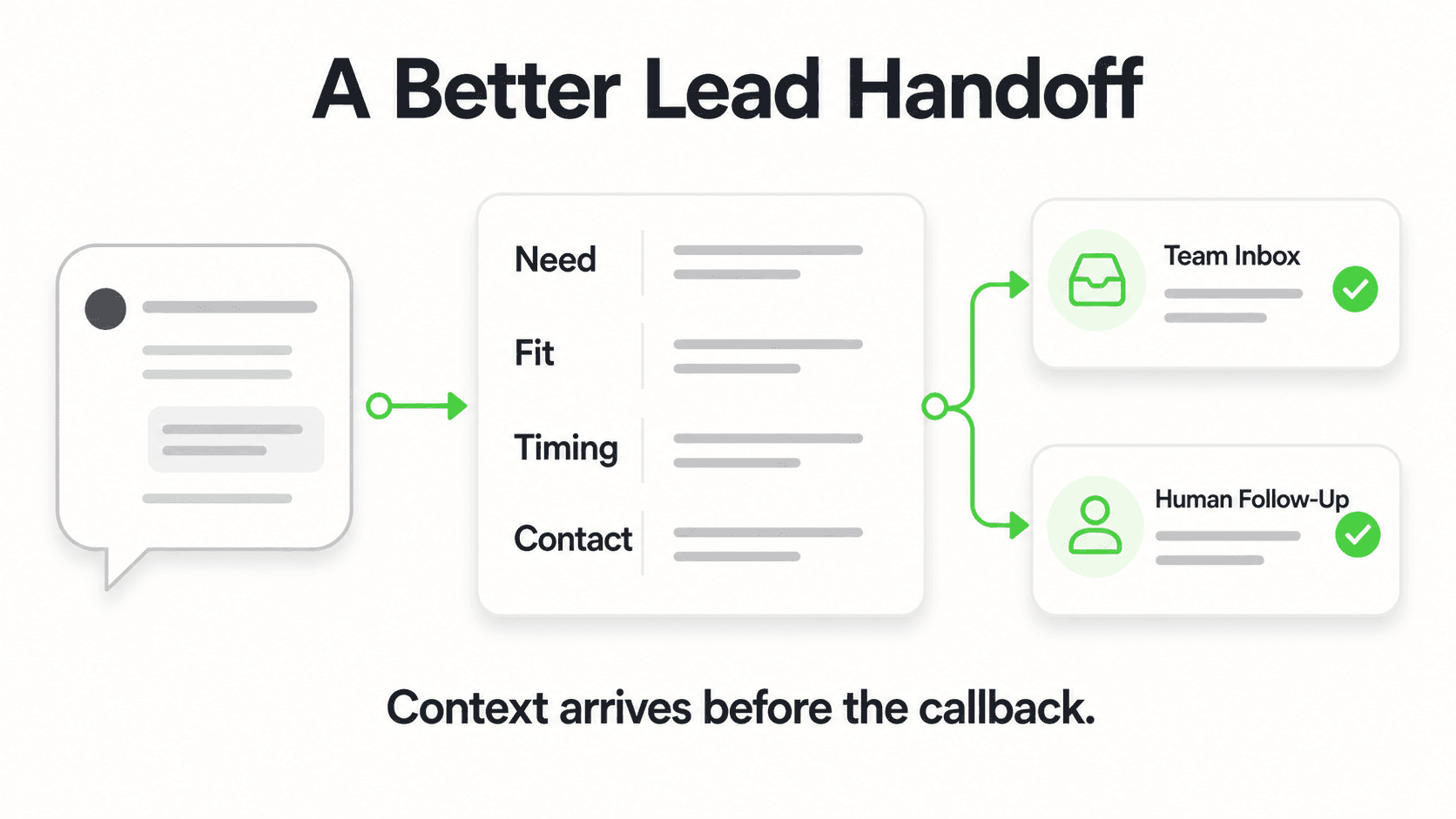
- Integrate with your CRM for lead tracking and customer history
- Configure automated reminder triggers based on customer data (insurance dates, service milestones)
- Coordinate with your existing payment systems for parts orders and service payments (Hyperleap does not process payments directly)
Phase 4: Launch and Scale (Month 2+)
- Promote your WhatsApp number across all touchpoints: website, Google Business, showroom signage, business cards, newspaper ads
- Add WhatsApp "click to chat" links on your website and social media
- Launch your first WhatsApp campaign (e.g., year-end exchange offer, festive season discount)
- Track key metrics: response time, booking conversion rate, customer satisfaction scores
- Expand to additional locations if you're a multi-showroom operation
To understand WhatsApp adoption trends in India, read our WhatsApp statistics India 2026 guide.
Frequently Asked Questions
How much does WhatsApp Business API cost for an Indian dealership?
WhatsApp Business API pricing in India is based on conversation categories. Business-initiated conversations (marketing, utility, authentication) and user-initiated service conversations have different per-conversation rates, typically ₹0.30-₹0.75 per conversation. Add the chatbot platform cost (Hyperleap AI starts at ₹3,300/month for Plus plan) and BSP fees. For a dealership handling 1,000-2,000 conversations per month, total cost is typically ₹5,000-₹15,000/month, a fraction of a single salesperson's salary.
Can WhatsApp integrate with my existing dealer management system?
Yes. Modern chatbot platforms integrate with popular Indian DMS solutions through APIs and webhooks. Even if your DMS doesn't have a direct API, middleware solutions can bridge the gap. Hyperleap AI supports webhook-based integration that works with virtually any system.
Is WhatsApp Business API secure enough for sharing customer financial information?
WhatsApp Business API uses end-to-end encryption for all messages. For sensitive information like financing details, the best practice is to share preliminary information on WhatsApp and redirect the customer to your secure portal for detailed financial documentation. Never share complete Aadhaar numbers, PAN details, or bank account information in chat.
How do I handle multiple showroom locations on one WhatsApp number?
You can use a single WhatsApp Business number with intelligent routing. The chatbot identifies the customer's preferred location early in the conversation and routes them to the appropriate showroom's team. Alternatively, you can use separate WhatsApp numbers per location for clearer attribution.
Will customers find it intrusive to receive automated WhatsApp messages?
Indian customers are generally comfortable with WhatsApp business communication when it's relevant and not excessive. The key is opt-in consent (obtained during booking or purchase) and value-driven messaging. A service reminder or insurance renewal alert is helpful; daily promotional blasts are not. Stick to 2-4 messages per month for non-transactional communication.
Can the chatbot handle Hindi and regional language queries?
Yes. Modern AI chatbots support multilingual conversations. In the Indian auto context, customers frequently switch between English and Hindi (or regional languages like Telugu, Tamil, Marathi) within the same conversation. AI-powered platforms handle this code-switching naturally, responding in the customer's preferred language.
How long does it take to see results from WhatsApp automation?
Most dealerships see measurable results within 2-4 weeks of deployment. Service departments notice reduced phone volume immediately. Sales teams see improved test drive booking rates within the first month. Insurance renewal campaigns show ROI within the first renewal cycle (30-60 days). The full impact on customer satisfaction and retention builds over 3-6 months.
WhatsApp Is Where Indian Auto Buyers Live
India's auto market is booming. Record sales, growing SUV demand, an expanding used car market, and increasingly digital-first buyers are transforming how dealerships and workshops must operate. WhatsApp, with its 535 million Indian users and 98% open rate, is the communication platform that matches this transformation.
The dealerships winning today aren't the ones with the biggest showrooms. They're the ones that respond to a buyer's WhatsApp inquiry in 30 seconds, book a test drive without a phone call, send service reminders at the right time, and make every interaction feel personal and effortless.
Whether you're a Maruti authorized dealer handling 200+ inquiries a month or a neighborhood workshop scheduling 20 services a week, WhatsApp automation delivers the speed, scale, and personal touch that Indian customers expect. The technology is ready. Your competitors are already adopting it. Learn more about how after-hours gaps cost dealerships real revenue.
How much does WhatsApp Business API actually cost?
Meta charges per conversation, not per message, with different rates for marketing, utility, authentication, and service conversations. Pricing varies by country — see the WhatsApp Business Platform pricing docs. Hyperleap surfaces these costs transparently and does not mark them up.
Is a WhatsApp Business Account required to use Hyperleap on WhatsApp?
Yes — Meta requires a verified WhatsApp Business Account with a dedicated phone number for the WhatsApp Business API. Hyperleap walks you through provisioning during onboarding.
Can the same chatbot handle WhatsApp and website chat?
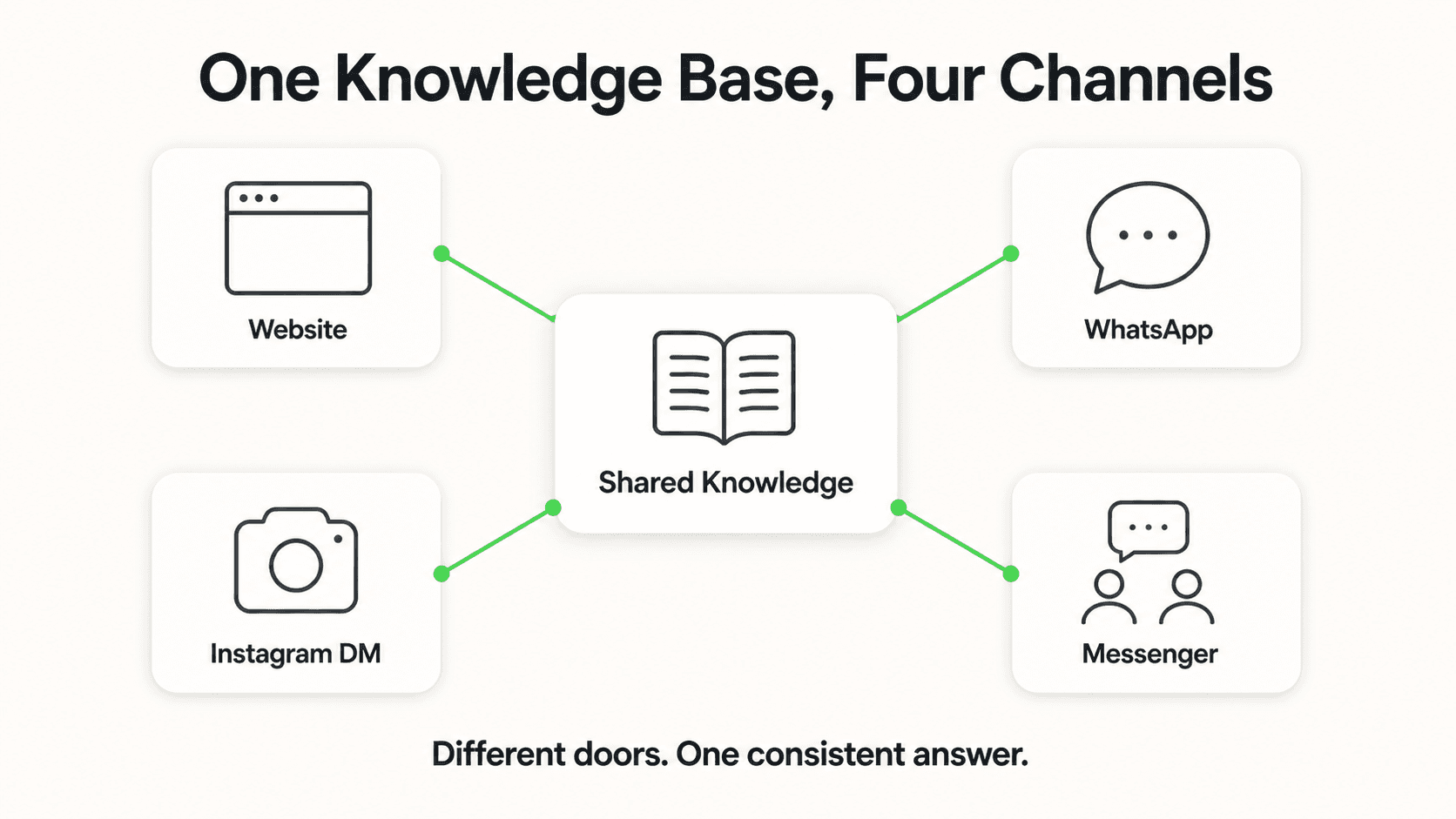
Yes. Hyperleap runs one AI agent across Website chat, WhatsApp, Instagram DM, and Facebook Messenger — same knowledge base, same answers, same conversation history in one unified inbox.
Further Reading
Authoritative external sources used and recommended for further research on this topic:
- WhatsApp Business Platform documentation
- WhatsApp Business conversation-based pricing
- Meta for Developers WhatsApp API
Ready to Launch WhatsApp for Your Dealership?
Hyperleap AI deploys AI-powered WhatsApp chatbots for Indian auto dealerships. Test drives, service booking, parts inquiries, and customer follow-up, all automated.
Start Your Free TrialIndustry Solutions
See how AI chatbots work for these industries:
Related Articles
AI Answering for Auto Repair Shops & Dealerships
AI answering for auto repair shops vs. dealerships: estimates and status vs. inventory, test drives, trade-ins — 24/7 across chat, WhatsApp, Instagram.
WhatsApp for Home Services in India: Lead Guide
How Indian home service businesses use WhatsApp to capture leads, book jobs instantly, and convert 3x more inquiries into completed work orders.

WhatsApp for Clinics in India: Fewer No-Shows, 24/7 Replies
How Indian clinics and hospitals use WhatsApp to reduce no-shows, automate appointment reminders, and improve patient comms.

WhatsApp for Real Estate Developers in India
How Indian real estate developers use WhatsApp to capture project inquiries, schedule site visits, and convert leads 3x faster than traditional methods.