WhatsApp for Salons & Spas in India: Bookings Guide
How Indian salons and spas use WhatsApp to fix missed bookings, automate follow-up, and grow client retention and revenue.
TL;DR: India's beauty and wellness industry is worth over $28 billion and growing rapidly, yet most salons and spas still rely on phone calls, walk-ins, and personal WhatsApp messages with no system behind them. With over 600 million WhatsApp users in India, the salons that build structured WhatsApp communication -- for booking, reminders, service menus, loyalty programmes, and seasonal campaigns -- are retaining more clients, filling more appointment slots, and competing effectively against aggregator platforms. This guide covers 7 practical ways Indian salons and spas use WhatsApp to grow their business, from single-chair setups in tier-2 cities to premium spa chains in metros.
Who This Guide Is For
This guide is written for owners and managers of beauty salons, unisex salons, hair studios, day spas, Ayurvedic spas, nail bars, bridal studios, and wellness centres across India. Whether you run a neighbourhood salon in Indore or a luxury spa in South Mumbai, these WhatsApp strategies apply to your business.
WhatsApp for Salons and Spas in India: Booking and Follow-up Guide
Every missed booking call costs an Indian salon ₹500-3,000 in lost service revenue -- and that does not account for the product sales, repeat visits, and referrals that never happen. Research shows that beauty and wellness businesses experience no-show rates between 20-30%, depending on location, service type, and clientele (Source: salon industry management surveys). For a busy salon handling 30 appointments daily, a 25% no-show rate means 7-8 empty slots every single day. At an average ticket size of ₹800-1,500, that adds up to ₹15-30 lakhs in lost revenue annually -- from a single location.
The client who missed her appointment did not cancel out of indifference. She was stuck in traffic and could not call to reschedule. She forgot the timing because the salon confirmed by phone three days ago and she never wrote it down. She wanted to bring a friend along but could not easily check your service menu and prices. She saw a promotional post from a competitor on Instagram and booked there instead -- because they had a WhatsApp link that made it effortless.
The solution is not hiring another front-desk person. The solution is meeting clients on the platform they already use dozens of times daily. India has over 600 million monthly active WhatsApp users, making it the world's largest WhatsApp market. Your clients -- from a 22-year-old college student in Jaipur getting her first facial to a 45-year-old professional in Bangalore scheduling a monthly hair colour -- are on WhatsApp. The question is whether your salon is engaging them there with a professional system, or still relying on the owner's personal number and unanswered phone calls.
What Is WhatsApp-Based Client Management for Salons and Spas?
WhatsApp-based client management is the use of WhatsApp Business -- either the free app or the Business API -- as a structured, professional communication channel for every client interaction outside the salon chair. For Indian salons and spas, this means handling appointment booking, confirmations, and reminders through WhatsApp instead of phone calls and walk-in registers. It means sharing service menus with prices, sending before-and-after transformation photos, collecting feedback, and running festival campaigns -- all through the platform your clients already prefer.
This is fundamentally different from a salon owner using their personal WhatsApp to message clients informally. Professional WhatsApp client management involves a dedicated business number, a verified business profile with salon details, operating hours, and location, automated responses during closed hours, quick reply templates for common inquiries, and labels to organise client conversations by service type, visit frequency, or loyalty tier.
Key capabilities for Indian salons and spas:
- Appointment booking -- new client registration, service scheduling, and stylist-specific booking via chat
- Automated reminders -- 24-hour and 2-hour reminders that reduce no-shows by 25-40%
- Service menu sharing -- detailed catalogues with pricing, duration, and package options
- Before-and-after galleries -- transformation photos that drive bookings (with client consent)
- Product recommendations -- personalised suggestions for at-home hair care, skincare, and wellness products
- Loyalty programmes -- points tracking, reward redemptions, and VIP client management
- Festival and seasonal campaigns -- Diwali packages, bridal season offers, monsoon hair care, and summer skincare promotions
Unlike email (open rates below 20% in India) or SMS (lost among hundreds of OTP and promotional messages), WhatsApp messages achieve open rates above 95% with response rates 3-5x higher than any other channel. For salons and spas -- where an empty slot at 3 PM cannot be sold at 5 PM -- this difference directly impacts daily revenue.
Why Indian Salons and Spas Lose Clients Without WhatsApp
India's beauty and wellness market is valued at over USD 28 billion and growing at approximately 15-20% annually, driven by rising disposable incomes, social media influence, and the expanding salon culture in tier-2 and tier-3 cities (Source: IMARC Group / Redseer Consulting). With lakhs of salons -- from neighbourhood parlours to premium chains like Lakme Salon, Enrich, and Naturals -- competition for clients is fierce and getting fiercer. The salon that communicates better retains more clients.
Phone Tag During Services
A typical mid-sized salon in a metro city receives 40-80 calls daily across booking inquiries, price checks, rescheduling requests, and product questions. During peak hours -- Saturday afternoons, pre-festival rushes, and wedding season -- every stylist is occupied with a client, and the receptionist (if you have one) is managing walk-ins, processing payments, and answering the ringing phone simultaneously. Research indicates that 30-40% of calls to service businesses go unanswered during busy periods.
In many Indian salons -- especially single-owner setups and small neighbourhood parlours -- there is no dedicated receptionist. The salon owner or a stylist answers calls between clients, which means interrupted services, rushed conversations, and missed calls. A client trying to book a bridal trial appointment calls three times, gets no answer, and books with the salon down the road instead.
Walk-In Culture Shifting to Appointments
Indian salon culture has historically been walk-in dominated. But this is changing rapidly, especially in metros and tier-1 cities. Clients now expect to book specific time slots with their preferred stylist, avoid waiting, and know exactly how long the service will take. Aggregator platforms like Urban Company have accelerated this shift by training consumers to expect instant booking and transparent scheduling. Salons that cannot offer the same convenience through WhatsApp lose clients to both aggregators and competitors who can.
Competition from Aggregators
Urban Company, the dominant home beauty services platform in India, has built a ₹6,000+ crore business partly by offering the booking convenience that traditional salons lack. The platform takes 15-25% commission from beauticians and has trained millions of Indian consumers -- especially in metros and tier-1 cities -- to expect instant booking, upfront pricing, and professional communication. Independent salons that match this experience on WhatsApp compete effectively without surrendering commissions. Those that do not lose clients to the aggregator every time convenience wins over loyalty.
No Follow-Up Culture
Most Indian salons have zero systematic follow-up after a client visit. No reminder for the next haircut (every 4-6 weeks). No check-in after a new hair colour. No birthday wish or anniversary offer. No reactivation message for clients who have not visited in 3 months. The result is predictable: clients drift to whichever salon is top-of-mind when they next need a service, and that is increasingly the one they saw on Instagram or the one that sent a timely WhatsApp message.
7 Ways Salons and Spas Use WhatsApp to Grow Their Business
1. Appointment Booking Around the Clock
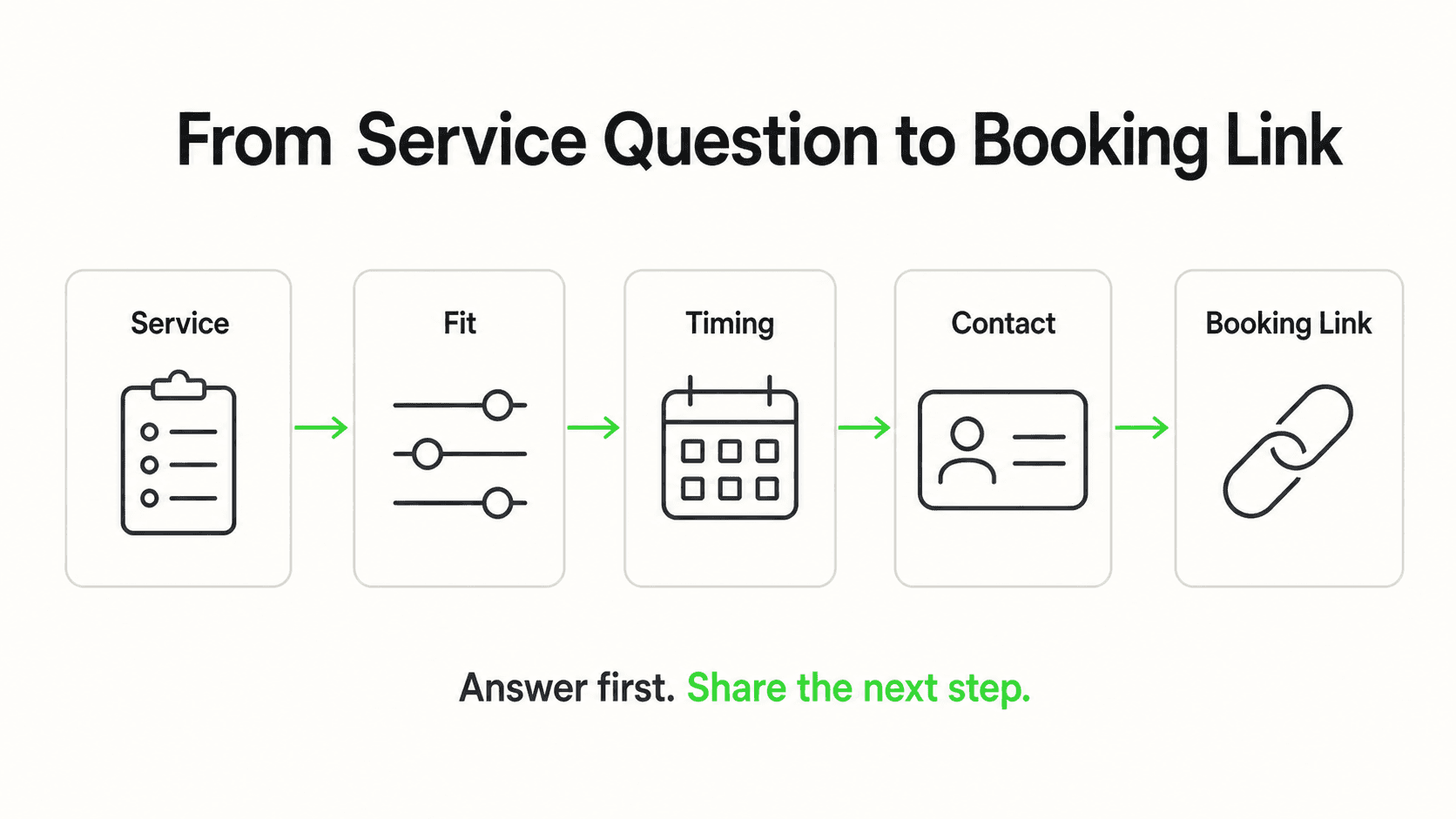
What this looks like in practice: A client messages your salon's WhatsApp number at 10:30 PM on a Tuesday: "Want to book a haircut and blow-dry for Saturday afternoon with Priya." An automated response acknowledges the message instantly, shows available Saturday afternoon slots with Priya, and confirms the booking -- all without your staff being involved. By Wednesday morning, the appointment is locked in and the client has her confirmation saved in her chat.
Real-world impact: Salons that implement WhatsApp-based appointment booking typically capture 30-40% more after-hours bookings compared to phone-only systems. For a salon that receives 10-15 after-hours inquiries weekly, converting even half of these at an average ticket size of ₹1,000-2,000 translates to ₹3-7 lakhs in additional annual revenue.
Why it works: Indian clients -- especially working women, young professionals, and college students -- strongly prefer messaging over calling for non-urgent bookings. WhatsApp eliminates the friction of busy phone lines, hold times, and the awkwardness of calling during meetings. A client can message at midnight, and the booking is confirmed before she wakes up. The conversation stays in her chat history, so she never loses the appointment details, salon address, or parking instructions.
Key features:
- Greeting message with service categories, pricing ranges, and booking instructions
- Quick reply templates showing available slots by stylist and service type
- Automated confirmation with date, time, stylist name, salon address, and Google Maps link
- Booking link sharing so clients can confirm slots directly in your scheduling system (via WhatsApp Business API)
2. Automated Reminders That Eliminate Empty Chairs
What this looks like in practice: Mrs. Sharma booked a hair colour appointment two weeks ago for Saturday at 11 AM. She receives a WhatsApp reminder Friday evening: "Hi Mrs. Sharma! This is a reminder for your hair colour appointment with Neha at Glow Studio tomorrow (Saturday) at 11:00 AM. The service takes approximately 2 hours. Please arrive with clean, dry hair for best results. Reply CONFIRM to confirm or RESCHEDULE to pick a new time." On Saturday morning at 9 AM, she gets a second reminder with the salon address and a note about nearby parking.
Real-world impact: WhatsApp appointment reminders reduce salon no-show rates by 25-40% based on service industry communication studies. For a salon with a baseline no-show rate of 25%, bringing it down to 15% recovers 3-4 appointments per day. At an average ticket size of ₹1,200 (haircut + treatment or colour), that is ₹3,600-4,800 recovered daily -- approximately ₹11-15 lakhs annually for a single location.
Why it works: SMS reminders in India are buried under a flood of OTP messages, promotional texts, and bank notifications -- clients routinely ignore them. WhatsApp reminders appear in the client's primary messaging app, complete with your salon's business profile photo and verified name. The two-way format means clients can confirm, reschedule, or ask a question ("Can I bring my daughter for a haircut too?") directly from the reminder -- something SMS cannot facilitate.
Key features:
- 24-hour reminder with appointment details and preparation tips
- Same-day morning reminder with directions and parking information
- One-tap CONFIRM / RESCHEDULE options
- Automatic waitlist notification when a cancelled slot opens up
- Follow-up message if the client does not confirm (offering alternative dates)
Multi-Language Reminders for Diverse Clientele
A salon in Chennai may serve clients who prefer Tamil, English, or Hindi. A salon in Hyderabad fields queries in Telugu, Hindi, and English. WhatsApp-based reminder systems -- especially those powered by AI -- can send reminders in the client's preferred language, improving comprehension and reducing no-shows significantly. This is especially valuable for salons in tier-2 and tier-3 cities where English may not be the first language for most clients.
3. Service Menu Sharing with Prices and Packages
What this looks like in practice: A new client messages: "What are your bridal packages?" Instead of a vague "Come visit us and we'll discuss," your WhatsApp system instantly sends a structured catalogue: a PDF or catalogue message with bridal packages ranging from ₹15,000 (basic: makeup + hair) to ₹75,000 (premium: trial session + engagement look + wedding day + reception look + mehendi day), with clear inclusions, duration, and photos of past bridal work. The client can browse, ask questions, and book a trial -- all in the same conversation.
Real-world impact: Indian clients research extensively before committing to high-value salon services -- bridal packages, keratin treatments, hair extensions, and advanced facials. Salons that share structured, visually appealing service menus via WhatsApp see higher inquiry-to-booking conversion rates because the client has everything she needs to make a decision without visiting the salon first. For services costing ₹5,000 and above, reducing the decision-making friction from "I need to visit and ask" to "I can see everything on WhatsApp" accelerates bookings measurably.
Why it works: Price transparency is a persistent challenge in the Indian salon industry. Many salons are reluctant to share prices until the client walks in, which creates friction and distrust. Clients -- especially younger demographics influenced by aggregator pricing models -- expect to know what they will pay before they book. A professional WhatsApp catalogue with clear pricing, service descriptions, and sample work builds trust and eliminates the "will I be overcharged?" anxiety that prevents many first-time bookings.
Key features:
- WhatsApp Business catalogue with service categories (hair, skin, nails, spa, bridal)
- PDF price lists for comprehensive service menus
- Package breakdowns with inclusions, duration, and add-on options
- Sample photos for each service category (with client consent)
- Quick reply for instant booking after menu review
4. Before-and-After Photo Galleries That Drive Bookings
What this looks like in practice: A client considering a balayage sends a WhatsApp message: "I want to see some of your colour work." Your salon responds with a curated gallery of 8-10 before-and-after balayage transformations -- on different hair types, lengths, and skin tones relevant to Indian clients. Each photo includes a brief caption: hair type, technique used, and approximate pricing. The client finds a look she loves, asks "Can I get something like photo 5?", and books a consultation.
Real-world impact: Visual proof is the most powerful conversion tool in the beauty industry. Salons that maintain and share organised before-and-after portfolios via WhatsApp report higher client confidence and faster booking decisions, particularly for high-value services like colour transformations (₹3,000-15,000), keratin treatments (₹5,000-12,000), and hair extensions (₹8,000-25,000). A client who can see results on hair similar to hers is far more likely to commit than one relying on verbal descriptions.
Why it works: Instagram is where salons showcase their work publicly, but WhatsApp is where the private, personalised conversation happens. A client may hesitate to comment on an Instagram post or send a DM to a business page, but messaging a WhatsApp number feels direct and personal. Sharing a curated gallery in response to a specific inquiry -- rather than posting generically -- makes the client feel that the recommendation is tailored to her. In Indian culture, where beauty decisions are often discussed with friends and family, these WhatsApp photos get forwarded to the client's trusted circle for opinions, extending your salon's reach organically.
Key features:
- Organised photo galleries by service type (colour, cuts, bridal, skincare, nail art)
- Before-and-after comparisons with relevant hair/skin types for Indian clientele
- Captions with service details, pricing, and duration
- Client consent management for using transformation photos
- Quick booking link directly from gallery conversations
5. Personalised Product Recommendations After Every Visit
What this looks like in practice: After a keratin treatment, the client receives a WhatsApp message the next day: "Hi Meera! Your keratin treatment looked beautiful yesterday. To maintain the smoothness for 4-6 months, we recommend: (1) Sulfate-free shampoo -- L'Oreal Serie Expert or Matrix Biolage (₹450-650) (2) Leave-in serum -- available at our salon for ₹350 (3) Avoid tying your hair tightly for the next 48 hours. Your next touch-up is recommended in 4 months -- shall I schedule it for June?"
Real-world impact: Product sales are a significant revenue stream that most Indian salons underutilise. A salon generating ₹5 lakhs monthly in service revenue could add ₹50,000-1,00,000 in product sales simply by recommending relevant products after services. WhatsApp makes this personal and timely -- the recommendation arrives while the client is still admiring her new look, not as a generic promotional message weeks later.
Why it works: In-salon product pitches feel pushy. A stylist trying to sell shampoo while blow-drying feels transactional and uncomfortable -- for both the stylist and the client. A follow-up WhatsApp message the next day, framed as aftercare advice rather than a sales pitch, feels genuinely helpful. The client can consider the recommendation at her leisure, ask questions about alternatives, and order when ready. This consultative approach to product sales aligns with how Indian consumers prefer to make purchasing decisions -- with time to consider, discuss with family, and compare options.
Key features:
- Service-specific aftercare and product recommendation templates
- Product catalogue with prices and direct ordering option
- Follow-up timing based on service type (next day for treatments, same evening for colour)
- Refill reminders based on typical product usage duration
- Cross-selling related services (e.g., deep conditioning after colour, facial after cleanup)
Automate Client Communication for Your Salon
Hyperleap AI helps Indian salons and spas deploy AI-powered WhatsApp chatbots that handle appointment booking, reminders, service inquiries, and client follow-ups -- in Hindi, English, and regional languages.
See How It Works6. Loyalty Programmes That Keep Clients Coming Back
What this looks like in practice: After every visit, the client receives a WhatsApp update: "Hi Ananya! You earned 150 loyalty points today. Your total: 720 points. At 1,000 points, you unlock a complimentary hair spa (worth ₹1,500). Just 280 points to go -- that's approximately 2 more visits! Book your next appointment: [link]." On reaching 1,000 points, she gets a congratulatory message with a redemption code and a prompt to book.
Real-world impact: Client retention is dramatically more profitable than client acquisition. Industry benchmarks suggest that retaining an existing salon client costs 5-7x less than acquiring a new one (Source: Bain & Company). Yet most Indian salons have no structured loyalty programme beyond the occasional "your 10th haircut is free" stamp card that gets lost. WhatsApp-based loyalty programmes maintain digital records, send automatic updates after every visit, and create a tangible incentive to return to your salon rather than trying the new one that just opened nearby.
Why it works: Physical loyalty cards get lost, forgotten at home, or ignored. App-based loyalty programmes require downloads that most Indian salon clients will not bother with. WhatsApp loyalty updates arrive in the same app the client uses for everything else -- no new app, no card to carry, no login to remember. The psychology of progress tracking ("just 280 points to go") creates a compelling reason to book the next appointment sooner rather than later. For salons competing against aggregator platforms that offer deep discounts to first-time users, a loyalty programme creates switching costs that keep clients returning to your salon.
Key features:
- Automatic points tracking with WhatsApp updates after each visit
- Tier-based rewards (Silver, Gold, Platinum) with escalating benefits
- Birthday and anniversary rewards with personalised messages
- Referral bonuses credited directly to loyalty points
- Redemption notifications with booking prompts
7. Festival and Seasonal Campaigns
What this looks like in practice: Three weeks before Diwali, your salon sends a WhatsApp broadcast to your client list: "Diwali Glow Package at [Salon Name]: Gold facial + hair spa + manicure + pedicure -- ₹2,999 (save ₹1,200). Limited slots: Oct 18-28. Plus, every Diwali booking earns double loyalty points! Book now: reply DIWALI or tap here: [link]." Follow-up messages go out to clients who opened but did not respond, and a "Last 5 slots remaining" message creates urgency.
Real-world impact: Seasonal campaigns are the highest-revenue weeks for Indian salons -- Diwali, Navratri, Karwa Chauth, wedding season (October-February), and the summer wedding rush drive 2-3x normal booking volumes. Salons that run structured WhatsApp campaigns for these seasons fill their calendars 2-3 weeks in advance, command premium pricing for festive packages, and avoid the last-minute chaos of walk-in-only demand. A single well-executed Diwali campaign can generate ₹2-5 lakhs in additional revenue for a mid-sized salon.
Why it works: Indian festival culture is deeply tied to personal grooming and beauty rituals. Women plan their Diwali looks, Navratri outfits, and wedding-season appearances weeks in advance. A timely WhatsApp message -- sent when the client is already thinking about her festive preparation -- converts at dramatically higher rates than a generic Instagram post. The personal, one-to-one nature of WhatsApp makes the offer feel exclusive, not mass-marketed. And the ability to book instantly from the message eliminates the gap between "I want this" and "I'll book later" that loses so many potential sales.
Key features:
- Festival-specific package templates (Diwali, Navratri, Karwa Chauth, Eid, Christmas, New Year)
- Wedding season bridal and guest packages (engagement, sangeet, mehendi, reception looks)
- Monsoon haircare and skincare campaigns (July-September)
- Summer skin protection packages (April-June)
- Early bird pricing with deadline-based urgency
- Double loyalty points for seasonal bookings
- Broadcast lists segmented by client preferences and service history
Real Results: What Indian Salons and Spas Are Achieving
Salons and spas across India that have professionalized their WhatsApp client communication report consistent improvements across key business metrics.
Revenue Recovery from Reduced No-Shows
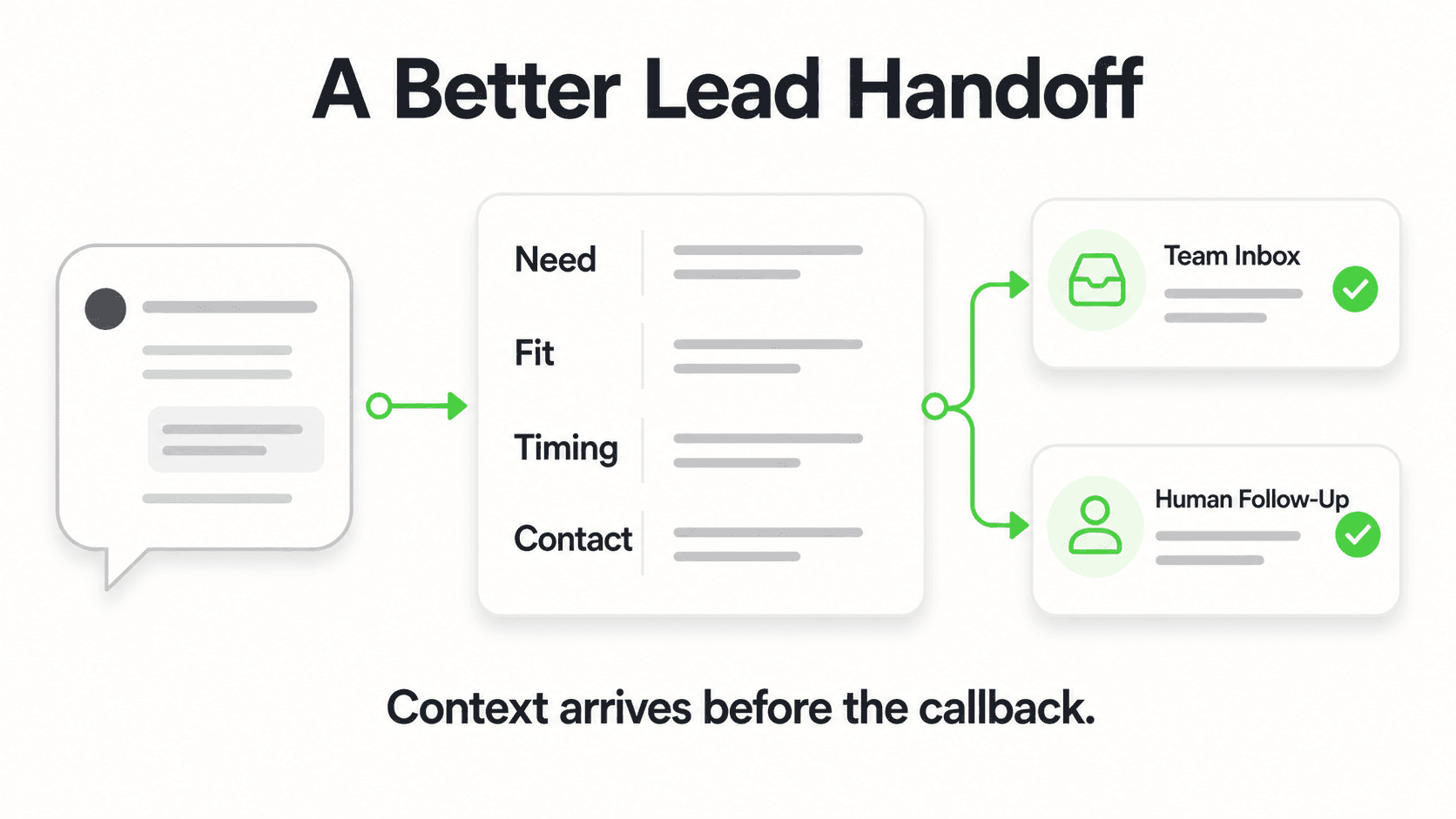
WhatsApp reminders deliver measurable results for Indian salons. Salons that implement structured reminder sequences (24-hour + same-day morning) typically see no-show rates drop by 25-40%. For a salon handling 30 appointments daily with an average ticket size of ₹1,200, reducing the no-show rate from 25% to 15% recovers approximately 3 appointments per day. That translates to ₹3,600 in recovered daily revenue -- or approximately ₹11 lakhs annually from a single location. Multi-location chains see the impact multiply across every branch.
Higher Average Ticket Size
- Service menu sharing via WhatsApp encourages clients to book add-on services (spa with haircut, nail art with pedicure) that they would not have known about otherwise
- Package promotions increase the average transaction value by 20-35% compared to single-service bookings
- Product recommendations after treatments add ₹300-800 per visit in retail revenue
- Pre-visit upselling ("Would you like to add a head massage with your haircut? Just ₹300 extra") works naturally in a WhatsApp conversation
Operational Efficiency Gains
- 40-50% reduction in phone call volume for booking-related queries, freeing your front desk to focus on in-salon client experience
- Pre-booking via WhatsApp reduces walk-in wait times and improves stylist utilisation
- 2-3 hours daily saved on reminder calls, follow-up calls, and schedule confirmations
- After-hours booking capture adds 15-20% more appointments without extending salon hours or staffing
- Automated FAQ responses handle pricing, timing, and location queries that previously consumed staff time
Client Retention and Growth
The cumulative impact on client loyalty and salon growth is substantial. Salons that communicate consistently on WhatsApp report higher client satisfaction, more Google reviews, stronger word-of-mouth referrals, and better reactivation rates for lapsed clients. In India's increasingly competitive beauty market -- where new salons open every week and aggregator platforms poach clients with deep discounts -- retaining clients through superior communication and loyalty programmes is a decisive competitive advantage.
Implementation Roadmap for Indian Salons and Spas
Here is a practical 30-day plan to implement professional WhatsApp client communication at your salon or spa.
Week 1: Foundation (Days 1-7)
Day 1-2: WhatsApp Business Setup
- Get a dedicated phone number for the salon (not the owner's personal number)
- Download and configure WhatsApp Business with a complete business profile: salon name, address, services offered, operating hours, website, email
- Set a professional profile photo (salon logo or a clean interior photo)
- Add your WhatsApp number to Google Business Profile, salon signage, visiting cards, price menus, Instagram bio, and your website
Day 3-4: Automated Messages and Quick Replies
- Configure greeting message: "Welcome to [Salon Name]! We offer hair, skin, nail, and spa services. To book an appointment, reply BOOK. To see our service menu, reply MENU. For bridal inquiries, reply BRIDAL."
- Set up away message with operating hours and a note that bookings will be confirmed when the salon opens
- Create quick reply templates for: appointment confirmation, service pricing, directions to salon, stylist availability, and cancellation/rescheduling policy
Day 5-7: Labels and Organisation
- Set up labels: "New Client," "Appointment Booked," "Service Completed," "Follow-Up Due," "Loyalty VIP," "Bridal," and service-specific labels (hair colour, keratin, facials)
- Train your front desk and stylists on WhatsApp Business features: labels, quick replies, broadcast lists, and catalogue
- Begin using WhatsApp for all new appointment confirmations (in addition to phone calls during the transition)
Week 2: Migration and Templates (Days 8-14)
- Start sending appointment reminders via WhatsApp for all bookings (24-hour and same-day morning)
- Create and upload your service catalogue to WhatsApp Business -- categorised by hair, skin, nails, spa, bridal, and packages
- Build post-visit follow-up templates for your most popular services (colour aftercare, keratin maintenance, facial follow-up, bridal trial next steps)
- Begin collecting WhatsApp numbers from walk-in clients during billing (with consent for communication)
Week 3: Automation and Campaigns (Days 15-21)
- Implement automated reminder workflows if using the WhatsApp Business API
- Launch your loyalty programme with WhatsApp-based points tracking
- Set up post-service feedback collection with Google review links
- Plan and schedule your first seasonal or festival campaign (based on the nearest upcoming occasion)
- Create a referral programme with WhatsApp-based tracking and rewards
Week 4: Measurement and Optimisation (Days 22-30)
- Measure no-show rates before and after WhatsApp reminders
- Track phone call volume changes at the front desk
- Monitor booking conversion rates for WhatsApp inquiries vs. phone inquiries
- Gather client feedback on the WhatsApp booking experience
- Identify high-performing message templates and refine underperforming ones
- Set up monthly reporting on key metrics: bookings via WhatsApp, no-show rate, reactivation rate, product sales from recommendations
When to Upgrade to WhatsApp Business API
If your salon handles more than 50 client conversations daily, has multiple locations that need centralised communication, or wants AI-powered automated responses, consider upgrading to the WhatsApp Business API. The API enables multi-agent access, chatbot automation, and template messaging at scale -- essential for salon chains, premium spas, and high-volume salons. For direct integration with specific salon management systems, verify capabilities with your chosen platform before committing.
Frequently Asked Questions
Will WhatsApp replace my front-desk staff?
No. WhatsApp automates the repetitive, time-consuming parts of client communication -- appointment reminders, service menu inquiries, price checks, and common questions about timings and location. Your front-desk staff is freed up to handle complex client interactions, in-salon coordination, product consultations, and situations that require human warmth and judgement. The goal is to eliminate the 50-60% of their time spent on tasks that WhatsApp handles more efficiently, not to replace the person who greets your clients with a smile.
How much does WhatsApp Business for a salon cost?
The WhatsApp Business app is free and sufficient for most single-location salons handling up to 30-50 daily conversations. For larger salons, multi-location chains, and premium spas that need multi-agent access, AI-powered automation, and integration with salon management software, the WhatsApp Business API involves costs that vary by provider -- typically ₹5,000-15,000 per month depending on message volumes and features. Compared to the revenue lost to no-shows (₹11-30 lakhs annually per location), the investment pays for itself within the first few weeks. Read our detailed WhatsApp chatbot pricing breakdown for Indian businesses.
How long does it take to set up WhatsApp for a salon?
The basic WhatsApp Business setup takes 2-3 hours: installing the app, completing the business profile, uploading your service catalogue, and configuring automated messages and quick replies. Full implementation including staff training, client migration, and template optimisation takes 2-4 weeks following the roadmap above. For WhatsApp Business API with AI-powered automation and salon management software integration, plan for 4-6 weeks including testing and training.
Can WhatsApp handle bridal bookings that involve multiple sessions?
Yes, and this is one of WhatsApp's strongest use cases for Indian salons. Bridal packages typically involve 3-6 sessions spread across weeks or months -- trial makeup, pre-wedding facials, mehendi day, sangeet look, wedding day, and reception. WhatsApp allows you to maintain a continuous conversation thread with the bride, schedule all sessions with reminders, share look inspirations and product lists, coordinate with the bride's family, and make adjustments to the package as plans evolve. The entire planning process stays in one chat, rather than scattered across phone calls, emails, and Instagram DMs.
How do we handle walk-in clients who do not have appointments?
Walk-ins remain an important part of Indian salon culture, especially in neighbourhood salons and tier-2/tier-3 cities. WhatsApp does not eliminate walk-ins -- it complements them. When a walk-in client visits, collect their WhatsApp number during billing (with consent), send a thank-you message with their service summary and loyalty points, and add them to your WhatsApp communication system for future reminders, offers, and reactivation messages. Over time, many walk-in clients convert to appointment-based clients because the WhatsApp booking process is more convenient than showing up and hoping for an available slot.
Is WhatsApp effective for salons in tier-2 and tier-3 cities?
Absolutely -- and often more effective than in metros. Clients in cities like Bhopal, Coimbatore, Lucknow, Vijayawada, and Nagpur are highly active on WhatsApp but may have limited exposure to app-based booking systems or salon management platforms. Multi-language support is especially valuable: a salon in Madurai can communicate in Tamil, a salon in Varanasi in Hindi, and a salon in Kochi in Malayalam. WhatsApp also helps smaller-city salons attract clients from surrounding areas who previously relied on word-of-mouth and walk-in visits. The personal, familiar nature of WhatsApp communication builds trust faster than a website or social media presence -- particularly for first-time clients trying a new salon.
Do I need to worry about spamming clients on WhatsApp?
Yes, and being thoughtful about message frequency is essential. WhatsApp Business has strict anti-spam policies, and clients can easily block your number if they feel overwhelmed. Best practices include: sending only relevant, personalised messages (not generic blasts); limiting promotional messages to 2-4 per month; always including an opt-out option; timing messages appropriately (not early morning or late night); and focusing on value-adding communication (reminders, aftercare tips, loyalty updates) rather than pure sales pitches. A well-managed WhatsApp channel should feel like a helpful concierge, not a marketing machine.
Smarter Client Communication Starts Now
WhatsApp is already how 600+ million Indians communicate daily -- and your salon clients are no exception. The salons and spas that will thrive in India's booming beauty market are the ones that meet clients where they are: on WhatsApp, in their language, at their convenience.
The 7 practices in this guide -- from automated appointment booking to festival campaigns -- require no massive technology investment. A neighbourhood salon in a tier-3 city can start with the free WhatsApp Business app and see results within the first week. Premium spas and multi-location chains in metros can scale with the WhatsApp Business API and AI-powered automation to handle hundreds of client interactions daily without adding front-desk staff.
The gap between salons that communicate professionally on WhatsApp and those still relying on unanswered phone calls and walk-in registers is widening every month. Clients notice the difference. They choose the salon that sends a reminder before their appointment, shares a detailed service menu with transparent pricing, follows up after a treatment with care tips, runs exciting Diwali and wedding-season campaigns, and makes booking as easy as sending a message -- not the one that makes them call back three times to confirm a haircut.
For salons ready to go beyond basic WhatsApp Business -- with AI-powered salon client communication that handles appointment booking, service inquiries, product recommendations, and client follow-ups 24/7 in any language -- the technology is available today.
How much does WhatsApp Business API actually cost?
Meta charges per conversation, not per message, with different rates for marketing, utility, authentication, and service conversations. Pricing varies by country — see the WhatsApp Business Platform pricing docs. Hyperleap surfaces these costs transparently and does not mark them up.
Is a WhatsApp Business Account required to use Hyperleap on WhatsApp?
Yes — Meta requires a verified WhatsApp Business Account with a dedicated phone number for the WhatsApp Business API. Hyperleap walks you through provisioning during onboarding.
Can the same chatbot handle WhatsApp and website chat?
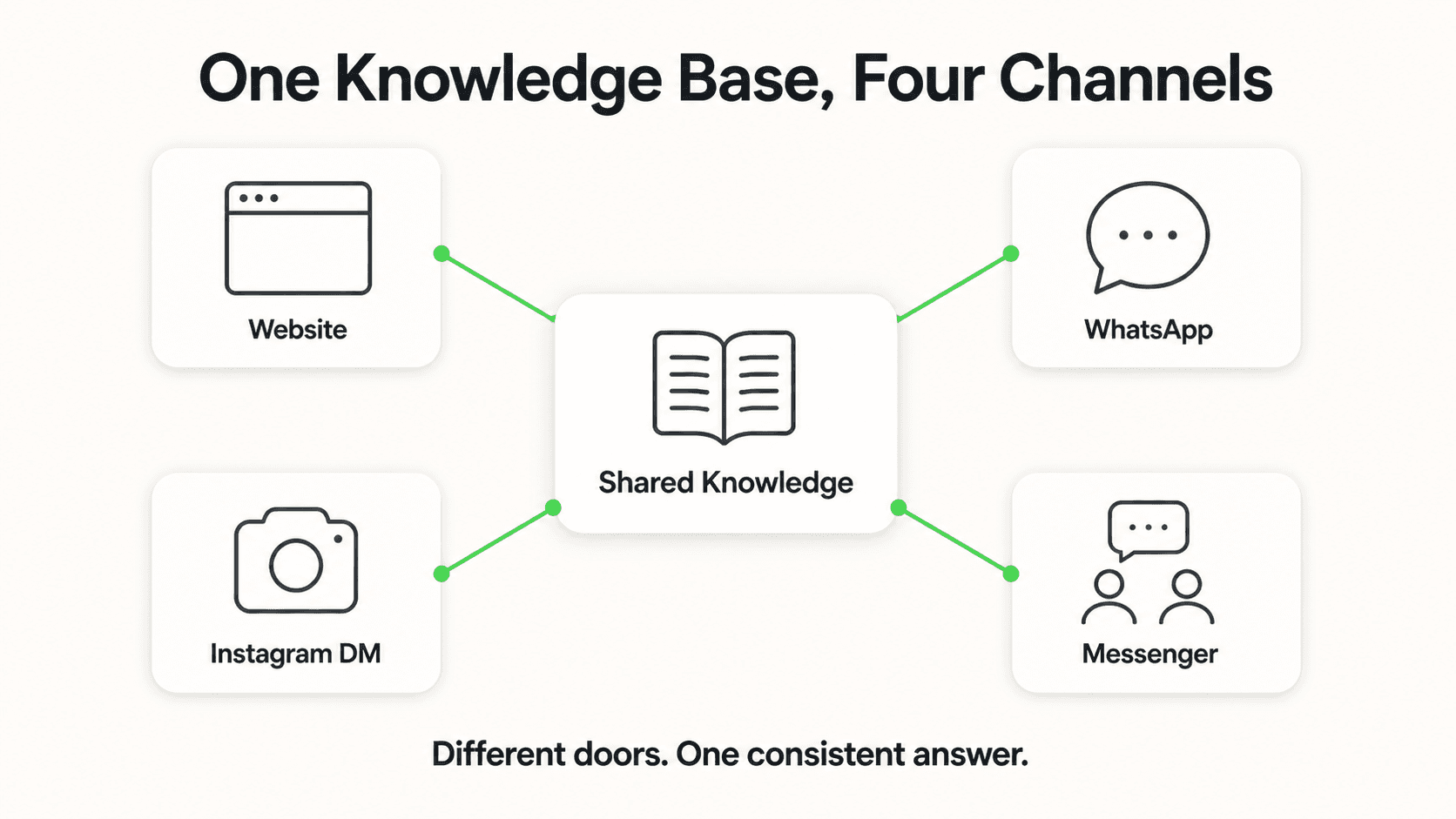
Yes. Hyperleap runs one AI agent across Website chat, WhatsApp, Instagram DM, and Facebook Messenger — same knowledge base, same answers, same conversation history in one unified inbox.
Further Reading
Authoritative external sources used and recommended for further research on this topic:
- WhatsApp Business Platform documentation
- WhatsApp Business conversation-based pricing
- Meta for Developers WhatsApp API
Ready to Transform Your Salon's Client Communication?
Hyperleap AI Agents handle appointment booking, reminders, service inquiries, and client follow-ups on WhatsApp -- 24/7, in Hindi, English, and regional languages.
Start Your Free TrialIndustry Solutions
See how AI chatbots work for these industries:
Related Articles

WhatsApp for Auto Dealerships and Workshops in India
How Indian dealerships and workshops use WhatsApp to capture leads, book services, and drive repeat business from buyers.
WhatsApp for Home Services in India: Lead Guide
How Indian home service businesses use WhatsApp to capture leads, book jobs instantly, and convert 3x more inquiries into completed work orders.
WhatsApp for Clinics in India: Fewer No-Shows, 24/7 Replies
How Indian clinics and hospitals use WhatsApp to reduce no-shows, automate appointment reminders, and improve patient comms.
WhatsApp for Real Estate Developers in India
How Indian real estate developers use WhatsApp to capture project inquiries, schedule site visits, and convert leads 3x faster than traditional methods.