Why Salons & Medspas Lose Clients to Missed Calls
Salons and medspas miss up to 35% of calls while stylists are with clients. With medspa client lifetime values of $7,800+, every missed call is revenue lost.
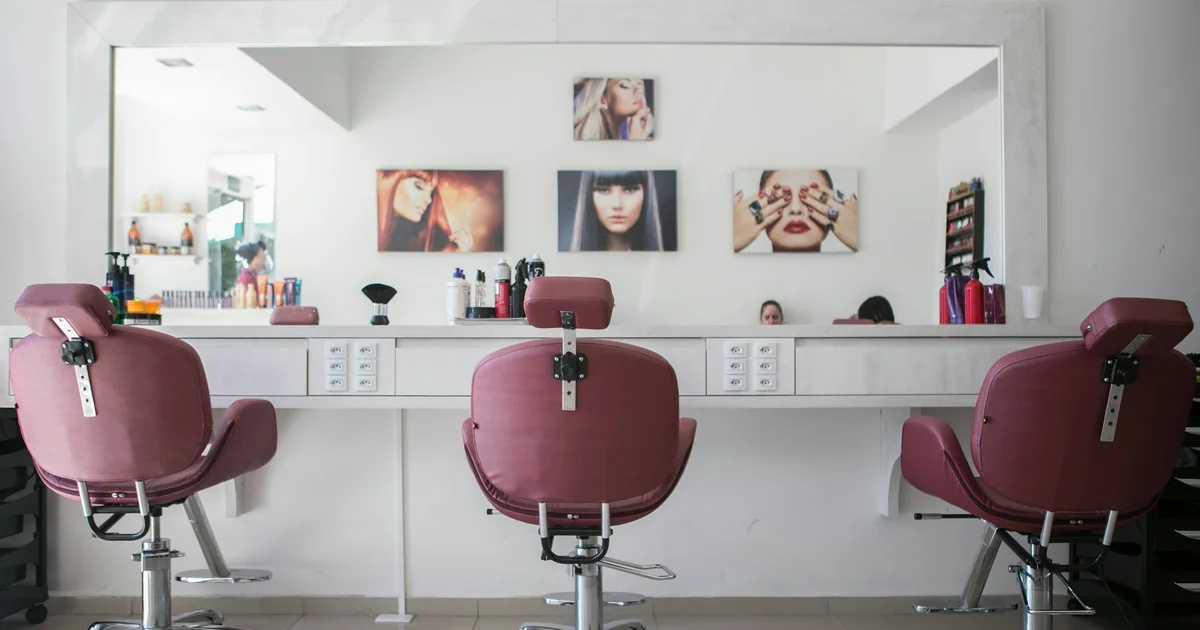
TL;DR: Salons and medspas miss up to 35% of incoming calls because stylists and estheticians physically cannot answer the phone while performing services. With the average salon client worth $2,500+ in lifetime value and medspa clients worth $7,800+, even a handful of missed calls per week can cost a business six figures annually. Automated client communication solves this by responding to every inquiry instantly — without interrupting a single blowout, facial, or Botox appointment.
Why Salons and Medspas Lose Clients to Missed Calls During Appointments
Your stylist is mid-highlight, gloves covered in lightener, when the phone rings. The front desk is checking out another client and processing a product purchase. The phone rings four times and goes to voicemail. The caller — a new client looking to book a balayage — hangs up and calls the salon down the street.
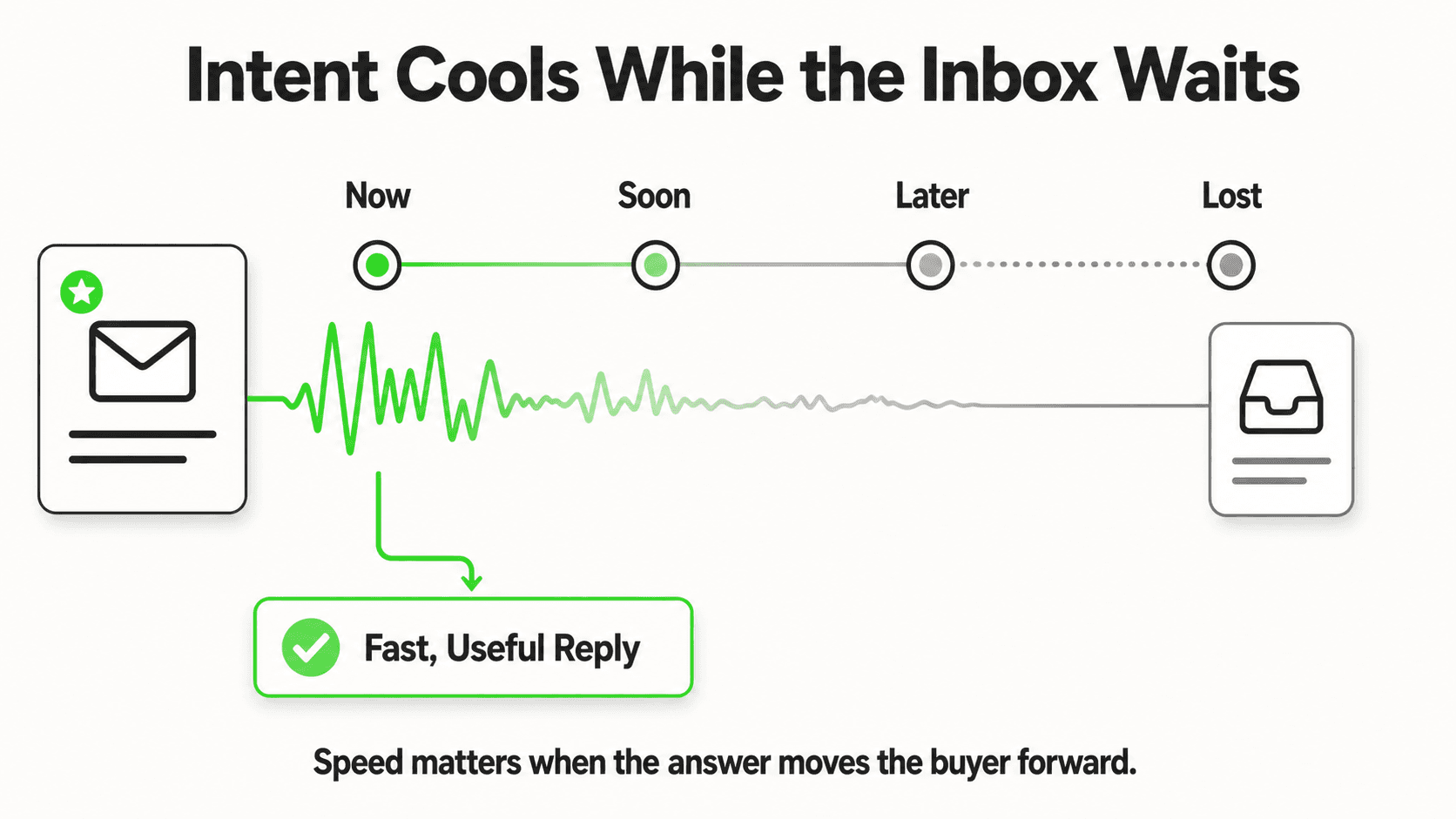
Research shows that businesses responding within 5 minutes are dramatically more likely to convert inquiries than those that call back hours later. Yet the beauty industry faces a unique challenge: the very act of delivering services makes it impossible to answer the phone. Unlike an office worker who can pause to take a call, a stylist applying a keratin treatment or an esthetician performing microneedling cannot stop mid-service. The result? An estimated $67,000 in lost revenue per salon per year from missed appointments alone (Source: Zenoti / Shortcuts). The solution isn't hiring more staff — it's putting an AI receptionist on every channel so every inquiry gets an instant response, regardless of how many clients are in your chairs.
What Is Automated Client Communication for Salons and Medspas?
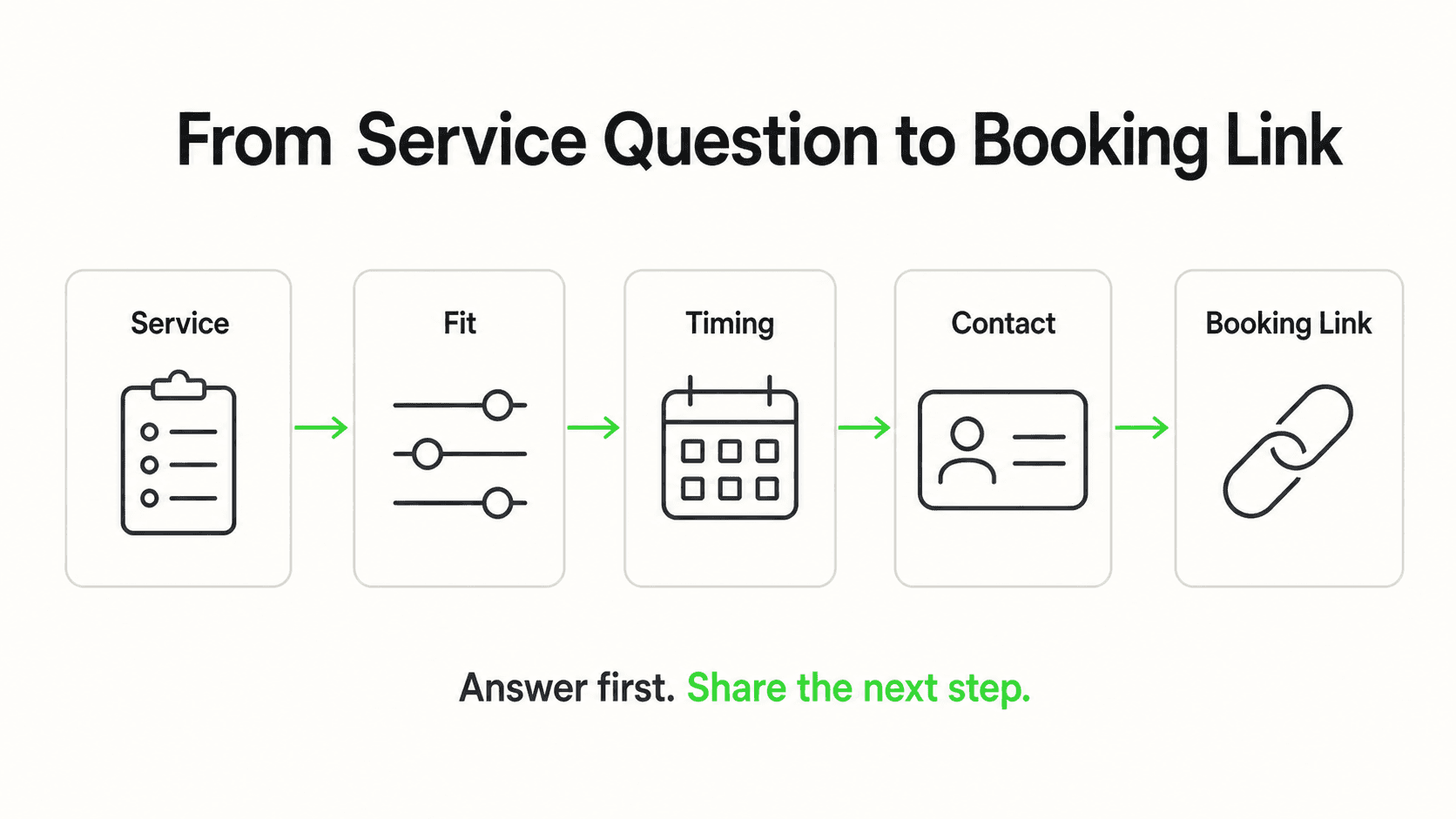
Automated client communication means every incoming inquiry — phone call, website message, Instagram DM, or WhatsApp message — receives an immediate, intelligent response regardless of whether your team is busy with clients, on lunch, or closed for the day.
This goes far beyond the "leave a message after the beep" approach that most salons rely on. Modern AI-powered communication platforms designed for beauty and salon businesses can:
- Answer service questions about pricing, treatment duration, aftercare instructions, and stylist availability
- Share booking links that direct clients to your scheduling system to lock in appointments
- Recommend services based on the client's description of what they're looking for
- Collect new client information including skin type, hair history, allergies, and preferred products
- Send automated confirmations and reminders that reduce no-shows by up to 40%
- Follow up with clients who inquired but didn't book, capturing revenue that would otherwise disappear
The difference between traditional salon communication and AI-powered response is fundamental. A voicemail says "we're busy, call back later." An AI assistant says "I'd love to help you book. Here's what's available this week." Research from Zenoti shows that 72% of salon clients prefer digital booking over traditional phone-based methods — meaning the call your receptionist missed might have been unnecessary in the first place if clients had an instant digital option.
The technology works alongside your team, not instead of them. When a question requires personal attention — a consultation for a complex color correction, a medical question for a medspa provider — the system routes it to the right person with all the context already collected.
Why Salons and Medspas Lose Clients to Missed Calls
The Hands-Busy Problem Unique to Beauty Services
Salons and medspas have a communication challenge that almost no other industry faces: your highest-revenue employees physically cannot answer the phone while generating revenue. A hairstylist applying color has chemical-covered gloves. An esthetician performing a laser treatment is operating medical equipment. A nail technician doing a gel manicure has both hands occupied. A massage therapist is in a closed room for 60-90 minutes at a time.
This isn't a staffing problem that can be solved by telling your team to "prioritize the phone." It's a structural problem built into the nature of beauty services. During a typical 8-hour day, a stylist might spend 6-7 hours in active services where answering a phone is either impossible or would compromise the client in the chair. The few minutes between appointments are spent prepping, cleaning stations, and consulting with the next client.
The math is brutal: if a salon receives 20-30 calls per day and each stylist can only answer during 15-20% of the workday, missed calls aren't the exception — they're the norm.
The Walk-In vs. Appointment Conflict
Front desk staff are caught in an impossible balancing act between in-person clients and phone inquiries. When a walk-in arrives while the phone is ringing, the person standing in front of them always wins. Research shows that response time directly impacts conversion rates across every industry, but salon receptionists are forced to choose between the client who walked through the door and the caller they've never met.
This creates a cascading problem: the walk-in gets served, the caller gets voicemail, and when the receptionist finally calls back 2-3 hours later, the caller has already booked with a competitor. According to industry data, 67% of potential clients will choose a competitor if they can't book an appointment instantly (Source: SalonBookingSystem / On-Demand App).
The Receptionist Cost Dilemma
Hiring a dedicated receptionist costs $25,000-$50,000 per year — a significant expense for a business averaging $443,000 in annual revenue (Source: Indeed / SharpSheets). For independent stylists and small salons with 2-4 chairs, this cost is prohibitive. Many salon owners try to handle front desk duties themselves between clients, which means they're either delivering subpar services (rushing to answer calls) or delivering subpar customer service (missing calls during services).
Even salons that do hire a receptionist face a gap: the receptionist works 8 hours, but client inquiries come in 24 hours a day. Research shows that 73% of millennial and Gen Z clients — the fastest-growing beauty consumer demographic — expect 24/7 online booking availability (Source: SalonBookingSystem). A single-shift receptionist covers less than half of the hours when potential clients are actively looking to book.
Peak-Hour Overwhelm
The busiest service hours are also the busiest inquiry hours, creating a perfect storm of missed opportunities. Saturday mornings, weekday evenings after 5 PM, and the days before major events (weddings, proms, holidays) generate both the highest chair occupancy and the highest call volume. During these peak periods, every team member is occupied, the phone is ringing constantly, and each unanswered call represents a client who specifically wants the time slots that are filling up fastest.
Industry data from Zenoti shows that 52% of spa customers will abandon their call attempt after just three minutes on hold. They're not leaving voicemails — they're simply moving on to the next option in their search results.
The Hidden Cost of 'Call Us Back'
When a potential client calls and doesn't get through, only 20-30% will try again. The rest will search for another salon or medspa that makes booking easier. Each lost new client represents not just one appointment, but an entire relationship — years of color services, regular facials, product purchases, and referrals.
7 Ways Salons and Medspas Can Stop Losing Clients to Missed Calls
1. Instant Text-Back for Every Missed Call
What this looks like in practice: A new client calls your medspa at 6:30 PM to ask about Botox pricing. Your team left at 6. Instead of voicemail, she instantly receives a text: "Thanks for calling [Salon Name]! We'd love to help. You can book a free consultation here [link], or tell us what you're looking for and we'll get back to you by 9 AM." She taps the link, sees available times, and books a consultation for Thursday.
Real-world impact: Businesses that implement instant text-back for missed calls typically recover 30-40% of inquiries that would have been lost to voicemail. For a medspa receiving 10 after-hours calls per week, that's 3-4 recovered consultations — and with an average medspa service ticket of $454-$504 per visit (Source: AmSpa / Financial Models Lab), each recovered client represents significant immediate revenue before accounting for lifetime value.
Why it works: Texting meets clients where they already are. Research shows that 89% of consumers prefer digital communication over phone calls for booking (Source: SalonBookingSystem). An instant text-back converts a frustrating dead-end (voicemail) into an engagement opportunity. The client feels acknowledged, gets useful information, and has a clear path to booking — all without your team lifting a finger.
Key features:
- Automated text sent within seconds of a missed call
- Customizable messages for different times of day (business hours vs. after hours)
- Direct booking link embedded in the message
- Option for the client to describe their needs via text for a personalized callback
2. 24/7 Online Booking That Replaces the Phone Call Entirely
What this looks like in practice: A bride-to-be is planning her wedding party's hair and makeup at 11 PM on a Sunday. She visits your salon's website, starts a chat, describes what she needs for six bridesmaids plus herself, and the AI assistant walks her through available dates, service options, and pricing. She books a bridal consultation for next week — a booking worth $1,500+ in services that would have been a Monday-morning voicemail.
Real-world impact: Salons offering 24/7 online booking see substantially higher conversion rates from website visitors. Research from Boulevard shows that first-time online bookings return for a second visit approximately 78% of the time — nearly double the 39% retention rate for walk-ins. Online booking doesn't just capture the initial appointment; it starts clients on a higher-retention path.
Why it works: Beauty services are often researched and booked outside business hours. Clients browse Instagram for inspiration at night, see a treatment they want, and visit the salon's website. If the only option is "call us during business hours," you lose the momentum of that impulse. An always-available booking system captures clients at the exact moment they're most motivated to book.
Key features:
- Real-time availability synced with your scheduling software
- Service descriptions with duration and pricing
- Stylist or provider selection based on specialization
- No-show reduction through automated confirmations and reminders
- Support for multi-service inquiries for bridal parties, mother-daughter visits, and group events
3. Automated Appointment Confirmations and Reminders
What this looks like in practice: A client books a keratin treatment for next Thursday. She immediately receives a confirmation with the appointment details, pre-appointment instructions (don't wash hair for 48 hours), and what to expect. Three days before, she gets a reminder. The morning of, she gets a final confirmation with driving directions and parking tips. No phone calls. No missed reminders. No no-shows.
Real-world impact: Salon no-show rates typically range from 10-30%, with the average beauty business losing an estimated $67,000 annually to missed appointments (Source: Zenoti / Shortcuts). Automated reminders can reduce no-shows by 40% (Source: SalonBookingSystem). For a salon with an average ticket of $55 per visit and 200 monthly appointments, reducing no-shows from 15% to 9% saves $3,960+ per year in recovered revenue — and that figure climbs dramatically for medspas with $400-$500 average tickets.
Why it works: Most no-shows aren't intentional. Clients simply forget, or their schedule changes and they don't think to call until it's too late. Multi-touchpoint reminders with easy reschedule options (not just "reply C to confirm") give clients a frictionless way to manage their appointments. The result is fewer empty chairs and less revenue lost to gaps in the schedule.
Key features:
- Confirmation sent immediately upon booking
- Pre-appointment instructions specific to the service (fasting for certain medspa treatments, hair prep for color services)
- Reminder sequence (72 hours, 24 hours, 2 hours before)
- One-tap reschedule option instead of requiring a phone call
- Waitlist notification when a canceled slot opens up
4. Automated Waitlist Management
What this looks like in practice: Your top colorist is booked solid for three weeks. A client calls asking for an appointment this week. Instead of "sorry, she's booked, try calling back," the AI assistant offers: "I can add you to her waitlist. If anything opens up, you'll be the first to know. In the meantime, would you like to see availability with another colorist?" The client joins the waitlist, and when a cancellation happens Thursday morning, she's automatically notified and books the slot — all without a single phone call from your team.
Real-world impact: Every cancellation without a waitlist system creates a revenue gap. For a stylist generating $75-$150 per hour, a 2-hour cancellation is $150-$300 in lost revenue. If that happens twice a week, it's $15,600-$31,200 annually per stylist. An automated waitlist fills those gaps instantly, recovering revenue that would otherwise vanish.
Why it works: Manual waitlists fail because staff forget to call people, call in the wrong order, or can't reach clients fast enough before the slot passes. Automated systems send instant notifications the moment a cancellation occurs, giving waitlisted clients a first-come-first-served opportunity to book. The slot goes from "cancelled" to "rebooked" in minutes instead of hours.
Key features:
- Clients join the waitlist via text, chat, or website — no phone call needed
- Instant notification when a matching slot opens
- Priority ordering based on flexibility, service type, and provider preference
- Automatic slot filling without staff intervention
- Confirmation and reminder sequence triggered automatically for the new booking
Stop Losing Clients to Missed Calls
Hyperleap AI helps salons and medspas respond to every client inquiry instantly — on your website, WhatsApp, Instagram, and Facebook Messenger. No missed calls. No lost bookings.
See How It Works5. Retail and Service Upsell Follow-Ups
What this looks like in practice: A client just got a Brazilian blowout. Two days later, she receives an automated message: "Hi Sarah! To keep your blowout looking amazing, we recommend our sulfate-free shampoo and conditioner set. Order for pickup at your next visit, or we can ship it to you. Also — your blowout treatment lasts 10-12 weeks. Want me to book your touch-up for early March?" The client orders the product set ($45) and books her next appointment — $200+ in future revenue locked in without a single call.
Real-world impact: Retail product sales are one of the highest-margin revenue streams for salons, yet most practices capture only a fraction of the potential. Research shows that loyal salon clients spend approximately 67% more than first-time visitors (Source: Strategies / Meevo). Automated follow-ups after services — recommending the right products and suggesting rebooking — capitalize on the client's peak satisfaction moment while their results are still fresh.
Why it works: Post-service follow-up is something most stylists intend to do but never find time for between clients. Automation ensures every client gets personalized product recommendations and rebooking prompts based on the specific service they received. The timing is critical — sending a product recommendation 48 hours after a service, when the client is actively maintaining their results, converts far better than a generic monthly email blast.
Key features:
- Service-specific product recommendations triggered automatically
- Rebooking prompts timed to the service cycle (6 weeks for color, 10-12 weeks for keratin, etc.)
- Direct "order for pickup" or "book now" links embedded in the message (payments handled through your own checkout system)
- Personalization based on client history, preferences, and past purchases
- Multi-channel delivery via the client's preferred platform (text, email, Instagram, WhatsApp)
6. Automated Review Requests
What this looks like in practice: A client finishes a medspa facial and raves about the results to the esthetician. Two hours later, she receives a message: "We loved having you today! If you have a moment, a Google review means the world to us: [direct link]." She taps the link, writes a glowing 5-star review, and your medspa's Google ranking improves — driving even more new client inquiries. All without your esthetician remembering to ask or your front desk tracking who needs a review request.
Real-world impact: Online reviews directly influence where clients book. Research consistently shows that the majority of consumers read reviews before choosing a beauty service provider. More critically, the recency and volume of reviews impacts Google local search rankings — meaning more reviews leads to higher visibility, which leads to more new client inquiries. Salons that automate review requests see a steady stream of fresh reviews rather than the sporadic trickle that comes from staff remembering to ask.
Why it works: The best time to ask for a review is immediately after a positive experience. But asking in person feels awkward for both the provider and the client, and by the time the client gets home, the impulse has passed. Automated review requests hit the sweet spot: sent shortly after the appointment when satisfaction is high, delivered privately so there's no social pressure, and including a direct link that eliminates friction. The result is dramatically higher review volume without any staff time invested.
Key features:
- Triggered automatically after each completed appointment
- Direct link to Google, Yelp, or your preferred review platform
- Smart timing (2-4 hours post-service for satisfaction-based services, 24-48 hours for results-based treatments)
- Negative experience routing — if a client indicates dissatisfaction, route to a private feedback form instead of a public review
- Review monitoring dashboard to track volume, ratings, and trends
7. Loyalty Program Automation
What this looks like in practice: A regular client just completed her 10th visit. She automatically receives a message: "Congratulations, Amanda! You've earned a complimentary deep conditioning treatment on your next visit. Book here to redeem: [link]." She books immediately, thrilled at the unexpected reward. Meanwhile, a client who hasn't visited in 90 days receives a different message: "We miss you! Here's 15% off your next service — just because. Book before [date] to claim your offer." Both messages drive bookings. Neither required any staff time.
Real-world impact: Client retention is the single most important driver of salon profitability. Research from Strategies shows that the typical salon retains 75% of clients, but best-in-class salons achieve 85%+ retention. Meanwhile, research from Meevo shows that 42% of loyal clients drive 80% of salon revenue. Automated loyalty programs nurture your highest-value clients without relying on your team to remember milestones, track visit counts, or manually send offers. The industry average visit frequency is 4.88 visits per year (Source: Boulevard), but salons with active loyalty programs push this to 7-8 visits per client annually.
Why it works: Loyalty doesn't happen by accident. It requires consistent touchpoints — birthday offers, visit milestones, seasonal promotions, and win-back campaigns for lapsed clients. Without automation, these touchpoints depend on staff memory and available time, which means they happen inconsistently or not at all. Automated loyalty programs deliver the right message at the right moment in the client lifecycle, keeping your salon top-of-mind between visits.
Key features:
- Points-based or visit-based reward tracking
- Automatic milestone notifications (5th visit, 10th visit, anniversary)
- Win-back campaigns triggered after 60, 90, and 120 days of inactivity
- Birthday and special occasion offers
- Tiered rewards that incentivize higher spending and more frequent visits
- Referral program integration — reward clients who bring friends
Real Results: What Salons and Medspas Are Achieving
Revenue Recovery
Salons and medspas that implement automated client communication typically report:
- $50,000-$120,000 in recovered annual revenue from previously missed inquiries and abandoned bookings
- 30-50% reduction in missed client calls and messages
- 20-35% increase in new client bookings within the first 90 days
- 15-25% increase in average client lifetime value through automated upsells and rebooking
Efficiency Gains
The operational improvements free your team to focus on what they do best — delivering exceptional services:
- 2-3 hours daily freed from phone-based appointment scheduling and confirmations
- 40-50% reduction in front desk call volume for routine questions (pricing, hours, directions)
- 70-80% of common questions handled automatically without staff involvement
- Instant waitlist filling that recovers 60-70% of cancellation revenue
Client Satisfaction
Happy clients come back more often and refer more friends:
- Zero wait time for initial response to inquiries, day or night
- 24/7 availability matches modern client expectations — especially the 73% of younger clients who expect it
- Consistent information about pricing, services, and policies delivered every time
- Multi-channel access — clients communicate however they prefer, whether website, Instagram, WhatsApp, or Facebook Messenger
Competitive Advantage
Early adopters in the beauty space gain measurable market advantages:
- First-mover advantage in capturing clients who are comparing multiple salons
- Higher Google rankings from improved review volume and engagement signals
- Stronger referral pipeline from consistent client satisfaction
- Reduced dependency on a single receptionist whose absence disrupts the entire business
Implementation Roadmap for Salons and Medspas
Phase 1: Audit Your Current Response (Week 1)
Before implementing any solution, understand where you're losing clients:
- Track your missed call rate for one full week. Ask your phone provider for a call report, or simply have your front desk tally missed calls on a notepad. Most salon owners are shocked to discover the actual number.
- Measure your after-hours inquiry volume. How many website form submissions, voicemails, Instagram DMs, and Google "request a call" clicks come in outside business hours? These are clients you're currently losing.
- Calculate your cost of missed calls using this formula: (Missed calls per week x 4) x (Estimated % of new clients, typically 40-50%) x (Average client lifetime value). Even conservative estimates are eye-opening.
- Identify your peak missed-call times — Saturdays, weekday evenings, and lunch hours are typical pain points.
Phase 2: Deploy Automated Response (Weeks 2-3)
Start with the highest-impact channels:
- Website chat — Capture visitors who are actively browsing your services and pricing pages. An AI chatbot on your website can answer questions, describe services, show available times, and book appointments 24/7.
- Missed call text-back — Ensure every unanswered call receives an instant text with a booking link and helpful information.
- Appointment confirmations and reminders — Set up the automated confirmation and reminder sequence to immediately reduce no-shows.
Phase 3: Expand and Optimize (Weeks 4-8)
Once your basic system is working:
- Add social channels — Connect Instagram DM and Facebook Messenger to capture clients who find you through social media.
- Activate review requests — Set up post-appointment review automation to build your Google presence.
- Launch loyalty automation — Implement win-back campaigns for lapsed clients and milestone rewards for regulars.
- Track and measure — Monitor new client conversion rates, no-show rates, and response times weekly. Adjust messaging and timing based on what the data shows.
Start With What Hurts Most
You don't need to automate everything at once. If your biggest problem is missed calls during services, start with text-back and online booking. If it's no-shows, start with automated reminders. Most salons see immediate ROI from just one or two capabilities, which builds confidence to expand further.
Frequently Asked Questions
Will an AI chatbot replace my front desk receptionist?
No. AI chatbots for salons and medspas are designed to handle routine inquiries — pricing questions, availability checks, booking confirmations, and after-hours messages — so your receptionist can focus on providing an excellent in-person experience. Think of it as adding a tireless digital assistant that handles the 70-80% of inquiries that are repetitive, freeing your human team to handle complex requests, consultations, and client relationships that require a personal touch. Most salons that implement AI find their front desk staff are happier and more effective, not replaced.
How much does automated client communication cost compared to hiring staff?
AI communication platforms typically range from $40 to $200 per month depending on features and volume. Compare this to a salon receptionist salary of $25,000-$50,000 annually, plus benefits, taxes, and training costs. Even at the highest tier, you're paying roughly $2,400 per year versus $30,000+ for a part-time employee — and the AI system works 24/7 with no sick days, vacation, or turnover. For most salons, the system pays for itself within the first month by recovering just a few bookings that would have been lost to missed calls. Check current pricing for specific plan details.
Can AI work alongside my salon scheduling software like Vagaro, Mindbody, or Boulevard?
Hyperleap AI books natively only through Calendly and Cal.com, on Pro and Max (on Plus, it shares your booking link): connect one and the agent reads live availability and books the appointment in the chat (in-chat booking needs Calendly Standard or higher). For Vagaro, Mindbody, Boulevard, or any other scheduler, it collects the client's needs and shares a direct link to your booking page so the client can see real availability and confirm in your system. When evaluating platforms, ask how they handle the handoff from conversation to booking and whether they can be customized to your specific booking flow. The goal is a seamless experience where a client can go from "what's available Saturday?" to a confirmed appointment without your team being involved.
How do I make sure the AI gives accurate pricing and service information?
AI chatbots are trained on your specific service menu, pricing, policies, and FAQs. You control exactly what information the system can share. When you update your pricing or add a new service, you update the chatbot's knowledge base. The system is designed to provide document-grounded responses based on the information you provide — not to make up answers. For questions it can't confidently answer, it collects the client's information and routes the inquiry to your team for a personal follow-up.
Will clients feel comfortable talking to an AI instead of a person?
Client acceptance is typically very high, especially when the AI provides a better experience than the alternative — voicemail. Research shows that 89% of consumers already prefer digital booking over phone calls (Source: SalonBookingSystem). Most clients care more about getting their question answered and their appointment booked than whether a human or AI facilitated it. The key is transparency: let clients know they're interacting with an AI assistant, and make it easy to request a human if they prefer. In practice, the vast majority of clients are delighted to get an instant response rather than waiting for a callback.
How long does it take to set up an AI chatbot for my salon or medspa?
Most salon AI chatbots can be deployed within 1-2 weeks. The process typically involves uploading your service menu and pricing, configuring your business hours and policies, connecting to your scheduling system, and customizing the conversation flow for your specific services. Many salons see their first AI-booked appointment within days of launch. The setup doesn't require any technical skills — if you can update your Instagram bio, you can configure an AI chatbot. Get started here to see the typical onboarding process.
What about client privacy and data security for medspa services?
Client data security is critical, especially for medspas that handle health-related information. Reputable AI platforms use end-to-end encryption, secure data storage, and strict access controls. When evaluating platforms, ask about their security certifications, data retention policies, and whether they share or sell client data. Your clients' personal information — contact details, service history, and treatment preferences — should be protected with the same rigor as any other business data. Platforms that serve healthcare-adjacent businesses like medspas are typically built with stronger security standards than general-purpose chatbots.
Every Missed Call Is a Client Choosing Someone Else
The beauty industry is built on relationships — but those relationships can only start if a client can reach you. Right now, salons and medspas are losing clients not because of the quality of their services, but because of a structural communication gap. Your stylists can't answer phones during services. Your receptionist can't be in two places at once. Your business can't answer calls at 9 PM on a Tuesday when a client decides she wants a color refresh before her weekend trip.
The salons and medspas that solve this communication gap will capture the clients that their competitors miss. The ones that don't will keep wondering why their Google Ads generate clicks but not bookings, why their Instagram following grows but their chair occupancy doesn't, and why clients seem to book once and never return.
The technology to solve this is available today. It's affordable — less than the cost of a single missed medspa appointment per month. And it works alongside your team, handling the routine so they can focus on the artistry that makes your business special.
Don't let the phone ring to voicemail one more time.
What is an AI chatbot in business terms?
A customer-facing chat agent that answers questions, qualifies inquiries, and captures leads 24/7. Modern AI chatbots are grounded in your business content (not the open internet) and run across your website and messaging channels with the same persona and knowledge.
How is Hyperleap different from a chat widget or a live chat tool?
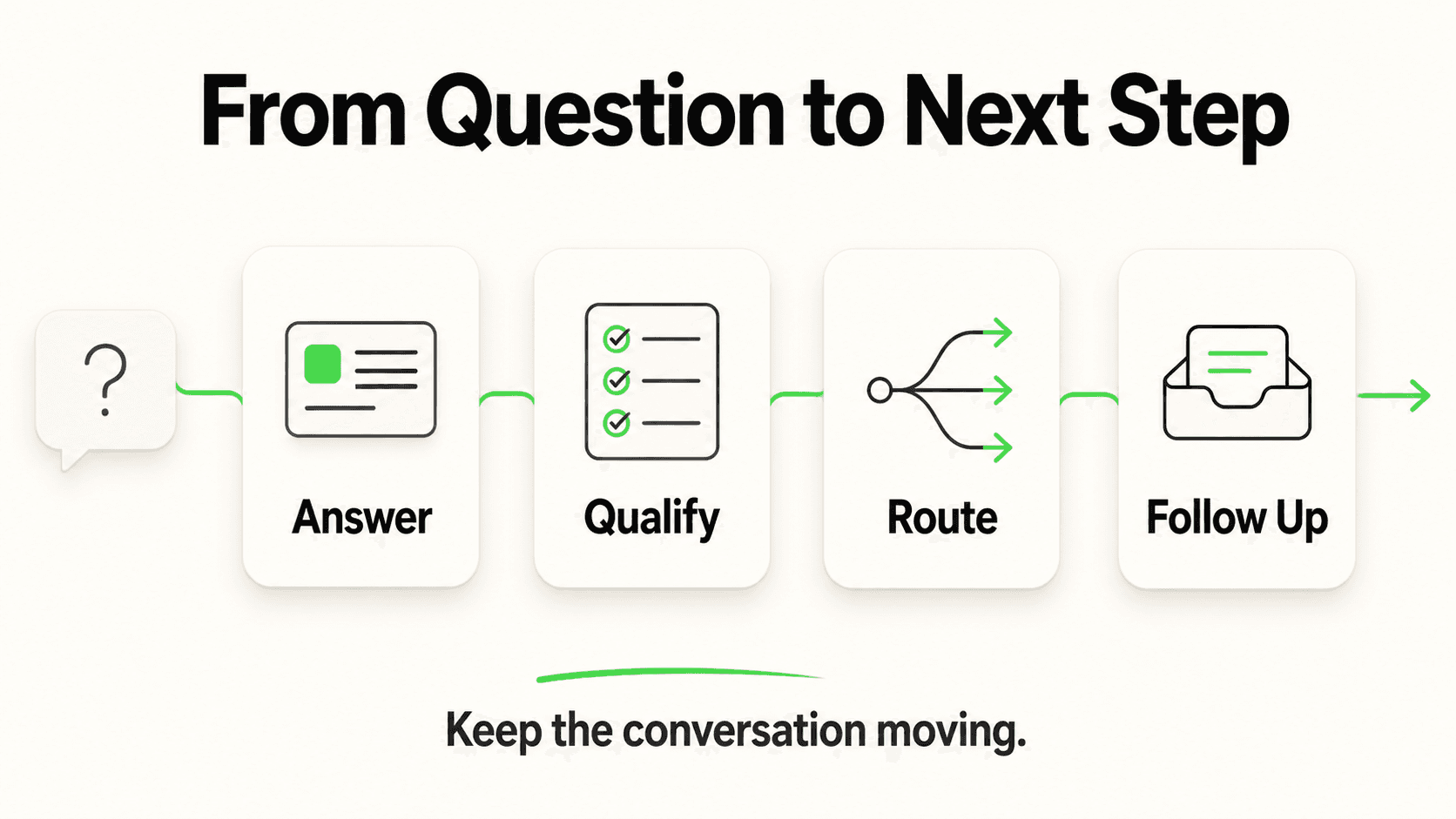
Live chat tools route to humans; basic widgets follow scripted flows. Hyperleap is an AI agent grounded in your content — it understands intent, retrieves from your knowledge base, qualifies leads, and escalates only when needed. Same answers across website, WhatsApp, Instagram DM, and Facebook Messenger.
How long does it take to set up an AI chatbot with Hyperleap?
Most SMBs go live in 3–5 days for self-serve setup. With Managed Setup ($299 Free, available on every plan), Hyperleap builds the bot for you on your content and channels. A 7-day free trial is included on every plan.
Further Reading
Authoritative external sources used and recommended for further research on this topic:
- Anthropic research and product documentation
- Google Search Central documentation
- Gartner customer service research
For the Instagram-DM-specific version of this pattern, see AI receptionist for med spas.
Ready to Capture Every Client Inquiry?
Hyperleap AI gives your salon or medspa 24/7 instant response on website, WhatsApp, Instagram, and Facebook Messenger. Respond to every inquiry. Book more clients. Grow your business.
Get StartedIndustry Solutions
See how AI chatbots work for these industries:
Related Articles
What Missed Calls Really Cost Your Small Business
A worked example of what missed calls cost small businesses in lost jobs, plus where inquiries actually arrive now and what to do about it.
The Real Cost of Missed Patient Calls for Small Clinics
Small clinics miss 30-40% of peak-hour calls. Each one is a patient worth $1,500-$50,000 in LTV going to the practice next door.
AI Receptionist Cost in 2026: What You Actually Pay
AI receptionist cost ranges from $20/month for automated voice AI to $300+/month for live-agent phone answering. Full breakdown by category.
Companies Using AI for Customer Service: Industry Patterns
How companies using AI for customer service are transforming healthcare, hospitality, real estate, and more — with the specific jobs AI handles across each sector.