AI Chatbot Mistakes: 7 Reasons Implementations Fail
Most AI chatbot projects fail due to avoidable mistakes. Learn the 7 most common errors and how to ensure your deployment succeeds.

TL;DR: According to Gartner, more than 60% of AI chatbot projects fail to meet their original goals — not because the technology is flawed, but because of preventable planning and execution mistakes. The cost goes beyond wasted budget: failed implementations create organizational skepticism that blocks future AI adoption. This guide covers the 7 most common mistakes and gives you a concrete checklist to avoid every one of them.
Every year, thousands of businesses invest in AI chatbots expecting transformed customer experiences, faster response times, and a steady stream of qualified leads. And every year, a significant number of those projects quietly get shelved. The chatbot sits on the website collecting digital dust, the team loses confidence in AI, and the budget disappears into a line item nobody wants to discuss.
Gartner research puts the underperformance rate above 60% for AI chatbot projects — and the pattern holds across industries and business sizes (typical severity varies by implementation quality). The financial cost is real — months of setup time, subscription fees, and opportunity cost. But the hidden cost is worse: team skepticism that makes it harder to adopt AI in the future, even when the technology has clearly matured.
The good news? Most failures share the same root causes, and they're all preventable. Whether you're deploying your first AI chatbot or recovering from a failed attempt, this guide will show you exactly what goes wrong — and how to get it right.
What Makes AI Chatbot Implementations Succeed or Fail?
Before diving into specific mistakes, it helps to understand the fundamental difference between a chatbot that captures leads and one that frustrates visitors into clicking away.
A successful AI chatbot does three things well: it understands what the customer is asking, it provides an accurate answer grounded in your actual business data, and it knows when to hand the conversation to a human. That sounds simple, but getting there requires deliberate planning in areas that have nothing to do with technology.
The first distinction to understand is between rule-based chatbots and RAG-powered AI agents. Rule-based bots follow scripted decision trees — if the customer says X, respond with Y. They break the moment a question falls outside the script, which happens constantly in real customer interactions. RAG-powered agents (Retrieval-Augmented Generation) work differently: they pull relevant information from your knowledge base and generate contextual, document-grounded responses that handle the messy, unpredictable nature of real conversations.
But even the most sophisticated AI agent will fail if the underlying implementation is flawed. We have seen successful deployments capture thousands of leads and failed ones generate nothing but frustrated visitors. The technology was often identical. The difference came down to preparation, content quality, and realistic expectations.
Here is the pattern we see repeatedly: failure is rarely a technology problem. It is a people and process problem. The businesses that succeed treat their chatbot like a new team member — they train it properly, set clear goals, monitor its performance, and iterate based on real data. The businesses that fail treat it like a piece of software they installed and forgot about.
Understanding this distinction is the foundation for avoiding every mistake on this list. If you are just getting started with AI agents, internalize this principle before you do anything else.
Why Most AI Chatbot Projects Underperform
Before we get to the specific mistakes, let us examine the organizational patterns that create the conditions for failure. These are the upstream causes — the environment in which tactical mistakes become inevitable.
Leadership Buys But Nobody Owns It
A common pattern: a senior leader sees a demo, gets excited, and approves the budget. The project gets assigned to someone who already has a full plate — maybe the marketing coordinator, maybe a junior developer. There is no dedicated owner, no clear accountability, and no protected time for implementation. The chatbot becomes everyone's secondary priority and nobody's primary one.
Successful implementations always have a clear owner who is empowered to make decisions about content, escalation workflows, and channel strategy. This person does not need to be technical, but they need authority and dedicated time.
"Set It and Forget It" Mentality
Many businesses approach chatbot deployment the way they approach installing a WordPress plugin: configure it once, check the box, move on. This is a fundamental misunderstanding of how AI agents work. Your chatbot's performance in week one is the starting point, not the finish line. The businesses that see the best results are the ones that review conversation transcripts weekly, update their knowledge base, and refine their responses based on real customer interactions.
Unrealistic Day-One Expectations
When leadership expects the chatbot to handle every possible customer scenario perfectly from launch day, the project is set up for disappointment. Even the best AI agents need a ramp-up period. Setting realistic expectations — and communicating them across the organization — is critical to maintaining support during the inevitable early-stage rough patches.
Choosing Based on Features Instead of Use-Case Fit
Feature comparison spreadsheets are seductive but misleading. A platform with 50 integrations means nothing if you need a chatbot that excels at capturing leads on WhatsApp. The businesses that succeed start with their specific use case — lead capture, appointment scheduling, customer service automation — and choose the platform that best serves that use case. Feature lists come second.
7 AI Chatbot Mistakes That Cost Businesses Leads and Revenue
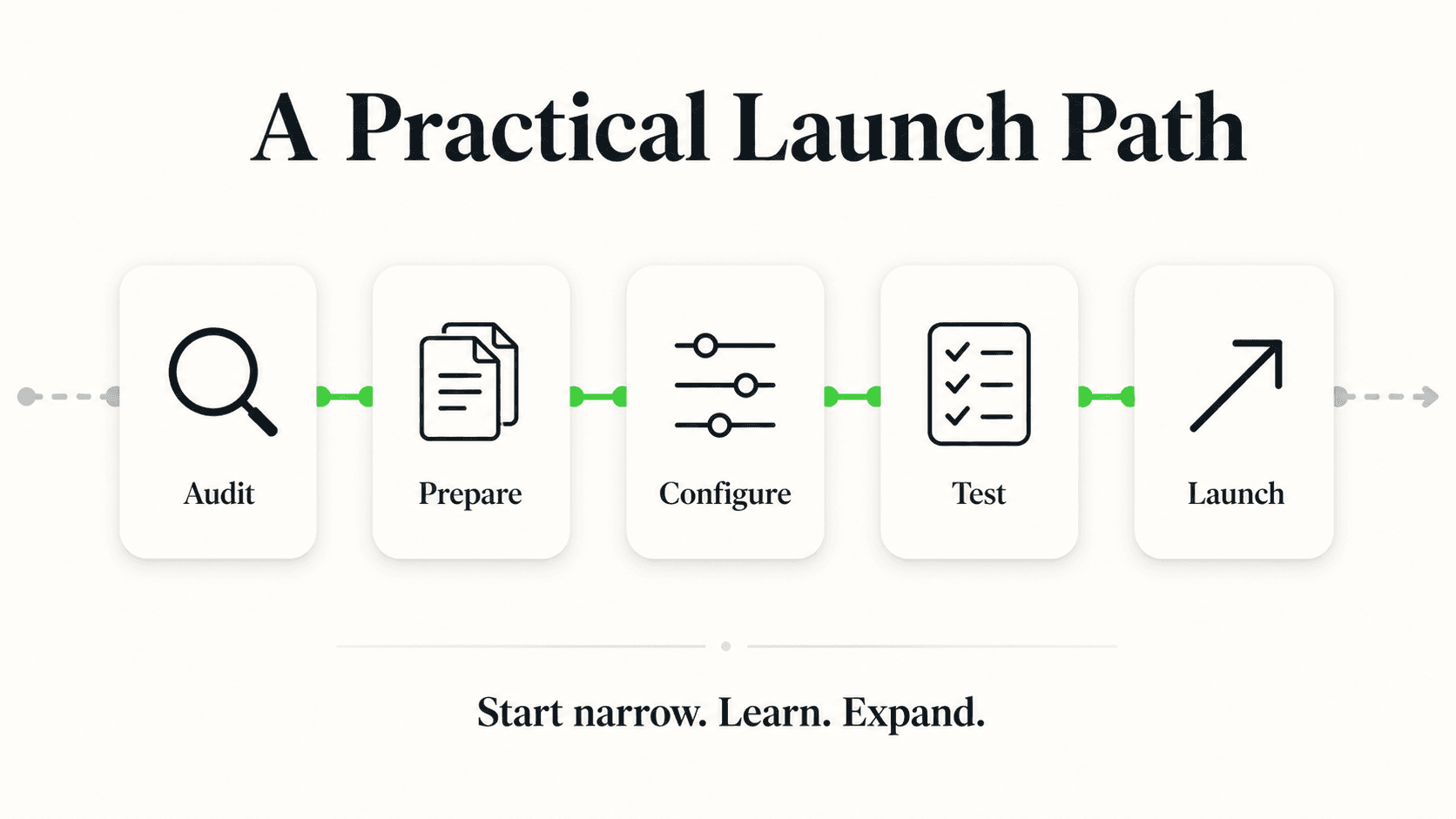
Now let us get specific. These are the seven mistakes we see most frequently, along with what they look like in practice, their real-world impact, and exactly how to avoid each one.
1. Launching Without Clear Goals
What this looks like in practice: The team installs the chatbot, connects it to the website, and calls it done. Nobody has defined what success looks like. There are no KPIs, no baseline metrics, and no targets. Six months later, someone asks "is the chatbot working?" and nobody can answer the question because nobody decided what "working" means.
Real-world impact: Without defined goals, you cannot optimize. You cannot know whether your chatbot is underperforming, meeting expectations, or exceeding them. Worse, you cannot justify the investment to leadership when budget review comes around. The chatbot becomes politically vulnerable — easy to cut because nobody can defend its value.
How to avoid it: Before you build anything, define 3-5 specific KPIs. Common starting points include: leads captured per week, average response accuracy, human handoff rate, after-hours lead capture rate, and customer satisfaction score. Set baseline measurements from your current process so you can quantify improvement. Revisit these KPIs monthly and adjust as your chatbot matures.
2. Poor Knowledge Base Content
What this looks like in practice: The team uploads a few outdated PDFs, maybe a product brochure from last year and an FAQ document that has not been updated since 2023. The chatbot starts giving incomplete answers, outdated pricing, or vague responses because the underlying content is thin, disorganized, or stale.
Real-world impact: This is the "garbage in, garbage out" problem applied to AI. A RAG-powered chatbot is only as good as the documents it retrieves from. If your knowledge base has gaps, your chatbot will either give incomplete answers or — worse — attempt to fill the gaps with less relevant information. Customers notice immediately, and trust erodes fast.
How to avoid it: Invest serious time in your knowledge base before launch. Start by auditing your existing content: product pages, pricing information, service descriptions, policies, FAQs, and common customer questions. Fill gaps with clear, concise documents written in the same language your customers use. Update your knowledge base at least monthly, and immediately whenever pricing, policies, or offerings change.
3. Ignoring Multi-Channel Deployment
What this looks like in practice: The business deploys the chatbot on their website only, ignoring the channels where their customers actually spend time. Meanwhile, WhatsApp messages go unanswered, Instagram DMs pile up, and Facebook Messenger inquiries get a generic auto-reply that says "please visit our website."
Real-world impact: According to HubSpot's State of Service research, customers increasingly prefer messaging channels over traditional forms — and a website-only chatbot misses a significant portion of potential leads. For businesses serving markets where WhatsApp is dominant — including India, Latin America, and parts of Europe — a website-only deployment can mean missing the majority of customer inquiries.
How to avoid it: Identify the top 2-3 channels where your customers initiate contact. Do not guess — check your analytics, ask your sales team, and review where inbound inquiries currently come from. Plan a multi-channel deployment strategy that starts with your highest-volume channel and expands from there. Supported channels today include website chat, WhatsApp Business API, Instagram DM, and Facebook Messenger.
4. Skipping the Human Handoff Plan
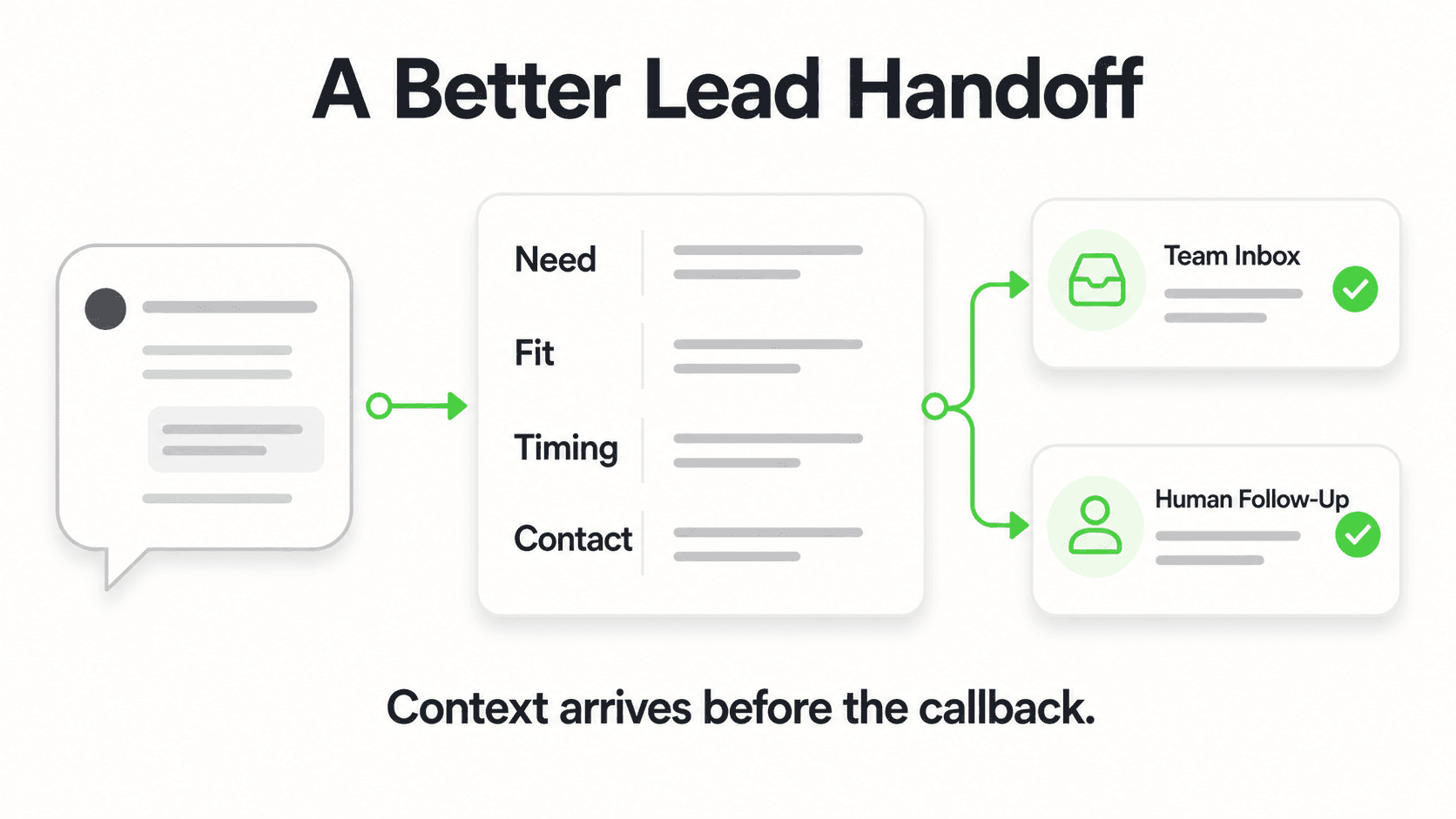
What this looks like in practice: The chatbot encounters a question it cannot answer — a complex complaint, a sensitive situation, or a high-value prospect with specific requirements. Instead of smoothly routing to a human agent, the bot loops, gives an unhelpful generic response, or simply drops the conversation. The customer leaves frustrated, sometimes publicly.
Real-world impact: No AI chatbot should handle every conversation end-to-end. Complex complaints, high-value sales opportunities, and sensitive situations require human judgment. Without a clear escalation plan, these critical moments become your worst customer experiences — precisely the opposite of what the chatbot was supposed to achieve.
How to avoid it: Define your escalation triggers before launch. Common triggers include: customer expresses frustration, the conversation exceeds a certain number of exchanges without resolution, the customer explicitly requests a human, or the inquiry involves complaints, refunds, or safety concerns. Map each trigger to a specific team member or queue, set response time expectations, and test the handoff flow thoroughly before going live.
5. Over-Promising AI Capabilities
What this looks like in practice: The marketing team writes chatbot welcome messages that say things like "I can help you with anything!" or the sales team tells prospects the chatbot will "completely replace your customer service team." When the AI inevitably encounters a question outside its scope, the gap between promise and reality destroys credibility.
Real-world impact: Over-promising is one of the fastest ways to erode customer trust. When a chatbot claims it can do everything but fails at basic tasks, customers do not blame the scope limitation — they blame the product and, by extension, your brand. This mistake also creates internal backlash when the team realizes the chatbot cannot do what was promised.
How to avoid it: Be honest about your chatbot's scope from the start. Configure your welcome message to set accurate expectations: "I can help you with questions about our services, pricing, and availability. For complex issues, I will connect you with our team." Internally, educate your team about what AI can and cannot do. AI provides document-grounded responses and is designed to minimize hallucinations — but it does not replace human judgment for complex scenarios.
6. Not Testing With Real Customer Questions
What this looks like in practice: The team tests the chatbot using their internal FAQ list and a handful of scripted scenarios. Everything works perfectly in testing. Then the chatbot goes live, and real customers start asking questions in ways nobody anticipated — misspellings, slang, multi-part questions, references to competitors, questions about edge cases not covered in the knowledge base.
Real-world impact: Internal testing creates a false sense of confidence. Your team knows the "right" way to ask questions. Your customers do not. The gap between scripted test scenarios and real customer behavior is where most chatbots fail. If you have not tested with messy, real-world queries, you will discover problems in production — when they cost you leads and credibility.
How to avoid it: Before launch, gather at least 50-100 real customer questions from your support email inbox, phone call logs, website form submissions, and social media DMs. Test every one of them against your chatbot. Pay special attention to questions that are poorly worded, combine multiple topics, or reference information not in your knowledge base. Use these tests to identify content gaps and improve your knowledge base before going live.
7. Treating Launch as the Finish Line
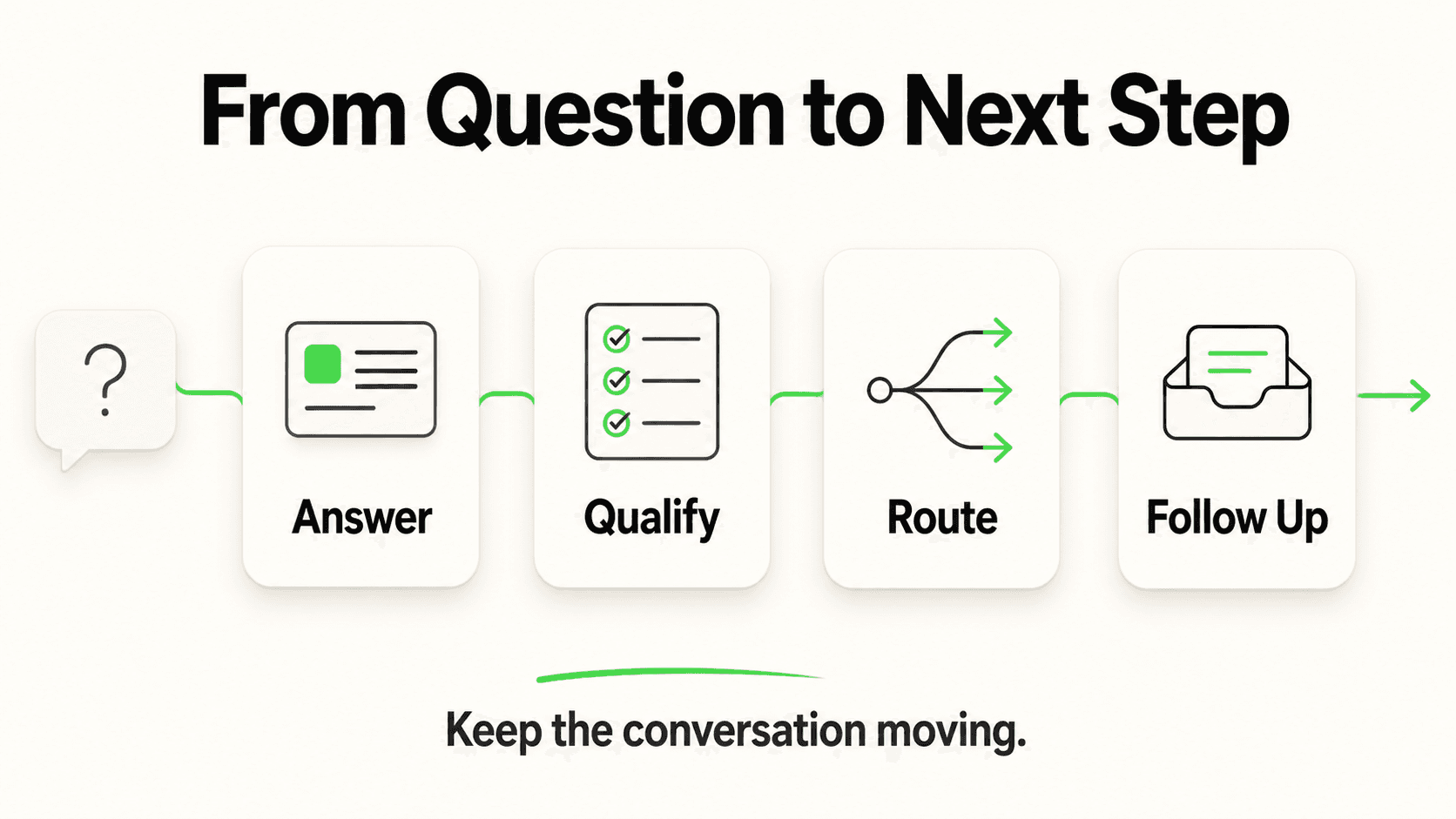
What this looks like in practice: The chatbot goes live, the team celebrates, and nobody looks at it again for three months. Conversation transcripts go unreviewed. Customer feedback goes uncollected. The knowledge base becomes increasingly outdated as products, pricing, and policies change. Performance gradually degrades, and by the time someone notices, the chatbot has been silently losing leads for weeks.
Real-world impact: AI chatbots require ongoing optimization to perform well. Customer questions evolve, your business changes, and the chatbot needs to keep up. Without regular review and iteration, even a well-launched chatbot will degrade over time. The businesses that see sustained results are the ones that treat launch as the beginning of an ongoing process, not the end of a project.
How to avoid it: Schedule a weekly 30-minute review of chatbot transcripts. Look for: questions the bot handled poorly, topics where customers consistently need human handoff, new questions that are not covered in your knowledge base, and opportunities to improve response quality. Track your chatbot KPIs monthly and set improvement targets. Update your knowledge base whenever you spot gaps.
Launch Your AI Chatbot the Right Way
Avoid every mistake on this list. Hyperleap AI gives you document-grounded responses, multi-channel deployment, and built-in human handoff (Pro and Max) — with a 7-day free trial to prove it works for your business.
Start Your Free TrialReal Results: What Happens When You Avoid These Mistakes
When businesses get the implementation right, the results speak for themselves. Let us look at what happens when you avoid the mistakes outlined above.
Jungle Lodges & Resorts, Karnataka's premier eco-tourism enterprise, deployed an AI chatbot with careful attention to each of the factors we have discussed. They defined clear goals (lead capture and after-hours coverage), invested in a comprehensive knowledge base covering their multi-property portfolio, deployed across their highest-traffic channel, and established clear human handoff protocols for complex booking inquiries.
The results: 3,300+ qualified leads captured in just 90 days, with 99%+ response accuracy. Perhaps the most significant finding: 35% of all inquiries came after business hours — leads that were previously lost entirely because no one was available to respond.
Contrast that with the "before" scenario that is typical for businesses that make the mistakes above:
- No clear goals: The team cannot tell leadership whether the chatbot is working or not, so funding gets questioned every quarter
- Thin knowledge base: The chatbot gives vague answers to specific questions, and visitors abandon the conversation within 30 seconds
- Website-only deployment: Customers reaching out on WhatsApp and Instagram get no response, driving them to competitors who are present on those channels
- No handoff plan: A high-value prospect gets stuck in a loop and posts a negative review about the experience
- No ongoing optimization: The chatbot's accuracy degrades over time as the knowledge base becomes outdated
The difference between these two outcomes is not technology — it is execution. Jungle Lodges used the same AI platform that is available to any business. They succeeded because they avoided the mistakes that derail most implementations (typical results vary based on industry, content quality, and implementation approach).
A Pre-Launch Checklist to Avoid Every Mistake
Here is a practical checklist that maps directly to the seven mistakes above. Complete every item before going live, and you will dramatically increase your chances of a successful deployment.
Save This Checklist
Bookmark this page or share it with your implementation team. Working through this checklist before launch takes 2-4 weeks but saves months of troubleshooting after the fact.
The 7-point pre-launch checklist:
- Define 3-5 measurable KPIs — leads per week, response accuracy, handoff rate, after-hours captures, satisfaction score. Write them down and share with all stakeholders. (Prevents Mistake #1)
- Audit and build your knowledge base — review all existing content, fill gaps, write in customer language, verify pricing and policies are current. Aim for comprehensive coverage of your top 50 customer questions. (Prevents Mistake #2)
- Map your channel strategy — identify your top 2-3 customer contact channels using real data, not assumptions. Plan deployment order starting with the highest-volume channel. (Prevents Mistake #3)
- Document your escalation workflow — define every trigger that should route to a human, assign team members to each trigger, and set response time targets. Test the handoff flow before launch. (Prevents Mistake #4)
- Write honest scope messaging — configure your chatbot's welcome message and fallback responses to set accurate expectations. Train your internal team on what the chatbot can and cannot do. (Prevents Mistake #5)
- Test with 50-100 real customer questions — pull actual questions from email, phone logs, and social media. Test every one. Fix knowledge base gaps before going live. (Prevents Mistake #6)
- Schedule ongoing optimization — block 30 minutes per week for transcript review. Set monthly KPI review meetings. Assign a chatbot owner with clear accountability. (Prevents Mistake #7)
The 30-Day Launch Timeline
Here is how to structure a successful implementation from start to finish:
Week 1: Goals and Knowledge Preparation
- Define KPIs and success criteria with stakeholders
- Audit existing content and identify knowledge base gaps
- Gather 50-100 real customer questions for testing
- Choose your chatbot platform based on use-case fit
Week 2: Build and Test
- Build your knowledge base with comprehensive, customer-language content
- Configure your chatbot's personality, welcome messages, and fallback responses
- Set up escalation triggers and human handoff workflows
- Test with your real customer question set and fix gaps
Week 3: Soft Launch on Primary Channel
- Deploy on your single highest-volume channel
- Monitor conversations daily — review every transcript
- Refine responses and fill knowledge base gaps in real time
- Gather feedback from the team handling handoffs
Week 4: Expand and Iterate
- Add your second and third channels (WhatsApp, Instagram DM, Facebook Messenger)
- Conduct first formal KPI review against baseline
- Optimize based on data from the first three weeks of operation
- Document learnings and establish your ongoing review cadence
Set Your AI Chatbot Up to Succeed
AI chatbot failures are not inevitable. They are the predictable result of skipping the planning, content preparation, and ongoing optimization that separate successful implementations from expensive experiments.
The seven mistakes in this guide account for the vast majority of chatbot failures we see. Every one of them is avoidable with the right preparation. Define your goals before you build. Invest in your knowledge base. Deploy where your customers actually are. Plan your human handoffs. Set honest expectations. Test with real questions. And never treat launch as the finish line.
The businesses that get this right — like Jungle Lodges, which captured 3,300+ leads in 90 days — do not have access to better technology. They have better implementation discipline.
Your AI chatbot can deliver the same kind of results. Start with the checklist, follow the 30-day timeline, and build the habits of ongoing optimization from day one.
Further Reading
Authoritative external sources used and recommended for further research on this topic:
- Anthropic research and product documentation
- Google Search Central documentation
- Gartner customer service research
Frequently Asked Questions
What is the most common reason AI chatbots fail?
The most common reason is a combination of unclear goals and poor knowledge base content. Without defined KPIs, teams cannot measure success or identify problems. And without a comprehensive, up-to-date knowledge base, even the best AI platform will deliver subpar responses. These two mistakes together create a situation where the chatbot underperforms and nobody has the data to diagnose why. Start with clear goals and invest in your content before anything else.
How long should I test before going live?
Plan for at least one full week of dedicated testing before launching to real customers. During this week, test with a minimum of 50-100 real customer questions gathered from your email inbox, phone logs, and social media inquiries. Pay particular attention to edge cases, poorly worded questions, and multi-topic inquiries. If you find significant gaps during testing, extend your timeline to address them. It is far better to delay launch by a week than to go live with a chatbot that gives inaccurate answers.
Can I fix a failed chatbot deployment?
Yes, and it is usually faster than starting from scratch. Most failed deployments suffer from the same fixable issues: thin knowledge base content, missing escalation workflows, or no ongoing optimization. Start by auditing your conversation transcripts to identify the most common failure points. Then systematically address each one: improve your knowledge base, configure proper human handoff triggers, and establish a weekly review cadence. Many businesses recover a failed deployment within 2-4 weeks of focused effort.
Do I need technical skills to avoid these mistakes?
No. The majority of chatbot implementation mistakes are strategic, not technical. Defining KPIs, building a knowledge base, mapping escalation workflows, and testing with real questions are all business skills, not engineering tasks. Modern no-code platforms like Hyperleap AI allow you to set up and configure an AI agent without writing any code. The most important skill for a successful implementation is the discipline to plan thoroughly and iterate consistently.
How much does a failed implementation cost?
The direct costs typically range from a few thousand to tens of thousands of dollars in subscription fees, setup time, and staff hours — depending on the platform and the complexity of the deployment. But the indirect costs are often much larger: lost leads during the period the chatbot underperformed, damaged customer experiences that are difficult to reverse, and organizational skepticism that delays future AI adoption. When you factor in the opportunity cost of leads lost to competitors who respond faster, the true cost of a failed implementation can be multiples of the direct investment.
Will an AI chatbot replace my support team?
No, and that should not be the goal. AI chatbots are designed to handle routine inquiries, capture leads around the clock, and provide instant responses to common questions — freeing your team to focus on complex, high-value conversations that require human judgment, empathy, and expertise. The best implementations use AI to make human teams more effective, not to eliminate them. Think of your chatbot as a team member that handles the first response and routes complex conversations to the right person.
What's the fastest way to get started correctly?
Follow the 30-day timeline in the checklist section above. Spend week one on goals and knowledge preparation, week two on building and testing, week three on a soft launch on your primary channel, and week four on expanding to additional channels and iterating based on data. If you want to move even faster, start your free trial and work through the knowledge base setup while your goals and escalation workflows are being finalized. The key is to resist the urge to rush through planning — the time you invest upfront in preparation directly determines your results.
Ready to Launch Your AI Chatbot the Right Way?
Hyperleap AI gives you document-grounded responses, multi-channel deployment across website, WhatsApp, Instagram, and Messenger, and built-in human handoff (Pro and Max) — all with a 7-day free trial.
Start Your Free TrialRelated Articles
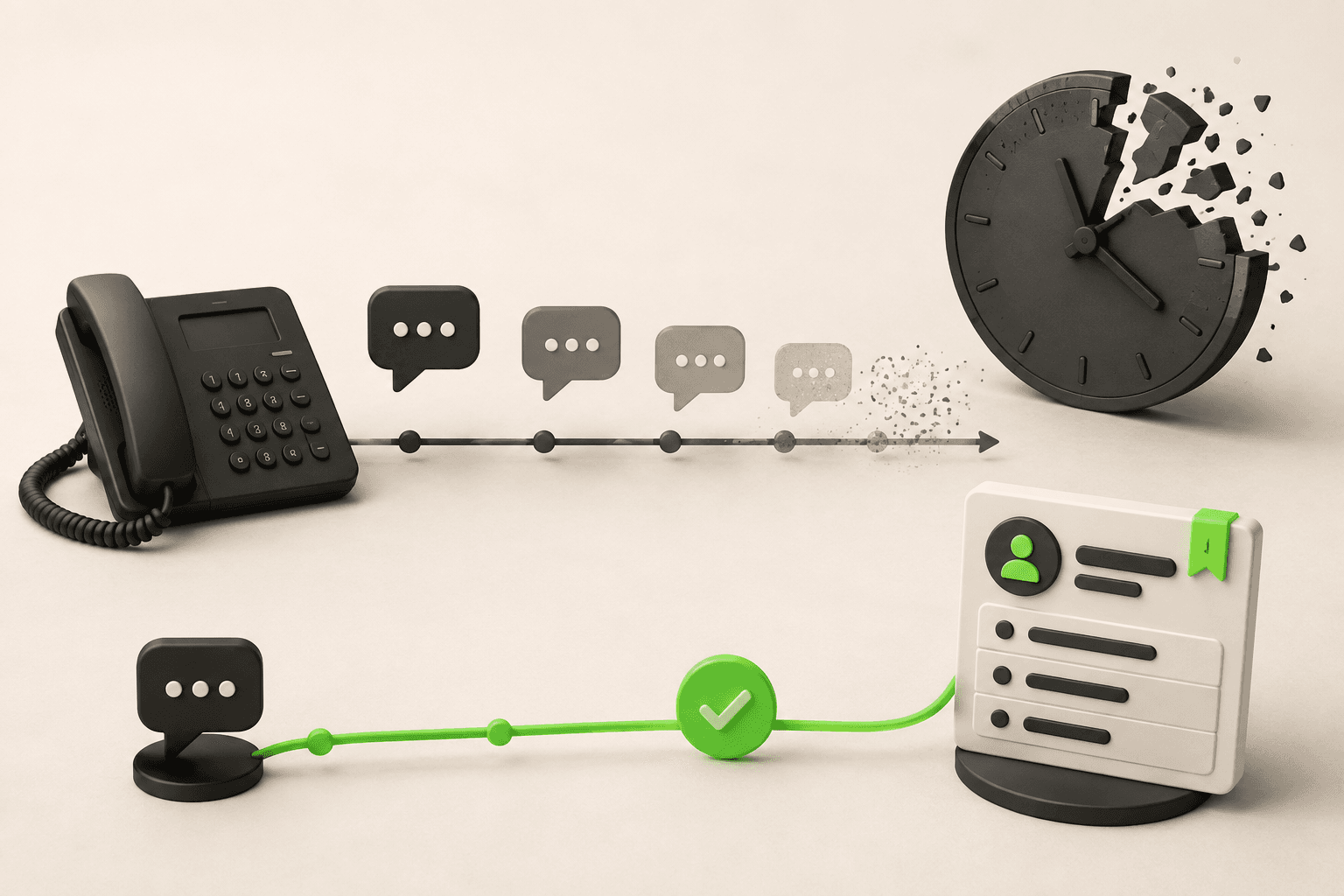
What Missed Calls Really Cost Your Small Business
A worked example of what missed calls cost small businesses in lost jobs, plus where inquiries actually arrive now and what to do about it.

AI Receptionist Cost in 2026: What You Actually Pay
AI receptionist cost ranges from $20/month for automated voice AI to $300+/month for live-agent phone answering. Full breakdown by category.

Companies Using AI for Customer Service: Industry Patterns
How companies using AI for customer service are transforming healthcare, hospitality, real estate, and more — with the specific jobs AI handles across each sector.

Will AI Replace Customer Service? The Honest Answer
Will AI replace customer service? Not wholesale — but it's changing the job fundamentally. Here's what AI handles well, what still needs humans, and how to build a hybrid model.