AI Chatbot Strategy for Multi-Location Franchises
How to structure AI chatbot deployment across 40+ franchise locations — covering knowledge architecture, routing, and franchisee onboarding for brand consistency.

TL;DR: A franchise chatbot strategy solves a specific problem that single-location chatbot guides ignore: how do you maintain brand-consistent responses across 20, 50, or 200 locations — while still giving each location the ability to answer questions about its own hours, promotions, and staff? The answer is a layered knowledge architecture: shared brand content at the top, location-specific content at the base. Getting that structure right is the entire game.
Multi-Location Franchises: AI Chatbot Strategy for Brand Consistency
A customer asking "do you have the summer special?" at your Denver location and your Atlanta location should get the same answer. A customer asking "what are your Saturday hours?" at those two locations should get different answers.
Managing that distinction at scale — across 20 or 200 locations — is the core challenge of franchise chatbot deployment. Deploy one chatbot with shared content and locations can't answer local questions. Deploy 40 independent chatbots and you have 40 different brand voices, inconsistent FAQs, and a support and maintenance burden that scales with every new franchisee.
This guide covers how to structure a franchise chatbot deployment that solves both problems: shared brand governance from the top, local relevance at each location.
The Problem Unique to Multi-Location Businesses
Single-location chatbot guides focus on a simple architecture: one knowledge base, one chatbot, one team. Multi-location franchises have a fundamentally different problem.
Brand consistency at scale. Your franchise agreement specifies brand standards for signage, uniforms, and customer communication. An AI chatbot that gives different answers about product quality, pricing policy, or brand positioning at different locations is a brand standards violation — and a customer trust problem. A customer who gets a confident answer from your Phoenix location and a conflicting answer from your Dallas location doesn't blame the individual location. They form a negative brand impression.
Local relevance without brand drift. A franchise in Hawaii has different hours, a different staff, potentially different local promotions, and a customer base with different questions than a franchise in Minnesota. A chatbot that only knows shared corporate content can't answer "what's your parking situation?" or "do you have the local promotion this weekend?" — and a customer who can't get a local question answered quickly moves on.
Franchisee autonomy vs. franchisor control. Franchisees want to control their own customer communication. Franchisors want to ensure brand standards. These interests are in legitimate tension. Your chatbot architecture needs to resolve that tension structurally — not through policy documents that franchisees may or may not follow.
Maintenance burden at scale. If brand-level content changes (a new product launch, a policy update, a revised pricing structure), and you have 40 separate chatbots, that's 40 manual updates. With a layered architecture, it's one update that propagates to all locations automatically.
Who This Guide Is For
This guide is for franchise development directors, multi-unit operators, and franchisor marketing teams evaluating AI chatbot deployment across 5 or more locations. The architecture principles apply at any scale — from a regional 10-location chain to a national 500-unit network.
The Layered Knowledge Architecture
The solution to the franchise chatbot challenge is a layered knowledge base structure. Think of it as two distinct layers of content with defined governance rules:
Layer 1: Shared Brand Knowledge (Franchisor-Controlled)
This layer contains content that is the same across all locations and must remain consistent:
- Brand positioning: What the franchise stands for, its history, core values, brand differentiators
- Product and service descriptions: Standard menu items, services offered, product specifications
- Pricing structure (where pricing is standardized): Corporate pricing, promotional frameworks
- Company-wide policies: Warranty terms, return/exchange policies, corporate customer service commitments
- Compliance-required language: Allergen information, legal disclosures, safety statements
Layer 1 content is owned and updated by the franchisor. Franchisees cannot edit it. When corporate updates the allergen information or launches a national promotion, that update goes into Layer 1 once, and the chatbot uses it when answering about any location.
Layer 2: Location-Specific Knowledge (Franchisee-Controlled)
This layer contains content that is specific to the individual location:
- Hours of operation: Including holiday hours, special closures, seasonal hours
- Address and directions: Including parking, transit access, local landmarks
- Local staff and contact information: Location manager, phone number, email
- Local promotions: Franchisee-run promotions not part of the corporate calendar
- Local FAQs: Questions specific to that location's customer base, neighborhood, or facility
Layer 2 content is owned by the franchisee. They can update their hours without submitting a request to corporate. They can add a local promotion without waiting for approval. What they cannot do is modify Layer 1 content — brand positioning, standard product descriptions, or company-wide policies.
How the Layers Interact
When a customer asks a question, the chatbot answers from the content that fits it. A question about weekend hours pulls from Layer 2 (location-specific). A question about what's in a product pulls from Layer 1 (shared brand content). A question about a local promotion pulls from Layer 2. A question about the brand's history pulls from Layer 1.
In Hyperleap AI, both layers live in one knowledge base that every plan answers from. When you have many near-identical location pages, the Multi-variant (locations, courses, etc) add-on makes sure a question about the Plano location is answered from the Plano page, checks every location for questions like "which locations are open Sunday?", and asks which location when the customer doesn't say.
Build a Franchise Chatbot Architecture That Scales
Hyperleap AI's Multi-variant add-on answers from the right location, compares across all of them, and asks which one when unclear. Start your 7-day trial.
See How It WorksDeployment Models for Multi-Location Franchises
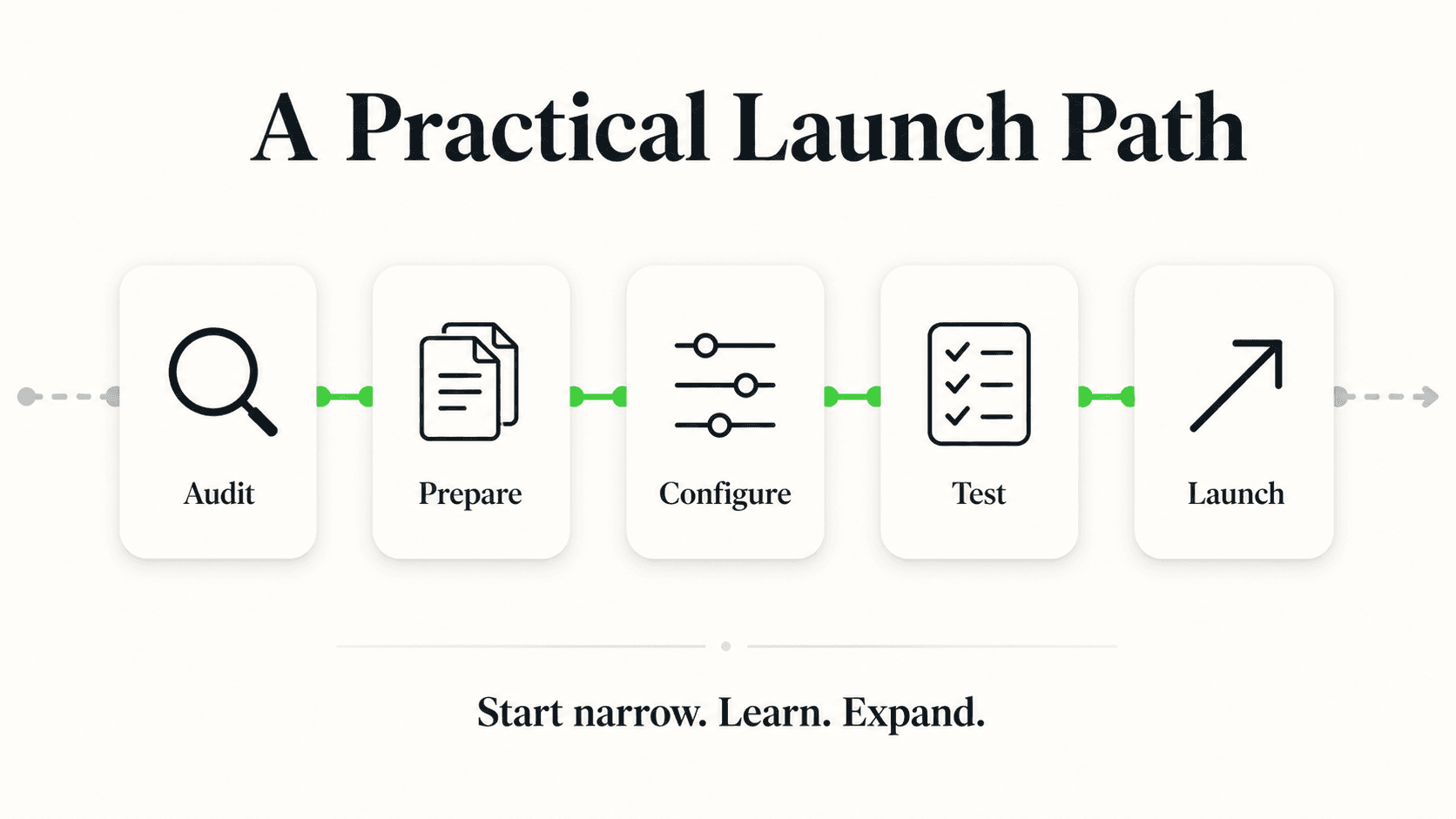
Once you have the layered architecture defined, the next decision is how to deploy chatbots across your location network. Three models are commonly used:
Model A: Central Deployment, Location Customization
The franchisor deploys and manages the chatbot infrastructure centrally. Each location has its own chatbot instance that shares the Layer 1 knowledge base but maintains its own Layer 2 content. Franchisees update their Layer 2 content through a simple dashboard interface — no technical knowledge required.
Best for: Franchise networks with 20+ locations where central management creates economies of scale. Networks where brand consistency is a high priority and franchisee technical capacity is variable.
Tradeoffs: Requires franchisor investment in setup and ongoing Layer 1 maintenance. Franchisees have limited autonomy below Layer 2 boundaries.
Model B: Franchisee Deployment, Brand Content Syndication
Individual franchisees deploy and manage their own chatbots, but subscribe to a corporate brand content feed that populates their Layer 1 automatically. The franchisor maintains a master brand content package that franchisees subscribe to — updates push automatically.
Best for: Franchise systems where franchisees are more technically sophisticated and prefer operational autonomy. Networks where individual locations have meaningfully different customer profiles that require significant local customization.
Tradeoffs: More complex to enforce brand standards. Relies on franchisees keeping their subscriptions active and their Layer 2 content current.
Model C: Hybrid Pilot, Then Scale
Start with a pilot cohort of 3–5 locations to test and refine the architecture before rolling out network-wide. Pilot locations provide feedback on the Layer 1/Layer 2 boundary — what should be shared vs. what needs to be local — and the full deployment reflects those learnings.
Best for: Any franchise network deploying chatbots for the first time. The pilot phase surfaces problems at small scale before they become network-wide issues.
Tradeoffs: Slower to full deployment. Pilot locations need to be representative of the network's diversity — different regions, different volumes, different customer profiles.
Channel Strategy for Franchise Deployments
A multi-location franchise deployment adds a channel complexity layer beyond what single-location businesses face. Each location may have its own website, social profiles, and messaging channels — or the brand may use a single corporate presence with location subpages.
Website widget deployment:
For franchise networks with individual location websites, deploy the chatbot widget on each location's site with that location's Layer 2 context active. For networks with a single corporate website with location pages, the chatbot can use URL context or a location selection prompt to serve location-specific content.
WhatsApp and social channels:
WhatsApp Business API accounts, Instagram Business profiles, and Facebook Pages are typically tied to individual business entities — which means each location has its own account. Each location's chatbot channel is connected to that location's account. The shared Layer 1 knowledge ensures brand consistency; the location context ensures local accuracy.
The channel governance question:
Decide before deployment who controls each channel. If a franchisee connects their own Instagram account to a chatbot, they control that integration. If the franchisor manages Instagram for the network, the franchisor controls the integration. Misalignment here creates operational confusion and potential brand risk.
Channels currently supported: Website widget, WhatsApp, Instagram DM, Facebook Messenger. See the multi-channel AI chatbot strategy guide for deployment best practices.
Brand Governance: What to Lock and What to Leave Open
The most common mistake in franchise chatbot deployment is locking too much or too little.
Lock too much: Franchisees can't update their own hours. A customer asks about Saturday hours and gets an outdated answer from stale corporate content. Franchisee frustration grows; local data becomes unreliable.
Lock too little: Franchisees can edit brand positioning, product descriptions, or pricing policy. Two locations give contradictory answers about a core product. A customer screenshot of the inconsistency surfaces on social media. Brand damage occurs.
The right governance framework defines clear boundaries:
| Content Type | Who Controls It | Update Frequency |
|---|---|---|
| Brand story and values | Franchisor | Annual or on major changes |
| Standard product/service descriptions | Franchisor | Per product launch/change |
| Company-wide pricing and promotions | Franchisor | Per promotional calendar |
| Legal disclosures and compliance content | Franchisor | Per regulatory change |
| Location hours | Franchisee | Weekly/as needed |
| Local staff and contact info | Franchisee | As staff changes |
| Local promotions | Franchisee | Per local promo |
| Local FAQ (parking, transit, etc.) | Franchisee | Periodically |
Document this matrix explicitly in your franchise chatbot playbook. Franchisees should know exactly what they can change and what requires a corporate request.
Metrics and Reporting for Multi-Location Deployments
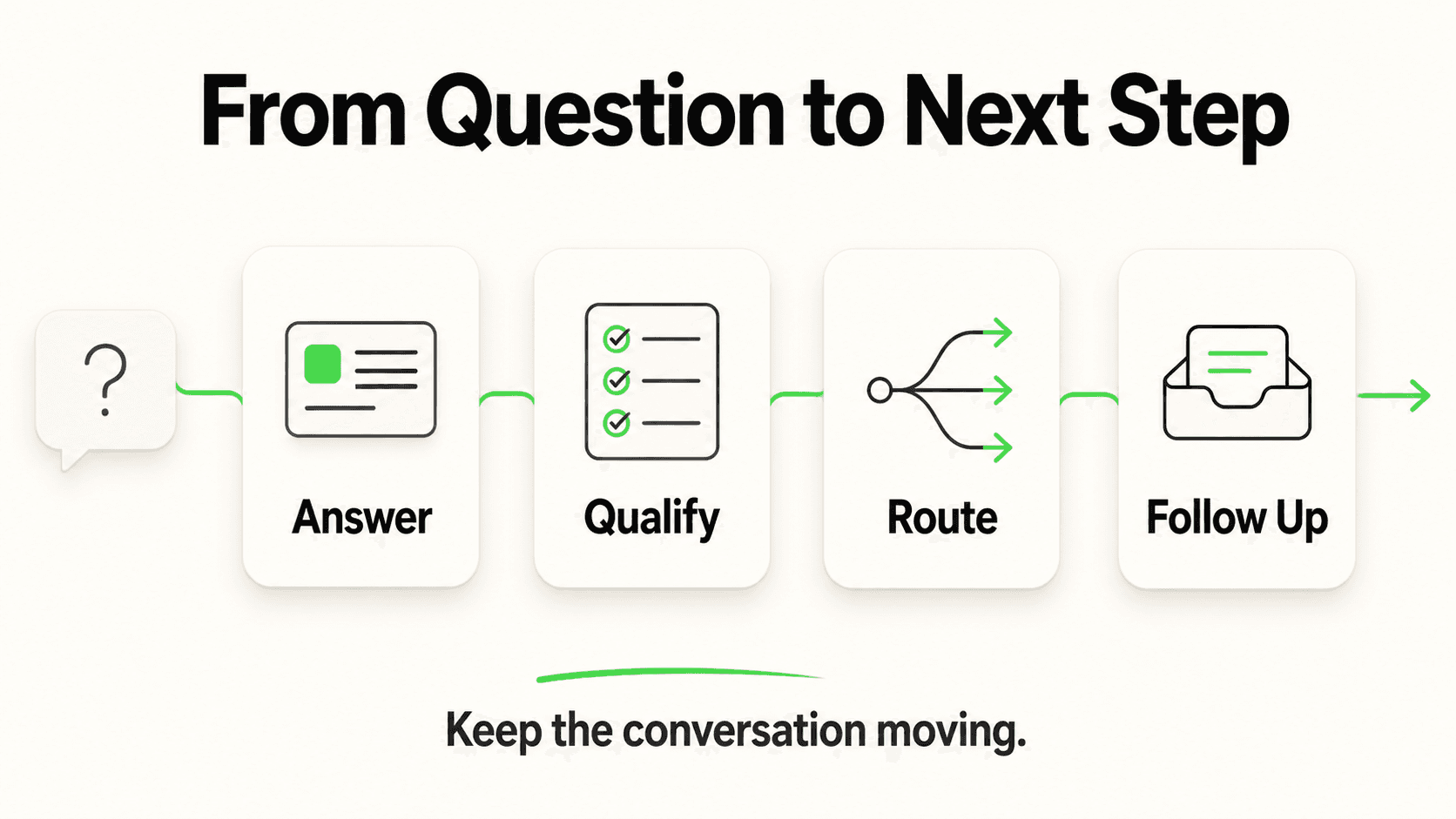
One advantage of a centrally managed franchise chatbot deployment is unified analytics — you can see conversation volume, lead capture rates, and common questions across all locations simultaneously, not just at an individual location level.
Network-level metrics to track:
- Total conversations across network (week over week, month over month)
- Leads captured per location (identifies underperforming locations that may need chatbot training updates)
- Most common questions by location (surfaces FAQ gaps in the knowledge base)
- Escalation rates by location (high escalation = knowledge base needs work)
- After-hours capture rate by location
Location-level metrics for franchisee reporting:
Each franchisee should receive a simple monthly report: conversations handled, leads captured, most common questions asked. This creates accountability and demonstrates the value of maintaining accurate Layer 2 content — franchisees who keep their hours and local FAQs current will see better chatbot performance.
Implementation Roadmap: Franchise Chatbot Rollout
Phase 1 — Architecture (Weeks 1–2)
Define your Layer 1/Layer 2 boundary. Document all brand-level content that goes into Layer 1. Identify the minimum required Layer 2 fields for each location (hours, address, local contact). Set up governance rules for who can edit what.
Phase 2 — Pilot (Weeks 3–6)
Select 3–5 locations for the pilot: at least one high-volume location, one low-volume location, different regions if possible. Deploy the layered architecture. Run test conversations for each location covering both shared and local questions. Identify gaps in both layers.
Phase 3 — Refinement (Weeks 7–8)
Based on pilot learnings, update the Layer 1 knowledge base to fill gaps identified. Work with pilot franchisees to complete and verify their Layer 2 content. Update governance documentation based on what you learned.
Phase 4 — Network Rollout (Weeks 9–16)
Roll out to the full network in cohorts of 10–20 locations per week. Provide franchisees with a simple onboarding guide for completing their Layer 2 content. Establish a support channel for franchisee questions. Plan a 30-day check-in to review metrics and address gaps.
For networks using the Managed Setup add-on, a Hyperleap AI setup specialist can handle the Layer 1 knowledge base build and assist franchisees with their Layer 2 content — reducing the internal time investment significantly.
Frequently Asked Questions
How is a franchise chatbot different from a single-location chatbot?
A franchise chatbot requires a layered knowledge architecture that single-location guides don't cover. You need shared brand content controlled by the franchisor (Layer 1) and location-specific content controlled by each franchisee (Layer 2), with clear governance rules about who can edit what. The technical and operational complexity is meaningfully higher than a single-location deployment.
How does a franchise chatbot keep near-identical locations apart?
Franchise location pages often read almost the same, differing only in address, hours, and local promotions, so the chatbot has to pick the right location's source before answering. For a franchise, that means a question about the Plano location is answered from the Plano page rather than a near-identical sibling, questions across locations check every location, and a question that doesn't name a location gets a clarifying question. Shared brand content stays in its own sources and is found for every location. On Hyperleap AI, this is the Multi-variant (locations, courses, etc) add-on, available on Pro and Max plans for $40/month plus 2x credits per request.
Can each location have its own chatbot style or personality?
Brand voice and personality should be defined at the Layer 1 level and consistent across all locations — that's part of what a chatbot governance framework protects. Within that consistent voice, each location's chatbot will answer with location-specific content (hours, local staff names, local promotions), which creates appropriate local relevance without brand drift.
What happens if a franchisee enters incorrect information in their Layer 2?
This is a real operational risk. Incorrect hours or a wrong phone number in Layer 2 creates customer friction and support issues. Establish a verification process: either the franchisor spot-checks Layer 2 content periodically, or the chatbot platform provides a review workflow before Layer 2 updates go live. Building in accountability makes franchisees more careful about accuracy.
How do I handle a national promotion that runs simultaneously at all locations?
National promotions belong in Layer 1 — the franchisor pushes them to all locations simultaneously as part of the shared knowledge base. This is one of the clearest advantages of the layered architecture: a single update at the corporate level reaches every customer-facing chatbot in the network immediately, rather than requiring 40 individual franchisee updates.
Does each location need its own WhatsApp number?
Yes, WhatsApp Business API accounts are registered to individual phone numbers and business entities. Each location that wants WhatsApp coverage needs its own WhatsApp Business account. The chatbot connects to each location's account independently. For franchise networks deploying WhatsApp, factor in the per-location account setup as part of your rollout planning. See the step-by-step WhatsApp chatbot setup guide for technical context.
What plan does a franchise operation need?
Multi-location franchise operations typically start on Hyperleap AI's Pro plan ($100/month) or Max plan ($200/month), which support multiple chatbots and higher response volumes. The Multi-variant (locations, courses, etc) add-on ($40/month + 2x credits per request) is available on Pro and Max plans for networks with many similar locations: it answers from the right location and asks which one when a customer doesn't say. For network-wide deployments, contact Hyperleap AI directly about multi-location pricing.
Brand Consistency at Scale Starts With Architecture
Franchise chatbot deployment is not a single-location problem at larger scale. It's a distinct architecture challenge that requires deliberate decisions about knowledge governance, deployment model, and franchisee autonomy before a single chatbot goes live.
The brands that get this right — layered knowledge architecture, clear governance rules, centralized brand content with local flexibility — will have a competitive advantage over franchise networks where every location is answering the same questions differently, or where franchise-level chatbots are too rigid to answer local questions at all.
Start with the architecture. Define the Layer 1/Layer 2 boundary before you configure anything. Pilot with a small cohort before rolling out network-wide. Build franchisee reporting that creates accountability for keeping local content current.
For multi-location businesses across other sectors, the same architecture principles apply — see how property managers handle tenant communication and how restaurants handle inquiry volume at scale.
What is an AI chatbot in business terms?
A customer-facing chat agent that answers questions, qualifies inquiries, and captures leads 24/7. Modern AI chatbots are grounded in your business content (not the open internet) and run across your website and messaging channels with the same persona and knowledge.
How is Hyperleap different from a chat widget or a live chat tool?
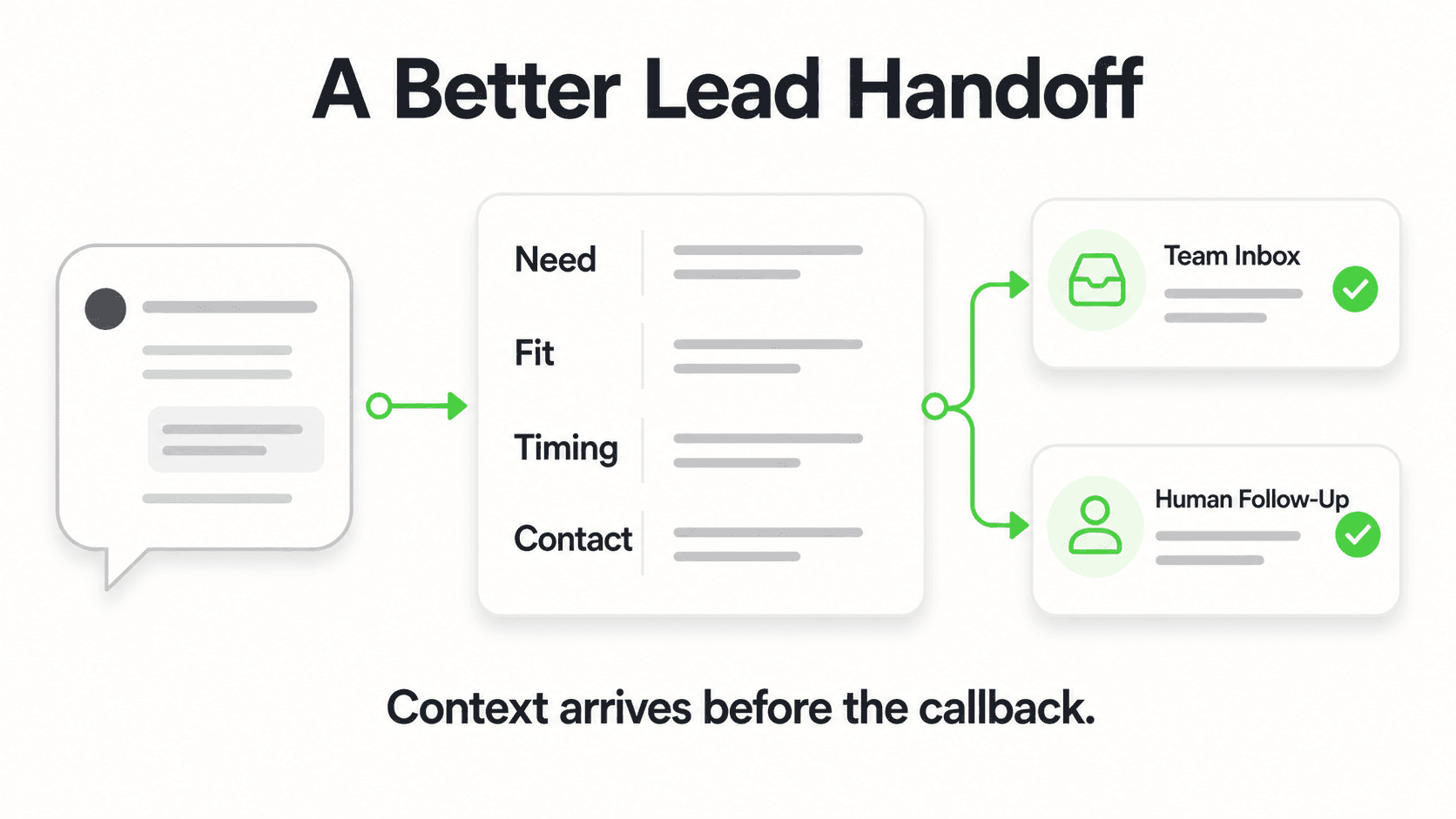
Live chat tools route to humans; basic widgets follow scripted flows. Hyperleap is an AI agent grounded in your content — it understands intent, retrieves from your knowledge base, qualifies leads, and escalates only when needed. Same answers across website, WhatsApp, Instagram DM, and Facebook Messenger.
How long does it take to set up an AI chatbot with Hyperleap?
Most SMBs go live in 3–5 days for self-serve setup. With Managed Setup ($299 Free, available on every plan), Hyperleap builds the bot for you on your content and channels. A 7-day free trial is included on every plan.
Further Reading
Authoritative external sources used and recommended for further research on this topic:
- Anthropic research and product documentation
- Google Search Central documentation
- Gartner customer service research
Scale Your Franchise Chatbot Across Every Location
Hyperleap AI's Multi-variant add-on keeps every answer on the right location for multi-location businesses. Start with a 7-day trial on your first locations.
Start Free TrialRelated Articles
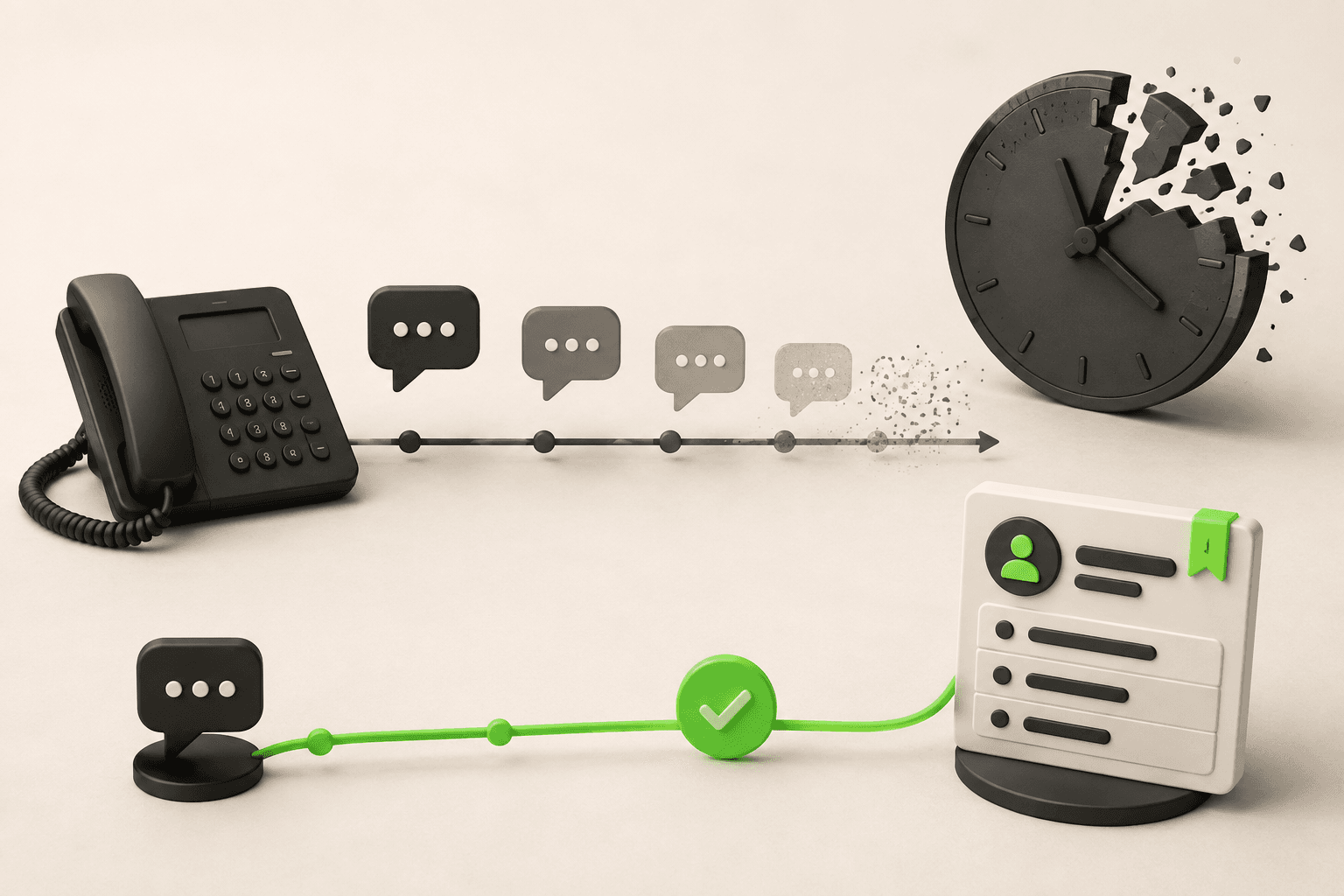
What Missed Calls Really Cost Your Small Business
A worked example of what missed calls cost small businesses in lost jobs, plus where inquiries actually arrive now and what to do about it.

AI Receptionist Cost in 2026: What You Actually Pay
AI receptionist cost ranges from $20/month for automated voice AI to $300+/month for live-agent phone answering. Full breakdown by category.

Companies Using AI for Customer Service: Industry Patterns
How companies using AI for customer service are transforming healthcare, hospitality, real estate, and more — with the specific jobs AI handles across each sector.

Will AI Replace Customer Service? The Honest Answer
Will AI replace customer service? Not wholesale — but it's changing the job fundamentally. Here's what AI handles well, what still needs humans, and how to build a hybrid model.