AI Chatbot Pricing Models Compared: Per-Message vs Flat-Rate
Per-message, per-resolution, and flat-rate pricing all have different cost profiles. Here's exactly how each model works and what to watch for before signing.

TL;DR: AI chatbot vendors charge in three fundamentally different ways: per message exchanged, per resolved conversation, or a flat monthly rate regardless of volume. Each model creates a different cost structure and a different set of incentives. Understanding which model fits your actual usage pattern is the single most important decision when evaluating chatbot pricing — and it's often glossed over in vendor demos.
AI Chatbot Pricing Models Compared: Per-Message, Per-Resolution, Flat-Rate
The question "how much does an AI chatbot cost?" is misleading. The real question is: how does the vendor count usage, and does that counting method work in your favor?
Three distinct pricing models dominate the market in 2026. Each has a rational design behind it, legitimate use cases where it performs well, and patterns where it creates unexpected bills. This guide breaks down all three so you can evaluate vendor pricing on equal terms — not just the headline number.
How the Three AI Chatbot Pricing Models Work
AI chatbot pricing divides into three core structures: per-message (you pay per individual exchange), per-resolution (you pay per completed conversation), and flat-rate (you pay a fixed monthly fee regardless of volume). Most vendor pricing is a variation of one of these three, sometimes combined.
Here is how each model works in practice:
| Model | How You're Charged | Best For | Watch Out For |
|---|---|---|---|
| Per-message | Each message sent or received costs a fixed amount | Very low-volume or burst-only usage | Costs compound fast; chatty conversations multiply bills |
| Per-resolution | Each "resolved" conversation costs a fixed amount | High-deflection support use cases | "Resolved" definitions vary; disputes over what counts |
| Flat-rate | Fixed monthly fee, unlimited or capped volume | Predictable, steady usage | Hard caps or overages that make "flat" misleading |
Per-Message Pricing
Per-message pricing charges for each individual turn in a conversation — user sends a message, chatbot replies, that's two messages. Some vendors count only outbound messages; others count both directions.
The math problem: A simple FAQ interaction might involve 6–10 message turns. At $0.005 per message (a common rate), that's $0.03–$0.05 per conversation. Sounds negligible. But 500 conversations per month is $15–$25. 5,000 conversations is $150–$250 — and that's before any AI inference costs the vendor passes through.
Per-message pricing made sense when chatbots were rule-based trees with predictable depths. Modern LLM-based chatbots have variable conversation lengths, which makes per-message pricing unpredictable by design.
Who it works for: Businesses with genuinely low volume — say, fewer than 200 conversations per month — or those testing before committing. Developers building custom integrations who want granular control over costs at the token level.
Who it doesn't work for: SMBs with growing or seasonal inquiry volume. A summer spike in HVAC inquiries or a tax-season surge at an accounting firm can turn a manageable monthly bill into a surprise invoice.
Per-Resolution Pricing
Per-resolution pricing (sometimes called "per-conversation" or "outcome-based" pricing) charges for each conversation that the AI handles to completion without escalating to a human agent.
Intercom's Fin AI agent uses this model, charging per resolved conversation as of 2026. The pitch is appealing: you only pay when AI actually works.
The definition problem: "Resolved" is a vendor-defined term. A conversation where the user stopped responding may be logged as resolved. A conversation where the user said "okay thanks" before calling your main line anyway may be logged as resolved. You're paying for deflection events, not customer satisfaction events.
The incentive problem: Per-resolution pricing creates an incentive for vendors to define "resolved" broadly and to optimize their AI for conversation closure rather than customer satisfaction. This is not necessarily malicious — but it's worth scrutinizing how resolution is measured before committing.
Who it works for: Large customer support operations where deflection rate is a tracked KPI and where the finance team is comfortable paying per-outcome. Enterprise deployments with 10,000+ monthly conversations where outcome-based pricing creates accountability.
Who it doesn't work for: SMBs where the primary use case is lead capture and booking rather than support deflection. You're not trying to "resolve" a lead inquiry — you're trying to convert it. Per-resolution pricing is designed for support, not sales.
Flat-Rate Pricing
Flat-rate pricing charges a fixed monthly fee. Volume is either unlimited or included up to a defined cap, with overage pricing for usage above that cap.
This is the most predictable model for SMBs and the one most aligned with how small businesses think about software costs. Your accounting firm, HVAC company, or dental practice knows its monthly software budget and doesn't want variable invoices.
The "flat" caveat: Many flat-rate plans include volume limits that turn them into effectively tiered per-unit pricing above a threshold. Read the overage terms. A plan that's "$99/month for up to 1,000 conversations" with "$0.10 per additional conversation" is not truly flat-rate for businesses that regularly exceed the cap.
What to look for in flat-rate plans:
- What is the monthly conversation or response limit?
- What happens when you exceed it — hard cutoff, overage billing, or upgrade prompt?
- Are all channels (website, WhatsApp, Instagram, Facebook) included or priced separately?
- Are team seats included or charged additionally?
How Hyperleap AI Prices
Hyperleap AI uses a flat-rate model based on monthly AI responses: Plus at $40/month (3,000 responses), Pro at $100/month (12,000 responses), and Max at $200/month (30,000 responses). Additional responses can be purchased as Credit Packs ($12 per 1,000 responses) on any plan. There is a 7-day free trial; credit card required. No free plan exists. See full details at the pricing page.
Hidden Costs Across All Three Models
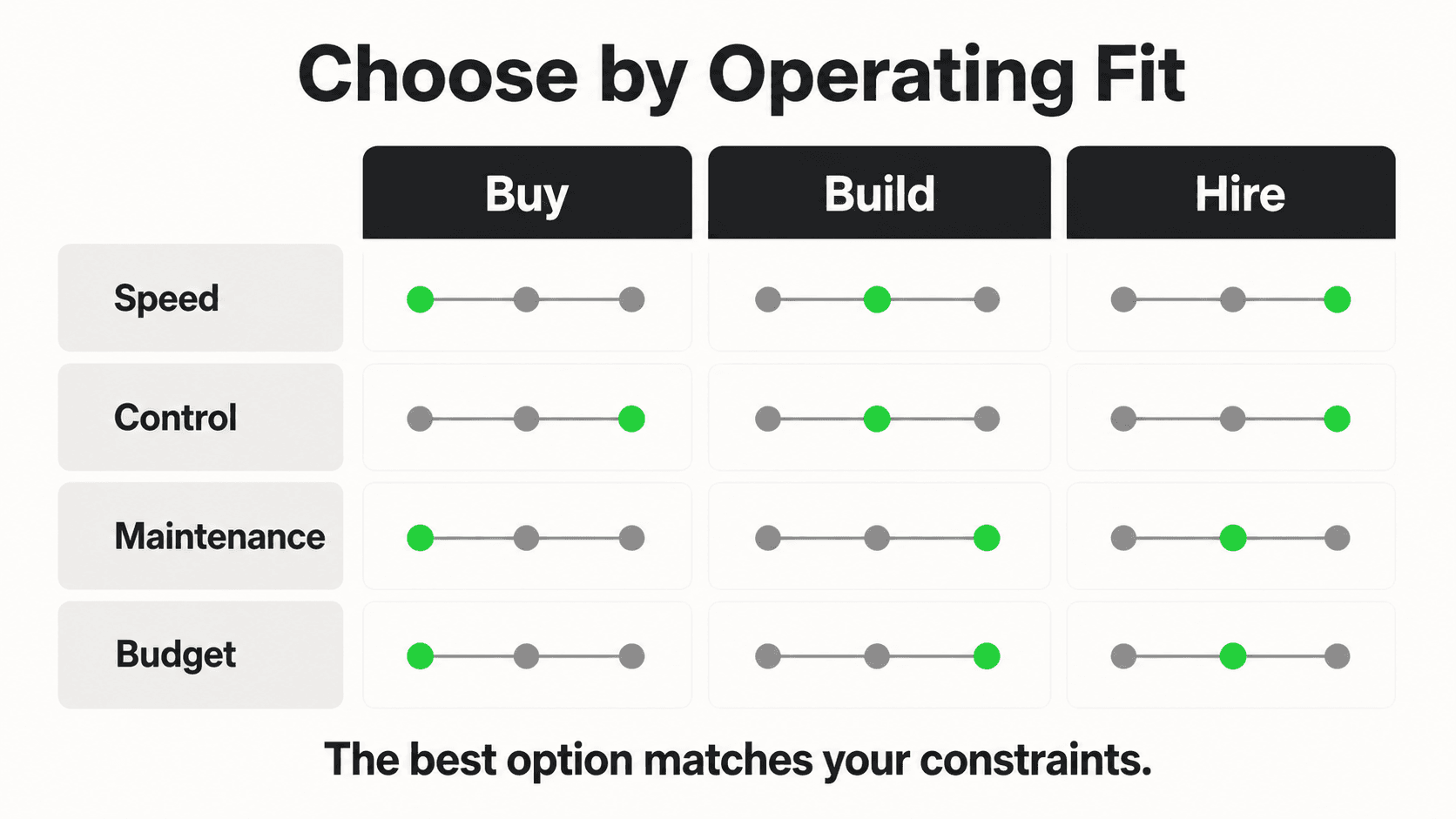
Regardless of which pricing model a vendor uses, several cost layers are commonly buried in the fine print.
AI model inference costs. Some vendors pass through their underlying LLM costs (OpenAI, Anthropic, Google) separately or inflate the per-message/per-resolution fee to absorb them. Others include them in flat-rate pricing. Ask explicitly: "Are AI inference costs included in this pricing?"
Channel fees. WhatsApp Business API has Meta's own per-conversation pricing, which varies by country and conversation type (marketing vs. utility vs. service). Some chatbot vendors pass this through to customers; others absorb it. If you're deploying on WhatsApp, understand whether the vendor's price includes Meta's fees or is additive to them.
Seat and workspace fees. Per-user pricing is common in the enterprise segment but unusual for SMB-focused tools. Still worth confirming: does adding a second team member cost extra?
Knowledge base or training costs. Some platforms charge for the compute time to process and index your documents. Others charge for storage above a threshold. This is typically minor but worth asking about.
Setup and onboarding fees. One-time setup charges are legitimate — some vendors invest real time in implementation. Hyperleap AI's Managed Setup add-on, for instance, is offered at a clearly stated one-time price rather than buried in the monthly fee.
Choosing the Right Model for Your Business
The right pricing model depends on three factors: your conversation volume, the predictability of that volume, and your primary use case (lead capture vs. support deflection).
Low, unpredictable volume (fewer than 300 conversations/month): Per-message or per-resolution can work, but only if you've verified the definition of "message" and "resolution" and run the math on your actual conversation patterns. Flat-rate at the entry tier is often cheaper and simpler.
Steady, predictable volume (300–2,000 conversations/month): Flat-rate is almost always the right model. Predictable costs, no surprise invoices, easy ROI calculation.
High volume with deflection as the KPI (2,000+ conversations/month, support use case): Per-resolution can create accountability and align costs with outcomes — but scrutinize the resolution definition carefully (see chatbot KPIs for how to define it properly). For SMBs, high-tier flat-rate is usually still simpler.
Seasonal or spike-prone businesses (HVAC, tax season, retail holidays): Flat-rate with a monthly response cap that covers your peak months is ideal. Per-message pricing during a summer HVAC spike can produce a bill 5–10x your slow-month cost for the same product.
Predictable Pricing, No Surprises
Hyperleap AI uses flat-rate pricing — you know your cost before the month starts. Start your 7-day trial and see what your actual usage looks like.
See PricingWhat to Ask Every Vendor Before You Sign
These questions surface the actual cost structure behind any pricing model:
- How do you define a "message" / "resolution" / "conversation"? Get the definition in writing.
- What happens when I exceed my plan limit? Hard cutoff, overage rate, or automatic upgrade?
- Are WhatsApp or other channel API fees included or additional?
- Are AI inference costs included in this price or passed through?
- How does pricing change if I add a second chatbot or a second workspace?
- What does the annual pricing look like vs. month-to-month?
- Can I see a bill from a customer at similar volume? (Legitimate vendors will share anonymized examples.)
AI Chatbot Pricing by Platform: Structural Observations
Rather than assigning specific quality labels, here are structural observations about how different platforms approach pricing as of 2026:
Intercom Fin uses per-resolution pricing for its AI agent tier. The base platform fee is separate from the resolution fee. Businesses with high resolution volume and clearly defined KPIs may find this model works well. Businesses focused on lead capture rather than support deflection should model carefully.
Tidio and Freshchat offer tiered flat-rate plans with conversation limits. Entry tiers are competitive for low volume; pricing steps up sharply at higher volumes. Channel breadth varies by tier.
Drift (now part of Salesloft) has moved toward enterprise-only pricing with custom quotes. Not directly comparable for SMB use cases — if you are priced out, see the best Drift alternatives.
Chatbase and similar document-trained chatbot builders offer flat-rate plans based on message credits. Useful for simple FAQ use cases; deeper lead capture and multi-channel deployment typically require more capable platforms.
Hyperleap AI uses flat-rate plans based on AI responses. Plans include multi-channel deployment (Website, WhatsApp, Instagram DM, Facebook Messenger), team seats, and workspaces. Response packs are available for overage without requiring a plan upgrade.
For a detailed comparison of platforms, see how to choose the right AI chatbot platform for your business, and for a side-by-side chatbot price list across the major platforms, the chatbot pricing comparison.
Understanding "AI Responses" vs. "Conversations"
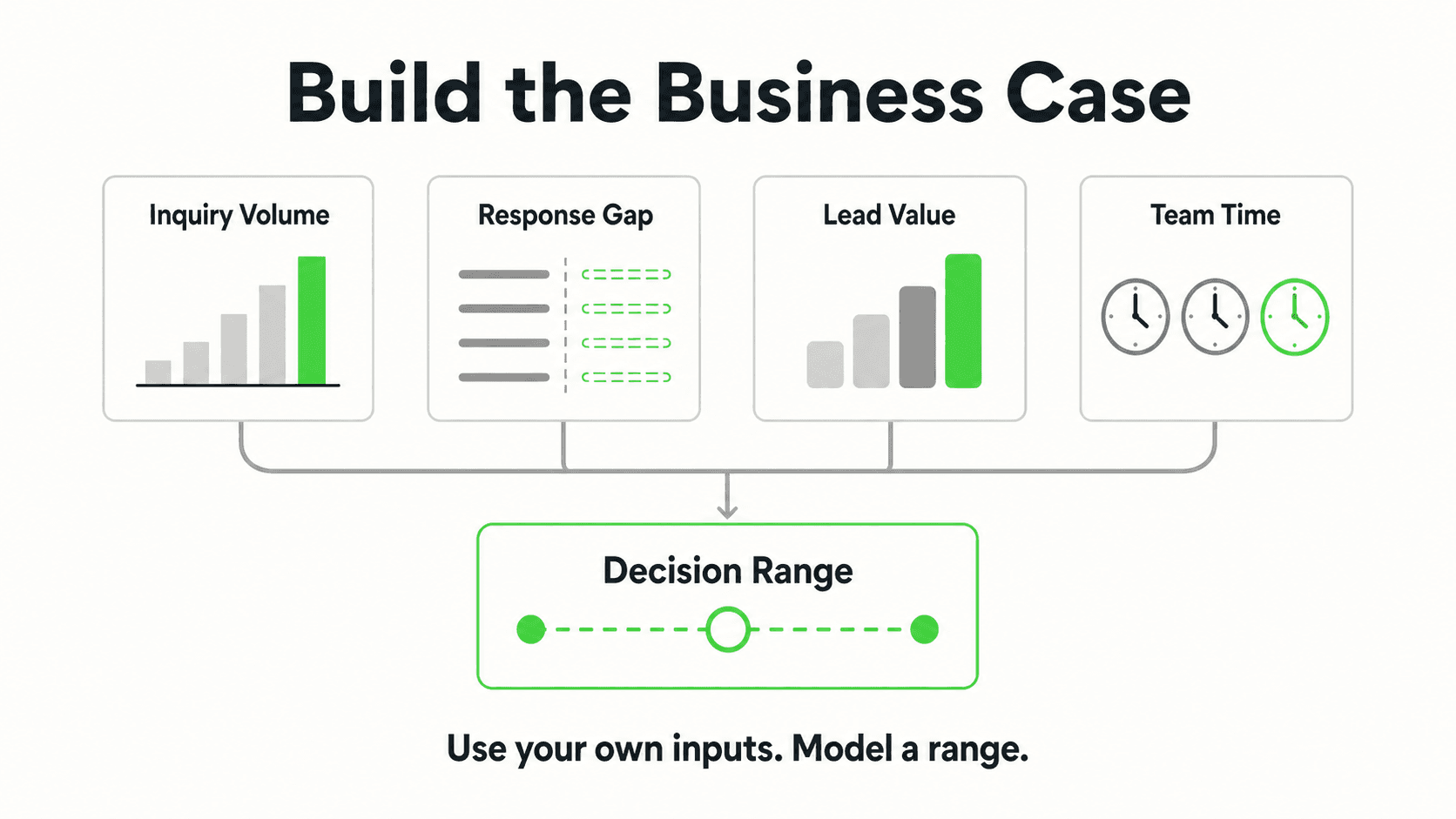
One nuance that catches SMB buyers off guard: some platforms charge per conversation (one conversation = one session, regardless of message count), while others charge per AI response (each individual message the AI sends).
On a per-conversation model, a 2-message session and a 20-message session cost the same. On a per-AI-response model, the 20-message session costs 10x more.
For businesses where customers tend to ask one question and leave, per-conversation pricing is favorable. For businesses where customers engage in extended back-and-forth — comparing treatment options at a med spa, asking detailed questions about a service package — per-response pricing can compound unexpectedly.
Hyperleap AI charges per AI response. For typical qualification conversations (5–8 AI messages per session), that means roughly 400–600 conversations on a Plus plan per month before hitting the 3,000-response limit. Understanding your average conversation depth is an important step in sizing your plan correctly.
Frequently Asked Questions
What is the cheapest AI chatbot pricing model for a small business?
Flat-rate pricing is almost always most cost-effective and predictable for small businesses with steady usage. Per-message and per-resolution models can appear cheaper at low volume but create unpredictable bills during busy periods. Look for flat-rate plans starting around $40–$50/month that include all channels you need.
What does "per-resolution" mean in AI chatbot pricing?
Per-resolution pricing charges your business each time the AI handles a conversation to completion without escalating to a human agent. The exact definition of "resolved" varies by vendor — some count any closed conversation, others require the user to explicitly confirm satisfaction. Ask for the vendor's specific resolution definition before committing.
How do I calculate how many AI responses I need per month?
Estimate your monthly chat volume (inquiries through your website, WhatsApp, etc.) and multiply by your average conversation length in AI messages. If you receive 200 conversations per month and each involves 6 AI replies, you need approximately 1,200 responses per month. Add 20–30% buffer for longer conversations and busy periods.
Are WhatsApp messaging fees included in chatbot pricing?
Usually not. WhatsApp Business API has its own per-conversation fee structure set by Meta, which varies by country and conversation category. Most chatbot vendors charge their platform fee separately from Meta's API fees. Always ask whether the quoted price includes Meta's fees or whether those are additional.
What is a good AI chatbot price for an HVAC, plumbing, or home services business?
For home services businesses with moderate inquiry volume (100–500 conversations/month), a flat-rate plan in the $40–$100/month range is typically appropriate. The key metric is whether capturing even one additional emergency job per month covers the subscription cost — for most trades businesses at average ticket values, the math is straightforward, whether you're running an AI chatbot for plumbers or an HVAC AI assistant.
Can I switch pricing plans as my volume grows?
Most platforms allow plan upgrades mid-cycle. Downgrades typically take effect at the next billing period. Look for platforms that allow you to purchase add-on response credits rather than forcing an upgrade — this prevents overpaying during slow months while covering occasional spikes.
Is per-message pricing ever better than flat-rate?
Per-message pricing can be advantageous for genuinely low-volume or intermittent usage — fewer than 100–150 conversations per month. For any business with consistent daily inquiries, flat-rate provides better cost predictability and typically lower total monthly cost once volume reaches steady state.
The Model That Fits Your Business
AI chatbot pricing is not about finding the lowest headline number — it's about finding the model that matches your usage pattern, doesn't punish you for success (volume growth), and remains predictable through seasonal spikes.
For most SMBs, flat-rate pricing with a clear monthly response cap and optional overage credits is the right structure. It maps to how small businesses budget for software, it removes the anxiety of variable-cost spikes, and it lets you evaluate ROI on a simple monthly basis.
Before your next vendor demo, ask the five questions above. The answers will tell you more about the actual cost of that platform than any pricing page ever will.
For a broader look at how AI chatbot platforms compare on features as well as price, see how to choose an AI chatbot platform for your business and the AI chatbot statistics for 2026.
How do I calculate the ROI of an AI chatbot?
The clean formula: (additional captured leads × average lead value × close rate) + (deflected support tickets × average handle cost) − (chatbot subscription + setup). Most SMBs see payback inside 90 days when after-hours capture and ticket deflection are tracked honestly.
How much money does an AI chatbot actually save?
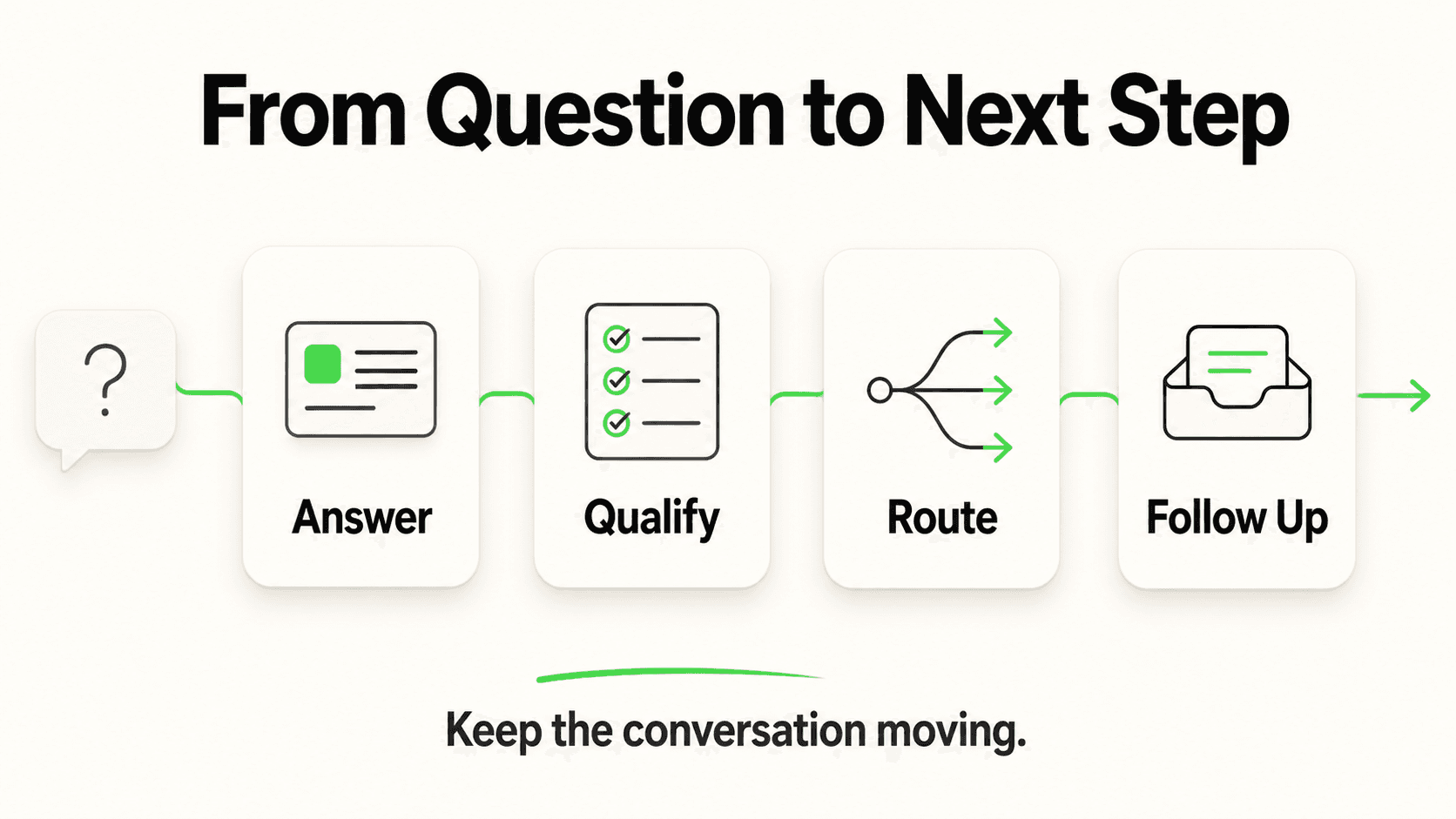
It depends on your support volume and lead value. Industry benchmarks suggest 30–50% of routine inquiries can be handled without human involvement, though specific savings vary by configuration and business. Use a per-business calculation rather than headline averages.
What is the realistic deflection rate?
For SMBs with a well-configured knowledge base, 40–70% deflection of routine FAQs is achievable. Anyone promising 90%+ across the board is overselling — that number requires both unusually narrow scope and aggressive escalation suppression.
Further Reading
Authoritative external sources used and recommended for further research on this topic:
- Gartner customer service research
- Forrester customer experience research
- Harvard Business Review on customer response speed
Straightforward Pricing, No Surprises
Hyperleap AI's flat-rate plans let you capture every lead and conversation without watching a per-message meter. Try it free for 7 days.
Start Free TrialRelated Articles

AI Receptionist Cost in 2026: What You Actually Pay
AI receptionist cost ranges from $20/month for automated voice AI to $300+/month for live-agent phone answering. Full breakdown by category.
ChatGPT Enterprise vs Custom AI Agent: 2026 Cost Breakdown
ChatGPT Enterprise starts around $60/user/month. A custom AI agent for the same business often costs less and does more. Here's the honest math.

AI Chatbot vs Receptionist: Cost Comparison for SMBs
Should your small business hire a receptionist or deploy an AI chatbot? A practical cost comparison covering salary, availability, scalability, and ROI.

How to Build a Business Case for AI Chatbots: ROI Framework
A practical ROI framework for SMBs evaluating AI chatbots — calculate costs, measure returns, and build a convincing business case.