AI Chatbot vs Receptionist: Cost Comparison for SMBs
Should your small business hire a receptionist or deploy an AI chatbot? A practical cost comparison covering salary, availability, scalability, and ROI.

TL;DR: A full-time receptionist costs $43,000-$52,000/year in total employment costs (US), while an AI chatbot platform runs $480-$2,400/year. But cost is only part of the equation. Receptionists excel at empathy and complex situations; chatbots excel at 24/7 availability, multi-channel reach, and scale. Most small businesses get the best ROI from a hybrid approach: AI handles the volume, your team handles the relationship.
This weighs the cost both ways; for what an AI receptionist actually does, see our AI receptionist guide.
For the support-side view of the same choice, see conversational AI for customer service.
You are in the middle of a consultation with a client. Your phone rings. You can not answer it. It goes to voicemail. The caller, who found you on Google and was ready to book, hangs up and calls the next business on the list. You never even know they existed.
This scenario plays out thousands of times a day across small businesses. The natural reaction is "I need to hire someone to answer phones." And that might be exactly right. But before you post that job listing, there is a comparison worth making, because the landscape has fundamentally shifted in the last two years.
AI chatbots are no longer clunky decision trees that frustrate customers. Modern AI chatbots, powered by large language models and grounded in your business documents, can hold natural conversations, answer detailed questions, capture leads, and route complex situations to your team. They work across multiple channels simultaneously: your website, WhatsApp, Instagram, and Facebook Messenger.
This is not a "replace humans" argument. It is a practical, numbers-driven comparison to help you decide what combination of human and AI gives your customers the best experience at a cost your business can sustain.
The Real Cost of Hiring a Receptionist
A full-time receptionist costs $44,000-$51,000 per year in total employment cost in the US, once payroll taxes, benefits, and training are added to the base salary — not the roughly $36,000 figure on the job posting. Most business owners budget only for the salary line, but the true cost of an employee goes well beyond the number on the offer letter. Understanding the full picture is essential before making this decision.
Base Salary
According to the U.S. Bureau of Labor Statistics (BLS, May 2024 data), the median annual wage for receptionists and information clerks is approximately $36,000. In higher-cost metro areas like New York, San Francisco, or Boston, that figure can reach $42,000-$48,000.
In the UK, receptionist salaries average around GBP 22,000-24,000 per year (Source: Reed.co.uk).
These are the numbers that appear on the job posting. They are not the numbers that appear on your books.
Benefits, Taxes, and Training
In the US, the actual cost of employing someone is typically 1.25-1.4 times their base salary. For a receptionist earning $36,000:
| Cost Category | Estimated Annual Cost |
|---|---|
| Base salary | $36,000 |
| Employer payroll taxes (FICA, FUTA, SUTA) | $2,750-$3,600 |
| Health insurance contribution | $3,000-$7,000 |
| Paid time off (10-15 days) | $1,400-$2,100 |
| Workers' compensation insurance | $200-$400 |
| Training and onboarding | $1,000-$2,000 |
| Total annual cost | $44,350-$51,100 |
Source: Bureau of Labor Statistics Employer Costs for Employee Compensation (ECEC) survey, which shows benefits averaging 29.4% of total compensation for civilian workers.
Total employment cost is the full amount an employer pays to keep a role staffed — base salary plus payroll taxes, benefits, paid time off, and training — and it is the number that actually shows up on your books, not the salary listed in the job posting. That $36,000 salary actually costs your business $44,000-$51,000. For many small businesses operating on thin margins, this is a significant commitment.
Coverage Gaps
Even a dedicated, excellent receptionist has structural limitations:
- Sick days and personal leave: Average of 8-10 days per year (Source: BLS)
- Vacation: 10-15 days per year for new employees
- Lunch breaks and breaks: 1-1.5 hours per day of unavailability
- Turnover: The median tenure for receptionists is approximately 2.5 years (Source: BLS), meaning you face recruiting and training costs regularly
- Single-tasking: A receptionist on a call can not simultaneously respond to a website inquiry, an Instagram DM, and a WhatsApp message
When your receptionist is out sick, on vacation, or at lunch, who answers the phone?
The After-Hours Gap
This is arguably the biggest hidden cost. A receptionist works 8 hours a day, typically 9 AM to 5 PM. But customer inquiries arrive 24 hours a day.
In Hyperleap AI's Jungle Lodges deployment, 35% of all inquiries arrived outside standard business hours. Those are not casual browsers. After-hours inquirers often have higher intent because they are researching during their own free time, evenings, and weekends.
If your receptionist works 8 hours out of 24, and a significant portion of inquiries arrive outside those hours, you are structurally unable to capture a large share of potential business. This is the cost you never see on a spreadsheet: the leads that never made it into your pipeline.
The Math on Missed After-Hours Leads
If your business receives 50 inquiries per week and 35% arrive after hours, that is 17-18 missed opportunities per week. Even if only 10% of those would have converted, that is nearly 2 lost customers per week, or roughly 90 per year. At an average transaction value of just $200, that is $18,000 in missed revenue annually, nearly half the cost of the receptionist you hired to capture leads.
The Real Cost of an AI Chatbot
An AI chatbot platform for a small business costs $480-$2,400 per year ($40-$200/month) in subscription fees, with no salary, payroll taxes, or benefits to add on top — though it is not free or magic. Let us break down the actual costs and limitations honestly.
Monthly Subscription Costs
AI chatbot platforms for small businesses typically range from $30-$200 per month, depending on the provider and plan tier. Some examples:
| Platform Category | Typical Monthly Cost | What You Get |
|---|---|---|
| Basic chatbot builders | $30-$60/month | Simple Q&A, limited conversations |
| Mid-tier AI platforms | $60-$120/month | Document-grounded responses, multi-channel, lead capture |
| Full-featured platforms | $120-$200/month | Advanced AI, multiple chatbots, white-label, higher volume |
Hyperleap AI, for example, offers plans from $40/month (Plus) to $200/month (Max), with features scaling across tiers. A 7-day free trial is available on all plans, though a credit card is required.
On an annual basis, you are looking at $480-$2,400 per year for an AI chatbot versus $44,000-$51,000 for a receptionist. The cost differential is significant, typically 20-90x less expensive.
Setup and Knowledge Base Creation
The subscription cost is not the whole story. You need to invest time to set up the chatbot properly:
- Knowledge base creation: 4-10 hours to compile your FAQs, service descriptions, pricing information, and policies into documents the AI can reference
- Testing and refinement: 2-5 hours reviewing conversations and adjusting responses in the first few weeks
- Channel setup: 1-3 hours per channel (website widget, WhatsApp Business, Instagram, Facebook Messenger)
This is your time, not an ongoing expense. Most small business owners report spending about a weekend getting their chatbot to a solid baseline. Some platforms also offer managed setup services if you prefer someone else to handle it.
Ongoing Maintenance
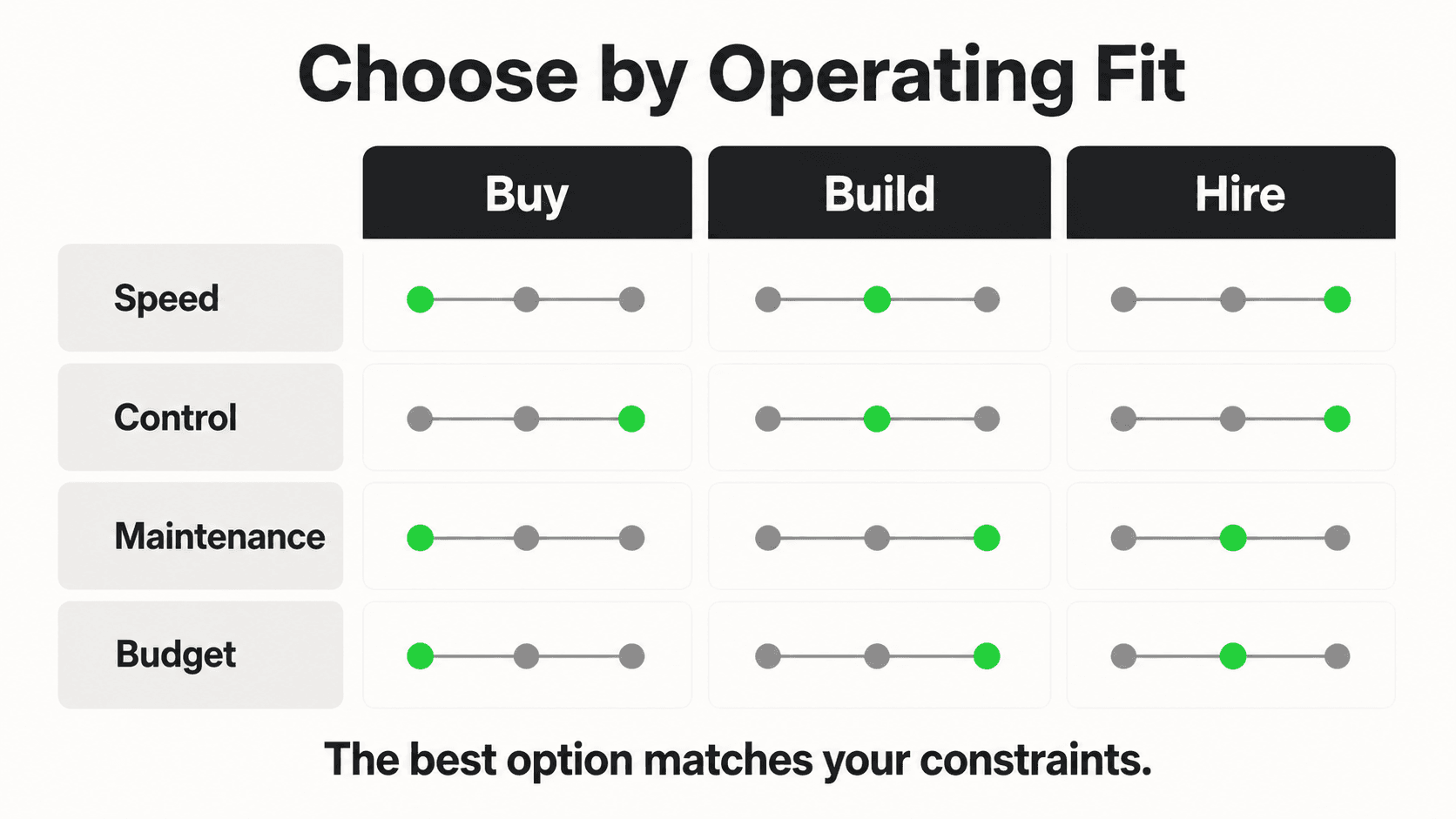
An AI chatbot is not "set it and forget it." You should plan to spend:
- 1-2 hours per week in the first month reviewing conversations and refining the knowledge base
- 30 minutes to 1 hour per week after the first month for maintenance
- Periodic updates when your services, pricing, or policies change
This is significantly less time than managing an employee, but it is not zero.
What a Chatbot Cannot Do
Honesty builds trust, so here is what AI chatbots genuinely cannot do as well as a human receptionist:
- Handle emotionally charged situations: A frustrated or upset customer often needs a human voice and genuine empathy
- Navigate complex, multi-step negotiations: Custom service packages, unusual requests, and exception handling benefit from human judgment
- Perform physical tasks: A receptionist can greet walk-in visitors, accept deliveries, manage the waiting area, and handle paperwork
- Read body language and social cues: In-person interactions require human perception
- Make judgment calls about urgency: While AI can follow rules, a human receptionist can sense when something needs immediate escalation based on subtle cues
If your business depends heavily on in-person front-desk presence, a chatbot is not a substitute for that physical role. It is a supplement.
See How AI Handles Your Customer Inquiries
Hyperleap AI responds to customer questions instantly across website, WhatsApp, Instagram, and Messenger, even at 2 AM.
Start Your Free Trial7 Dimensions Where AI Chatbots and Receptionists Compare
The cost difference is clear. But cost alone does not determine the right choice. Here are seven dimensions that matter for small businesses weighing an AI chatbot vs. a receptionist.
1. Availability: 24/7/365 vs. Business Hours
What this looks like in practice: A potential customer searches for a dentist at 9 PM after a toothache starts. They find your website and have questions about emergency appointments and insurance. With a receptionist, they get voicemail. With an AI chatbot, they get instant answers and can book a consultation.
Real-world impact: In Hyperleap AI's deployment with Jungle Lodges, 35% of inquiries arrived after standard business hours. These were not low-quality leads. After-hours inquirers were actively researching and often ready to make decisions. Businesses that can respond instantly to these inquiries capture leads that competitors miss.
The verdict: If more than 20% of your inquiries arrive outside business hours, an AI chatbot addresses a structural gap that no single receptionist can fill without overtime costs. A receptionist would need to work three shifts to match 24/7 availability, tripling your employment cost.
2. Scalability: Hundreds of Conversations vs. One at a Time
What this looks like in practice: Your dental practice runs a promotion. Suddenly, 30 people are trying to reach you at the same time. Your receptionist can handle one phone call and maybe one in-person visitor simultaneously. The other 28 get a busy signal or hold music.
Real-world impact: AI chatbots handle virtually unlimited simultaneous conversations. There is no hold time, no busy signal, and no "all representatives are currently assisting other customers" message. During peak periods, promotions, or seasonal rushes, this scalability is the difference between capturing demand and losing it.
The verdict: If your inquiry volume fluctuates significantly (seasonal businesses, practices running promotions, businesses with viral social media moments), an AI chatbot scales instantly while a receptionist creates a bottleneck.
3. Consistency: Same Quality Every Time vs. Human Variability
What this looks like in practice: A customer asks about your return policy. With a well-configured AI chatbot, they get the exact, correct answer every time, pulled directly from your documented policies. With a receptionist, the answer might vary depending on the person, the day, their mood, or how well they remember the latest policy update.
Real-world impact: Consistency matters most for businesses with complex service menus, detailed pricing, or regulatory requirements. A dental practice needs accurate insurance information every time. An insurance agency needs correct coverage details without exceptions. Document-grounded AI chatbots draw answers directly from your uploaded materials, reducing the risk of misinformation.
The verdict: For factual, policy-based, and detail-heavy inquiries, an AI chatbot grounded in your documents delivers more consistent answers. For nuanced situations requiring judgment, a human still wins.
4. Multi-Channel Reach: Four Channels Simultaneously vs. Phone and In-Person
What this looks like in practice: Your customers are on WhatsApp, Instagram, your website, and Facebook Messenger. A receptionist can answer the phone and greet walk-ins. An AI chatbot can be present on all four digital channels simultaneously, meeting customers where they already spend their time.
Real-world impact: According to Meta (2024), WhatsApp has over 2 billion monthly active users globally. Instagram has over 2 billion. For many small businesses, especially those targeting younger demographics, phone calls are no longer the primary way customers want to communicate. A multi-channel strategy ensures you are reachable wherever your customers prefer to interact.
The verdict: If your customers communicate across multiple digital channels, an AI chatbot provides presence that a receptionist physically can not match. This is especially relevant for businesses targeting customers under 40, who increasingly prefer messaging over phone calls.
5. Speed: Instant Response vs. Hold Times and Callbacks
What this looks like in practice: A customer sends a WhatsApp message asking about your availability this Saturday. An AI chatbot responds in under 5 seconds. A receptionist might respond in 1-5 minutes if available, or hours later if they were on another call or away from the desk.
Real-world impact: Lead response research published in Harvard Business Review (based on InsideSales.com data) found that leads contacted within 5 minutes are 100 times more likely to convert than those contacted after 30 minutes. Speed is not a nice-to-have; it is the single largest factor in whether an inquiry becomes a customer. Every minute of delay costs your business real revenue.
The verdict: For first-touch response speed, AI chatbots are unmatched. They respond in seconds, every time, regardless of current call volume or time of day.
6. Empathy and Complex Situations: Humans Win Here
What this looks like in practice: A patient calls your clinic in distress about a diagnosis. A family contacts your senior living facility worried about their parent's care. A homeowner calls your plumbing business with a burst pipe and rising water.
These situations require genuine empathy, reassurance, and the ability to make judgment calls about urgency and escalation. A human receptionist can hear the panic in someone's voice, adjust their tone, and make someone feel heard in a way that AI simply can not replicate.
Real-world impact: According to PwC's Future of Customer Experience report (2024), 75% of consumers say they want more human interaction in customer service, not less. The desire for human connection is real and especially acute in high-emotion, high-stakes situations.
The verdict: For emotionally charged, complex, or sensitive situations, a human receptionist provides value that no AI chatbot can match today. This is not a limitation that will disappear with better technology. Genuine human empathy is qualitatively different from an AI's best approximation.
The Smart Approach
The best configuration for most businesses: AI chatbot handles the initial contact, answers routine questions, and captures lead information 24/7. When a conversation becomes complex or emotional, the chatbot routes it to a human team member with full context. AI handles the volume; your team handles the relationship.
7. Cost Per Interaction: The Math
Cost per interaction is your total annual cost for a channel divided by the number of customer interactions it handles in a year — it puts a receptionist's fixed salary and a chatbot's flat subscription fee on the same footing so you can compare them directly.
What this looks like in practice: Let us calculate the actual cost per customer interaction for each approach.
Receptionist cost per interaction:
- Annual cost: ~$47,000 (midpoint of our earlier range)
- Working days: ~250 per year
- Interactions per day: ~40-60 (phone calls, walk-ins, messages)
- Annual interactions: ~10,000-15,000
- Cost per interaction: $3.13-$4.70
AI chatbot cost per interaction:
- Annual cost: ~$1,200 (midpoint of $480-$2,400 range)
- Interactions per year: Virtually unlimited, but let us use the same 10,000-15,000
- Cost per interaction: $0.08-$0.12
That is a 25-50x cost difference per interaction. The gap widens dramatically as volume increases, because the chatbot cost stays flat while a receptionist's capacity is capped.
The verdict: On pure cost-per-interaction math, AI chatbots are dramatically more efficient. But remember, not every interaction is equal. A $4 human interaction that saves a $10,000 client relationship is infinitely better than a $0.10 automated interaction that loses one.
When to Use Both: The Hybrid Approach
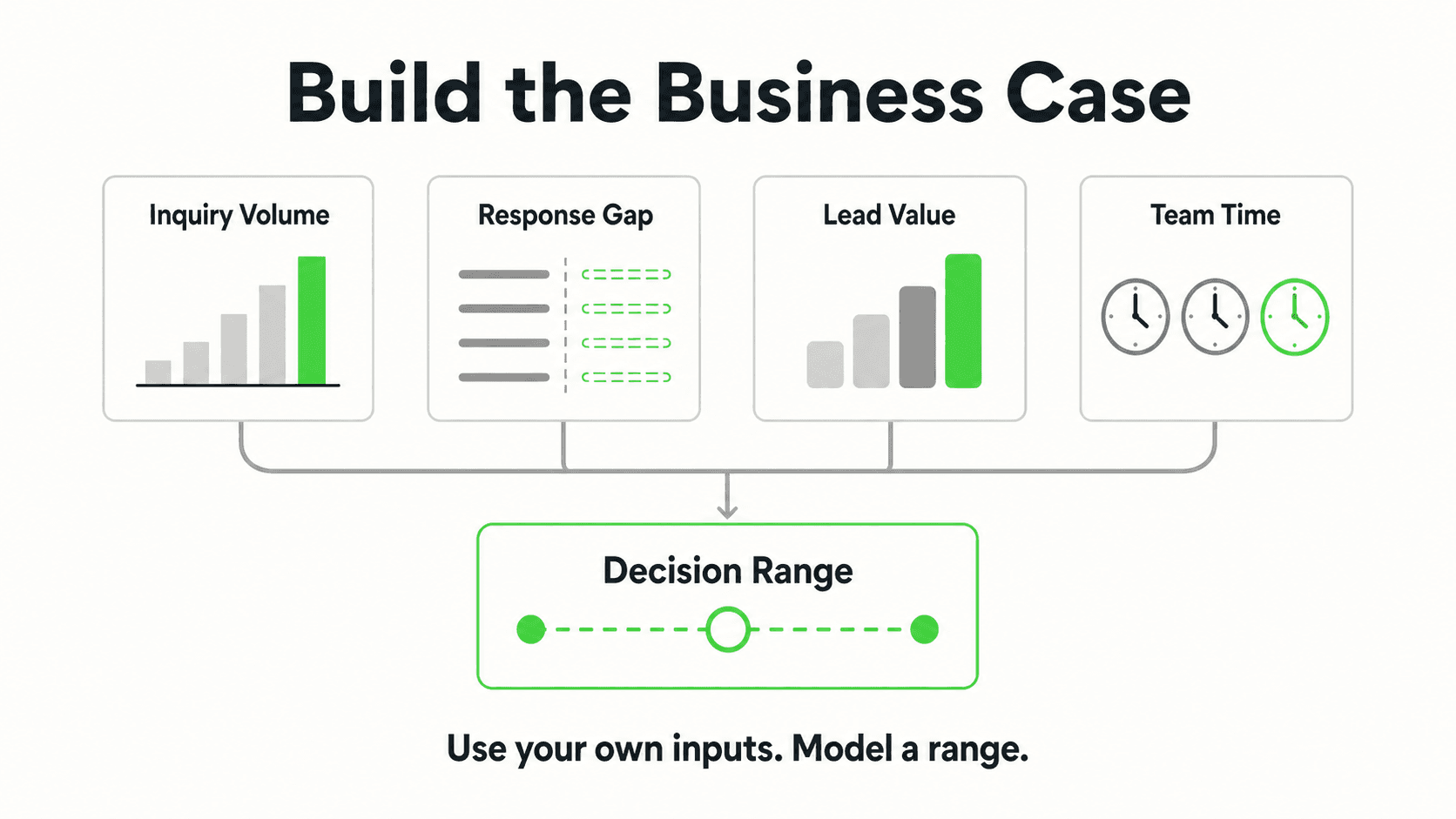
The best results for most small businesses come from combining an AI chatbot with a human receptionist rather than choosing one exclusively.
Here is why. AI chatbots and human receptionists are not interchangeable. They are complementary. Each excels in areas where the other is weakest.
The Hybrid Model in Practice
AI chatbot handles:
- All after-hours inquiries (the 35% you are currently missing)
- Routine questions (hours, pricing, services, location, policies)
- Initial lead qualification (collecting name, contact info, reason for inquiry)
- Multi-channel presence (WhatsApp, Instagram, website, Facebook Messenger)
- Simultaneous conversations during peak periods
- Consistent, document-grounded answers to common questions
Your team handles:
- Complex consultations and custom requests
- Emotionally sensitive situations
- High-value client relationships
- In-person greetings and physical front-desk tasks
- Exception handling and judgment calls
- Situations the chatbot flags for human review
What This Looks Like Financially
For a small business currently paying $47,000/year for a full-time receptionist:
Option A: Receptionist only — $47,000/year, 8-hour coverage, single-channel Option B: AI chatbot only — $1,200/year, 24/7 coverage, multi-channel, but no physical presence or human empathy Option C: Hybrid (part-time receptionist + AI chatbot) — $25,000-$30,000/year (part-time receptionist) + $1,200/year (chatbot) = $26,200-$31,200/year for 24/7 multi-channel coverage with human availability during business hours
The hybrid approach often costs less than a full-time receptionist alone while delivering dramatically better coverage.
Start with AI, Add Humans Where Needed
If you do not have a receptionist yet, start with an AI chatbot. Monitor conversations for patterns where human intervention would have been better. Then hire specifically for those gaps, whether that is a part-time front-desk person, a customer service specialist for complex cases, or a sales closer for qualified leads.
Making the Decision: A Framework for Your Business
Every business is different. Here is a practical framework to help you decide which approach fits your specific situation.
Factor 1: Inquiry Volume
- Under 20 inquiries per week: An AI chatbot alone may be sufficient. The volume does not justify a full-time salary.
- 20-100 inquiries per week: Hybrid approach delivers the best ROI. AI handles volume; a part-time or existing team member handles complex cases.
- Over 100 inquiries per week: You likely need both a dedicated person and AI to avoid bottlenecks and missed leads.
Factor 2: After-Hours Percentage
Check your phone logs, email timestamps, and website analytics. What percentage of inquiries arrive outside business hours?
- Under 15% after-hours: A receptionist during business hours covers most of your demand.
- 15-30% after-hours: An AI chatbot for after-hours coverage pays for itself quickly.
- Over 30% after-hours: An AI chatbot is not optional. You are losing significant business every night and weekend.
Factor 3: Question Complexity
- Mostly routine (hours, pricing, availability, services): AI chatbot handles this with high accuracy when grounded in your documents.
- Mixed routine and complex: Hybrid approach with AI handling first touch and routing complex questions to your team.
- Mostly complex (legal consultations, medical concerns, financial planning): Human-first with AI as a backup for after-hours lead capture and basic FAQ.
Factor 4: Physical Presence Requirements
- Walk-in business (retail, salon, dental office): You need a human presence. An AI chatbot supplements but does not replace the front desk.
- Appointment-only (consulting, professional services): Physical reception is less critical. AI chatbot can handle scheduling and qualification.
- Fully digital (e-commerce, online services): An AI chatbot is likely your primary customer touchpoint. A receptionist adds limited value.
Factor 5: Growth Plans
If you are planning to scale, consider which approach grows with you. Adding a second receptionist doubles your cost. An AI chatbot handles 10x the volume on the same subscription.
Decision Matrix
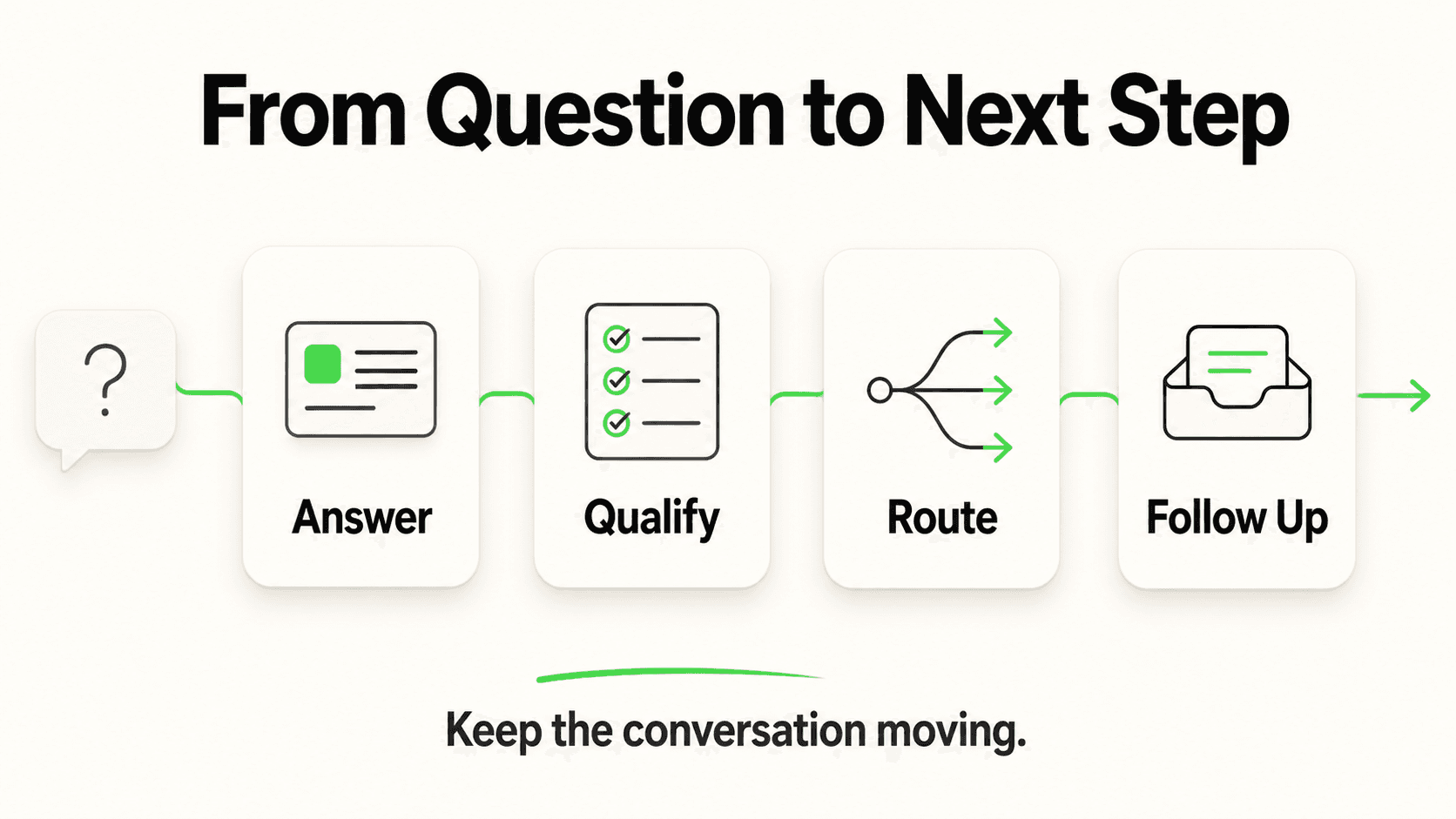
| Your Situation | Recommended Approach |
|---|---|
| Solo practitioner, low volume, digital-first | AI chatbot only |
| Small team, moderate volume, some walk-ins | Hybrid: AI chatbot + part-time front desk |
| Growing business, high volume, significant walk-in traffic | Hybrid: AI chatbot + full-time receptionist |
| Enterprise with dedicated support team | AI chatbot for first touch + human team for escalation |
For most small businesses, the question is not "AI chatbot or receptionist." It is "how do I combine them to cover all my gaps without breaking the budget?"
The Right Combination for Your Business
The AI chatbot vs. receptionist decision is not really an either/or question. It is a resource allocation question: where do you get the most value from human attention, and where does technology deliver a better outcome at lower cost?
The data is clear on a few points. AI chatbots are dramatically cheaper per interaction. They provide 24/7 availability that no single employee can match. They scale instantly during peak demand. And they meet customers on the digital channels where they increasingly prefer to communicate.
But humans bring irreplaceable qualities to customer interactions: empathy, judgment, creativity, and the ability to make someone feel genuinely valued. For complex situations, high-value relationships, and emotionally charged moments, a skilled human is worth every dollar of their salary.
The businesses that win are the ones that stop thinking about this as a binary choice and start thinking about it as an optimization problem. Deploy AI where it is strongest: volume, speed, availability, and consistency. Deploy humans where they are strongest: empathy, complexity, and relationship building.
That combination, AI handling the volume while your team handles the relationship, is how small businesses compete with enterprises that have entire call centers. It is how a three-person dental practice provides the same responsiveness as a national chain. It is how a solo insurance agent covers the same hours as an agency with a night shift.
The question is not whether to use AI. The question is how quickly you can stop missing the leads that are already looking for you.
Further Reading
Authoritative external sources used and recommended for further research on this topic:
- Gartner customer service research
- Forrester customer experience research
- Harvard Business Review on customer response speed
Frequently Asked Questions
Will an AI chatbot replace my receptionist?
For most small businesses, no. An AI chatbot is best understood as a tool that handles the tasks a receptionist can not do efficiently: after-hours coverage, simultaneous multi-channel conversations, and instant response to routine questions. The ideal setup uses AI to handle volume so your human team can focus on relationship-building and complex situations. Think of it as adding capacity, not replacing people.
Can I use both a chatbot and a receptionist?
Yes, and this is what most businesses find works best. The hybrid approach uses the AI chatbot as the first point of contact across all digital channels, 24/7. During business hours, the chatbot handles routine inquiries while the receptionist focuses on in-person visitors, phone calls, and escalated conversations. After hours, the chatbot captures leads that would otherwise be lost. Many platforms, including Hyperleap AI, support seamless handoff from AI to human agents.
How long does it take to set up an AI chatbot?
Most small businesses can have a functional AI chatbot running within a few hours to a weekend. The main time investment is creating your knowledge base: compiling your FAQs, service descriptions, and policies into documents the AI can reference. The technical setup for deploying the chatbot on your website or WhatsApp is typically straightforward, often requiring just a code snippet or a business account connection.
What if customers prefer talking to a human?
Many customers do prefer human interaction, especially for complex or sensitive matters. A well-designed AI chatbot system accounts for this by offering clear pathways to reach a human agent. The chatbot can qualify the inquiry and route it appropriately: routine questions get instant AI answers, while complex or emotional situations are escalated to your team with full conversation context. According to PwC (2024), customer satisfaction is highest when they can easily reach a human when they want one, and get fast automated answers for simple questions.
Is an AI chatbot worth it for a very small business with 1-5 employees?
Often, yes, and arguably more so than for larger businesses. Very small businesses are the most likely to miss inquiries because everyone is busy serving existing customers. At $40-$200/month, an AI chatbot costs less than any part-time hire and ensures you never miss an after-hours lead. If your business gets even 10-15 inquiries per week and you are currently missing some of them, the chatbot likely pays for itself within the first month. The ROI framework for small businesses is straightforward: count your missed inquiries, estimate their value, and compare that to the subscription cost.
What happens when the chatbot cannot answer a question?
Good AI chatbot platforms are designed to handle this gracefully. When a question falls outside the knowledge base, the chatbot should acknowledge its limitation and offer to connect the visitor with a human team member. It captures the visitor's contact information and the question, then notifies your team so they can follow up. The key is that even a "I do not have that answer, but let me connect you with someone who does" response, delivered instantly at 11 PM, is far better than a voicemail that might not get returned until the next afternoon. No AI system is perfect, but a well-configured one knows when to escalate rather than guessing.
Never Miss Another Customer Inquiry
Hyperleap AI answers customer questions instantly on your website, WhatsApp, Instagram, and Messenger, 24/7. Your team handles the conversations that matter most.
Start Your Free TrialIndustry Solutions
See how AI chatbots work for these industries:
Related Articles
AI Receptionist Cost in 2026: What You Actually Pay
AI receptionist cost ranges from $20/month for automated voice AI to $300+/month for live-agent phone answering. Full breakdown by category.
How to Build a Business Case for AI Chatbots: ROI Framework
A practical ROI framework for SMBs evaluating AI chatbots — calculate costs, measure returns, and build a convincing business case.
What Missed Calls Really Cost Your Small Business
A worked example of what missed calls cost small businesses in lost jobs, plus where inquiries actually arrive now and what to do about it.
AI Chatbot Pricing Models Compared: Per-Message vs Flat-Rate
Per-message, per-resolution, and flat-rate pricing all have different cost profiles. Here's exactly how each model works and what to watch for before signing.