The Real Cost of Missed Patient Calls for Small Clinics
Small clinics miss 30-40% of peak-hour calls. Each one is a patient worth $1,500-$50,000 in LTV going to the practice next door.
TL;DR: Small clinics with 1-2 receptionists miss up to 23% of incoming patient calls, with solo practices losing over 30% during peak hours. Each missed call represents a patient worth $3,000-$50,000 in lifetime value. With 85% of callers refusing to call back after one failed attempt, every unanswered ring is revenue walking out the door. An AI receptionist can capture these calls 24/7 and typically pays for itself within 30 days.
The Real Cost of Missed Patient Calls for Small Clinics
Your receptionist is checking in a patient, verifying insurance, answering a question about a billing statement, and the phone is ringing for the fourth time in ten minutes. She can't answer. The caller hangs up. That caller was a new patient worth $10,000 in lifetime revenue.
This scenario plays out thousands of times daily across small medical practices. Research from Keona Health shows that 23% of calls to medical practices go unanswered — sent to voicemail, abandoned during hold, or disconnected (Source: Keona Health, 2024). For solo practices, that number climbs above 30%. And here is the part that should concern every practice owner: 85% of patients who can't reach you on the first attempt will not call back (Source: AgentZap, 2025). They will call the practice next door.
The missed call problem is not a minor inconvenience. It is a revenue crisis hiding in plain sight. This article breaks down exactly what those missed calls cost your practice and what you can do about it.
Who This Guide Is For
This guide is written for owners and office managers of small medical practices — clinics with 1-5 providers and 1-3 front desk staff. If your practice relies on phone-based scheduling and you suspect you are losing patients to missed calls, this article will help you quantify the problem and find a solution.
What Missed Calls Really Mean for Small Clinics
A missed call in a small clinic is not the same as a missed call at a large hospital system. Large organizations have dedicated call centers with dozens of agents. Small clinics have one or two people handling everything — scheduling, check-ins, insurance verification, prescription refill requests, referral coordination, and patient questions — all while answering the phone.
The math is unforgiving. A medical practice receives an average of 53 phone calls per physician per day (Source: AgentZap, 2025). A solo practitioner with one receptionist is asking a single person to handle 50+ calls alongside every other front desk responsibility. During peak hours — typically 8-9 AM and 3-5 PM — 38% of daily call volume arrives in concentrated bursts (Source: Dialog Health, 2025). That is roughly 20 calls in two hours for a single-physician practice.
When your receptionist is face-to-face with a patient at the counter, the phone becomes secondary. When she steps away for lunch, the phone goes entirely to voicemail. When she is on a call with an insurance company that takes 15 minutes, three or four other calls go unanswered. Each of those callers has a decision to make: leave a voicemail and hope for a callback, or search for another provider who answers immediately.
Most choose the second option.
Why Small Clinics Lose Patients to Missed Calls
Peak Hour Overflow
The busiest calling periods for medical practices are Monday mornings and the first and last hours of the business day (Source: Dialog Health, 2025). Patients who experience symptoms over the weekend call first thing Monday. Patients who want to schedule before work call at 8 AM. Patients who remember to call after their own workday ends try at 4:30 PM.
During these windows, a small practice can receive double or triple its average hourly call volume. With one receptionist, the hold times grow. Research shows that 34% of patients will hang up after just 2 minutes on hold, and 67% will hang up after 5 minutes (Source: Dialog Health, 2025). In a practice that averages 6-7 calls per hour normally, a peak hour with 15 calls creates a backlog that is mathematically impossible for one person to manage.
Lunch Break and Coverage Gaps
For practices with a single receptionist, the lunch hour creates a complete communication blackout. While overall call volume dips during 12-1 PM, it does not stop entirely. Patients who work 9-5 jobs often use their own lunch break to make medical calls. When they reach a voicemail, most will not leave a message and will not try again.
Vacation days, sick days, and training sessions create similar gaps. A small clinic that loses its single receptionist to illness has no phone coverage at all unless the providers themselves answer — taking them away from patient care.
After-Hours Calls
Studies show that 30-40% of patient calls occur outside traditional business hours (Source: ACC Solutions, 2024). This includes early morning, evenings, and weekends. For a practice receiving 50 calls per day during business hours, that suggests another 25-35 call attempts happening when nobody is there to answer.
These are not all emergencies. Many are patients wanting to schedule appointments, ask about test results, or get directions. They represent real demand that goes entirely unmet.
The Voicemail Problem
Here is the statistic that makes missed calls exponentially worse: 80% of patients who reach voicemail will not leave a message (Source: Staffingly/Medium, 2025). Patients do not want to speak into a recording with no real-time feedback. They do not trust that anyone will listen to the message promptly. They want help now, not a callback tomorrow.
This means that for every 10 calls your practice misses, only 2 patients will leave a voicemail. The other 8 are invisible lost opportunities — you will never know they called, and they will never call back.
7 Ways Missed Calls Cost Your Practice
1. Lost New Patient Acquisition
What this looks like in practice: A prospective patient searches "dermatologist near me," finds your practice on Google, and calls to schedule. Your receptionist is processing a checkout. The call goes to voicemail. The patient hangs up, returns to Google, and calls the next practice on the list. They get an answer. They schedule. You never know they existed.
Real-world impact: New patient calls are disproportionately valuable because they represent the beginning of a long-term relationship. According to data from First Page Sage, the average patient acquisition cost across healthcare runs $53-$286 per lead depending on channel (Source: First Page Sage, 2026). When a lead that cost you hundreds of marketing dollars calls and gets no answer, that acquisition cost is entirely wasted.
Why it works against you: New patients have zero loyalty to your practice. They have not met you. They have not experienced your care. The phone call is their first impression, and a voicemail greeting is not the impression you want. Existing patients may try again because they have a relationship. New patients will simply move on.
Key takeaway:
- New patients are the lifeblood of practice growth
- They have the lowest switching cost — zero relationship to keep them loyal
- Every missed new patient call wastes the marketing dollars that generated it
2. Lost Revenue Per Specialty
What this looks like in practice: The financial impact of each missed call varies dramatically by specialty. A missed call from a prospective dental patient represents roughly $10,000 in lifetime value. A missed call from a prospective orthopedic surgery patient could represent $25,000-$50,000 depending on the procedures involved.
Real-world impact: The average patient lifetime value in primary care is approximately $3,000 (Source: Vital Interaction, 2024). For dental practices, estimates range from $6,000 to $10,000 per patient (Source: Tooth & Coin, 2024). Specialty practices see even higher numbers — an orthopedic patient averages $627 per visit with multiple visits over their care relationship, while dermatology patients who combine annual exams with procedures can generate substantial ongoing revenue (Source: Nextech, 2024).
Why it matters: When you miss a call, you are not losing a single appointment fee. You are losing years of visits, procedures, referrals, and family members who might have followed. A $200 missed appointment fee is the tip of the iceberg.
Key takeaway:
- Primary care patient lifetime value: approximately $3,000
- Dental patient lifetime value: $6,000-$10,000
- Specialty patients can exceed $25,000-$50,000 in lifetime value
- Each missed call represents the full lifetime value, not just one visit
3. Staff Burnout and Turnover
What this looks like in practice: Your receptionist arrives at 7:45 AM and the calls start at 8:00. By 9:30, she is behind on check-ins, has a stack of messages to return, and the phone keeps ringing. She feels overwhelmed, underappreciated, and responsible for a system that sets her up to fail.
Real-world impact: The burnout rate among non-clinical healthcare staff is 45.6% (Source: PMC/National Library of Medicine, 2023). Front-office support roles have a median turnover rate of 20% — significantly higher than other healthcare positions (Source: WellReceived, 2025). Replacing a front desk employee costs approximately 50-75% of their annual salary when you factor in recruiting, training, and lost productivity.
Why it works against you: Burned-out staff answer fewer calls, provide less friendly service, and make more scheduling errors. High turnover means you are constantly training new staff who are even less efficient during their learning curve. It creates a vicious cycle: understaffing leads to missed calls, which leads to frustrated staff, which leads to turnover, which leads to more understaffing.
Key takeaway:
- Nearly half of non-clinical healthcare staff experience burnout
- Front desk turnover rate is 20%, higher than most healthcare roles
- Replacing one receptionist costs 50-75% of their annual salary
- Burnout leads to worse service, which leads to more missed calls
4. Patient Dissatisfaction and Retention Loss
What this looks like in practice: Mrs. Johnson has been a patient for three years. She calls to reschedule a follow-up appointment. She gets a busy signal, then voicemail. She tries again an hour later. Same thing. By the third attempt, she is frustrated and considering whether this practice values her time at all.
Real-world impact: Research shows that 69% of healthcare consumers are likely to switch providers if communication standards fail to meet expectations — up from 51% in 2023 (Source: Smart Communications, 2025). Poor communication is the leading reason patients switch providers, cited by 32% of patients who leave a practice (Source: Smart Communications, 2025). It costs healthcare practices 6-7 times more to attract a new patient than to retain an existing one (Source: Vital Interaction, 2024).
Why it works against you: Every patient who cannot reach you by phone has a small but real probability of leaving your practice entirely. Over a year, if you miss calls from even 5% of your patient base and lose 1% of them as a result, the cumulative revenue impact is significant for a small practice.
Key takeaway:
- 69% of patients will switch providers over poor communication
- Poor communication is the number one reason for patient churn
- Retaining patients is 6-7x cheaper than acquiring new ones
- Phone accessibility is a core part of the patient experience
5. Wasted Marketing Spend
What this looks like in practice: Your practice invests $3,000 per month in Google Ads and SEO. These efforts successfully drive 40 new patient calls per month. Your front desk misses 30% of them during peak hours. That means 12 leads per month — leads you paid $75-$250 each to generate — hear a voicemail and hang up.
Real-world impact: Healthcare practices spend an average of 6-10% of total revenue on marketing (Source: WebFX, 2026). When calls generated by that marketing go unanswered, the return on investment collapses. If your practice spends $36,000 annually on marketing and misses 30% of the calls it generates, approximately $10,800 in marketing spend is wasted every year — not counting the lost lifetime revenue from those patients.
Why it works against you: Marketing creates demand. But demand that arrives as a phone call and goes unanswered is worse than demand that never existed, because you paid for it. This is money you have already spent, and you cannot get it back. The most efficient way to improve your marketing ROI is not to spend more on ads — it is to answer the calls those ads generate.
Key takeaway:
- If you miss 30% of marketing-generated calls, 30% of your marketing budget is wasted
- Average healthcare marketing spend: 6-10% of revenue
- Improving call answer rates is the highest-ROI fix for most practices
- You are paying to generate calls you cannot handle
Stop Losing Patients to Missed Calls
See how Hyperleap AI helps small clinics capture every patient inquiry 24/7 — no hold times, no voicemail, no missed opportunities.
Explore Healthcare AI6. Competitive Disadvantage
What this looks like in practice: A dental practice across town invested in a system that answers every call instantly, schedules appointments around the clock, and responds to after-hours inquiries within seconds. Your practice still relies on a single receptionist and a voicemail box. When the same patient calls both practices, the one that answers wins.
Real-world impact: Practices that implement AI-powered communication tools or dedicated answering services report capturing calls that competitors miss. With 89% of patients expecting the ability to schedule appointments at any time (Source: Experian Health, 2025), the practices that offer instant responsiveness have a structural advantage over those that do not. This gap compounds over time as patients and referral sources gravitate toward practices that are easier to reach.
Why it works against you: In most local markets, patients have 5-10 choices for any given specialty. If your competitors answer and you do not, the patient does not wait for you. They are not loyal to a practice they have never visited. They are choosing based on who picks up the phone. Over months and years, this competitive disadvantage compounds. The practice that answers more calls grows. The one that misses calls stagnates.
Key takeaway:
- Patients typically have 5-10 provider choices in a local market
- 89% of patients expect anytime scheduling capability
- The practice that answers first gets the patient
- This disadvantage compounds over time as competitors grow
7. Reputation Impact from No-Answer Experiences
What this looks like in practice: A patient who cannot reach your office by phone does not just move on silently. Some leave negative Google reviews mentioning long hold times or inability to reach the office. Others tell friends and family about their frustrating experience. In a field where reputation drives referrals, this is damaging. A calm, specific public reply limits the damage; the free review response generator drafts one without confirming private patient details.
Real-world impact: 73% of patients consider online reviews when selecting a healthcare provider, and 84% trust those reviews as much as personal recommendations (Source: Repugen, 2025). A single negative review about phone accessibility can influence dozens of prospective patients. Research shows it takes approximately 40 positive reviews to offset the impact of one negative review (Source: Repugen, 2025). And with 40% of patients avoiding practices with too many negative reviews, the reputation damage from poor phone responsiveness can cost a practice up to 30% of its potential business.
Why it works against you: Slow response times cost businesses in every industry, but healthcare is uniquely vulnerable because patients are often anxious, in pain, or worried. When they cannot reach their doctor's office, their frustration is amplified. A negative review that says "I could never reach anyone by phone" is particularly damaging because it signals a systemic problem, not a one-time mistake.
Key takeaway:
- 73% of patients check online reviews before choosing a provider
- One negative review requires roughly 40 positive reviews to offset
- Phone accessibility complaints signal systemic practice problems
- Reputation damage from missed calls reduces future patient acquisition
Real Results: What Practices Are Achieving
Revenue Recovery
Practices that address their missed call problem report significant revenue improvements:
- Capturing previously missed calls can recover $125-$200 per call in immediate appointment value (Source: AgentZap, 2025)
- A practice missing 25 calls daily stands to recover $3,125-$5,000 in daily revenue — up to $1.3 million annually (Source: AgentZap, 2025)
- Automated appointment reminders reduce no-shows by up to 35%, recovering additional revenue from scheduled patients who actually show up (Source: DemandSage, 2025)
Operational Efficiency
Practices implementing AI-powered communication tools report:
- 30% reduction in administrative staff time spent on phone calls (Source: DemandSage, 2025)
- Significant decrease in front desk burnout and turnover
- Better patient flow with fewer scheduling errors
- More time for staff to focus on in-person patient care
Patient Satisfaction
When patients can reach your practice consistently:
- 84% of patients identify communication quality as crucial to their provider experience (Source: Smart Communications, 2025)
- Practices with faster response times see measurable improvements in Google review ratings
- Patient retention improves when communication barriers are removed
- Referral rates increase as satisfied patients recommend the practice
Key Insight
The return on investment for solving the missed call problem is not incremental — it is transformational. A practice that goes from answering 70% of calls to answering 95%+ is not just capturing 25% more calls. It is recovering hundreds of thousands of dollars in lifetime patient value annually.
Implementation Roadmap for Small Clinics
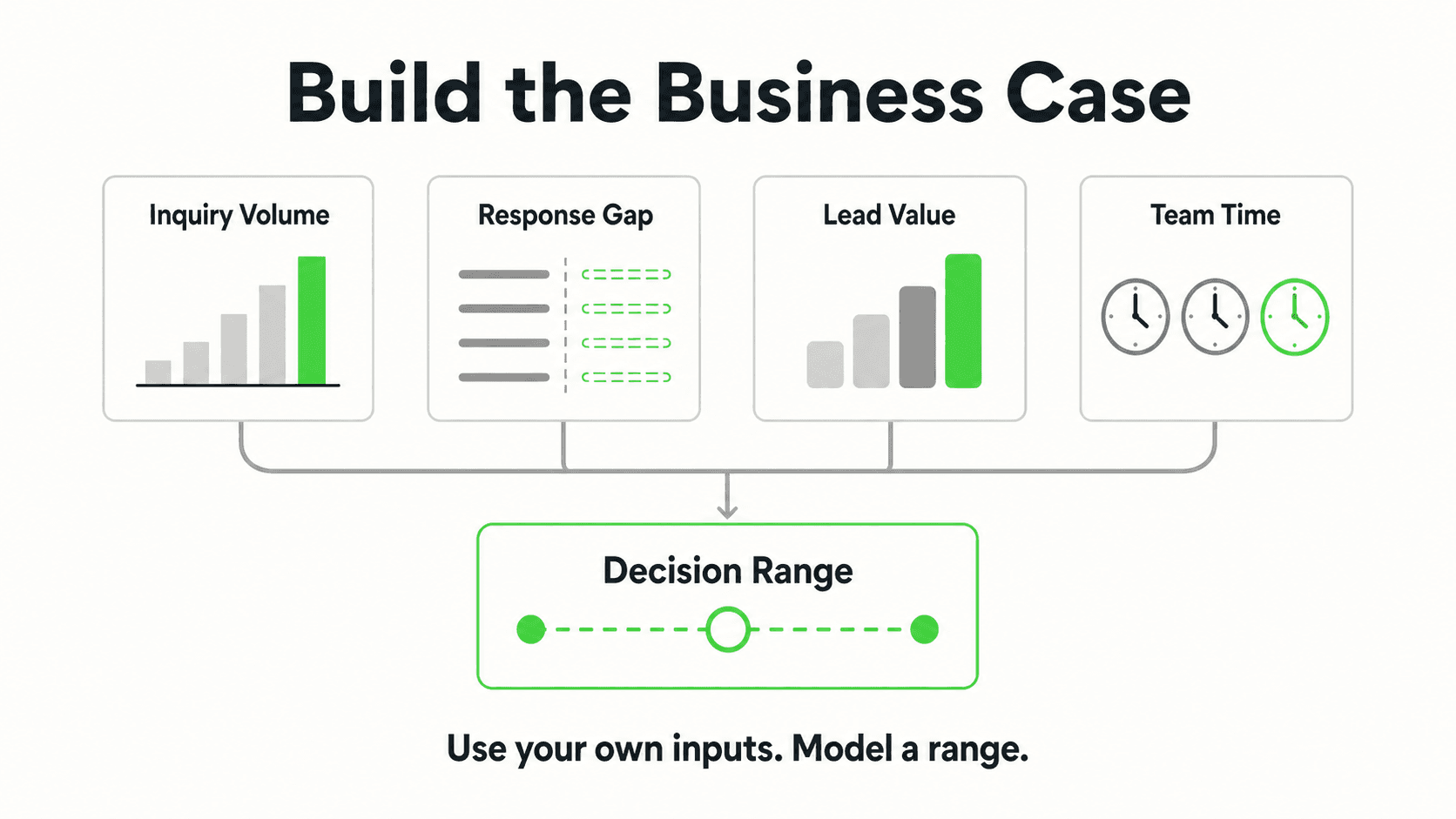
Solving the missed call problem does not require hiring additional staff or overhauling your entire practice. Here is a phased approach that delivers results quickly.
Phase 1: Audit and Baseline (Week 1-2)
Before investing in any solution, understand the scope of your problem:
- Track your missed calls: Most phone systems can report call abandonment rates. If yours cannot, manually log calls for two weeks.
- Calculate your cost: Multiply missed calls by your average patient lifetime value. This is the revenue at risk.
- Identify peak problem times: When do most calls go unanswered? Monday mornings? Lunch hours? After 4 PM?
- Survey your staff: Ask your receptionist what percentage of calls she estimates she misses. Front desk staff usually know the problem is worse than management assumes.
Phase 2: Quick Wins (Week 3-4)
Implement changes that require minimal investment:
- Adjust staffing around peak hours: If 38% of calls arrive in the first and last hours, ensure maximum coverage during those windows
- Eliminate voicemail dependency: Since 80% of patients will not leave a voicemail, stop relying on voicemail as a safety net
- Add a web-based scheduling option: 89% of patients want to schedule online (Source: Experian Health, 2025). Offering self-scheduling reduces phone volume
Phase 3: AI-Powered Communication (Week 5-8)
Deploy technology that provides 24/7 patient engagement:
- AI chatbot for your website: Capture inquiries from patients who visit your website outside business hours and provide instant responses to common questions about scheduling, services, and insurance
- Multi-channel availability: Meet patients where they are — website chat, WhatsApp, Facebook Messenger, and Instagram DM
- Automated appointment scheduling: Let patients book directly without waiting for a callback
- Intelligent routing: Route emergencies to your team immediately while handling routine inquiries automatically
Important for Healthcare Practices
Any AI communication tool you implement must be HIPAA-compliant. Look for solutions that offer document-grounded responses (minimizing inaccurate information), encrypted data handling, and configurable guardrails that prevent the AI from providing medical advice. Hyperleap AI provides all of these capabilities for healthcare practices.
Phase 4: Measure and Optimize (Ongoing)
Track the results and refine:
- Compare call capture rates before and after implementation
- Monitor new patient acquisition numbers month over month
- Track patient satisfaction through surveys and Google reviews
- Calculate ROI by comparing the cost of your solution against recovered revenue
Frequently Asked Questions
Is an AI chatbot HIPAA-compliant for patient communication?
It depends on whether protected health information (PHI) flows through the chat. Most high-value clinic use cases — hours, directions, insurance plans accepted, appointment requests — involve no PHI at all. Hyperleap AI is built around that non-PHI pattern: a lead form collects contact details before the conversation, answers are document-grounded rather than medical advice, and clinical questions are routed to your staff. Hyperleap does not sign Business Associate Agreements, so if your workflow needs PHI handled in-chat, choose a BAA-covered vendor for that piece — and confirm any deployment with your own legal and compliance team.
How much does an AI communication solution cost compared to hiring another receptionist?
A full-time medical receptionist costs $32,000-$42,000 annually in salary alone, plus benefits, training, and overhead. AI-powered communication tools typically cost a fraction of that — Hyperleap AI plans start at $40 per month — and provide 24/7 coverage that a single employee cannot. The key difference is scalability: an AI tool handles 100 simultaneous inquiries as easily as one, with no overtime, sick days, or burnout.
Do patients actually want to interact with an AI chatbot for healthcare questions?
Patient preferences are nuanced. While 89% of patients prefer speaking to a real person for complex medical discussions (Source: WellReceived, 2025), many routine interactions — scheduling, directions, insurance questions, office hours — do not require human judgment. Patients increasingly expect digital convenience for these routine tasks. The goal is not to replace human interaction but to ensure that no patient inquiry goes unanswered, especially outside business hours when the alternative is voicemail.
Can an AI chatbot handle after-hours calls and emergencies?
AI chatbots excel at after-hours coverage for routine inquiries like scheduling, general questions, and information requests. For emergencies, properly configured AI tools route urgent messages to your on-call team immediately rather than attempting to handle clinical situations. This approach ensures emergencies reach the right person while routine inquiries are resolved instantly. The result is better coverage than voicemail for both scenarios.
Will this integrate with my existing EHR or practice management system?
Most modern AI communication tools integrate with popular EHR and practice management systems through REST APIs and webhooks. Integration allows the AI to check appointment availability, confirm scheduling, and sync patient information. The level of integration depends on your specific systems — many practices start with standalone operation and add integrations over time as they see results.
How long does it take to see results from implementing an AI communication tool?
Most practices see measurable results within 2-4 weeks of deployment. The immediate impact is capturing after-hours inquiries that previously went to voicemail. Within the first month, practices typically report increased appointment bookings and fewer missed calls. Full ROI — where the revenue from captured patients exceeds the cost of the tool — typically occurs within 30-60 days for most small clinics. You can explore our ROI calculator to estimate the impact for your practice.
Every Missed Call Is a Patient You May Never Get Back
The small clinic missed call problem is not going away on its own. Patient expectations for instant communication are rising — 69% of healthcare consumers will switch providers over poor communication (Source: Smart Communications, 2025). Hiring additional staff is expensive and does not solve the after-hours problem. Voicemail is a dead end when 80% of callers refuse to use it.
The practices that thrive in the next decade will be the ones that make themselves reachable whenever and however patients want to communicate. AI-powered communication is not about replacing the human touch that makes small practices special. It is about making sure the phone never goes unanswered while your team focuses on what they do best — caring for patients.
Small clinics that invest in capturing every patient inquiry, whether by phone, chat, or messaging, position themselves to grow in a market where accessibility is the new competitive advantage.
How do I calculate the ROI of an AI chatbot?
The clean formula: (additional captured leads × average lead value × close rate) + (deflected support tickets × average handle cost) − (chatbot subscription + setup). Most SMBs see payback inside 90 days when after-hours capture and ticket deflection are tracked honestly.
How much money does an AI chatbot actually save?
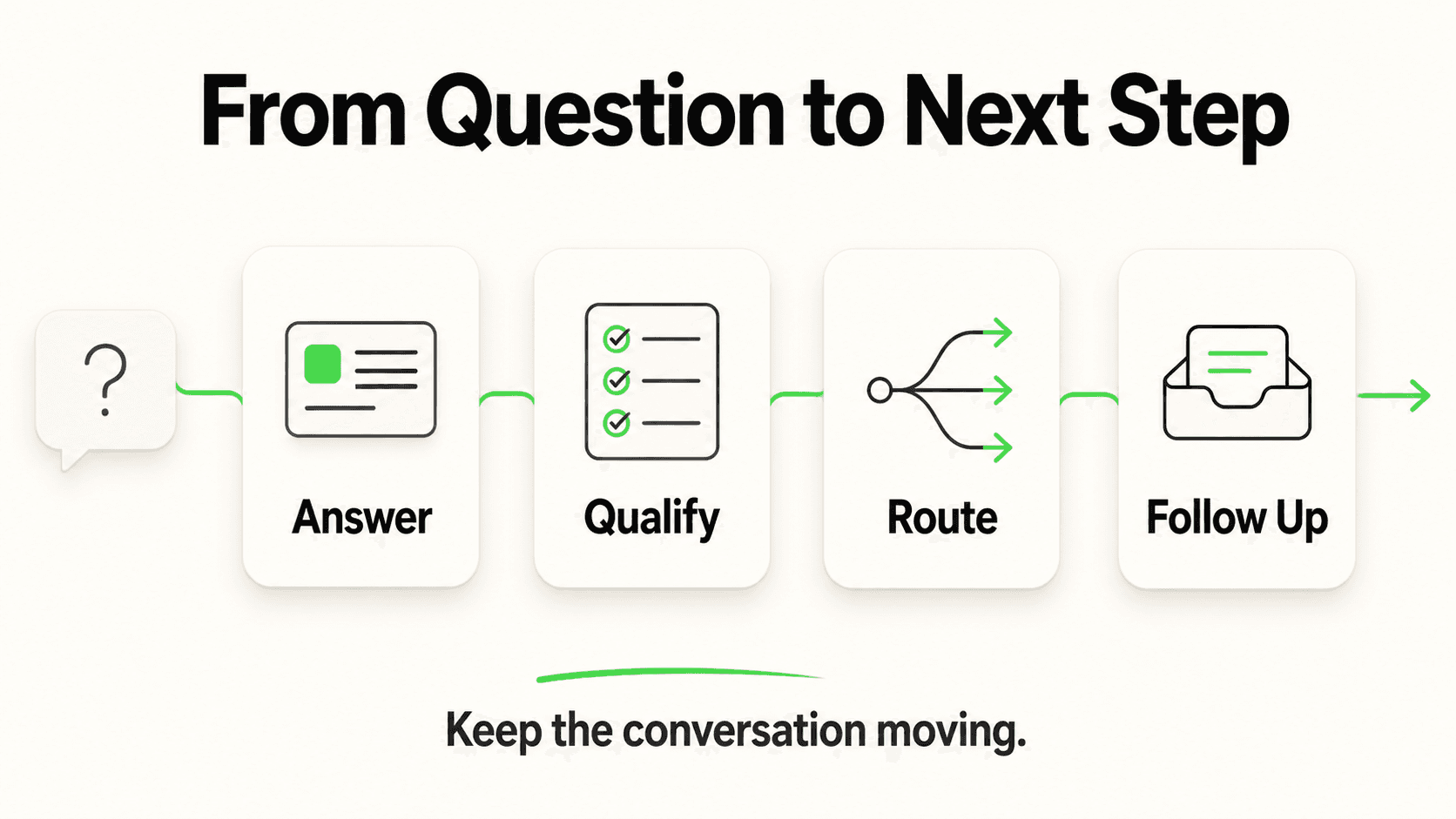
It depends on your support volume and lead value. Industry benchmarks suggest 30–50% of routine inquiries can be handled without human involvement, though specific savings vary by configuration and business. Use a per-business calculation rather than headline averages.
What is the realistic deflection rate?
For SMBs with a well-configured knowledge base, 40–70% deflection of routine FAQs is achievable. Anyone promising 90%+ across the board is overselling — that number requires both unusually narrow scope and aggressive escalation suppression.
Further Reading
Authoritative external sources used and recommended for further research on this topic:
- Gartner customer service research
- Forrester customer experience research
- Harvard Business Review on customer response speed
Ready to Capture Every Patient Inquiry?
Hyperleap AI helps small clinics answer patient questions 24/7 across web chat, WhatsApp, and more — with document-grounded responses and a non-PHI design that keeps health details out of the chat.
Get StartedIndustry Solutions
See how AI chatbots work for these industries:
Related Articles
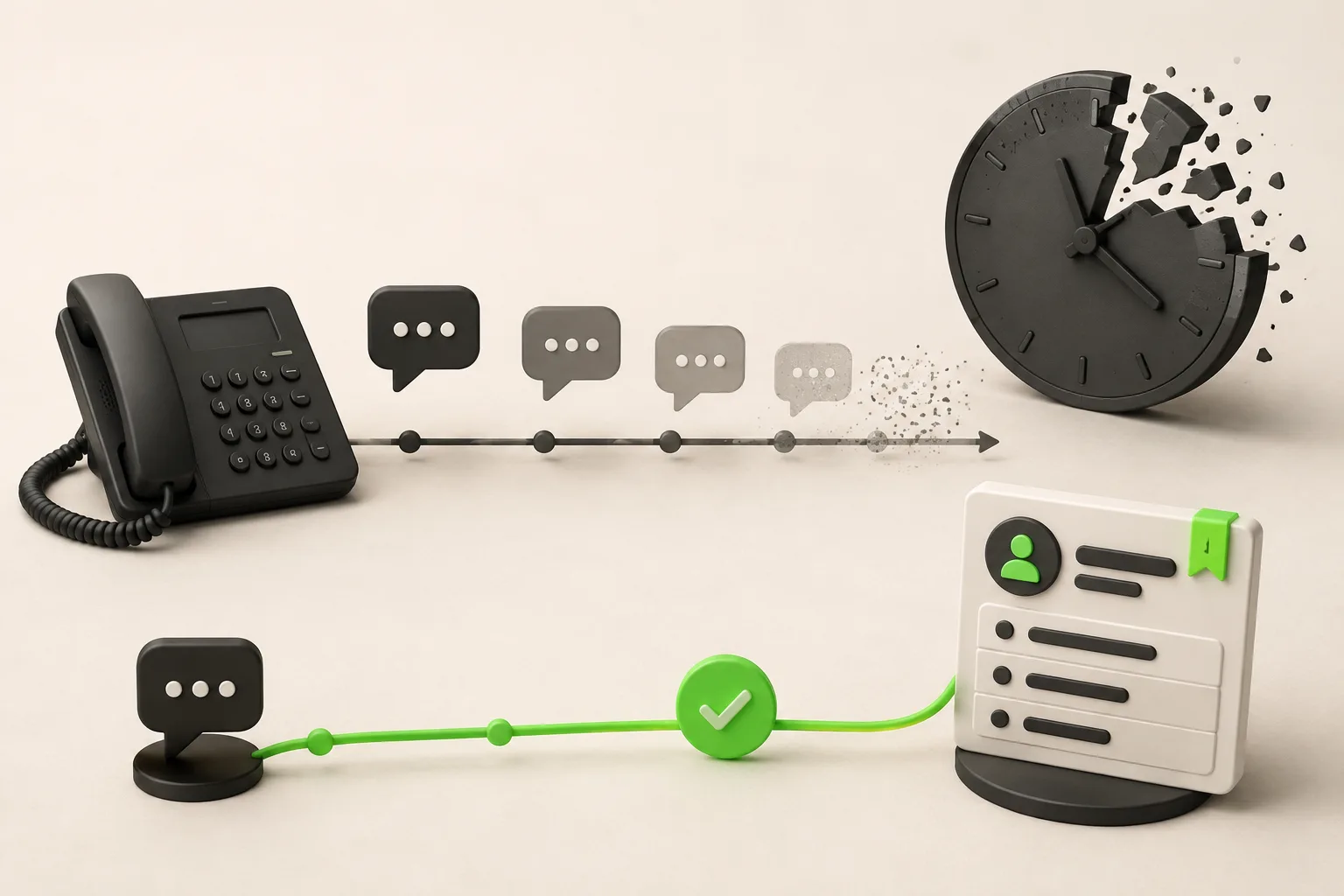
What Missed Calls Really Cost Your Small Business
A worked example of what missed calls cost small businesses in lost jobs, plus where inquiries actually arrive now and what to do about it.
Patient Communication Statistics 2026 for Healthcare
35+ sourced statistics on patient communication gaps, response times, and provider switching behavior reshaping practices in 2026.

Why Salons & Medspas Lose Clients to Missed Calls
Salons and medspas miss up to 35% of calls while stylists are with clients. With medspa client lifetime values of $7,800+, every missed call is revenue lost.
Why Dental Clinics Lose Patients to Faster Practices
New patients call 2-3 practices and book with whoever answers. With $2,500-$15,000 LTV, every missed call costs real revenue.