Education and Admissions Customer Service Statistics 2026
30+ sourced statistics on enrollment melt, response times, and communication gaps reshaping education admissions in 2026.

Last updated: 2026-05-03
TL;DR: India's education sector is valued at over USD 225 billion, yet institutions lose 40-60% of prospective enrollments because they cannot respond to inquiries fast enough. Over 60% of admissions inquiries arrive outside office hours, 78% of families enroll with the first institution that responds, and the average coaching institute takes 8-12 hours to reply. This article compiles 30+ sourced statistics on student communication, admissions conversion, and the cost of slow response in the education sector. Every number is sourced, and every section includes practical context for institutions in India.
See how conversational AI for customer service answers admissions inquiries the moment they arrive — including after hours.
Every unanswered inquiry during admissions season is a student who enrolls at your competitor. Research consistently shows that 78% of customers buy from the first company that responds to their inquiry (Source: LeadAngel). In education, where families invest lakhs of rupees and years of a child's future, this pattern is even more pronounced. A parent who sends a WhatsApp message about NEET coaching at 9 PM and receives no reply until the next morning has already shortlisted two competitors who responded in minutes.
India's coaching institute market alone is projected to reach USD 17.4 billion by 2033 (Source: IMARC Group). Over 22 lakh students appeared for NEET 2025 (Source: Careers360), and approximately 13 lakh sit for JEE Main annually. The demand is massive. The problem is not a shortage of students — it is an inability to respond to them when they are ready to decide.
The institutions that will thrive in 2026 are those that treat inquiry response as a strategic function, not an administrative afterthought. The statistics in this article reveal exactly where the gaps are and what the data says you should do about them.
Who This Guide Is For
This guide is written for admissions heads, institute directors, school principals, and education marketing teams in India who want data-driven insight into how students and parents communicate, what they expect, and where most institutions fall short. Use these statistics to benchmark your admissions process, justify technology investments, and prioritise improvements that drive enrollment and revenue.
What Is Student Communication Analytics?
Student communication analytics is the systematic measurement and analysis of every interaction between an educational institution and its prospective students and parents — from phone calls and WhatsApp messages to website inquiries, social media DMs, and walk-in visits. It transforms what most admissions teams treat as anecdotal ("we were very busy last week") into quantifiable data that drives decisions.
For educational institutions, student communication analytics typically measures:
- Inquiry volume and patterns: How many inquiries arrive daily, weekly, and during peak admission windows, broken down by channel (WhatsApp, phone, website, social media, walk-in)
- Response time metrics: Average time to first response, response time by channel, response time during peak vs. off-peak periods
- Conversion funnel tracking: Inquiry-to-application rate, application-to-enrollment rate, and drop-off at each stage
- Channel effectiveness: Which channels generate the highest-intent inquiries and the best conversion rates
- After-hours inquiry volume: The percentage of inquiries arriving outside business hours and how they are handled
- Follow-up completion: Whether and when undecided families receive follow-up communication
- Parent vs. student communication: Understanding who initiates inquiries and how decision-making is distributed
The difference between institutions that convert 15% of inquiries and those that convert 40% is rarely the quality of their programs. It is the quality of their communication systems. Analytics reveals where the leaks are, how large they are, and which fixes deliver the highest return.
For a deeper look at how slow response specifically costs schools and coaching institutes, see our analysis on why institutions lose enrollments during peak admissions season.
Why Educational Institutions Are Failing to Convert Inquiries
The gap between inquiry volume and enrollment numbers follows predictable patterns. Understanding these patterns is the first step toward fixing them.
Response time delays that kill conversions
The single most important factor in admissions conversion is speed. Responding within 5 minutes makes you 21x more likely to qualify a lead than waiting 30 minutes (Source: Kixie). Yet the average educational institution in India takes 8-12 hours to respond to an inquiry, according to industry surveys and mystery shopping exercises conducted by education marketing firms.
A parent sends a WhatsApp message at 8:30 PM asking about Class 6 admissions. The admissions office is closed. The message sits unanswered for 12 hours. By 8:30 AM, the parent has received responses from two other schools, scheduled a campus visit at one, and mentally shortlisted the institutions that replied the same evening. That 12-hour delay did not just lose one inquiry — it lost the lifetime value of that family's fees, referrals, and sibling enrollments.
Peak season overwhelm
India's admissions calendar creates extreme demand spikes. JEE Main results, NEET results, board exam results, and school admission windows each trigger surges where daily inquiry volume can jump from 50-100 to 500-1,000+ per day (Source: ICEF Monitor). A counselor can handle 15-20 detailed WhatsApp responses per hour. When 500 messages arrive in a day, the backlog becomes unmanageable within hours.
The math is straightforward: 500 inquiries multiplied by 10 minutes of counselor time per inquiry equals 83 hours of work in a single day. Even a team of 10 counselors working 8-hour shifts can only cover 80 hours. Every inquiry beyond that capacity is a potential enrollment lost.
Multi-channel fragmentation
Today's admissions inquiries arrive across WhatsApp, phone, website forms, Instagram DMs, Facebook Messenger, email, and walk-ins. Without centralised management, each channel operates as a silo. A parent who messages on WhatsApp and also fills a website form may receive contradictory information or, worse, no response on one channel because the admissions team is overwhelmed on another.
This fragmentation is particularly damaging in the Indian context, where WhatsApp dominates student communication. With over 537 million WhatsApp users in India (Source: Statista), families expect instant, conversational responses on the platform they use daily — not a form submission followed by a callback in 48 hours.
Parent-student dual communication
Education decisions in India are family decisions. Parents research institutions, students ask about faculty and pedagogy, and grandparents may weigh in on location and reputation. This means a single enrollment decision often involves 2-3 separate inquiries from different family members, sometimes on different channels. Institutions that cannot track and consolidate these touchpoints waste counselor time on duplicate responses and risk providing inconsistent information to the same family.
7 Education and Admissions Statistics That Will Change How You Handle Inquiries
These seven statistics are drawn from industry research, education-sector surveys, and published data from institutions that have measured their admissions funnels. Each statistic is sourced and includes practical context for institutions in India.
1. Institutions that respond within 5 minutes are 21x more likely to convert inquiries
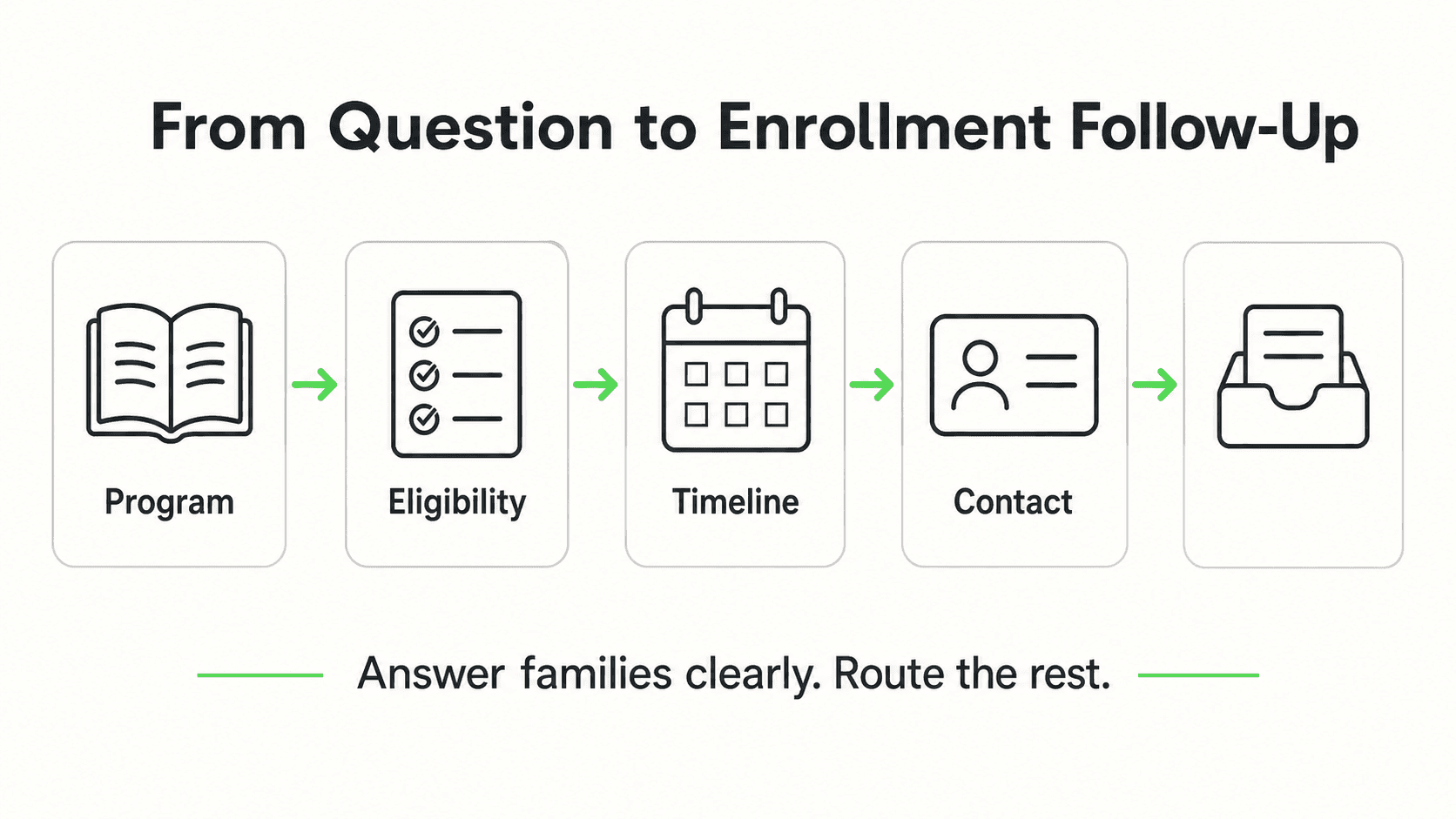
What this looks like in practice: A coaching institute in Kota receives a WhatsApp inquiry at 7 PM from a parent asking about their 2-year JEE programme. The institute has an automated system that responds within seconds with batch details, fee structure, and an invitation to schedule a counselor call. The parent, who sent the same message to three other institutes, receives no reply from the others until the next morning. The first institute gets the campus visit and, eventually, the enrollment.
Real-world impact: Research from Kixie shows that responding within 5 minutes makes you 21x more likely to qualify a lead compared to waiting 30 minutes (Source: Kixie). Harvard Business Review found that companies responding within 5 minutes are 100x more likely to connect with a prospect than those that wait an hour (Source: HBR).
Why it matters for Indian institutions: India's competitive exam ecosystem compresses decision-making into narrow windows. When NEET results are announced, families make decisions within days, not weeks. Every hour of delay during these windows represents permanently lost revenue.
Key takeaway:
- The 5-minute response standard is not aspirational — it is the minimum threshold for competitive admissions conversion
- Institutions relying on manual response during peak season cannot consistently meet this standard
- Automated first-response systems are the only scalable way to achieve sub-5-minute response times at volume
2. Over 60% of admissions inquiries arrive outside standard business hours
What this looks like in practice: A school's admissions office operates from 9 AM to 5 PM. But inquiry data consistently shows that the highest-volume inquiry periods are 6 PM to 11 PM on weekdays and all day on weekends. Students research coaching institutes after their classes end. Parents research schools after returning from work. Family discussions about education happen over dinner and on weekends.
Real-world impact: Data from chatbot deployments and education sector research indicates that over 60% of education inquiries come outside standard business hours — evenings, late nights, and weekends (Source: ICEF Monitor). For institutions that only respond during office hours, this means the majority of their inquiries sit unanswered for 12-16 hours.
Why it matters for Indian institutions: India's time zone means that even international inquiries from NRI families arrive outside IST business hours. Domestically, the culture of family decision-making during evenings and weekends amplifies the after-hours inquiry pattern. An institution without 24/7 response capability is invisible during the hours when families are most actively researching.
Key takeaway:
- After-hours inquiries represent the largest untapped conversion opportunity for most institutions
- Voicemail and "we will get back to you" auto-replies do not convert — they signal that the institution is not available
- AI-powered education chatbots provide 24/7 availability without the cost of night-shift staff
3. WhatsApp is the dominant admissions inquiry channel in India, handling 50-70% of first-contact inquiries
What this looks like in practice: Parents in India do not fill out website forms as their first step. They open WhatsApp, search for the institution's number, and send a message. For coaching institutes, WhatsApp is often the only channel that matters during peak season — parents share brochures, ask about fees, and even negotiate scholarships, all within WhatsApp conversations.
Real-world impact: India has over 537 million WhatsApp users (Source: Statista), and WhatsApp achieves 98% open rates compared to approximately 22% for email (Source: Meta Business). Education industry data from institutions using multi-channel tracking consistently shows 50-70% of first-contact admissions inquiries arriving via WhatsApp.
Why it matters for Indian institutions: The implication is clear: if your admissions process is built around phone calls and email, you are optimising for channels that account for a minority of inquiries. WhatsApp-first admissions communication — with structured responses, rich media (brochures, videos, virtual tours), and quick-reply buttons — matches how Indian families actually communicate. For detailed WhatsApp trends, see our India WhatsApp statistics roundup.
Key takeaway:
- WhatsApp is not a supplementary channel in India — it is the primary channel for admissions inquiries
- Institutions need WhatsApp Business API integration for scalable, automated response at volume
- Manual WhatsApp reply by admissions staff does not scale beyond 50-100 inquiries per day
4. Only 3-5% of education inquiries convert to enrollment across the full funnel
What this looks like in practice: A well-known coaching institute runs a ₹10 lakh digital ad campaign that generates 5,000 inquiries over a 30-day peak admissions window. Of those 5,000 inquiries, approximately 150-250 convert to paid enrollments. The remaining 4,750+ inquiries represent students who either enrolled elsewhere, never received a timely response, or dropped out of the funnel due to lack of follow-up.
Real-world impact: Research from Reshape shows that the complete funnel conversion rate in education admissions is 3-5% from initial inquiry to enrollment (Source: Reshape). However, institutions with optimised response systems and structured follow-up achieve 8-12% conversion, representing a 2-3x improvement.
Why it matters for Indian institutions: At a 3% conversion rate, a coaching institute charging ₹2 lakhs per student needs 3,333 inquiries to fill 100 seats. At a 6% conversion rate, the same institute needs only 1,667 inquiries — cutting marketing spend in half for the same enrollment outcome. In a market where digital ad costs for education jumped nearly 50% in a single year (Source: Exchange4media), improving conversion rates is more economical than increasing ad spend.
Key takeaway:
- The 3-5% baseline conversion rate means 95-97% of inquiries are lost — the opportunity for improvement is enormous
- Even a 2-percentage-point improvement in conversion rate can represent crores in additional revenue for a mid-sized institute
- Conversion improvement comes from faster response, structured follow-up, and consistent multi-channel communication — not from more advertising
5. Counseling appointment no-show rates in education range from 20-40%
What this looks like in practice: Your admissions counselor schedules 15 campus visit appointments for Saturday. By midday, only 9 families have shown up. Three called to reschedule. Three simply did not come. The counselor's afternoon slots, which could have been allocated to other interested families, go unused. The no-shows reschedule "for next week" and half of them never actually visit.
Real-world impact: Education industry data indicates that counseling appointment and campus visit no-show rates range from 20% to 40% depending on the institution type and follow-up process (Source: Dialog Health / education industry benchmarks). The primary cause across industries is forgetfulness (36% of all no-shows), followed by scheduling conflicts and decision to go elsewhere.
Why it matters for Indian institutions: A NEET coaching institute charging ₹1.5 lakhs per year that schedules 100 counseling appointments per week and experiences a 30% no-show rate loses 30 potential interactions weekly. If even 20% of those no-shows would have converted (6 students per week), the weekly revenue loss is ₹9 lakhs. Over a 10-week peak season, that is ₹90 lakhs in lost potential revenue.
Key takeaway:
- Automated multi-touch reminders (48 hours, 24 hours, 2 hours before appointment) reduce no-shows by 23-38% (Source: PMC/Dialog Health)
- WhatsApp-based reminders achieve higher engagement than phone calls or email in India
- Two-way confirmation (where parents can confirm, reschedule, or cancel via WhatsApp) further reduces no-shows by giving families a friction-free alternative to simply not showing up
6. 30% of prospective students who do not receive a fast response seek information from competitors
What this looks like in practice: A student researching UPSC coaching institutes sends inquiries to five institutes on a Sunday evening. Two respond within minutes via automated systems. One responds Monday morning. Two respond Tuesday. The student has already scheduled demo classes with the first two responders by Monday afternoon. The remaining three never had a chance.
Real-world impact: Research from ICEF Monitor shows that 30% of leads who do not receive a fast response will actively seek information from competitors (Source: ICEF Monitor). In the Indian education market, where parents typically shortlist 3-5 institutions and competition is fierce, this percentage is likely higher.
Why it matters for Indian institutions: India's coaching market is increasingly competitive. With the market projected to reach USD 17.4 billion by 2033, new institutes are opening every year. Established players cannot rely on brand reputation alone when a newer, more responsive competitor captures the inquiry first. Speed of response is becoming a proxy for institutional quality — a school that replies instantly signals efficiency and care; one that takes days signals disorganisation.
Key takeaway:
- Every hour of response delay increases the probability that the family contacts a competitor
- During peak admission windows (JEE/NEET results, school admission season), the competitive cost of slow response is exponentially higher
- Institutions that invest in AI-powered admissions response create structural advantages that compound each admissions cycle
Stop Losing Enrollments to Slow Responses
Respond to every admissions inquiry instantly, 24/7, across WhatsApp, website, and social media. See how institutions are handling 1,000+ daily inquiries without adding staff.
See How It Works7. Institutions using AI-powered response systems see 25-40% improvement in inquiry-to-enrollment conversion
What this looks like in practice: A coaching institute handling 600+ daily inquiries during peak season deploys an AI chatbot across WhatsApp and their website. The chatbot answers 65% of routine questions (fees, batch timings, eligibility, documentation) instantly. The remaining 35% are routed to counselors with full context. Counselors focus exclusively on high-value interactions: personalised batch recommendations, scholarship assessments, and campus tours. The result is faster response for every inquiry and higher-quality interactions for serious prospects.
Real-world impact: Education institutions deploying AI-powered inquiry systems report 25-40% improvement in inquiry-to-enrollment conversion rates, driven primarily by instant response to after-hours inquiries, consistent information delivery, and systematic follow-up with undecided families (Source: DemandSage / institution case studies). Additionally, institutions report processing 3-5x more inquiries during peak season without adding staff.
Why it matters for Indian institutions: The ROI calculation is compelling. If an AI system costing ₹3,000-8,000 per month helps a coaching institute convert even 10 additional students per admissions cycle at ₹1.5 lakhs each, that is ₹15 lakhs in additional revenue against an annual technology cost of less than ₹1 lakh. The return is 15x or higher.
Key takeaway:
- AI-powered admissions response is not experimental — institutions across India are seeing measurable results
- The highest impact comes from three capabilities: instant response, 24/7 availability, and automated follow-up sequences
- Human counselors become more effective, not less, when AI handles routine inquiries and provides them with qualified, context-rich leads
Real Results: What Responsive Institutions Are Achieving
Institutions that have systematically addressed admissions communication gaps are seeing measurable improvements across their enrollment funnels.
Revenue and enrollment impact
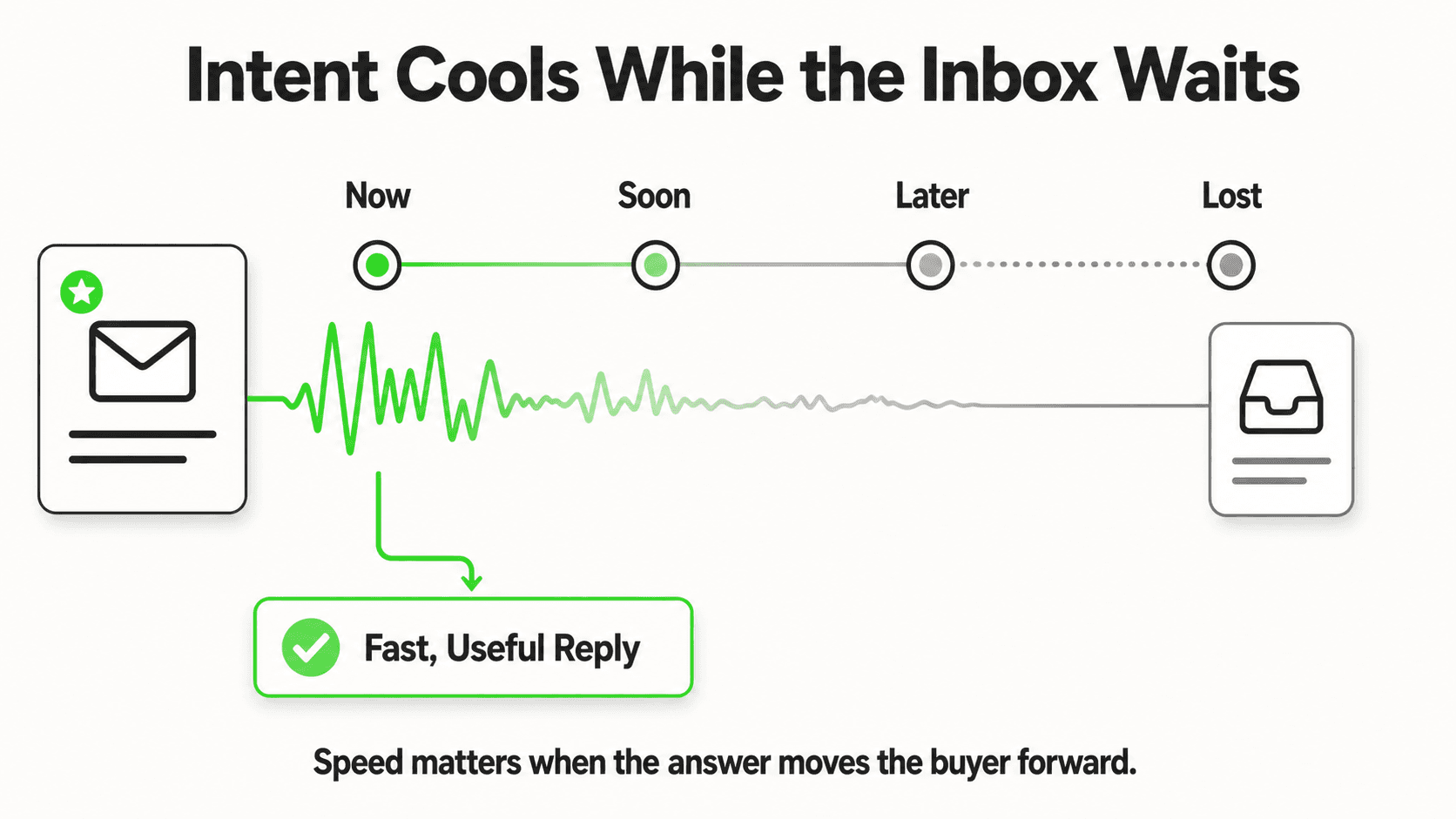
- Inquiry-to-application conversion rates improve from 15-25% to 30-50% when response times drop below 5 minutes (Source: Reshape)
- Institutions using automated response systems process 3-5x more inquiries during peak season without additional staff
- Marketing ROI improves by 40-60% when every ad-generated inquiry receives an instant response, based on the elimination of wasted ad spend on inquiries that go unanswered
- Seasonal staffing costs reduce by 50-70% as automation handles 65-80% of routine inquiries
Operational efficiency
- 70-80% of routine admissions questions (fees, eligibility, batch timings, documentation requirements) are resolved without human intervention
- Admissions counselors focus on high-value activities: campus tours, personalised counseling, scholarship assessments, and parent relationship building
- Information consistency across all channels eliminates trust-eroding contradictions where different counselors quote different fees or share different batch details
- Automated follow-up sequences ensure no warm lead goes cold during the critical 1-3 week decision period
Parent and student satisfaction
- Parents report significantly higher satisfaction when they receive responses within minutes rather than hours or days
- Consistent, accurate information across WhatsApp, website, and phone builds institutional credibility, which is especially important for premium-priced institutions
- Positive admissions experiences generate word-of-mouth referrals in parent communities, apartment WhatsApp groups, and online forums — reducing future marketing costs
- Google review ratings improve as the admissions experience improves, creating a virtuous cycle for organic discovery
Implementation Roadmap for Educational Institutions
Fixing the admissions response gap does not require replacing your admissions team. It requires augmenting them with systems that handle volume while they handle complexity.
Phase 1: Audit your current response gaps (Week 1-2)
Start by measuring your current state. Without baseline data, you cannot quantify improvement.
- Measure average response time during peak and off-peak periods, broken down by channel
- Count unanswered inquiries per day across all channels (WhatsApp, phone, website, social media)
- Calculate after-hours inquiry volume as a percentage of total inquiries
- Document the top 20-30 questions parents and students ask repeatedly (fees, eligibility, batch timings, scholarship criteria, hostel facilities, documentation requirements)
- Map your conversion funnel from inquiry to application to enrollment, identifying where the largest drop-offs occur
This audit reveals exactly where enrollments are leaking and quantifies the revenue impact of each gap.
Phase 2: Deploy automated response for routine inquiries (Week 2-4)
Deploy an AI-powered response system that addresses the highest-impact gaps identified in your audit.
- Configure the system to answer the top 20-30 FAQs instantly and accurately
- Connect to WhatsApp Business API, website chat, Instagram, and Facebook Messenger for multi-channel coverage
- Ensure 24/7 availability so after-hours inquiries receive instant responses
- Set up lead qualification questions to capture student details, exam preferences, and intent level before routing to counselors
- Configure escalation rules so complex inquiries and high-intent prospects reach human counselors immediately with full context
Platforms like Hyperleap AI allow institutions to set up an education-focused chatbot in days, trained on your specific institution's information, fee structures, batch details, and admission policies.
Phase 3: Optimise follow-up and scale (Week 4-8)
With automated response handling routine inquiries, focus on the follow-up and nurture gaps that cause the largest enrollment drop-offs.
- Set up automated follow-up sequences for undecided families (Day 1, Day 3, Day 7 touchpoints with relevant information)
- Implement automated appointment reminders (48-hour, 24-hour, and 2-hour before counseling sessions and campus visits)
- Track conversion metrics at each funnel stage and A/B test response messages
- Integrate with your student management system for seamless data flow from inquiry to enrollment
- Analyse inquiry patterns to optimise ad spend, staffing schedules, and channel investments
The goal is a system where every inquiry receives an instant, helpful response, and your human admissions team focuses exclusively on the interactions that require empathy, judgment, and personalised expertise.
Building an Admissions Process That Matches How Families Actually Communicate
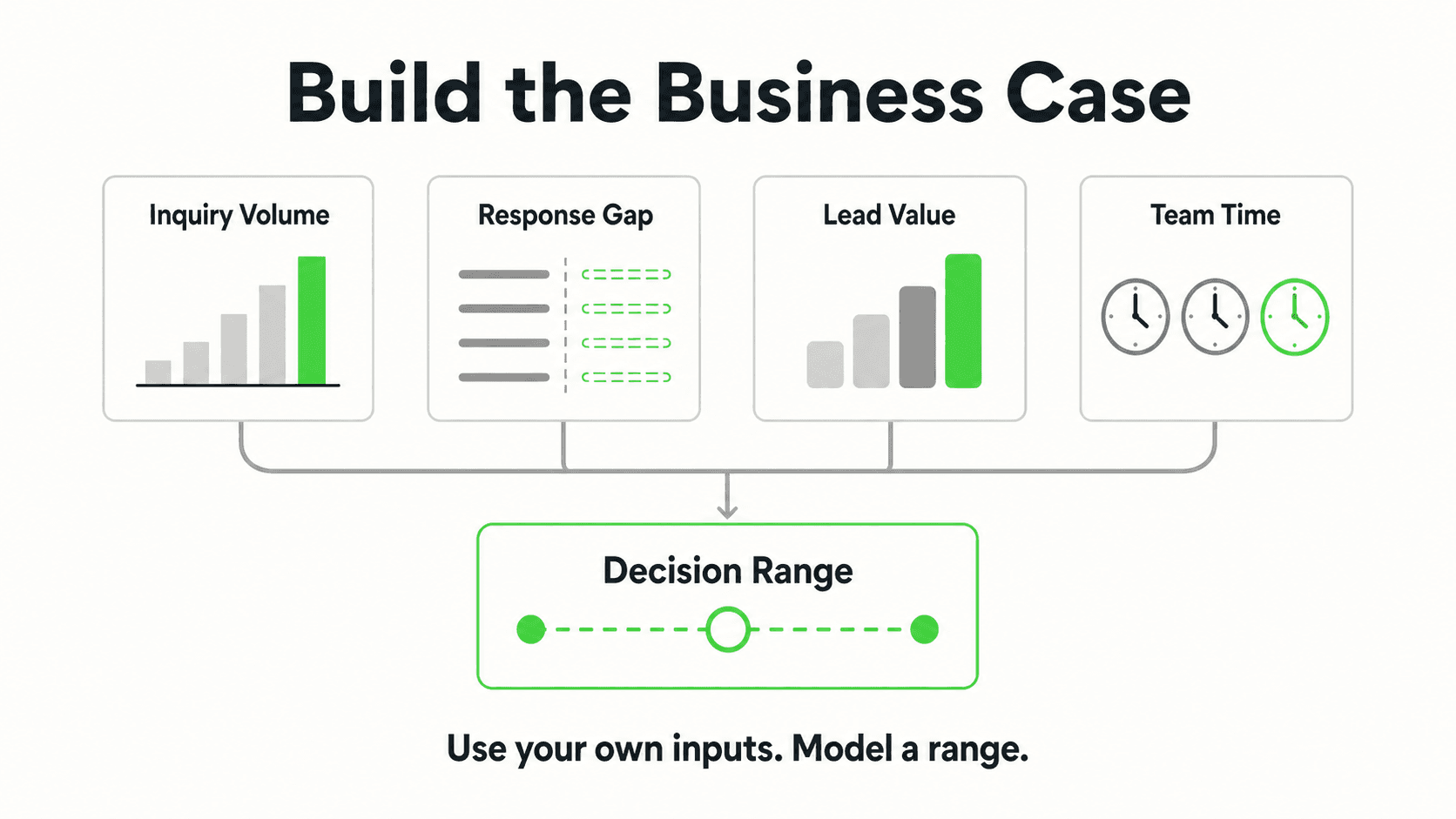
The statistics in this article point to a fundamental mismatch: educational institutions in India still operate admissions processes designed for walk-ins and phone calls, while families have moved to WhatsApp, after-hours research, and instant-response expectations. The institutions closing this gap are capturing enrollments that their competitors lose by default.
India's education sector is growing rapidly, with the school market projected to reach USD 138 billion by 2034 and the coaching institute market reaching USD 17.4 billion by 2033. The demand for quality education is immense. The challenge is not attracting inquiries — it is converting them.
The data is clear: respond within 5 minutes, be available 24/7, communicate on WhatsApp, follow up systematically, and let your counselors focus on the conversations that actually require human judgment. Institutions that build these capabilities now create compounding advantages that widen every admissions season.
For a deeper dive into how coaching institutes specifically are solving the inquiry management challenge, see our guide on how coaching institutes use AI to handle 1,000+ daily inquiries.
Frequently Asked Questions
Will automated admissions responses make our institution feel impersonal?
No. Modern AI systems communicate naturally and can be configured to match your institution's tone and voice. The AI handles routine questions — fees, timings, eligibility, documentation — instantly, freeing your counselors to provide deeply personalised attention to families who need it. Parents report higher satisfaction when they receive immediate answers rather than waiting hours or days for a human to respond with the same information. The key is using AI for speed and consistency while preserving human interaction for relationship-building moments.
How much does it cost to automate admissions responses?
AI-powered chatbot solutions for education typically start at ₹3,000-8,000 per month, which is a fraction of the cost of hiring even one temporary admissions counselor at ₹25,000-40,000 per month. Platforms like Hyperleap AI offer plans starting at $40/month (approximately ₹3,300) with a 7-day free trial. The ROI is typically realised within the first week of peak admissions when the system prevents even a handful of lost enrollments worth ₹1-3 lakhs each.
How long does it take to set up an AI admissions assistant?
Most institutions can have a functional AI admissions assistant operational within 3-7 days. The process involves uploading your institution's information (prospectus, fee structure, FAQ document, batch details, scholarship criteria), configuring response tone and escalation rules, and connecting to your WhatsApp Business account and website. No technical skills are required from your admissions team.
Can an AI chatbot handle questions in Hindi and regional languages?
Yes. Modern AI chatbots support multiple Indian languages including Hindi, Tamil, Telugu, Kannada, Malayalam, Bengali, Marathi, and Gujarati. The AI detects the language of the inquiry and responds accordingly. It also handles code-switching (mixing Hindi and English within the same conversation), which is extremely common in Indian education inquiries. This is particularly important for coaching institutes and schools in Tier-2 and Tier-3 cities where parents may prefer communicating in their regional language.
Will this replace our admissions counselors?
No — AI augments counselors rather than replacing them. Successful implementations use AI to handle the 70-80% of inquiries that ask repetitive, routine questions (fees, schedules, eligibility) that consume the majority of counselor time. This frees counselors to focus on high-value activities: personalised batch recommendations, scholarship assessments, campus tours, and building relationships with families who are close to enrolling. Most institutions maintain the same staffing levels but see dramatically improved productivity and counselor job satisfaction.
How do we measure whether automated admissions response is working?
Track three key metrics: average response time (should drop from hours to seconds), inquiry-to-enrollment conversion rate (should improve by 25-40%), and the number of inquiries handled per day without adding staff (should increase by 3-5x). Additionally, track after-hours inquiry capture rate, appointment no-show rates, and parent satisfaction scores. Most AI platforms provide built-in analytics dashboards that display these metrics in real time, allowing you to quantify ROI within your first admissions cycle.
What if parents do not want to interact with a chatbot?
Research shows that 75% or more of education prospects prefer instant AI responses over waiting hours or days for a human response, provided the AI is helpful and can escalate to humans when needed (Source: McKinsey). The key strategies are: always offer easy escalation to a counselor, be transparent that the initial response is AI-powered, ensure the AI provides accurate and helpful information, and maintain human availability for families who prefer it. In practice, the vast majority of parents care about getting accurate answers quickly — not whether the first response comes from a human or AI.
Ready to Capture Every Admissions Inquiry?
Join schools and coaching institutes using Hyperleap AI to respond instantly to every parent and student inquiry, 24/7, across WhatsApp, website, Instagram, and Facebook. Start your 7-day free trial today.
Get StartedIndustry Solutions
See how AI chatbots work for these industries:
Related Articles

Why Schools Lose Enrollments in Peak Admissions
Peak-admissions coaching institutes get 1,000+ daily inquiries and lose 40-60% of enrollments to slow responses and overwhelmed staff.

Dental Practice Customer Communication Statistics 2026
40+ sourced statistics on dental patient communication, no-shows, new patient acquisition costs, and patient expectations.
Patient Communication Statistics 2026 for Healthcare
35+ sourced statistics on patient communication gaps, response times, and provider switching behavior reshaping practices in 2026.

Real Estate Lead Response Statistics 2026
40+ sourced statistics on real estate lead response times, conversion rates, and agent technology adoption. The data behind why speed wins in real estate.