Multi-Language AI Chatbots: Serve Customers in Any Language
How multi-language AI chatbots help businesses serve diverse customers in their preferred language — without hiring multilingual staff.

TL;DR: Modern LLM-powered chatbots handle 100+ languages from a single knowledge base — you upload content in your primary language, and the AI detects each customer's language automatically and responds in kind, including mid-conversation code-switching. This replaces the old approach of building separate decision trees, translating every FAQ, and routing customers to language-specific queues. CSA Research's "Can't Read, Won't Buy" study found 76% of consumers prefer to buy in their own language and 40% will never buy from sites in other languages — language is a purchasing prerequisite, not a preference. This guide shows businesses serving multilingual customer bases (hotels, healthcare, real estate, e-commerce) how to deploy a single multilingual agent across website, WhatsApp, Instagram DM, and Facebook Messenger without hiring multilingual staff.
A customer sends a WhatsApp message in Spanish. Your team speaks English. Before AI, that inquiry got one of three outcomes: a delayed response while someone fumbled through Google Translate, a clumsy machine-translated reply that missed the nuance entirely, or — most commonly — the message was quietly ignored.
In a global economy where customers expect instant, personalized service, language should not be a barrier to doing business. Yet for most small and medium-sized businesses, it is. Hiring multilingual staff for every language your customers speak is prohibitively expensive. Maintaining separate phone lines, chat systems, or email queues for each language is operationally complex. And ignoring non-English inquiries means leaving revenue on the table in markets where growth is fastest.
The solution is a multi-language AI chatbot — one that detects a customer's language automatically and responds fluently, drawing from a single knowledge base that you maintain in one language. This guide covers how multi-language AI chatbots work, why they matter for businesses serving diverse customer bases, and how to implement one without the complexity you might expect.
Who This Guide Is For
This guide is written for business owners and operators serving multilingual customer bases — whether you run a hotel receiving international guests, a healthcare practice in a diverse community, a real estate agency working with immigrant buyers, or an e-commerce store shipping globally. No technical background required.
What Is a Multi-Language AI Chatbot?
A multi-language AI chatbot is a form of conversational AI for customer service that can understand and respond to customers in multiple languages — without requiring separate bots, separate knowledge bases, or separate configurations for each language. Modern large language models (LLMs) that power these chatbots are trained on text in dozens of languages simultaneously, which means they can detect a customer's language from their first message and respond accordingly.
Here is what makes this different from older approaches. Traditional multilingual chatbots required you to build separate decision trees for each language, hire translators to convert every FAQ and response template, and route customers to language-specific queues. The setup cost scaled linearly with every language you added. If supporting one language took a week, supporting ten languages took ten weeks.
LLM-powered multi-language chatbots work fundamentally differently:
- Single knowledge base: You upload your documents, FAQs, and product information in your primary language. The AI understands the content and can discuss it fluently in whatever language the customer uses.
- Automatic detection: The customer does not need to select a language from a dropdown or navigate to a localized version of your site. They simply type or speak in their preferred language, and the AI responds in kind.
- Consistent accuracy: Because the AI draws from the same document-grounded knowledge base regardless of language, the answers are consistent. A customer asking about your return policy in Hindi gets the same substantive answer as someone asking in English.
- Contextual switching: If a customer switches languages mid-conversation — which is common in multilingual communities where code-switching is natural — the AI adapts without missing a beat.
This capability is especially powerful when paired with a multi-channel deployment strategy. A business can deploy a single AI agent across its website, WhatsApp, Instagram DM, and Facebook Messenger — and that agent handles every language on every channel from the same knowledge base.
Why Language Barriers Cost Businesses Revenue
Language barriers are not just a customer service inconvenience. They are a direct revenue leak. Here is how they affect businesses at every stage of the customer journey.
Customers Abandon When They Cannot Communicate
According to CSA Research's "Can't Read, Won't Buy" study, 76% of online consumers prefer to buy products with information in their own language, and 40% will never buy from websites in other languages. That research, which surveyed consumers across 29 countries, demonstrates a clear commercial reality: language is not just a preference — it is a purchasing prerequisite for a significant share of your potential customers.
When a prospect reaches your website or sends a WhatsApp message and cannot get a response in their language, they leave. They do not submit a contact form in a language they are not comfortable with. They do not wait for a bilingual team member to become available. They go to a competitor who communicates in their language — even if that competitor offers an inferior product or service.
Multilingual Staff Is Expensive and Hard to Find
The traditional solution to language barriers — hiring bilingual or multilingual staff — is increasingly difficult and expensive. Bilingual customer service representatives command salary premiums of 5-20% depending on the market and language combination, according to compensation research from PayScale. For less common language pairs, the premium is even higher, and the talent pool is smaller.
For a small business that needs to support Spanish, Mandarin, and Arabic alongside English, the staffing math does not work. You would need at least one speaker of each language available during business hours, which means a minimum of three additional hires — assuming none of them take vacations or call in sick. The reality is that most small businesses cannot justify this cost and instead default to English-only service, silently losing every customer who is not comfortable in English.
Translation Delays Kill Conversions
Even when businesses attempt to handle multilingual inquiries, the process is painfully slow. A customer sends a message in Portuguese. A team member copies it into a translation tool, reads the English version, drafts a response in English, translates it back to Portuguese, reviews the translation for obvious errors, and sends it. What should be a 30-second interaction takes five to ten minutes — and that is assuming someone is available immediately.
In sales contexts, this delay is fatal. Research on lead response time consistently shows that the probability of qualifying a lead drops dramatically after the first five minutes. A multi-language AI chatbot eliminates this delay entirely by responding in the customer's language within seconds.
Growing Immigrant and International Customer Bases
Demographics are shifting rapidly. According to the United Nations International Migration Report (2024), the number of international migrants globally reached approximately 281 million. In the United States alone, the U.S. Census Bureau reports that over 67 million people speak a language other than English at home. In countries like the UAE, Singapore, and Canada, multilingual populations are the norm, not the exception.
For businesses in diverse metropolitan areas — whether that is Miami, London, Dubai, Toronto, or Los Angeles — the customer walking through your door (or landing on your website) increasingly speaks a language other than your primary business language. Businesses that adapt to this reality capture a larger addressable market. Those that do not are voluntarily shrinking theirs.
Ready to Serve Every Customer in Their Language?
See how an AI chatbot handles multilingual conversations from a single knowledge base — across WhatsApp, web, and more.
Get Started7 Ways Multi-Language Chatbots Transform Customer Communication
Multi-language AI chatbots are not just a translation layer bolted onto a chat widget. They fundamentally change how businesses communicate with diverse customer bases. Here are seven specific ways.
1. Automatic Language Detection — No Customer Action Needed
What this looks like in practice: A customer visits your website or sends a WhatsApp message in French. Without any language selection menus, dropdown pickers, or "Click here for French" buttons, the chatbot immediately responds in French. The experience feels native, as if your business has a dedicated French-speaking team member.
Why it works: Language selection interfaces create friction. Every extra step between a customer and their answer is an opportunity for them to leave. Automatic detection removes that friction entirely. The AI identifies the language from the first message — sometimes from just a single word — and adapts instantly.
Key features:
- Detection from the very first message in the conversation
- No configuration required per language — works out of the box with LLM-powered chatbots
- Handles informal language, abbreviations, and mixed-language messages
2. Consistent Answers Across All Languages from a Single Knowledge Base
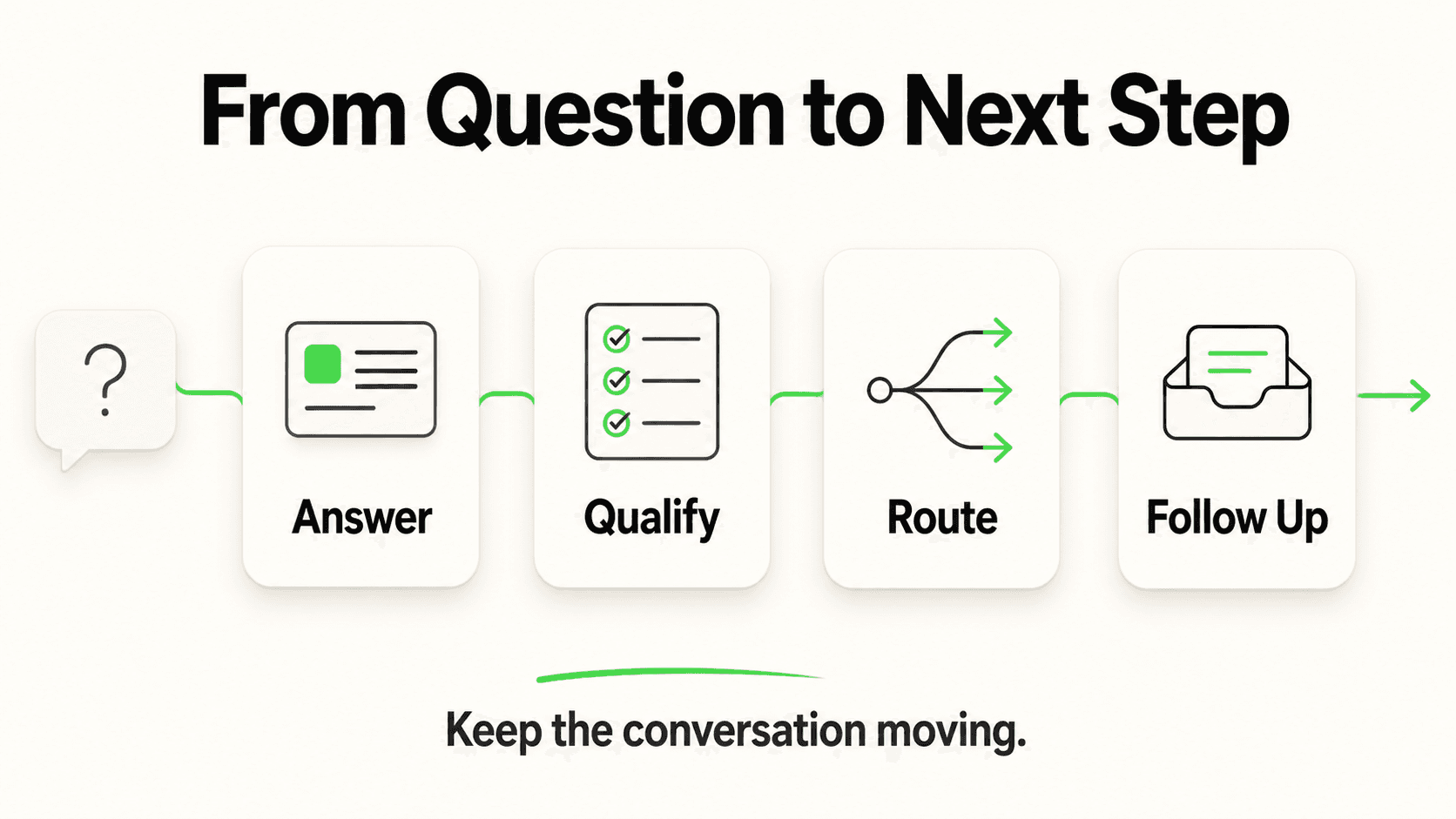
What this looks like in practice: You upload your FAQ document, pricing sheet, and product descriptions in English. A customer asks about your return policy in Japanese. The AI reads your English-language return policy document, understands it, and explains it accurately in Japanese — with the same level of detail and accuracy as if you had written a Japanese FAQ from scratch.
Why it works: Maintaining separate translated knowledge bases is a content management nightmare. Every time you update a policy, change a price, or add a product, you need to update it in every language. With a single knowledge base approach, you update once and the AI handles the rest. This is especially valuable for businesses whose information changes frequently — hotels updating seasonal rates, clinics adjusting appointment availability, or e-commerce stores rotating inventory.
Real-world impact: This approach ensures document-grounded responses across all languages. The AI is not making up answers — it is drawing from your specific documents, which means a customer in any language gets your actual policies, your actual pricing, and your actual availability. For businesses that need to build a strong knowledge base, the multi-language benefit is built in from the start.
3. WhatsApp and Instagram Reach for Non-English Markets
What this looks like in practice: Your business deploys a chatbot on WhatsApp Business API and Instagram DM. Customers in India message you in Hindi on WhatsApp. Customers in Brazil message you in Portuguese on Instagram. Customers in the Middle East message you in Arabic on WhatsApp. Every conversation is handled by the same AI agent, in each customer's language, with zero manual intervention.
Why it works: WhatsApp is the dominant communication channel in India, Latin America, the Middle East, and Southeast Asia — markets where English is often a second or third language. According to Meta, WhatsApp has over 2 billion users globally, with the majority in non-English-speaking markets. If you are deploying chatbots on these channels without multi-language capability, you are building infrastructure that excludes the very customers those channels are designed to reach.
For businesses already using WhatsApp Business API in India, adding multi-language support means your chatbot can handle Hindi, Tamil, Telugu, Bengali, Marathi, and other regional languages from the same deployment — no additional setup required.
Key features:
- Same AI agent works across WhatsApp, Instagram DM, Facebook Messenger, and web chat
- Language handling is channel-agnostic — the AI responds in the customer's language regardless of platform
- Particularly valuable for markets where WhatsApp is the primary customer communication channel
4. After-Hours Support for International Time Zones
What this looks like in practice: A hotel in New York receives a WhatsApp inquiry from a potential guest in Tokyo at 3 AM Eastern Time. The guest writes in Japanese, asking about room availability for their upcoming trip. The chatbot responds in Japanese within seconds, provides current availability, captures the guest's contact details, and shares the hotel's booking link — all while the front desk team is asleep.
Why it works: International customers do not adjust to your business hours. A prospect in Dubai is nine hours ahead of New York. A customer in Sydney is sixteen hours ahead of London. Without 24/7 multilingual coverage, every international inquiry that arrives outside your business hours sits unanswered until morning — by which time the customer has likely found an alternative.
Real-world impact: When Jungle Lodges & Resorts deployed an AI chatbot, they discovered that 35% of all inquiries arrived after business hours (Hyperleap AI case study, 2024). For businesses with international customer bases, that after-hours percentage is likely even higher. An AI chatbot that handles these inquiries in any language turns a dead zone in your schedule into an active revenue-generating window.
5. Reduced Dependency on Bilingual Staff for Routine Inquiries
What this looks like in practice: A dental clinic in a diverse neighborhood receives inquiries in English, Spanish, and Mandarin. Previously, they needed bilingual receptionists available during all business hours. Now, the chatbot handles routine questions — appointment availability, services offered, insurance accepted, office hours, directions — in all three languages. The bilingual staff focus on complex cases that genuinely require human judgment and cultural sensitivity.
Why it works: Most customer inquiries are routine and repetitive. They are questions about pricing, availability, location, policies, and basic product or service information. These questions have definitive answers that do not change based on who is asking. By letting an AI handle these routine multilingual inquiries, businesses free their bilingual staff for higher-value interactions: consultations, complex problem-solving, and relationship-building.
Key features:
- Handles the high-volume, repetitive questions that consume most multilingual staff time
- Escalates complex or sensitive inquiries to human team members
- Reduces the pressure to hire for specific language skills for front-line roles
6. Lead Capture in the Customer's Language
What this looks like in practice: A real estate agency's chatbot engages a prospective buyer who messages in Arabic. The chatbot discusses available properties in Arabic, answers questions about pricing and neighborhoods in Arabic, and then — still in Arabic — asks for the prospect's name, phone number, and budget range. The lead is captured in the CRM with all details, ready for a human agent to follow up.
Why it works: Lead capture forms and qualification questions have significantly higher completion rates when presented in the customer's preferred language. A prospect who is comfortable enough to share their contact information and budget details in their own language is far more likely to complete the process than one who is struggling to parse questions in a language they are not fluent in.
Real-world impact: For businesses where lead capture is the primary chatbot objective — real estate, healthcare, education, hospitality — multi-language lead capture directly impacts the top of the funnel. Every lead that completes qualification in their own language is a lead that might have bounced in an English-only system.
7. Cultural Nuance in Responses
What this looks like in practice: The chatbot greets a customer in Japan with appropriate formality, uses respectful honorifics, and structures its responses in a way that aligns with Japanese communication norms. The same chatbot greets a customer in Brazil with warmth and informality that feels natural in Brazilian Portuguese. The tone adapts to cultural expectations, not just linguistic ones.
Why it works: Language is more than vocabulary and grammar. It carries cultural context — levels of formality, directness, politeness conventions, and communication styles that vary significantly across cultures. LLM-powered chatbots, because they are trained on vast amounts of text from diverse cultures, can reflect these nuances in ways that simple translation engines cannot.
Key features:
- Adjusts formality level based on language and cultural norms
- Uses culturally appropriate greetings and closings
- Understands that "direct" communication in one culture may feel rude in another
- Handles right-to-left languages (Arabic, Hebrew, Urdu) naturally in text
Key Insight
Multi-language AI chatbots do not just translate words — they adapt communication style. This is a meaningful difference from traditional translation tools, which produce linguistically correct but culturally flat responses.
Setting Up a Multi-Language Chatbot: What You Need to Know
The good news about modern multi-language chatbots is that setup is far simpler than you might expect. You do not need to translate your knowledge base into every language. The AI handles the translation layer. But there are several practical considerations that determine whether your multilingual chatbot delivers a good experience or a frustrating one.
You Do Not Need to Translate Your Knowledge Base
This is the most common misconception. If your business documents, FAQs, and product information are in English, that is sufficient. The LLM understands English content and can discuss it fluently in dozens of other languages. You upload once, in your primary language, and the AI serves customers in theirs.
That said, there are cases where adding content in a target language improves quality. If your business has specific terminology, brand names, or regional product names that do not translate well, adding a glossary or supplementary document in that language can help the AI use the correct local terms.
Verify Critical Responses in Your Target Languages
While LLM-powered chatbots are remarkably good at multilingual communication, you should verify that critical business information — pricing, policies, legal disclaimers, medical or safety information — is communicated accurately in your most important target languages. Have a native speaker review a sample of conversations in each key language during your initial deployment.
This does not need to be an ongoing expense. A one-time review of 20-30 sample responses in each target language is usually sufficient to identify any patterns that need correction.
Set Up Language-Specific Greetings
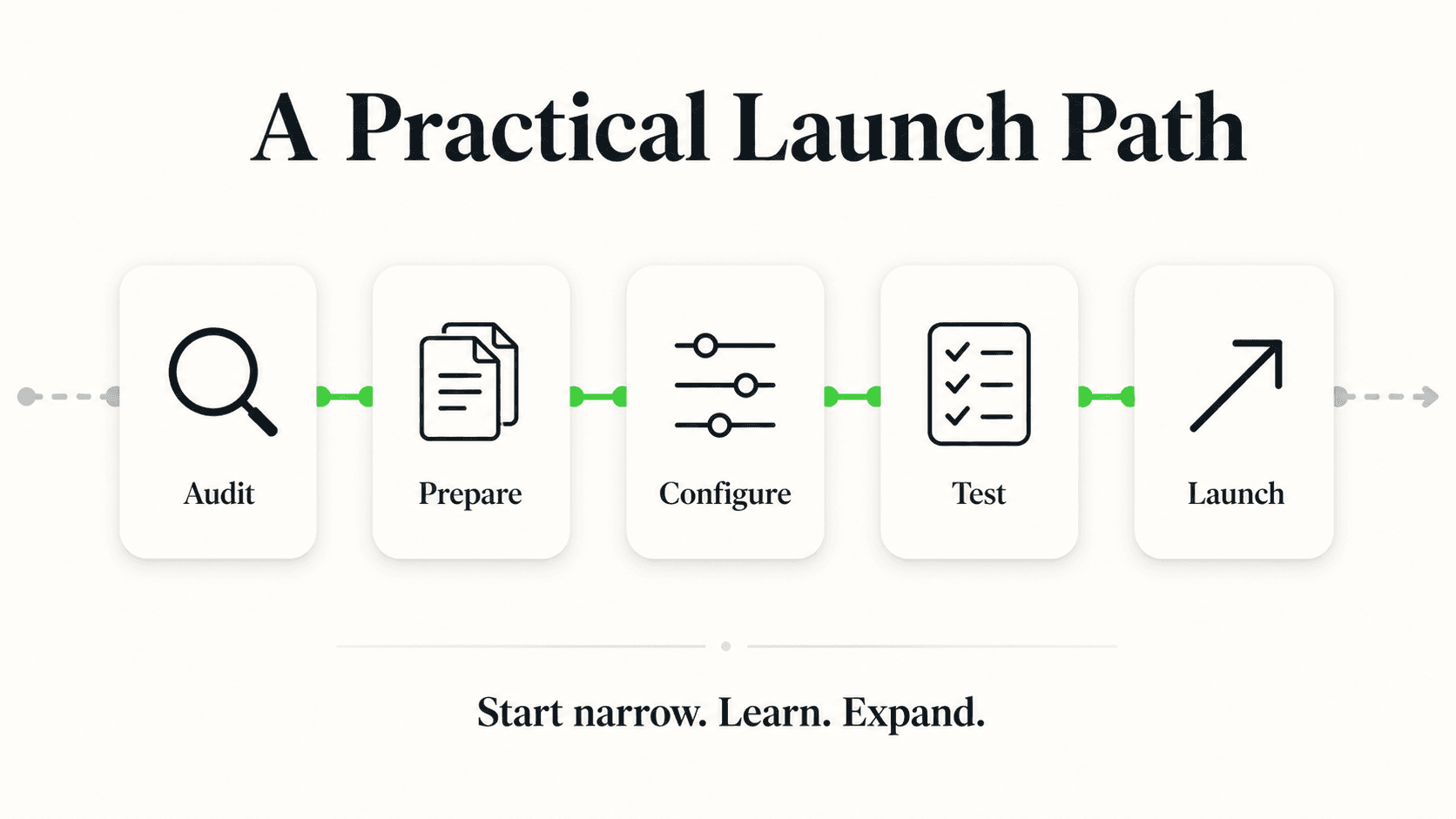
While the AI handles language detection automatically, you can improve the customer experience by configuring language-specific greeting messages. A customer who receives an initial greeting in their own language immediately feels that your business is prepared to serve them — it sets the tone for the entire conversation.
Understand the Limitations
Multi-language AI chatbots are powerful, but they are not perfect. Be aware of these limitations:
- Highly technical content: Legal documents, medical terminology, and technical specifications may not translate with complete precision. For these use cases, the chatbot should provide general information and escalate to a human specialist for detailed discussions.
- Low-resource languages: While major world languages (Spanish, French, Arabic, Hindi, Chinese, Portuguese, German, Japanese, Korean) are well-supported, less commonly spoken languages may have lower quality responses. Test before committing to support for niche languages.
- Slang and very informal language: Regional slang, internet shorthand, and highly informal expressions may occasionally confuse the AI. Performance improves continuously as models are updated, but it is worth noting.
- Right-to-left languages: Arabic, Hebrew, and Urdu require proper rendering in your chat interface. Most modern chat widgets handle this, but verify that your specific deployment displays RTL text correctly.
Common Mistake
Do not assume that because the AI can respond in a language, it will always be perfect. For regulated industries like healthcare and legal services, always have a human review process for complex inquiries in any language. The AI is designed to minimize errors, but no system can guarantee perfection — especially across dozens of languages.
Choose a Platform That Supports Multi-Channel and Multi-Language Together
The most effective multi-language chatbot strategy combines language capability with multi-channel deployment. When evaluating chatbot platforms, look for solutions that let you deploy a single AI agent across website chat, WhatsApp, Instagram, and Facebook Messenger — with multi-language support working identically on every channel. Hyperleap AI, for example, lets you build one knowledge base that serves customers across all four channels in whatever language they prefer.
Industries That Benefit Most from Multi-Language AI
While virtually any customer-facing business can benefit from multi-language AI chatbots, certain industries see outsized returns because of the nature of their customer base.
Hospitality and Tourism
Hotels, resorts, and travel businesses serve international guests by definition. A luxury hotel's AI agent needs to handle inquiries in the languages of its top source markets — which might mean Japanese, Chinese, German, French, and Arabic alongside English. Multi-language chatbots turn every inquiry from an international traveler into a potential direct booking, regardless of the language they use on WhatsApp or your website.
Healthcare
Clinics and hospitals in diverse communities serve patient populations that speak multiple languages. A pediatric practice in Houston might see families who speak English, Spanish, Vietnamese, and Hindi. Multi-language chatbots handle appointment scheduling, insurance questions, and pre-visit information in each patient's preferred language — improving both access and patient satisfaction.
Real Estate
In major metropolitan markets, a significant percentage of home buyers are immigrants or international investors. Real estate agencies that can engage prospects in Mandarin, Hindi, Arabic, or Spanish from the first inquiry have a meaningful competitive advantage. The chatbot handles initial property questions and lead qualification in the buyer's language, then connects them with an agent for the relationship-building phase.
E-Commerce
Online stores that ship internationally need to support customers across language boundaries. Product questions, shipping inquiries, return policies, and order status updates in the customer's language reduce support ticket volume and increase conversion rates. For Shopify and other e-commerce platforms, embedding a multi-language chatbot on the storefront means every international visitor gets immediate, personalized support.
Education
Universities and schools with international student recruitment need to field inquiries from prospective students and parents in multiple languages. Admissions questions, program details, tuition information, and visa guidance in the student's language reduce barriers to enrollment and improve the applicant experience.
Professional Services
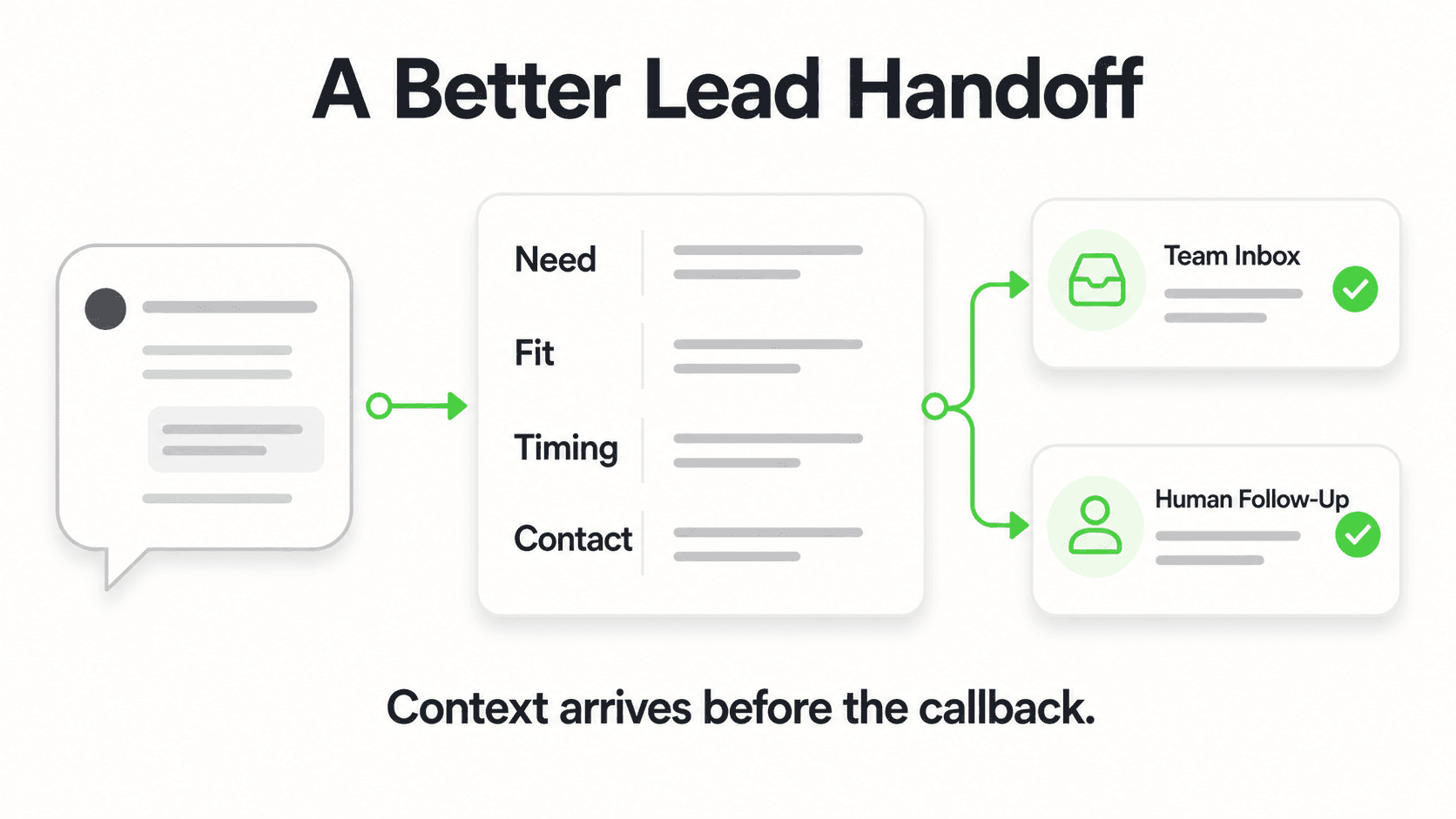
Law firms, accounting practices, and consulting firms in diverse metropolitan areas serve clients who prefer communicating in their native language. A multi-language chatbot handles initial inquiry qualification, collects case details, and schedules consultations in the client's language — ensuring that language is never the reason a potential client chooses a different firm.
Breaking Language Barriers Starts Now
Language should never be the reason a customer chooses your competitor. In a world where businesses serve increasingly diverse and international customer bases, the ability to communicate instantly in any language is not a luxury — it is a competitive necessity.
The technology to make this happen is available today. A multi-language AI chatbot lets you serve customers in their preferred language across every channel — website, WhatsApp, Instagram, Facebook Messenger — from a single knowledge base that you maintain in one language. No multilingual hiring sprees. No translation delays. No unanswered inquiries in languages your team does not speak.
The businesses that embrace multi-language AI now will capture customers that their English-only competitors are silently losing. The ones that wait will wonder where those customers went.
Further Reading
Authoritative external sources used and recommended for further research on this topic:
- Anthropic research and product documentation
- Google Search Central documentation
- Gartner customer service research
Frequently Asked Questions
Do I need to translate my knowledge base into every language?
No. Modern LLM-powered chatbots understand content in your primary language and can discuss it accurately in dozens of other languages. You upload your documents, FAQs, and product information once in your primary language. The AI handles the translation layer when responding to customers. For specialized terminology or regional product names, adding a brief glossary in target languages can improve accuracy, but full translation is not necessary.
How accurate are AI translations compared to professional human translators?
For conversational business communication — answering questions about products, services, pricing, and policies — LLM-powered chatbots produce responses that are natural and accurate in major world languages. They are not word-for-word translations; the AI generates native-sounding responses based on its understanding of your content. For highly regulated content like legal disclaimers or medical instructions, human review remains advisable. The quality is continuously improving as language models advance.
Which languages are supported?
LLM-powered chatbots can communicate in dozens of languages, including all major world languages: English, Spanish, French, German, Portuguese, Chinese (Simplified and Traditional), Japanese, Korean, Arabic, Hindi, and many more. The quality is strongest in languages that have large amounts of training data available. For less commonly spoken languages, performance varies — test with native speakers before committing to support for a specific language.
Can the chatbot switch languages mid-conversation?
Yes. If a customer starts a conversation in English and then switches to Spanish — a common pattern in bilingual communities — the AI detects the switch and continues the conversation in Spanish. This code-switching capability is particularly valuable in diverse markets where customers naturally blend languages. The chatbot maintains full conversation context across the language switch.
What about regional dialects and language variations?
LLM-powered chatbots handle major regional variations well. The AI can distinguish between European Portuguese and Brazilian Portuguese, Latin American Spanish and Castilian Spanish, Simplified Chinese and Traditional Chinese. For more granular dialect differences — Bavarian German vs. Standard German, for example — the AI will generally respond in the standard variety of the language, which is understood by all speakers.
How do I test quality in languages I do not speak?
Start by having a native speaker of each target language conduct 20-30 test conversations covering your most common customer scenarios. Ask them to evaluate naturalness, accuracy, and cultural appropriateness on a simple scale. For ongoing monitoring, enable conversation logs and periodically have native speakers review a random sample. Most businesses find that initial quality testing is sufficient, with periodic spot checks as new content is added to the knowledge base.
Serve Every Customer in Their Language
Deploy a single AI chatbot that speaks your customers' language — across WhatsApp, web, Instagram, and Messenger. Start your 7-day free trial.
Get StartedData Sources
- CSA Research, "Can't Read, Won't Buy" study (2020, updated findings) — consumer language preferences and purchasing behavior across 29 countries
- United Nations International Migration Report (2024) — global migration statistics
- U.S. Census Bureau, American Community Survey — language spoken at home statistics
- Meta Business, WhatsApp global user data (2025)
- PayScale, bilingual employee compensation research
- Hyperleap AI Jungle Lodges & Resorts case study (2024) — after-hours inquiry and lead capture data
Related Articles
How Many Languages Does ChatGPT Support?
OpenAI doesn't publish an official language count for ChatGPT. Here's what's known, and why it matters less than you'd think for a business chatbot.

How to Add an AI Chatbot to Squarespace (Step by Step)
Step-by-step guide to adding an AI chatbot to Squarespace via Code Injection, plus plan requirements, troubleshooting, and a pre-launch checklist.

AI Chatbot for Real Estate: Capture Leads 24/7
An AI chatbot for real estate qualifies buyers and sellers around the clock, capturing leads before agents ever pick up the phone.

AI Chatbot for SaaS Companies: Cut Support Load, Speed Onboarding, and Keep Customers in 2026
How SaaS teams use an AI chatbot to deflect repetitive how-to questions, activate trial users, qualify demos, and support a global customer base — without adding headcount or risking wrong answers.