LiveChat Alternatives 2026: 12 Options on Price & AI
A buyer's-eye comparison of 12 live-chat alternatives in 2026 — Intercom, Tidio, Crisp, Drift, Chatbase, Hyperleap, and more.

TL;DR: LiveChat (the product, livechat.com) was a great fit for the 2015 era of agent-staffed support. In 2026, most teams shopping for an alternative are not looking for a cheaper agent inbox — they are looking for AI deflection from conversational AI for customer service. The buyer's question has shifted from "how many seats do we need?" to "what percentage of conversations can we close without an agent?"
This guide compares 12 alternatives across three categories — traditional live-chat tools, AI-first chatbot platforms, and hybrid AI+human routing systems. Pricing is in USD. We include a decision matrix for SMB e-commerce, B2B SaaS, agency client work, multi-channel ops (WhatsApp + web), region-specific billing needs, and GDPR-strict EU buyers. Hyperleap is one of the candidates; we are honest about where it fits and where another tool wins.
If you only read one section, jump to the comparison table and the decision matrix.
LiveChat Alternatives 2026: 12 Options Compared
Why teams are moving off LiveChat in 2026
LiveChat (livechat.com, the Polish/US product, not the generic category) is a competent piece of software. It is not broken. But four things have shifted under it in the last 18 months, and those shifts are what is driving the migration searches.
1. Pricing creep on a per-agent model. LiveChat starts at $20/agent/month on the Starter plan and climbs to $59/agent/month on Business. For a 10-agent team that is $7,080/year before any AI add-ons. Compare that to platforms where the AI handles 60–80% of conversations and you only need 2–3 humans for the rest — the math stops working. (We dig into this in reduce customer support costs with AI.)
2. AI deflection is not native. LiveChat's ChatBot product is a separate purchase ($65–$424/month) and uses an older intent-classification engine, not a modern retrieval-augmented LLM. Buyers who want to point a bot at their docs, FAQs, and Notion and get a 70% deflection rate out of the box find this awkward.
3. Workflow automation is thin. Routing rules are basic. There is no first-class support for branching workflows that span chat → email → CRM → calendar. Teams that started on LiveChat for chat and grew into "we need a real customer ops platform" tend to outgrow it.
4. Data residency. LiveChat is headquartered in Wrocław, Poland. For most buyers this is fine. For a subset of EU enterprise and Indian government-adjacent buyers, the lack of an India or EU-only data region is a procurement blocker.
The honest truth: LiveChat is still a fine choice if you want a clean agent inbox and you do not care about deflection. If either of those is no longer true, here are 12 alternatives that matter.
The three categories of alternative
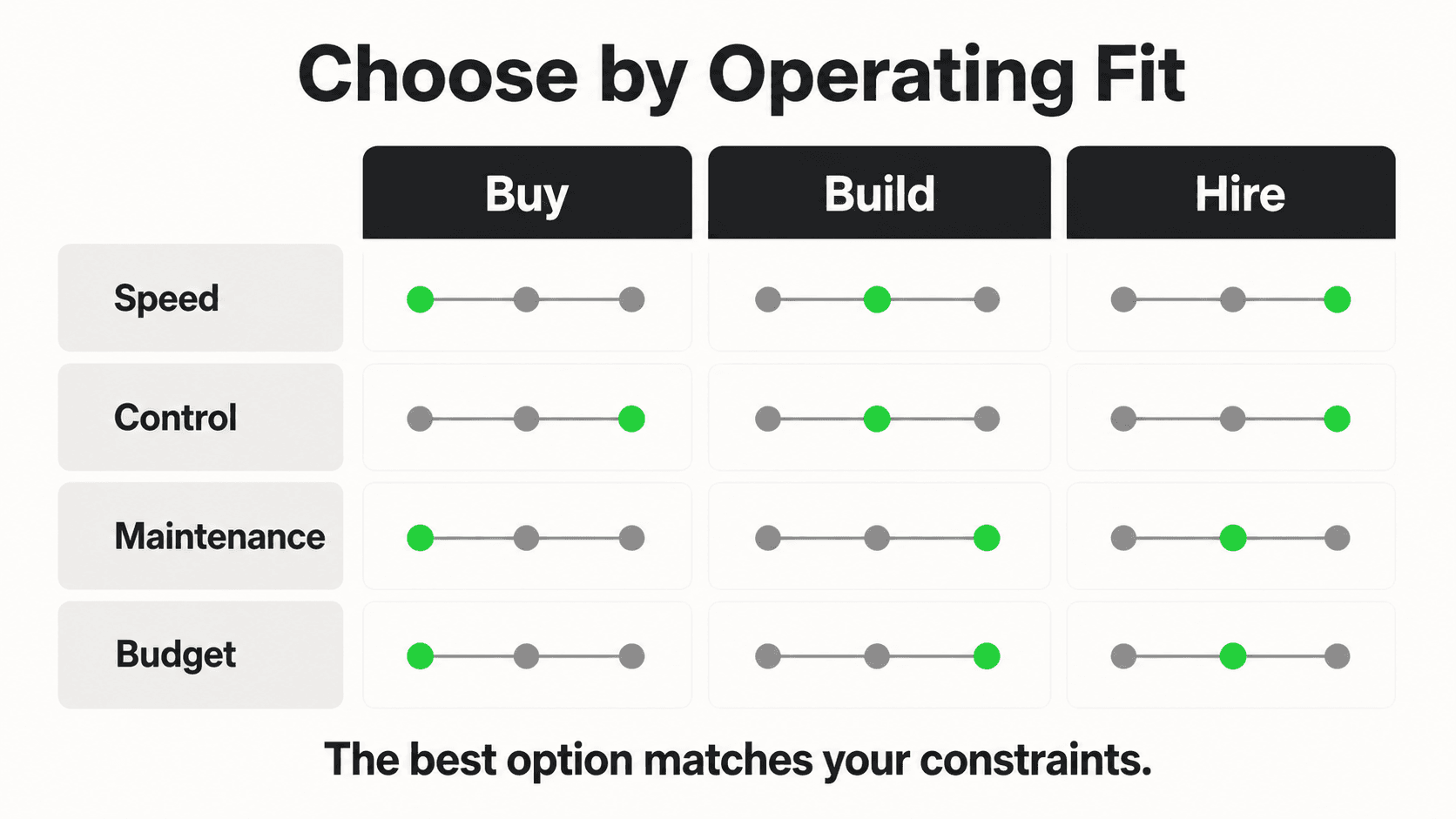
Buyers tend to lump everything into "chat tools," but the alternatives fall into three distinct buckets. Picking the wrong category is the #1 reason migrations fail.
Category A — Traditional live-chat tools. Agent-first inboxes with chat widgets. The closest analogues to LiveChat itself. Examples: Intercom, Tidio, Tawk.to, Crisp, Drift, Olark, Help Scout Beacon, Zendesk Chat, LiveAgent, Front, Kayako. Pick this category if you actually want humans on the other end and you are optimising agent productivity, not deflection.
Category B — AI-first chatbot platforms. The widget exists, but the centre of gravity is the bot. Train on your content, deploy, monitor. Humans are the fallback, not the default. Examples: Chatbase, Hyperleap, Landbot, Voiceflow, SiteGPT, Botpress, ProProfs Chat. Pick this category if you have a high-volume, repetitive query pattern and you want to stop paying for human attention to questions a model can answer.
Category C — Hybrid AI + human routing. AI handles tier-1, escalates to humans cleanly with full context. The buyer in 2026 increasingly wants this — not pure bot, not pure human. Examples: Intercom Fin, Hyperleap, Tidio Lyro, Freshworks Freddy, Zendesk AI Agents. Pick this category if you have any ticket complexity above "where is my order."
Hyperleap shows up in B and C because the platform is built around the hybrid premise — AI first, human handoff with full conversation context, on the same widget.
The big comparison table
This is the table buyers actually want. Pricing is the entry tier in USD. "AI deflection" means the platform ships native AI that can resolve conversations without a human, not just a scripted bot.
| Tool | Category | AI deflection? | Pricing start | Best for | Weakness |
|---|---|---|---|---|---|
| Intercom | A / C | Yes (Fin AI) | $39/seat/mo | B2B SaaS support at scale | Expensive; Fin AI billed per resolution |
| Tidio | A / C | Yes (Lyro) | $29/mo | SMB e-commerce, Shopify | Lyro caps; UI limits at scale |
| Tawk.to | A | No | Free | Budget-first SMB, agencies | No native AI; ads on free tier removed but support is paid |
| Crisp | A | Partial (MagicReply) | $25/mo | Multi-channel SMB | AI is autocomplete, not deflection |
| Drift | A / C | Yes | ~$2,500/mo | B2B sales / ABM | Sales-led pricing; overkill for support |
| Olark | A | No | $29/seat/mo | Small support teams wanting simple | No AI roadmap visible |
| Zendesk Chat | A / C | Yes (AI Agents add-on) | $55/agent/mo | Existing Zendesk shops | Locked into the Zendesk suite |
| Help Scout Beacon | A | Limited | $25/user/mo | Email-first teams adding chat | Beacon is a feature, not a product |
| LiveAgent | A | No | $15/agent/mo | Omnichannel on a budget | Dated UX; AI is bolted on |
| Chatbase | B | Yes (core product) | Free, $40/mo paid | Quick AI bot from your docs | No native human handoff inbox; integration-dependent |
| Hyperleap | B / C | Yes (core product) | $40/mo (Plus) | Hybrid AI + human, multi-channel, WhatsApp-native | Smaller brand; younger ecosystem than Intercom |
| Landbot | B | Yes (flow-based) | $45/mo | Visual flow builders, lead capture | Conversational flows feel scripted |
| Botpress | B | Yes (devs) | Free + usage | Developer teams building custom bots | Requires engineering; not a turnkey buy |
A note on the numbers: prices change, and several tools bill in USD only — factor currency conversion and local taxes into your effective cost outside the US. We have flagged the pricing model (per-seat, per-resolution, or flat) wherever it changes the buying decision.
Category A: traditional live-chat tools
Intercom
The most-cited LiveChat alternative, and for good reason. Intercom moved aggressively into AI with Fin and now bills it on resolutions ($0.99 per resolution at the time of writing). For a B2B SaaS team with $20–$100 LTV per ticket, that math works. For a high-volume, low-margin e-commerce shop, it does not.
Strengths: best-in-class agent inbox, mature workflows, Fin is genuinely good at retrieval-grounded answers, the help-centre and product-tour bundle is a real moat. Weakness: pricing surprises. The "Essential" tier marketing hides the per-seat-plus-per-resolution-plus-per-help-centre stack, and most buyers come out at $200–$500/month before they have onboarded.
Best fit: B2B SaaS support and product-led-growth motions. Avoid if your unit economics are thin.
Tidio
Tidio's Lyro AI is the SMB e-commerce darling. Pre-trained on common e-com intents (order status, shipping, returns), priced at $29/month for the starter tier with Lyro available on higher plans. Native Shopify and WooCommerce integrations.
Strengths: easy onboarding, fair pricing, Lyro genuinely deflects 30–50% of standard e-com queries without configuration. Weaknesses: Lyro caps on lower tiers (you pay per AI conversation), the UI starts to creak at 10+ agent teams, and the bot quality drops off for non-e-com domains.
Best fit: Shopify/Woo SMB. Switch from LiveChat → Tidio is a one-day migration for most.
Tawk.to
The free option that everyone considers and half the market actually uses. Tawk has been free forever and the company makes money on hire-an-agent services and paid features (whitelabel, AI assist).
Strengths: $0 price tag, clean widget, has matured a lot since 2018. Weaknesses: no native AI deflection — Tawk's AI assist is autocomplete-grade, not retrieval. If your goal is deflection, Tawk is the wrong category. If your goal is a free agent inbox, it's the right answer.
Best fit: agencies running 10+ client widgets, bootstrapped SMBs, anyone where the answer to "what's the chat budget?" is "zero."
Crisp
Belgian-built, multi-channel native. Crisp shines when you want one inbox for chat + WhatsApp + email + Instagram + Messenger. MagicReply is the AI layer but it's reply-suggestion, not full deflection.
Strengths: clean multi-channel, fair pricing, strong EU data posture (servers in France). Weaknesses: AI is not yet a deflection product; the "MagicReply" branding oversells what is essentially AI autocomplete.
Best fit: EU SMB with WhatsApp + Instagram traffic. GDPR-strict buyers love it.
Drift
Drift is no longer really a "live chat alternative" — it is a B2B revenue platform that happens to have chat. Salesloft acquired Drift in 2024 and the product is now squarely targeted at sales teams running ABM motions.
Strengths: best-in-class for "high-intent visitor on pricing page → book meeting with AE." Weaknesses: not for support. The pricing reflects this — sales-led, typically $2,500+/month, and overkill if you wanted a LiveChat replacement.
Best fit: B2B sales-led SaaS. Skip if you want support chat.
Olark, Help Scout Beacon, Zendesk Chat, LiveAgent
These four are the "drop-in replacement" cluster. Pick Olark if you want simple and don't care about AI. Pick Help Scout Beacon if you are an email-first team and want chat as a feature on top of Help Scout's mailbox. Pick Zendesk Chat if you are already paying Zendesk for support and just want chat in the same suite (Zendesk's AI Agents add-on is a credible deflection product if you are already in the ecosystem). Pick LiveAgent if you want omnichannel for $15/agent and don't mind a slightly dated interface.
None of these win the deflection battle. They win the "we want chat to be a small, predictable line item" battle, which is a real buyer.
Category B: AI-first chatbot platforms
Chatbase
Chatbase is the poster child for "point a bot at your URL, get an AI chatbot in 10 minutes." Free tier with 100 credits/month, paid from $40/month. The product is genuinely good at the demo: ingest a sitemap, ask questions, get retrieval-grounded answers.
Strengths: fastest time-to-first-bot of any tool in this list, reliable retrieval, decent embed widget. Weaknesses: it is a bot, not a customer ops platform. There is no native human inbox to escalate into. Most production buyers end up wiring Chatbase to Slack or a separate helpdesk for escalations, and the seams show.
Best fit: marketing-site bots, internal knowledge bots, lightweight FAQ deflection. Outgrown the moment you need real human handoff.
Hyperleap
Disclosure: Hyperleap is our product. We will be specific so you can judge fairly.
Hyperleap is a hybrid AI + human chat platform built for the post-LiveChat buyer. The pitch in one line: point it at your knowledge, get a deflection bot, when it can't answer it routes to a human on the same widget with full conversation context. Pricing starts at $40/month on the Plus plan. WhatsApp Business API is native, and the agent inbox is built in — not a separate purchase.
Where it wins: hybrid use cases, multi-channel (web + WhatsApp), buyers who want one bill not three. Where another tool wins: pure agent-only inbox at the lowest possible price (Tawk wins), brand-name buying for B2B enterprise (Intercom wins), pure no-handoff bot at lowest price (Chatbase wins on the very small end).
Best fit: SMB/mid-market with both AI deflection ambition and a human team, especially India + Southeast Asia ops.
Landbot
Landbot is the visual-flow champion. Drag a bot together, branching logic, lead capture, calendar booking. Strong for marketing teams that think in funnels rather than tickets. AI is a feature, not the spine — flows still feel scripted at the edges.
Best fit: marketing lead-capture, quizzes, structured onboarding flows.
Voiceflow, SiteGPT, Botpress, ProProfs Chat
Voiceflow is the agency/enterprise bot-building IDE — strong for teams designing complex assistants across voice and chat. SiteGPT is the lighter Chatbase competitor; honest, simple, $49+/month. Botpress is the developer-first option — open-source, free for small workloads, you build the assistant in code. ProProfs Chat is the budget bundled-bot tool that pairs an old-school chat with a new-school AI add-on; works if you already use ProProfs's other products.
Category C: hybrid AI + human routing
This is where the 2026 market is converging. Five tools stand out:
- Intercom Fin — best brand, best inbox, priced for B2B SaaS.
- Hyperleap — hybrid native, India-friendly pricing, WhatsApp-first.
- Tidio Lyro — SMB e-commerce sweet spot.
- Freshworks Freddy — strong if you already use Freshdesk.
- Zendesk AI Agents — strong if you already use Zendesk Support.
The pattern: each major support suite has bolted on an AI agent. The "best" tool depends almost entirely on which inbox you already have and what your unit economics tolerate per resolution.
Pricing breakdown (USD)
Sticker price hides a lot. Below is the realistic monthly cost for a 5-agent team handling ~3,000 conversations/month with AI deflection enabled where the product supports it.
| Tool | Sticker / agent / mo | Effective for 5 agents + 3k convos |
|---|---|---|
| LiveChat (incumbent) | $20–$59 | ~$295 + $149 ChatBot = $444 |
| Intercom + Fin | $39 + $0.99/res | $195 + ~$1,485 (1.5k Fin res) = $1,680 |
| Tidio + Lyro | $29 base, Lyro tier $59 | ~$295 |
| Tawk.to | $0 | $0 (+ ~$29 for whitelabel optional) |
| Crisp | $25/mo flat | ~$95 (Pro tier, multi-channel) |
| Chatbase | $40–$500/mo (no per-agent) | ~$150 (standard) |
| Hyperleap | $40/mo (Plus), scales by usage | $100–$200/mo effective (Pro/Max) |
| Landbot | $45/mo + usage | ~$150 |
| Botpress | Free + LLM cost | ~$50–$200 LLM passthrough |
| Zendesk Chat + AI | $55/agent + AI add-on | $275 + AI $200 = $475 |
The interesting line: every tool that has internalised AI deflection lands in roughly the same effective price band ($150–$500/month) for a small team. The tools that bill per-resolution (Intercom Fin) get expensive at volume. The tools that bill flat (Tidio, Hyperleap, Chatbase) stay predictable.
Decision matrix: which one for your shop?
This is the section to bookmark. We have mapped the six most common buyer personas to the tools that actually win for them.
SMB e-commerce (Shopify / WooCommerce)
Pick: Tidio (Lyro) or Hyperleap. Why: Lyro is pre-trained on e-com intents and the Shopify integration is one click. Hyperleap wins if you also have heavy WhatsApp traffic — Tidio's WhatsApp story is weaker. Skip: Intercom (overpriced for AOV under $100), Drift (wrong category).
B2B SaaS support
Pick: Intercom + Fin. Why: It is the safe default for a reason. The agent inbox, help centre, and Fin all cohere. Pricing hurts but unit economics for B2B SaaS support absorb it. Skip: Tawk (no AI), Olark (no AI roadmap), Crisp (multi-channel is wasted on you).
Agency running 5+ client widgets
Pick: Tawk.to or Hyperleap (multi-workspace). Why: You need cheap and white-labelable. Tawk is free; Hyperleap supports multi-workspace billing if you want AI deflection across clients. Skip: Anything per-seat — the math melts at 5 clients.
Multi-channel (WhatsApp + web + Instagram)
Pick: Crisp or Hyperleap. Why: Crisp is the EU-friendly default. Hyperleap is strong for WhatsApp-heavy ops with native WhatsApp Business API and flexible regional billing. Skip: Olark, Help Scout Beacon (single-channel by design).
Region-specific billing & data residency
Pick: Hyperleap. Why: Flexible regional billing and local tax invoicing, with WhatsApp Business API native. Many US-first tools force USD-only billing and US/EU-only data residency. Skip: Drift (no regional motion), Help Scout (US-tilted).
GDPR-strict EU ops
Pick: Crisp or Intercom (both have EU data regions). Why: Both publish DPAs, both offer EU-only data residency. Crisp is cheaper; Intercom is more enterprise-credible. Skip: Tools without published DPAs or with US-only hosting.
Migration considerations: what actually breaks
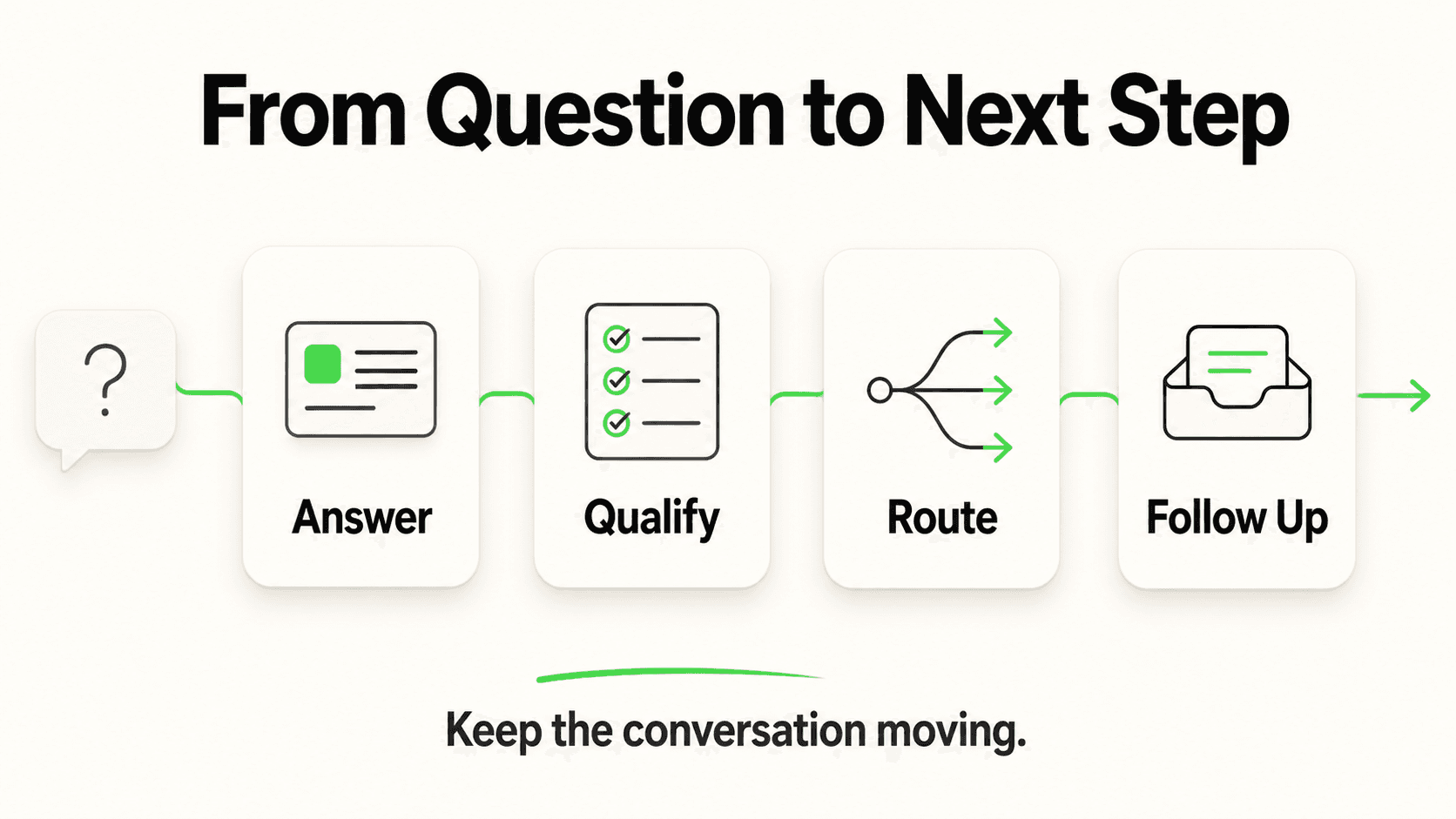
Switching live-chat tools is rarely a one-click event. Five things go wrong if you don't plan:
1. Transcript export. LiveChat will export your historical conversations as JSON or CSV. Most alternatives accept it on import, but the schema mapping is lossy — agent IDs, custom attributes, and tags often need a re-map. Budget half a day for a 10-agent team.
2. Agent retraining. Don't underestimate this. A new inbox UI changes muscle memory. Run a one-week parallel where the old and new widgets both ship; switch agents over in waves of 2–3.
3. Widget swap. The visual swap is one line in your app. The harder bit is canned responses, routing rules, and integrations — Slack, CRM, calendar — all of which need to be rebuilt in the new tool. Budget two engineering days.
4. Knowledge ingestion (for AI tools). Pointing Chatbase, Hyperleap, or Fin at your docs is fast. Tuning the bot so it stops hallucinating product names and pricing is slower. Plan two weeks of QA where a human reviews 100% of bot replies before going live.
5. Brief downtime. The widget swap itself causes ~5 minutes of "no chat available" if you do it during business hours. Most teams swap on a weekend.
The AI-deflection angle (the real reason for the move)
We buried the lede on purpose. The actual reason most teams are searching "live chat alternatives" in 2026 is not pricing or features — it is that modern buyers have learned that 60–80% of chat conversations don't need a human, and LiveChat doesn't deliver that natively.
Here are real deflection numbers we have seen across buyers in the last 12 months:
- Standard SMB e-commerce (order status, returns, shipping, sizing): 65–80% deflection with a well-tuned bot.
- B2B SaaS support (mixed simple + complex tickets): 40–55% deflection before quality degrades.
- Local services (booking, hours, directions): 70–85% deflection.
- Insurance / financial services (compliance-sensitive): 30–45% deflection — the rest needs a human by policy.
Two things matter for these numbers:
Quality of retrieval. Modern AI agents use RAG (retrieval-augmented generation) over your docs. The quality of the underlying retrieval — chunking, re-ranking, citation — determines whether deflection is real or whether you're just delaying the human handoff with frustrated users in the middle.
Quality of handoff. When the bot escalates, does the human get the full conversation context, the user's account state, and a suggested reply? Or do they get "user wants help"? The handoff is where most deflection projects fail — users get angry, not because the bot tried, but because escalation felt like starting over.
Tools that do both well: Intercom Fin, Hyperleap, Tidio Lyro, Zendesk AI Agents. Tools that do one well but not the other: Chatbase (great retrieval, weak handoff), most legacy chat tools (no retrieval, fine handoff).
So what should you actually buy?
A short, opinionated set of recommendations. Not "it depends" — actual picks.
- If you are an SMB e-commerce shop on Shopify and just want to stop paying LiveChat: Tidio with Lyro. One day to migrate, half the price, real deflection.
- If you are a B2B SaaS team with $50+ ACV per customer: Intercom + Fin. Pay the premium; the inbox is worth it.
- If you have heavy WhatsApp traffic: Hyperleap. Native WhatsApp, multi-currency billing, hybrid AI + human on one widget.
- If you have a $0 chat budget: Tawk.to. Don't pretend you're getting AI; you're not. But you're getting a clean inbox for free.
- If you are an agency running 5+ client widgets: Tawk for low-end clients, Hyperleap for anyone who wants AI deflection.
- If you live inside Zendesk already: Zendesk AI Agents. The integration tax of leaving outweighs the feature gap.
- If you are a developer-first team that wants to build, not buy: Botpress. Open source, you own the stack — see our chatbot development frameworks guide for build-vs-buy criteria.
FAQ
Is LiveChat (livechat.com) shutting down? No. It is a healthy, profitable business. The migration trend is not about LiveChat dying; it is about the buyer's question changing from "agent inbox" to "deflection."
Can I keep LiveChat for agents and add a separate AI bot? Yes — and many teams do exactly that, layering Chatbase or Hyperleap in front of the LiveChat widget. It works but you pay twice and the handoff is awkward. For most teams, consolidating is cleaner.
What's the cheapest alternative with real AI? Tidio's free tier includes Lyro on a small monthly cap. Chatbase's free tier gives you 100 credits/month. Hyperleap's Plus tier at $40/month is the most affordable paid tier with full hybrid handoff.
Does WhatsApp matter? If your buyers are in India, Southeast Asia, Brazil, the Middle East, or LATAM — yes, enormously. WhatsApp is the default chat channel in those markets. Crisp and Hyperleap handle this best.
Is it safe to put a bot in front of customers? Yes, with two guardrails: 1) constrain it to retrieval over your verified docs (no open-web answers), 2) have a clean human handoff when confidence is low. Tools that do both default to safe; tools that don't will hallucinate.
Final word
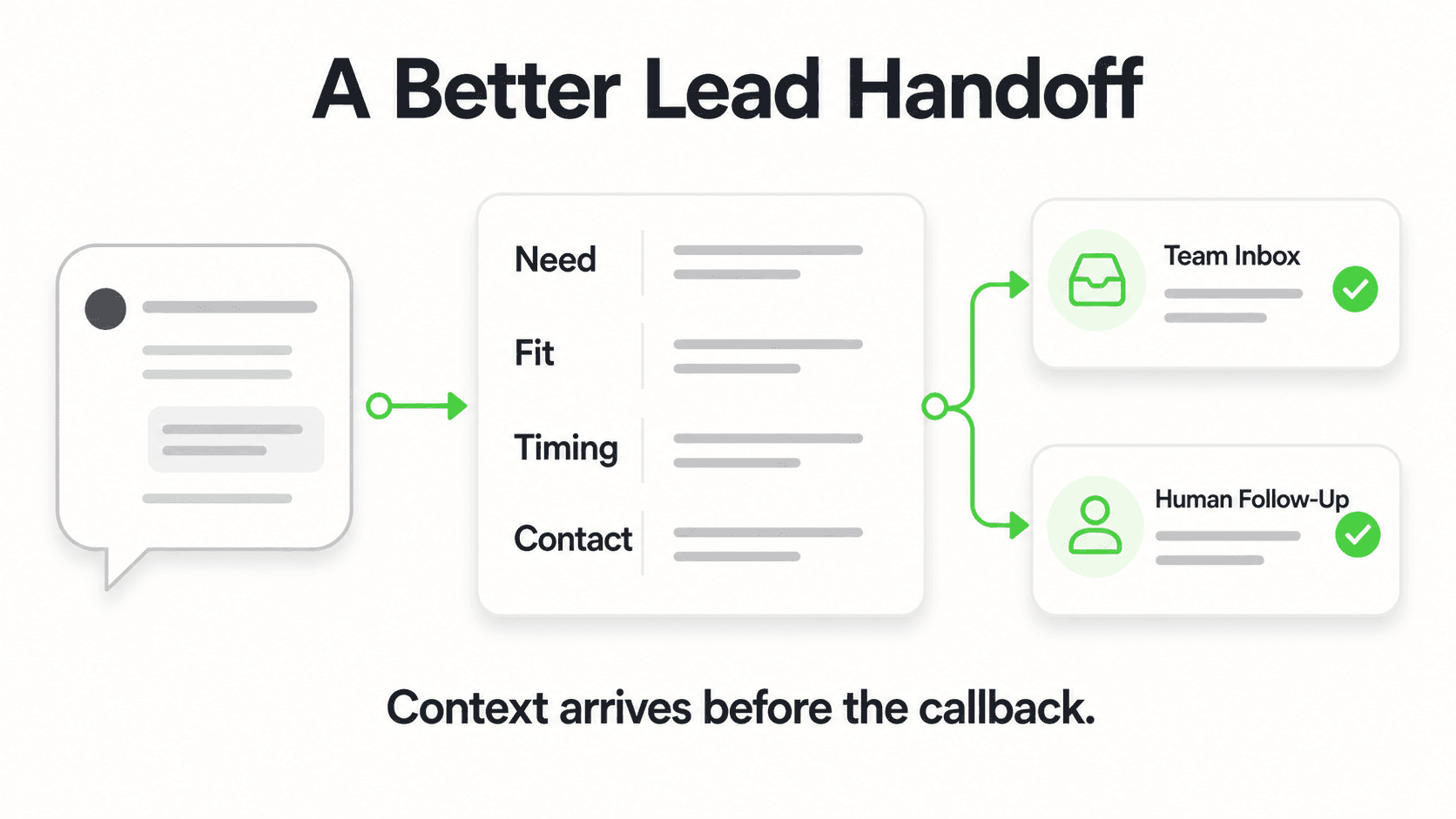
The right answer in 2026 is rarely the cheapest tool. It is the tool that matches your actual conversation profile — what percentage your team can responsibly deflect, what channel mix your buyers use, where your data needs to live, and what your unit economics tolerate per resolution.
If you are migrating off LiveChat for cost reasons, look at Tidio and Tawk first. If you are migrating because deflection is now core to your support strategy, look at Intercom Fin, Hyperleap, or Zendesk AI Agents. If you are running India ops with WhatsApp traffic, Hyperleap is built for you — and we will say so honestly. If you are not, one of the others on this list probably wins.
Either way, run a 14-day parallel before you cut over. The migrations that fail are the ones where someone clicked "swap widget" on a Friday afternoon.
How do I calculate the ROI of an AI chatbot?
The clean formula: (additional captured leads × average lead value × close rate) + (deflected support tickets × average handle cost) − (chatbot subscription + setup). Most SMBs see payback inside 90 days when after-hours capture and ticket deflection are tracked honestly.
How much money does an AI chatbot actually save?
It depends on your support volume and lead value. Industry benchmarks suggest 30–50% of routine inquiries can be handled without human involvement, though specific savings vary by configuration and business. Use a per-business calculation rather than headline averages.
What is the realistic deflection rate?
For SMBs with a well-configured knowledge base, 40–70% deflection of routine FAQs is achievable. Anyone promising 90%+ across the board is overselling — that number requires both unusually narrow scope and aggressive escalation suppression.
Further Reading
Authoritative external sources used and recommended for further research on this topic:
- Gartner customer service research
- Forrester customer experience research
- Harvard Business Review on customer response speed For phone-specific alternatives, see small business answering service alternatives.
Related Articles

Chatbase vs SiteGPT vs Hyperleap: An Honest Comparison
A founder-written comparison of Chatbase, SiteGPT, and Hyperleap across knowledge base, channels, lead capture, and pricing.

AI Chatbot vs Live Chat vs Contact Form (2026)
Contact forms convert at 2-5%. Live chat at 3-5x higher. AI chatbots match live chat 24/7 without staff. Here's how to choose for your business.
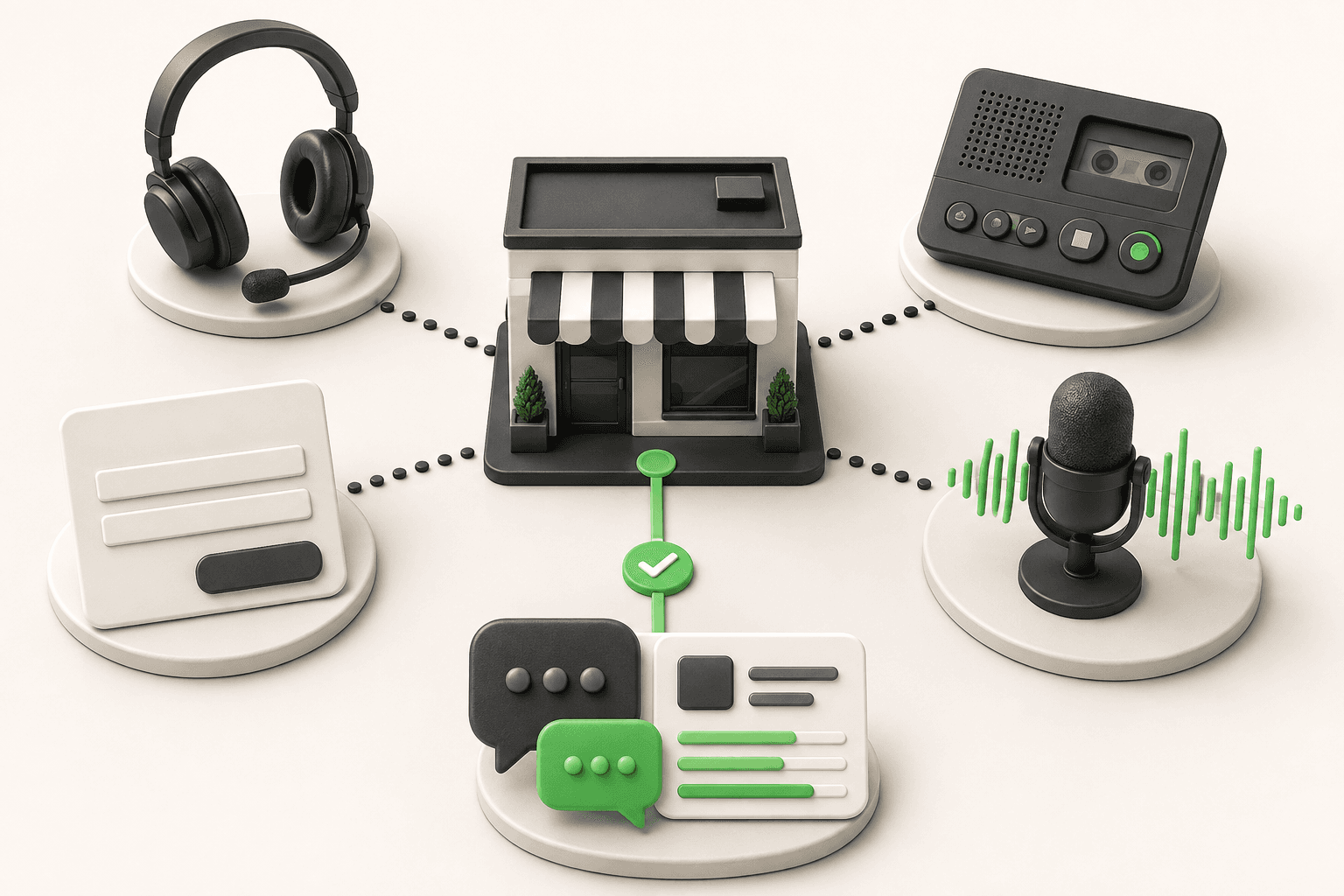
Small Business Answering Service Alternatives (2026)
8 small business answering service alternatives for 2026 compared on coverage, cost, and setup — from voice AI to chat-first AI receptionists.

How to Choose an AI Chatbot Platform
A comprehensive guide to selecting the right AI chatbot platform — covering features, pricing, integrations, and the questions to ask before you commit.