How to Reduce Customer Support Costs with AI (2026)
5 levers that cut customer support costs, real cost-per-ticket benchmarks, a worked SMB example, and where AI actually fails.
TL;DR: - The fully-loaded cost of a support ticket is $5–$15 for US SMBs — most teams underestimate it because they only count agent salary.
- Realistic AI deflection is 30–70%, not the 90% number vendors put on landing pages. Plan for the lower half of that range in year one.
- There are exactly five levers that cut support cost: deflection, self-serve, tier-1 automation, agent assist, and shift-left. Pulling all five compounds; pulling one is a rounding error.
- A 50-agent US support team can typically take 20–25% out of monthly support cost in the first 90 days and 40–45% by month 12 with a disciplined deployment — roughly $90k–$175k/month back on a ~$390k/month operation. Typical ranges; results vary by deployment quality and ticket mix.
- AI fails predictably on angry customers, account-specific edge cases, refund disputes, and anything requiring authority. Design the escalation, don't pretend it doesn't exist.
- Channel mix, Spanish coverage and where your agents sit change the math — a floor in San Francisco and one in Tampa have very different payback windows.
The deflection lever in practice is conversational AI for customer service — see how it resolves repetitive tickets and routes the rest.
How to Reduce Customer Support Costs with AI in 2026 (Worked Example, Real Benchmarks)
Most articles on this topic are content marketing wrapped around a chatbot demo. They tell you to "deploy AI" and project 90% cost reduction. The numbers don't survive contact with a real ops team.
This post is the version a head of CX would actually use to plan a budget. We'll walk through the actual cost components of a support function, the real benchmarks, the five levers that move the needle, a worked example with before/after numbers, where AI predictably fails, and the metrics worth tracking. The credibility is in being honest about what AI can't do.
What support actually costs (the parts everyone forgets)
Ask a CFO what a support ticket costs and they'll quote agent salary divided by ticket volume. That number is wrong by roughly 2x. The fully-loaded cost of a support function has eight components, and AI only attacks four of them.
1. Agent salary and benefits. In the US, a tier-1 support agent costs $40k–$60k loaded — toward the top of that range in high-cost metros like New York or San Francisco, toward the bottom in lower-cost cities. This is the biggest line item but it's not the only one.
2. Training and onboarding. Industry average is 4–8 weeks to productivity. At a 25–35% annual attrition rate (which is typical and often understated for BPO-heavy operations), you're permanently retraining 30% of the floor. That's 3–4% of total support cost in pure training overhead, more if you count the productivity ramp.
3. Tooling. Helpdesk, knowledge base, QA, WFM, telephony, CSAT survey tools. A reasonable mid-market stack runs $80–$150 per agent per month.
4. Attrition replacement cost. Beyond training, the loaded cost of replacing an agent is 50–100% of annual salary once you count recruiting, onboarding, lost productivity, and quality dip. At 30% annual attrition on a 50-agent floor, that's 15 agents replaced per year.
5. Escalation cost. A tier-2 or specialist agent is 1.5–2.5x the cost of tier-1. Every ticket that escalates carries that premium plus the wasted tier-1 time before handoff.
6. After-hours premium. 24/7 coverage typically adds 30–50% to total headcount cost (night shift differentials, smaller-team inefficiency, coverage gaps).
7. Multilingual coverage. Each additional language is a separate hiring pipeline. For most US teams Spanish comes first; every language after that (Vietnamese, Chinese, Tagalog) adds either dedicated agents or expensive language-tagged routing.
8. Quality and compliance overhead. QA reviewers, training content, audit trails, recording infrastructure. Usually 5–8% of total cost.
The headline metric — cost per resolved ticket — should include all eight. When it does, US support runs $5–$15 per ticket for SMBs and $15–$40 for enterprise. If your finance team is reporting numbers below this range, they're undercounting.
The 90% deflection myth
Every chatbot vendor's homepage promises 80–90% deflection. In production, the honest number for a well-deployed AI support stack is 30–70% deflection, with most SMBs landing in the 40–55% range by month six.
Here's why the gap exists:
- "Deflection" is often measured as "conversations the bot handled" — including users who said hi, asked for a human, and left. Real deflection is measured as resolved without human intervention AND no follow-up ticket within 7 days.
- The 90% scenarios are usually FAQ-style: "what are your hours," "where is my order." If your product has accounts, billing, technical configurations, or anything personalized, your floor is much lower.
- Vendors don't subtract the tickets that should never have existed (a self-serve UX fix would have eliminated them). True cost reduction shifts those tickets out of the system entirely.
Plan for 40% deflection in months 1–3, 50% in months 3–6, 60–70% by month 12 — and only if you invest in the knowledge base, fine-tuning, and escalation training the deployment actually needs.
The honest version of vendor math: If a vendor says "90% deflection," ask them to show you (a) the resolution rate excluding hi/bye conversations, (b) the 7-day re-contact rate on bot-resolved tickets, and (c) CSAT for bot-handled vs human-handled tickets. If they can't produce all three, the 90% number is marketing.
The 5 levers that actually cut support cost
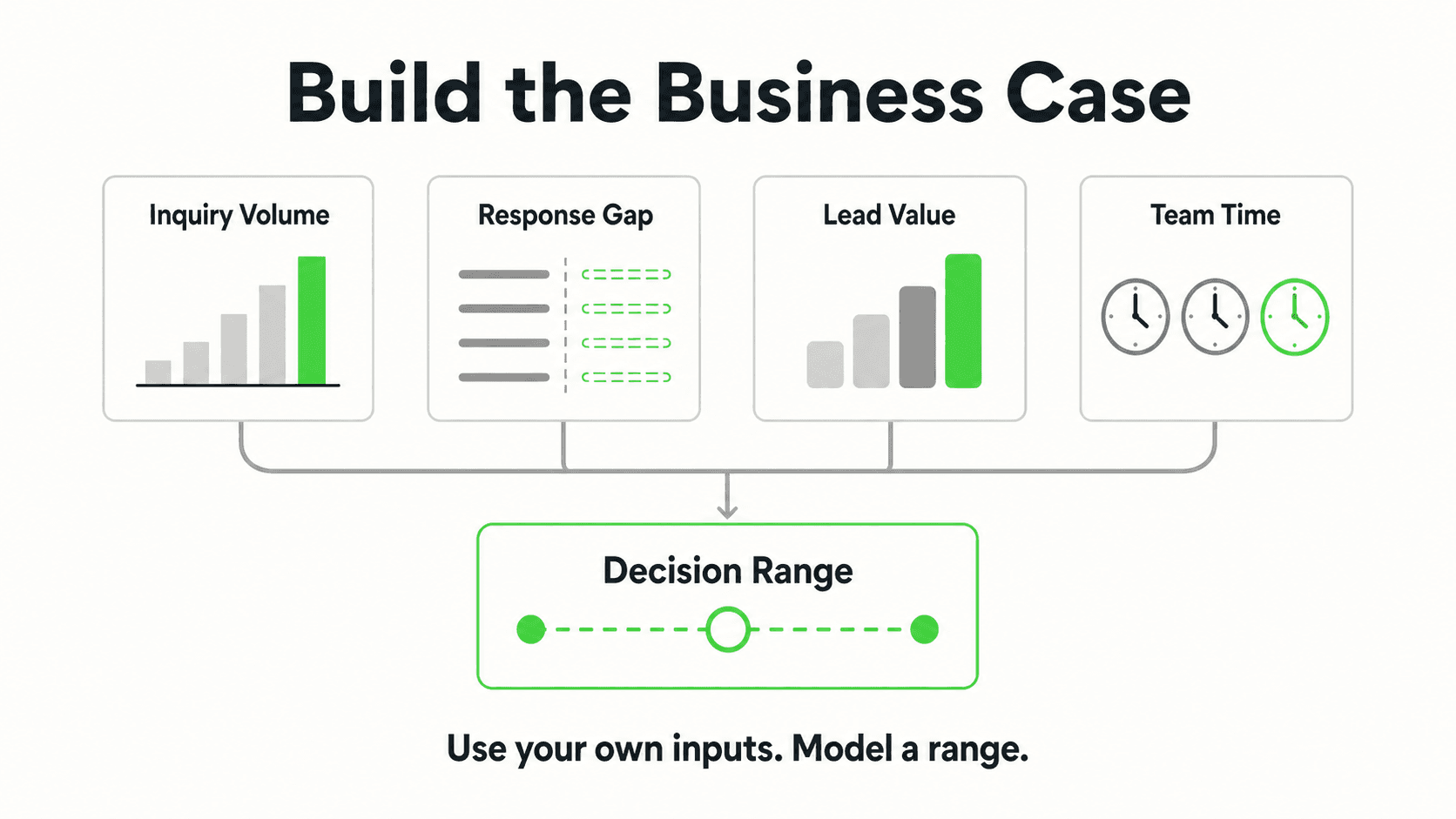
Cost reduction in support comes from five distinct mechanisms. They compound — pulling all five gets you 40–60% cost reduction. Pulling one usually nets 8–15%, which gets you fired six months in when the board asks why the savings stalled.
Lever 1: Deflection (AI handles the ticket)
The AI bot, on chat or WhatsApp or voice, resolves the customer's issue end-to-end without a human. This is the lever everyone talks about. Best for: FAQs, status checks, account info reads, simple how-tos, returns initiation, basic troubleshooting.
Realistic ceiling: 50–60% of inbound volume for SMBs in the first year. Going higher requires deep integration (CRM, OMS, identity) and is where most projects stall.
Lever 2: Self-serve (the ticket never starts)
A high-quality help center, in-product help, and search that actually works. The ticket gets resolved before the customer opens a chat window. This is the cheapest lever per dollar of cost saved because you're not paying any inference cost — but it requires sustained content investment.
Mature self-serve operations deflect another 15–25% of would-be tickets on top of AI deflection.
Lever 3: Tier-1 automation (smart routing, canned responses, copilots)
Even when a human agent handles the ticket, automation can cut average handle time (AHT) by 30–50% via:
- AI-suggested replies that the agent edits and sends
- Auto-classification and routing to the right queue
- Auto-summarization of the customer's history before the agent reads
- Macro suggestion based on intent
This doesn't reduce ticket volume — it reduces cost per ticket on the volume that survives.
Lever 4: Agent assist (the AI copilot)
The senior version of tier-1 automation. Real-time copilot that pulls from policy docs, past tickets, KB articles, and the customer record while the agent is mid-conversation. Cuts AHT and — more importantly — cuts escalation rate because tier-1 agents resolve things they used to escalate.
Expect 20–35% AHT reduction and 10–20% escalation reduction with a properly tuned copilot.
Lever 5: Shift-left (fix the product, kill the ticket category)
The highest-ROI lever and the one nobody runs because it requires product engineering involvement. Categorize incoming tickets, find the top 10 ticket-driving issues, and fix them in the product itself.
Examples: a confusing checkout error message that drives 4% of all tickets; a billing date mismatch that drives 6%; an unclear shipping ETA UI that drives 3%. Fix these and that volume disappears permanently. Some teams cut 15–25% of total volume in two quarters this way.
The five levers together is what gets you from "we tried a chatbot and saved 12%" to "we cut support cost 45% in a year."
Worked example: 50-agent SMB ops team
Let's run the math on a hypothetical US-based D2C ecommerce SMB. Setup: 50 in-house agents, 24/7 coverage, ~60,000 tickets/month, bilingual (English + Spanish).
Before AI deployment
| Cost Component | Monthly Cost (USD) | Notes |
|---|---|---|
| Agent salaries (50 × $4,000 loaded avg) | $200,000 | Tier-1, ~$48k/year loaded |
| After-hours / shift premium (35%) | $70,000 | 24/7 coverage |
| Tier-2 specialists (8 × $6,500) | $52,000 | Escalations |
| Helpdesk + tooling stack | $7,000 | Zendesk-tier + KB + QA, ~$120/seat |
| Training & attrition (30% annual) | $25,000 | Recruiting + ramp |
| QA and compliance | $22,000 | 4 reviewers + tooling |
| Multilingual premium (Spanish pod) | $8,000 | Bilingual pay differential + scheduling |
| Telephony + infra | $9,000 | Voice channel |
| Total monthly cost | $393,000 | |
| Tickets resolved / month | 60,000 | |
| Fully-loaded cost per ticket | $6.55 |
That's inside the $5–$15 range for US SMBs, toward the low end because 60,000 tickets a month spreads the fixed costs thin.
After 90 days of disciplined AI deployment
The team deploys all five levers: AI bot on web chat + WhatsApp (deflection), refreshed help center (self-serve), AI routing + suggested replies (tier-1 automation), agent copilot (agent assist), and a top-10 ticket-driver fix list shipped by product (shift-left).
Outcomes at day 90:
- 48% AI deflection of incoming volume (28,800 tickets/month resolved without human)
- 12% reduction in incoming volume from shift-left product fixes
- 28% AHT reduction on remaining human-handled tickets via copilot + suggested replies
- Headcount reduces by 18 agents through attrition and redeployment to other teams (no layoffs needed)
- 1 fewer tier-2 specialist needed
| Cost Component | Monthly Cost (USD) | Change |
|---|---|---|
| Agent salaries (32 agents) | $128,000 | -$72,000 |
| After-hours premium (reduced floor) | $44,800 | -$25,200 |
| Tier-2 specialists (7 × $6,500) | $45,500 | -$6,500 |
| Helpdesk + tooling | $7,000 | unchanged |
| AI platform (Hyperleap-class) | $8,000 | new |
| Training & attrition | $20,000 | -$5,000 |
| QA and compliance | $22,000 | unchanged |
| Multilingual premium | $5,000 | -$3,000 (bot covers L1 Spanish) |
| Telephony + infra | $8,000 | -$1,000 |
| KB content investment (one-time, amortized) | $4,000 | new |
| Prompt eng + ongoing eval | $8,000 | new |
| Total monthly cost | $300,300 | -$92,700 |
| Tickets resolved / month | 52,800 | -12% volume from shift-left |
| Fully-loaded cost per ticket | $5.69 | -13% per ticket |
| Total monthly savings | $92,700 | 23.6% cost reduction |
A disciplined 90-day deployment lands a 20–25% cost reduction. By month 12, with deflection climbing to 60%+ and another shift-left wave shipped, the same team typically reaches 40–45% total cost reduction — roughly $157k–$177k/month back.
Hyperleap typically delivers 40–60% deflection inside 60 days for SMB support deployments, with the help center and WhatsApp integration done in parallel. We size deployments against the five-lever model, not against deflection rate alone — that's why our 12-month cost reduction numbers tend to land in the 40–50% band for ecommerce, fintech, and SaaS SMBs.
Where AI predictably fails (don't oversell)
If you ship AI support without designing for these failure modes, you'll trade cost savings for CSAT damage and end up worse than before.
Angry customers. Sentiment-detect early and route to a human within the first turn. A bot trying to "empathize" with a furious customer is the single fastest way to escalate from a recoverable issue to a public Twitter thread.
Account-specific edge cases. "Why was I charged twice on the 14th but only once on the 15th when I bought the same SKU" — these need an agent with full system access and authority to issue corrections. Bots can prep the case and hand off, but shouldn't try to resolve.
Refund disputes and policy exceptions. Anything where the answer is "no, but here's what we can do" requires human judgment and authority. Bots that say "no" rigidly drive escalations; bots that say "yes" liberally cost you margin.
Technical edge cases. When the issue is a real bug or an unusual configuration, the bot will hallucinate confident-sounding but wrong instructions — this is where the gap between AI agents and chatbots becomes obvious. Route to a tier-2 with the conversation history attached.
Anything legally or financially binding. Pricing decisions, contract changes, regulated information (medical, legal, financial advice). Don't let the bot commit the company.
The escalation pathway is the most under-engineered part of most AI deployments. Spend as much design effort there as you did on the happy path.
Hidden costs of AI deployment
The vendor pitch is "$X per month, plug and play." Reality includes line items most teams don't budget for.
- Knowledge base preparation. 80–200 hours of writing, editing, and structuring content the bot can actually retrieve from. If your help center is stale, this is the real first month.
- Prompt engineering and tuning. 40–80 hours per major intent surface. Ongoing as you add capabilities.
- Escalation workflow design. Who gets pinged, with what context, on what trigger, on what channel. Usually 20–40 hours.
- Fine-tuning and RAG configuration. If you go beyond out-of-the-box, expect 40–120 hours of engineering work in the first quarter.
- Ongoing eval. A test set of 200–500 representative conversations, run weekly, with regression tracking. Without this, model or prompt drift will erode quality silently. Plan 8–12 hours/week for someone to own eval.
- Integration work. CRM, OMS, identity, billing — each integration is 40–120 hours of engineering.
- Agent training. Agents need to learn the new copilot, the new escalation flow, and how to QA bot transcripts. 8–16 hours per agent.
A realistic year-one all-in cost for an SMB AI support deployment is $35k–$70k above the platform license, mostly in human time. Bake this into the ROI model or you'll miss the payback period by two quarters.
The metrics that matter
Track these. Stop tracking vanity metrics like "messages handled" or "users engaged." If you're not sure which numbers actually matter, this rundown of chatbot KPIs is a good starting scorecard.
- CSAT (post-resolution). The single most important number. Track it for bot-resolved, human-resolved, and escalated tickets separately. If bot CSAT is more than 8 points below human CSAT, your deflection is hurting you.
- First Contact Resolution (FCR). Of the tickets the bot or agent "resolved," how many didn't come back within 7 days? This is the truth-teller. A 70% deflection rate with 55% FCR is a 38% real deflection rate dressed up.
- Average Handle Time (AHT). For human-handled tickets, this is your copilot scoreboard. Down-trending AHT with stable CSAT means your copilot is working.
- Deflection rate (with the FCR adjustment). True deflection = bot-resolved AND no follow-up within 7 days.
- Cost per resolved ticket (fully loaded). All eight cost components, divided by tickets that actually got resolved (not opened).
- Escalation rate. Tier-1 to tier-2. A copilot that's working will reduce this without reducing CSAT.
- Bot containment vs deflection. Containment = stayed in bot. Deflection = stayed in bot AND was resolved. The gap is your wasted spend.
Vanity metrics to ignore: total conversations, "engagement rate," messages handled, users helped. None of these tell you anything about cost or quality.
The 3-month implementation timeline that works
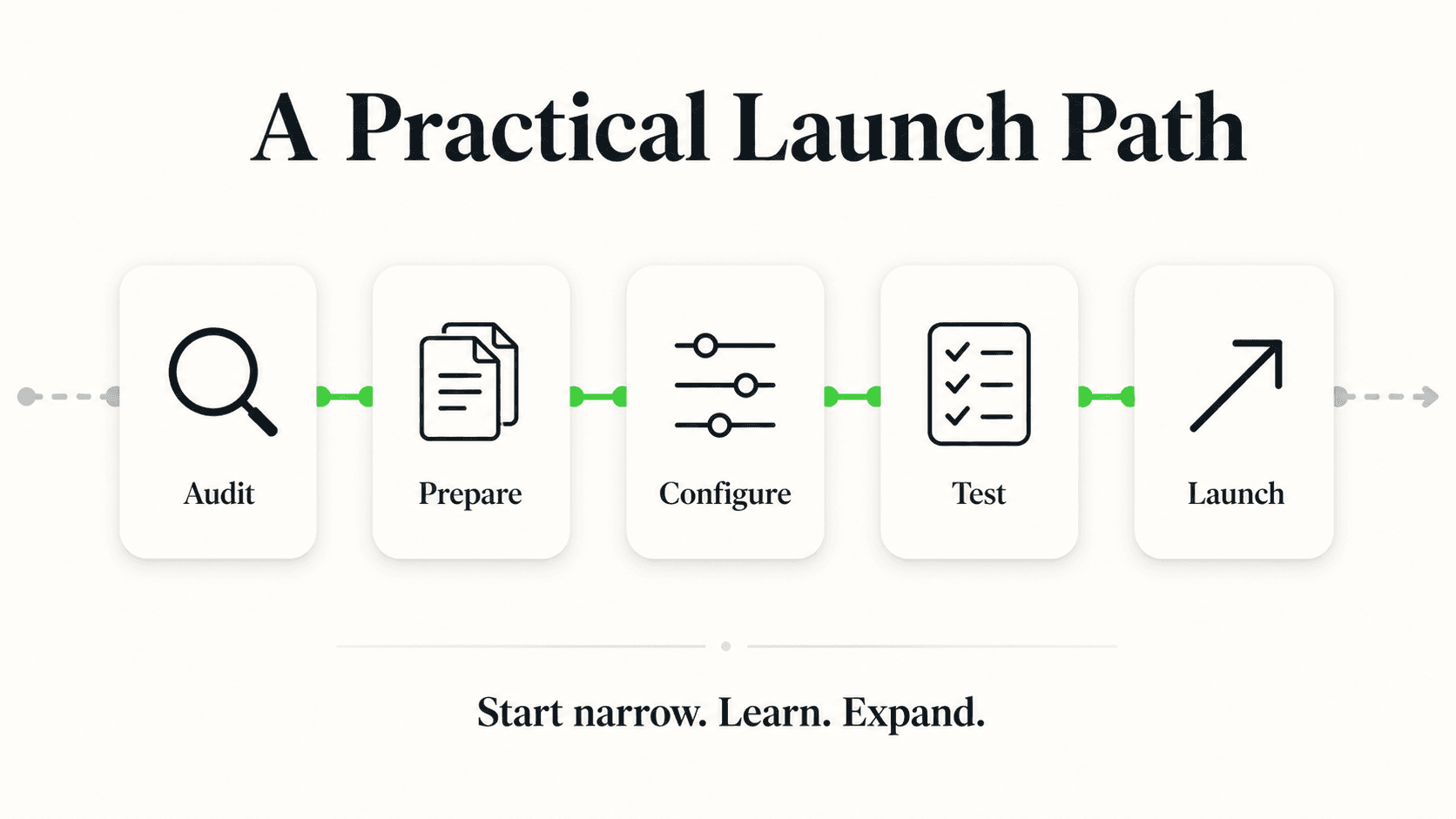
Most failed AI deployments fail because the team tries to do everything at once. The shape that works:
Month 1 — Foundation.
- Audit current ticket volume, top 20 intents, top 10 escalation drivers.
- Refresh top 30 help center articles. Kill the rest or hide them from retrieval.
- Stand up the AI bot on web chat with the top 10 intents only. No WhatsApp yet.
- Configure escalation: any negative sentiment, any account-specific question, any "speak to human" → human within one turn.
- Define your eval set: 200 representative historical conversations with labeled correct outcomes.
Month 2 — Expansion.
- Add a messaging channel such as WhatsApp or Instagram — for brands with Hispanic or international customers, WhatsApp is often where a large share of inbound already is.
- Expand to top 25 intents.
- Ship the agent copilot to the floor. Train agents.
- Start the shift-left workstream: hand product the top 10 ticket-driver list with monthly volume and cost data.
Month 3 — Optimization.
- First fine-tuning pass based on month 1–2 conversation data.
- Add multilingual coverage (Spanish first, then your next-largest customer language) — bot scales here essentially for free; agent pods are expensive.
- First product-side shift-left fixes ship.
- Eval cadence stabilizes at weekly.
- Headcount adjustments via attrition begin (don't fire — let the floor shrink as deflection ramps).
By day 90, expect 40–50% deflection, 25–30% AHT reduction, 20–25% total cost reduction. Year-one targets of 40–50% cost reduction are reasonable from there.
Adjusting the math for your team
The worked example is one shape of US support team. Four things move the numbers for yours:
1. Put the bot where the volume is. Most US customers start on web chat, email or phone. WhatsApp matters when you serve Hispanic or international customers — for those brands it can carry a large share of inbound. Deflect on the channels your tickets actually arrive on; web chat alone misses the rest.
2. Spanish coverage is the unlock. Adding a language to the bot is roughly free; staffing a bilingual pod means pay differentials and a separate schedule to cover. AI deflection economics are most favorable in multilingual environments.
3. Where your agents sit changes the payback. A 50-agent floor in San Francisco or New York costs far more than the same floor in Tampa or Salt Lake City, or with an outsourced BPO. AI is cost-positive in all of them, but the absolute savings scale with agent cost, so the ROI window stretches. Plan for roughly 6-month payback in high-cost metros and 9–12 months for lower-cost or outsourced floors.
4. Voice still lags chat. Voice-channel deflection trails chat deflection by 12–18 months in maturity. Don't promise voice deflection numbers in year one. Use voice AI for IVR replacement and call summarization first, full deflection later.
What to do this week
- Pull last 90 days of ticket data. Tag the top 20 intents by volume. This is your deflection target list.
- Compute fully-loaded cost per ticket using all eight components above. The number will surprise you.
- Pick five tickets you'd be embarrassed if a bot handled badly. Write down what "good" looks like for each. This is your CSAT floor.
- Start the shift-left list. Top 10 ticket drivers, with monthly volume × cost per ticket. Hand it to product as a ranked backlog.
- Pick a vendor that will show you real deflection numbers (with FCR adjustment), not landing-page numbers. If they can't, move on.
Cost reduction in support is a 12-month project, not a 30-day project. Teams that treat it as the latter come back in six months claiming "AI doesn't work." It works — it just doesn't work the way the vendor decks promise. Pull all five levers, design for the failure modes, track real metrics, and the 40–50% number is conservative.
Further Reading
Authoritative external sources used and recommended for further research on this topic:
- Gartner customer service research
- Forrester customer experience research
- Harvard Business Review on customer response speed
Deflection is one of the main cost levers — see what is ticket deflection for how to measure it honestly before you bank on the savings.
Frequently Asked Questions
How do I calculate the ROI of an AI chatbot?
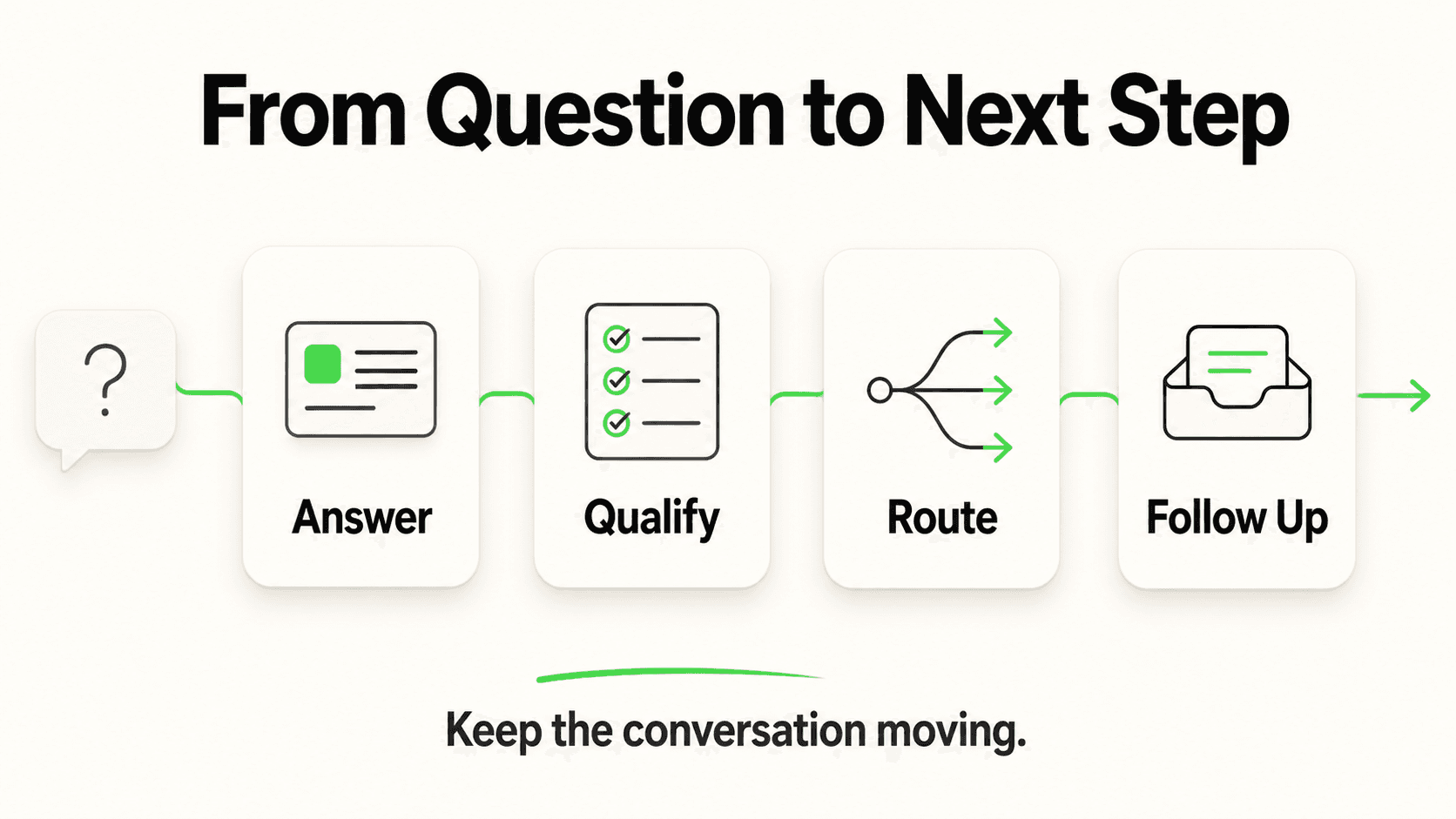
The clean formula: (additional captured leads × average lead value × close rate) + (deflected support tickets × average handle cost) − (chatbot subscription + setup). Most SMBs see payback inside 90 days when after-hours capture and ticket deflection are tracked honestly.
How much money does an AI chatbot actually save?
It depends on your support volume and lead value. Industry benchmarks suggest 30–50% of routine inquiries can be handled without human involvement, though specific savings vary by configuration and business. Use a per-business calculation rather than headline averages.
What is the realistic deflection rate?
For SMBs with a well-configured knowledge base, 40–70% deflection of routine FAQs is achievable. Anyone promising 90%+ across the board is overselling — that number requires both unusually narrow scope and aggressive escalation suppression.
How long does it take to set up an AI chatbot with Hyperleap?
Most SMBs go live in 3–5 days for self-serve setup. With Managed Setup ($299 Free, available on every plan), Hyperleap builds the bot for you on your content and channels. A 7-day free trial is included on every plan.
Related Articles
24/7 Customer Support for Small Business: 5 Real Options
Compare 5 ways small businesses offer 24/7 customer support — realistic costs, coverage, and what each option actually handles at 3am.

AI Chatbot for SaaS Companies: Cut Support Load, Speed Onboarding, and Keep Customers in 2026
How SaaS teams use an AI chatbot to deflect repetitive how-to questions, activate trial users, qualify demos, and support a global customer base — without adding headcount or risking wrong answers.

AI Chatbot for All-Inclusive Resorts (2026)
All-inclusive resorts use AI chatbots to upsell upgrades, answer package questions, and boost direct bookings over OTA channels.

AI Chatbot for Beach Resorts: Seasonal Guide
How beach resorts use AI chatbots to capture bookings in peak season, reduce OTA dependency, and respond to guests 24/7.