AI Chatbot for All-Inclusive Resorts (2026)
All-inclusive resorts use AI chatbots to upsell upgrades, answer package questions, and boost direct bookings over OTA channels.
TL;DR: All-inclusive resorts lose direct bookings to OTAs because guests comparing "Platinum vs. Diamond" inclusions sit around for hours waiting on an answer, then book elsewhere. AI chatbots answer package questions on the spot, upsell upgrades while the guest is still deciding, and handle group and family bookings around the clock — helping Caribbean, Cancun, and Maldives properties claw back direct revenue and lift per-guest spend (results vary by property).
AI Chatbot for All-Inclusive Resorts: Upsell Packages and Fill Rooms (2026)
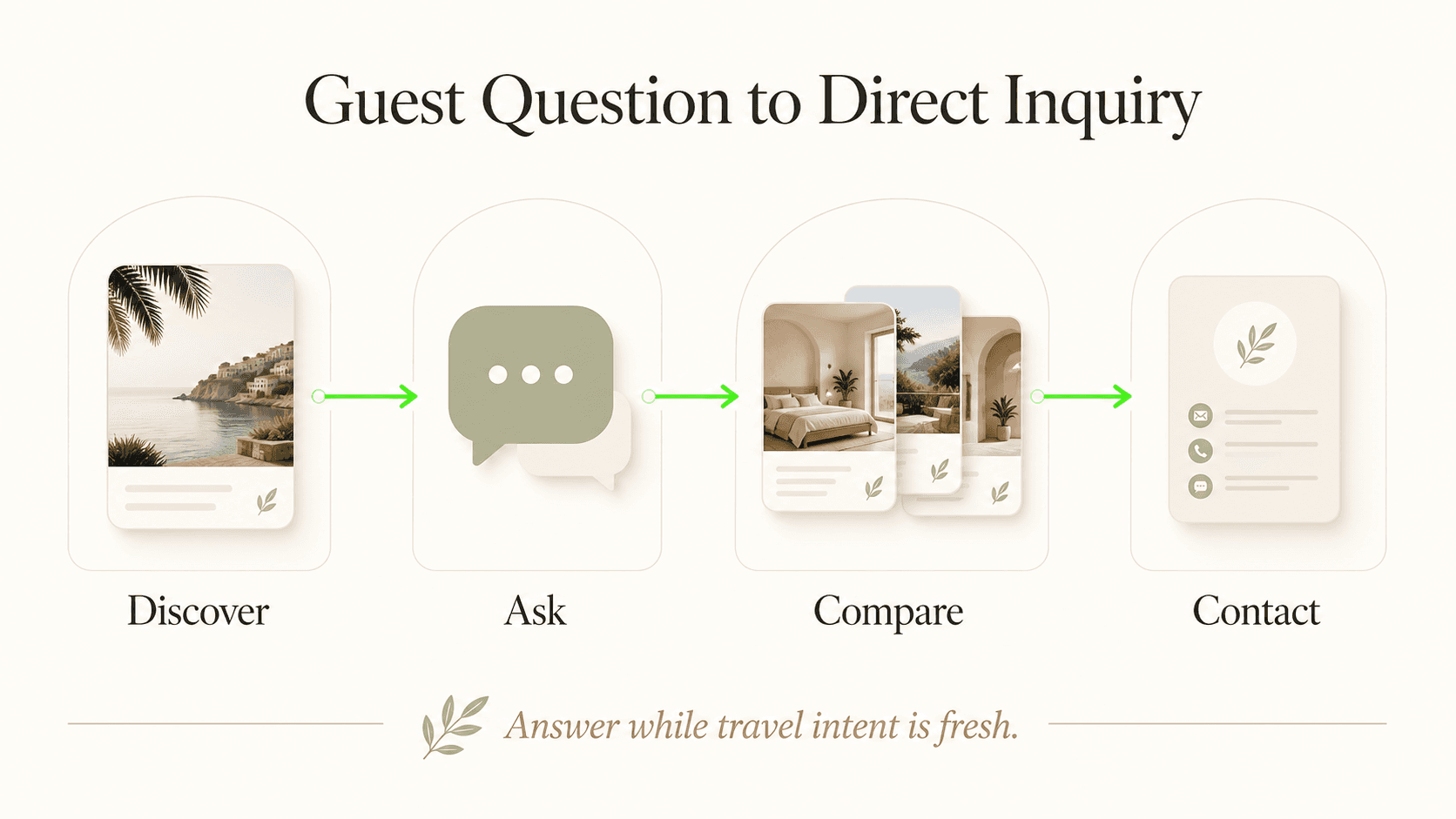
A couple from Toronto has fourteen browser tabs open, comparing two Jamaica resorts. At 10:30 PM they message one of them: "Does the Premium package include the à la carte restaurants, or do we book those separately? And is the swim-up suite upgrade available the first week of August?"
Eleven seconds later, they have an answer. A clean breakdown, confirmed August availability, a direct-booking rate, a free room upgrade thrown in.
The other resort? Auto-reply. "Thank you for your inquiry. Our team will respond within 24 hours."
By morning, the couple is booked. Just not there.
This plays out hundreds of times a day across the all-inclusive market — a segment worth roughly $30 billion annually, according to Allied Market Research (2025). The complexity that makes the category what it is — tiered packages, room categories, dining credits, excursions, family supplements — is the exact same complexity that paralyzes sales teams and hands guests to OTAs.
AI chatbots cut through that. Instant, accurate package guidance, delivered fast enough to turn a curious browser into a confirmed guest before they close the tab.
Who This Guide Is For
This guide is for general managers, revenue managers, and digital marketing teams at all-inclusive resorts in the Caribbean (Jamaica, Dominican Republic, Turks & Caicos), Mexico (Cancun, Riviera Maya), the Maldives, and global Club Med and similar brands. If your guests ever ask "what's actually included?" — this guide is for you.
The All-Inclusive Package Complexity Problem
All-inclusive is one of the most-searched travel formats on the planet, and one of the least understood. Every resort draws the line on "all-inclusive" somewhere different. That ambiguity is your biggest conversion killer.
Package Comparison Paralysis
Look at what a typical Cancun resort expects a guest to decode alone:
- Standard plan: Buffet restaurants, house brand drinks, beach and pool access, non-motorized water sports
- Premium plan: À la carte specialty restaurants (up to 2 bookings per stay), premium international spirits, room service, upgraded minibar
- Platinum plan: Unlimited à la carte dining, premium swim-up or ocean-view room, private beach section, butler service for stays of 4+ nights
A family of four weighing a $200/person/night jump from Standard to Platinum will have a dozen small questions. Do the kids eat free at the à la carte? Is lobster included, or a supplement? Can we swap the four Platinum dinners for different restaurant combos? Does Platinum cover excursions, or just on-site activities?
Every one of those questions that goes unanswered nudges the booking a little closer to an OTA — which will happily present a clean comparison table and strip the resort of 18-22% commission in the process.
The OTA Commission Pressure
Phocuswright (2025) puts OTA penetration in the all-inclusive Caribbean segment above 52% of room nights at major resort chains. At an average all-inclusive booking value of $3,000-8,000 for a family stay, one booking routed through an OTA costs the resort $540-1,760 in commission. Multiply that across a high season of 5,000 booked room nights and you're looking at $2.7-8.8 million a year — commission on bookings the resort should have kept.
Whoever answers the question instantly wins the direct booking. Whoever delays loses it to Expedia, Booking.com, or a travel agent collecting their own cut.
Group and Family Coordination Complexity
All-inclusive is the go-to format for group travel — family reunions, wedding parties, corporate incentive trips, multi-generational holidays. These bookings run high-value ($20,000-100,000+ for a 10-20 room group) and high-complexity:
- Multiple room categories across varying budgets within the same party
- Kids' club enrollment and age bracket coordination
- Dietary restrictions and allergy management across 20+ guests
- Coordinating arrival times when the group lands on different flights
- Negotiating group rates and deciding which inclusions actually matter
Handle that serially — one email, one question at a time, over several days — and you've told the group coordinator this property isn't organized enough to host them. An AI that works through all of it fluently, at 2 AM if needed, sends the opposite signal right when a coordinator is deciding whether to commit tens of thousands of dollars.
Why Traditional Reservations Handling Fails All-Inclusive Resorts
After-Hours Inquiry Volume
People researching vacation packages do it at night. After work, after dinner, once the whole family's in the room to actually make the call. Salesforce's State of the Connected Customer (2024) found 76% of consumers expect consistent service regardless of when they reach out — but most resort reservations desks close by 6 PM local time.
Take a Cancun resort on Central Time (GMT-6). Here's who's messaging, and when:
- East Coast US families (GMT-5): peak hours 8-11 PM ET = 7-10 PM CT (barely covered)
- West Coast US families (GMT-8): peak hours 9-11 PM PT = 11 PM-1 AM CT (not covered)
- UK guests (GMT): peak hours 8-10 PM GMT = 2-4 PM CT (sometimes covered)
- German and Scandinavian guests (GMT+1/+2): peak hours 9-11 PM = 3-5 PM CT (usually covered)
- Canadian families (ET/PT): same pattern as the US
A meaningful chunk of your highest-value source markets are messaging while the desk is closed or down to one person.
Jungle Lodges & Resorts, a hospitality group in Karnataka, India, brought in Hyperleap AI and picked up 3,300+ leads in 90 days — 35% of them after hours. Those are inquiries that would otherwise have gone cold, or gone to a competitor.
Early Booking vs. Last-Minute Rate Confusion
All-inclusive properties run sophisticated revenue management — early bird discounts, last-minute rates, flash sales, seasonal pricing shifts. Try to communicate all of that through static web copy and you'll always be behind: pricing moves weekly, room availability shifts daily, promo windows open and close faster than a web team can update a page.
A guest booking 8 months out to lock in the early bird rate needs a different conversation than one checking availability 3 weeks before arrival, who might land on distressed inventory instead. AI chatbots configured with current pricing and promo logic can hold both conversations at once, matching the offer to the guest's actual booking horizon.
Repeat Guest Recognition
Repeat guests generate 3-5x higher lifetime value than first-timers, per the American Hotel & Lodging Association (2024). Resorts with strong loyalty cultures — Club Med Plus, Sandals' Beaches Rewards, Excellence Collection's tiers — live or die on recognizing returning guests and upselling in a way that acknowledges their history.
The Club Med family that always books the family suite with teen activities should get offered the relevant upgrade, not a generic pitch. The Maldives couple who mentioned wanting a water villa "next time" should see that upsell front and center on their next inquiry. A reservations team fielding hundreds of inquiries a year can't reliably do this for everyone. AI can.
The 7 Core AI Capabilities Every All-Inclusive Resort Needs
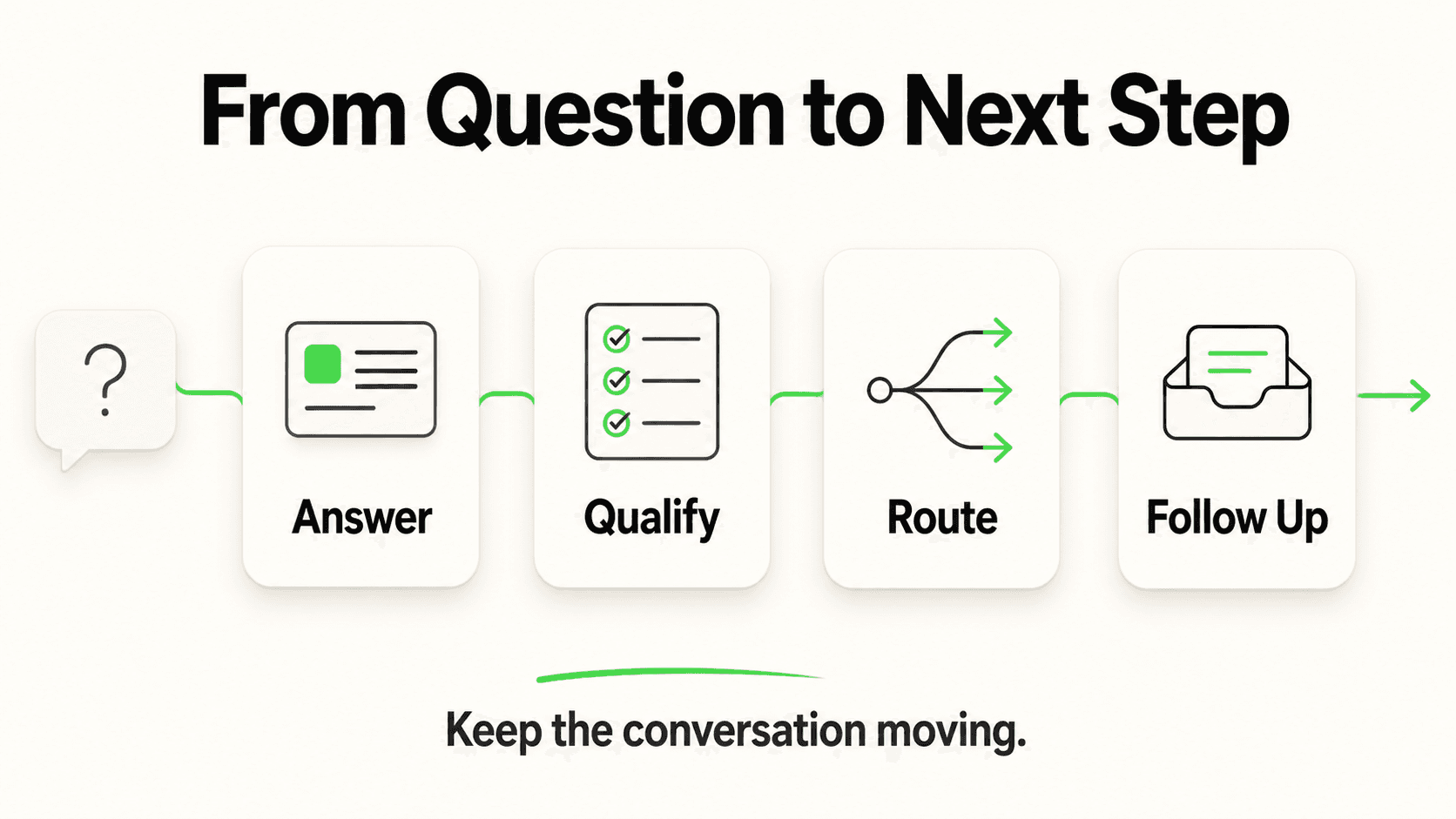
1. Tiered Package Explanation and Comparison
"What's the difference between your packages?" This is the single most common — and highest-stakes — question in all-inclusive reservations.
An AI trained on your exact package structure answers it in under 30 seconds, at any hour, in multiple languages, with the same precision every time.
What this looks like in practice: A guest messages: "Is the Premium package worth the upgrade? We're a family of 4 including 2 kids aged 7 and 10."
The AI responds: "For a family with kids 7 and 10, the Premium upgrade adds the most value through unlimited à la carte dining — your kids can pick their favourite restaurant each evening instead of only the buffet — plus room service for those nights they're tired after the water park. Standard works well if you prefer buffet dining and don't need the specialty restaurants. Premium also includes premium spirits for adults and a guaranteed ocean view room. Want to see current pricing for your dates?"
Specific. Structured. Aware of who's asking. That's what a great reservations agent sounds like — delivered at 11:30 PM on a Tuesday.
Key capabilities:
- Side-by-side package comparison tailored to guest profile (family, couple, group)
- Dietary and allergy filter for à la carte options
- Language-matched explanations (English, Spanish, French, German, Arabic)
- Direct routing to reservations for package commitments
2. Upgrade and Upsell Conversations
Upsell revenue — room upgrades, dining credit top-ups, excursion packages, spa credits — is some of the highest-margin revenue in the all-inclusive model. And most of it gets pitched at check-in, exactly when the guest has already committed and is least in the mood to spend more.
AI moves that conversation earlier, to the inquiry and pre-booking stage, when guests are still evaluating and genuinely curious what premium buys them.
Upsell conversation examples:
- Garden villa to overwater bungalow in the Maldives: the direct lagoon access, the glass-floor panel, versus a walk to the beach every morning
- Standard room to swim-up suite in Cancun: private pool access and butler service, pitched to a couple celebrating an anniversary
- Base all-inclusive to premium dining credit package in the Dominican Republic: the gap between "resort dining" and an actual restaurant experience
AI never gets pushy and never runs out of patience for the fifth "but is it really worth it?" question. The guest sets the pace. That patience alone often outperforms phone-based upsell pressure.
Ready to Upsell Packages Automatically?
AI chatbots handle package comparisons, upgrade conversations, and direct booking flows 24/7—so your reservations team focuses on high-touch group coordination.
Start Free Trial3. Group and Family Booking Coordination
All-inclusive resorts pull outsized revenue from group bookings — reunions, destination weddings, corporate retreats. These inquiries need a lot of information pulled from a coordinator who's juggling six other things at once.
The AI acts as intake, capturing:
- Total room count and room category mix (standard, premium, suites)
- Travel dates and arrival/departure pattern
- Dietary restrictions and allergy list for the group
- Event needs (rehearsal dinners, private beach events, group excursions)
- Budget range and package tier preferences
- Primary contact for group pricing and contract
Once it's captured, the AI can hand back an instant preliminary quote or route a complete brief to the groups desk — saving 20-30 minutes of intake work per inquiry and getting a reply back in minutes instead of the next business day.
Why this matters for conversion: Group coordinators are shopping several properties at once. Reply with a structured, complete confirmation in minutes and you look organized. Take 48 hours and you lose the group to whoever replied first.
4. Excursion and Activity Scheduling
"What's included versus extra?" is the second most common question in this category — and it's often the deal-closer, or the deal-breaker.
AI chatbots break it down precisely:
- Non-motorized water sports included at all plan levels
- Motorized activities (jet ski, parasailing) usually extra
- Excursions (zip-lining, Mayan ruins tours, snorkeling trips) as add-on packages
- Kids' club programming and age brackets (4-7, 8-12, teens)
- Evening entertainment (shows, theme nights, live music) on the weekly calendar
For excursion add-ons, the AI can walk guests through what's on offer and share links to the resort's preferred excursion partners — so the whole trip gets planned in one conversation instead of discovered piecemeal after arrival.
5. Repeat Guest Recognition and Personalized Offers
Returning guests cost less to win back, spend more per stay, and refer more friends. A loyalty program is only as good as your ability to recognize them and speak to their history.
Recognition-driven conversations:
- "Welcome back! I see you stayed with us in January 2025 in a garden villa — want to look at overwater villa options for your anniversary trip this August?"
- "Since you mentioned the buffet wasn't your favourite last time, you might like our Premium package this visit — nightly à la carte dining."
- "As an Excellence Elite member, you have complimentary early check-in and late checkout. Want me to confirm that now?"
Until recently, this level of personalization needed a dedicated agent with full guest history in front of them. AI delivers it at scale, across every channel, any hour.
6. Direct Booking Incentive Communication
Resorts should always be offering direct-booking advantages — the OTA commission you're saving funds plenty of guest incentive. But "book direct and save" only works if guests know exactly what that means:
- Price match guarantee plus X% additional discount
- Complimentary room upgrade (subject to availability at check-in)
- Free airport transfer (a $60-150 value OTAs never include)
- Early check-in or late checkout guaranteed
- Resort credit for on-site spending
- Best available room category guaranteed
AI surfaces these the moment a guest brings up pricing, heading off the instinctive "let me check Expedia" before it happens. "Book direct for $120 off your 5-night stay plus a free airport transfer" is a concrete reason to finish the booking right there.
7. Multi-Language Guest Communication
Caribbean and Cancun resorts split fairly evenly between North American and European guests. Maldives properties serve 30-50 nationalities. Club Med operates worldwide. No single reservations team covers English, French, Spanish, German, Russian, Arabic, Mandarin, and Japanese at 11 PM local time.
AI handles it — auto-detects the language from the first message, holds the conversation quality steady across every language it supports. A German family researching Riviera Maya in German gets the same package comparison, the same upsell conversation, the same booking guidance as an English-speaking family from Chicago. No German-speaking staff member has to be on shift.
Languages typically needed for all-inclusive markets:
- Caribbean (Jamaica, DR, Turks & Caicos): English, Spanish, French (Haitian Creole for staff; French for European and Quebec guests)
- Cancun/Riviera Maya: English, Spanish, French, German
- Maldives: English, Arabic, Mandarin, Japanese, German, French, Russian
- Club Med global: English, French, Spanish, German, Mandarin, Portuguese
Further Reading
Authoritative external sources used and recommended for further research on this topic:
- Skift hospitality research
- Phocuswright travel and hospitality data
- STR / CoStar hotel performance benchmarks
Capture Direct Bookings in Every Language
Stop losing Caribbean and Maldives guests to OTAs because your team isn't available at 10 PM in their time zone. AI delivers package comparisons and booking flows 24/7.
View PricingReal Results: What All-Inclusive Resorts Are Achieving
The Direct Booking Recovery Opportunity
The math on AI at all-inclusive resorts is stronger than almost anywhere else in hospitality, because booking values are high and OTA commissions are steep. Take a mid-size Caribbean resort with these numbers:
- 250 rooms, 85% average occupancy
- Average booking value: $4,500 per stay (family of 4, 5 nights, Premium package)
- Current OTA mix: 50% of bookings
- OTA commission: 18%
Annual OTA commissions at this property run around $3.9 million. Shift just 10% of those OTA bookings to direct — one in ten — and you save $390,000 a year in commission. The platform enabling that shift costs a fraction of that.
Case Study Reference: Jungle Lodges & Resorts
Jungle Lodges & Resorts, a hospitality group operating properties in Karnataka, India, deployed Hyperleap AI and picked up 3,300+ leads in 90 days, with 35% of inquiries landing after hours, when their team wasn't around to answer. A few things this tells us:
- A real share of serious, booking-intent inquiries land outside business hours
- Capturing those inquiries with AI turns leads that would otherwise vanish into pipeline
- That volume shows up fast — within the first quarter of deployment
For all-inclusive resorts, where average booking values run higher, the payoff from catching that after-hours volume is proportionally bigger. Read the full Jungle Lodges case study for the implementation details.
Upsell Revenue Impact
Beyond direct booking conversion, AI drives upsell revenue by:
- Moving the upsell conversation from check-in (low receptivity) to pre-booking (high receptivity)
- Explaining upgrade value in plain language instead of dropping it as a line item
- Personalizing the recommendation to party size, occasion, and budget signals
Skift Research (2025) puts pre-arrival digital upsell tools at $20-80 in additional revenue per guest when properly implemented — not nothing, on properties where ancillary revenue already runs 15-25% of total revenue.
Implementation: Getting Started in 5 Weeks
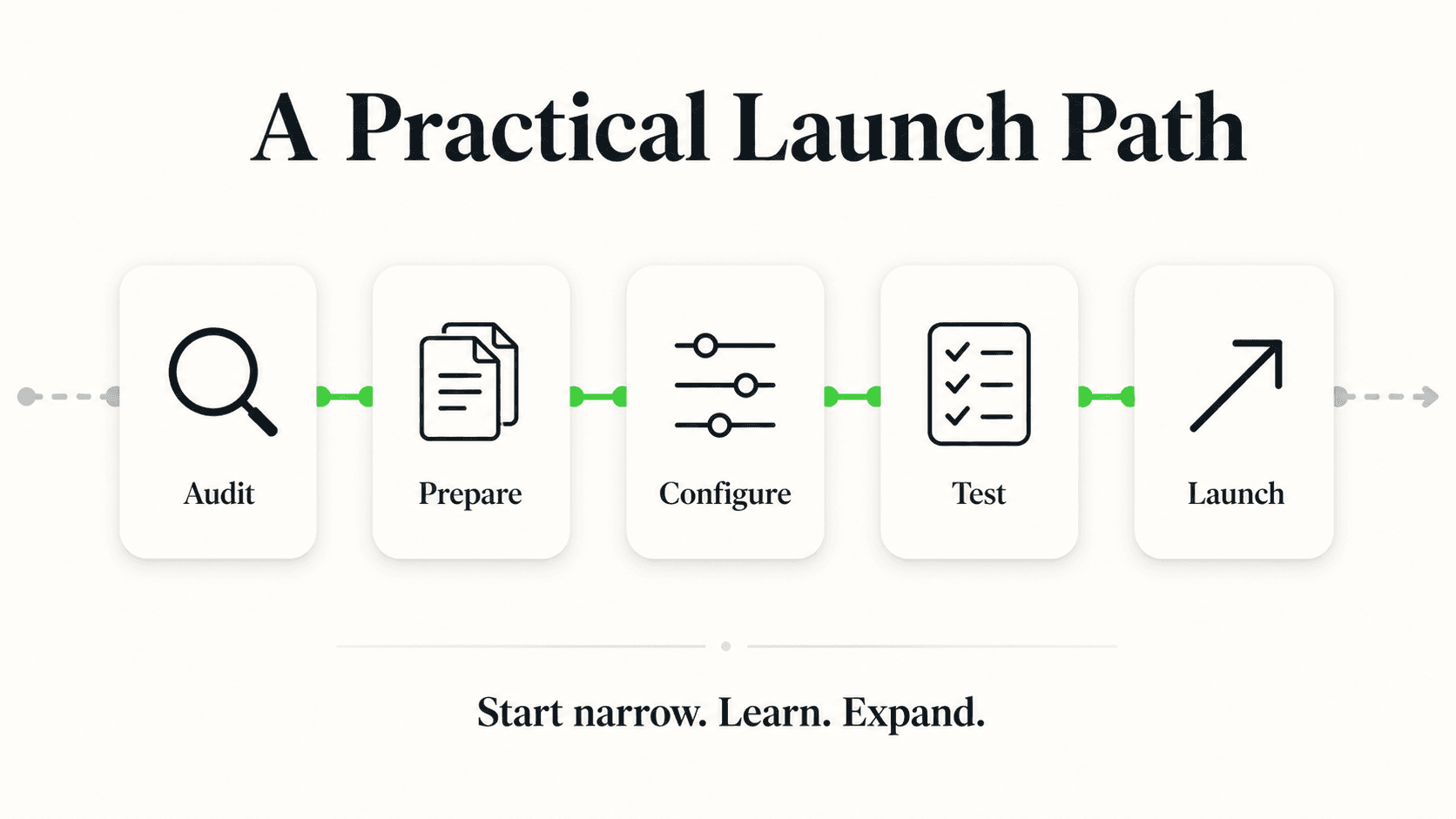
Week 1-2: Knowledge Base Foundation
An all-inclusive knowledge base is more involved than a standard hotel's — it has to encode every permutation of inclusion, exclusion, supplement, and condition across your package tiers. Spend real time here. The quality of this foundation determines the quality of every package comparison conversation that follows.
Content to upload:
- Complete package inclusion matrix for every tier (Standard, Premium, Platinum, or your equivalents)
- Room category descriptions with photos and inclusion differences (garden view vs. ocean view vs. swim-up vs. overwater)
- Dining venue list with cuisine, hours, dress code, and reservation requirements by plan
- Activity inclusion list: what's included at each plan level, what costs extra
- Excursion menu with pricing and booking guidance
- Kids' club details: age brackets, hours, activities, enrollment process
- Group rate inquiry form and minimums
- Seasonal pricing calendar and early bird/last-minute promotional windows
- FAQ covering the most common "is X included?" questions by package tier
Week 3: Channel Deployment
Deploy across four channels at once for full coverage:
- Website chat widget: the primary channel for desktop researchers comparing properties
- WhatsApp Business API: essential for European and Latin American guests, and increasingly used by North American families (learn more about WhatsApp automation for hotels)
- Instagram DM: all-inclusive resorts sell on visuals; Instagram drives real inquiry volume
- Facebook Messenger: family-focused all-inclusive segments lean Facebook
Week 4-5: Upsell and Routing Configuration
Configure routing rules based on what the inquiry signals:
- Group inquiries (10+ rooms mentioned) → immediate alert to the groups desk
- High-value room category inquiries (suites, water villas) → VIP routing to a senior reservations agent
- Wedding/event inquiries → events coordinator routing
- Standard package inquiries → AI handles the full conversation with a direct booking link
Month 2+: Optimize Based on Conversation Data
Review AI conversations weekly through the first month and look for:
- Questions the AI answered wrong or incompletely (update the knowledge base)
- Upsell conversations that stalled out (refine how you're framing value)
- Language gaps where response quality slipped (expand training data)
- Peak inquiry hours and volume patterns (feed into staffing decisions)
Frequently Asked Questions
How does AI handle complex package comparison questions?
An AI trained on your complete package matrix handles multi-variable questions fine: "Does the à la carte booking limit on Premium apply per person or per room?" "Are kids under 5 free at all plan levels?" "Can we mix package tiers within one group?" The catch is the knowledge base — every edge case your reservations team fields regularly needs to be documented, or the AI won't have an answer either.
Can AI handle the OTA "compare prices" challenge?
Yes. When a guest signals they're about to "check Expedia," a well-configured AI can respond with something like: "Our direct rate includes [specific advantages] you won't find on OTAs, and I can match any lower rate you find elsewhere. Want me to confirm availability and show you the direct price?" That keeps the guest in the resort's own channel instead of tabbing away.
What about all-inclusive resorts that use travel agents heavily?
AI can route direct consumers and trade partners down different paths. Travel agents get sent to a dedicated trade team with trade rate access; direct consumers get the full inquiry-to-booking-link journey handled by the AI. You configure which path someone takes based on how they identify themselves.
How does AI handle dietary and allergy questions?
This is one of the highest-stakes use cases in the category. The AI can confirm which restaurants accommodate specific diets (gluten-free, vegan, halal, nut-free) and prompt guests to note allergies at booking confirmation. For medical allergies specifically, it flags the case for the chef team and routes to a human coordinator for written confirmation — that combination protects both the guest and the resort.
Can AI manage early check-in and late checkout requests?
It can capture the request, confirm whether it's guaranteed by the guest's package or loyalty tier, and route anything requiring manual sign-off (subject to availability) to front desk with the details already documented. Less work for front desk on arrival day, and guests get an accurate answer instead of a guess.
How do Maldives water villa all-inclusives differ from Caribbean?
Price point, mostly, and positioning. Maldives properties run $800-3,000+ a night for overwater villas and lean into a more exclusive, couples-focused voice. An AI serving these properties needs to match that tone, handle detailed villa-feature questions (glass floor panels, private plunge pools, snorkeling straight off the deck), and manage transfer logistics that are genuinely more complicated (seaplane vs. speedboat from Malé). The underlying package-complexity problem is the same one Caribbean resorts have; the tone and the detail bar are just higher.
What channels work best for all-inclusive resort guests?
Website chat and WhatsApp lead for North American guests, the largest source market for Caribbean and Cancun. WhatsApp dominates for European guests, especially UK, German, French, and Scandinavian travelers. Instagram DM catches inspiration-stage inquiries from people who found the resort through visual content. Facebook Messenger works well for family group coordinators. Running all four from one platform — available on Hyperleap AI's Plus, Pro, and Max plans — gives you full coverage without stitching tools together.
The Competitive Advantage Window Is Open — But Not Forever
All-inclusive resorts are sitting in an unusual moment. The technology to deliver instant, intelligent package guidance is affordable and available right now, but most of the category hasn't touched it yet. Skift's 2025 Hospitality Technology Report found fewer than 20% of independent all-inclusive properties currently use AI chatbots for reservations — despite running the highest inquiry complexity and OTA dependency in hospitality.
Early adopters are already banking the direct bookings that late movers keep losing. The resort that answers "Platinum vs. Premium" at 10:30 PM converts the booking. The one that says "wait until morning" doesn't.
Cutting OTA dependency in this category isn't a nice-to-have operational tweak — it's worth millions of dollars a year, and it's a strategic call. AI chatbots are the cheapest lever available for pulling it.
Ready to capture more direct bookings and grow package revenue? Start with a 7-day free trial of Hyperleap AI and see what AI-powered conversations do for your reservations process. All plans include website chat, WhatsApp, Instagram DM, and Facebook Messenger — the full channel stack for all-inclusive resort guests.
Related Resources
- Hotels Lose Revenue from After-Hours Inquiries — The data on missed bookings
- Ways Hotels Use AI to Increase Direct Bookings — Implementation strategies
- WhatsApp Automation for Hotels & Resorts — Channel deep dive
- Jungle Lodges Case Study — 3,300+ leads in 90 days
- 5 Ways Hotels Use AI to Increase Direct Bookings — Direct-booking and guest experience strategies
- Hyperleap AI for Hospitality — Platform overview
Keep exploring
- AI agents for resorts and hotels — See how they handle package and booking questions
- Conversational AI for customer service — Automate guest support across every channel
Glossary
- WhatsApp Business API — Essential resort channel
- What is a Chatbot? — Chatbot fundamentals
- Multi-variant (locations, courses, etc) — How the chatbot answers for the right resort when you run several
Related Articles

AI Chatbot for Beach Resorts: Seasonal Guide
How beach resorts use AI chatbots to capture bookings in peak season, reduce OTA dependency, and respond to guests 24/7.

AI Chatbot for Luxury Hotels: Service at Scale
Luxury city hotels use AI chatbots to deliver personalized concierge experiences at scale, handle VIP inquiries, and maintain white-glove service 24/7.
AI Chatbot for Golf Resorts: Tee Time Guide
Golf resorts use AI chatbots to handle tee time inquiries, membership questions, and high-net-worth guest service without response delays.

AI Chatbot for Serviced Apartments (2026 Guide)
Serviced apartments use AI chatbots to handle extended-stay inquiries, corporate account questions, and self-check-in coordination 24/7.