AI Chatbot for Luxury Hotels: Service at Scale
Luxury city hotels use AI chatbots to deliver personalized concierge experiences at scale, handle VIP inquiries, and maintain white-glove service 24/7.

TL;DR: Five-star city hotels operate at the intersection of impossibly high guest expectations and enormous operational complexity. Guests paying $500–$2,000+ per night expect butler-level personalization, instant responses, and proactive anticipation of needs — at 3 AM, in Mandarin, about a theatre ticket for tonight. AI chatbots allow luxury hotels to deliver this standard at scale: handling 60–70% of routine concierge interactions automatically, freeing human butlers and concierges for the nuanced, relationship-driven service that earns five-star reviews and defines the brand.
AI Chatbot for Luxury City Hotels: Butler-Level Service at Scale (2026)
A guest at a New York five-star hotel sends a WhatsApp message at 11:43 PM: "I need two tickets to Hamilton for tomorrow evening — orchestra, not mezzanine — and a car to the theatre at 7:15 PM. Also, can you extend my checkout to 2 PM? My flight is at 6."
At a property without AI, this message sits in an inbox until morning. The guest wakes up to a 7 AM response and spends their first hour of the day managing logistics they assumed would already be handled.
At a property with AI, the response comes in two minutes: checkout extension confirmed to 2 PM, the concierge team has been notified about the Hamilton request and will follow up with availability by 8 AM, and transportation to the theatre at 7:15 PM has been provisionally scheduled. The guest goes to sleep knowing their requests are in motion.
This is the luxury hotel service gap in 2026. According to McKinsey & Company's "Luxury Travel Report" (2024), guests at five-star properties cite responsiveness as the single most important factor in satisfaction scores — above room quality, dining, and even property design. In a segment where guests are paying $500–$2,000+ per night and comparing their experience to every other world-class property they've ever stayed in, a slow response isn't a minor inconvenience. It's a brand-defining failure.
AI chatbots don't replace the human expertise and emotional intelligence that defines elite hospitality. They handle the volume — the checkout extension requests, the restaurant booking confirmations, the transportation coordination, the "when does the spa open?" inquiries at midnight — so your human team can focus entirely on the moments that require genuine artistry.
Who This Guide Is For
This guide is written for general managers, front office directors, and concierge leadership at five-star and luxury boutique city hotels — New York (The Plaza, Four Seasons, Park Hyatt), Paris (Ritz, Le Meurice, Bristol), Dubai (Jumeirah, Four Seasons DIFC, Waldorf Astoria), Los Angeles (The Beverly Hills Hotel, Hotel Bel-Air), Tokyo (Park Hyatt, Aman), London (The Savoy, Claridge's, The Connaught). If your guests are paying $500+ per night and expect personalized, instant service, this guide is directly relevant to your operation.
What Is an AI Chatbot for Luxury City Hotels?
An AI chatbot for luxury city hotels is a brand-trained conversational agent deployed across WhatsApp, website chat, Instagram DM, and Facebook Messenger — capable of handling the full range of routine concierge and guest service interactions with the warmth, precision, and responsiveness that five-star guests expect.
The distinction between a luxury hotel AI chatbot and a standard hospitality chatbot is not merely technological — it's philosophical. At a luxury property, every interaction is a brand expression. The AI must:
- Communicate in a tone that matches your hotel's positioning — refined at a classic European grand hotel, modern and efficient at a contemporary city property, warm and culturally attuned for an Indian luxury property
- Know the hotel's services, amenities, and dining options with depth — not just "we have a spa" but "The Spa offers the 90-minute Himalayan Stone Ritual, advance booking recommended, gentlemen's treatments available Tuesday through Sunday"
- Share booking links appropriately — directing guests to your reservation system, booking a concierge consultation in the chat via Calendly or Cal.com, providing the Michelin-starred restaurant's direct reservation link
- Handle multi-language VIP guests fluently — Mandarin for guests from mainland China, Arabic for Gulf visitors, French for European guests
- Escalate seamlessly to human concierge for anything requiring judgment, artistry, or relationship
The operating principle: AI handles volume, humans handle artistry. This isn't a compromise — it's an upgrade. Human concierges freed from "what time does the pool open?" can spend their energy on crafting the surprise anniversary setup, sourcing the impossible theatre ticket, and building the guest relationships that generate five-star reviews and repeat bookings.
Key capabilities specific to luxury city hotel chatbots include:
- Pre-arrival preference capture — collecting guest preferences before arrival so the room and amenities are ready
- Concierge function automation — answering dining, transportation, and entertainment questions with depth
- Booking link sharing — connecting guests to reservation systems and concierge consultation scheduling
- Multi-language VIP guest support — serving global guests in their native language, 24/7
- Special occasion coordination — capturing and routing anniversary, birthday, and celebration setups
- VIP escalation — immediate human notification for recognized VIP guests and complex requests
Why Luxury City Hotels Face a Unique Service Challenge
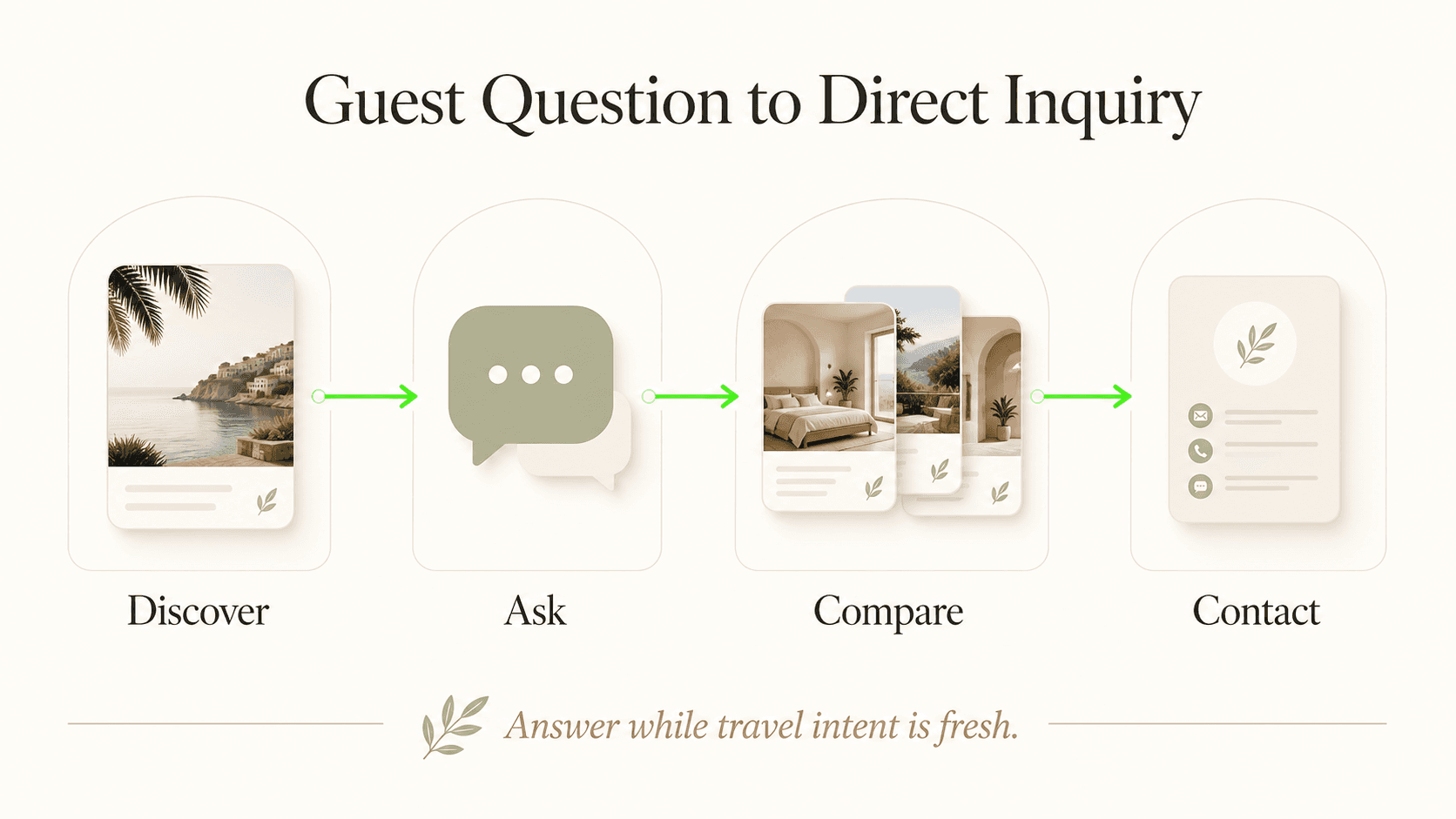
The Volume-Quality Paradox at Five-Star Properties
Five-star city hotels operate at an impossible intersection: they must deliver intensely personalized, premium service to potentially hundreds of guests simultaneously, at all hours, across multiple channels. A 300-room property in Dubai with 400 guests on a Thursday night generates an enormous volume of service interactions:
- Guests checking in across time zones
- Room service orders
- Concierge requests (restaurant recommendations, transportation, theatre tickets)
- Technical support (WiFi, room systems)
- Special occasion arrangements
- Checkout and billing inquiries
- In-room dining questions
- Wake-up call confirmations
Even with 50 staff on shift, delivering genuinely personal responses to every interaction is operationally impossible without technology support. Without AI, staff triage ruthlessly — complex requests get attention, routine ones get delayed or generalized. With AI, every interaction receives an immediate, personalized response, regardless of complexity.
International Guests Across Every Time Zone
Luxury city hotels in New York, Dubai, Paris, London, Los Angeles, and Tokyo all share one challenge: guests who arrive from every time zone and operate on their own clock.
A Chinese business traveler in New York wakes at 5 AM due to jet lag and needs breakfast recommendations. A Gulf family in Paris sends messages at midnight about tomorrow's shopping itinerary. A Japanese executive in Los Angeles requires bilingual information about business center services at 7 AM local time.
Without AI, these interactions either get delayed responses (the guest experience suffers) or require staff on shift to handle channels and languages they may not be fully equipped for. With AI, every language is covered at every hour without exception.
According to the World Tourism Organization (UNWTO, 2024), Chinese, American, and Gulf travelers collectively represent over 40% of global luxury hotel spending. Properties that cannot serve these guests in their native languages and time zones are conceding a substantial share of this market.
The Standard Set by Every Other Premium Service Provider
Five-star hotel guests compare their experience not just to other hotels — they compare it to every premium service interaction in their lives. Their private banker responds within 20 minutes. Their assistant confirms meetings in real time. Their luxury car concierge handles service appointments without any back-and-forth.
When a guest sends a WhatsApp message to their $1,500/night hotel and waits four hours for a response, the contrast is jarring. The service quality standard that justifies five-star pricing must extend to every touchpoint, including digital communication channels — or the premium positioning erodes.
Pre-Arrival Experience Sets the Satisfaction Baseline
Guest satisfaction research consistently shows that the pre-arrival experience sets the baseline for the entire stay. According to Cornell University's Center for Hospitality Research (2023), guests who have positive pre-arrival interactions with a property rate their overall stay 15–20% higher than guests with neutral pre-arrival experiences, even when the in-stay service quality is identical.
Pre-arrival presents enormous AI opportunity: collecting preferences (pillow firmness, room temperature, arrival time, dietary restrictions for in-room amenity setup), answering questions about the property and the city, sharing welcome information, and creating anticipatory excitement about the stay. Properties that automate this touchpoint with high-quality AI interactions build a satisfaction buffer that makes the entire stay feel more premium.
Staff Burnout from Routine Request Volume
Elite concierge professionals — the individuals whose expertise and relationships are the source of your competitive advantage — are spending a significant portion of their working hours on requests that require no expertise at all:
- "What's the WiFi password?"
- "What time is checkout?"
- "Can I get a late checkout?"
- "Is the pool heated?"
- "Do you have a gym?"
- "Can you call me a taxi to JFK at 7 AM?"
These interactions are necessary — they serve guests — but they do not require the expertise of a five-star concierge. When AI handles this volume, your concierge team's expertise is deployed entirely on what they're uniquely capable of: sourcing rare theatre tickets, crafting personalized city itineraries, arranging the birthday surprise, and building the guest relationship that makes them come back.
7 Essential AI Capabilities for Luxury City Hotels
Deliver Butler-Level Service at Any Hour
Hyperleap AI handles routine concierge interactions so your human team focuses on the moments that earn five-star reviews. Deploy on WhatsApp, website, and Instagram.
Start Free Trial1. Pre-Arrival Preference Capture and Personalization
What this looks like in practice: Three days before a guest's arrival, your AI sends a personalized WhatsApp message: "We're looking forward to welcoming you on Friday, Mr. Nakamura. To ensure everything is perfect for your stay, may I ask a few quick questions? Do you have any pillow preferences? Any dietary restrictions for your welcome amenity? Is there anything specific I can arrange before you arrive — restaurant reservations, transportation from the airport, or a specific newspaper delivered each morning?" All answers are captured, routed to the relevant teams, and confirmed.
Real-world impact: Pre-arrival preference collection transforms check-in from a transaction into a reveal. When a guest arrives and finds their preferred pillow firmness already set, their dietary preference accommodated in the welcome amenity, and their newspaper waiting — without ever having made a phone call — the impression is that the property has paid attention in the most attentive way. According to Cornell CHR (2023), this kind of pre-arrival personalization measurably increases overall stay satisfaction scores.
Why it works: Pre-arrival is an underutilized service window. Most luxury hotels have the staff and the operational capability to deliver exceptional personalization — but only if they know what the guest wants before they arrive. AI makes systematic pre-arrival preference collection possible at scale.
Key features:
- Timed pre-arrival WhatsApp outreach (3 days before, confirmed 1 day before)
- Structured preference capture (pillows, amenities, dietary restrictions, arrival time, transportation needs)
- Automatic routing to housekeeping, F&B, and concierge teams
- Guest-facing confirmation that preferences have been noted
2. 24/7 Concierge Information and Booking Link Sharing
What this looks like in practice: A guest at 1 AM asks for restaurant recommendations for a business dinner the following evening for six people. The AI responds with three curated options at the appropriate tier — their neighborhood locations, cuisine styles, and appropriate dress codes — and shares the direct reservation link for each. When the guest selects their preference, the AI captures the booking details and adds them to the concierge's morning briefing.
Real-world impact: In the Jungle Lodges case study, Hyperleap AI documented that 35% of hospitality inquiries arrived after business hours. For luxury city hotels serving jet-lagged international guests, this proportion is likely higher. Concierge information and booking link sharing at 1 AM — with the same quality response as a 2 PM human interaction — eliminates the service gap that would otherwise generate a mediocre guest experience.
Why it works: Dining recommendations are the single most common concierge request at city hotels. AI that knows your city — the right restaurants for business dinners, the best theatre for a family with children, the rooftop bar with the best view — delivers genuine value at scale, and shares booking links so guests can act immediately rather than waiting for the restaurant to open.
Key features:
- Curated dining recommendations with restaurant details (cuisine, neighborhood, dress code, atmosphere)
- Direct reservation link sharing for partner restaurants and booking platforms (link sharing, not native API integrations)
- Transportation request capture (taxi, car service, airport transfers) with timing details
- Entertainment recommendations, with a concierge consultation booked in the chat via Calendly or Cal.com (on Pro and Max) when bespoke planning is needed
3. Multi-Language VIP Guest Support
What this looks like in practice: A VIP guest from Riyadh sends a message in Arabic about their suite upgrade preferences before arrival. Your AI responds fluently in Arabic, confirms the preference, and flags the inquiry to your VIP services team with a full English summary. Simultaneously, a Chinese corporate group's travel manager sends a message in simplified Mandarin about meeting room availability. The AI responds in Mandarin, captures the requirements, and routes to your events team.
Real-world impact: According to UNWTO (2024), Chinese, American, and Gulf travelers represent over 40% of global luxury hotel spending. These guests feel most confident and cared for when they can communicate in their own language. For luxury city hotels in Dubai, Paris, New York, and Los Angeles — each receiving guests from every major market — multilingual AI is not a convenience feature but an operational necessity.
Why it works: Language is a trust signal and a service signal simultaneously. A guest who receives an immediate, fluent, accurate response in their native language experiences the hotel's commitment to their comfort in the most personal possible way. This trust translates directly to satisfaction scores and social sharing.
Key features:
- Multi-language support for all deployed channels (auto-detected from first message)
- Consistent service quality and brand voice across languages
- VIP language preference capture for guest profile
- Internal English-language summaries for staff routing when needed
4. Special Occasion and Surprise Coordination
What this looks like in practice: A booking note indicates that a guest is celebrating their 10th anniversary. Two days before arrival, the AI messages: "We see you're celebrating your anniversary with us — congratulations! Would you like us to arrange something special? We can prepare rose petals and champagne in the suite, arrange a private dining experience on our terrace, organize a couples' spa treatment, or simply ensure a celebratory welcome. What would feel most meaningful to you?"
Real-world impact: Special occasion recognition is one of the highest-impact drivers of five-star reviews. Guests who feel their celebration has been acknowledged and thoughtfully accommodated are dramatically more likely to write detailed, emotional reviews that describe specific moments — exactly the kind of reviews that influence future bookings.
Why it works: The challenge in special occasion management is scale: with hundreds of guests arriving each week, identifying which arrivals deserve special attention and what that attention should look like requires systematic capture and routing. AI creates the systematic capture layer — every mention of anniversaries, birthdays, honeymoons, and celebrations is identified and escalated to your human team for execution.
Key features:
- Special occasion detection from booking data and guest messages
- Pre-arrival special occasion outreach to understand guest preferences
- Routing to relevant departments (housekeeping for room setup, F&B for dining arrangements, spa for couples' treatments)
- Confirmation message to guest that arrangements are in motion
5. In-Stay Service Request Handling and Escalation
What this looks like in practice: A guest messages at 3 AM that their suite's air conditioning is making a noise and they can't sleep. The AI responds immediately: "I'm very sorry to hear this — I know how important rest is. I've immediately notified our on-call maintenance team. They will contact you within 10 minutes. In the meantime, may I offer to arrange a quieter room for the remainder of the evening? Our duty manager is also aware and ready to assist in any way." The duty manager receives a WhatsApp notification with full context within 60 seconds.
Real-world impact: Service failures at 3 AM at a five-star property are brand-defining moments — for better or worse. The difference between a guest who leaves a scathing review about the noisy air conditioning and a guest who writes "they handled a problem at 3 AM flawlessly" is entirely determined by how quickly and how professionally the issue is acknowledged and resolved. AI ensures immediate acknowledgment at any hour.
Why it works: Service recovery research consistently shows that guests who experience a problem that is resolved quickly and professionally often give higher satisfaction ratings than guests who had no problem at all. The resolution quality is what guests remember and describe in reviews. Immediate AI acknowledgment starts the resolution clock at the moment of the problem, not at the start of business hours.
Key features:
- 24/7 immediate acknowledgment for all service requests
- Urgency classification (emergency vs. routine) with appropriate escalation pathways
- Duty manager notification via WhatsApp for issues above a threshold
- Status updates to guest as issue is progressed
- Service recovery follow-up (ensuring the guest is satisfied after resolution)
6. Brand Standards Compliance Across All Channels
What this looks like in practice: Your brand guidelines specify that guests should always be addressed by name when known, that apologies should be followed by an immediate action statement, that upsell suggestions should never be made in response to a complaint, and that the word "unfortunately" should be avoided. Your AI is configured to follow all of these guidelines consistently across every message, at every hour, regardless of the nature of the inquiry.
Real-world impact: Brand standards compliance is one of the hardest operational challenges at large luxury hotels. A 50-person front office team will produce 50 slightly different communication styles. Staff turnover resets brand voice training repeatedly. AI delivers perfectly consistent brand standards at every interaction — no variation, no off-brand moments, no fatigue-driven shortcuts.
Why it works: Luxury positioning depends on absolute consistency. Guests who experience an inconsistency in tone or quality — one exceptional interaction followed by one mediocre one — rate the overall experience lower than guests who receive consistent, if slightly lower, quality throughout. AI's value in brand consistency is precisely its inability to have a bad day.
Key features:
- Brand voice training specific to your property (formal vs. warm, classic vs. contemporary)
- Communication rules compliance (name usage, apology protocols, upsell guidelines)
- Channel-specific tone calibration (slightly more formal on website chat, slightly warmer on WhatsApp)
- Escalation language that maintains brand standards while connecting guests to human support
7. Post-Departure Relationship and Loyalty Maintenance
What this looks like in practice: Two days after departure, your AI sends a personalized message: "Mr. and Mrs. Okafor — we hope you've arrived home safely and that everything went smoothly. We'd love to hear about your stay, and we hope to welcome you back soon. As a returning guest, you'll have priority access to our preferred suites on your next visit. Would you like to discuss upcoming dates?" The message uses the couple's names, references their stay implicitly, and offers genuine value.
Real-world impact: Post-departure relationship maintenance is one of the highest-ROI activities in luxury hospitality — the cost of retaining a guest who has already had a great experience is far lower than acquiring a new one. Yet most luxury hotels fail to execute systematic post-departure follow-up because the operational bandwidth doesn't exist. AI makes systematic, personalized follow-up possible at scale.
Why it works: Loyalty in the luxury segment is earned through continuity of experience and genuine relationship. A post-departure message that references the guest's actual stay (rather than a generic satisfaction survey) demonstrates attentiveness that reinforces the guest's choice to return. Combined with a genuine offer (priority access, preferred rate), it creates a specific reason to book again.
Key features:
- Timed post-departure messages (2 days after checkout, personalized)
- Review request with direct link to the relevant review platform
- Loyalty re-engagement with genuine value (preferred access, priority booking)
- Birthday and anniversary follow-up from captured preference data
Real Results: What Luxury City Hotels Are Achieving
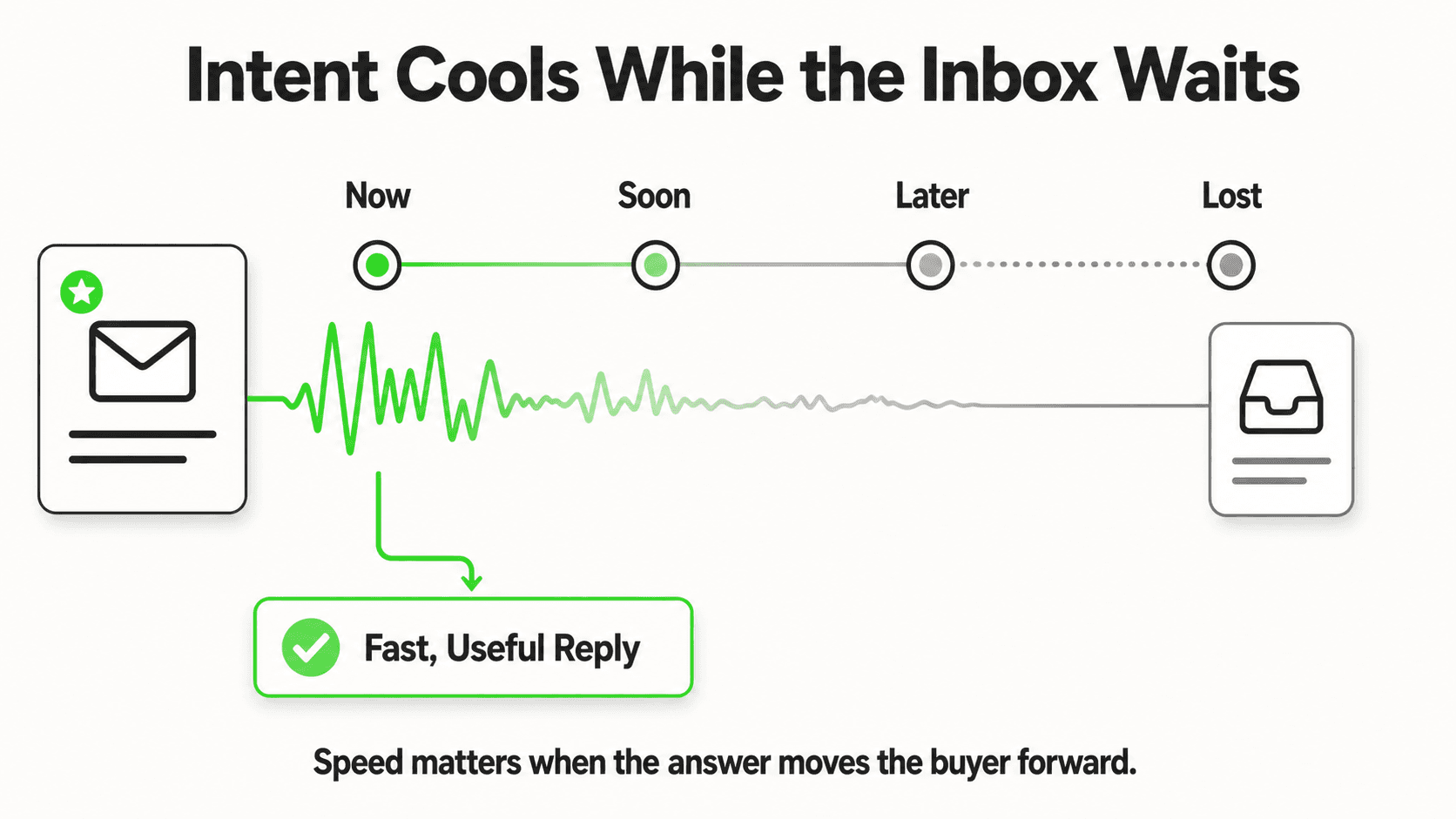
Guest Satisfaction and Review Quality
Luxury hotels deploying AI chatbots report improvements in two key satisfaction dimensions: response speed and personalization consistency. The Jungle Lodges case study documented 3,300+ leads in 90 days with 35% after-hours — demonstrating the volume of guest interactions that AI captures during hours when human staff are not at full capacity.
For luxury city hotels, the quality impact is specific:
- After-hours concierge inquiries receive immediate, high-quality responses rather than morning-after answers
- Pre-arrival preference collection improves arrival experience scores
- Special occasion capture increases the proportion of guests who feel their celebration was acknowledged
- Service recovery acknowledgment time drops from hours to seconds
Staff Satisfaction and Concierge Effectiveness
Concierge teams report meaningful improvements in job satisfaction when AI handles routine volume. The ratio of "routine questions" to "meaningful interactions" shifts — instead of answering 50 WiFi password questions for every one bespoke theatre request, concierges spend the majority of their time on the complex, creative, relationship-building work that drew them to the profession.
This improvement in concierge engagement directly improves service quality for high-value interactions — when your best concierges are energized rather than exhausted, the quality of the bespoke experiences they create improves.
Revenue Metrics: Ancillary Capture and Repeat Bookings
Properties tracking ancillary revenue (dining, spa, transportation, excursions) report improvement when AI proactively surfaces relevant services during pre-arrival and in-stay interactions. A guest who receives a personalized dining recommendation with a booking link at 11 PM is more likely to act than one who receives a generic "ask our concierge for dining recommendations" message.
Post-departure re-engagement sequences drive measurable improvements in repeat booking rates among former guests. Luxury travelers who feel genuinely remembered and valued are motivated to return — particularly when presented with a specific, personalized offer.
Implementation Roadmap for Luxury City Hotels
Phase 1: Brand Voice and Knowledge Base (Week 1–2)
Build the foundation of the AI's knowledge base with luxury-appropriate depth:
Property knowledge:
- All room and suite categories with precise descriptions, dimensions, views, and special features
- Every amenity with hours, booking requirements, and highlights (spa treatment descriptions, dining concepts and dress codes, fitness and wellness facilities)
- Services and their operational details (airport transfer pricing and lead time, valet procedures, business center capabilities)
- Building and city orientation (nearest underground station, iconic landmarks visible from the property, neighbourhood guide)
Brand voice guidelines:
- Tone specification (formal vs. warm, classic vs. contemporary) — calibrated to your specific brand positioning
- Guest address protocol (when to use first name vs. last name, how to address couples and families)
- Apology and service recovery language standards
- Upsell guidelines (when appropriate, when never appropriate)
VIP and recognition protocols:
- How to identify VIP guests in conversation and escalation protocols
- Loyalty tier recognition and appropriate acknowledgment
- Privacy and discretion standards for high-profile guests
Phase 2: Channel Deployment (Week 3–4)
Priority channel order for luxury city hotels:
- WhatsApp Business API — primary channel for international VIP guests, Middle East, Asia
- Website chat — captures pre-booking inquiries and research-phase guests
- Instagram DM — relevant for aspirational properties with strong visual content and social presence
- Facebook Messenger — supplementary channel
Configure the AI's tone for each channel. WhatsApp conversations from existing guests should be warmer and more familiar; website chat for new inquirers slightly more formal and informational.
Phase 3: Pre-Arrival and Special Occasion Workflow (Week 4–5)
Build the pre-arrival preference capture and special occasion workflows:
- Pre-arrival message timing (3 days before vs. 1 day before for different preference types)
- Special occasion detection from booking data and conversation
- Routing to relevant departments (housekeeping preferences, F&B for dining and amenity setup, spa for wellness preferences)
- Confirmation message to guest
Phase 4: Post-Stay and Loyalty Workflows (Month 2)
- Post-departure follow-up sequence (2 days, thank you + review request)
- Loyalty re-engagement sequence (30 days, for guests who haven't rebooked)
- Birthday and anniversary follow-up from captured preference data
- Review first 30 days of conversations for knowledge base gaps and escalation patterns
Further Reading
Authoritative external sources used and recommended for further research on this topic:
- Skift hospitality research
- Phocuswright travel and hospitality data
- STR / CoStar hotel performance benchmarks
Elevate Your Five-Star Service to 24/7
Hyperleap AI delivers butler-level responsiveness across WhatsApp, Instagram, and your website — every hour, in every language, with your exact brand voice.
See PricingFrequently Asked Questions
Will AI chatbots damage the human touch that defines luxury hospitality?
No — when properly implemented. The human touch is not expressed by your concierge answering "what time does the pool open?" at 2 AM. It's expressed in the bespoke city itinerary crafted for a guest's specific interests, the impossible theatre ticket sourced through a personal contact, the anniversary surprise that made a couple cry. AI handles the volume that prevents your team from doing these things. The human touch is preserved and amplified, not replaced.
How do you ensure the AI maintains luxury brand standards consistently?
The AI is configured with your specific brand voice guidelines — tone, address protocols, service recovery language, upsell boundaries. These guidelines are applied consistently to every message, at every hour, regardless of the inquiry type. This is actually more consistent than human execution, which varies across staff and shifts. Quarterly reviews of conversation samples ensure the brand voice remains aligned as guidelines evolve.
What does an AI chatbot cost for a five-star hotel?
Hyperleap AI plans start at $40/month (Plus), $100/month (Pro), and $200/month (Max), all with a 7-day free trial (credit card required). For a luxury city hotel where the average daily rate exceeds $500 and a single VIP relationship is worth tens of thousands in lifetime revenue, the platform cost is negligible relative to the service improvement it enables. The more relevant calculation is the cost of not having AI: the 3 AM message that went unanswered, the pre-arrival preference that wasn't collected, the repeat booking that went to a more responsive competitor.
How does the AI handle truly sensitive VIP or high-profile guests?
VIP protocols are configured at the property level. For recognized VIP guests, the AI can be set to immediately escalate to human staff — providing an instant acknowledgment and simultaneously notifying your duty manager with full context. The AI can also be configured with a higher escalation threshold for guest categories where any response other than immediate human attention would be inappropriate. Privacy and discretion standards are part of the brand voice configuration.
Can the AI integrate with our property management system?
Hyperleap AI connects to your existing systems via REST API and webhooks, enabling data exchange with your property management and booking systems. This allows the AI to access guest reservation details for personalized interactions and route service requests to the appropriate operational systems. Integration capabilities vary — your technical team can evaluate specific compatibility requirements during the trial period.
How does multi-language support work for luxury properties?
The AI detects the language of each message automatically and responds fluently in that language. Language quality is consistent with the brand standard in the same way as English — the AI doesn't default to simplified or overly formal language in translated responses. For luxury properties serving markets where Mandarin, Arabic, French, or Japanese are primary languages for a significant guest segment, this multilingual capability is a genuine competitive advantage.
How quickly can a luxury hotel deploy an AI chatbot?
Most properties can go live within 5 days on the Hyperleap AI platform. The setup involves building the knowledge base (room descriptions, services, policies, city guide), configuring brand voice guidelines, and connecting channels (WhatsApp Business API, website chat widget, Instagram and Facebook connections). For luxury properties with complex configurations or extensive PMS integration requirements, a managed setup option is available. Explore hospitality agent deployment at Hyperleap AI.
Butler-Level Service, at Scale, Every Hour
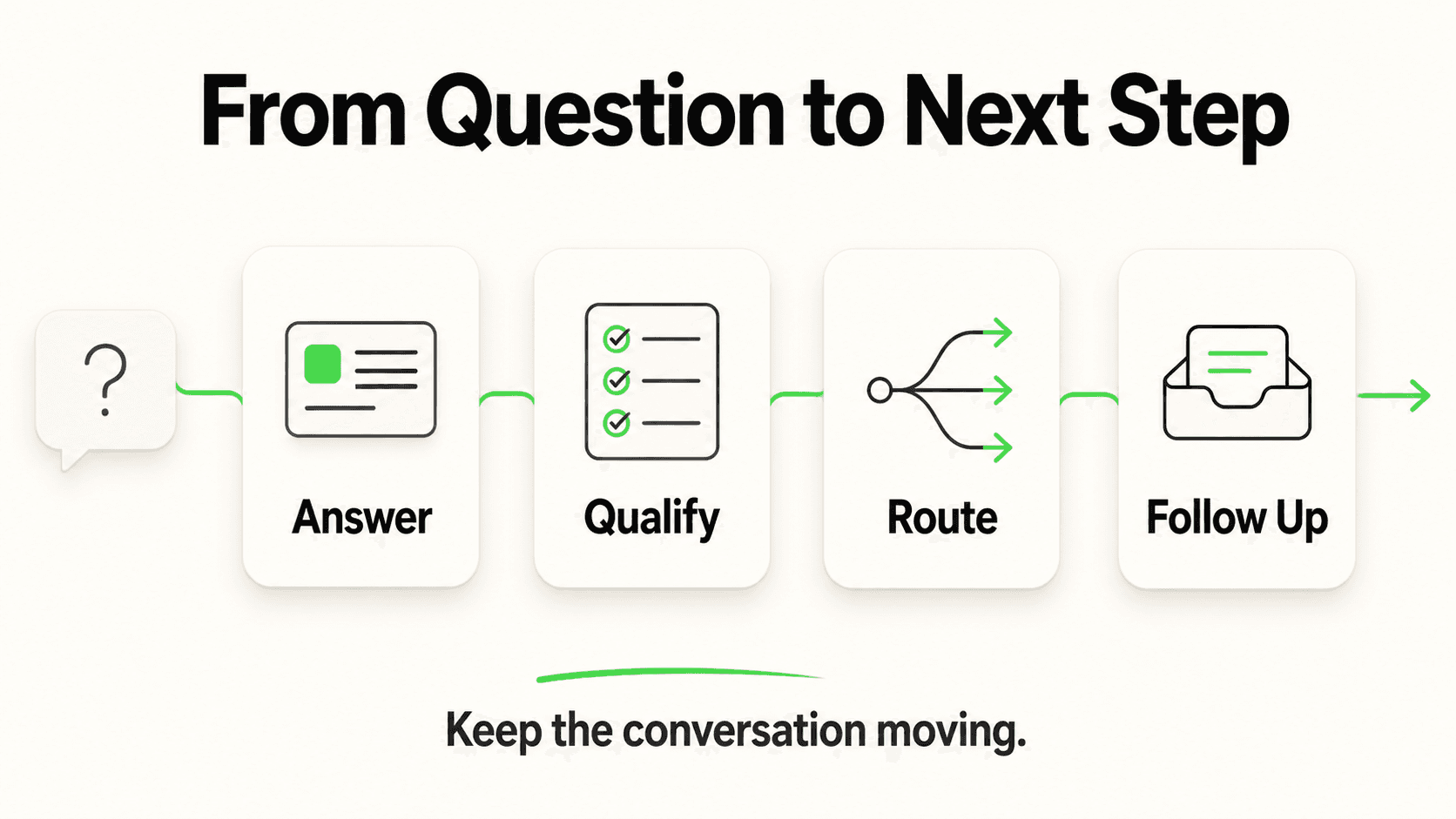
The luxury hotel experience has always been defined by the feeling of being genuinely known and cared for — of having your preferences anticipated, your needs addressed before you express them, and your presence at the property treated as an event worth preparing for.
AI makes this standard achievable at scale. Not by replacing the concierge who knows which table at Le Bernardin has the best light, or the butler who remembers that Mr. Tanaka takes his tea at 6:30 AM without being asked. But by handling the volume of routine interactions that prevent these professionals from being present for the moments that define the luxury experience.
The hotels winning the luxury market in 2026 are those that are combining the irreplaceable human artistry of exceptional hospitality professionals with the tireless, consistent, scalable responsiveness that AI provides. The result is what every five-star hotel aspires to deliver: butler-level service, at scale, at 3 AM, in Mandarin, without anyone on your team losing sleep.
Explore how Hyperleap AI powers luxury hotel operations, or view pricing to see which plan fits your property's scale.
Related Reading
- 5 Ways Hotels Use AI to Increase Direct Bookings — Direct-booking strategies with a luxury playbook
- Hotels Lose Revenue from After-Hours Inquiries — The after-hours booking loss problem
- WhatsApp Automation for Hotels and Resorts — Channel automation guide
- Ways Hotels Use AI to Increase Direct Bookings — Direct booking strategy
- Jungle Lodges Case Study — First-party data: 3,300+ leads in 90 days, 35% after-hours
Data Sources
- McKinsey & Company, "Luxury Travel Report" (2024)
- Cornell University Center for Hospitality Research, "Pre-Arrival Guest Experience Study" (2023)
- World Tourism Organization (UNWTO), "Global Luxury Travel Market Analysis" (2024)
- Hyperleap AI Jungle Lodges deployment data (2024) — 3,300+ leads in 90 days, 35% after-hours
- Meta WhatsApp Business API documentation (2026)
Can the chatbot handle bookings and availability questions?
Yes — it answers room and rate questions, captures booking inquiries with check-in / check-out / party-size details, and shares your direct-booking link or routes serious bookers to your reservations team. It does not replace your PMS — it sits in front of it as a 24/7 inquiry desk.
Industry Solutions
See how AI chatbots work for these industries:
Related Articles

AI Chatbot for Golf Resorts: Tee Time Guide
Golf resorts use AI chatbots to handle tee time inquiries, membership questions, and high-net-worth guest service without response delays.

AI Chatbot for Serviced Apartments (2026 Guide)
Serviced apartments use AI chatbots to handle extended-stay inquiries, corporate account questions, and self-check-in coordination 24/7.

AI Chatbot for Honeymoon Resorts (2026 Guide)
Honeymoon resorts use AI chatbots to respond to romantic inquiries 24/7, coordinate special requests, and capture couples before they book elsewhere.

AI Chatbot for All-Inclusive Resorts (2026)
All-inclusive resorts use AI chatbots to upsell upgrades, answer package questions, and boost direct bookings over OTA channels.