AI Chatbot for Vet Clinics: 24/7 Emergency Triage
How vet clinics use AI chatbots for after-hours emergency guidance, appointment booking, and FAQs so staff focus on care.

TL;DR: An AI chatbot for veterinary clinics answers pet-owner questions 24/7 across your website, WhatsApp, and Facebook Messenger — routing emergencies to your on-call number or a 24-hour hospital, booking appointments, and handling the FAQs your front desk repeats dozens of times per week. The key distinction is routing, not triage: the chatbot identifies urgency signals and connects pet owners to qualified human help, while medical assessment stays with your veterinary team. Clinics deploying this typically recover after-hours leads they were silently sending to competitors and free their front desk from repetitive call volume during peak hours. No technical setup required — the chatbot trains on your existing services, hours, FAQs, and policies.
A pet owner's dog starts vomiting at midnight. They Google your clinic, find your website, and try to call — voicemail. They look for someone to chat with, find nothing, and end up driving 20 miles to the nearest emergency animal hospital.
You lost that client. And if that emergency hospital gave them a great experience, you may have lost them permanently.
Veterinary clinics field a steady stream of calls and messages outside business hours. Most of those contacts hit voicemail. A pet owner in a panic doesn't wait until morning — they find the next option. An AI chatbot changes this equation: it answers immediately, routes urgent situations to your emergency contact or a 24-hour animal hospital, books appointments, and handles the questions your front desk answers dozens of times per week.
This guide explains what an AI chatbot for veterinary clinics does, why it matters, and how to deploy one without technical expertise.
What Is an AI Chatbot for Veterinary Clinics?
An AI chatbot for veterinary clinics is a software system trained on your clinic's own knowledge base — your services, species served, hours, pricing, vaccine schedules, FAQs, and policies. It deploys on your website, WhatsApp, and Facebook Messenger, and responds to pet owner questions instantly, around the clock.
Unlike a rule-based decision tree (which only handles questions it was programmed to expect), a modern AI chatbot handles free-text questions in natural language. A pet owner can type "do you see guinea pigs?" or "my cat hasn't eaten in two days, what should I do?" and receive a relevant, accurate response drawn from your clinic's documents.
Core capabilities for veterinary clinics:
- After-hours emergency routing — Identifies urgency signals in messages and provides your emergency contact number or the nearest 24-hour animal hospital. The chatbot routes pet owners to help; it does not perform medical assessment.
- Online appointment booking — Accepts requests for wellness exams, vaccinations, grooming, and dental cleanings. Confirms the booking and sends reminders.
- Pre-visit FAQ — Answers questions about what to bring, fasting requirements before procedures, parking, and first-visit paperwork.
- Species and service information — Tells pet owners whether you see rabbits, birds, reptiles, or exotic animals, and which services apply to each.
- Medication refill requests — Collects the pet name, medication, and last visit date, then flags the request for staff to process during business hours.
- Post-visit care guidance — Answers common recovery questions after procedures or vaccinations so pet owners don't need to call.
Language Matters: Routing vs. Triage
Throughout this guide, you will see the word "routes" used for emergency situations — not "triages" or "assesses." AI chatbots identify urgency signals and connect pet owners to qualified help. Medical assessment is always the role of your veterinary team.
Why Vet Clinics Miss Calls and Lose Clients
The missed-contact problem in veterinary medicine is structural, not a matter of effort. Several overlapping pressures create gaps that cost clinics new and returning clients.
After-Hours Gaps
Most veterinary clinics operate between 8am and 6pm, five or six days a week. Pet emergencies — ingested toxins, sudden limping, labored breathing, unexplained vomiting — happen at any hour. When a pet owner searches for guidance at 11pm and finds only a voicemail recording, they do not wait until morning. They search for "emergency vet near me" and find a 24-hour animal hospital that captures their attention, their trust, and their future business.
Without an after-hours response capability, your clinic effectively refers distressed pet owners to your competitors every night.
Front Desk Overload
Peak call volume in veterinary clinics clusters on Monday mornings and after holiday weekends, when pet owners who noticed symptoms over the weekend all call at once. Front desk staff are simultaneously checking in patients, managing records, coordinating with veterinarians, and processing payments. Under this load, calls go unanswered even during business hours.
Every missed call is a potential new client who called a competitor next.
Repetitive FAQ Burden
Vaccine schedule questions. Flea and tick prevention timing. Which foods are toxic to dogs. What the post-neuter recovery looks like. These questions arrive dozens of times per week, and each phone call takes three to five minutes to handle. Multiplied across a week, this represents meaningful staff time that could go toward in-person care.
New Client Friction
Pet owners researching veterinarians often browse at night, after work. They compare two or three clinics. If one clinic has a chat widget that answers their species-specific question in 30 seconds, and yours sends them to voicemail, they book with the responsive clinic. The cost of inaction compounds with every new client you do not capture.
6 Use Cases for Vet Clinic AI Chatbots
1. After-Hours Emergency Routing
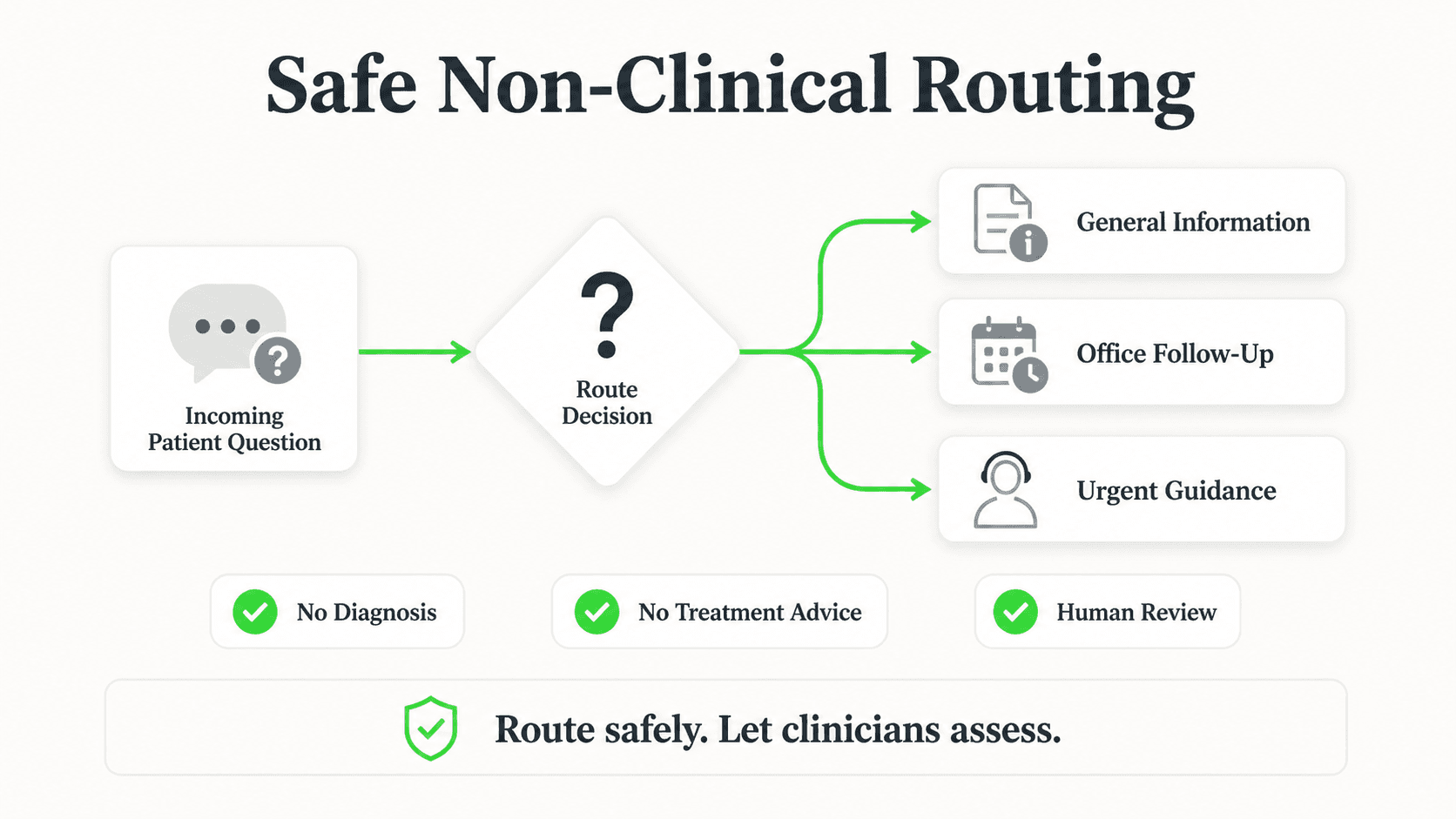
When a pet owner messages at 2am — "my dog ate rat poison" or "my cat is breathing really fast and seems scared" — a well-configured chatbot detects these urgency signals and responds immediately.
It does not attempt to diagnose. It does not suggest home remedies. It routes.
The response looks something like this: "This sounds urgent. Please call our emergency line at [number] right now, or go directly to [nearest 24-hour animal hospital name and address]. Do not wait until morning."
For this to work, your chatbot's knowledge base needs to include your emergency contact number, the phone number and address of the nearest 24-hour emergency animal hospital, and a clear instruction to the AI to prioritize routing over any other response when urgency signals appear.
This is the highest-value use case for any veterinary AI chatbot. The cost of a missed emergency is not just a lost client — it is a relationship destroyed at the moment of greatest vulnerability.
2. Online Appointment Booking
A pet owner wants to schedule a wellness exam for their new puppy. At 9pm on a Tuesday, they visit your website. With a chatbot deployed, they can select their service type (wellness exam, vaccines, grooming, dental), specify their pet's species and age, and request a time slot — all within a two-minute conversation.
The chatbot confirms the booking, sends the pet owner a summary, and adds it to your scheduling queue for staff to confirm during business hours. A 24-hour reminder reduces no-shows.
For clinics that take a high volume of routine bookings — vaccinations, annual exams, parasite prevention consultations — this alone justifies the cost of the platform.
3. New Pet Owner Onboarding
First-time pet owners have a disproportionate number of questions. What vaccines does an 8-week-old puppy need? When should a kitten be spayed? What should I bring to the first visit?
A chatbot trained on your clinic's first-visit guide, vaccine schedule, and onboarding FAQ can walk new pet owners through everything they need to know before they arrive. This improves the first-visit experience, reduces the time your staff spends on the phone explaining basics, and positions your clinic as a knowledgeable, responsive partner from day one.
You can also use this interaction to collect contact information for follow-up reminders — vaccine due dates, annual exam scheduling, and parasite prevention refills.
4. Medication and Refill Requests
Pet owners managing chronic conditions — arthritis, epilepsy, thyroid disease, diabetes — need regular prescription refills. Each refill request typically requires a phone call, a wait on hold, and a message left for staff to process and call back.
A chatbot streamlines this: the owner messages their pet's name, the medication name, and the date of their last visit. The chatbot acknowledges the request, confirms it has been flagged for veterinary review, and tells the owner they will hear back when the prescription is ready. Staff processes the request batch during the day. The owner gets a notification.
This reduces inbound call volume for a routine task while giving pet owners a faster, more convenient option.
5. Post-Visit Care Instructions
After a spay or neuter, after a dental cleaning, after a rabies or distemper vaccine, pet owners have questions. Is it normal for my dog to be tired? The incision site looks a little red — is that okay? My cat hasn't eaten since her dental cleaning yesterday.
Many of these questions have standard answers that your veterinary team already communicates at discharge. A chatbot trained on your post-operative and post-vaccine care guides can answer these questions at 10pm without pulling anyone away from patient care.
For truly concerning symptoms — excessive swelling, inability to walk, persistent vomiting after surgery — the chatbot routes to your emergency contact or advises an immediate call to your clinic.
6. Boarding and Grooming Inquiries
If your clinic offers boarding, grooming, or daycare services, these generate their own stream of inquiries: availability, pricing, vaccination requirements, drop-off times, and what to pack. These questions often arrive outside business hours from pet owners planning ahead for travel.
A chatbot handles all of this. It can share availability windows, explain what vaccines are required for boarding, describe the check-in process, and collect a booking request. For clinics where boarding and grooming represent a meaningful revenue stream, automating these inquiries frees staff to focus on care rather than calendar management.
See How Veterinary Clinics Use AI to Capture After-Hours Inquiries
Hyperleap AI trains on your clinic's knowledge base and responds instantly on your website, WhatsApp, and Facebook Messenger — even when your office is closed.
Start Free TrialChatbot vs. Voicemail vs. Answering Service
Before choosing a solution, it helps to understand what each option actually provides. Many clinics already use voicemail or an answering service. Here is how each compares:
| Feature | Voicemail | Answering Service | AI Chatbot |
|---|---|---|---|
| Response time | Next business day | Minutes (human) | Instant |
| Available 24/7 | Passive (records message) | Active (live person) | Active (responds) |
| Books appointments | No | Sometimes | Yes |
| Answers FAQ | No | Limited | Yes |
| Handles multiple contacts simultaneously | No | Limited | Yes |
| Emergency routing | No | Yes | Yes |
| Estimated monthly cost | ~$0 | $200–$500/month | From $40/month |
When voicemail still makes sense: For clinics that are genuinely not interested in after-hours contact and have a policy of returning all calls the next morning, voicemail is effectively free. The trade-off is the clients you lose overnight.
When an answering service still makes sense: For clinics that want a live human voice for after-hours calls — particularly for true emergencies where a pet owner needs reassurance, not just information — an answering service provides something a chatbot cannot: human presence and emotional support under stress.
The good news: they are not mutually exclusive. Many clinics use both. The AI chatbot handles online inquiries, website chat, WhatsApp messages, and FAQ questions. The answering service handles inbound phone calls. Together, they cover all channels without requiring a single after-hours staff member.
Getting Started: Adding a Chatbot to Your Vet Clinic Website
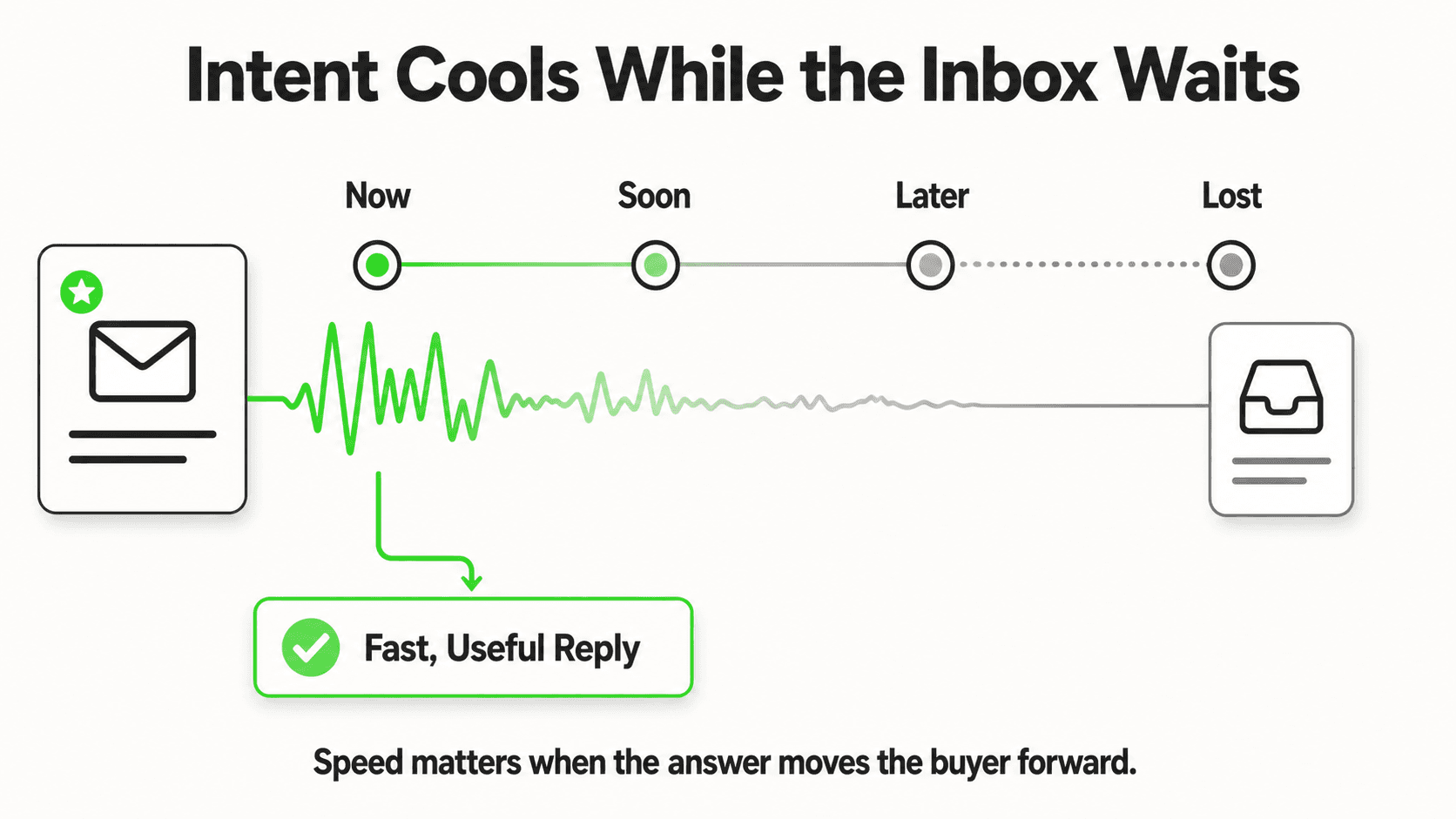
Step 1: Compile Your Knowledge Base
Before you configure anything, gather the documents and information you want the chatbot to draw from. At minimum:
- Full services list (wellness, surgery, dental, grooming, boarding, emergency, exotic animals)
- Species you see (and species you do not)
- Pricing for common services (if you share it publicly)
- Vaccine schedules (puppy/kitten series, adult annual)
- Common FAQ answers (fasting requirements, what to bring, parking, payment methods)
- Emergency contact number
- Name, address, and phone number of the nearest 24-hour emergency animal hospital
- Medication refill request process
Start here. You can always add more documents as you discover what questions come in.
Step 2: Choose a Platform
Chatbot platforms range from rule-based (cheaper but limited to scripted flows) to AI-powered (handles free-text questions and learns from your documents). For a veterinary clinic where questions are varied and species-specific, an AI-powered platform is the better investment.
No-code chatbot platforms allow you to upload documents — your FAQ list, service menu, pricing guide — and the AI learns from them without any programming required. Hyperleap AI is one option in this category; it trains on your uploaded documents and deploys on website chat, WhatsApp, and Facebook Messenger.
Step 3: Deploy on Your Website and WhatsApp
Once configured, deploying the chatbot requires:
- Website: Copy and paste a one-line embed script into your website's header or footer. This works on any website platform — WordPress, Squarespace, Wix, Webflow, or a custom-built site.
- WhatsApp: Connect your WhatsApp Business number. Pet owners who message you on WhatsApp receive the same responses as those who chat on your website.
- Facebook Messenger: Connect your clinic's Facebook page. Inquiries through Messenger are handled automatically.
This multi-channel deployment is important because the cost of missed calls compounds across every channel. A pet owner who can't reach you by phone will try your website next. If your website chat also fails them, they are gone.
Step 4: Test With Real Scenarios
Before going live, have your team run through edge cases:
- "My dog ate chocolate 30 minutes ago" — Does it route immediately to emergency resources?
- "Do you see bearded dragons?" — Does it answer correctly for your species list?
- "How much does a spay cost?" — Does it answer or explain that pricing requires a consultation?
- "I need a refill for [medication name]" — Does it collect the right information and confirm the request?
Test the unusual questions, not just the easy ones. Emergency routing in particular should be verified before you go live.
A Note on Accuracy
Modern AI chatbots trained on your documents are designed to answer from your knowledge base and minimize making things up. That said, no AI system is infallible. For medical questions specifically, configure your chatbot to route to your team rather than attempt clinical guidance. The chatbot's job is to connect pet owners to the right resource — not to replace your veterinarians.
The Case for Acting Now
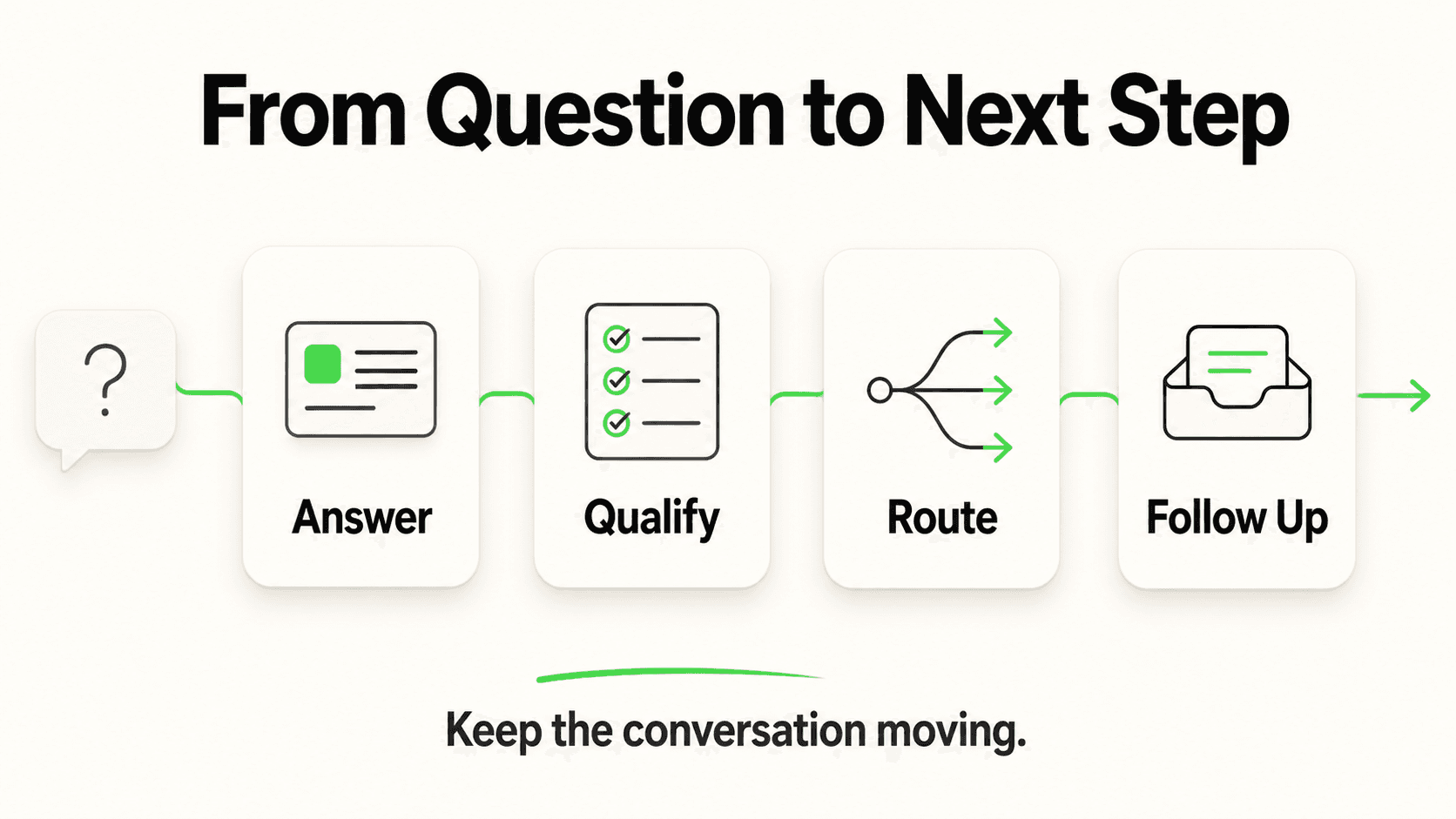
Slow response times cost businesses clients across every service vertical, but the stakes are particularly high in veterinary care. Pet owners in distress — whether the emergency is a possible toxin ingestion or a dog limping unexpectedly — are making fast decisions about who they trust with an animal they love.
The clinic that responds in seconds at 2am builds a different kind of loyalty than the clinic that returns calls the next morning. Capturing after-hours calls is not just an efficiency play — it is a trust signal.
A healthcare AI chatbot adapted for veterinary practice gives your clinic the same responsive presence that previously required dedicated overnight staff. At a fraction of the cost, and without adding headcount, you cover the hours when your competitors go dark.
Your Clinic Is Open 24 Hours — Even When You Are Not
Pet owners do not stop needing information when your doors close. They search, they message, they look for reassurance. The clinics that show up at midnight are the ones that earn loyalty that lasts through years of wellness visits, dental cleanings, and everything in between.
An AI chatbot for veterinary clinics does not replace your team. It makes your clinic reachable at every hour, on every channel your clients use — so that the next pet owner who searches for a vet at 2am finds a response instead of a voicemail.
Further Reading
Authoritative external sources used and recommended for further research on this topic:
For the receptionist-function view — intake, refills, and emergency routing — see AI receptionist for veterinary clinics.
Frequently Asked Questions
Will a chatbot replace my receptionist?
No. A chatbot handles after-hours inquiries and repetitive FAQ questions — the volume that arrives when your receptionist is busy with in-person check-ins, complex scheduling, and clinical coordination. Your receptionist focuses on the interactions that require human judgment, empathy, and real-time problem-solving. Think of the chatbot as a 24/7 assistant for routine tasks, not a replacement for the person who runs your front desk.
Can the chatbot handle pet emergencies?
The chatbot can identify urgency signals in messages — phrases like "my dog ate rat poison" or "my cat can't breathe" — and immediately provide your emergency contact number and/or direct the pet owner to the nearest 24-hour animal hospital. It does not perform medical assessment or advise treatment. That is always your veterinary team's role. For the chatbot to route correctly, your knowledge base needs to include your emergency line and the nearest 24-hour emergency hospital's contact details.
What information should I load into the chatbot?
Start with: your clinic's services and species served, hours and location, pricing (if you share it publicly), vaccine schedules, common pre-visit and post-visit FAQs, your medication refill request process, your emergency contact number, and the nearest 24-hour emergency animal hospital. These basics cover the majority of after-hours inquiries. Expand based on the questions that actually come in — your chatbot's conversation history will show you what pet owners are asking.
How much does an AI chatbot cost for a veterinary clinic?
Platforms like Hyperleap AI start at $40/month for the Plus plan, which includes website chat, WhatsApp, Instagram DM, and Facebook Messenger. That is typically less than the cost of a single missed new-client appointment, and significantly less than an answering service ($200–$500/month) that covers only phone calls. A 7-day free trial is available; a credit card is required to start.
Do I need technical skills to set up a vet clinic chatbot?
No. Modern AI chatbot platforms let you upload documents — your FAQ list, service menu, pricing guide — and the AI learns from them without any programming. Embedding the chatbot on your website takes one copy-and-paste of an embed code, which your web designer can handle in under five minutes. Connecting WhatsApp and Facebook Messenger is a guided setup process that takes 15–20 minutes.
Can it handle questions about multiple species?
Yes. Train your chatbot with species-specific information — dogs, cats, rabbits, birds, reptiles, guinea pigs — and it will answer questions specific to each. If you do not see exotic pets, configure it to say so clearly and, if possible, recommend a specialist in your area. The chatbot follows whatever information you give it, so your species policy is accurately reflected in every conversation.
Capture Every After-Hours Pet Owner Inquiry
Hyperleap AI trains on your clinic's knowledge base and responds instantly on your website, WhatsApp, and Facebook Messenger — even at 2am.
Start Free TrialIndustry Solutions
See how AI chatbots work for these industries:
Related Articles
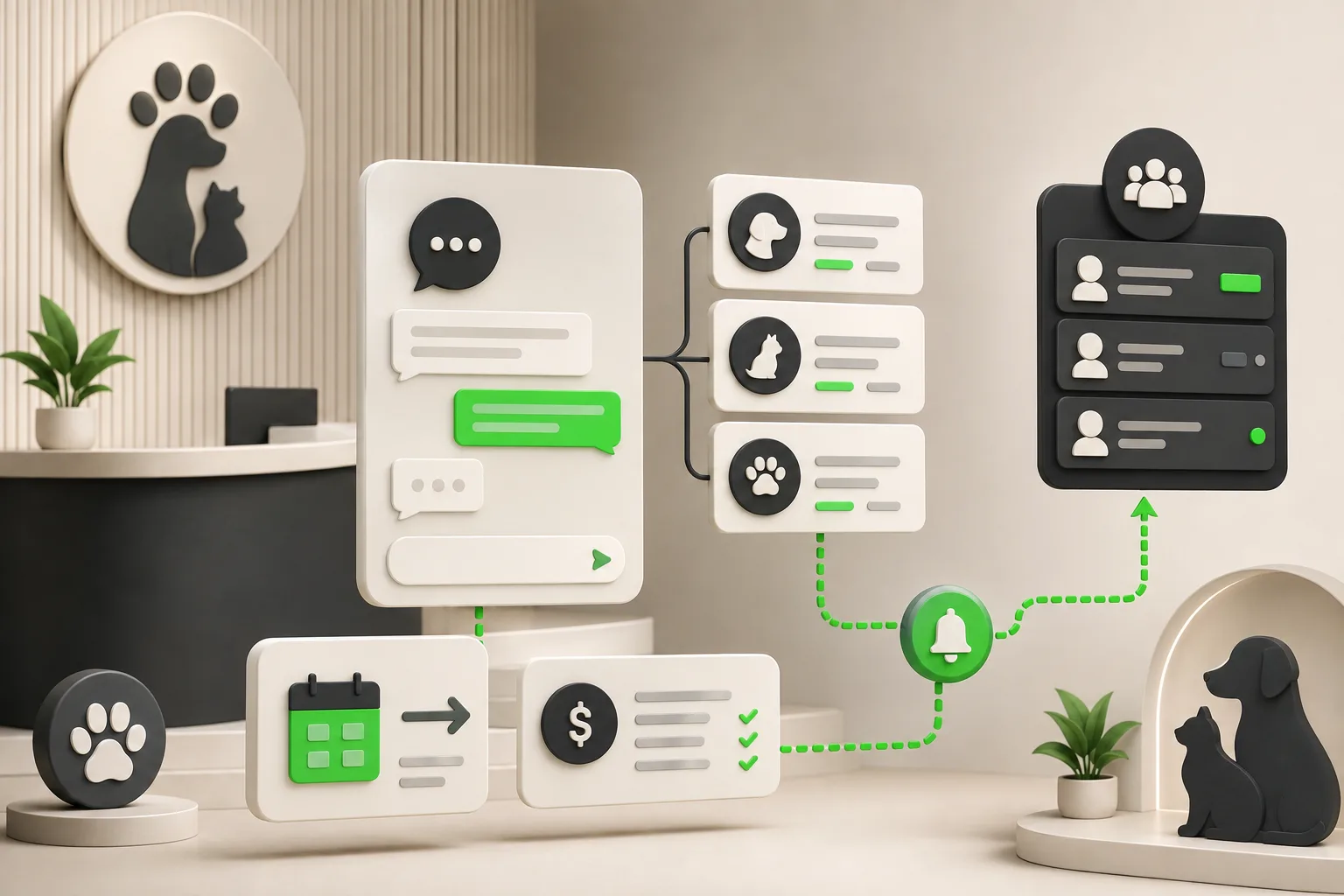
AI Receptionist for Veterinary Clinics: A Guide
An AI receptionist for veterinary clinics answers intake and pricing questions, routes emergencies to your team, and shares your booking link 24/7.

How Many Languages Does ChatGPT Support?
OpenAI doesn't publish an official language count for ChatGPT. Here's what's known, and why it matters less than you'd think for a business chatbot.
AI Answering Service for Plumbers: What's Automated
A plain breakdown of what an AI answering service actually automates for plumbing companies — and what's still roadmap, not shipped.
AI Receptionist for Home Services: The Complete Guide
An AI receptionist for home services answers overflow inquiries in chat, qualifies emergencies by trade, and routes jobs 24/7 across every service line.