Claude vs GPT-4 vs Gemini for Customer Support Chatbots
Which frontier model is actually best for customer support? An honest comparison of Claude, GPT-4, and Gemini across grounding, tone, latency, and cost.

TL;DR: For customer support chatbots in 2026, the frontier models from Anthropic (Claude), OpenAI (GPT-4o / GPT-5), and Google (Gemini) are all excellent and all viable. Claude tends to be the safest default for document-grounded responses and tone control. GPT-4-class models have the most mature tooling ecosystem. Gemini is strong on latency and on long-context retrieval. The honest answer for most SMBs is: the model doesn't matter as much as the grounding, retrieval, and workflow around it.
The model matters less than the system around it — see conversational AI for customer service and how a RAG chatbot grounds answers in your own documents.
Claude vs GPT-4 vs Gemini for Customer Support
If you've spent any time shopping for a customer support chatbot in 2026, you've had some variant of this conversation: "But which model does it use?" It's the wrong first question. The model is the least differentiated part of a well-built chatbot. Document grounding, retrieval quality, channel coverage, and escalation handling matter more for real customer outcomes.
That said, the model does matter at the margins — and choosing well can meaningfully improve tone, accuracy on long-context questions, and cost at scale. This guide is an honest comparison for the specific job of customer support: grounded, multi-turn, business-facing conversations.
Who This Guide Is For
Technical founders and ops leaders evaluating which frontier model to use (or which model a chatbot platform should use on their behalf) for customer support automation.
What Makes a Good Model for Customer Support?
Customer support is a specific workload, not a generic "smarter is better" benchmark. A model that writes beautiful poetry or solves olympiad math problems isn't automatically the right fit. The traits that matter:
- Instruction following on grounding rules — can you tell it "only answer from these passages" and have it comply?
- Consistent tone across turns — does it stay in brand voice over a long conversation?
- Graceful refusal — does it say "I don't know" cleanly instead of inventing?
- Low variance on similar inputs — same question shouldn't get wildly different answers
- Latency — responses should feel fast on web and WhatsApp
- Cost at volume — support is high-volume, so unit economics matter
No single model dominates all six. Here's how the three frontier families currently trade off.
Claude (Anthropic): The Grounding Specialist
Where Claude Wins
Claude's instruction-following is currently the best of the three for strict grounding. When told to answer only from provided context, it complies more reliably than GPT-4o or Gemini in my own side-by-side tests. It's also the most comfortable saying "I don't know" instead of fabricating.
Tone is another Claude strength. It tends to be warm, measured, and consistent — which is exactly what you want for customer support. Long conversations stay on-voice.
Where Claude Is Weaker
Ecosystem maturity still lags OpenAI. Fewer first-party integrations, fewer examples, fewer third-party tools built around it. That's changed a lot in 2025–2026 but it's still real.
Claude at a Glance
| Trait | Rating |
|---|---|
| Grounding compliance | Excellent |
| Tone / voice control | Excellent |
| Graceful refusal | Excellent |
| Latency | Good |
| Ecosystem maturity | Good |
| Cost at volume | Competitive |
GPT-4 / GPT-4o (OpenAI): The Ecosystem Leader
Where GPT Wins
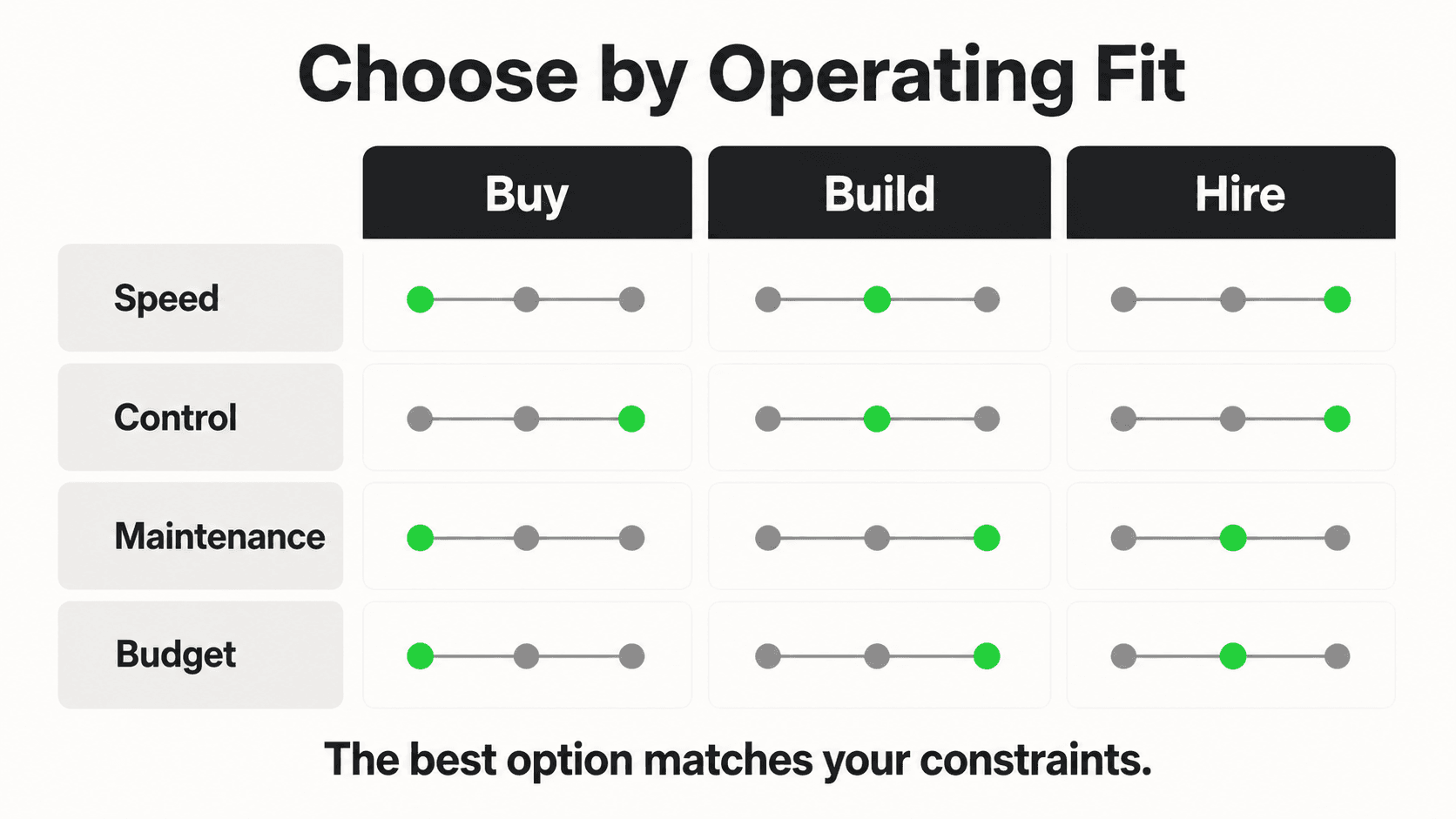
The OpenAI ecosystem is still the broadest. If you're gluing a chatbot together from open-source components, GPT-4-class models have the most tutorials, libraries, and integrations. Latency on GPT-4o is excellent. Function calling is mature. The assistant APIs and prompt caching features are well-developed.
Where GPT Is Weaker
In my own testing, GPT-4-class models are slightly more willing to "help" by filling in gaps when retrieved context is incomplete — which is useful for general assistants and dangerous for grounded customer support. You can tune this with careful system prompts, but it takes more effort than Claude.
Tone can drift on long conversations, especially if the system prompt isn't firmly reinforced.
GPT at a Glance
| Trait | Rating |
|---|---|
| Grounding compliance | Good (tunable) |
| Tone / voice control | Good |
| Graceful refusal | Good |
| Latency | Excellent |
| Ecosystem maturity | Excellent |
| Cost at volume | Competitive |
Gemini (Google): The Long-Context Option
Where Gemini Wins
Gemini's long-context support is genuinely differentiating. If your knowledge base is enormous and you want to experiment with stuffing entire document sets directly into context rather than relying on vector retrieval, Gemini handles it better than the other two. Latency on smaller Gemini tiers is excellent. Pricing is competitive.
Where Gemini Is Weaker
Instruction-following for strict grounding is, in my own testing, slightly behind Claude. It's improved significantly through 2025 but still not my first choice when "never invent anything" is the top priority. Tone can be less consistent than Claude on longer multi-turn conversations.
Gemini at a Glance
| Trait | Rating |
|---|---|
| Grounding compliance | Good |
| Tone / voice control | Good |
| Graceful refusal | Good |
| Latency | Excellent |
| Long context | Excellent |
| Cost at volume | Competitive |
7 Things That Matter More Than Your Model Choice
1. The Quality of Your Retrieval
What this looks like in practice: How well the system finds the right passages from your knowledge base before the LLM sees them.
Real-world impact: Bad retrieval + best model = wrong answer confidently phrased. Good retrieval + mid-tier model = right answer clearly phrased.
2. The Strictness of Your System Prompt
What this looks like in practice: Explicit instructions to answer only from retrieved passages and to refuse out-of-scope questions.
Real-world impact: This single lever affects hallucination rate more than model choice. The deeper playbook is in how AI chatbots minimize hallucinations.
3. How You Handle Conversation History
What this looks like in practice: Clear summarization, pruning, or windowing so long conversations don't degrade.
Real-world impact: Model quality matters less than whether you're feeding it a coherent context.
4. Your Knowledge Base Hygiene
What this looks like in practice: Content that's current, well-structured, and free of contradictions.
Real-world impact: Any model, grounded against bad content, gives bad answers.
5. Your Escalation Triggers
What this looks like in practice: Clear rules for when to hand off to a human — confidence thresholds, sensitive topics, explicit requests.
Real-world impact: A great model that escalates well outperforms a great model that never escalates.
6. Channel-Specific Behavior
What this looks like in practice: Responses formatted appropriately for WhatsApp (shorter, no markdown), web (richer), Instagram (image-aware).
Real-world impact: Customers judge support quality by how it feels on their channel, not by the model underneath.
7. Your Feedback Loop
What this looks like in practice: Weekly transcript review, source content updates, edge cases added to the KB.
Real-world impact: Any of the three models improves over time with a good feedback loop. Any of the three stagnates without one.
Real Results: What We See in Production
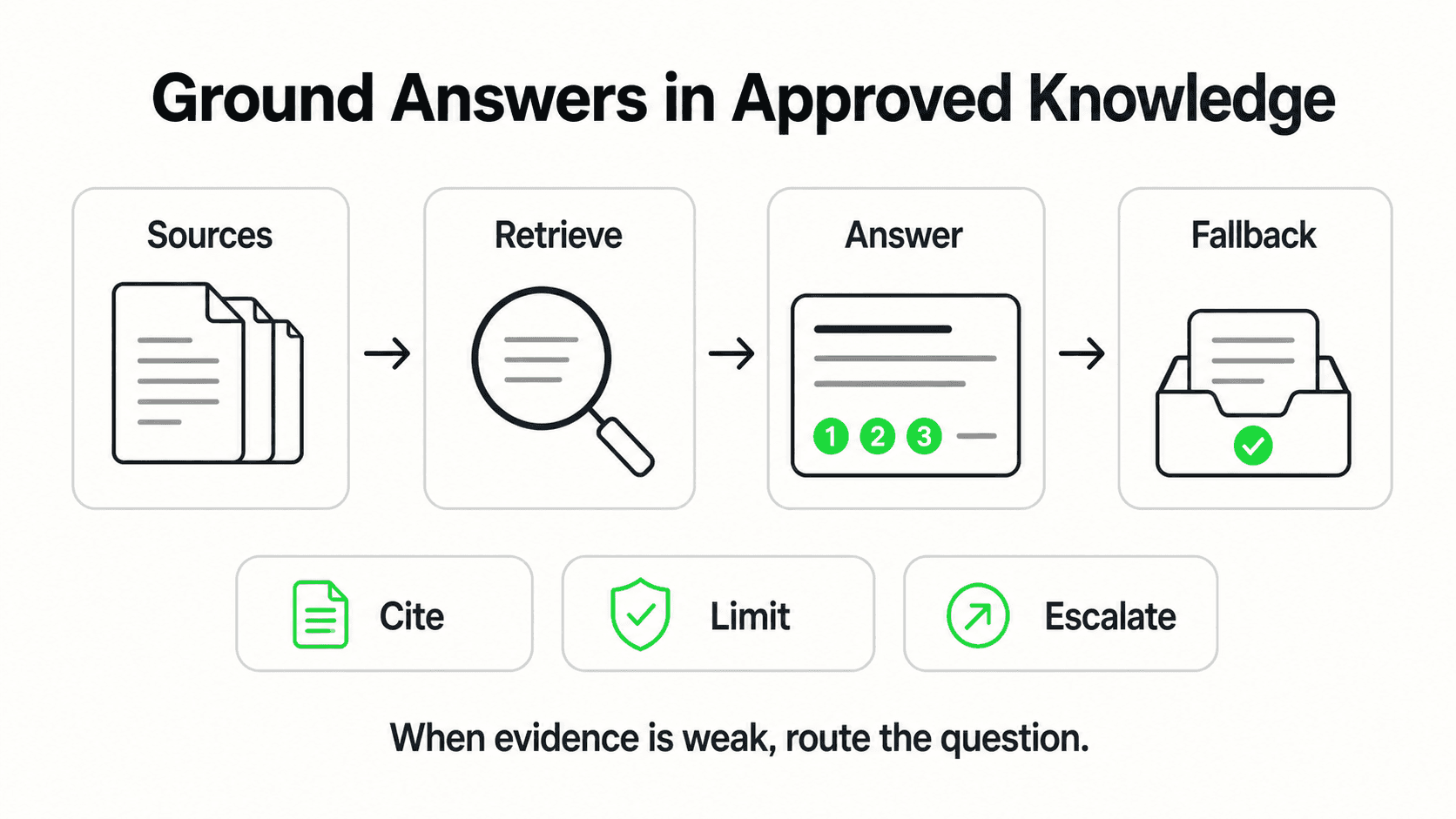
In Hyperleap's customer base, moving between Claude, GPT-4o, and Gemini on the same grounded workflow typically changes performance at the margins — a few percentage points of escalation rate, small differences in tone, small differences in latency. Moving from "no grounding" to document grounding with RAG changes performance an order of magnitude more than any model swap.
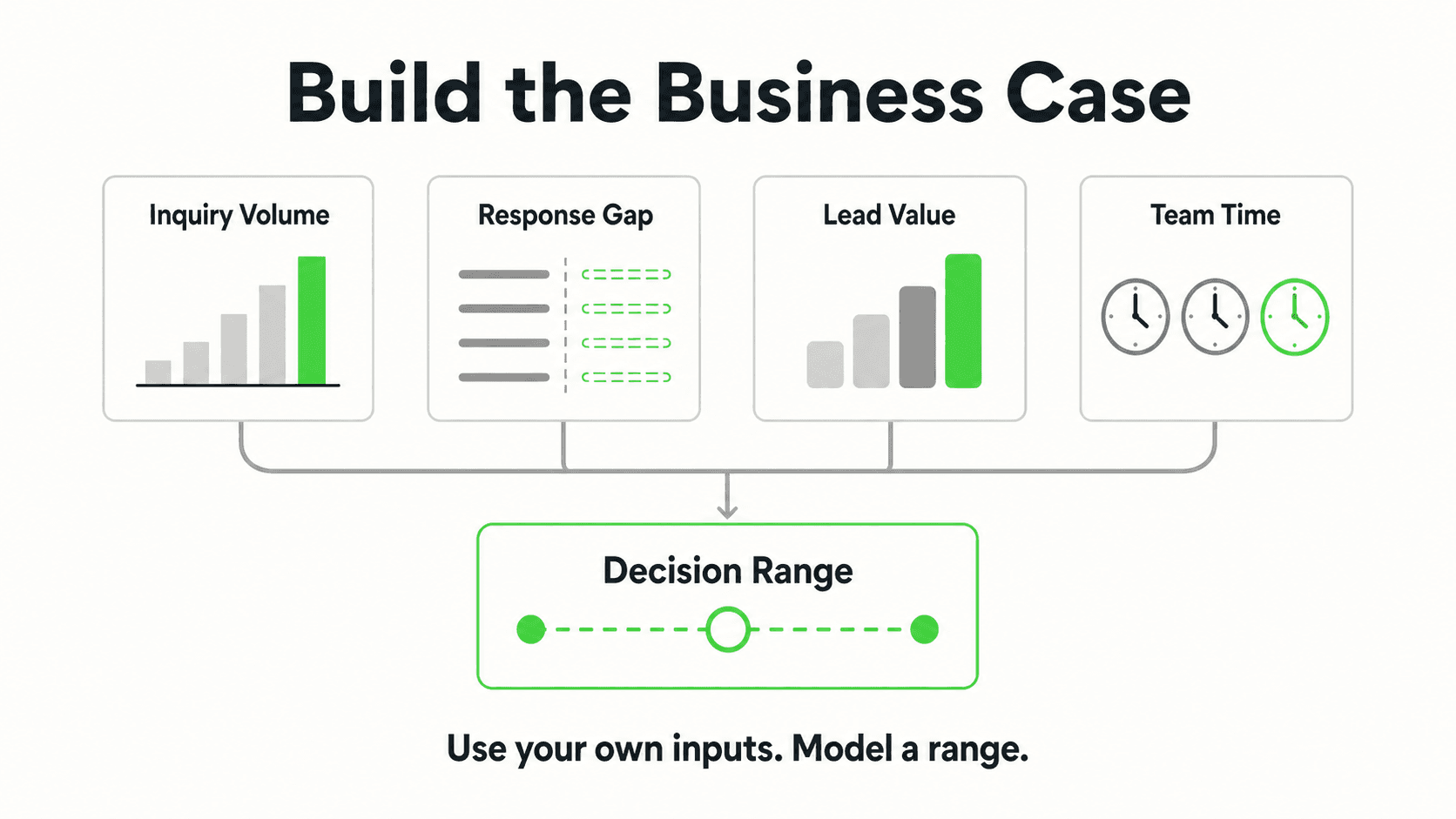
The Jungle Lodges deployment captured 3,300+ leads in 90 days with 35% of inquiries after hours. The lift came from document-grounded responses, multi-channel coverage, and fast response times — not from choosing the "right" frontier model.
See grounded responses with the model that fits your use case
Hyperleap handles model selection, retrieval, channels, and escalation so you can focus on your customers.
Start a Free TrialHow to Choose: A Practical Framework
If you're picking the model yourself:
- Tone and grounding matter most? Start with Claude.
- You need the broadest ecosystem and tooling? GPT-4o.
- You need massive context windows? Gemini.
- You're cost-sensitive at very high volume? Benchmark the smaller tier of each family on your own workload — prices change monthly.
If you're picking a chatbot platform:
- Does the platform let you choose or swap models? Useful flexibility.
- Does it invest in retrieval and prompting quality? More important than the model.
- Does it have the channels you need? Non-negotiable — see the multi-channel AI chatbot strategy.
- Does it handle escalation cleanly? The silent determinant of customer satisfaction.
Frequently Asked Questions
Which model has the lowest hallucination rate?
On strict grounding benchmarks in 2025–2026, Claude tends to lead, with GPT-4o and Gemini close behind. But the difference between "strict grounding with any frontier model" and "no grounding with the best model" is much larger than the differences between models.
Is GPT-5 significantly better than GPT-4o for support?
For most grounded support workloads, the difference is small. GPT-5-class models are better on complex reasoning and long-context tasks, but support conversations are rarely where that matters. The cost difference often matters more.
Can I mix models in the same chatbot?
Yes. A common pattern is using a smaller model for classification and a larger one for final response generation. Some platforms route simple questions to cheaper models and escalate complex ones to frontier tiers.
Does Hyperleap let me pick the model?
Hyperleap manages model selection as part of the platform. The team benchmarks models on grounded support workloads and routes to whichever is currently best for the job — which isolates customers from pricing and capability changes at the model layer.
What's the right way to benchmark models for my use case?
Write 30 real questions from your support inbox, run each through a trial deployment on each model, and score on correctness, grounding, tone, and escalation behavior. Don't trust vendor demos with curated data.
How often should I re-evaluate my model choice?
Every 6–12 months. Models and pricing both change frequently. Platforms that own model selection handle this for you automatically.
Pick a Platform, Not a Model
The deepest lesson from two years of running customer-facing chatbots in production is that the frontier model is the least interesting variable. Grounding, retrieval, channels, and workflow determine whether customers get good answers. Model choice is a second-order knob that matters most at extreme scale or extreme specificity.
Hyperleap is built around that insight. The model underneath can change; the things that matter for your customer conversations — grounding, multi-channel reach, lead capture, escalation — stay consistent.
What is an AI chatbot in business terms?
A customer-facing chat agent that answers questions, qualifies inquiries, and captures leads 24/7. Modern AI chatbots are grounded in your business content (not the open internet) and run across your website and messaging channels with the same persona and knowledge.
How is Hyperleap different from a chat widget or a live chat tool?
Live chat tools route to humans; basic widgets follow scripted flows. Hyperleap is an AI agent grounded in your content — it understands intent, retrieves from your knowledge base, qualifies leads, and escalates only when needed. Same answers across website, WhatsApp, Instagram DM, and Facebook Messenger.
How long does it take to set up an AI chatbot with Hyperleap?
Most SMBs go live in 3–5 days for self-serve setup. With Managed Setup ($299 Free, available on every plan), Hyperleap builds the bot for you on your content and channels. A 7-day free trial is included on every plan.
Further Reading
Authoritative external sources used and recommended for further research on this topic:
- Anthropic research and product documentation
- Google Search Central documentation
- Gartner customer service research
Stop comparing models, start comparing outcomes
Deploy a grounded customer support chatbot in one session, across every channel your customers actually use.
Try Hyperleap FreeRelated Articles

Build a Sales Agent with Hyperleap MCP (Read-Only, Scheduled, Safe)
A hands-on guide to building a non-interactive sales agent on top of Hyperleap's read-only MCP server — the agent loop, the tools it uses, example prompts, and how to schedule or trigger it.

Hyperleap MCP API Reference: Schemas, Examples, and Rate Limits
Complete developer reference for the Hyperleap MCP server. Tool schemas, parameters, response shapes, authentication, pagination, and rate limits.

Multi-MCP Workflows: Hyperleap + HubSpot + Linear in Claude
How to combine multiple MCP servers — Hyperleap, HubSpot, Linear — into a single Claude workflow that turns chatbot leads into enriched CRM records and follow-up tickets.

Connect Hyperleap MCP to Cursor for Developer Workflows
Step-by-step setup for using Hyperleap's MCP server inside Cursor. Pull live lead data, prototype agents, and debug integrations from your IDE.