Connect Hyperleap MCP to Cursor for Developer Workflows
Step-by-step setup for using Hyperleap's MCP server inside Cursor. Pull live lead data, prototype agents, and debug integrations from your IDE.

TL;DR: Add a single JSON entry to ~/.cursor/mcp.json, restart Cursor, and Hyperleap's nine read-only MCP tools become available inside every Cursor chat and agent session. You can then query live lead data, pipeline stages, and conversation transcripts from your chatbot without leaving your editor—no separate dashboard tab, no copy-pasting IDs.
Connect Hyperleap MCP to Cursor: What You're About to Do
The Model Context Protocol (MCP) is an open standard that lets AI-powered tools—including Cursor's built-in agent—reach out to external data sources through a structured, typed interface. Cursor added native MCP support as a first-class feature: configure a server, restart, and the tools appear in the IDE's MCP panel alongside Cursor's existing context.
Hyperleap AI ships an official MCP server with nine read-only tools that expose your chatbot's CRM data: leads, conversations, activities, notes, pipeline stages, and aggregated dashboard metrics. Read-only by design—the server has zero write methods, so there is no risk of modifying production data from an exploratory Cursor session.
This tutorial walks you through the full setup and five real developer workflows you can run the same afternoon you configure it. If you have already done the Claude Desktop version, the JSON structure is nearly identical—but the Cursor integration has some workflow angles worth reading for, particularly around combining multiple MCP servers in one session.
Related reading: Hyperleap MCP Tools Reference · Connect Hyperleap to Claude Desktop · Developer hub
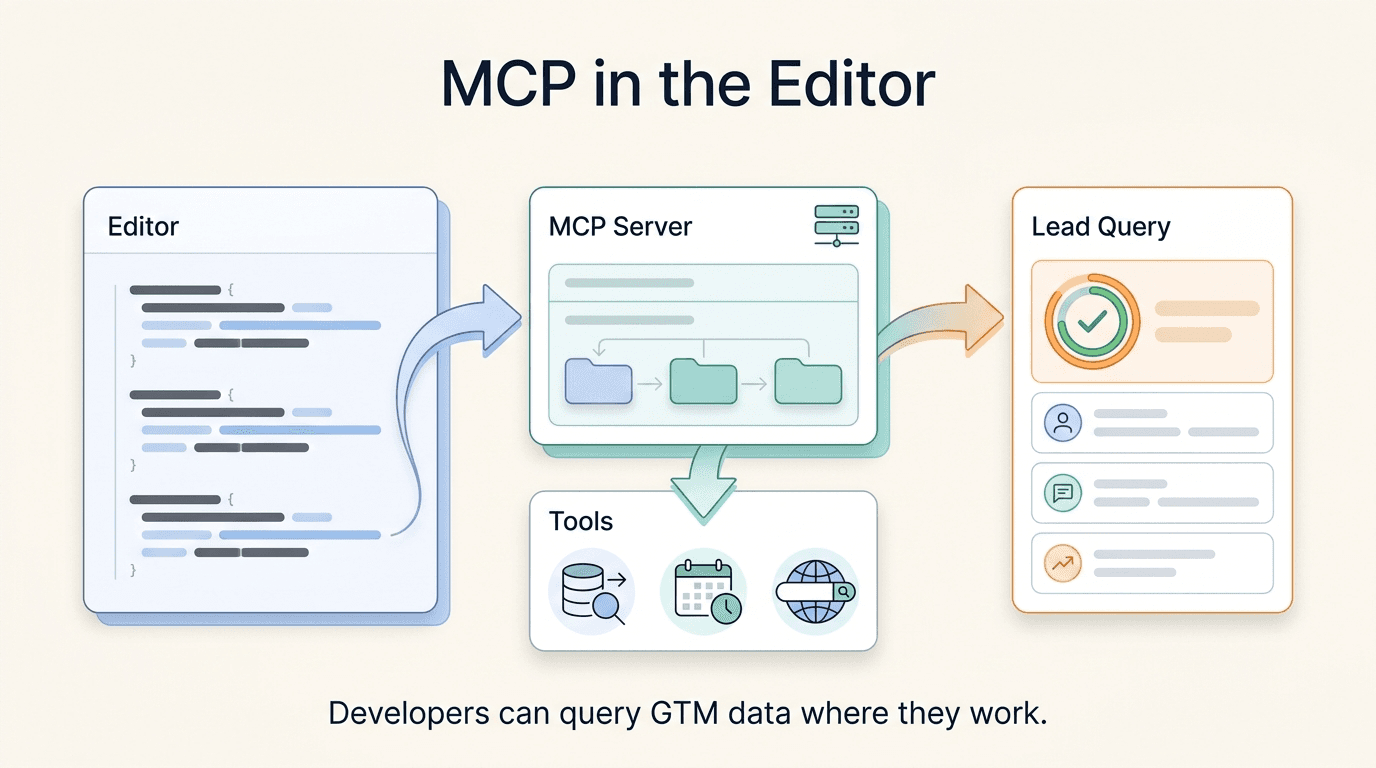
Why a Developer Would Want This
Before walking through steps, it is worth being precise about the problem this solves—because "bring your CRM data into your IDE" can sound like a novelty until you have hit one of these situations yourself.
Debugging webhook handlers against real shape data
You are building a webhook handler that processes Hyperleap lead events. Your tests pass locally with hand-crafted JSON fixtures, but things break in production because the actual payload shape is subtly different—field names you did not expect, nested objects where you assumed flat, nullable fields that your code treats as required.
With the Hyperleap MCP connected in Cursor, you can ask the agent to fetch a real lead record, inspect the exact JSON shape, and generate test fixtures from it. The fixtures are production-accurate because they came from production. You do not need to copy-paste from a dashboard or write a throwaway script to hit the REST API.
Generating reports inside the IDE
Occasionally you need a quick one-off report—say, all leads in a specific pipeline stage with their last conversation date—that does not justify building a full export feature. With list_leads and get_pipeline_stages accessible in Cursor chat, you can ask the agent to assemble and format the data as a CSV, a markdown table, or whatever structure your stakeholder needs. Done in minutes, without leaving the editor.
Building and iterating on data scripts
If you are writing a scheduled script—a weekly digest emailer, a Slack summary bot, a dashboard data pipeline—you want to iterate against real data, not stubs. The MCP lets Cursor's agent read live records while you write the script alongside it. You spot edge cases immediately rather than discovering them when the cron job runs on Monday morning.
Prototyping agents that reason over conversation data
Cursor's agent mode is a capable environment for prototyping. If you are building a secondary agent—one that reads Hyperleap conversations and extracts themes, escalation signals, or sentiment patterns—you can prototype the entire reasoning loop from inside Cursor using extract_lead_insights and get_lead_conversations as the data source. When the prototype works, your production implementation already has a validated prompt and data contract.
Writing integration tests with real-shape responses
Integration tests that mock external APIs tend to diverge from reality over time. With the MCP server available, you can fetch a handful of real records, anonymize them (swap out names, emails, phone numbers), and hard-code those shapes as your test fixtures. The resulting tests are far more likely to catch actual regressions.
Prerequisites
Before you start the configuration, make sure you have the following:
- A Hyperleap AI paid plan (Plus at $40/mo, Pro at $100/mo, or Max at $200/mo). API access is included on all paid plans. There is a 7-day free trial if you want to test before committing.
- Cursor installed — download from cursor.sh. Any recent version with MCP support works (check
Cursor > Settings > MCPto confirm the panel is present). - Node.js 18 or later — the MCP server runs via
npx, so Node must be available on the PATH that Cursor's shell uses. Runnode --versionin your terminal to confirm. - Your Hyperleap API key — find it in your Hyperleap dashboard under Settings > API Keys. It starts with
hlp_. Keep this key out of version control.
Setup Steps: 6 Steps to Connect Hyperleap MCP to Cursor
Step 1: Open or create ~/.cursor/mcp.json
Cursor stores all MCP server configurations in a single file at ~/.cursor/mcp.json. Open it in your editor of choice. If the file does not exist yet, create it—Cursor will pick it up on the next restart.
# Check whether the file already exists
ls ~/.cursor/mcp.json

# Create the directory if needed
mkdir -p ~/.cursor
You should now see either the contents of your existing mcp.json or an empty file ready to edit.
Step 2: Add the Hyperleap MCP server entry
Paste the following into ~/.cursor/mcp.json. If you already have other MCP servers configured, add the "hyperleap" key inside the existing "mcpServers" object—do not replace the whole file.
{
  "mcpServers": {
    "hyperleap": {
      "command": "npx",
      "args": ["-y", "@hyperleap/mcp-server"],
      "env": {
        "HYPERLEAP_API_KEY": "your-api-key-here"
      }
    }
  }
}
Replace your-api-key-here with the API key you copied from your Hyperleap dashboard. The -y flag tells npx to install the package without prompting, so the first run is fully automatic.
You should now see a valid JSON file saved to disk with no syntax errors. Run node -e "require('fs').readFileSync(process.env.HOME+'/.cursor/mcp.json'); console.log('valid')" to confirm the JSON parses correctly.
Step 3: Restart Cursor
Quit Cursor fully (Cmd+Q on macOS, Alt+F4 on Windows/Linux) and relaunch it. A reload or window refresh is not sufficient—the MCP configuration is read at startup.
You should now see Cursor finish its startup sequence normally with no error dialogs.
Step 4: Verify the MCP server appears in the MCP panel
Open Cursor's settings (Cmd+, on macOS) and navigate to the MCP section. You should see hyperleap listed with a green status indicator once the server has initialized successfully.
If the indicator is yellow or red, the server is either still starting (wait a few seconds and refresh) or has encountered an error—see the Troubleshooting section below.
You should now see hyperleap in the MCP panel with a connected status.
Step 5: Confirm the nine tools are registered
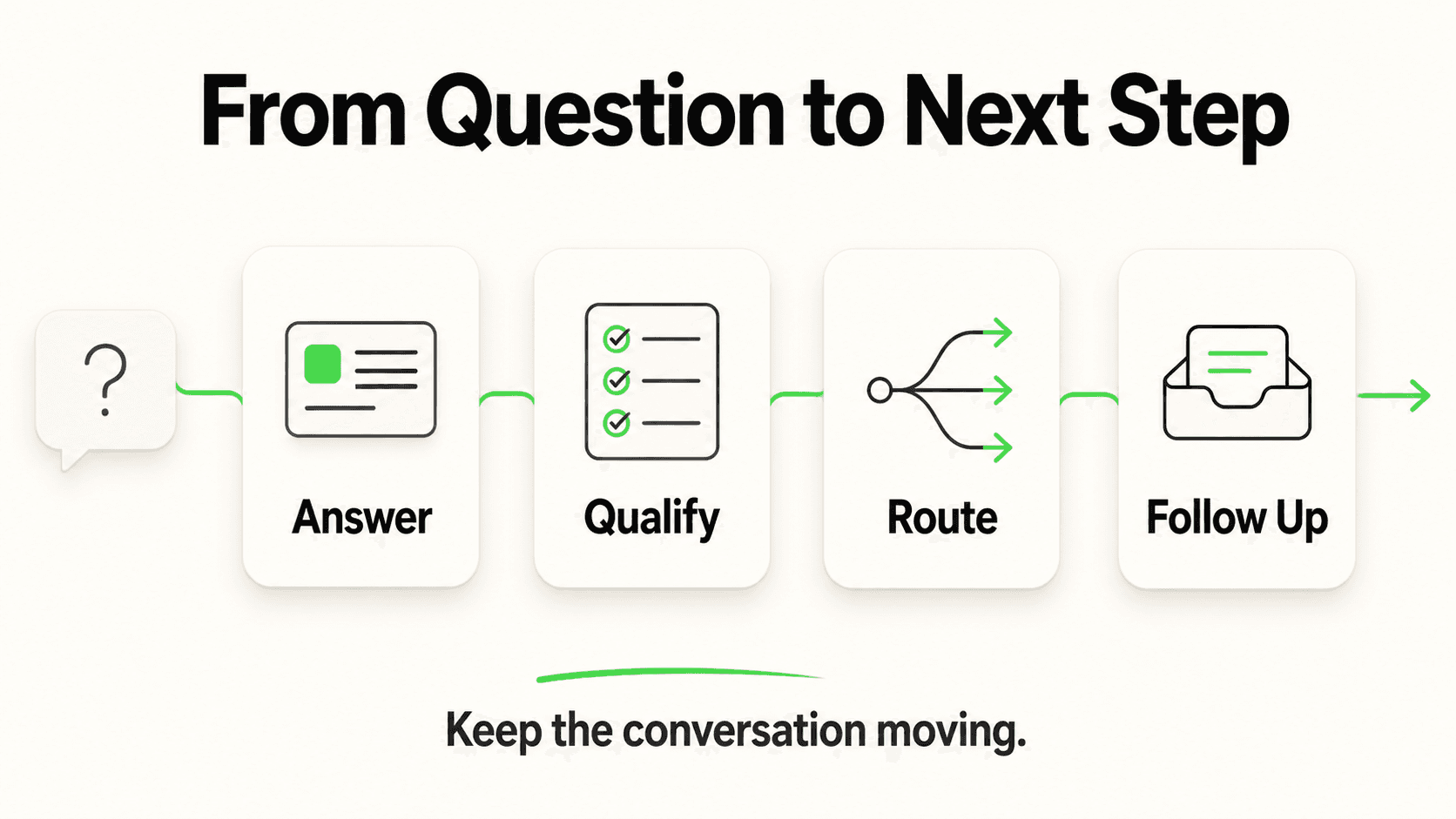
Click on the hyperleap entry in the MCP panel. Cursor will display the list of available tools exposed by the server. You should see all nine:
list_leadsget_lead_detailsget_lead_conversationsget_conversationget_lead_activitiesget_lead_notesget_pipeline_stagesget_crm_dashboardextract_lead_insights
You should now see all nine tools listed with their descriptions. If any are missing, the server version may be outdated—run npx @hyperleap/mcp-server --version in your terminal to check.
Step 6: Run a test query in Cursor chat
Open a new Cursor chat window (Cmd+L) and type:
Use the hyperleap MCP to list my pipeline stages.
Cursor's agent will call get_pipeline_stages and return the stages configured in your Hyperleap account. This confirms the full round-trip: Cursor → MCP server → Hyperleap API → response.
You should now see your pipeline stages listed in the chat response. If you see an authentication error instead, double-check that your API key in mcp.json matches the one in your Hyperleap dashboard.
5 Developer Workflow Examples
Workflow 1: Debug a webhook handler against live lead data
Scenario: You are building a webhook handler that receives lead creation events from Hyperleap and writes them to your database. Your handler keeps failing on certain lead records in staging.
Cursor prompt:
Use the hyperleap MCP to fetch the details of lead [lead-id] and show me the full JSON shape of the response, including any nested objects. I want to use this to update my TypeScript interface and test fixtures.
Sketched outcome: Cursor calls get_lead_details, returns the full record structure, and you can immediately see that the metadata field is sometimes an object and sometimes null—exactly the edge case your handler was not handling. You update your TypeScript interface and add a null-check in two minutes instead of spending an hour adding logging and waiting for the next webhook event.
Workflow 2: Generate a one-off CSV report from list_leads
Scenario: Your sales manager needs a list of all leads currently in the "Qualified" stage with their last activity date, formatted as a CSV, by end of day.
Cursor prompt:
Use the hyperleap MCP to list all leads in the "Qualified" pipeline stage. For each lead, include their name, email, and the date of their last activity. Format the result as a CSV I can paste into a spreadsheet.
Sketched outcome: Cursor chains get_pipeline_stages to find the correct stage ID, then calls list_leads with that filter, then get_lead_activities for each result to pull the last activity date. The output is a clean CSV in the chat window. Total time: under two minutes, no context-switching to a dashboard, no custom export script needed.
Workflow 3: Build a weekly digest script using get_crm_dashboard
Scenario: You are writing a Node.js script that runs every Monday morning, fetches a summary of last week's lead and conversation activity, and posts it to a Slack channel.
Cursor prompt:
I'm writing a Node.js script to fetch weekly CRM metrics from Hyperleap. Use the hyperleap MCP to call get_crm_dashboard and show me what the response structure looks like. Then help me write a function that extracts total leads, active conversations, and response rate from that shape.
Sketched outcome: Cursor fetches a real get_crm_dashboard response from your account, shows you the exact field names (so you are not guessing from documentation), and writes the extraction function against the actual shape. When you run the script in production the following Monday, the field names match because you tested against production data, not stubs.
Workflow 4: Prototype a reasoning agent using extract_lead_insights
Scenario: You want to build an agent that reads recent conversations and surfaces leads showing purchase intent signals—phrases like "how do I get started," requests for pricing, or mentions of a competitor. Before investing in a full implementation, you want to validate the prompt and output structure.
Cursor prompt:
Use the hyperleap MCP to run extract_lead_insights on lead [lead-id]. Based on the output, help me write a system prompt for an agent that identifies purchase intent signals in lead conversation data. Then test the prompt against the insights you just fetched.
Sketched outcome: Cursor calls extract_lead_insights, returns a structured breakdown of themes and signals from that lead's conversations, and uses those as grounding data to draft and immediately test a system prompt. You validate the reasoning loop against a real record before writing a single line of production code.
Workflow 5: Write integration tests with real-shape (anonymized) fixtures
Scenario: Your integration tests for the Hyperleap API client mock the responses by hand. Over time the mocks have drifted from the actual API shape, and the tests are no longer catching real regressions.
Cursor prompt:
Use the hyperleap MCP to fetch lead details for leads [id-1], [id-2], and [id-3]. Then anonymize the results—replace real names with "Acme Corp Contact 1", replace emails with test@example.com, and replace phone numbers with +1-555-000-0001. Use the anonymized data to generate TypeScript test fixtures for my integration test suite.
Sketched outcome: Cursor fetches three real records, performs the anonymization inline, and generates a fixtures/leads.ts file with production-accurate shapes and safe placeholder values. Your integration tests now reflect the actual API contract, and any future breaking changes in the API will surface in test failures rather than production incidents.
Combining Hyperleap with Other Cursor MCPs
Cursor's MCP system is additive—you can run multiple servers simultaneously in the same session by adding entries to mcpServers in mcp.json. A productive developer stack for Hyperleap integration work might look like:
{
  "mcpServers": {
    "hyperleap": {
      "command": "npx",
      "args": ["-y", "@hyperleap/mcp-server"],
      "env": { "HYPERLEAP_API_KEY": "your-api-key-here" }
    },
    "filesystem": {
      "command": "npx",
      "args": ["-y", "@modelcontextprotocol/server-filesystem", "/your/project/path"]
    },
    "github": {
      "command": "npx",
      "args": ["-y", "@modelcontextprotocol/server-github"],
      "env": { "GITHUB_TOKEN": "your-github-token" }
    }
  }
}
With this configuration, a single Cursor agent session can read live Hyperleap lead data, inspect your local source files, and query open GitHub issues—all at once. Practical example: ask Cursor to "look at the Hyperleap webhook handler in src/webhooks/leads.ts, fetch a real lead record to check the expected shape, and open a GitHub issue if the handler's TypeScript interface has any missing fields."
For more advanced multi-MCP patterns—including combining Hyperleap with HubSpot and Linear in a single workflow—see Multi-MCP Workflows: Hyperleap + HubSpot + Linear.
You can also explore the full list of available tools and their parameters in the Hyperleap MCP Tools Reference.
Troubleshooting
hyperleap server shows as disconnected (red) in the MCP panel
The most common cause is that npx cannot reach the npm registry on first run, or Node is not on the PATH that Cursor's shell uses. Open a terminal, run npx @hyperleap/mcp-server --version, and confirm it executes. If it fails, check your Node installation and network. If Cursor's shell uses a different PATH than your interactive terminal (common on macOS with Homebrew), specify the full path to npx in the command field of mcp.json.
Authentication failed or 401 Unauthorized in Cursor chat
Your API key in mcp.json is incorrect or has been rotated. Go to Hyperleap Settings > API Keys, generate a new key if needed, and update mcp.json. Restart Cursor after saving.
JSON parse error on Cursor startup
mcp.json has a syntax error. Run node -e "JSON.parse(require('fs').readFileSync(process.env.HOME+'/.cursor/mcp.json','utf8'))" in your terminal—Node will print the line and character where the error occurs. Common culprits: trailing commas, mismatched braces, or unescaped characters in the API key string.
Tool calls return empty results for list_leads or get_crm_dashboard
Your Hyperleap account may not have any leads yet, or the API key belongs to a workspace with no data. Log in to your Hyperleap dashboard and confirm there is at least one lead in the account associated with your key.
Cursor agent ignores the MCP tools and tries to answer from training data
Cursor's agent will use MCP tools when prompted explicitly. If you ask a generic question ("what are my leads?"), it may respond from context instead. Be explicit: "Use the hyperleap MCP tool list_leads to..." — this forces the tool call.
Start Using Hyperleap MCP in Cursor
The full setup takes under five minutes. Once connected, you have a direct read channel from your IDE into your Hyperleap chatbot's CRM data—useful any time you are debugging an integration, prototyping a data script, or building something that needs to reason over real conversation data.
If you are evaluating whether Hyperleap's MCP server fits your team's workflow, the MCP overview page covers the full capability set and how the read-only design fits into a safe developer workflow. And if you are running a multi-tool setup with other MCPs alongside Hyperleap, the developer hub has the reference material you need.
Frequently Asked Questions
Does the Hyperleap MCP server write any data back to my account?
No. All nine tools are read-only. The MCP server has zero write methods—it cannot create leads, update pipeline stages, send messages, or modify any data in your Hyperleap account. This is intentional: the server is designed for data access and integration work, not for automating writes from an AI agent session.
Which Hyperleap plans include API access for MCP?
API access is available on all three paid plans: Plus ($40/mo), Pro ($100/mo), and Max ($200/mo). All plans include a 7-day free trial. There is no free plan. You can find your API key under Settings > API Keys after subscribing.
Is my API key sent to Cursor or stored anywhere by the MCP server?
Your API key lives in ~/.cursor/mcp.json on your local machine. It is passed to the MCP server process as an environment variable at startup. Cursor reads the config to start the process but does not transmit your key to Cursor's cloud servers. The MCP server uses the key only to authenticate requests to the Hyperleap API.
Can I use the same API key for both Cursor and Claude Desktop?
Yes. Your Hyperleap API key is not scoped to a specific client. You can use the same key in ~/.cursor/mcp.json and in your Claude Desktop configuration simultaneously. Both clients will read from the same Hyperleap workspace.
How do I update the MCP server when a new version is released?
Because the config uses npx -y @hyperleap/mcp-server, npx will pull the latest published version each time Cursor starts the server process—unless npx has cached the package locally. To force a fresh pull, run npx clear-npx-cache (or delete ~/.npm/_npx/) and restart Cursor.
Can I restrict which leads the MCP server can access?
The MCP server accesses all data visible to the API key you provide. If you want to restrict access to a specific workspace or set of leads, create a dedicated API key tied to that workspace from your Hyperleap dashboard. You cannot currently scope a single key to a subset of leads within a workspace.
What happens if I accidentally include my API key in a committed file?
Rotate the key immediately from Hyperleap Settings > API Keys. The old key will stop working as soon as you rotate. Then remove the key from your git history using git filter-repo or BFG Repo Cleaner—a simple revert does not remove a secret from history. Going forward, consider using a tool like direnv to inject the key via an environment variable rather than hardcoding it in mcp.json.
Where can I see the full list of MCP tool parameters and response shapes?
The Hyperleap MCP Tools Reference documents all nine tools with their input parameters, response schemas, and example outputs. If you want to explore interactively, you can also ask Cursor's agent to describe any tool: "Using the hyperleap MCP, describe the parameters accepted by extract_lead_insights."
Related Articles

The 9 Hyperleap MCP Tools, Explained with Real Prompts
Reference guide to every tool in Hyperleap's MCP server. Parameters, example prompts, sample responses, and when to use each of the 9 read-only methods.

Build a Sales Agent with Hyperleap MCP (Read-Only, Scheduled, Safe)
A hands-on guide to building a non-interactive sales agent on top of Hyperleap's read-only MCP server — the agent loop, the tools it uses, example prompts, and how to schedule or trigger it.

Hyperleap MCP API Reference: Schemas, Examples, and Rate Limits
Complete developer reference for the Hyperleap MCP server. Tool schemas, parameters, response shapes, authentication, pagination, and rate limits.

Multi-MCP Workflows: Hyperleap + HubSpot + Linear in Claude
How to combine multiple MCP servers — Hyperleap, HubSpot, Linear — into a single Claude workflow that turns chatbot leads into enriched CRM records and follow-up tickets.