Why Insurance Agencies Lose Quotes to Faster Agents
Insurance prospects request quotes from 3-4 agencies at once. The data shows the first responder wins over 50% of the time—here's what that costs you.

TL;DR: Insurance prospects request quotes from 3-4 agencies simultaneously, and research shows 78% of customers buy from the first business to respond (Source: Lead Connect). With the average insurance agency taking hours to return a call, you're losing the majority of quote opportunities before you even pick up the phone. An AI receptionist that answers quote requests instantly changes the math entirely.
Right now, someone in your service area is comparing auto insurance rates. They've opened three browser tabs, filled out your quote form, your competitor's quote form, and a third agency's form. They're waiting to hear back. The first agent who responds with useful information wins their business the majority of the time.
This isn't speculation. According to a study cited by Lead Connect, 78% of customers purchase from the company that responds to their inquiry first. In insurance, where products are largely commoditized and price differences between carriers are often marginal, speed is the single greatest differentiator between the agency that writes the policy and the agency that never hears from the prospect again.
Yet most independent agencies still operate on a callback model built for the 1990s: a prospect calls, goes to voicemail, and waits hours or even days for a return call. By then, they've already bound coverage with someone else.
The data on what this costs your agency is sobering. This article breaks down exactly why speed-to-quote is the most important metric in your agency, what slow response is costing you in real dollars, and how agencies are solving it.
The Speed-to-Quote Problem in Insurance
Insurance shopping has fundamentally changed. According to J.D. Power's U.S. Insurance Shopping Study, 57% of customers actively shopped for a policy in the past year, which is the highest shopping rate ever recorded in the 19-year history of their study. And when they shop, they don't call one agency and wait patiently. They request quotes from multiple agencies simultaneously.
A ValuePenguin study found that 74% of Americans have shopped around for insurance at least once, and 76% of those who compared quotes reported saving money by doing so. The implication for agencies is clear: your prospect is always comparing you against at least two or three other agencies at the same time.
The Multi-Quote Reality
Here's what the typical insurance shopping journey looks like today:
- The prospect identifies a need (new car, home purchase, policy renewal, rate increase)
- They search online and open 3-4 agency websites or aggregator sites
- They submit quote requests to multiple agencies within a 10-15 minute window
- They engage with the first agency that responds with relevant information
- They bind coverage, often within the same session if the price and experience are right
This pattern holds across personal lines (auto, home, renters) and commercial lines (general liability, commercial auto, workers' compensation). The agency that gets back to the prospect first with a useful response, not just an acknowledgment email, but actual engagement, captures the conversation. And the agency that captures the conversation writes the policy.
Research from MIT and InsideSales.com shows that leads contacted within 5 minutes are 21 times more likely to qualify than those contacted at 30 minutes. In a multi-quote environment where three agencies are racing to respond to the same person, 5 minutes might already be too slow.
Why Insurance Agencies Are Losing to Faster Competitors
Most independent agencies aren't losing on price. They're not losing on coverage options. They're not even losing on service quality. They're losing because they can't get back to the prospect fast enough. Here's why.
Voicemail During Business Hours
Your producers are on the phone with existing clients, in meetings, or processing renewals. When a new quote request comes in, it sits in a queue. According to insurance industry data compiled by Microcall, insurance companies miss 39% of inbound calls. That's nearly 4 out of every 10 prospects who tried to reach you and couldn't.
Worse, research from PATLive shows that 80% of callers who reach voicemail don't leave a message. They hang up and call the next agency on their list. Your phone system is actively sending prospects to your competitors.
After-Hours Quote Requests
According to IBISWorld research cited by AgentZap, 47% of all insurance inquiries occur outside traditional business hours. The peak time for insurance quote requests is between 6 PM and 8 PM on weekday evenings, when people are home from work and finally have time to research coverage.
If your agency closes at 5 PM and doesn't reopen until 9 AM, you're missing nearly half of all incoming inquiries during the hours when prospects are most motivated to shop.
High Cost Per Lead, Wasted
Insurance leads are expensive. According to ActiveProspect, the average cost per insurance lead ranges significantly by type and source, with real-time exclusive leads running $20-$50+ for personal lines and significantly higher for commercial lines. Industry benchmark data from Flyweel and CausalFunnel puts the overall insurance CPL at $300-$460 depending on methodology.
Every lead that goes unanswered is that investment burned. If you're spending $400 per lead and failing to respond to even 30% of inquiries in a timely manner, you're wasting $120 per lead before your producers even attempt contact.
Multi-Year Premium Value Lost
A single auto insurance policy averaging $2,101 per year (Source: Bankrate/ValuePenguin, 2025 data) doesn't tell the whole story. With the industry average retention rate of 88% according to Agency Brokerage, a client who stays for 7 years represents roughly $14,700 in premium. Bundle that with homeowners insurance, and you're looking at $25,000-$35,000 in lifetime premium value from a single household.
Every lost quote isn't a lost transaction. It's a lost relationship worth tens of thousands of dollars.
Trust Erosion from Slow Follow-Up
Insurance is a trust-based sale. When a prospect reaches out and doesn't hear back for hours, the implicit message is: "We're too busy for you." That first impression carries weight. If your agency can't respond quickly before they're a client, prospects reasonably wonder how responsive you'll be when they need to file a claim.
78%
Buy from First Responder
47%
Inquiries After Hours
39%
Insurance Calls Missed
80%
Don't Leave Voicemail
7 Ways Slow Response Costs Your Insurance Agency
The speed-to-quote problem isn't a single issue. It compounds across your agency's operations, marketing budget, and competitive position. Here are seven specific ways slow response is eroding your book of business.
1. Lost Quote Opportunities from Multi-Quote Shoppers
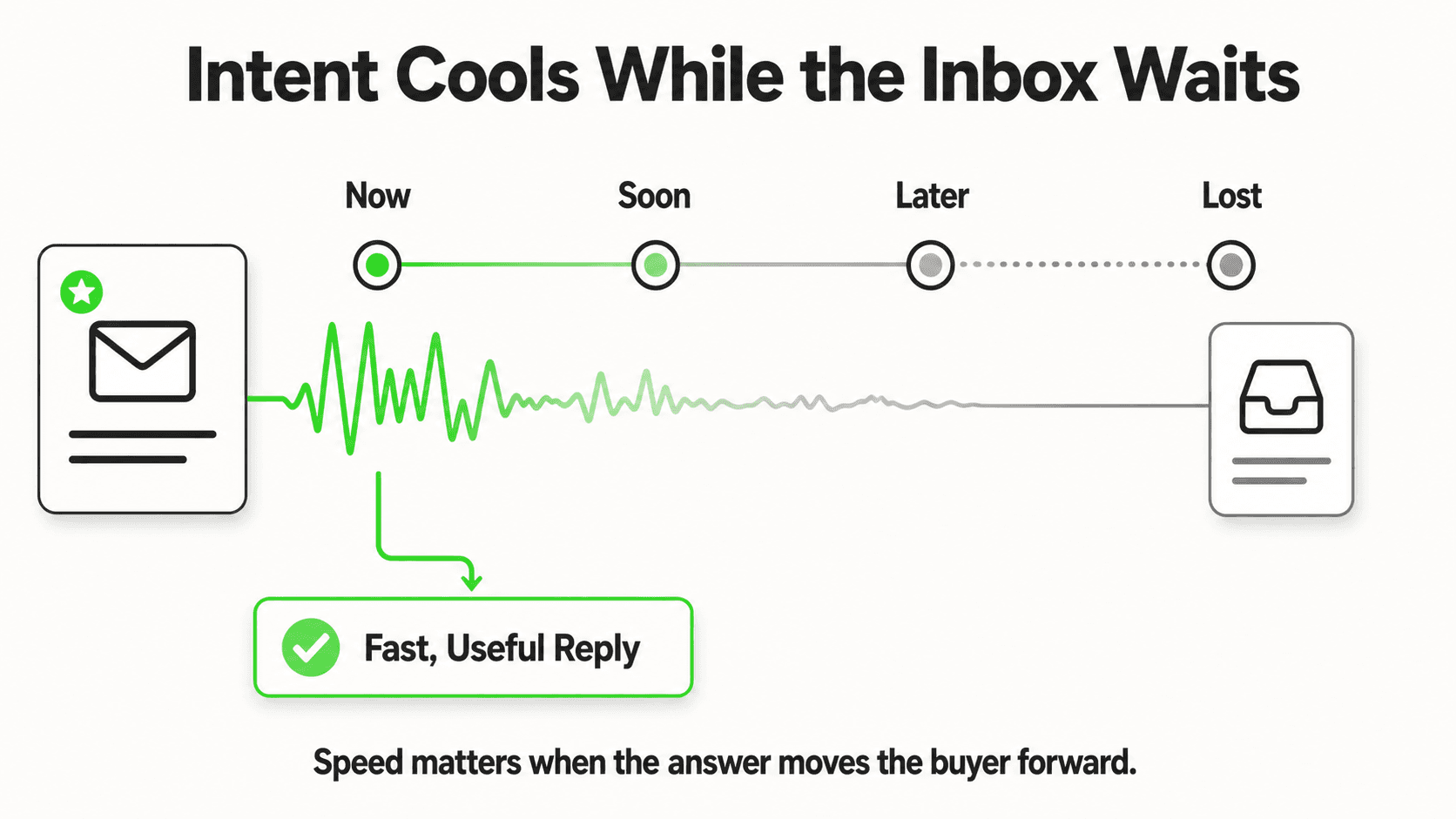
What this looks like: A prospect submits quote requests to your agency and two competitors at 2:15 PM. Your producer is on a call and doesn't see the request until 3:45 PM. By then, the prospect is already in a quoting conversation with a competitor who responded at 2:22 PM.
Real-world impact: J.D. Power data shows that 57% of insurance customers actively shopped in the past year, and the majority request multiple quotes. If 78% of customers buy from the first responder (Source: Lead Connect), and your average response time is over 30 minutes, simple math suggests you're losing the majority of competitive quote situations, not because of price, but because of timing.
Research from Velocify shows that responding within 1 minute results in a 391% increase in conversions compared to responding later. Every minute your response is delayed, your close rate drops measurably.
Key features to solve this:
- Instant acknowledgment and qualification when a quote request arrives
- Automated collection of coverage details (current carrier, policy limits, deductibles) before a producer ever touches the lead
- Real-time alerts to the right producer based on line of business and state licensing
2. Wasted Marketing Spend on Leads That Go Cold
What this looks like: Your agency spends $3,000/month on Google Ads targeting "auto insurance quotes near me." You generate 15 leads. Your team follows up with 10 of them within an hour and never contacts the other 5. Of the 10 contacted, 3 have already bound coverage elsewhere by the time you call.
Real-world impact: According to lead response research cited by Harvard Business Review, the odds of qualifying a lead drop by 80% after the first 5 minutes. If your average lead costs $200-$400, and 30-40% of leads go cold before first contact, you're burning $1,200-$4,800 per month in wasted ad spend alone.
For an agency spending $36,000-$50,000 annually on lead generation, that's potentially $10,000-$20,000 per year in leads that were never given a fair chance to convert, simply because of response time.
Key features to solve this:
- Immediate engagement with every inbound lead, 24/7, so no lead goes uncontacted
- Pre-qualification that captures insurance-specific details (VIN, property address, date of birth) to prepare the producer
- Automated follow-up sequences for leads that don't convert on first contact
The 5-Minute Window
Research from MIT shows that responding within 5 minutes makes you 100x more likely to connect with a lead compared to a 30-minute response. In the insurance multi-quote environment, those 5 minutes determine whether you're in the conversation or out of it entirely.
3. Competitor Advantage from Digital-First Agencies
What this looks like: A direct carrier or digital-native agency offers instant online quoting. Your prospect gets a ballpark rate in 90 seconds from the competitor while your agency's form simply says "We'll be in touch soon."
Real-world impact: The insurance chatbot market is projected to grow from $1.3 billion in 2024 to $6.3 billion by 2033, at a CAGR of 19.2% (Source: Verified Market Reports). By 2025, an estimated 70% of all customer service interactions in insurance will be handled by AI chatbots (Source: CoinLaw/Datagrid). Your competitors, including both direct carriers and tech-forward independent agencies, are already deploying these tools.
Agencies that don't adapt aren't standing still. They're falling behind as the industry standard for response time drops from hours to seconds.
Key features to solve this:
- AI-powered instant engagement that matches the responsiveness of direct carriers
- Intelligent conversation that collects quote information naturally, not just a dumb form
- Seamless handoff to a licensed producer when the lead is qualified and ready
4. Client Experience Gap That Kills Referrals
What this looks like: A current client refers a friend to your agency. The friend calls, gets voicemail, and waits two days for a callback. They tell your client the experience was frustrating. Your client starts wondering if they should shop around too.
Real-world impact: The probability of selling to a new customer is 5-20%, while the probability of selling to an existing customer is 60-70% (Source: Agency Brokerage). Referrals are your highest-quality leads because they come with built-in trust. When you fumble a referral with slow response, you damage two relationships: the prospect's and the referrer's.
Retention is the backbone of agency profitability. Acquisition costs can equal 75-100% of the first year's revenue, which means losing an existing client due to eroded trust is far more expensive than losing a cold lead.
Key features to solve this:
- Instant response to every inquiry, whether it comes from a referral, website, or social media
- Personalized engagement that acknowledges the referral source
- Automated follow-up that ensures no referral lead falls through the cracks
5. Seasonal Surge Bottlenecks During Peak Periods
What this looks like: Open enrollment season hits in November. Renewal notices go out in batches. Your phone volume triples. Your three producers can handle their normal volume, but during surge periods, hold times stretch to 15-20 minutes and callbacks take 24-48 hours.
Real-world impact: Insurance shopping is heavily seasonal. ACA open enrollment runs November through mid-January. Auto and home policy renewals cluster around specific months. Commercial renewals often concentrate in January and July. During these periods, agencies face 2-3x normal inquiry volume, but staffing stays flat.
The agencies that maintain fast response during peak periods capture disproportionate market share. The agencies that slow down during these exact moments, when the most prospects are actively shopping, lose the leads that cost the most to generate and are the most motivated to buy.
Key features to solve this:
- AI-powered capacity that scales instantly during peak periods without additional staffing
- Automated routing that directs urgent quote requests to available producers
- Self-service quote information gathering that reduces producer time per lead
6. After-Hours Coverage Gaps That Miss Half Your Leads
What this looks like: It's 7:30 PM on a Tuesday. A couple just got a quote from their current carrier that's $400 more than last year. They're motivated to shop. They find your agency online and submit a quote request. Your office is closed. They get an auto-reply saying you'll contact them during business hours. By 9 AM Wednesday, they've already received two quotes from agencies with after-hours coverage.
Real-world impact: As noted earlier, 47% of all insurance inquiries occur outside traditional business hours (Source: IBISWorld/AgentZap). Insurance Journal analysis reveals that calls received on Saturdays have a 23% higher conversion rate compared to weekday calls because weekend callers have more time, aren't rushed, and are in active decision-making mode.
If you're dark from 5 PM to 9 AM on weekdays and all weekend, you're closed during 76% of the total hours in a week. Even accounting for lower overnight volume, missing the evening and weekend peaks means missing the highest-converting inquiry windows.
Key features to solve this:
- 24/7 AI-powered response that engages prospects at 10 PM the same way you would at 10 AM
- After-hours lead qualification that captures coverage details so producers start the next morning with warm, pre-qualified leads
- Multi-channel coverage across your website, WhatsApp, Facebook, and Instagram so prospects can reach you however they prefer
The After-Hours Advantage
Insurance Journal reports that 85% of people who call a business and don't get an answer will not leave a voicemail or attempt to call again. They move on to the next agency. An AI agent ensures you never miss that first contact, even at midnight on a Saturday.
7. Follow-Up Failures on Warm Leads
What this looks like: A producer quotes a prospect on Monday. The prospect says they want to think about it. The producer makes a note to follow up Thursday. Thursday comes, and three urgent service requests push the follow-up to next week. By then, the prospect has bound coverage elsewhere.
Real-world impact: Industry best practice calls for 6 follow-up touches on insurance quotes to maximize conversion (Source: Agency Performance Partners). Most agencies complete 1-2 follow-ups before the lead goes cold. The gap between best practice and reality is where policies are lost.
Aged lead data from AgedLeadStore shows that conversion rates drop from 5-10% on fresh leads to 1-4% on aged leads. Every day without follow-up pushes a warm lead toward those diminished conversion rates. The producer who quoted the prospect did the hard work. Failing to follow up is leaving money on the table.
Key features to solve this:
- Automated follow-up sequences triggered after quotes are delivered
- AI-powered re-engagement that checks in with the prospect and answers lingering questions
- Escalation alerts when a warm lead shows buying signals (revisiting your website, opening emails)
Stop Losing Quotes to Slower Competitors
Every missed response is a policy written by someone else. See how AI agents keep your agency responsive 24/7 across every channel.
See How It WorksReal Results: What Agencies Are Achieving with Faster Response
Agencies that have modernized their response process with AI-powered engagement are seeing measurable improvements across their operations. While individual results vary based on agency size, market, and implementation, here are the typical improvements reported across the industry:
Response Time Improvements
The most immediate change is response time itself. Agencies that deploy AI-powered chat on their websites and social channels move from an average response time of hours to under 30 seconds. For after-hours inquiries, the change is even more dramatic, going from next-business-day response to instant engagement.
According to research from Velocify cited by CaseyResponse.com, this speed improvement alone can drive conversion rate increases of up to 391% for leads contacted within the first minute.
Quote Completion Rates
When an AI agent engages a prospect immediately and collects coverage details (vehicles, property information, current coverage, desired limits) before a producer picks up the lead, agencies typically see higher quote completion rates. Producers spend less time chasing information and more time presenting coverage options.
Policy Conversion
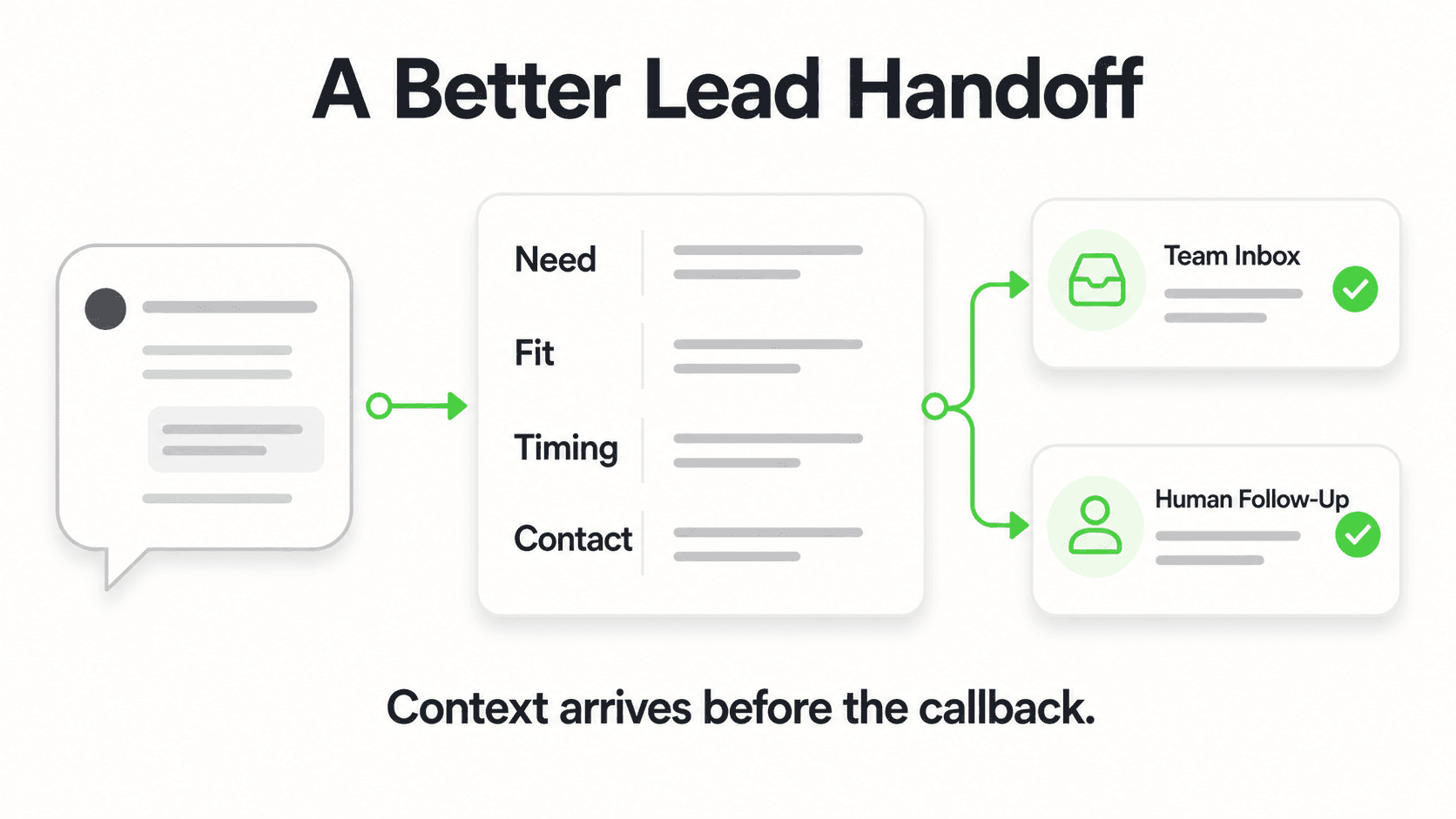
Agencies adopting faster response models typically report improvements in their lead-to-policy conversion rates. The combination of faster initial response, better pre-qualification, and consistent follow-up addresses the three main leakage points in the traditional agency quote process.
Client Retention
The responsiveness that wins new clients also retains existing ones. When current policyholders can get immediate answers to coverage questions, request policy changes, or start claims without waiting on hold, satisfaction and retention both improve. With the industry average retention rate at 88%, even small improvements (moving from 88% to 92-94% retention) compound dramatically over time. According to Agency Brokerage data, increasing retention from 88% to 94% yields 16% more policies after 5 years and 37% more after 10 years.
Typical ROI Framework
For an agency writing $2 million in annual premium:
- 5 additional policies per month from faster response at an average $2,100 annual premium = $126,000 in new annual premium
- 2% retention improvement on a 1,000-policy book = 20 fewer lost policies = $42,000 in preserved annual premium
- 30% reduction in wasted marketing spend through better lead engagement = direct cost savings
These figures are illustrative and will vary by agency, but they demonstrate why calculating AI chatbot ROI shows strong returns for insurance agencies of all sizes.
Getting Started: Modernizing Your Agency's Quote Process
Transforming your agency's response process doesn't require ripping out your existing systems or retraining your entire team. Here's a practical approach.
Step 1: Audit Your Current Response Times
Before you change anything, measure where you stand:
- Website form submissions: How long until a producer makes contact?
- Phone calls: What percentage go to voicemail? What's your callback time?
- After-hours inquiries: How are these handled today?
- Follow-up cadence: How many touches happen after a quote is delivered?
Most agencies are surprised by their actual numbers. Track these for two weeks to establish a baseline.
Step 2: Identify Your Highest-Value Leakage Points
Not all response gaps cost the same. Prioritize based on:
- Lead source cost: Your most expensive leads (paid search, exclusive leads) deserve the fastest response
- Line of business: Commercial policies with higher premiums justify more aggressive follow-up
- Time of day: If 47% of inquiries come after hours, that's your biggest coverage gap
- Competitive density: In markets with many agencies, speed matters more
Step 3: Deploy AI-Powered Instant Response
An AI agent built for insurance can provide immediate engagement across your website, WhatsApp, Facebook Messenger, and Instagram. The right solution should:
- Greet prospects instantly and begin collecting quote information
- Ask insurance-specific questions (coverage type, current carrier, policy details)
- Answer common questions about coverage, process, and your agency
- Route qualified leads to the appropriate producer with full context
- Operate 24/7 without additional staffing costs
When choosing an AI chatbot platform, prioritize solutions that offer document-grounded responses (to minimize hallucinations about coverage) and multi-channel deployment (to meet prospects wherever they are).
Step 4: Integrate with Your Agency Management System
Your AI agent should feed data into your existing workflows, whether you use Applied Epic, Hawksoft, EZLynx, or another agency management system. Look for solutions that can:
- Push lead information into your AMS via API or webhook integrations
- Trigger automated workflows in your existing quoting tools
- Sync contact information to avoid duplicate data entry
Step 5: Train Your Team on the New Workflow
The goal isn't to replace producers. It's to make them more effective by handling initial engagement, qualification, and information gathering before a producer picks up the lead. Your producers should understand:
- How qualified leads will be delivered to them
- What information the AI agent will have already collected
- When and how to take over the conversation from the AI
- How to use the time savings to focus on consultative selling and relationship building
Step 6: Measure and Optimize
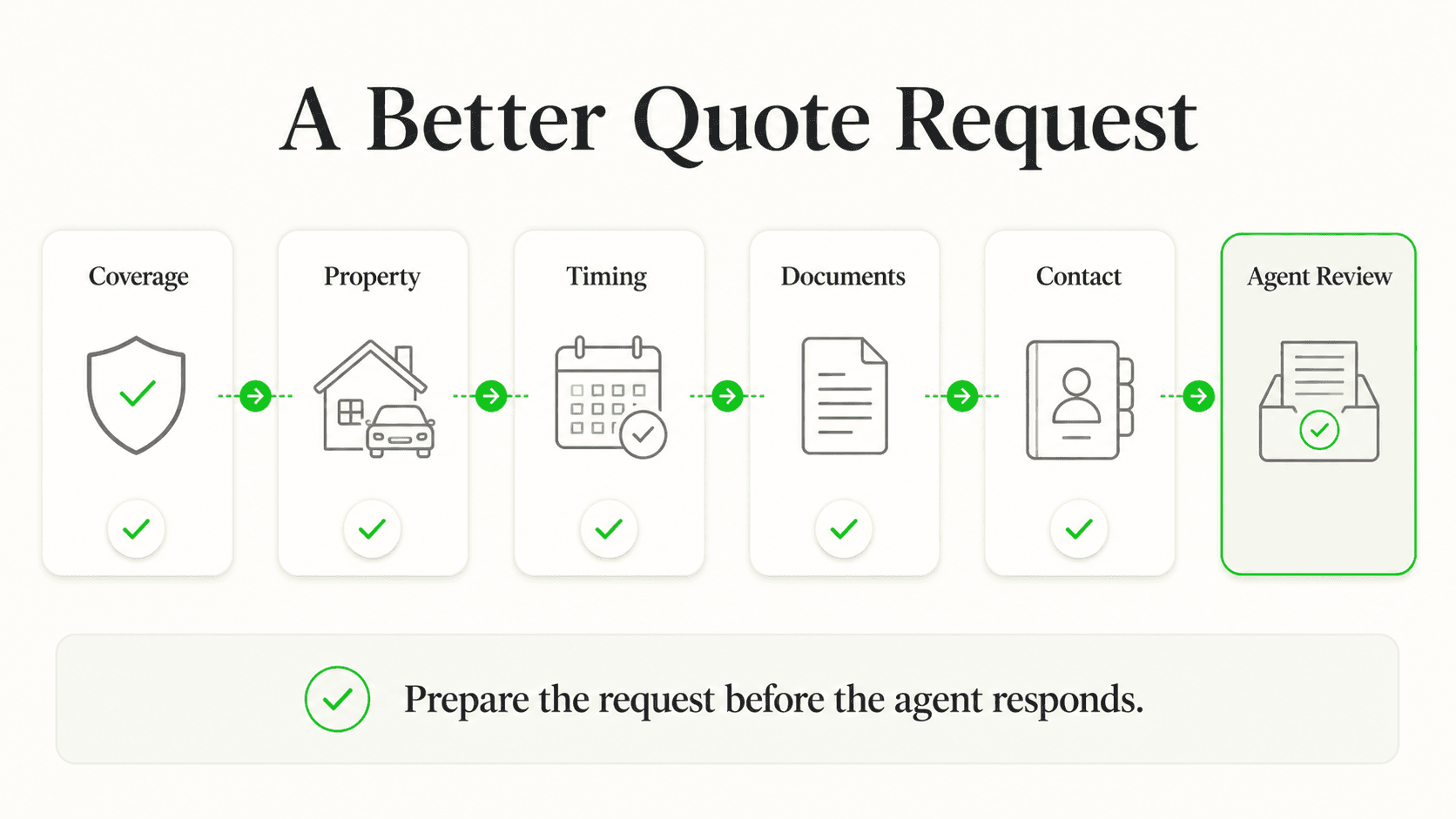
Track the metrics that matter:
- Speed to first response (target: under 30 seconds)
- Lead-to-quote conversion rate
- Quote-to-bind conversion rate
- After-hours lead capture rate
- Cost per acquired policy
Review these monthly and adjust your AI agent's conversation flows based on what you learn.
Start Where It Hurts Most
Most agencies see the fastest ROI by deploying AI response on their website first, then expanding to social channels. Website visitors are your highest-intent prospects, so they're actively looking for insurance right now, and they're the most sensitive to response time.
Further Reading
Authoritative external sources used and recommended for further research on this topic:
Frequently Asked Questions
How much does an AI agent cost compared to hiring additional staff?
AI agent platforms like Hyperleap AI start at $40/month for the Plus plan, which includes 3,000 AI responses. Compare that to hiring an after-hours receptionist ($2,000-$4,000/month) or adding a producer ($40,000-$60,000/year base salary). For most independent agencies, an AI agent costs less per month than a single day of a full-time employee's salary. See current pricing for details.
Will an AI agent comply with state insurance regulations?
AI agents don't provide insurance advice or bind coverage. They handle initial engagement: greeting prospects, collecting quote information, answering general questions about your agency, and routing qualified leads to licensed producers. All quoting and binding is still done by your licensed team. The AI functions as a responsive front desk, not a licensed agent. You control exactly what the AI can and cannot say through its knowledge base configuration.
Can the AI agent integrate with my agency management system?
Hyperleap AI connects to your existing tools through webhook integrations and REST API. Lead data captured by the AI agent — contact details, coverage type, current carrier, and qualification signals — can be pushed to your AMS in real time via webhooks, eliminating duplicate data entry. The specific integration method depends on what your AMS supports; consult your AMS vendor's API documentation for connection details.
Will clients know they're talking to an AI?
Transparency is important and usually required by state regulations. Best practice is to identify the AI as a virtual assistant that helps with initial inquiries and routes to licensed agents. In practice, most prospects appreciate the instant response and smooth handoff more than they mind the initial AI interaction. According to industry data from CoinLaw, 83% of insurance customers express satisfaction with chatbot interactions.
What happens when the AI can't answer a question?
The AI agent is designed to handle common inquiries: quote requests, coverage questions answered from your agency's knowledge base, business hours, appointment scheduling, and general information. When a question falls outside its scope, such as specific underwriting questions, complex coverage scenarios, or claim details, it routes the conversation to your team with full context. The prospect gets a fast, honest response ("Let me connect you with a licensed agent who can help with that specific question") rather than silence.
How quickly can we get an AI agent up and running?
Most agencies can deploy an AI agent on their website within a day. The process involves configuring the agent's knowledge base with your agency's information (carriers you represent, lines of business, service areas, hours), customizing the conversation flow for insurance-specific interactions, and embedding the chat widget on your website. Expanding to additional channels like WhatsApp and Facebook Messenger typically takes another day or two.
What about prospects who prefer to talk to a human?
AI agents don't replace human interaction. They ensure it happens faster. When a prospect indicates they want to speak with a producer, the AI agent immediately captures their contact information and notifies your team. The prospect gets a faster callback because the AI has already collected their basic information and coverage needs. Your producer starts the conversation informed and prepared rather than cold-calling a name on a list.
Be the Agency That Responds First
Your prospects are requesting quotes from multiple agencies right now. Hyperleap AI ensures you're always the first to respond—24/7, across every channel.
Start Your Free TrialThe Bottom Line
The insurance industry's speed-to-quote problem isn't going away. As consumers become more comfortable shopping online and direct carriers raise the bar on instant quoting, independent agencies face a choice: adapt your response process or continue losing policies to whoever picks up the phone first.
The data is unambiguous. 78% of customers buy from the first responder. 47% of inquiries come after hours. 85% of unanswered callers never try again. These aren't trends you can overcome with better training or harder work. They require a structural change in how your agency handles initial prospect engagement.
AI-powered response is that structural change. It doesn't replace your producers. It ensures that by the time a producer picks up a lead, the prospect is already engaged, pre-qualified, and ready for a substantive conversation about coverage, instead of having moved on to the agency that answered first.
The agencies that write the most policies in the next five years won't necessarily have the lowest rates or the most carriers. They'll be the ones that responded first.
Ready to modernize your agency's response process? Explore AI Agents for insurance, review pricing plans, or start your free trial today.
Industry Solutions
See how AI chatbots work for these industries:
Related Articles

Why Home Service Businesses Lose Jobs to Faster Rivals
Homeowners contact 3–5 contractors per job, and the data shows the first responder wins most. How home service businesses fix slow response and keep the work.
Speed to Lead in Real Estate: 78% Pick First Responder
Real estate leads cost $200-$450 each. When 78% of buyers choose the first agent who responds, every minute of delay costs you commissions.

How Law Firms Lose Cases on After-Hours Inquiries
Legal leads cost $250-$1,000+ each. When 40% arrive after hours and hit voicemail, firms lose cases worth $5K-$500K to faster-responding competitors.

Restaurants Lose Reservations to Faster Competitors
Diners call 2-3 restaurants and book with whoever answers. With average covers worth $50-150, every missed inquiry costs real revenue.