How Law Firms Lose Cases on After-Hours Inquiries
Legal leads cost $250-$1,000+ each. When 40% arrive after hours and hit voicemail, firms lose cases worth $5K-$500K to faster-responding competitors.

TL;DR: The 2024 Clio Legal Trends Report found that only 40% of law firms answer phone calls, and 64% of prospective clients never receive any response at all. With legal leads costing $150-$500+ each and 78% of consumers choosing the first firm that responds, after-hours silence is one of the most expensive problems in legal marketing. This article breaks down exactly how much it costs your firm and what to do about it.
It is 8:47 PM on a Thursday. A woman has just been rear-ended at an intersection. She is sitting in the ER waiting room with a neck brace, scrolling her phone, searching "personal injury lawyer near me." She taps the first result, calls, and gets voicemail. She calls the second firm. Voicemail again. The third firm picks up -- or at least, something does -- and within two minutes, she has a consultation scheduled for the next morning.
That first firm she called? They spent $300 on the Google Ad she clicked. They will never know she existed.
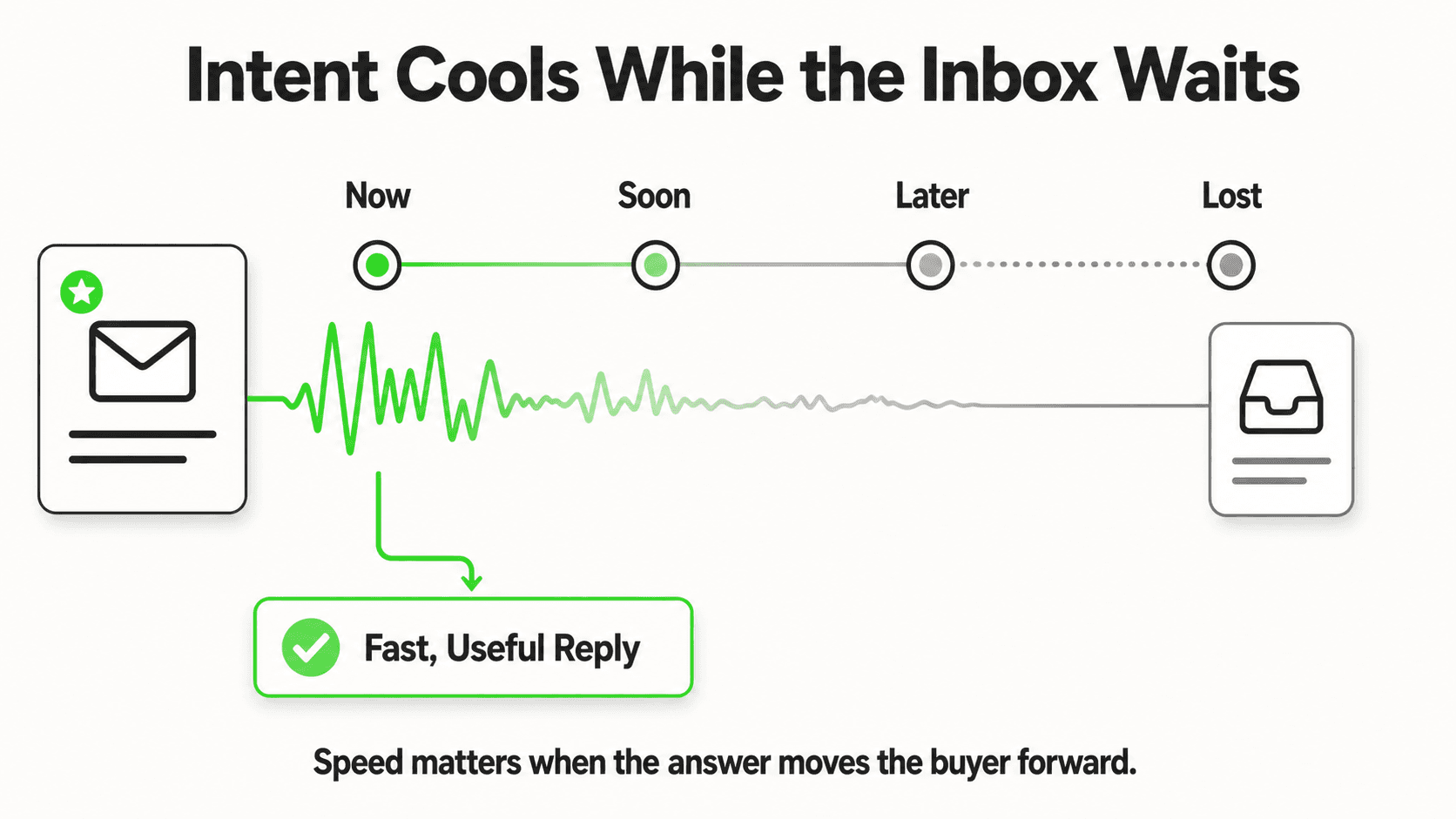
This is not a hypothetical. According to the Lead Response Management Study cited by Harvard Business Review, leads contacted within five minutes are 100 times more likely to convert than those contacted after 30 minutes (Source: InsideSales.com). And according to research compiled by LeadAngel, 78% of consumers go with the first company that responds to their inquiry -- not the best, not the cheapest, the first.
For law firms, where a single personal injury case can settle for $10,000 to $75,000 or more and the average cost per lead runs $150-$500, the math on missed after-hours calls is devastating.
What After-Hours Inquiries Mean for Law Firms
Legal emergencies do not follow a 9-to-5 schedule. Car accidents happen on Friday nights. DUI arrests peak between 10 PM and 3 AM on weekends. Domestic disputes escalate after dinner. Business partners discover fraud when reviewing weekend financials. A spouse decides to file for divorce after a Sunday argument.
The 2022 Clio Legal Trends Report found that 86% of lawyers work outside regular business hours to catch up on existing tasks (Source: Clio Legal Trends Report). But "catching up on tasks" is not the same as being available to answer the phone when a new client calls. While attorneys are buried in briefs and filings after hours, their incoming phone lines are dark.
The Scope of After-Hours Demand
Research from Answering Legal and industry data suggest that roughly 35-40% of calls to law firms come outside standard business hours. For criminal defense firms, that percentage is even higher -- the FBI reports approximately 865,000 DUI arrests annually in the United States (Source: Gerald Miller Law / FBI and NHTSA data), and the majority of those arrests happen at night and on weekends, precisely when most firms are unreachable.
40%
Of Firms Answer Phone Calls
64%
Of Clients Never Get a Response
78%
Choose the First Firm to Respond
$150-$500
Average Cost Per Legal Lead
Which Practice Areas Are Most Affected
The types of cases that generate after-hours inquiries tend to be urgent and high-value:
- Personal injury: Accidents happen around the clock. Average settlements range from $10,000 to over $75,000, with the average auto liability claim for bodily injury at $26,501 (Source: Clio Personal Injury Statistics).
- Criminal defense / DUI: Arrests are disproportionately evening and weekend events. Clients need immediate counsel.
- Family law: Domestic violence incidents, emergency custody situations, and emotional decisions about divorce often happen in the evening.
- Immigration: Detentions and enforcement actions can occur at any hour, and families are often searching for help late at night.
- Business disputes: Executives discovering fraud, breach of contract, or partnership disputes often reach out after reviewing documents in the evening.
These are not tire-kicker inquiries. After-hours legal searches carry high intent -- the person is dealing with an active problem and needs help now.
Why Law Firms Are Losing Their Best Cases
The 2024 Clio Legal Trends Report paints a stark picture of law firm responsiveness. In a "secret shopper" study of law firms across the country, the results were alarming (Source: Clio 2024 Legal Trends Report).
The Voicemail Black Hole
Only 40% of law firms answered their phone during business hours -- a significant decline from 56% in 2019. Of the firms that missed a call, only 20% returned it. That means 48% of all firms contacted were effectively unreachable by phone.
After hours, the picture is even worse. Solo attorneys miss over 35% of incoming calls during business hours, and that figure climbs to roughly 90% after hours (Source: Clio / Oklahoma Bar Association).
The email channel is no better. Just 33% of firms responded to email inquiries, down from 40% in 2019. And of those that did respond, only 18% provided clear next steps or cost information (Source: Clio 2024 Legal Trends Report).
The Recommendation Gap
In Clio's 2024 secret shopper study, only 12% of people who contacted law firms said they would recommend that firm to friends or family. Poor responsiveness was the primary driver of dissatisfaction -- not price, not expertise, not location.
The Competitor Speed Advantage
When a prospective client cannot reach your firm, they do not wait patiently until morning. They call the next firm on the list. Research shows that 78% of buyers choose the first company that responds (Source: Lead Response Management Study / Dr. James Oldroyd, MIT). In legal services, where trust is established in the first interaction, that first-mover advantage is even more pronounced.
A firm that answers at 9 PM -- even with an AI receptionist that captures the intake and schedules a morning callback -- will beat a firm that returns the call at 9 AM the next day, every time.
The Staggering Cost of Legal Leads
Legal leads are among the most expensive across any industry. According to 2024 benchmark data:
| Practice Area | Cost Per Lead | Average Case Value |
|---|---|---|
| Personal Injury | $150 - $500 | $10,000 - $75,000+ |
| Criminal Defense | $50 - $200 | $3,000 - $25,000 |
| Family Law | $100 - $350 | $5,000 - $30,000 |
| Business Law | $200 - $500 | $10,000 - $100,000+ |
| Immigration | $75 - $250 | $3,000 - $15,000 |
(Sources: LawRank, Legal Brand Marketing, Majux, LocaliQ 2024 Legal Search Advertising Benchmarks)
When a $300 personal injury lead hits voicemail after hours and calls a competitor instead, you have not just lost $300 in marketing spend. You have potentially lost a $20,000-$50,000 case.
Lost Revenue From a Single Missed Case
Consider a personal injury firm that spends $10,000 per month on Google Ads, generating roughly 30-60 leads at an average cost of $200-$350 each. If 35% of those leads arrive after hours and 90% of after-hours calls go unanswered, that is 10-19 leads per month that go straight to a competitor.
At a 20% conversion rate and an average case fee of $12,000 (one-third of a $36,000 settlement), that represents $24,000-$45,600 in lost revenue per month -- from a $10,000 marketing spend. The firm is literally paying to send clients to competitors.
Client Trust Erosion From Delayed Responses
In the 2024 Clio study, 47.6% of consumers listed responsiveness as the most critical factor in choosing an attorney -- ahead of cost and even the availability of a free consultation (Source: Clio Legal Trends Report). When a prospective client cannot reach you in their moment of need, they form a lasting impression: this firm does not prioritize its clients.
That impression does not just cost you one case. It costs you every referral that client would have generated.
7 Ways After-Hours Response Failures Cost Your Firm
1. Missed Initial Consultations That Never Come Back
What this looks like in practice: A prospective client searches for a family law attorney at 7 PM after a difficult conversation with their spouse. They fill out your contact form or call your office. They get an auto-reply saying "We'll get back to you during business hours." By morning, they have moved on -- either emotionally (they decided to wait) or practically (they found another attorney who responded).
Real-world impact: Research from Law Firm Marketing Pros found that responding to a lead within one minute can boost conversions by 391%, while a two-minute response yields only a 160% improvement (Source: Law Firm Marketing Pros). The difference between "immediately" and "next morning" is not linear -- it is exponential.
Key features a solution needs:
- Instant acknowledgment of the inquiry, even outside business hours
- Ability to collect case details while the client's memory is fresh
- Automated scheduling for next-day consultations so the client has a commitment
2. Competitors Winning the Speed-to-Response Battle
What this looks like in practice: Your firm ranks #1 in Google for "car accident lawyer [city]" and pays premium rates for that position. A potential client clicks your listing at 10 PM, calls, and gets voicemail. They click the #2 result, which happens to use a 24/7 answering service. The #2 firm books the consultation. Your $300+ click generated revenue for your competitor.
Real-world impact: According to Martindale-Avvo, speed is the single most important factor in converting legal leads (Source: Martindale-Avvo). Firms that respond within minutes capture a disproportionate share of available cases, regardless of their Google ranking or brand reputation.
Key features a solution needs:
- Sub-minute response to all inquiries, 24/7/365
- Ability to qualify leads and capture essential case information immediately
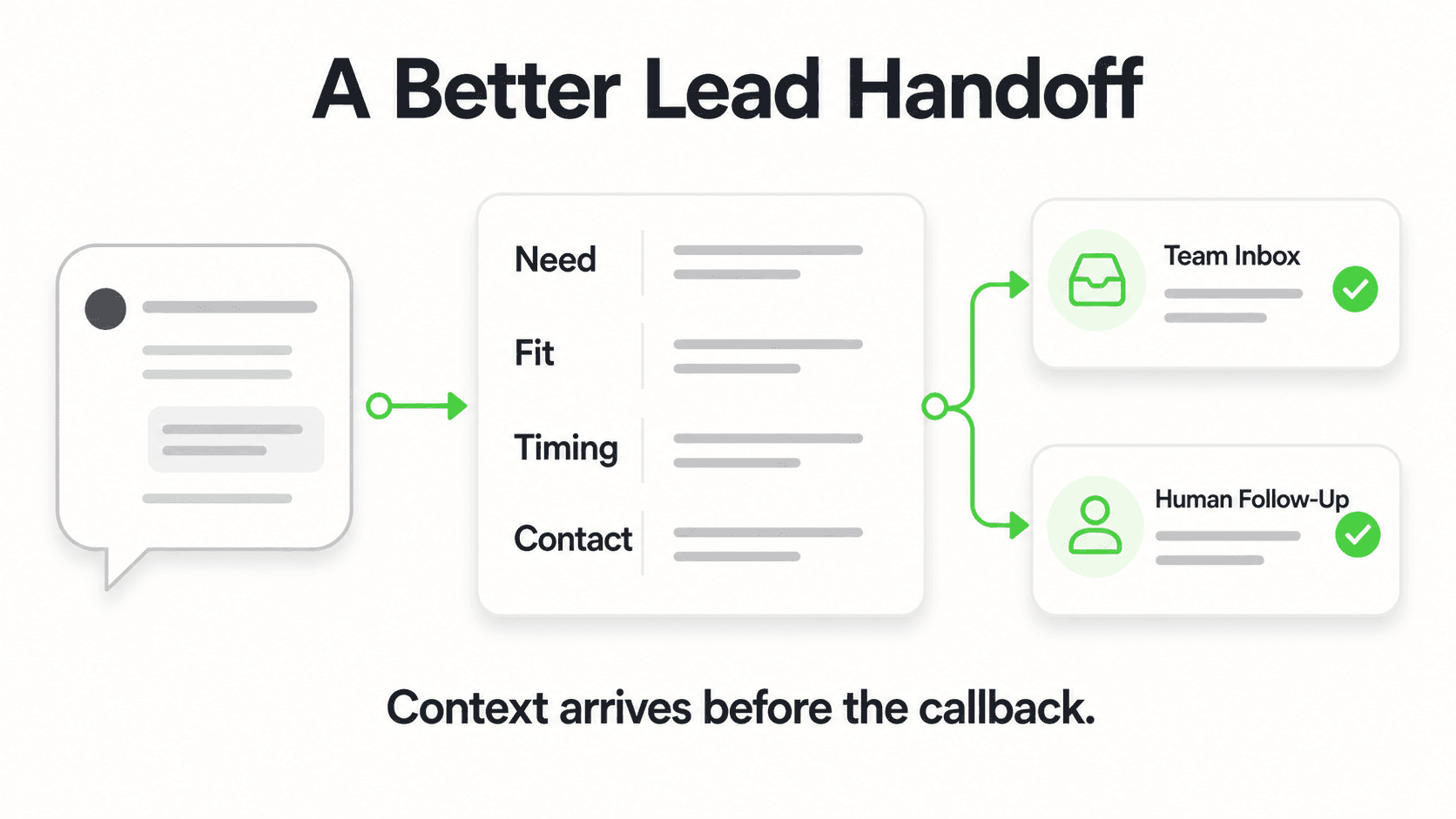
- Warm handoff protocols to ensure the attorney gets a complete picture before the callback
3. Wasted Marketing Spend on Leads That Go Cold
What this looks like in practice: Your firm invests $5,000-$15,000 monthly on SEO, Google Ads, and directory listings. Your marketing generates leads around the clock, but your intake process only operates from 9 AM to 5 PM. Every lead that arrives outside that window has a sharply diminished conversion probability.
Real-world impact: Law firms spend an average of 2-10% of revenue on marketing, with small firms typically investing $5,000-$50,000 per year and mid-sized firms up to $500,000 annually (Source: Comrade Web / Conroy Creative Counsel). If 35-40% of the leads generated by that spend arrive after hours and convert at near-zero rates, the effective ROI of the marketing investment drops dramatically.
Key features a solution needs:
- 24/7 lead capture that matches the 24/7 nature of digital marketing
- Detailed lead tracking to quantify after-hours inquiry volume
- Integration with your CRM or practice management software for seamless follow-up
Stop Paying for Leads You Never Capture
Your marketing works around the clock. Your intake should too. See how AI-powered client intake captures every inquiry, qualifies leads instantly, and schedules consultations 24/7.
See How It Works4. The Client Experience Gap That Kills Referrals
What this looks like in practice: A current client refers their friend to your firm for a criminal defense matter on a Saturday evening. The friend calls, gets voicemail, and never calls back. Your client never knows why their friend "decided not to call." You never know the referral happened.
Real-world impact: The Clio 2024 secret shopper study found that only 12% of people who contacted law firms would recommend that firm -- and that 7 out of 10 firms provided unsatisfactory phone responses (Source: Clio). Referrals are the lifeblood of most law practices, and every unanswered call does not just lose one client, it erodes your referral network.
Key features a solution needs:
- Professional, consistent response regardless of when the call comes in
- Ability to reference the referring client and capture the relationship
- Follow-up confirmation to both the new prospect and the referring client
5. The Intake Bottleneck During Business Hours
What this looks like in practice: Your receptionist arrives Monday morning to 15 voicemails from the weekend. They spend the first two hours returning calls -- but half those callers have already retained another attorney. Meanwhile, new calls are coming in and going unanswered because the receptionist is busy with callbacks. It is a perpetual cycle of playing catch-up.
Real-world impact: According to Clio, lawyers bill only 2.5 hours of an 8-hour workday on average. Much of the remaining time is consumed by administrative tasks, including intake and client communication. When Monday morning becomes a triage exercise for weekend voicemails, it compounds the inefficiency across the entire week.
Key features a solution needs:
- After-hours intake that handles qualification and scheduling automatically
- Priority flagging for urgent matters (active custody emergencies, arrests, time-sensitive filings)
- A clean handoff summary so attorneys can review qualified leads, not raw voicemails
6. After-Hours Emergencies: Criminal, DUI, and Accident Cases
What this looks like in practice: It is 1 AM on a Saturday. Someone has been arrested for DUI. Their family member is frantically searching "DUI lawyer" on their phone. They need someone now -- not at 9 AM Monday. The FBI reports roughly 865,000 DUI arrests annually in the United States (Source: Gerald Miller Law / FBI and NHTSA data), and the vast majority occur between 10 PM and 3 AM on weekends.
Real-world impact: Criminal defense and DUI cases are uniquely time-sensitive. Clients who are arrested need to know their rights, understand the bail process, and have representation scheduled before their first court appearance. A firm that can provide immediate guidance -- even automated guidance -- at 1 AM earns the case. A firm that calls back Monday morning is two days too late.
Key features a solution needs:
- Immediate, accurate information about next steps after an arrest
- Document-grounded responses that provide general information about your firm and process without practicing law
- Emergency escalation protocols for situations requiring immediate attorney attention
- Bail and court appearance scheduling assistance
7. International and Multi-Timezone Clients
What this looks like in practice: Your immigration law firm serves clients across multiple time zones. A client in India (10.5 hours ahead of Eastern Time) tries to reach you about an urgent visa issue at 10 AM their time -- which is 11:30 PM yours. A business litigation client in London needs to discuss a cross-border contract dispute at 3 PM their time -- 10 AM Eastern, but your attorney is in court.
Real-world impact: As legal work becomes increasingly cross-border, the traditional 9-to-5 window creates a structural disadvantage. Immigration firms, international business practices, and firms with clients in different states all face this challenge. The 2022 Clio Legal Trends Report noted that 74% of lawyers make themselves available on weekends to meet client demands (Source: Clio), but personal availability is not the same as a systematic intake process.
Key features a solution needs:
- Multilingual intake capability for international clients
- Time zone-aware scheduling that shows available consultation slots in the client's local time
- Ability to collect and organize case information regardless of when it arrives
The Real Cost of Missing One Case
Consider the lifetime value of a single client relationship. A personal injury client whose case settles for $40,000 (generating a $13,000 fee for the firm) may also need help with a subsequent insurance dispute, refer two friends over the next five years, and leave a five-star Google review that generates additional leads. The true cost of that missed 8 PM call is not one case -- it is an entire branch of your referral tree that never grows.
Real Results: What Firms Are Achieving with 24/7 Intake
Law firms that have implemented round-the-clock intake systems -- whether through answering services, virtual receptionists, or AI-powered solutions -- are seeing meaningful improvements across key metrics. Results vary by firm size, practice area, and implementation, but the patterns are consistent.
Revenue Recovery
Firms that move from voicemail-only after-hours coverage to 24/7 live or AI intake typically report capturing 25-40% more qualified leads per month. For a firm generating 50 leads per month at $200 per lead, capturing even 10 additional after-hours leads that previously went to voicemail can represent $20,000-$50,000 in additional annual revenue, depending on practice area and conversion rates.
Lead Capture Improvements
The most immediate and measurable improvement is in lead capture rates. When prospective clients reach a responsive system instead of voicemail, contact-to-consultation rates improve significantly. Firms using 24/7 intake report that after-hours leads convert at rates comparable to business-hours leads when the initial response is immediate (Source: Answering Legal).
Client Satisfaction and Retention
The 2024 Clio study confirmed that 47.6% of consumers prioritize responsiveness above all other factors when choosing an attorney. Firms that respond around the clock consistently report higher client satisfaction scores, more positive online reviews, and stronger referral rates. When clients feel prioritized from the first interaction, they are more likely to stay with the firm and recommend it.
391%
Conversion Boost From 1-Min Response
100x
More Likely to Convert in 5 Min vs 30 Min
47.6%
Prioritize Responsiveness in Choosing Attorney
12%
Would Recommend Firms They Contacted
Competitive Advantage
In a market where slow response times cost businesses across every industry, law firms that invest in 24/7 intake gain a structural advantage. They capture leads that competitors miss. They build reputations for responsiveness that generate organic referrals. And they maximize the return on their marketing investments by ensuring every dollar spent on lead generation has a chance to convert.
It is important to note that results vary significantly. A solo practitioner implementing an AI intake chatbot will see different results than a 20-attorney firm deploying a full virtual receptionist service. The key is matching the solution to your firm's specific volume, practice areas, and client expectations.
Getting Started: Modernizing Your Firm's Client Intake
Implementing 24/7 intake does not require a massive technology overhaul. Here is a practical roadmap for any firm, from solo practitioners to mid-sized practices.
Step 1: Audit Your Current Response Times
Before you can fix the problem, you need to quantify it. For two weeks, track:
- How many calls go to voicemail (during and after business hours)
- Average time to return missed calls
- How many web form submissions come in after 5 PM
- What percentage of after-hours inquiries you ultimately convert
Most firms are shocked by the data. If you are not tracking these metrics today, that is itself a finding -- you have no visibility into how many leads you are losing.
Step 2: Identify Your After-Hours Inquiry Volume
Review your call logs, website analytics, and form submissions to understand:
- When inquiries arrive (build a heat map by hour and day of week)
- What type of cases come in after hours (personal injury, criminal, family, etc.)
- What channel they use (phone, web form, chat, social media)
- What the estimated value of those cases is
This data will determine which solution makes economic sense for your firm.
Step 3: Evaluate Your Options
There are three main approaches to 24/7 intake, each with different cost and capability profiles:
| Solution | Monthly Cost | Capabilities | Best For |
|---|---|---|---|
| Traditional answering service | $200 - $1,400 | Call answering, basic message taking | Low-volume firms |
| Virtual receptionist (legal-specific) | $329 - $1,380 | Legal intake, call screening, scheduling | Mid-volume firms |
| AI-powered intake | $40 - $200 | 24/7 chat + web, lead qualification, scheduling, multilingual | All firm sizes |
(Sources: Answering Legal, Abby Connect, Embroker)
Traditional answering services handle phone calls but often lack legal-specific training. Virtual receptionists offer more sophisticated intake but come at a higher price point. AI-powered solutions provide the broadest coverage at the lowest cost, handling website chat, social media, and messaging channels in addition to phone integration -- and they scale without per-minute charges.
Step 4: Implement and Configure
Whichever solution you choose, proper configuration is critical:
- Define your intake questions by practice area
- Set up qualification criteria (what makes a "hot" lead vs. a general inquiry)
- Create escalation protocols for genuine emergencies
- Integrate with your practice management software (Clio, MyCase, PracticePanther, etc.)
- Test the system thoroughly before going live -- choosing the right platform matters
Step 5: Measure and Optimize
After implementation, track these key metrics monthly:
- After-hours lead capture rate (how many inquiries are you now capturing vs. before)
- After-hours conversion rate (are captured leads converting to consultations and retained clients)
- Cost per acquired client (has your effective marketing ROI improved)
- Client satisfaction scores (are new clients reporting a better initial experience)
- Revenue attributed to after-hours intake (the bottom line)
Review these metrics quarterly and adjust your intake scripts, qualification criteria, and escalation protocols based on what the data tells you.
Capture Every Legal Lead, 24/7
AI-powered client intake that responds instantly, qualifies leads, and schedules consultations around the clock. Built for law firms that refuse to lose cases to voicemail.
Start Your Free TrialThe Future of Legal Client Intake
The legal industry is at an inflection point. AI adoption among law firms nearly tripled from 11% in 2023 to 30% in 2024 (Source: ABA 2024 AI TechReport), and the trajectory is clear: firms that embrace technology for client-facing functions will capture a growing share of available cases while those that rely on voicemail and Monday-morning callbacks will watch their most valuable leads walk to competitors.
The data is unambiguous. Only 40% of firms answer their phones. 64% of prospective clients never hear back at all. And 78% of those clients will retain the first firm that responds.
The question is not whether your firm can afford to implement 24/7 intake. The question is whether your firm can afford not to.
If you are ready to stop losing high-value cases to voicemail, explore how Hyperleap AI's legal-specific chatbot can capture every inquiry, qualify leads in real time, and schedule consultations around the clock (in-chat booking on Pro and Max) -- starting at $40 per month with a 7-day free trial.
Further Reading
Authoritative external sources used and recommended for further research on this topic:
Frequently Asked Questions
Does using an AI chatbot for client intake create attorney-client privilege issues?
This is the most common concern, and it is valid. The American Bar Association issued Formal Opinion 512 in July 2024 -- its first formal guidance on generative AI in legal practice -- addressing competency, informed consent, confidentiality, and fees as they relate to AI tools (Source: American Bar Association). The key requirements: clients must be informed they are communicating with an AI system, confidential information must be protected with appropriate security measures, and no AI tool should be used in a way that compromises the lawyer's ethical obligations. When properly configured, AI intake tools collect preliminary case information (name, contact details, nature of the matter) without entering privileged territory. The attorney-client relationship -- and privilege -- begins when the attorney engages. Roughly half of U.S. state bar associations have now issued guidance on AI use in legal practice (Source: Justia / Clio).
How does the cost of AI intake compare to a traditional answering service?
Traditional legal answering services typically charge $200-$1,400 per month depending on call volume, with per-minute overages common (Source: Embroker). Virtual receptionist services with legal-specific training run $329-$1,380 per month (Source: Abby Connect / Clio). AI-powered intake solutions like Hyperleap AI start at $40/month and handle not just phone integration but also website chat, WhatsApp, Instagram DM, and Facebook Messenger -- without per-minute charges. For context, hiring a full-time receptionist costs $35,000-$40,000 annually before benefits (Source: Embroker). The cost difference becomes even more significant when you consider that AI solutions operate 24/7 without overtime, sick days, or turnover. See our pricing page for current plans.
What do bar associations say about AI in client intake?
As of late 2025, approximately half of U.S. state bar associations have issued formal ethics opinions or guidance on AI use in legal practice (Source: Justia 50-State Survey). The consensus requirements include: (1) disclosing to prospective clients that they are interacting with an AI system, (2) maintaining competence in understanding how the AI tools work, (3) protecting client confidentiality by using enterprise-grade tools with appropriate data security, and (4) supervising AI output to ensure accuracy. The Florida Bar specifically recommends obtaining informed consent before using third-party AI programs that involve disclosure of confidential information (Source: Florida Bar). None of these requirements prohibit AI intake -- they simply require thoughtful, transparent implementation.
How accurate is automated legal intake compared to a human receptionist?
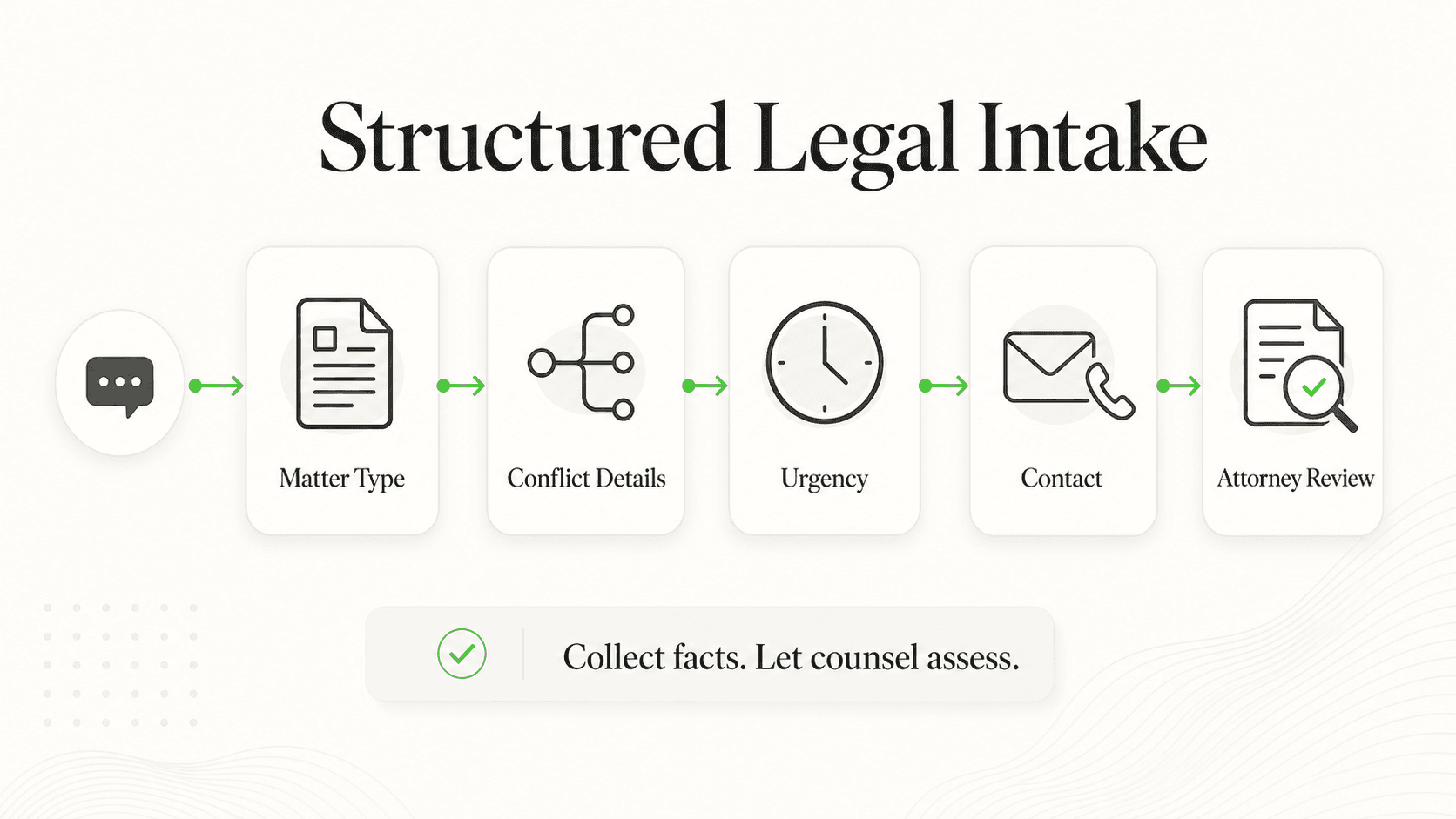
AI intake systems that use document-grounded responses -- meaning they answer only from information you provide about your firm, practice areas, and intake procedures -- deliver highly consistent and accurate intake experiences. Unlike human receptionists who may vary in their knowledge of different practice areas or forget to ask key screening questions, AI systems follow the same script every time. The ABA's 2024 AI TechReport found that accuracy remains a concern for 74.7% of legal professionals surveyed (Source: ABA 2024 AI TechReport), which is why the best AI intake tools are designed to collect information rather than provide legal advice. They ask the right questions, gather case details, and schedule consultations -- they do not attempt to assess the merits of a case or provide legal guidance.
Will AI intake integrate with my practice management software?
Most modern AI intake solutions offer integrations with popular legal practice management platforms including Clio, MyCase, PracticePanther, Smokeball, and others. The integration typically works through webhooks or direct API connections, allowing captured lead information to flow directly into your case management system. This eliminates the manual data entry that often creates bottlenecks when morning staff arrive to a stack of voicemails. When evaluating solutions, ask specifically about integration depth -- some tools simply send an email notification, while others create intake records, schedule calendar events, and update contact databases automatically.
Will AI replace my paralegals or intake staff?
No. AI intake is not a replacement for skilled legal professionals -- it is a force multiplier. The role of AI in client intake is to handle the first touch: answering the phone or chat at 2 AM, collecting basic case information, qualifying whether the inquiry matches your practice areas, and scheduling a consultation. Your paralegals and intake staff then handle the substantive follow-up: detailed case evaluation, conflict checks, engagement letters, and initial case strategy. Think of it as removing the lowest-value, highest-volume task (answering and screening inbound inquiries) so your team can focus on higher-value work. Firms that implement AI intake typically redeploy staff time toward case preparation and client service rather than reducing headcount.
What about sensitive or complex cases that need immediate human attention?
Well-configured AI intake systems include escalation protocols for situations that require immediate human attention. You define the triggers -- mentions of imminent harm, active arrests, emergency protective orders, time-sensitive filing deadlines -- and the system routes those inquiries to an on-call attorney via text, email, or phone call. For routine inquiries (scheduling a consultation for a contract review or asking about fees for a will preparation), the AI handles the full intake. For emergencies, it captures critical details and immediately alerts the right person. This tiered approach ensures that urgent matters get human attention while routine inquiries are handled efficiently around the clock.
Never Lose Another Case to Voicemail
AI-powered legal intake that captures every after-hours inquiry, qualifies leads, and books consultations 24/7. Start your free trial and see results in the first week.
Start Free TrialIndustry Solutions
See how AI chatbots work for these industries:
Related Articles

Law Firm Intake Stats 2026: 26% Never Respond to Leads
40+ sourced statistics on law firm response times, lead conversion rates, and client expectations. The data shows why the fastest firms win the best cases.

Why Auto Dealerships Lose After-Hours Online Buyers
70%+ of car shopping happens online after hours. A 9-5 BDC loses $5K-$25K gross-profit buyers to dealers who respond instantly.

Why Home Service Businesses Lose Jobs to Faster Rivals
Homeowners contact 3–5 contractors per job, and the data shows the first responder wins most. How home service businesses fix slow response and keep the work.

Speed to Lead in Real Estate: 78% Pick First Responder
Real estate leads cost $200-$450 each. When 78% of buyers choose the first agent who responds, every minute of delay costs you commissions.