What Families Want When They Contact Senior Living
Research shows 75% of families choose the first senior living community that responds. Here are the 7 things families truly need when they reach out.

TL;DR: When families contact a senior living community, they are not looking for a sales pitch. They are looking for reassurance, clarity, and someone who understands that this is one of the hardest decisions they will ever make. Research shows 75% of senior living prospects choose the first community that responds, yet 57% of consumers say it is difficult to determine whether communities are within their budget, and most inquiries go unanswered for hours or days. Communities that align their response with what families actually need -- empathy first, transparency second, and easy next steps third -- convert at dramatically higher rates.
Every time a family reaches out to a senior living community, they are doing something that took them weeks, sometimes months, to work up to. They are not casually browsing. They are admitting, often for the first time, that their parent cannot live alone anymore. That realization carries guilt, grief, fear, and an overwhelming sense of urgency all at once. Research shows 87% of family caregivers experience stress and anxiety, with 84% reporting feelings of being overwhelmed (Source: A Place for Mom). And 54% of caregivers say they wish they had started planning for senior care sooner.
Yet when these emotionally exhausted families finally reach out, most communities respond with a generic brochure, a contact form confirmation promising a callback "within 24-48 hours," or -- in too many cases -- no response at all. The gap between what families need in that moment and what communities deliver is costing the senior living industry millions in lost move-ins every year.
The communities that close this gap are not doing anything revolutionary. They are simply listening to what families are telling them, and responding accordingly.
Who This Guide Is For
This guide is written for senior living operators, sales directors, and marketing managers at independent living, assisted living, and memory care communities. Whether you manage a single community or a multi-site portfolio, understanding what families actually need when they contact you is the foundation of every conversion improvement.
What Families Expect from Senior Living Communication
Family expectations when contacting a senior living community are shaped by two forces: the emotional weight of the decision and the consumer behavior patterns they have developed everywhere else in their lives. Today's adult children researching senior living for their parents are the same people who get instant order confirmations from Amazon, real-time updates from their doctor's patient portal, and same-day responses from their children's schools. They do not adjust those expectations downward because the purchase is more complex. If anything, they expect more responsiveness when the stakes are this high.
What families expect from senior living communication includes:
- Speed: An acknowledgment that their inquiry was received and matters, ideally within minutes, not hours or days
- Empathy: Recognition that this is an emotional decision, not a transaction, and that the person reaching out is likely stressed, exhausted, or grieving
- Transparency: Honest, upfront information about pricing, care levels, and what is or is not included -- without having to attend a sales presentation to get basic answers
- Flexibility: Options for how to learn more that fit their schedule, whether that is a virtual tour at 9:00 PM, an in-person visit on a Saturday, or a phone call during a lunch break
- Inclusivity: Communication that accounts for the fact that this decision involves multiple family members, not just the person who submitted the form
- Honesty: Straightforward answers about what care the community can and cannot provide, rather than vague reassurances
- Simplicity: A clear, pressure-free path to the next step, whatever that step may be
The disconnect occurs because most communities have built their inquiry response process around the community's needs -- qualifying leads, booking tours, moving prospects down a sales funnel -- rather than around the family's needs. When a daughter reaches out about her mother and immediately receives a "Schedule a Tour!" prompt, the community has prioritized its conversion goal over the family's emotional reality. The communities winning today are the ones that flip that priority.
Why Senior Living Communities Misread Family Needs
The senior living industry has historically treated inquiry response as a sales function. And while it certainly is that, the families on the other end of the conversation do not experience it that way. Here is where the mismatch happens.
Going too salesy too fast
When a family submits an inquiry, their emotional state is vulnerability, not buying readiness. They need to feel heard before they can evaluate options. Yet many communities immediately launch into feature-benefit selling: "Our community offers 24/7 nursing, chef-prepared meals, and a state-of-the-art fitness center." These are important details, but they land differently when delivered before the family feels like someone understands why they are reaching out. According to the J.D. Power 2023 Senior Living Satisfaction Study, when family members perceive it is "very easy" to contact a community's executive director, overall satisfaction scores increase by 118 points -- yet less than half (48%) of family members report that this is the case (Source: J.D. Power). Accessibility and human connection matter more than amenity lists.
Overwhelming families with information
Families researching senior living are already drowning in information. They are simultaneously processing care levels, costs, locations, insurance options, Veterans benefits, Medicaid eligibility, and the emotional dynamics of convincing a parent (and siblings) that this is the right move. When a community responds to an initial inquiry with a 12-page PDF, a pricing matrix, and links to five different web pages, it amplifies the overwhelm rather than reducing it. What families need at first contact is not everything -- it is the right things, delivered simply.
Ignoring the emotional journey
Only 23% of caregivers report having "good" mental health (Source: Caregiver Action Network). The person contacting your community is likely operating on inadequate sleep, managing guilt about not being able to care for their parent themselves, and worrying about how to pay for care. A purely informational response -- even an accurate, well-organized one -- misses the mark if it does not acknowledge the emotional dimension. The first sentence of your response should make the family feel seen, not sold to.
Treating all inquiries the same
A daughter whose mother just fell and was discharged from the hospital has a fundamentally different set of needs than a son who is planning ahead for his father's gradual cognitive decline. Research shows 24% of caregivers who found senior care in the past year said their need was immediate, while 25% said they needed care within 30 days (Source: A Place for Mom). Crisis-driven families need rapid, specific answers. Planning-stage families need education and reassurance. A one-size-fits-all response fails both groups. The best communities ask early: "What is prompting your search today?" and calibrate everything that follows based on the answer.
87%
Caregivers Report Stress/Anxiety
48%
Find Contacting Leadership Easy
57%
Struggle to Assess Affordability
54%
Wish They Started Planning Sooner
What It Costs When Communities Get This Wrong
Misreading family needs is not a soft, hard-to-measure problem — it has a precise revenue cost. Senior living is a high-lifetime-value, low-volume business: with the median assisted living cost around $5,900/month and an average stay of 22 months, each resident represents roughly $130,000 in lifetime revenue (memory care climbs to $168,000–$306,000). And 75% of senior living prospects go with the first community that responds (Source: Invoca). When you take hours or days to respond — or respond with a brochure instead of empathy — you are not losing a $50 transaction; you are handing six figures to the competitor who answered first.
The damage compounds across seven channels:
- Lost lifetime resident revenue — one missed inquiry can mean $130K–$300K walking to a faster community.
- Wasted marketing and referral spend — at a $431 average cost per lead (and $2,000–$5,000 per referral move-in), losing 60% of leads to slow response can waste $100K–$155K/year.
- Tour no-shows and cancellations — every day between inquiry and tour raises the no-show rate as families tour faster competitors first.
- Negative word-of-mouth — in a referral-driven, local industry, one "they never called us back" influences 5–10 future prospects you never hear from.
- Longer sales cycles — a late, lukewarm first touch adds months to an already ~315-day independent-living cycle and drains admissions-staff time.
- Competitive disadvantage — as more communities adopt 24/7 AI response, instant engagement shifts from differentiator to baseline expectation.
- Missed long-distance families — ~11% of caregivers live an hour-plus away and evaluate communities entirely on digital responsiveness; slow digital response loses them outright.
The throughline is simple: families read your response speed and tone as a preview of the care their parent will receive. The good news — fixing it is a priorities problem, not a budget one. The seven things families actually want, below, are how you turn first contact into trust.
7 Things Families Actually Want When They Contact a Senior Living Community
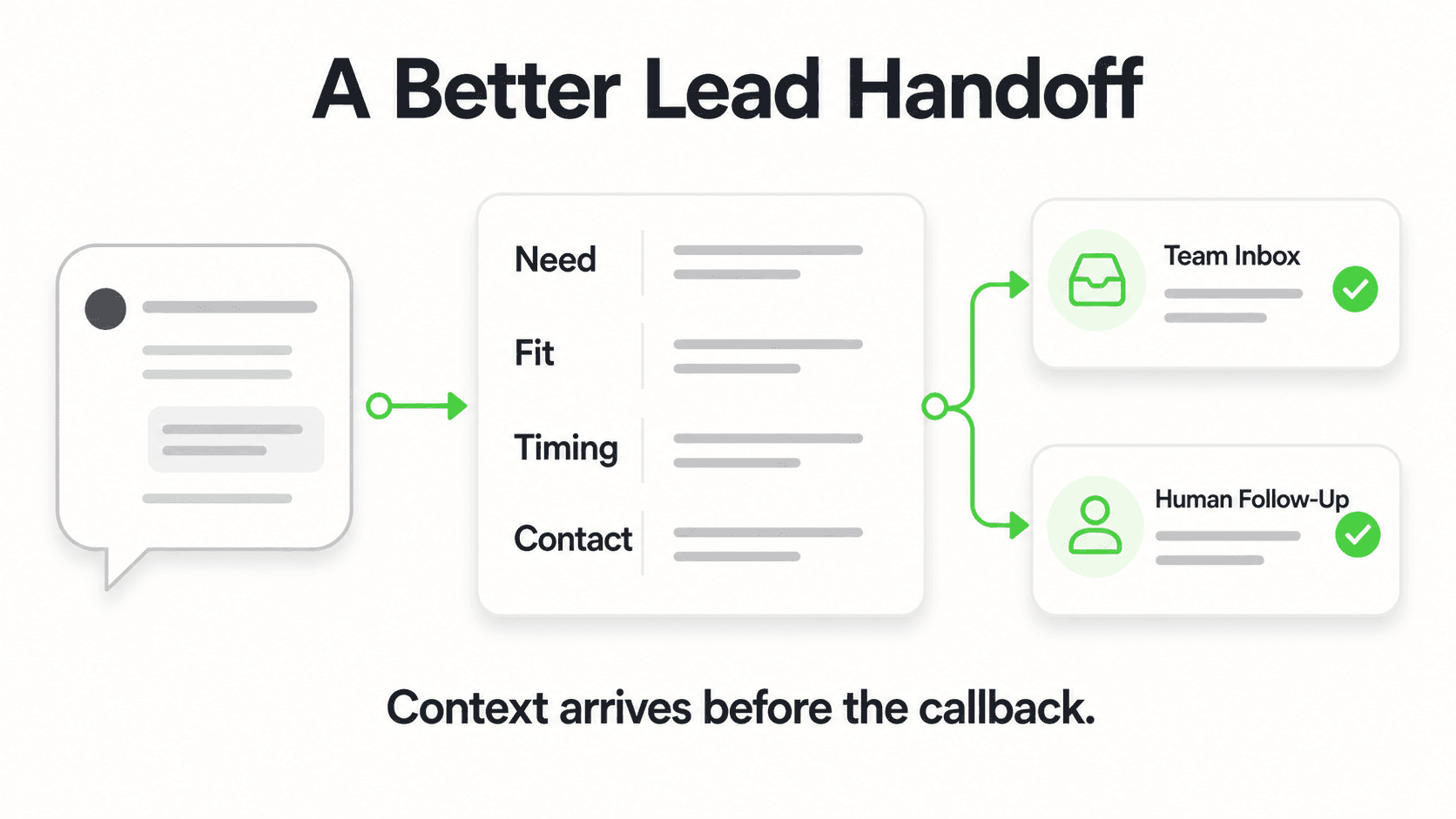
Understanding what families truly need when they reach out is the difference between a 5% inquiry-to-tour conversion rate and one that is two or three times higher. Here are the seven things that matter most, based on industry research, family surveys, and the patterns that high-performing communities consistently demonstrate.
1. Immediate Acknowledgment That Their Inquiry Matters
What this looks like in practice: A daughter submits a website form at 9:45 PM on a Tuesday after her kids are in bed. Within two minutes, she receives a warm, personalized response that confirms her inquiry was received, answers the specific question she asked (pricing for assisted living), and offers to connect her with an admissions counselor the following morning at a time that works for her schedule.
Real-world impact: Research shows 75% of senior living prospects choose the first community that responds (Source: Invoca). In an industry where the average cost per lead is $431, letting an inquiry sit unanswered overnight is not just a customer experience failure -- it is a direct revenue loss. Each senior living resident represents $130,000 or more in lifetime revenue. The math is unforgiving.
Why it works: Immediate acknowledgment does not mean an immediate sales conversation. It means telling the family: "We received your message. You matter. Here is something helpful right now, and here is when a real person will follow up." That simple act of responsiveness reduces the anxiety that drives families to contact four or five communities simultaneously. When you are first, you are often the only one they need.
Key features:
- Automated but personalized acknowledgment within minutes, not hours
- Answers to the specific question the family asked, not a generic reply
- A clear commitment to personal follow-up with a specific timeframe
- After-hours coverage through an AI chatbot or contact center
2. Emotional Empathy Before Information
What this looks like in practice: Instead of opening with "Thank you for your interest in Sunrise Gardens! We offer three levels of care..." the response opens with "We understand this is a big step, and we are glad you reached out. Whatever you are going through with your family, we are here to help you navigate it." The information follows, but the emotional validation comes first.
Real-world impact: The J.D. Power studies consistently show that family satisfaction with senior living communities is most strongly influenced by perceived accessibility and the sense that staff genuinely care (Source: J.D. Power, 2023). This impression forms at first contact, not at move-in. Families who feel emotionally acknowledged during the inquiry stage are more likely to tour, more forgiving during tours, and more likely to refer other families.
Why it works: The psychology is straightforward. When people are in a state of emotional distress, they cannot process complex information until their emotional needs are met. This is established neuroscience -- the amygdala must calm before the prefrontal cortex can evaluate options. A community that leads with empathy is not being "soft." It is being neurologically smart.
Key features:
- Opening language that validates the family's emotional experience
- Questions that invite the family to share their situation in their own words
- A tone that is warm and human, even in automated responses
- Staff training that prioritizes listening over pitching in initial conversations
3. Transparent Pricing Without Gatekeeping
What this looks like in practice: When a family asks "How much does assisted living cost at your community?" they receive a clear answer: "Our assisted living starts at $5,200 per month for a private studio, which includes meals, housekeeping, medication management, and personal care assistance. Additional services like specialized memory care or enhanced nursing support are available at an additional cost. Here is a breakdown of what is and is not included." No "schedule a tour to learn about pricing." No "it depends" without context.
Real-world impact: According to consumer survey data, 57% of consumers say it is difficult or very difficult to determine whether assisted living communities are within their budget, and 41% say it is difficult to understand what is included in cost estimates they see online (Source: U.S. News / Healthcare Business Today). Only 18% of families feel adequately prepared regarding senior care costs. Communities that provide transparent pricing upfront eliminate the single biggest source of family frustration and self-select for qualified prospects who can actually afford the community.
Why it works: Hiding pricing does not create more tours. It creates more frustrated families who waste their limited research time touring communities they cannot afford, then feel misled when they learn the actual cost. Transparent pricing builds trust, attracts families who are a genuine financial fit, and shortens the sales cycle by eliminating the "Can we even afford this?" anxiety that paralyzes decision-making. As one industry analysis noted, when consumers cannot locate pricing, they either lose trust or move on entirely (Source: Next Avenue / My Life Site).
Key features:
- Base pricing published on the website or provided immediately upon inquiry
- Clear explanation of what is included in the base rate
- Transparent disclosure of common add-on costs (medication management, enhanced care, etc.)
- A pricing range rather than a single number, acknowledging that care needs vary
4. Virtual and In-Person Tour Flexibility
What this looks like in practice: Instead of only offering in-person tours during weekday business hours, the community provides multiple ways for families to experience the community on their schedule: self-guided virtual tours available 24/7 on the website, live video tours with an admissions counselor on evenings or weekends, in-person tours with flexible scheduling including Saturdays, and the option to start with a virtual tour and follow up with an in-person visit when the family is ready.
Real-world impact: The U.S. News 2024 senior living survey found that in-person tours were most helpful for 50% of respondents, followed by websites with information and reviews at 38%, and recommendations from family and friends at 37% (Source: U.S. News). While in-person tours remain the gold standard, families increasingly need flexibility to begin their evaluation remotely -- especially the growing number of long-distance caregivers. According to AARP, approximately 11% of caregivers live an hour or more from their care recipient.
Why it works: Adult children researching senior living are doing so in stolen moments -- lunch breaks, late evenings, weekends between their kids' activities. A community that only offers tours Tuesday through Friday from 10:00 AM to 4:00 PM is excluding a significant portion of motivated prospects. Virtual tours also serve as a qualification tool: families who take a virtual tour and then request an in-person visit are far more likely to be serious prospects.
Key features:
- Self-guided virtual tour content available on the website 24/7
- Live video tour option with flexible scheduling, including evenings and weekends
- In-person tour availability that extends beyond traditional business hours
- The ability to book any type of tour instantly, including through a website chatbot
5. Family-Inclusive Communication
What this looks like in practice: After initial contact from an adult daughter, the community asks: "Who else in your family is involved in this decision? Would it be helpful if we included them in our communications?" When the daughter mentions her brother in another state and her mother's preferences, the community creates a shared communication thread, sends the brother the same information, and ensures both siblings feel equally informed and valued -- without making either feel like they are being "managed."
Real-world impact: Senior living decisions rarely involve a single decision-maker. Adult daughters are the primary inquirer 71% of the time, but the decision typically involves spouses, siblings, financial advisors, and the prospective resident (Source: Colorworks senior living decision-maker analysis). Families report that sibling disagreements and the challenge of coordinating across multiple stakeholders are among the most stressful aspects of the senior living decision. Communities that proactively facilitate family-wide communication remove a major friction point.
Why it works: When a community communicates only with the person who submitted the inquiry, they are building a relationship with one stakeholder while leaving others in the dark. That creates problems downstream: the brother who was not included feels blindsided, the mother feels excluded from her own care decision, and the family meeting to discuss the community becomes contentious because everyone has different information. Inclusive communication turns a community from a vendor into a partner in the family's decision process.
Key features:
- Early identification of all family stakeholders and their preferred communication channels
- Shared information packets or portal access so all decision-makers see the same details
- Willingness to have separate conversations with different family members who have different questions
- Respect for the prospective resident's voice and preferences throughout the process
Respond to Every Family the Moment They Reach Out
Hyperleap AI helps senior living communities provide immediate, empathetic responses to family inquiries 24/7 -- on your website, WhatsApp, Facebook, and Instagram.
See Senior Living AI6. Honest Answers About Care Levels and Limitations
What this looks like in practice: A family asks: "Can your community handle my mother's Parkinson's disease?" Instead of a vague "We provide personalized care plans for every resident," the community responds: "We currently have six residents with Parkinson's in various stages. Our care team includes staff trained in Parkinson's-specific needs, and we partner with a local neurologist who visits monthly. However, if your mother requires skilled nursing care beyond what our assisted living license permits, we would help you transition to an appropriate skilled nursing facility. Here is how we evaluate whether our community is the right fit for her current stage."
Real-world impact: Families who discover after move-in that a community cannot actually meet their parent's care needs experience the worst possible outcome: disruption, distress, and a forced transition during an already vulnerable period. Communities that are transparent about their capabilities and limitations upfront build far deeper trust. This honesty also protects the community legally and operationally by ensuring appropriate placements.
Why it works: Families are not looking for a community that can do everything. They are looking for a community that is honest about what it can do. This counterintuitive truth is consistently confirmed by high-performing sales teams: admitting what you cannot do makes families trust what you say you can do. A community that says "Here is where our care stops, and here is how we would help you if your parent's needs exceed what we provide" earns more move-ins than one that promises everything and underdelivers.
Key features:
- Clear documentation of care levels the community is licensed to provide
- Specific examples of conditions currently served and the staff expertise available
- Honest explanation of when and how a resident would need to transition to a higher level of care
- Proactive discussion of how the community handles changing care needs over time
7. Easy Next Steps Without Pressure
What this looks like in practice: At the end of the initial conversation, the community offers a menu of low-commitment next steps: "Based on what you have shared, here are a few options for what we could do next. You could take a virtual tour on our website whenever it is convenient. We could schedule a phone call with our Director of Nursing to discuss your mother's specific care needs. Or, if you are ready, we would love to schedule an in-person visit. There is no timeline or pressure -- we are here whenever you are ready."
Real-world impact: Research shows the average independent living sales cycle stretches to 315 days with roughly 25 touchpoints needed to convert a prospect (Source: CCR Growth). Pushing for an in-person tour on the first contact can backfire with families who are months away from a decision. Communities that offer graduated next steps appropriate to each family's readiness convert more inquiries into tours over time, because they keep the door open instead of creating a pressure moment that makes families pull back.
Why it works: The senior living decision has an unusually long consideration phase. Unlike buying a car or choosing a restaurant, families cycle through research, emotional processing, family discussions, financial planning, and sometimes resistance from the prospective resident. A community that respects this timeline and provides value at every stage -- without pressure -- becomes the default choice when the family is finally ready to act. Pressure creates resistance. Patience creates trust.
Key features:
- Multiple next-step options at varying levels of commitment
- No artificial urgency or scarcity tactics (avoid "We only have two units left" unless it is verifiably true and relevant)
- A lead nurturing system that maintains gentle, valuable contact over months
- Clear communication that the family controls the timeline
Real Results: What Family-Centered Communities Are Achieving
Communities that restructure their inquiry response around family needs -- rather than around their own sales process -- are seeing measurable improvements across the entire funnel.
Higher inquiry-to-tour conversion
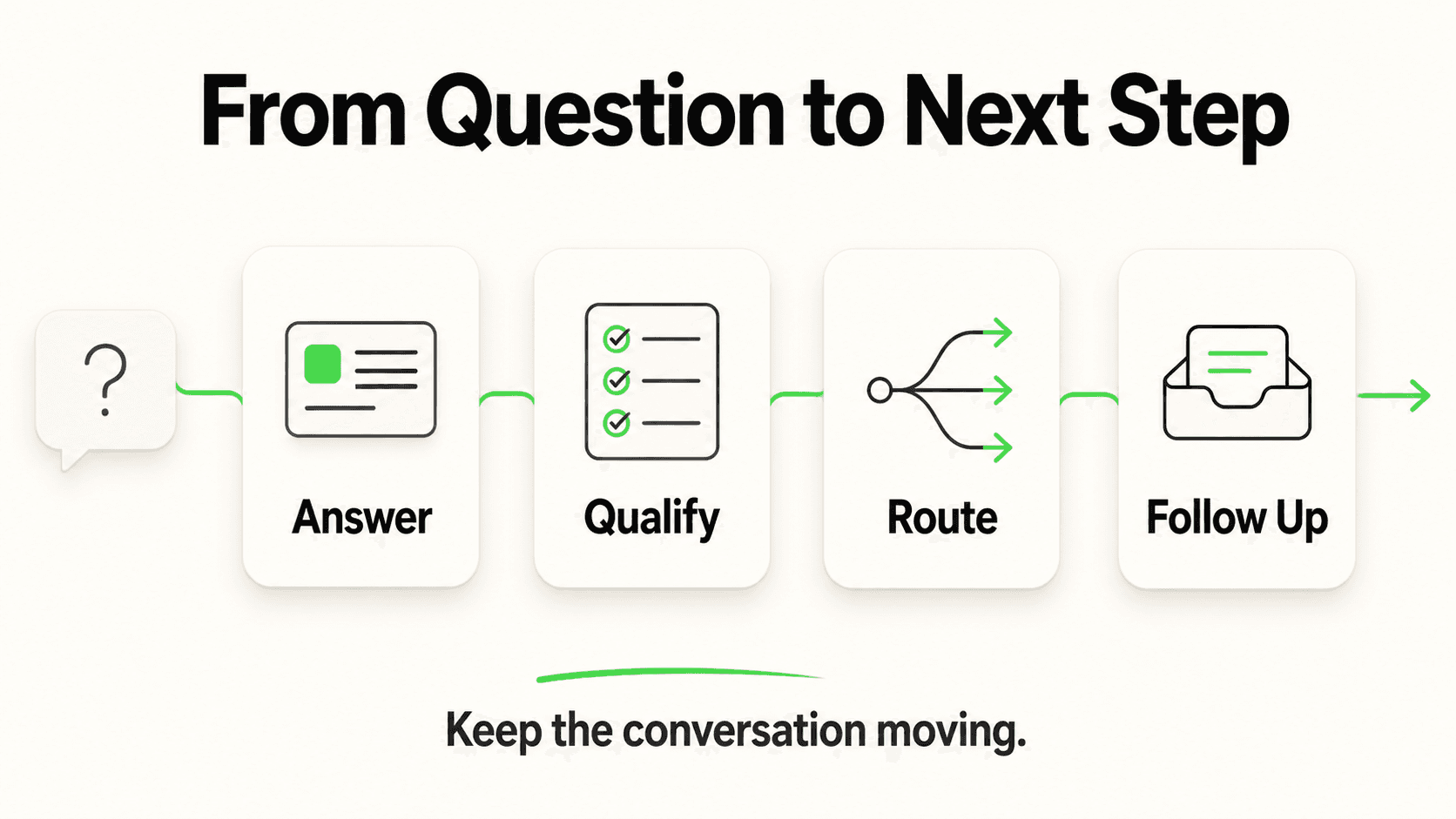
- Communities that respond within 5 minutes convert inquiries to tours at 2-3x the industry average of 5% for new leads (Source: Bild & Co., 2024)
- Empathy-first response scripts generate higher engagement rates than feature-focused scripts in initial outreach
- Transparent pricing on websites reduces unqualified inquiries while increasing the conversion rate of qualified families who do reach out
Faster occupancy recovery
- Each vacant unit costs $180-$280 per day in lost revenue, based on median assisted living rates of $5,419 per month (Source: SeniorLiving.org)
- Communities with sub-5-minute response times report filling units 20-30% faster than those relying on next-business-day callbacks
- Pricing transparency reduces the average sales cycle by eliminating weeks of back-and-forth about affordability
Stronger family satisfaction and referrals
- J.D. Power data shows a 118-point satisfaction increase when families perceive leadership as easily accessible
- Families who feel heard at first contact are more likely to refer friends and colleagues -- and in a referral-driven industry, each positive experience influences 5-10 future prospects
- Inclusive family communication reduces cancellations and no-shows by ensuring all stakeholders are aligned before touring
Reduced marketing waste
- The average senior living cost per lead is $431, with referral-platform move-ins costing $2,000-$5,000 (Source: Invoca)
- Communities that respond instantly and appropriately to every inquiry extract more value from existing marketing spend without increasing budget
- Better inquiry handling means fewer leads lost to competitors, reducing the need to purchase additional leads from aggregator platforms
75%
Choose First Responder
$5,419
Median Monthly AL Cost
315 days
Avg. IL Sales Cycle
$431
Avg. Cost Per Lead
Getting Started: Aligning Your Response with What Families Need
Shifting to a family-centered inquiry response does not require a complete operational overhaul. It requires intentional changes to how your community communicates during the critical first hours after a family reaches out.
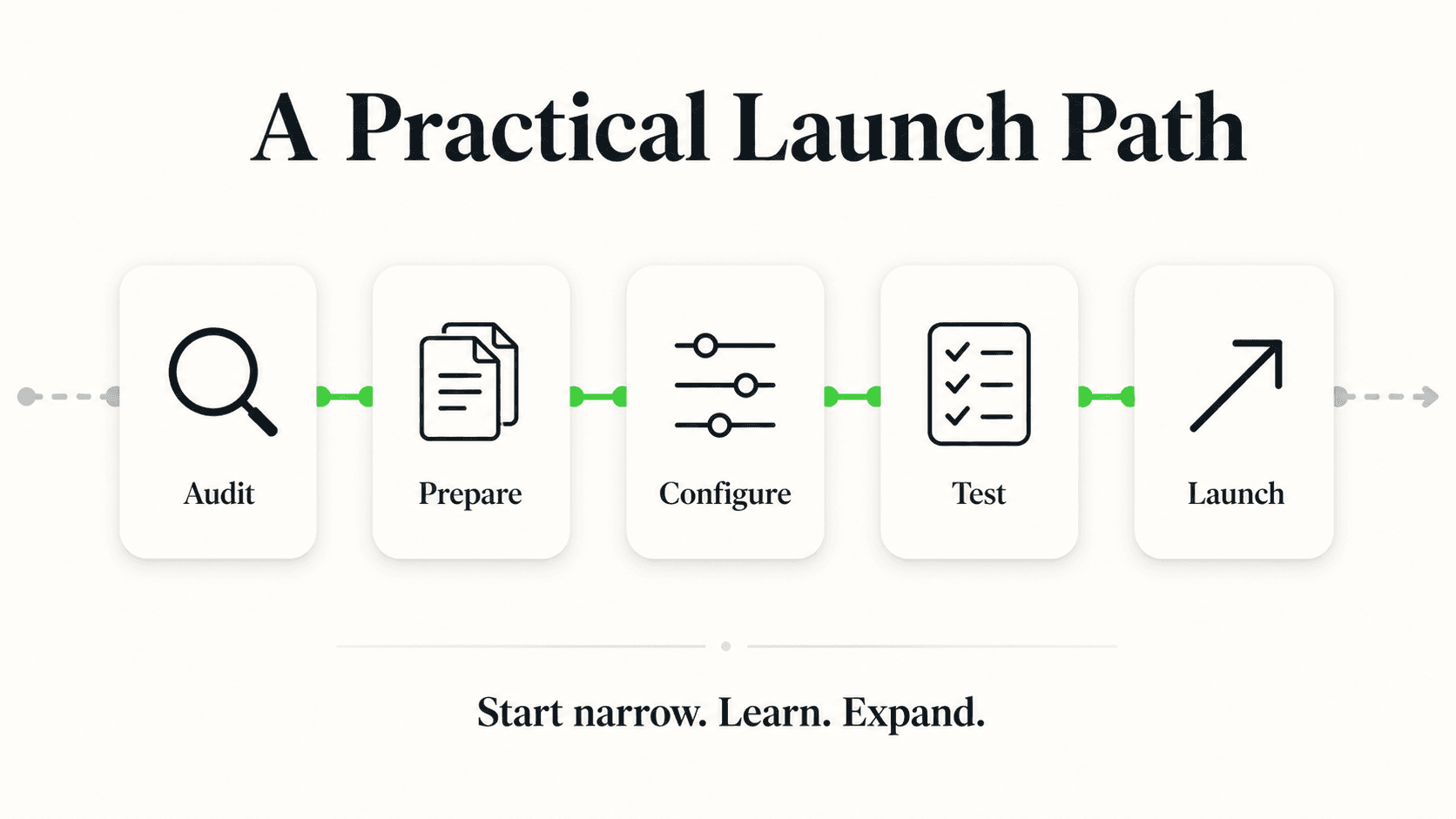
Phase 1: Audit your current experience (Week 1-2)
Start by experiencing your own inquiry process as a family would:
- Mystery-shop your own community: Submit an inquiry through your website at 8:00 PM on a weeknight. How long before you get a response? What does the response say? Does it feel empathetic or transactional?
- Review your response scripts: Read your current email templates and phone scripts. Count how many sentences focus on your community's features versus how many acknowledge the family's emotional state.
- Track response times by channel: Measure average response time for web forms, phone calls, referral platform leads, and social media inquiries. Identify the channels where families wait longest.
- Survey recent families: Ask families who recently toured (and those who did not) what they experienced during the inquiry phase. What felt helpful? What felt frustrating?
Phase 2: Implement family-first response (Week 3-4)
Deploy changes that immediately improve the family experience:
- Rewrite your response scripts to lead with empathy and acknowledgment before information. The first two sentences of every response should address the family's emotional reality.
- Deploy an AI chatbot on your website that can engage families 24/7 with warm, helpful responses -- answering questions about care levels, pricing, amenities, and tour scheduling even when your team is unavailable (see senior living AI solutions)
- Publish pricing on your website or, at minimum, provide pricing ranges immediately upon inquiry without requiring a tour or a phone call
- Offer multiple tour formats: Add virtual tour capability and extend in-person tour availability to evenings and Saturdays
- Ask about family stakeholders early: Add a question to your intake process: "Who else in your family is involved in this decision, and how can we include them?"
Phase 3: Build a family-centered nurture system (Month 2-3)
For the majority of families who are not ready to tour immediately:
- Segment leads by urgency and readiness: Crisis families (hospital discharge, recent fall) need same-day response with specific care information. Planning families need educational content and long-term nurturing.
- Create a multi-month nurture sequence that provides genuine value -- educational content about care levels, financial planning resources, caregiver support information -- without pressure to tour
- Implement multi-stakeholder communication that keeps all family decision-makers informed and engaged
- Track family engagement across all touchpoints so your admissions team knows when a planning-stage family shifts to active-decision mode
Measure What Families Experience, Not Just What You Send
Most communities track internal metrics: number of inquiries, response time, tours scheduled. Consider also tracking family-facing metrics: percentage of inquiries that receive a response within 5 minutes, percentage of first responses that include empathetic language, percentage of families who report feeling "heard" in post-tour surveys. What you measure shapes what you improve.
Building Trust Starts with the First Response
The senior living industry is built on trust. Families are entrusting the care, safety, and daily happiness of someone they love to your community. That trust does not begin at move-in. It does not begin at the tour. It begins at the very first moment a family reaches out and waits to see how you respond.
The data shows that most communities are failing this moment. Response times stretch into hours and days. First responses read like brochures rather than conversations. Pricing is hidden behind tour requirements. And the emotional reality of the family's experience is treated as an obstacle to overcome rather than a signal to meet with compassion.
The seven things families actually want -- immediate acknowledgment, emotional empathy, transparent pricing, tour flexibility, family-inclusive communication, honest answers, and easy next steps -- are not expensive to provide. They require intention, not investment. They require seeing the inquiry through the family's eyes, not through the sales funnel.
Communities that make this shift will not just convert more inquiries into tours and more tours into move-ins. They will build the kind of reputation that generates organic referrals, strengthens relationships with referral partners, and creates the trust that families need to make one of the most important decisions of their lives.
The family researching your community tonight is not a lead. They are a daughter who cannot sleep because she is worried about her mother. Respond accordingly.
This is the workflow behind that expectation — see AI front desk for senior living communities.
Frequently Asked Questions
What is the most important thing families want when contacting a senior living community?
Families want immediate acknowledgment that their inquiry matters, delivered with empathy. Research shows 75% of senior living prospects go with the first community that responds, but speed alone is not enough. The response must convey that the community understands the emotional weight of the decision. A fast but cold, transactional response is only marginally better than a slow one. The winning combination is speed plus empathy plus helpful information.
How can senior living communities provide pricing transparency without losing leads?
Publishing pricing ranges on your website or providing them immediately upon inquiry does not reduce qualified leads -- it increases them. When 57% of consumers struggle to determine whether a community is within their budget, hiding pricing only delays an inevitable conversation and frustrates families in the process. Communities that are transparent about costs self-select for families who can genuinely afford the community, resulting in higher-quality tours and shorter sales cycles. Publish base rates and explain what influences final pricing.
Should senior living communities use AI chatbots for family inquiries?
Yes, when configured thoughtfully. An AI chatbot designed for senior living can provide immediate, empathetic responses 24/7, answer questions about care levels, pricing, and amenities, and help families schedule tours -- all during the evenings and weekends when most family research happens. The key is transparency: the chatbot should identify itself as an AI assistant, provide document-grounded responses based on your community's actual information, and seamlessly connect families with a human admissions counselor for deeper conversations. Families overwhelmingly prefer getting helpful answers at 10:00 PM over waiting until Monday for a human callback.
How do we communicate with multiple family members involved in the decision?
Start by asking early in the conversation who else is involved in the decision. Offer to include additional family members in email communications, send them the same information packets, and make yourself available for separate conversations if different stakeholders have different questions. Senior living decisions typically involve 6-10 family influencers, and the community that proactively facilitates family-wide communication removes one of the biggest sources of friction and delay in the decision process.
How long does the senior living sales cycle typically take?
The average sales cycle varies by care type: independent living averages approximately 315 days with 25 touchpoints, while assisted living averages around 70 days (Source: CCR Growth). However, these averages include both crisis-driven searches (where a family needs placement within days) and planning-stage searches (where a family researches for 6-12 months). Understanding where each family is on this spectrum is essential for providing appropriate communication. Crisis families need rapid, specific answers. Planning families need education, patience, and sustained engagement over months.
What should a senior living community's first response to an inquiry include?
An effective first response includes four elements: (1) empathetic acknowledgment of the family's situation, (2) a direct answer to whatever specific question the family asked, (3) one or two additional pieces of helpful information such as pricing ranges or care capabilities, and (4) a low-pressure next step with options. The response should be personalized to the family's inquiry, not a generic template. It should arrive within minutes, not hours. And it should feel like it was written by someone who cares, not by a marketing department.
How can small senior living communities compete with large operators on responsiveness?
Small communities actually have an advantage: they can offer a more personal, relationship-driven experience. The key is implementing systems that ensure no inquiry goes unanswered, even when your admissions counselor is conducting a tour or it is after hours. An AI-powered chatbot on your website provides 24/7 coverage. Automated but warm email acknowledgments bridge the gap between inquiry and personal follow-up. And the personal touch that a small community's executive director or admissions counselor can provide -- calling a family by name, remembering their parent's specific needs, following up with genuine care -- is something large operators struggle to replicate at scale.
Ready to Transform How Families Experience Your Community?
Hyperleap AI helps senior living communities provide immediate, empathetic responses to every family inquiry -- 24/7, across every channel. Start your 7-day free trial.
Get StartedIndustry Solutions
See how AI chatbots work for these industries:
Related Articles
What Missed Calls Really Cost Your Small Business
A worked example of what missed calls cost small businesses in lost jobs, plus where inquiries actually arrive now and what to do about it.

AI Receptionist Cost in 2026: What You Actually Pay
AI receptionist cost ranges from $20/month for automated voice AI to $300+/month for live-agent phone answering. Full breakdown by category.

Companies Using AI for Customer Service: Industry Patterns
How companies using AI for customer service are transforming healthcare, hospitality, real estate, and more — with the specific jobs AI handles across each sector.

Will AI Replace Customer Service? The Honest Answer
Will AI replace customer service? Not wholesale — but it's changing the job fundamentally. Here's what AI handles well, what still needs humans, and how to build a hybrid model.