What Makes AI Chatbots Work: 7 Findings from Deployments
Real AI chatbot deployments reveal 7 patterns that separate high-performing implementations from ones that disappoint — plus the data to spot the difference early.

TL;DR: Most AI chatbot implementations underperform not because the AI is bad, but because of four fixable mistakes: a weak knowledge base, a poor opening message, no escalation path, and failing to design for after-hours volume. This analysis looks at real deployment patterns—including Hyperleap AI's own customer data—and identifies the seven factors that reliably predict whether an AI chatbot will generate ROI or become shelfware.
What Makes AI Chatbots Actually Work: 7 Findings from Real Deployments
There is a version of this story that ends with a glowing testimonial. The AI chatbot goes live, handles thousands of inquiries, and the business owner wonders why they waited so long.
There is another version. The bot goes live, gives a few vague or off-topic answers, customers complain, and the team turns it off after two weeks.
Both outcomes happen constantly. The difference is almost never the AI model itself—it is how the deployment was designed, what the bot was trained on, and whether the business owner understood what "working" actually means.
This piece is built from real deployment data and patterns observed across AI chatbot implementations in hospitality, healthcare, real estate, legal services, and home services. Where first-party data is cited, it comes from Hyperleap AI's own deployments (with customer permission). Where industry data is cited, sources are named.
Methodology Note
This analysis draws on Hyperleap AI deployment data from consenting customers including Jungle Lodges & Resorts (hospitality, India), publicly available third-party research, and pattern observations from our implementation team. It is not a randomized controlled study. It represents practitioner observations across a specific slice of the SMB market.
Why Most Chatbot Analysis Gets This Wrong
The industry is full of statistics claiming 87% resolution rates, 340% ROI, and near-perfect customer satisfaction. These numbers are real—but they represent the best-case tail of the distribution, not the median outcome.
The actual distribution of AI chatbot performance looks more like this: a small number of excellent deployments that earn every word of the case study, a large middle of adequate-but-unremarkable implementations, and a meaningful tail of failures that never get written about.
What separates the left tail from the right? That is the question this analysis attempts to answer.
Finding 1: The After-Hours Window Is Where Chatbots Pay for Themselves
The single most consistent finding across deployments: the economic case for AI chatbots is built at night, on weekends, and during holidays.
In Hyperleap AI's deployment for Jungle Lodges & Resorts—a hospitality group in India—35% of all customer inquiries arrived outside business hours (Hyperleap AI Jungle Lodges Case Study, 2024). That figure is consistent with industry research: Gartner's 2025 Customer Experience Trends report found that AI chatbot usage peaks between 8 PM and 11 PM, precisely when human support is unavailable.
What This Means for Business Owners
Before-hours and after-hours inquiries share a specific characteristic: if not answered within minutes, the customer typically contacts a competitor. Unlike daytime inquiries where a customer might wait for a callback, evening inquiries from people browsing hotels, real estate listings, dental practices, or law firm websites carry an immediate intent signal—and an immediate competitor threat.
The financial math is stark: If your business receives 20 inquiries per day and 35% arrive after hours (7 inquiries), and if the industry-average lead response research suggests that 78% of buyers work with whoever responds first (NAR Generational Trends Report, 2025), then you are losing approximately 5–6 qualified prospects per day to competitors who do respond—or to AI chatbots on competitor websites that respond instantly.
Across a month, that is 150+ lost opportunities. For service businesses where each converted lead represents $200–$2,000+ in revenue, the after-hours gap is the most expensive operational hole most small businesses have.
The chatbot's primary job, then, is not to replace your receptionist—it is to be the first responder when your receptionist is off the clock.
Implementation Implication
After-hours performance requires different design decisions than daytime support:
- The opening message must work without context about who the customer is or what they want
- Lead capture must happen early in the conversation, before the customer has time to navigate away
- The bot must set correct expectations about when a human will follow up ("Our team will reach you by 9 AM tomorrow")
Finding 2: The First 30 Seconds Determine Whether a Customer Stays
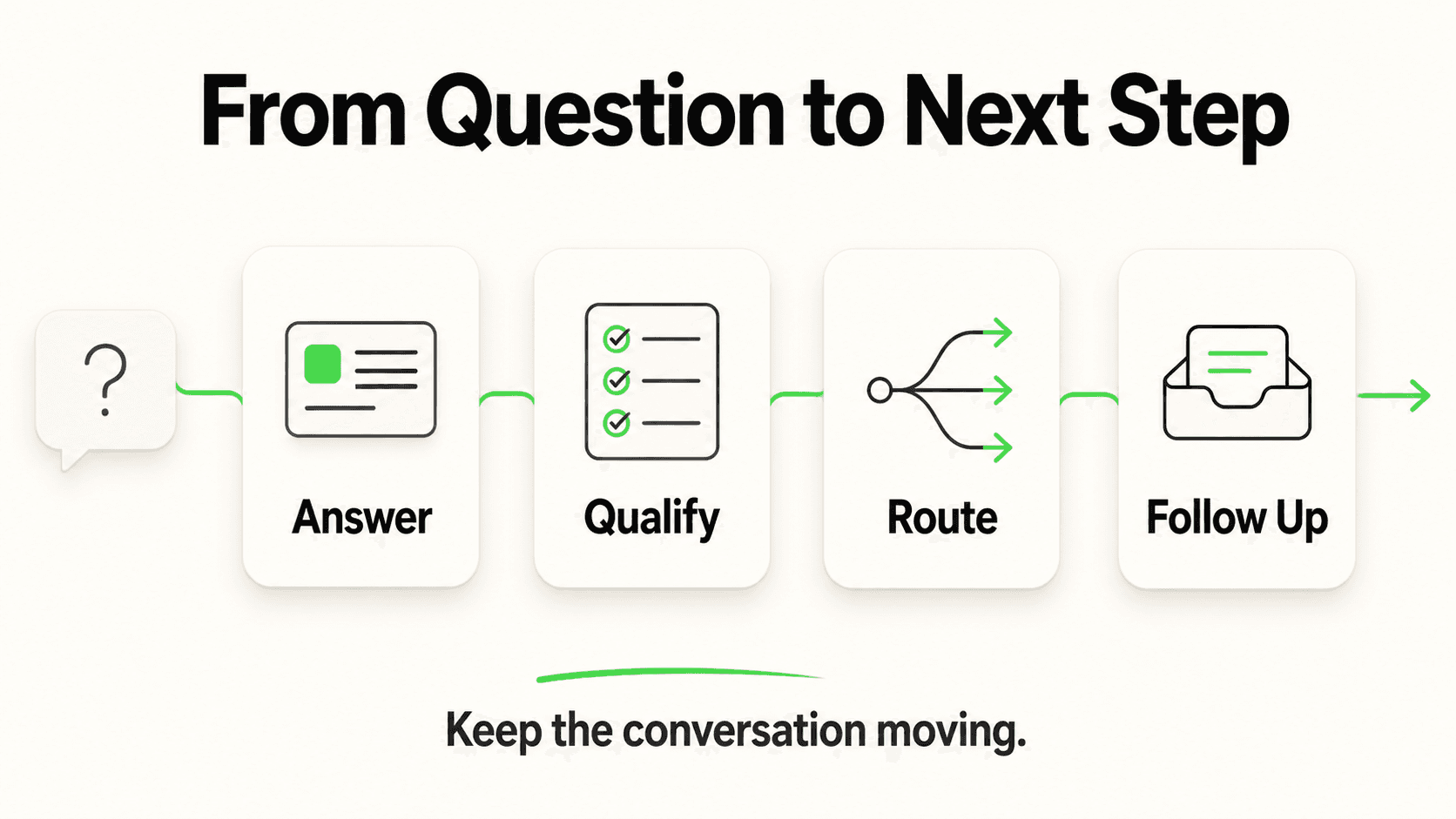
The opening message of an AI chatbot conversation is the most important design decision in the entire deployment—and the one that gets the least attention.
Research from Drift's State of Conversational Marketing (2024) found that the average visitor abandons a chatbot conversation within 35 seconds if the opening exchange does not quickly signal relevance. Among visitors who engage past 60 seconds, completion rates are 70%+ higher.
What High-Performing Opening Messages Have in Common
Across Hyperleap AI deployments, opening messages that perform well share three traits:
-
Specificity about capability — "Hi! I can answer questions about room types, availability, and pricing. What would you like to know?" outperforms "Hi! How can I help you today?" because it sets expectations and pre-qualifies the conversation.
-
A light lead capture hook — High-converting openings ask for context early: "To give you the most accurate information, may I ask if you're looking for a weekend stay or a weekday booking?" This captures intent without feeling like a form.
-
A tone match to the brand — A luxury resort's opening message should not read like a tech support ticket. A legal firm's should not feel casual. AI chatbots that sound generic underperform those tuned to the business's voice.
What Underperforms
Generic openings ("Hello! I'm your AI assistant. How can I help you?") produce higher bounce rates. Overly aggressive lead capture at the first message ("Before I answer, can I get your name and email?") produces even higher abandonment. Customers want to be helped first; capturing their information is a byproduct of a conversation that delivers value.
A note on pre-chat forms: Platforms that gate the conversation behind a short lead form — collecting name, email, and phone before the AI responds — sidestep this problem entirely. When the form is paired with a clear value statement ("Tell us about your project and we'll answer within minutes"), it converts well and ensures every conversation begins with a verified contact record. The abandonment pattern described above applies to bots that open a chat window and immediately demand credentials before offering anything of value.
Finding 3: Knowledge Base Quality Is the Ceiling on Chatbot Performance
No AI model can give a good answer to a question it has not been given information to answer. This sounds obvious, but it is the root cause of the majority of chatbot failures we observe.
A chatbot's knowledge base defines the ceiling of its accuracy. The AI model determines how well the bot retrieves and synthesizes information from that knowledge base. A weak knowledge base + a great AI model = a confidently wrong bot. A strong knowledge base + a decent AI model = a reliably helpful bot.
What a Good Knowledge Base Looks Like
Across Hyperleap AI deployments, the highest-performing knowledge bases share these characteristics:
Coverage of the 20 questions that 80% of customers ask. Most businesses have a small set of questions that represent the bulk of their inquiry volume—pricing, availability, how to schedule, what is included, how to contact a human. A knowledge base that exhaustively covers these 20 questions outperforms one with 200 pages of marketing copy that never directly answers anything.
Explicit answers, not implicit ones. Documents written for humans to read are not the same as documents written for AI to retrieve from. A brochure that says "We offer a range of room types to suit every occasion" does not help a bot answer "What is your cheapest room?" Knowledge bases need explicit answers: "Our Standard Room starts at ₹4,500 per night and includes..."
Regular updates. A knowledge base that reflects last year's pricing will generate incorrect answers and eroded customer trust. The businesses whose chatbots maintain performance over time are the ones that update the knowledge base whenever something changes.
The Knowledge Base Audit Test
To assess your own knowledge base quality: identify your 10 most common customer questions, then ask your chatbot each one. If you get a vague or incorrect answer to more than 3 of 10, your knowledge base needs expansion before you invest in driving more traffic to the bot.
Finding 4: Escalation Design Predicts Customer Satisfaction More Than Accuracy
Counter-intuitive finding: the quality of a chatbot's escalation path matters as much to customer satisfaction as the quality of its answers.
The Zendesk CX Trends Report 2026 found that 74% of customers are frustrated when they have to repeat their story to a human agent after interacting with AI, and 74% expect 24/7 AI availability — making a seamless escalation path a prerequisite, not a nice-to-have. Even customers who had their question answered by the AI rated the experience lower when there was no visible human escalation path.
For AI chatbots in high-stakes industries—healthcare, legal, financial services, real estate—this finding is amplified. Customers asking about medical symptoms, legal rights, or large financial transactions have a heightened need for the safety net of human contact.
What High-Performing Escalation Looks Like
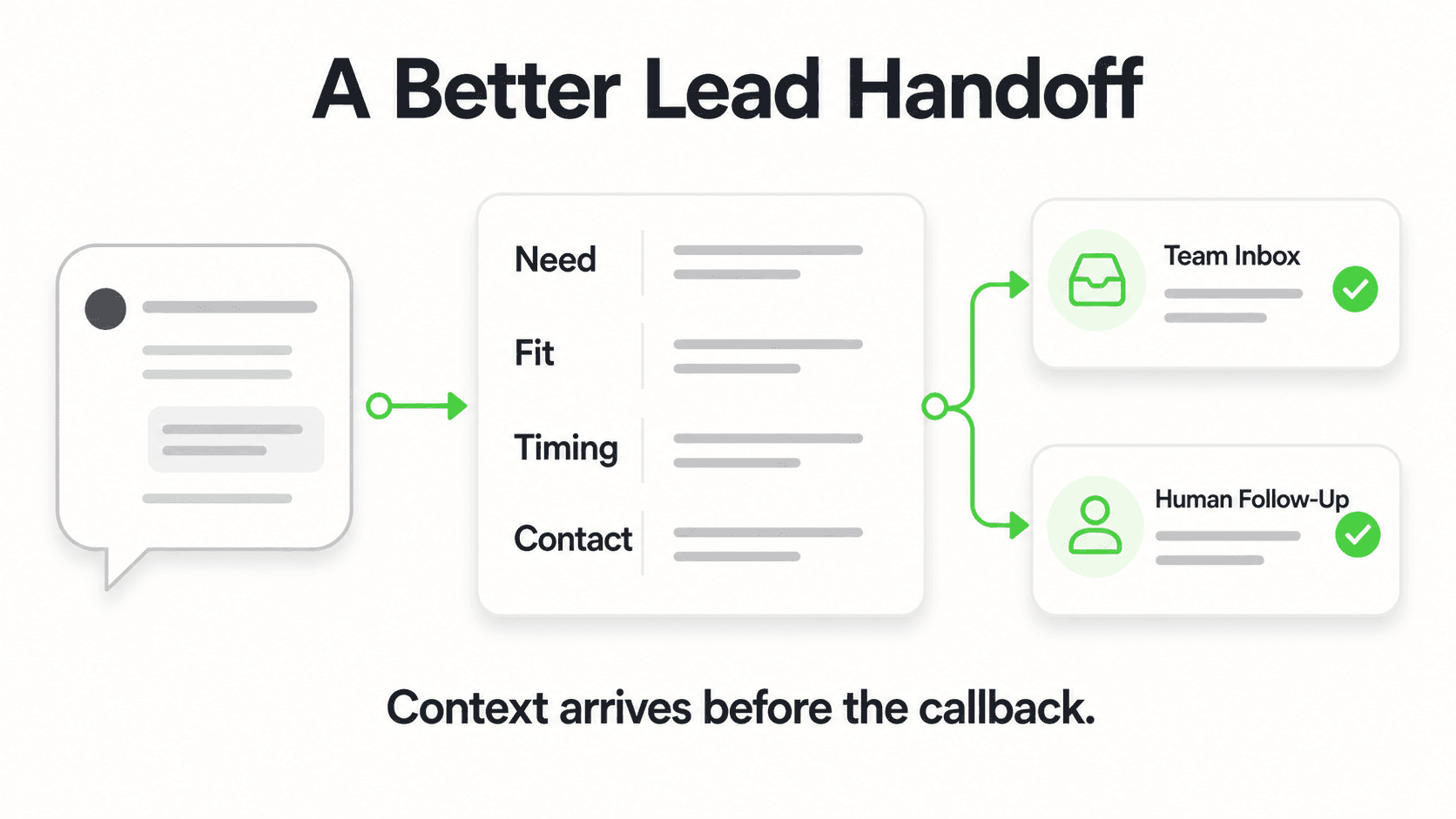
Surface the escalation option early, not as a failure state. High-performing chatbots proactively offer human contact within the first 2-3 exchanges: "I can handle most questions right now, or if you'd prefer to speak with our team directly, I can connect you." This offer actually reduces the rate of escalation requests while increasing satisfaction—because customers feel in control.
Set specific expectations on follow-up timing. "Our team will call you back" is insufficient. "Our team will reach out within 2 business hours, by 10 AM tomorrow at the latest" is satisfying. Specific commitments outperform vague ones.
Capture what the customer needed before escalating. A well-designed escalation flow captures the customer's question, contact details, and urgency level before handing off. This saves the human agent from having to re-ask everything — the number-one frustration cited in Zendesk CX Trends 2026, with 74% of customers reporting frustration at having to repeat themselves.
Finding 5: Channel Mix Varies Dramatically by Industry and Geography
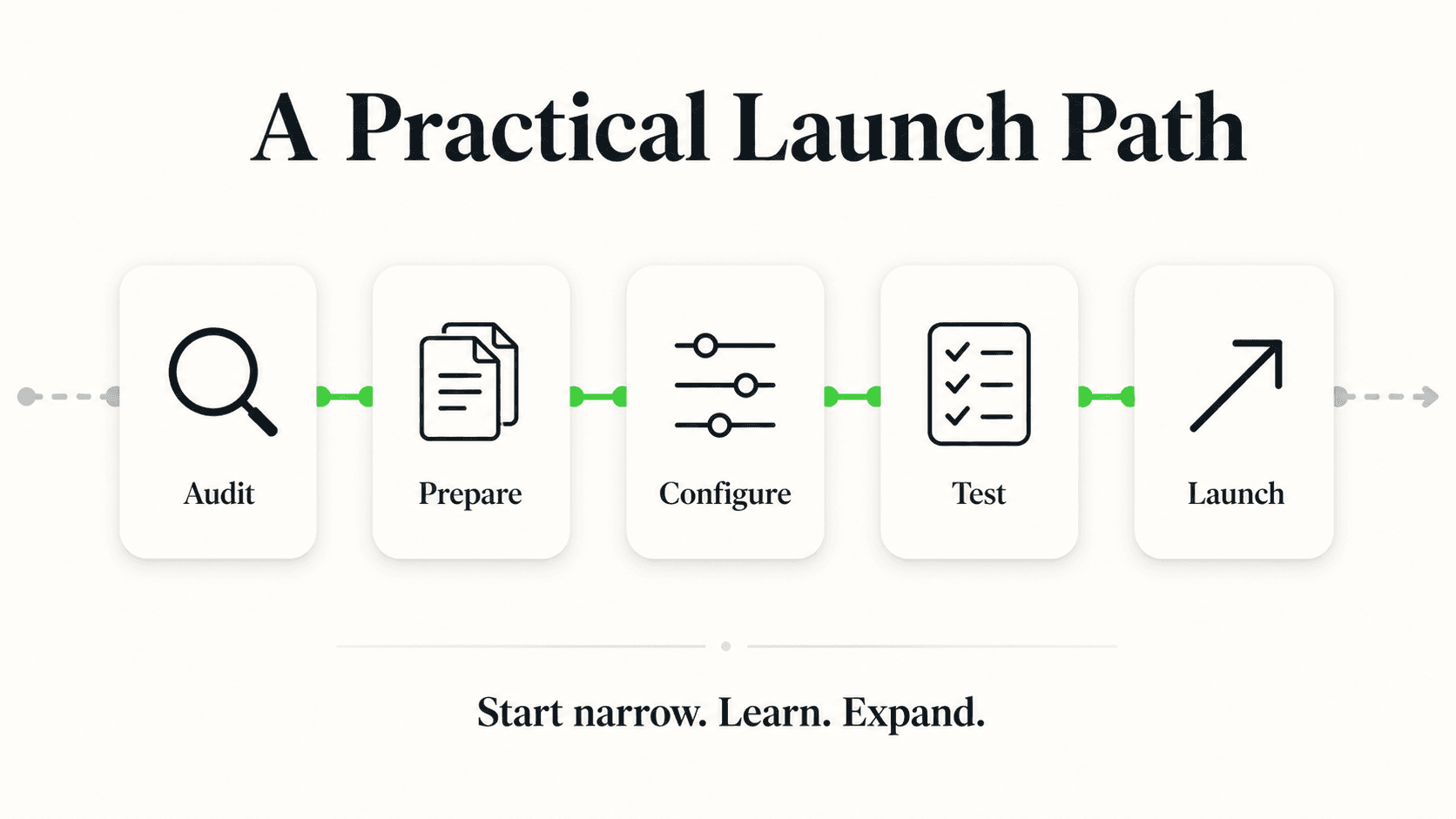
One of the clearest patterns in deployment data: the right channel for an AI chatbot depends heavily on the industry and the geographic market.
WhatsApp vs. Web Chat vs. Instagram
In India, WhatsApp dominates. For hospitality, real estate, healthcare, and legal clients in India, a chatbot that is not available on WhatsApp is missing 60–70% of where customer conversations naturally start. Web chat is a secondary channel that captures customers already on the website; WhatsApp captures customers in their natural communication environment.
In the US, the pattern is different. Web chat and website-initiated conversations remain primary, with SMS a meaningful secondary channel for follow-up. WhatsApp in the US is relevant for specific communities and international customer bases.
For service businesses targeting Instagram-active demographics (fitness, beauty, events, boutique hospitality), Instagram DM is increasingly a primary inquiry channel. Gymshark, for example, has reported that 30%+ of their customer service volume arrives via Instagram DM (Sprout Social Index, 2024).
Industry Patterns
| Industry | Primary Channel (India) | Primary Channel (US) |
|---|---|---|
| Hospitality | WhatsApp, Web | Web, Instagram |
| Healthcare/Dental | Web, SMS | |
| Real Estate | Web, SMS | |
| Legal Services | WhatsApp, Web | Web |
| Education/Coaching | Web | |
| Restaurants | WhatsApp, Instagram | Instagram, Web |
Implementation implication: Starting a chatbot on only one channel is fine—but building a deployment that can extend to additional channels without a full rebuild pays dividends as customer expectations evolve. The best implementations we have seen are architecturally multi-channel from day one, even if only one channel is active initially.
Finding 6: Response Grounding Eliminates the Trust Problem
The question businesses most frequently ask before deploying an AI chatbot is: "What if it says something wrong?"
This is a legitimate concern. Generative AI that is not constrained to a knowledge base will occasionally invent information—a problem known as hallucination. For conversational AI for customer service, hallucinating an incorrect price or a policy that does not exist is not an academic issue—it destroys trust and can create legal exposure.
The solution is retrieval-augmented generation (RAG): an architecture where the AI retrieves specific relevant content from your knowledge base before generating a response, rather than generating from its training data alone.
What the Research Shows
A Gartner Customer Experience Trends Report (2025) found that RAG-based chatbots achieve 94–98% accuracy on domain-specific questions when backed by well-structured knowledge bases—significantly higher than unconstrained generative AI, which shows greater variance on factual questions.
More importantly: when a RAG-based chatbot does not have information to answer a question, it can be designed to say "I don't have that information right now—let me connect you with our team" rather than generating a plausible-sounding wrong answer.
The Practical Design Principle
The difference between a chatbot that builds trust and one that erodes it is whether the bot knows what it does not know. The best implementations we have observed include explicit fallback handling: when the AI cannot find a confident answer in the knowledge base, it defaults to human escalation rather than hallucinating.
This design choice—prioritizing a graceful "I don't know" over a confident wrong answer—is the single most important trust-building decision in chatbot deployment.
Finding 7: Conversation Volume in Week One Predicts Long-Term Success
A predictive pattern from deployment data: businesses whose AI chatbot handles 50+ conversations in the first week are significantly more likely to achieve positive ROI and maintain the deployment.
Why? Not because of the conversations themselves, but because of what happens next. With 50+ early conversations, business owners see real questions they had not anticipated, find gaps in the knowledge base, and make refinements. They experience the concrete value of after-hours lead capture. They see a customer who would have called—and gotten voicemail—instead getting an instant answer.
The businesses that see under 10 conversations in week one typically fall into one of two failure modes:
- They deployed the chatbot but did not add it to their website prominently or to their WhatsApp number
- They deployed on a channel their customers do not use
The implication: Chatbot success requires both a well-designed bot and active promotion. Adding an obscure chat widget to your website footer is not a deployment—it is a checkbox.
How to Drive Conversation Volume Early
- WhatsApp: Send a broadcast to opted-in contacts introducing your new AI support channel
- Website: Add a chat prompt to high-traffic pages (pricing, contact, services), not just the homepage
- Social profiles: Add your WhatsApp number or chat link to your Instagram bio and Facebook page contact info
- Email signature: Include a "Chat with us instantly on WhatsApp" link in all outgoing emails
- Signage (physical businesses): QR codes at the reception desk, waiting room, or checkout counter
How to Apply These Findings: A Deployment Checklist
Based on the seven patterns above, here is an actionable pre-launch checklist for businesses deploying or improving an AI chatbot:
Knowledge base:
- Documented answers to the 20 most common customer questions
- Explicit pricing, availability, and policy information (no vague statements)
- Last updated within the past 30 days
Opening message:
- States what the bot can help with specifically
- Matches the brand's tone (formal/friendly/conversational)
- Includes a soft lead capture hook within the first 2 exchanges
Escalation path:
- Human escalation option offered proactively, not only on failure
- Specific follow-up time commitment captured and communicated to customer
- Customer question and contact details captured before handoff
Channel configuration:
- Active on the channel(s) where your customers naturally communicate (WhatsApp in India; web in US)
- Chat widget visible on high-intent pages (pricing, contact, services)
After-hours design:
- Bot configured with after-hours response flow (different from business-hours flow)
- Lead notifications go to a mobile device so the team can follow up first thing in the morning
Performance monitoring:
- Conversations reviewed weekly for the first month
- Knowledge base updated when gaps are identified
- Escalation rate tracked (high escalation = knowledge base gap)
Real Results: What Good Looks Like
The Jungle Lodges & Resorts deployment gives a concrete baseline for what a well-executed chatbot implementation produces in hospitality:
These numbers come from a hospitality deployment in India where WhatsApp was the primary channel, the knowledge base covered room types, pricing, availability, and booking logistics, and escalation routing was configured for the team to follow up within 2 hours during business hours.
The after-hours 35% figure is worth focusing on: for a business receiving 3,300 inquiries in 90 days, that is approximately 1,155 inquiries that would have gone unanswered without the chatbot. At a conservative conversion rate for hospitality inquiries, that represents meaningful revenue that was previously invisible.
Data Sources
- Hyperleap AI Jungle Lodges & Resorts Case Study (2024) — First-party deployment data (lead volume, after-hours percentage)
- Gartner Customer Experience Trends Report 2025 — RAG accuracy benchmarks, after-hours usage peaks, resolution rates
- Zendesk CX Trends Report 2026 — Escalation preferences, customer satisfaction drivers (74% frustrated repeating story; 74% expect 24/7 availability)
- NAR Generational Trends Report 2025 — First-responder advantage in real estate
- Drift State of Conversational Marketing 2024 — Chatbot abandonment timing
- Sprout Social Index 2024 — Instagram DM volume in customer service
- McKinsey Global AI Survey 2024 — Cost reduction benchmarks from AI deployment
Frequently Asked Questions
What percentage of customer inquiries can an AI chatbot handle without human help?
Resolution rates vary significantly by knowledge base quality and use case. Gartner's 2025 data suggests well-configured RAG-based chatbots achieve 87% first-contact resolution on routine inquiries. In practice, we see a range of 60–85% across SMB deployments, with the primary variable being how thoroughly the knowledge base covers the business's real inquiry patterns.
How long does it take for an AI chatbot to start performing well?
Most deployments show useful output from week one, but meaningful performance optimization typically takes 4–6 weeks. The first two weeks reveal knowledge base gaps; weeks three and four reveal conversation design issues; by week six, businesses have a clear picture of resolution rates and lead capture performance.
Is a RAG-based chatbot actually more accurate than a regular AI chatbot?
Yes, meaningfully so for domain-specific questions. Gartner's research (2025) found RAG-based chatbots achieve 94–98% accuracy on questions that fall within their knowledge base, compared to higher hallucination rates for unconstrained generative AI on factual business questions. No system can guarantee zero hallucinations, but document-grounded architectures represent the current best practice.
How do I know if my chatbot's knowledge base is good enough?
Test it. Ask your 10 most common customer questions and evaluate whether the answers are accurate, specific, and confident. If more than 3 of 10 produce vague or incorrect answers, the knowledge base needs expansion before you invest in traffic. Monthly audits using real customer conversations from the escalation queue reveal ongoing gaps.
What is a realistic first-month expectation for a small business chatbot?
A realistic benchmark for a well-promoted deployment at a small business (100–300 website visitors/day or equivalent WhatsApp traffic): 200–500 chatbot conversations in the first month, a 50–70% resolution rate, and 20–50 qualified leads captured. After-hours inquiries should represent 25–40% of total volume depending on industry and audience.
Conclusion: The Gap Is Operational, Not Technological
The AI technology powering modern chatbots is genuinely impressive. The gap between a chatbot that transforms your lead capture and one that disappoints your customers is almost always operational: how the knowledge base was built, how the opening message was designed, how escalation was configured, and which channels were activated.
The businesses achieving real results—capturing leads at 2 AM, resolving support tickets without adding headcount, closing sales while the team is at dinner—made specific operational decisions that the businesses still waiting for a chatbot to "just work" did not make.
The good news is that every finding in this analysis is fixable. Weak knowledge base? Update it this week. Wrong channel? Add WhatsApp. No escalation path? Add one in an afternoon. Poor opening message? A/B test two versions over a week.
The AI is ready. The question is whether your deployment is.
What is an AI chatbot in business terms?
A customer-facing chat agent that answers questions, qualifies inquiries, and captures leads 24/7. Modern AI chatbots are grounded in your business content (not the open internet) and run across your website and messaging channels with the same persona and knowledge.
How is Hyperleap different from a chat widget or a live chat tool?
Live chat tools route to humans; basic widgets follow scripted flows. Hyperleap is an AI agent grounded in your content — it understands intent, retrieves from your knowledge base, qualifies leads, and escalates only when needed. Same answers across website, WhatsApp, Instagram DM, and Facebook Messenger.
Build a Chatbot That Actually Works
Hyperleap AI gives you a RAG-powered AI Agent that learns from your documents, captures leads around the clock, and hands off to your team when the situation calls for it.
Start Your Free TrialRelated Resources
- AI Chatbot KPIs: How to Measure Chatbot Success — What to track and how
- AI Chatbot Knowledge Base Best Practices — How to build a knowledge base that works
- Common AI Chatbot Mistakes: Why Implementations Fail — Failure patterns and fixes
- Multi-Channel AI Chatbot Strategy — Channel planning guide
- Answering for the Right Location — How a chatbot keeps several similar locations apart
- AI Chatbot ROI Calculator and Case Studies — Calculating business returns
Related Articles
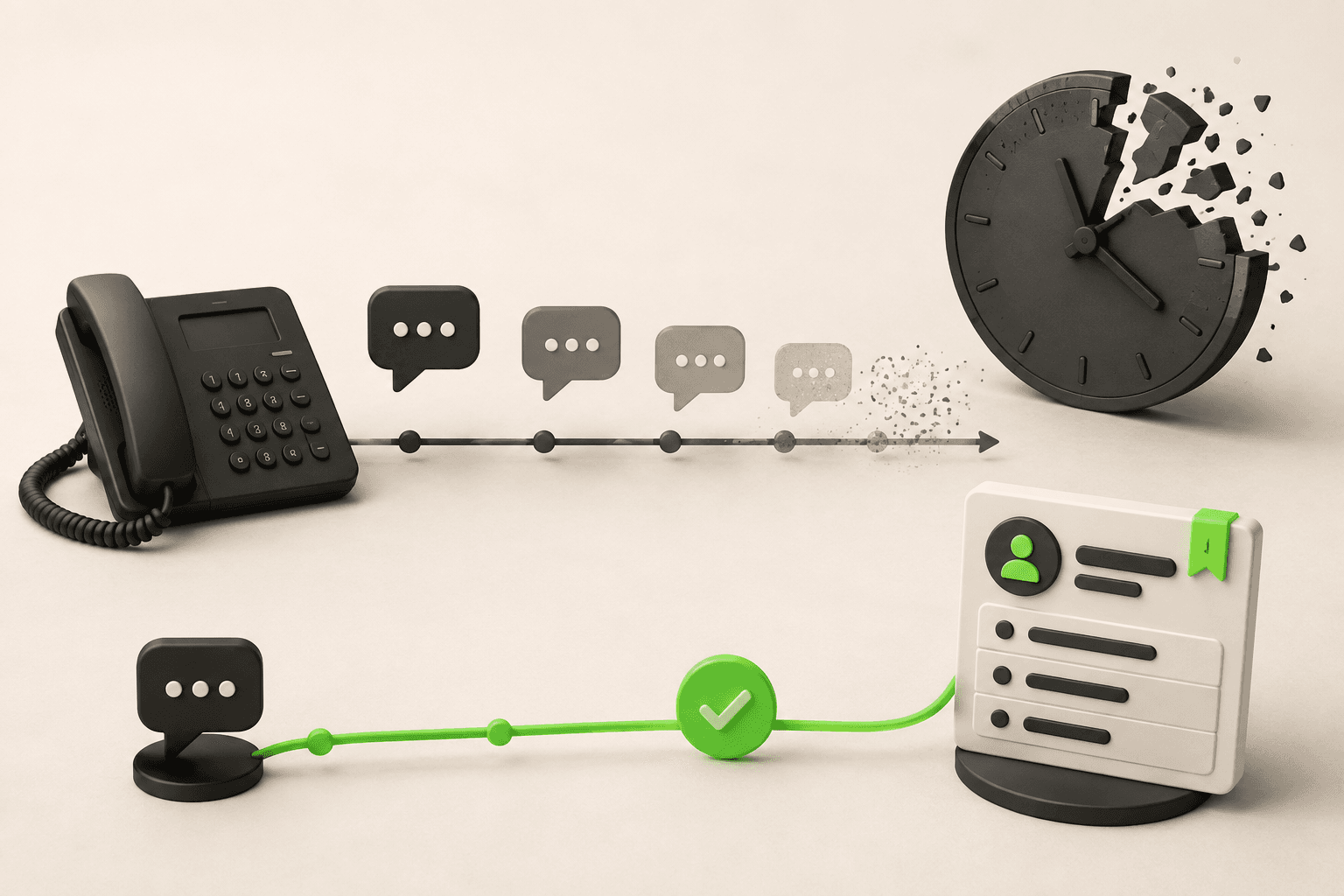
What Missed Calls Really Cost Your Small Business
A worked example of what missed calls cost small businesses in lost jobs, plus where inquiries actually arrive now and what to do about it.

AI-Native Sales Team: Query Your Chatbot via MCP
Dashboards are a pre-LLM artifact. AI-native sales teams query live chatbot data in plain English from Claude, Cursor, and Raycast. How to get there in 90 days.
ChatGPT Enterprise vs Custom AI Agent: 2026 Cost Breakdown
ChatGPT Enterprise starts around $60/user/month. A custom AI agent for the same business often costs less and does more. Here's the honest math.

Insurance Chatbot Statistics 2026: $1.3B in Savings Data
40+ sourced statistics on insurance chatbot adoption, lead response times, and automation ROI. The data behind the industry's $1.3B chatbot savings.