AI Chatbot for Property Managers: Tenant Requests 24/7
How AI chatbots handle routine maintenance, lease, and availability inquiries 24/7 — and lighten the load on property managers.

TL;DR: Property managers spend a disproportionate amount of their day answering the same questions — rent due dates, maintenance request status, lease renewal timelines, pet policies, parking rules. An AI chatbot handles this communication layer 24/7, freeing property management staff to focus on lease negotiations, property inspections, and vendor coordination that requires human judgment.
AI Chatbot for Property Managers: Tenant Requests on Autopilot
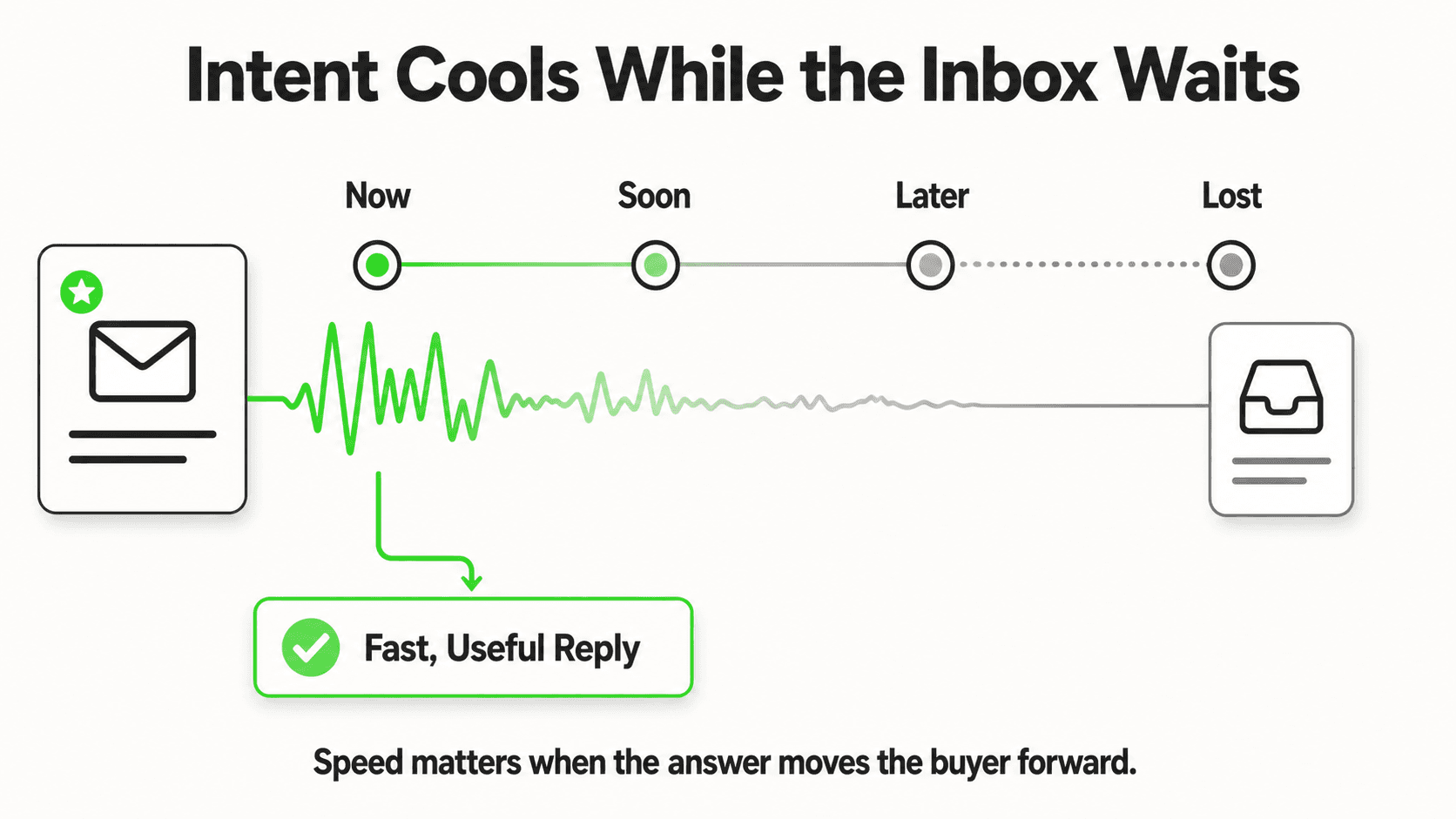
A tenant's faucet starts dripping at 9 PM. They message your property management office. If they get a response in the next hour — even just "Got it, we've logged your request, a maintenance team member will confirm scheduling by tomorrow morning" — they feel heard and trust the process. If they hear nothing until you open at 9 AM and only then after two follow-up messages, they're writing a Google review about your unresponsiveness.
Property management is a communication-intensive business. A property manager handling 100 units fields dozens of messages per day — maintenance requests, lease questions, move-in coordination, noise complaints, parking disputes, amenity bookings. Most of these interactions are routine and predictable. An AI chatbot for property managers handles the routine layer automatically, ensuring every message gets an immediate acknowledgment and many questions get a complete answer — without requiring a staff member to be on call around the clock.
The Communication Volume Problem in Property Management
A typical property manager handling a 50-unit portfolio fields, on average:
- 15–25 maintenance requests per week (logging, status updates, follow-up)
- 10–15 general tenant questions (lease terms, policies, utilities, amenities)
- 5–10 prospective tenant inquiries per week (availability, pricing, tours)
- 3–5 lease renewal discussions during renewal season
- Variable emergency contacts (after hours)
That's 33–55 meaningful communications per week — before accounting for vendor coordination, property inspections, owner reporting, and the actual management work. For a small property management firm with two or three staff members handling multiple properties, this volume is genuinely overwhelming.
Where the Chatbot Adds Value
| Communication Type | Chatbot Handles | Routes to Team |
|---|---|---|
| Maintenance request intake | Log request, confirm receipt, set timeline expectation | Actual scheduling, vendor dispatch |
| General policy questions | Answer from lease/policy documents | Complex or disputed situations |
| Availability and pricing inquiries | Answer current availability, share showing booking link | Tour scheduling decisions |
| Lease renewal questions | Provide renewal timeline, current terms overview | Negotiation, exceptions |
| After-hours emergencies | Acknowledge, provide emergency line if needed | All genuine emergencies |
| Complaints | Acknowledge, route to appropriate staff | Investigation and resolution |
What This Guide Covers
This guide is for property management companies — from independent landlords managing 10–20 units to mid-size firms handling hundreds of units across multiple properties. The principles apply to residential, commercial, and mixed-use properties.
5 Ways a Property Management Chatbot Improves Your Operation
1. Maintenance Request Intake and Acknowledgment
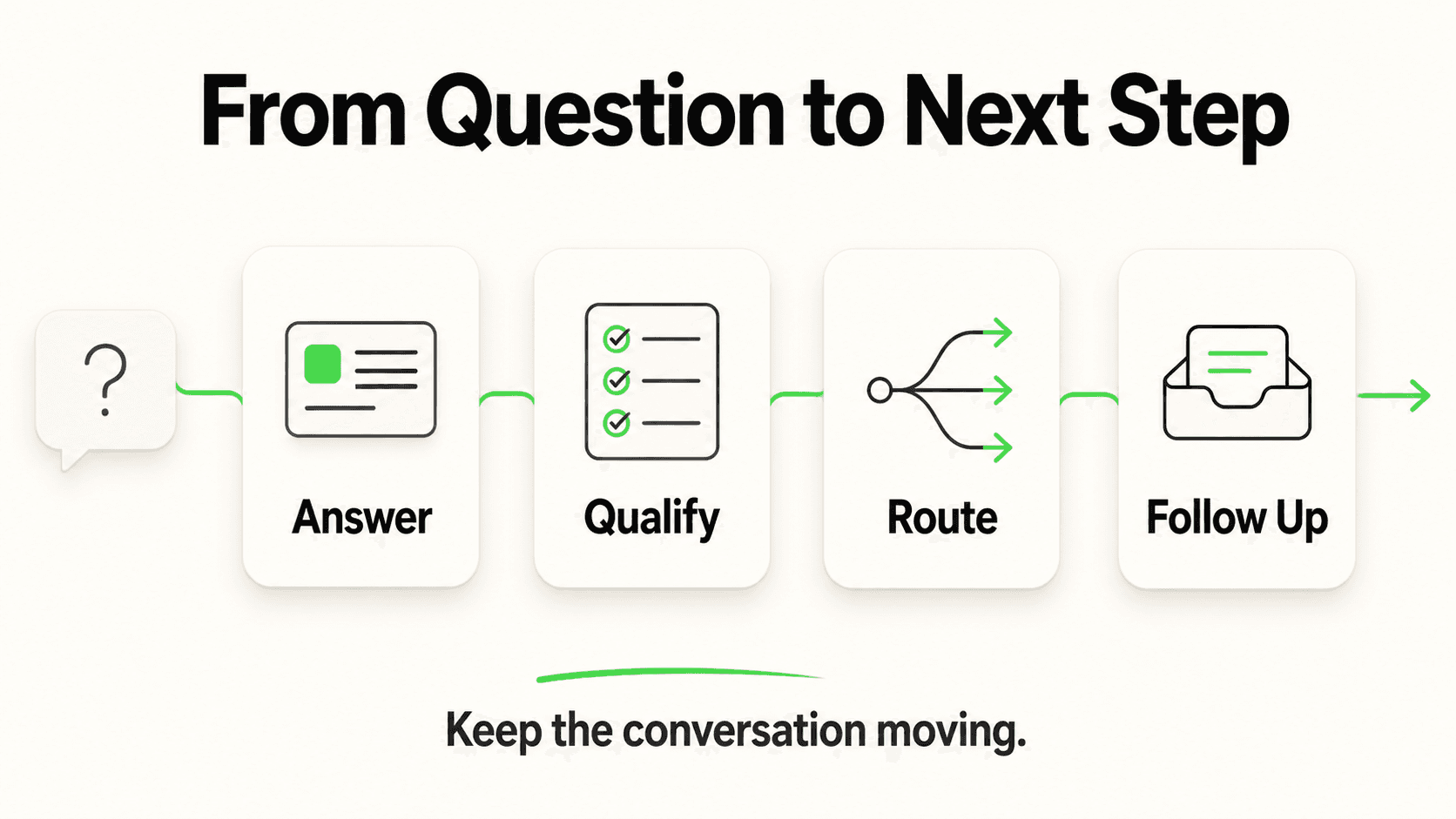
Maintenance request handling has two distinct phases: intake (what's the issue, where, how urgent?) and dispatch (scheduling a vendor, following up). The chatbot handles intake flawlessly — and the acknowledgment that often matters most to tenants.
When a tenant reports a leaking pipe at 8 PM, the chatbot:
- Asks clarifying questions (location, severity — is there active water damage?)
- Collects unit number and contact preference
- Logs the request with timestamp
- Sends an immediate acknowledgment: "Thanks, we've logged your maintenance request for [unit]. For active water leaks, we recommend turning off the water supply under the sink as a precaution. Our team will confirm scheduling by [next business day]."
The tenant feels heard. The request is documented. Your maintenance coordinator has a complete log in the morning — not a string of unread messages to decipher.
For genuine emergencies (flooding, no heat in winter, gas smell — though a gas smell should always prompt calling 911 first), configure the chatbot to surface your emergency maintenance line prominently. The chatbot handles triage; emergencies always reach a human.
2. Policy and Lease Question Handling
"When is rent due?" "What's the late fee?" "Can I have a dog?" "Is there a guest parking limit?" "What's the process for breaking my lease early?" These questions consume enormous staff time and have consistent answers based on your lease agreements and property policies.
Train your chatbot on your lease terms, property policies, pet policy, parking rules, amenity schedules, and renewal process. Most tenant questions will be answered completely. Questions that are unit-specific or require interpretation route to your team with the tenant's question already documented.
Consistent policy answers have an additional benefit: they reduce disputes. When every tenant gets the same accurate answer about the pet deposit policy, there's no "but someone told me" ambiguity.
3. Prospective Tenant Inquiry Handling
Prospective tenants contact property management companies through Google, your website, Zillow listings, and social media. They want to know: is the unit still available, how much is the rent and deposit, what's included, and how do I schedule a showing?
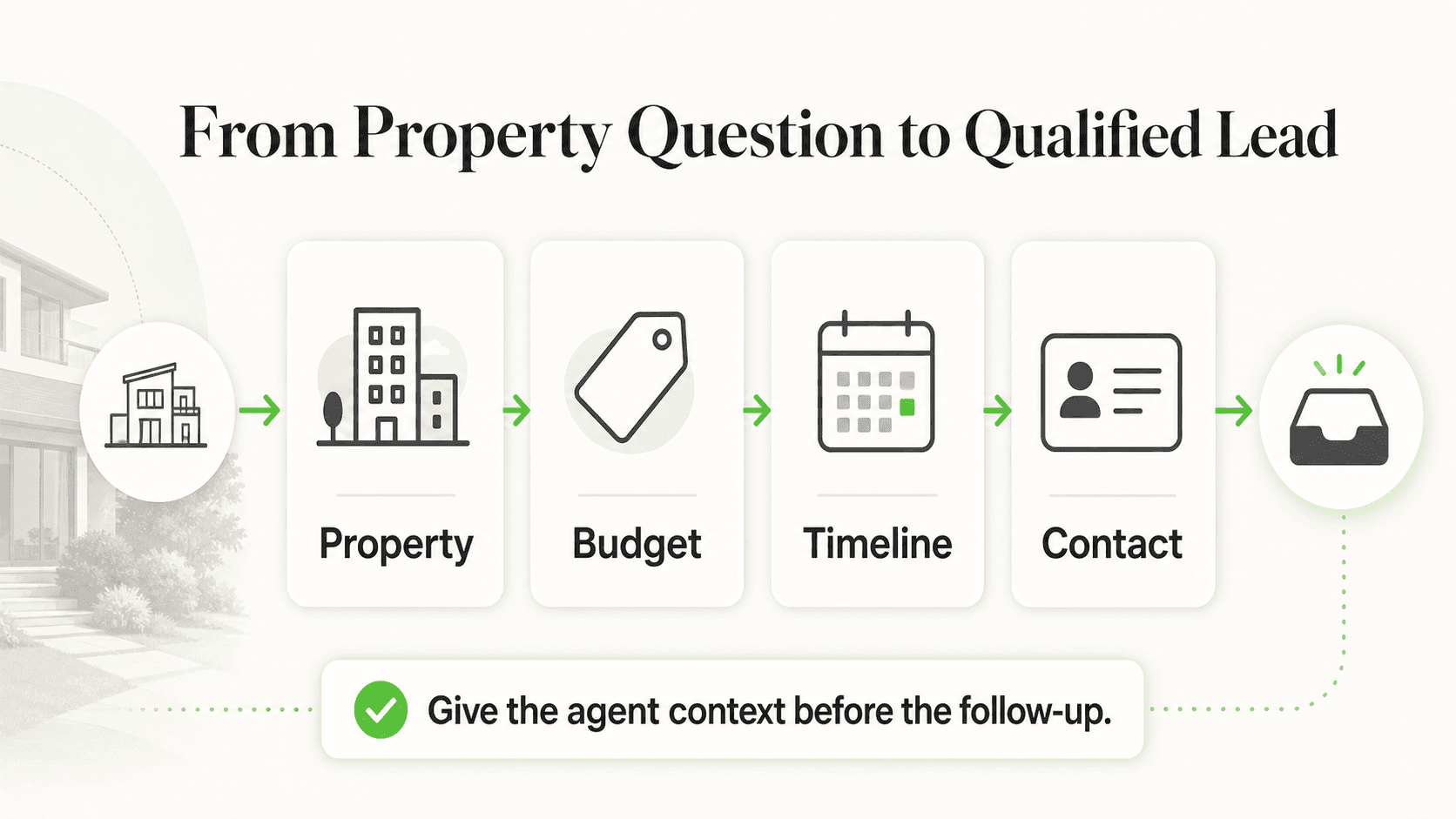
Your chatbot answers availability questions based on your current listings, provides pricing and deposit information, describes included utilities and amenities, and shares your showing booking link so the prospect can self-schedule. The lead is captured and qualified before your leasing agent ever makes contact.
This matters most for after-hours inquiries — a prospective tenant who finds your listing at 7 PM and gets immediate information is far more likely to schedule a showing than one who sends a contact form and hears back the next afternoon.
4. Renewal Season Communication
When renewal season approaches, a significant share of tenant communication is routine: "When does my lease end?" "What will my new rent be?" "What's the process for renewing?" The chatbot can handle these informational questions at scale, freeing your leasing team for the actual renewal negotiations and the tenants who are undecided about staying.
Configure the chatbot to provide renewal timeline information (typically 60–90 days before lease end), direct tenants to their renewal notice (if sent via your tenant portal), and invite tenants to schedule a renewal conversation with your leasing team if they have questions or want to discuss terms.
5. Consistent 24/7 Availability for Tenant Satisfaction
Tenant satisfaction is a measurable business outcome in property management — it drives renewal rates, reduces vacancy, and generates the referrals that fill units when current tenants leave. One of the most consistent drivers of tenant dissatisfaction is feeling ignored or unable to reach management.
A chatbot doesn't eliminate that risk entirely, but it eliminates the most common trigger: not getting a response to a message. When every message gets an immediate acknowledgment and most questions get a complete answer, tenants feel managed, not ignored.
Handle Tenant Requests 24/7 Without Adding Staff
A chatbot that logs maintenance requests, answers policy questions, and captures prospective tenant inquiries — around the clock.
See How It WorksWhat to Include in Your Property Management Knowledge Base
The quality of your chatbot depends on the quality of the information you train it on. For property management, build your knowledge base from:
Property policies (per property or as portfolio defaults):
- Rent due date and grace period
- Late fee amount and when it applies
- Pet policy (allowed, restricted breeds, deposit amount)
- Guest policy (maximum stay, registration required?)
- Parking rules (assigned spaces, guest parking, overnight rules)
- Noise policy and quiet hours
- Smoking policy
- Maintenance request process and expected response times
Lease and renewal information:
- Standard lease term
- Renewal notice requirements (from tenant, from you)
- Typical renewal timeline
- Early termination policy overview
- Security deposit return process
Building amenities and utilities:
- What's included (water, trash, internet?)
- Amenity schedules (gym hours, pool hours, laundry hours)
- Package and mail handling process
- Move-in / move-out procedures
For multi-property portfolios, the Hyperleap AI Multi-variant (locations, courses, etc) add-on (Pro/Max plans) makes sure answers come from the property the tenant asked about, and asks which property when they don't say. Useful for firms managing properties with substantially different rules.
Frequently Asked Questions
Can the chatbot handle emergency maintenance calls?
The chatbot handles intake and acknowledgment. For genuine emergencies (flooding, no heat in winter, electrical issues, gas concerns), configure it to prominently surface your emergency maintenance line rather than attempting to handle the situation through messaging. The chatbot's role in emergencies is to route quickly and clearly, not to resolve.
How does the chatbot handle a tenant who is angry or escalating?
Train the chatbot to recognize frustration signals and respond with empathy while escalating appropriately: "I can see this has been frustrating — I want to make sure our property manager hears about this directly. Can I have them reach out to you personally? What's the best time?" De-escalation through human routing is almost always the right move for charged tenant interactions.
Can the chatbot answer questions about specific lease terms for individual tenants?
This requires integration with your lease management system or property management software, which is a custom development project. Out of the box, the chatbot answers policy questions based on your general terms — the same terms that apply to all or most tenants. Unit-specific questions (like "what exactly does my lease say about subletting?") are routed to your team.
Does this work for commercial properties as well as residential?
Yes, with an appropriately configured knowledge base. Commercial tenant communication has different patterns (longer lease terms, different maintenance responsibility allocation, more negotiation-intensive renewals) but the same high-volume informational inquiry layer. The chatbot handles the informational layer; your leasing team handles negotiations.
What channels do tenants actually use to contact property managers?
Website inquiry forms and email are common, but WhatsApp and Instagram DM are increasingly used, especially among younger tenants. Deploying the chatbot on your website and WhatsApp gives you coverage on the highest-volume channels. Facebook Messenger is worth adding if you advertise listings there.
How much does it cost?
Plans start at $40/month (Plus plan) with a 7-day free trial. Credit card required. For property management companies, the ROI calculation is straightforward: if the chatbot saves your leasing coordinator 2 hours per day in repetitive communication, the labor cost savings far exceed the subscription cost. See pricing details.
Tenant Communication Is a Competitive Advantage
In property management, units fill and tenants stay at companies that make tenants feel well-managed. Consistent, prompt communication is a primary driver of that feeling — and it's an area where many property management companies are operationally weak, not because they don't care, but because the volume is hard to manage at scale.
An AI chatbot handles the volume layer. Your team handles the relationship layer. Tenants get immediate responses to routine questions. Your leasing coordinators spend their time on the work that requires judgment, negotiation, and human connection.
The result is a property management operation that scales — more units, more tenants, more inquiries — without proportional increases in administrative staff. See how AI in real estate is changing communication expectations for both tenants and buyers.
Can the chatbot integrate with my MLS or Zillow account?
Hyperleap does not have a native MLS or Zillow API integration today. The chatbot captures buyer / seller intent, qualifies leads, and shares your listing pages or booking link — agents follow up using their existing MLS tools.
How does the chatbot qualify real estate leads?
It asks for the essentials in a natural conversation — budget range, locations of interest, timeline, financing status — and hands a structured lead summary to your team via REST API or webhook so reps can prioritize follow-up.
How long does it take to set up an AI chatbot with Hyperleap?
Most SMBs go live in 3–5 days for self-serve setup. With Managed Setup ($299 Free, available on every plan), Hyperleap builds the bot for you on your content and channels. A 7-day free trial is included on every plan.
Further Reading
Authoritative external sources used and recommended for further research on this topic:
For the broader buyer's-guide view — pricing, evaluation checklist, and implementation steps — see property management chatbot: a buyer's guide.
Put Tenant Requests on Autopilot
Start a 7-day trial and deploy a property management chatbot that handles maintenance intake, policy questions, and prospective tenant inquiries 24/7.
Start Free TrialPut this into practice
Related Articles
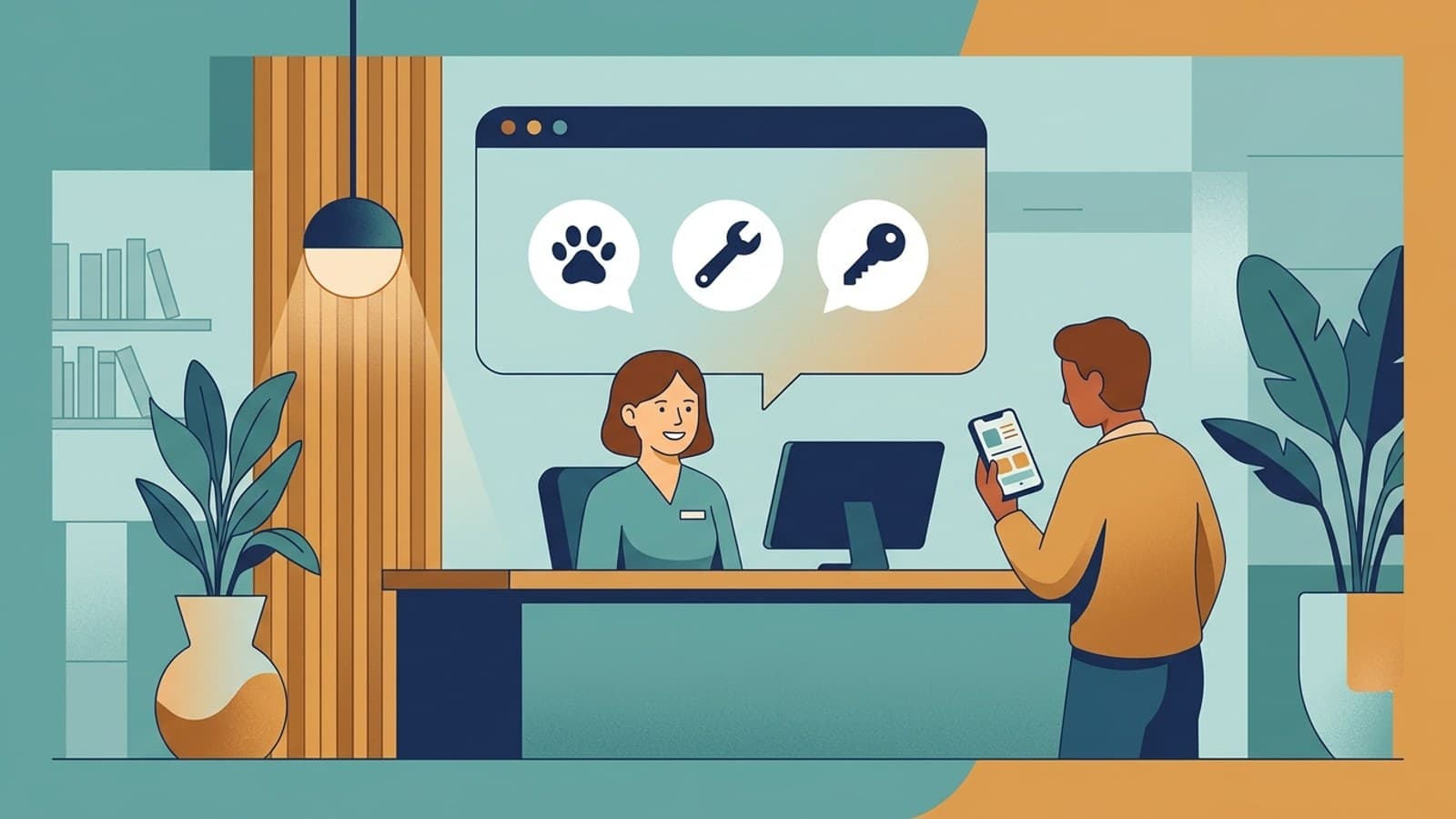
Chatbots for Property Management: Pets, Maintenance, Tenants
AI chatbots answer pet policy questions from your lease documents and capture maintenance requests as routed tickets — 24/7, with no PMS integration required.

Automate Property Inquiry Follow-ups Personally
A step-by-step guide to automating property inquiry responses and follow-ups while keeping the personal connection that closes deals.
How to Respond to a Real Estate Lead
Respond within minutes, answer their actual question, qualify naturally, and share the showing link. Example replies and a first-hour playbook inside.

AI Chatbot for Real Estate: Capture Leads 24/7
An AI chatbot for real estate qualifies buyers and sellers around the clock, capturing leads before agents ever pick up the phone.