Insurance AI Agent: Handling FAQs and Quote Requests Safely
How insurance agencies use AI agents to answer policy questions, capture quote requests, and route complex conversations to licensed producers.

TL;DR: An insurance AI agent's safe job is to answer general policy questions from your agency's own content, capture quote requests, route claims to a licensed producer, and provide fast first responses at every hour. It should not bind coverage, quote premiums without underwriting, or give advice that requires licensure. The right configuration makes an AI agent a meaningful pipeline and service tool for an agency — the wrong configuration creates compliance risk no agency should accept.
Insurance AI Agent: The Safe Configuration
Insurance is a category where the wrong chatbot deployment creates real problems — legal, regulatory, and reputational. It's also a category where the right chatbot deployment is unusually valuable, because the economics of inbound insurance inquiries are unforgiving: prospects shop aggressively, convert slowly, and almost always pick whoever answers first with accurate, professional information.
This guide covers the configuration that works: scoped, honest, grounded in your agency's content, and clearly separated from the licensed conversations a producer needs to handle.
Who This Guide Is For
Independent insurance agency owners, producers, and agency operations leaders evaluating AI chatbots for inbound lead handling and FAQ automation.
What an Insurance AI Agent Should Do
- Answer general policy questions from your agency's own marketing content
- Explain the lines of business you offer (auto, home, life, commercial, etc.)
- Describe your quote request process and collect quote-request details
- Capture contact information for producer follow-up
- Route claims and policy-change requests to your licensed team
- Provide fast, 24/7 first-response across website, WhatsApp, and social channels
What an Insurance AI Agent Should Never Do
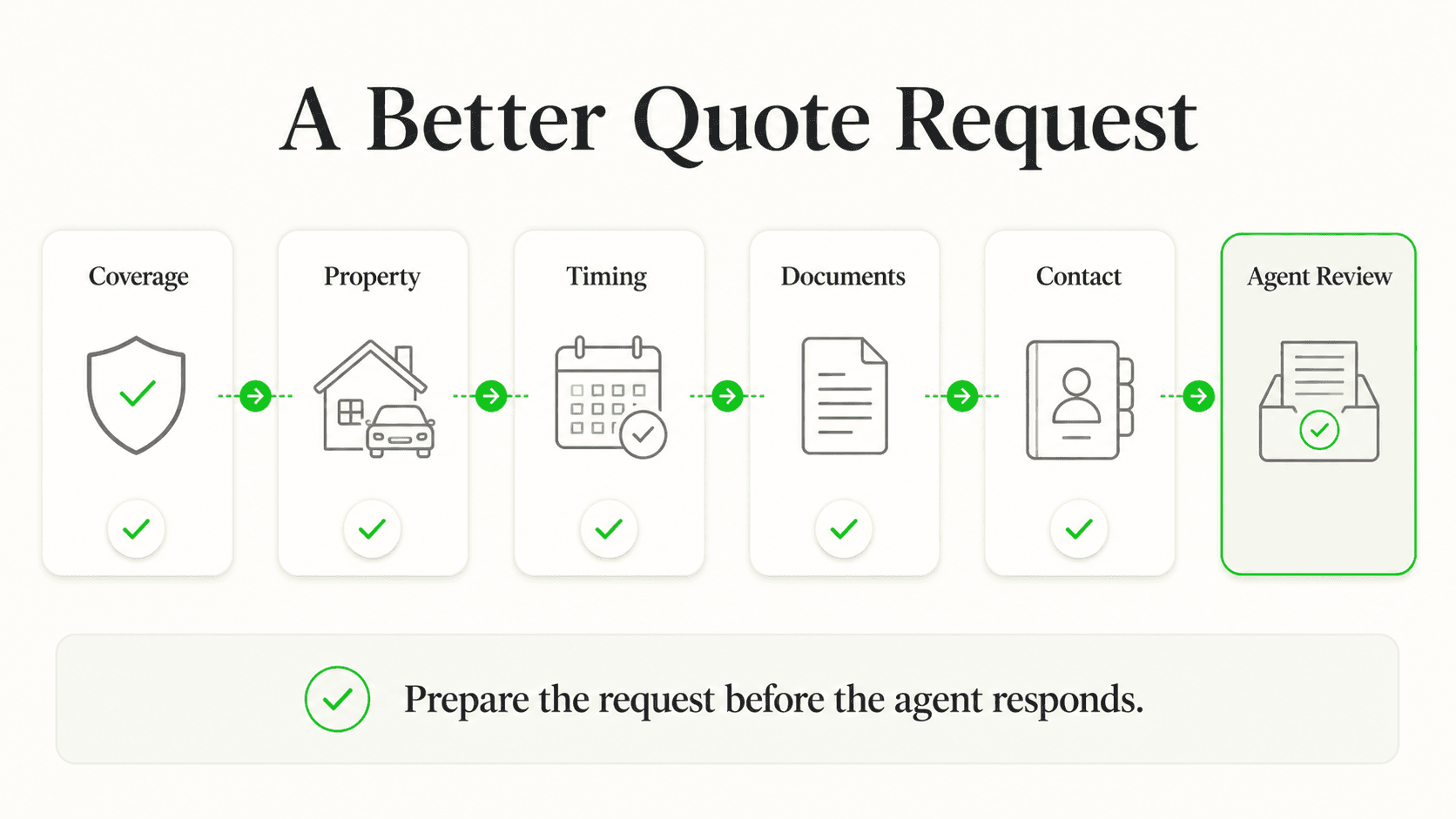
- Quote specific premiums or bind coverage
- Give advice about coverage selection beyond referring to your written materials
- Discuss another carrier's products with any specificity
- Represent itself as a licensed producer
- Handle claims beyond capturing the request and routing it
- Provide compliance-sensitive answers without human review
The line between "information" and "advice" is strict in insurance. A good platform makes it easy to stay on the information side.
Why Fast Response Matters in Insurance
Insurance prospects shop. They fill out multiple quote forms, wait for calls, and pick whichever agent feels most responsive and competent. The agency that responds first with a professional, accurate, helpful first interaction wins a disproportionate share of conversions. This is consistent across personal lines, commercial lines, and specialty markets.
An AI agent on your website and WhatsApp means every inbound inquiry gets an immediate, accurate first response — at any hour, from any channel — while the producer call is being scheduled.
7 Things an Insurance AI Agent Must Handle Well
1. Lines of Business Clarification
What this looks like in practice: The first conversational turn establishes what line the prospect is asking about — auto, home, life, commercial — and routes the rest of the qualification accordingly.
Real-world impact: Different lines have different information needs. Getting the classification right at the top keeps the conversation efficient.
2. General Policy Questions From Your Content
What this looks like in practice: "What's the difference between term and whole life?" — answered from your agency's own educational content, not from general web knowledge.
Real-world impact: Grounded answers from your own material keep the tone professional and keep you off the hook for the bot saying something a general LLM might get wrong.
3. Quote Request Capture
What this looks like in practice: For each line, the bot collects the specific information your producers need to start a quote — not to generate a quote itself, just to prepare the producer for the follow-up call.
Real-world impact: Producers start every callback with the information already collected. Less time on discovery, more time on selling.
4. Explicit "Not a Licensed Agent" Disclosure
What this looks like in practice: The bot is clear that it's an automated assistant and can't bind coverage or provide licensed advice. It routes anything that would require a license to your team.
Real-world impact: Honest disclosure protects both the prospect and the agency. Never let a bot pretend to be something it isn't.
5. Claim Routing
What this looks like in practice: When a prospect or customer mentions a claim, the bot acknowledges the situation, provides your claims process and emergency contact information, and flags the conversation to your team immediately.
Real-world impact: Claims are time-sensitive and emotionally charged. Fast, professional routing — without any attempt at claim assessment — is exactly the right behavior.
6. After-Hours Coverage
What this looks like in practice: Inquiries that arrive at 10pm get the same professional first interaction as ones at 10am, and the producer sees a prepared lead the next business morning.
Real-world impact: The biggest single source of pipeline lift. Every after-hours inquiry you used to miss is now captured.
7. Compliance-Aware Content
What this looks like in practice: Your knowledge base contains content you've approved for customer-facing use. The bot answers from that content and refuses to improvise.
Real-world impact: Treating the KB as the sanctioned-content boundary keeps compliance simple: if it's not in the KB, the bot doesn't say it.
Real Results: What Insurance Agencies Typically See
Pipeline Lift From After-Hours Capture
Insurance inquiries skew heavily toward evenings and weekends. Consistent SMB patterns show 30–40% of inbound inquiries arriving outside business hours. Before automation, a meaningful share of those never convert. After, they become prepared quote requests in the producer's morning inbox.
Producer Time Saved
Producers stop spending the first call on basic information gathering — lines of business, contact details, general context. Each callback starts with the conversation already partially done. Over a month, this is a meaningful time recovery per producer.
Professional First Impression
A well-configured agency AI agent is often the most professional first interaction a prospect has with any insurance agency during their shopping journey. That matters for conversion far more than any feature list.
Deploy an agency chatbot that stays inside the licensed lines
Hyperleap captures inbound insurance inquiries across web, WhatsApp, and Messenger — grounded in your content, routed cleanly to your producers.
Start a Free TrialImplementation Checklist for Insurance Agencies
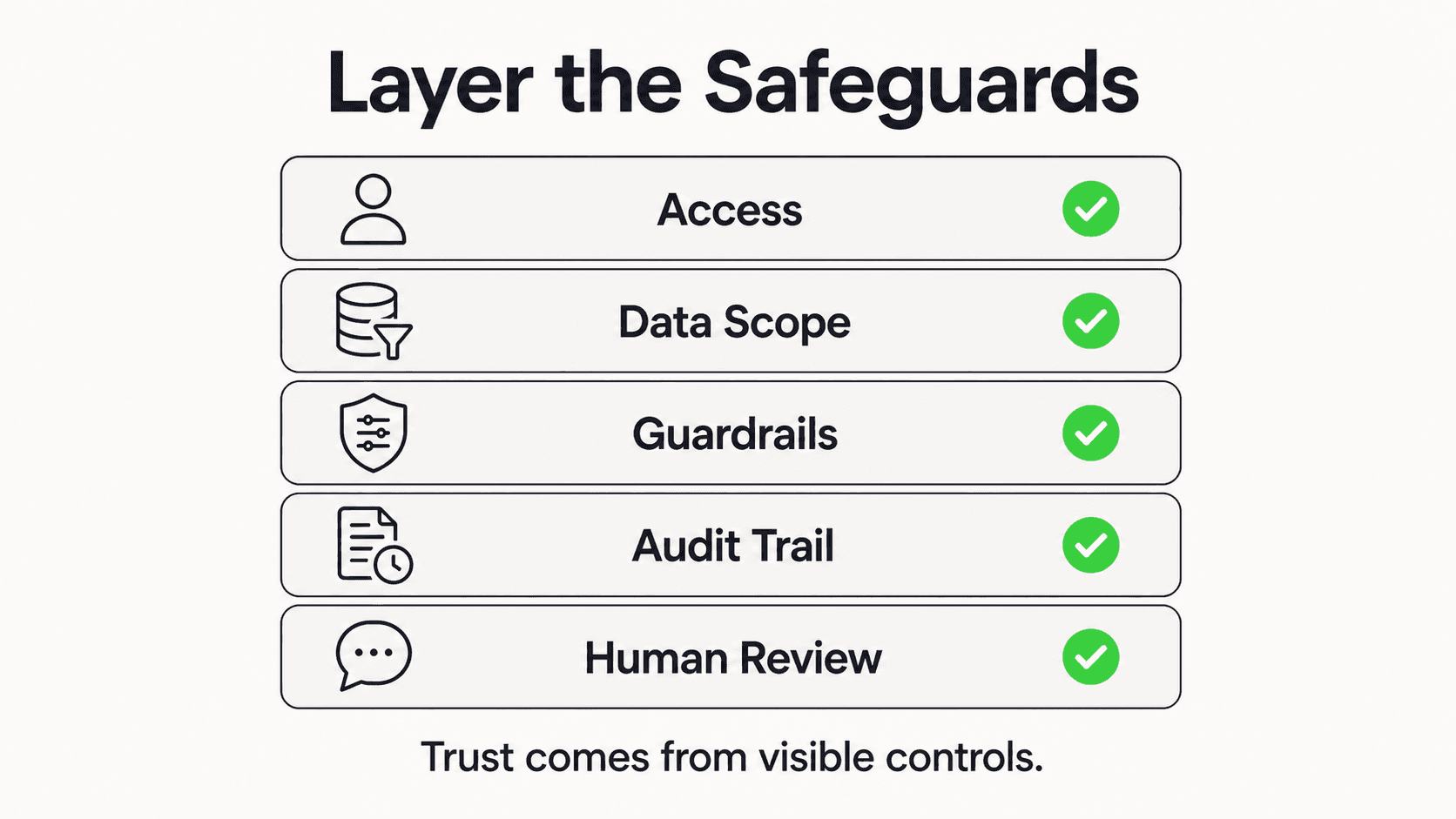
- Define the scoped conversation boundary. What is the bot allowed to discuss? Everything else routes to a producer.
- Build a compliance-reviewed knowledge base. Lines of business, process descriptions, FAQs — all content you're comfortable having a customer read as-is.
- Configure quote capture per line of business. Different fields for auto, home, life, commercial.
- Set up claim routing. Clear escalation language, emergency contact, immediate flag to your team.
- Write explicit "not a licensed agent" disclosure language. Used whenever a prospect asks.
- Deploy to website first. Add WhatsApp and Messenger once the content is validated.
- Review weekly. Patch the KB and escalation rules as gaps appear.
Frequently Asked Questions
Can the bot quote insurance premiums?
No, and it shouldn't try. Premium quoting requires underwriting, licensed judgment, and carrier-specific data that an AI chatbot has no business generating on its own. The bot's job is to collect quote request details for the producer — not to quote.
Is this compliant with insurance regulations?
Compliance depends on the specific jurisdiction, the content in the KB, and how the platform handles the scoped conversation boundary. The platform should support strict grounding and clean escalation; the agency is responsible for making sure the knowledge base and escalation rules align with local regulations.
Can the bot discuss specific carriers' products?
Only to the extent your agency has approved marketing content about those products. The bot should never improvise about products it doesn't have sanctioned content for.
Does Hyperleap integrate with agency management systems (AMS) like Applied Epic or EZLynx?
Not natively. Hyperleap captures leads via REST API and webhooks. Your team pushes captured leads into your AMS through that connectivity. If native AMS integration is a hard requirement for you, evaluate that on each platform you consider.
What happens when a customer mentions a claim?
The bot acknowledges the situation, provides your claims process and emergency contact information, and flags the conversation to your team immediately. It does not attempt to assess the claim or estimate coverage.
What's the right platform tier for a small agency?
Hyperleap Plus at $40/month is typically right for small agencies. It covers 3,000 AI responses, 4 channels, and a 7-day free trial. Break-even is usually a single captured after-hours quote request.
Honest Scope Is the Whole Game
Insurance is a category where "what the bot doesn't do" matters almost as much as what it does. Agencies that draw the line clearly — information, routing, first-response; no advice, no quoting, no claim handling — get genuine operational leverage without compliance risk. Agencies that don't draw the line end up with either a useless bot or a dangerous one.
Hyperleap's insurance agent deployments are built around the scoped version. Fast, grounded, compliant with the limits an agency actually operates under, and multi-channel so every inbound inquiry lands somewhere professional at every hour. Compare it against our pricing tiers and the AI chatbot vs hiring a receptionist cost breakdown.
Can the chatbot generate insurance quotes?
No — and presenting one would create compliance risk. Hyperleap captures coverage interest and routes the prospect to a licensed agent. It can answer general policy and process questions from your knowledge base but does not quote, bind, or advise.
How does the chatbot handle claims?
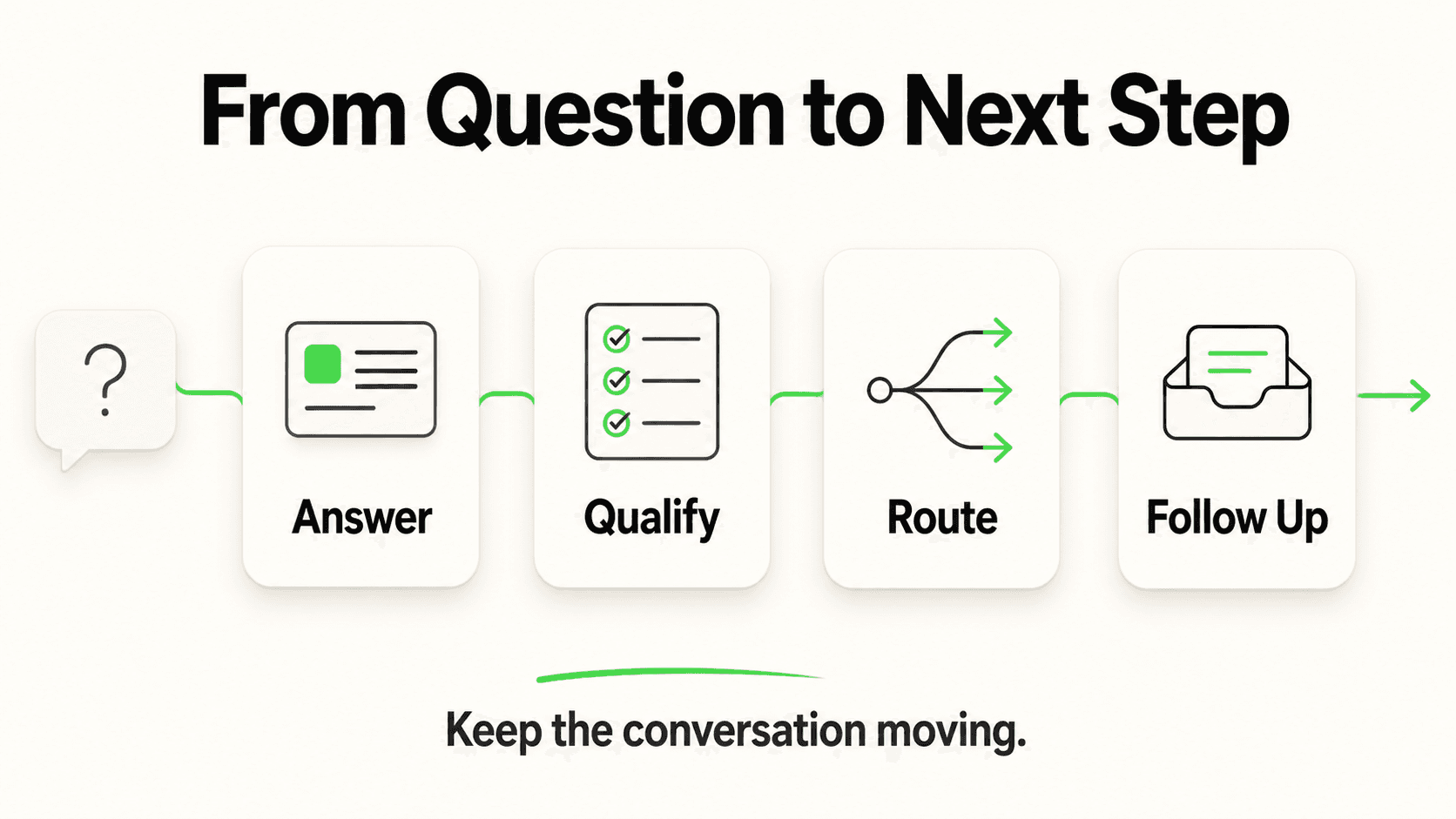
It does not handle claims directly. The bot acknowledges a claim inquiry, captures the basic incident details, and routes to your claims team or claims portal. The actual claim handling stays in your existing claims platform.
How long does it take to set up an AI chatbot with Hyperleap?
Most SMBs go live in 3–5 days for self-serve setup. With Managed Setup ($299 Free, available on every plan), Hyperleap builds the bot for you on your content and channels. A 7-day free trial is included on every plan.
Further Reading
Authoritative external sources used and recommended for further research on this topic:
Capture inbound insurance inquiries around the clock
Scoped, grounded, compliant with how your agency actually operates. 7-day free trial.
Try Hyperleap for InsuranceIndustry Solutions
See how AI chatbots work for these industries:
Related Articles

AI Front Desk for Insurance Agencies: Quoting & Compliance
How an AI front desk handles insurance quoting, lead qualification, and multiple lines of business — and exactly where a licensed agent takes over.

5 Questions Insurance Agencies Must Ask Before a Chatbot
Insurance isn't like other industries. Here are the 5 questions that separate the right chatbot from an expensive mistake for your agency.
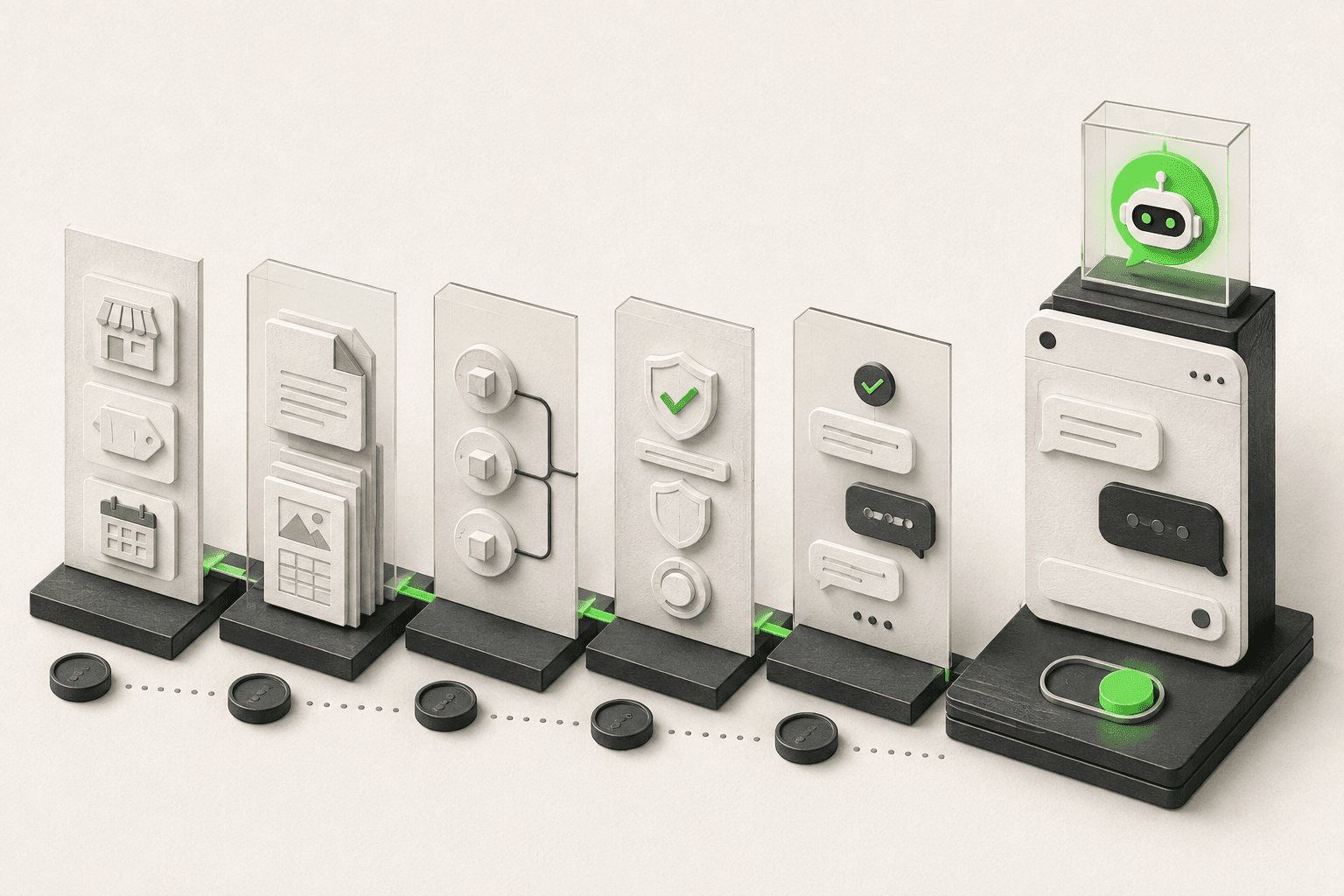
How to Build an AI Chatbot for Your Business
How to build an AI chatbot for your business: decide the jobs it should do, gather knowledge, choose channels, test, and go live in under 5 minutes.
How to Add an AI Chatbot to an HTML Website
Add an AI chatbot to a plain HTML site with one script tag before </body>. Step-by-step setup, testing, styling, and knowledge base tips.