AI Chatbot for Therapy Practices: Respectful Intake
How AI chatbots handle therapy intake logistics — phone tag, forms, scheduling — while clinical work stays with your therapists.

TL;DR: Someone searching for a therapist is often making one of the harder decisions of their life. If they reach out to your practice and hear nothing for 48 hours, many will give up — not because they don't need help, but because the friction reinforced their hesitation. An AI chatbot for therapy practices handles the logistics layer (hours, insurance questions, availability, intake paperwork routing) immediately and warmly, while all clinical functions remain firmly with your therapists.
AI Chatbot for Therapy Practices: Intake That Respects Boundaries
Someone reaching out to a therapy practice is often navigating a complicated mix of vulnerability and resolve. They've decided to take a step. They found your practice. They sent a message or filled out a contact form. And then — often — they wait. Sometimes for a day, sometimes for two, sometimes long enough that the moment of motivation passes and they tell themselves they'll try again later.
They often don't try again.
This is the intake bottleneck that costs therapy practices clients who genuinely needed their help. It's not a failure of care — it's a logistics failure. The intake coordination process (checking availability, explaining your services, collecting insurance information, getting paperwork started) is time-consuming, happens mostly in working hours, and competes with the clinical work therapists are actually trained to do.
An AI chatbot for therapy practices handles the logistics layer automatically and immediately, while keeping all clinical functions exactly where they belong: with your therapists. This guide explains what that looks like in practice, where the boundary sits, and how to implement it in a way that respects the sensitivity of the work.
The Clinical Boundary Is Non-Negotiable
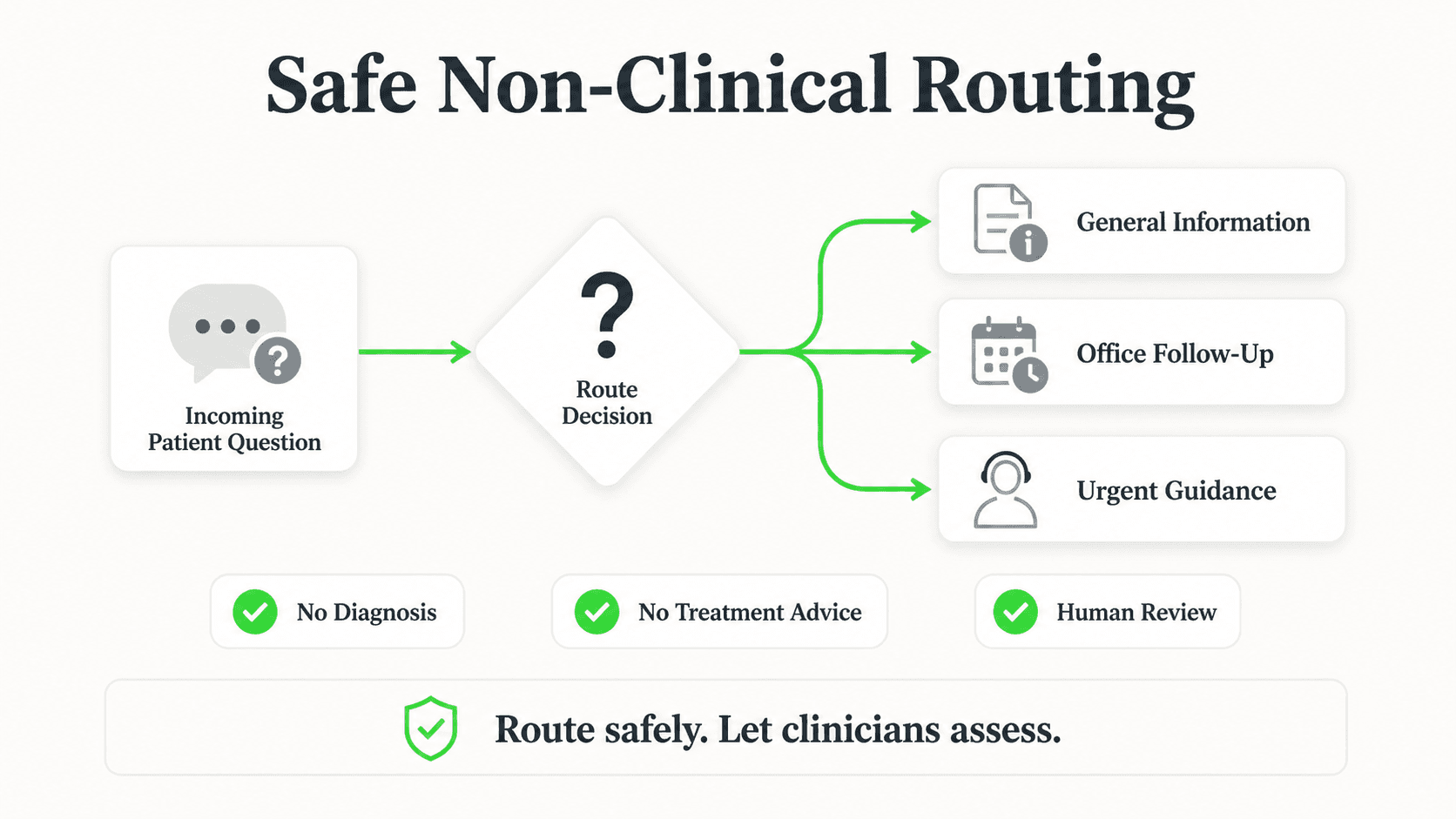
An AI chatbot for a therapy practice handles logistics only — availability, scheduling, insurance questions, intake form routing, and general information about your services. It does not perform clinical assessment, provide mental health advice, screen for diagnoses, or assess risk. If a client expresses a crisis, active suicidal ideation, or immediate safety concern, the chatbot must route to your crisis resources and emergency contacts immediately. This is a hard boundary that must be configured before launch.
What the Chatbot Handles vs. What Stays With Your Therapists
The distinction is simple: logistics versus clinical work. Here's how it maps in practice.
| Function | Chatbot | Your Therapists |
|---|---|---|
| Availability and scheduling | Yes — shares booking link | — |
| Service and specialty descriptions | Yes — from your practice info | — |
| Insurance and payment questions | General information only | Specific eligibility verification |
| Intake paperwork routing | Routes to your forms | Reviews and processes |
| Crisis or safety concerns | Routes to crisis resources immediately | Clinical response |
| Therapy modality questions | General descriptions | Clinical match recommendations |
| Assessment or diagnosis questions | Never | Clinical work only |
| Session structure questions | General overview | Specific clinical decisions |
| Medication questions | Not handled — routes to appropriate provider | Not in scope for therapy |
The chatbot's role is to reduce the friction between a potential client's decision to seek help and their first session with your therapist. It never makes clinical judgments.
Why Therapy Practices Lose Potential Clients in Intake
The 48-hour window is critical — and routinely missed. Someone who has worked up the motivation to contact a therapist is often doing so at a high point of resolve. That resolve can fade. A 48-hour wait for a response is long enough that the hesitation comes back in full force. Practices that respond within an hour — even just to acknowledge the inquiry and set expectations — see significantly higher intake completion rates.
Phone tag is a particular problem in this context. Many potential therapy clients are hesitant to call. They may be reaching out during work hours when they can't have a private conversation. They may have anxiety that makes phone calls feel daunting. A text or web chat option that they can engage with privately, on their own time, at their own pace, reduces the friction dramatically for exactly the population most likely to benefit from therapy.
Insurance questions are complex and time-consuming. "Do you take my insurance?" requires knowing the specific plan, checking current paneling, understanding out-of-network benefits, and often involves a conversation about cost. A chatbot can provide general information about which insurers you're paneled with, direct the client to verify their specific benefits, and route them to your billing coordinator for detailed questions. This handles 80% of the inquiry without consuming your administrative staff's time.
Intake paperwork delays first sessions. Many practices require intake forms before a first session. If the process for getting those forms to the client is manual and delayed, the first session gets pushed back further — and dropout increases with each delay.
4 Chatbot Use Cases That Work for Therapy Practices
1. After-Hours Inquiry Acknowledgment and Scheduling
A potential client reaches out to your practice website at 9 PM. Your chatbot responds immediately: "Thank you for reaching out to [Practice Name]. We're glad you're here. Our therapists specialize in [your specialties] and we're currently [accepting/not accepting] new clients. I can share some information about our services and help you get the process started — would that be helpful?"
This immediate, warm acknowledgment does two things: it confirms the message was received, reducing anxiety about having reached out, and it opens the conversation at a moment when motivation is high.
If the client is ready to schedule, the chatbot shares your booking link for an initial consultation. If they have questions first, the chatbot answers from your practice information.
2. Insurance and Payment Information
Configure the chatbot with your current insurance panels and a clear explanation of your self-pay rates. Common questions it handles:
- "Do you accept [specific insurer]?" — Yes/no based on your current paneling
- "What does therapy cost?" — Your session rate, sliding scale availability if applicable
- "Can I use out-of-network benefits?" — "Many plans include out-of-network coverage; I'd recommend calling the member services number on your insurance card to confirm your specific benefits. Our billing team can also help you estimate your cost — would you like to provide your contact information?"
- "Do you offer sliding scale?" — Yes/no based on your practice policy
The chatbot provides accurate general information and routes specific eligibility verification to your billing coordinator. It never estimates specific client costs — that requires actual insurance verification.
3. Service and Specialty Information
"Do you work with anxiety?" "Do you offer couples therapy?" "I'm dealing with trauma — do you have therapists who specialize in that?" These questions are important for potential clients making a fit decision, and they're answerable from your practice information without any clinical judgment.
Train the chatbot on your therapists' specialties, approaches (CBT, EMDR, DBT, psychodynamic — with brief plain-language descriptions), and populations served (adults, adolescents, couples, families). This information helps clients self-assess fit before investing in an initial consultation — which benefits them and reduces the rate of first-session mismatches.
4. Crisis and Safety Routing
This is the most critical configuration decision for therapy practice chatbots. The chatbot must be trained to recognize expressions of crisis — suicidal ideation, self-harm, immediate danger — and respond with resources immediately, without attempting to handle the situation through messaging.
A suggested response for crisis signals: "What you're sharing sounds serious, and I want to make sure you have immediate support. Please reach out to the 988 Suicide and Crisis Lifeline by calling or texting 988 — they're available 24/7. If you're in immediate danger, please call 911 or go to your nearest emergency room. I'll also alert our team to follow up with you directly."
This must be configured. It cannot be an afterthought. And it must always prioritize routing to human crisis support over any other function.
Reduce Intake Friction Without Crossing Clinical Lines
A chatbot that handles scheduling, insurance questions, and after-hours acknowledgment — while keeping all clinical work with your therapists.
Try for FreeConfidentiality Considerations
Therapy practices are subject to HIPAA, and any technology touching client communication must be evaluated in that context. Here's the relevant framing for chatbot deployment:
Pre-intake inquiries are not typically PHI. A potential client asking "do you accept Blue Cross?" before they've established a therapeutic relationship is not disclosing protected health information. The chatbot handles this layer appropriately.
Once a therapeutic relationship begins, different rules apply. Session scheduling, clinical notes, and treatment-related communication for existing clients should occur through your HIPAA-compliant practice management system — not through a general-purpose chatbot.
Your chatbot deployment should be reviewed by your HIPAA compliance framework. This guide does not constitute legal or compliance advice. Review your deployment with your practice administrator or compliance consultant.
The practical recommendation: use the chatbot for pre-intake inquiry handling and general information. Once a client is established, use your EHR or practice management system for communication.
Building Your Therapy Practice Knowledge Base
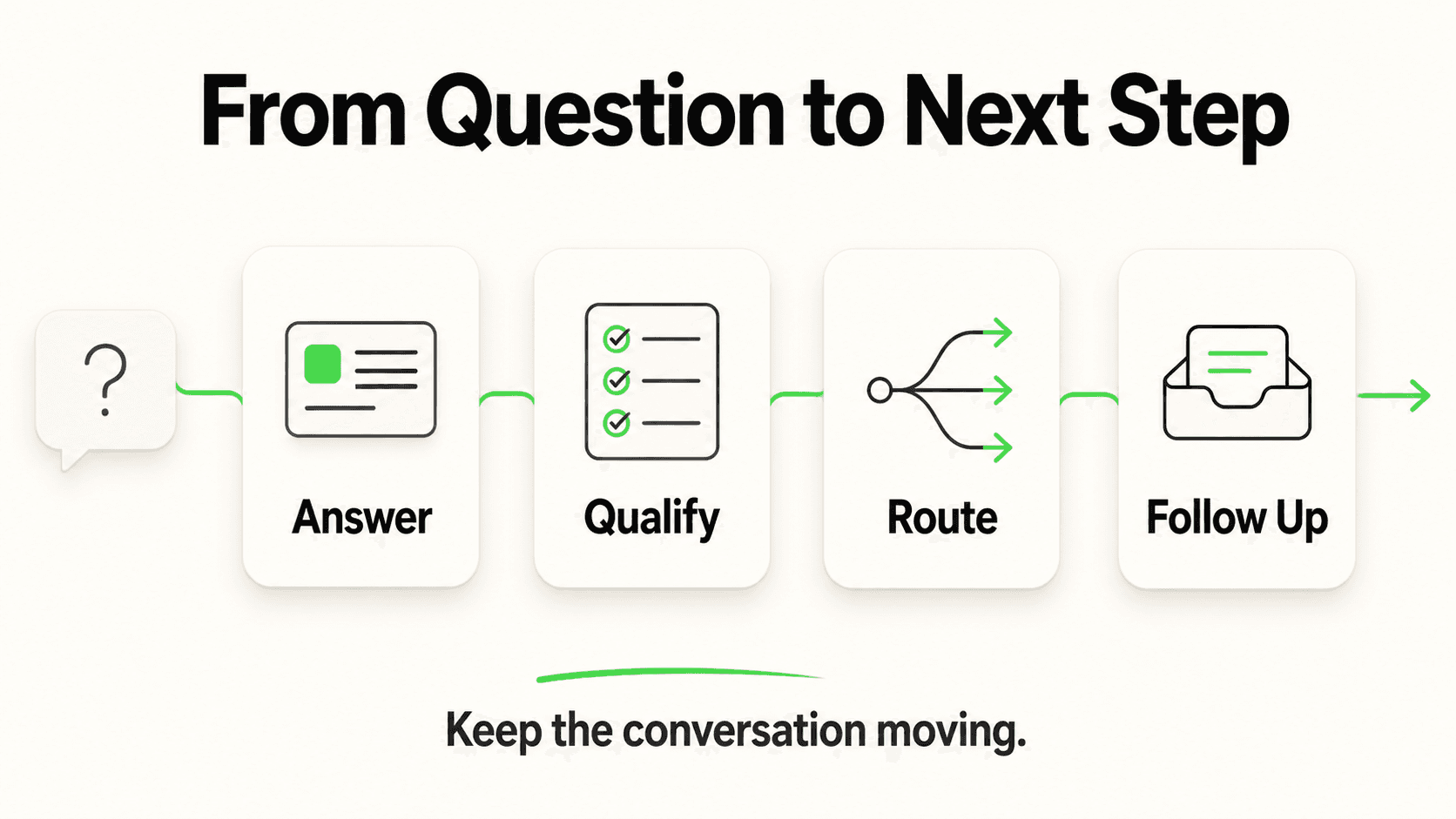
Train your chatbot on:
- Your practice name, address, parking, and how to find your office
- Your therapists' names, specialties, and a brief description of their approach (non-clinical)
- Services offered (individual, couples, family, group — if applicable)
- Insurance panels and self-pay rates
- Sliding scale availability and how to ask about it
- How the initial consultation works (length, cost, what to expect)
- Your intake form process (how it's sent, when to complete it)
- Cancellation and rescheduling policy
- Crisis resources (this should be accessible from any point in the chatbot conversation)
Do not train the chatbot on clinical protocols, assessment tools, diagnostic criteria, or anything that would create the impression it is capable of clinical evaluation.
Frequently Asked Questions
Is an AI chatbot appropriate for a therapy practice given the sensitivity of the work?
Yes, when configured correctly and limited to logistics functions. The chatbot handles the administrative and informational layer — scheduling, insurance, general service information — while all clinical work remains with your therapists. Many potential clients actually prefer a lower-friction, non-phone contact method for initial outreach. The key is ensuring the boundary between logistics and clinical functions is clearly maintained in the chatbot's configuration.
What happens if a client discloses something clinical through the chatbot?
The chatbot should be configured to recognize clinical disclosures and respond appropriately: acknowledge with warmth, provide relevant crisis resources if the disclosure involves safety concerns, and route to your team for follow-up. "Thank you for sharing that. I want to make sure one of our therapists connects with you directly — can I get the best way to reach you?" This is the appropriate response. The chatbot never attempts to provide clinical support.
Does the chatbot need to be HIPAA-compliant?
Pre-intake inquiries generally do not involve PHI. For communication that occurs after a therapeutic relationship is established — appointment reminders, session-specific communication — use your HIPAA-compliant practice management system. Review your specific deployment with your compliance framework. This guide does not constitute legal or compliance advice.
Will some potential clients be put off by a chatbot rather than a person?
Some will prefer a person. Ensure you have a clear pathway to speak with someone: "Would you prefer to speak with our intake coordinator? You can reach us at [phone number] during business hours." The chatbot supplements human availability; it doesn't replace the option to speak with a real person. For clients who do prefer a person, the chatbot can capture their contact information and time preference for a call-back.
Can I use this for existing client scheduling as well?
For existing clients, a chatbot can handle appointment scheduling if configured to share your scheduling link. However, any communication that involves clinical content, session notes, or treatment-related information should occur through your HIPAA-compliant system. Keep the chatbot focused on logistics; keep clinical communication in your practice management system.
How much does it cost?
Plans start at $40/month (Plus plan) with a 7-day free trial. Credit card required. See pricing details. For a practice that loses even one potential client per month due to intake friction, the ROI is straightforward.
Every Unanswered Inquiry Is Someone Who Didn't Get Help
Therapy practice intake is not just a business efficiency problem. The person who filled out your contact form and heard nothing for two days was someone who needed help and found the courage to ask for it. The intake friction that pushed them away wasn't intentional — it was a logistics gap.
An AI chatbot for therapy practices closes that gap. It acknowledges immediately, answers the questions that have answers, routes the ones that don't, and makes sure that the moment of resolve your potential client brought to your website translates into a first appointment — not a two-day wait that lets hesitation back in.
See how other healthcare-adjacent practices handle patient and client communication automation while maintaining appropriate clinical boundaries. For broader context, browse our healthcare AI agents overview and the AI chatbot ROI framework.
Can the chatbot replace a therapist or counselor?
No. Hyperleap handles intake logistics, scheduling questions, and routing — never clinical assessment, therapy, or crisis intervention. Crisis keywords are routed immediately to your designated emergency contact and to local crisis resources, not to the bot.
How does the chatbot respect patient privacy?
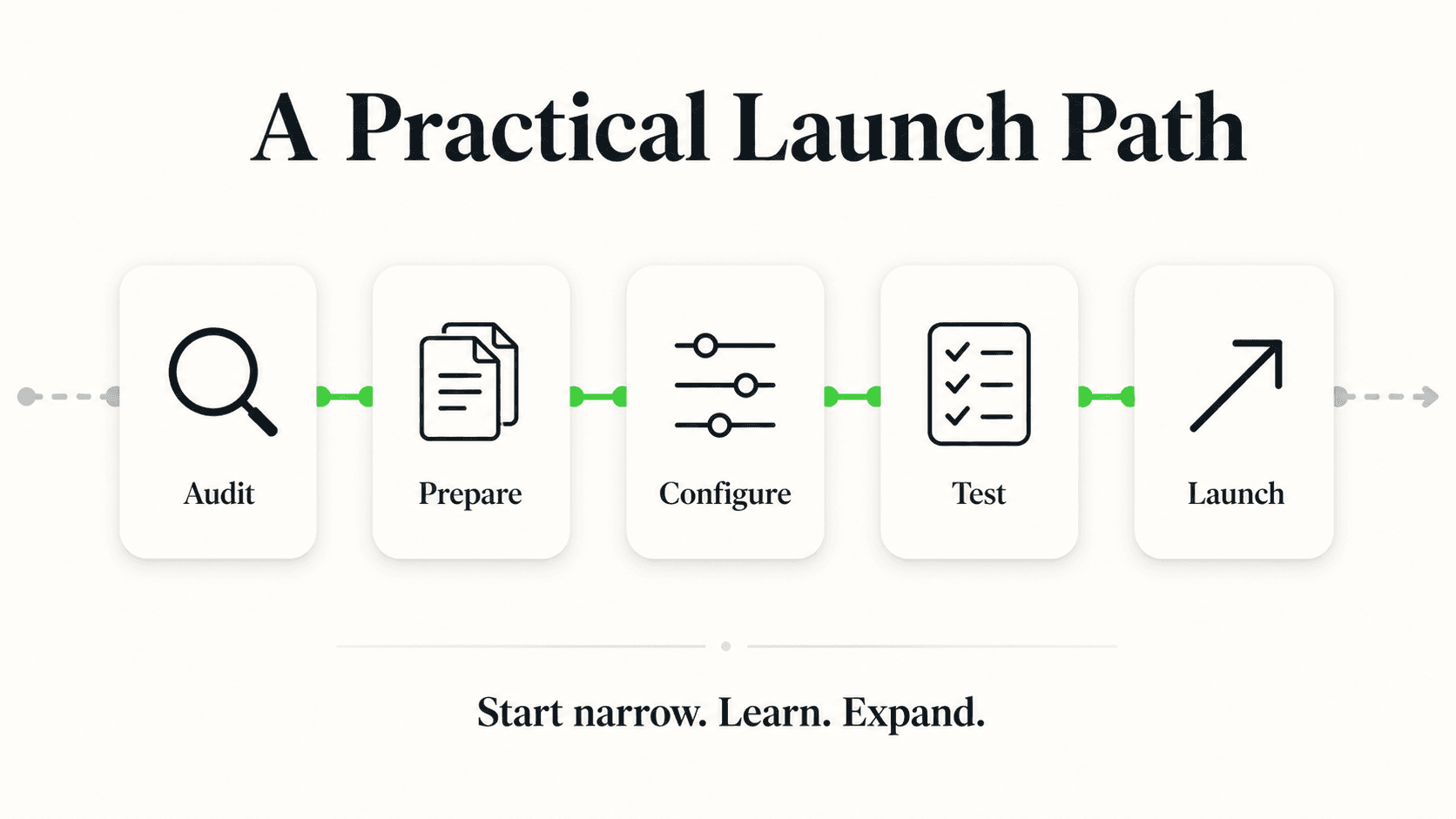
The bot is configured to capture only the information needed to schedule and route — not clinical detail. PHI handling should follow your existing compliance framework; the chatbot is a routing layer in front of your existing systems.
How long does it take to set up an AI chatbot with Hyperleap?
Most SMBs go live in 3–5 days for self-serve setup. With Managed Setup ($299 Free, available on every plan), Hyperleap builds the bot for you on your content and channels. A 7-day free trial is included on every plan.
Further Reading
Authoritative external sources used and recommended for further research on this topic:
- American Psychological Association practice guidelines
- HIPAA Privacy Rule (HHS.gov)
- SAMHSA mental health resources
Reduce the Friction Between Reaching Out and Getting Help
Deploy a chatbot that handles therapy practice intake logistics 24/7 — while keeping all clinical decisions with your therapists.
Start Free TrialRelated Articles
AI Receptionist for Veterinary Clinics: A Guide
An AI receptionist for veterinary clinics answers intake and pricing questions, routes emergencies to your team, and shares your booking link 24/7.

AI Chatbot for Chiropractic Clinics: 2026 Guide
How an AI chatbot for chiropractic clinics answers new-patient questions, shares booking links, and reduces no-shows — without giving medical advice.

AI Chatbot for Accounting Firms: Tax Season Triage
How AI chatbots handle tax-season client questions on deadlines, document checklists, and filing status — so CPAs stay focused on returns and advisory work.

AI Receptionist for Dental Clinics: Safe Emergency Routing
How dental clinics use AI receptionists to answer FAQs, book appointments, and route emergencies to the on-call team — without clinical triage.