RAG vs Fine-Tuning vs Prompt Engineering: The Business Guide
Plain-English guide to the three ways to teach AI your business — RAG, fine-tuning, and prompt engineering — for SMB owners.
TL;DR: There are three main ways to make an AI know your business: (1) Prompt engineering — write detailed instructions in the system prompt; (2) RAG — give the AI access to a searchable library of your documents at query time; (3) Fine-tuning — retrain the AI on your data so knowledge is baked into the model. For most small and medium businesses deploying customer-facing AI, RAG is the right answer: faster to set up, cheaper to run, easier to update, and more transparent about where answers come from. This guide explains why—without requiring a computer science background.
RAG vs Fine-Tuning vs Prompt Engineering: The Business Owner's Plain-English Guide
Three business owners have all heard the same pitch: "Our AI will learn everything about your business." What none of them were told is that there are fundamentally different approaches to how that learning actually works—and the approach matters enormously for cost, accuracy, update speed, and risk.
This guide explains those approaches in plain language. Not because the technical details are interesting for their own sake, but because understanding the approach helps you ask the right questions, spot marketing claims that do not hold up, and make a better decision about what to deploy.
Who This Guide Is For
This guide is written for business owners, operations managers, and non-technical decision-makers evaluating AI for customer service. The analogies are deliberately simplified. The goal is a clear mental model, not technical precision.
The Problem Each Approach Solves
Every AI language model (GPT-4, Claude, Gemini, and others) is trained on vast amounts of text from the internet. This training gives the model general knowledge—how to write, how to reason, how to answer common questions.
What these models do not know is anything specific to your business: your prices, your services, your policies, your staff, your opening hours, or the specific questions your customers ask.
The core challenge of deploying AI for your business is bridging that gap: getting the AI to answer questions accurately about your specific business, not generically about the world.
Prompt engineering, RAG, and fine-tuning are three different solutions to this same problem.
What Is Prompt Engineering?
The Simple Explanation
Prompt engineering means writing detailed instructions to the AI before every conversation starts. These instructions tell the AI who it is, what business it represents, what it should and should not say, and some core facts about the business.
The analogy: Imagine briefing a very capable but uninformed new hire every single morning: "You work at Riverside Dental. Our hours are Monday-Friday 8 AM-6 PM. Our standard cleaning costs $120. Do not quote fees you are not sure about. Always offer to book an appointment at the end of the conversation. Here is a list of services we offer and their prices..."
That morning briefing is the prompt.
How It Works in Practice
A system prompt might look like this (simplified):
You are the AI assistant for Riverside Dental Practice.
Hours: Mon-Fri 8 AM-6 PM, Sat 9 AM-2 PM.
Services: Cleaning ($120), Whitening ($350), Implants (from $1,800).
Always ask for the patient's name and preferred appointment time.
If asked about medical advice, remind patients to consult our dentists.
Every conversation starts with this briefing. The AI incorporates it into every response.
Where Prompt Engineering Works Well
- Tone and persona definition — "Be warm but professional. Don't use jargon." This is best done through the prompt.
- Behavioral guardrails — "Never quote prices you are not certain about. Always escalate if the patient mentions pain or an emergency."
- Simple, stable facts — If your business has 5 services and prices that rarely change, a well-written prompt can capture all of it.
Where Prompt Engineering Falls Short
- Volume of information: Prompts have a length limit (the "context window"). A business with hundreds of products, dozens of services, or a complex knowledge base cannot fit everything into a prompt.
- Staleness: Every time something changes (new prices, new services, new FAQs), someone has to manually update the prompt.
- Hallucination under uncertainty: If a customer asks something not covered in the prompt, the AI fills the gap with its general knowledge—which for business-specific facts, often means plausible-sounding but incorrect answers.
Verdict: Prompt engineering alone is appropriate for very simple deployments with a small amount of stable business information. It should almost always be combined with RAG for anything more complex.
What Is RAG (Retrieval-Augmented Generation)?
The Simple Explanation
RAG gives the AI access to a searchable library of your business's documents. Instead of memorizing everything in advance, the AI looks things up when a customer asks a question.
The analogy: Think of RAG like giving your AI employee access to a reference library. When a customer asks "What does an implant cost?", the AI does not rely on what it memorized—it goes to the library, finds the relevant pricing document, reads the relevant section, and answers from it.
The "Retrieval" in RAG is the library search. The "Generation" is writing the answer in natural language based on what was found.
How It Works in Practice
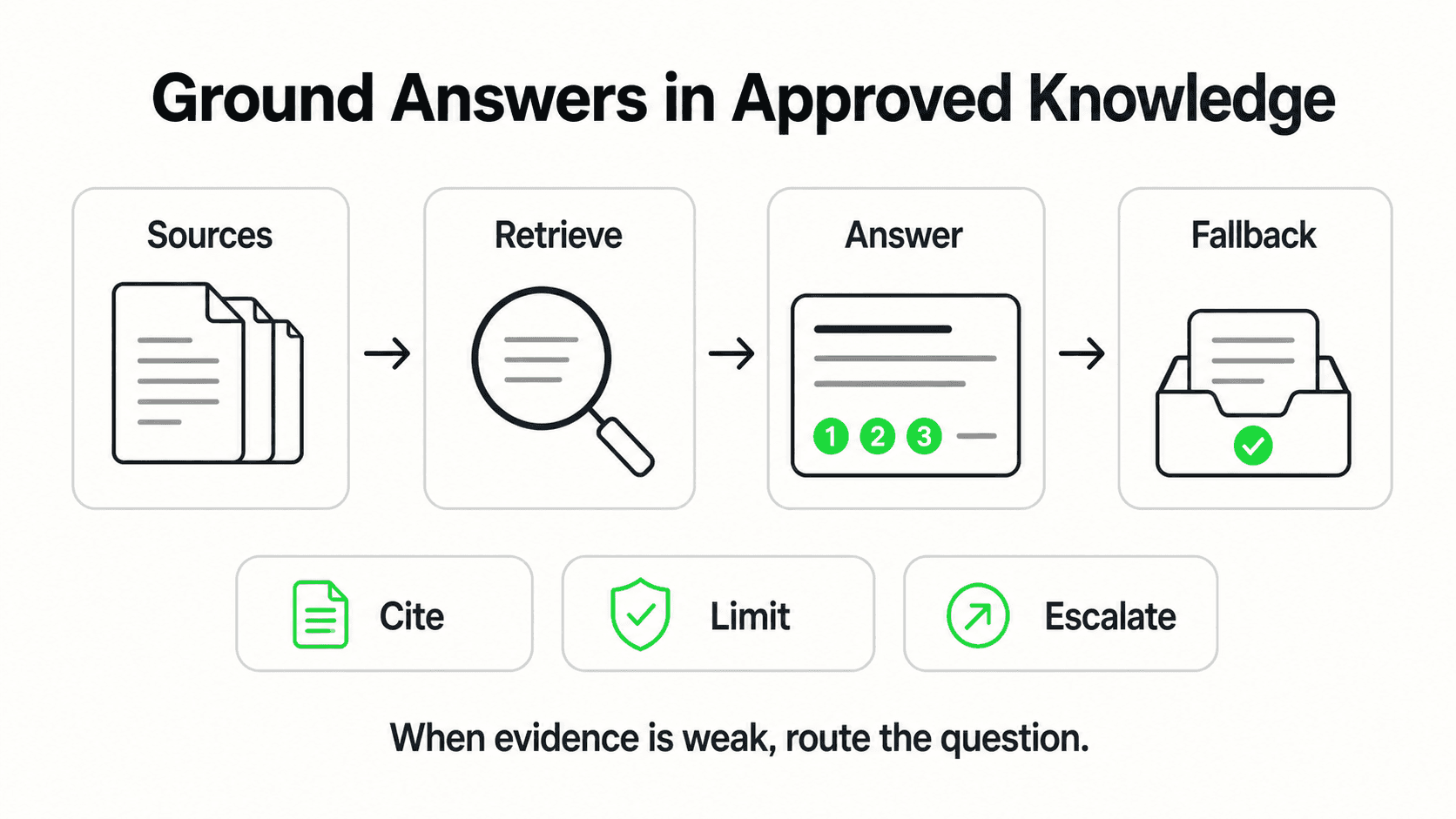
- You upload your documents — PDFs, FAQs, pricing sheets, service descriptions, policies, team bios, anything relevant.
- These are processed into a searchable index — The system breaks documents into chunks and creates a mathematical representation (embeddings) of each chunk that enables similarity search.
- When a customer asks a question, the system searches the index for the most relevant chunks.
- The AI reads those chunks and generates a response grounded in that specific content.
- If nothing relevant is found, the system routes to a fallback (escalation, "I don't know") rather than letting the AI hallucinate from general knowledge.
Why RAG Is the Right Default for Most Businesses
You can update your knowledge base without touching the AI. Add a new service document, update a pricing PDF, upload a new FAQ—the chatbot reflects the change immediately. No model retraining, no prompt editing.
It is transparent about its sources. RAG systems can show which document a response came from, enabling auditability. You can verify that the AI said something because it was in your documents, not because it invented it.
It handles scale. A chain of dental practices with 20 locations, each with different pricing, different team bios, and different local FAQs, can use a single AI system with location-aware knowledge retrieval. Prompt engineering alone cannot scale this way.
It reduces hallucination significantly. Because the AI generates responses based on retrieved content rather than its general training data, it is far less likely to invent business-specific facts. There is no single accuracy figure for RAG, though: how often a grounded system answers correctly depends mostly on how complete and current your knowledge base is. The reliable way to know is to test it on your own customer questions before you go live.
RAG for Several Similar Locations
For businesses with several near-identical locations, courses, or plans, the RAG challenge changes. Finding the answer is easy; finding it for the right location is the hard part, because ten branch pages that differ only in address, hours, and pricing read almost the same to a search system. A setup built for this:
- Picks the right location's source before answering, so a question about the Plano branch is answered from the Plano page, not whichever branch page reads most similar
- Checks every location for questions like "which branches are open on Sunday?"
- Asks which one when the customer doesn't say, instead of guessing or blending answers
This is particularly relevant for franchise businesses, multi-clinic healthcare groups, and real estate agencies with multiple offices. On Hyperleap AI, it's the Multi-variant (locations, courses, etc) add-on ($40/mo plus 2x credits per request, Pro and Max plans). Single-location businesses don't need it; the standard knowledge base already handles them.
What Is Fine-Tuning?
The Simple Explanation
Fine-tuning means actually training the AI on your business's data—adjusting the model's internal parameters so that knowledge about your business becomes part of how it thinks, not something it looks up.
The analogy: If prompt engineering is a morning briefing and RAG is a reference library, fine-tuning is sending your employee to a multi-week training program where they study your business exhaustively and emerge with that knowledge internalized.
How It Works in Practice
- You prepare a training dataset — Typically hundreds to thousands of example question-answer pairs specific to your business.
- You submit this dataset to a model provider (OpenAI, Anthropic, Google, or a self-hosted model) for fine-tuning.
- The model is retrained on your examples, adjusting its weights to make it more likely to generate responses consistent with your training data.
- The fine-tuned model is deployed and used for inference.
When Fine-Tuning Makes Sense
Fine-tuning is genuinely useful in specific scenarios:
Style and tone adaptation at scale. If you have thousands of customer interactions in a specific brand voice and you want the AI to internalize that voice at a deep level, fine-tuning on those interactions is more effective than prompt engineering alone.
Specialized domains where the base model lacks knowledge. A highly specialized medical subspecialty, a niche legal practice area, or a technical engineering domain where the base model has limited training data may benefit from fine-tuning on domain-specific literature.
Performance optimization. A fine-tuned smaller model can outperform a larger general model on a narrow task while running cheaper and faster. For very high-volume, narrow use cases, this economics can be compelling.
Why Fine-Tuning Is Usually the Wrong Choice for SMBs
Cost and time. Fine-tuning requires preparing a training dataset (significant effort), paying for the training run (meaningful cost for quality results), and repeating the process when significant business information changes.
Inflexibility to updates. When you add a new service or change a price, fine-tuning does not immediately reflect that change—you need to retrain. RAG systems update the moment you upload a new document.
Opacity. Fine-tuning embeds knowledge into model weights in ways that are difficult to inspect or audit. A RAG system can show you exactly which document informed a response. A fine-tuned model cannot tell you where a specific answer came from.
Hallucination risk. Counter-intuitively, fine-tuning on a small dataset can actually increase certain types of hallucination. The model may confidently state fine-tuned information even when it does not apply to the specific question asked. RAG's retrieval step provides a check that fine-tuning lacks.
Verdict for SMBs: Fine-tuning is almost never the right first choice for a small or medium business deploying customer-facing AI. The exception is businesses with enough volume, technical resources, and specialized domain needs to justify the overhead.
Side-by-Side Comparison
| Prompt Engineering | RAG | Fine-Tuning | |
|---|---|---|---|
| Setup time | Hours | Days–weeks | Weeks–months |
| Update when business changes | Edit prompt (minutes) | Upload document (minutes) | Retrain model (days) |
| Knowledge volume | Limited (context window) | Large (unlimited documents) | Large (training data) |
| Hallucination risk | Higher (gaps filled with general knowledge) | Lower (retrieval grounds responses) | Variable |
| Cost | Very low | Low–medium (embedding + retrieval) | High (training compute) |
| Auditability | Low | High (can see source documents) | Very low |
| Best for | Tone, persona, guardrails | Business-specific knowledge at scale | Specialized domains, style internalization |
| SMB recommendation | Always use alongside RAG | ✅ Primary approach | ⚠️ Rarely needed |
The Right Architecture for Customer-Facing Business AI
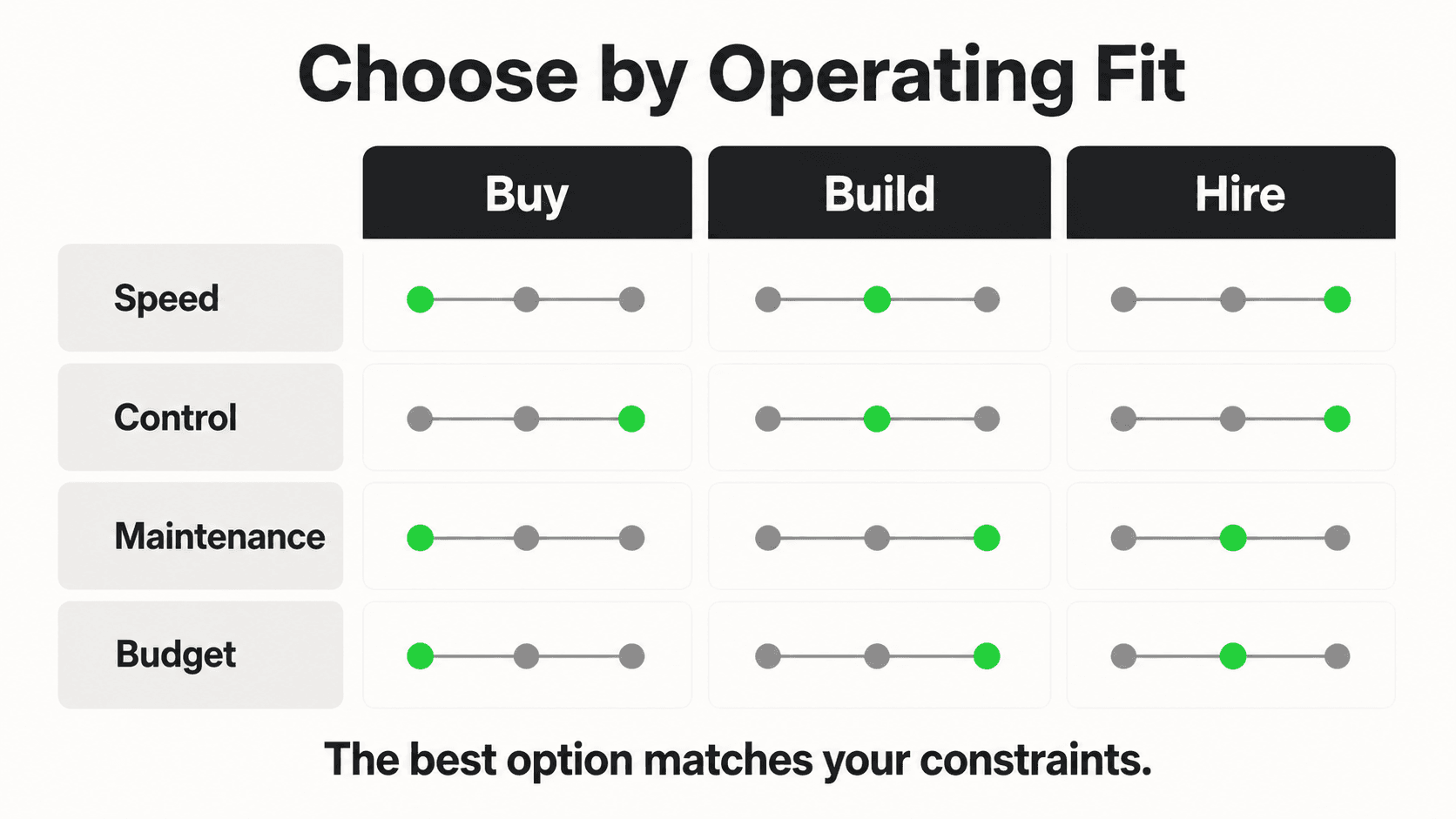
For most businesses deploying AI for customer service, lead capture, or FAQ handling, the right architecture is:
Prompt engineering + RAG
Specifically:
- System prompt: Defines the AI's persona, tone, behavioral guardrails, escalation rules, and a small set of core facts
- RAG knowledge base: Contains all business-specific detailed information—services, pricing, FAQs, policies, team bios, location information
This combination gives you:
- Consistent brand voice and behavior (from the prompt)
- Accurate, up-to-date, business-specific knowledge (from RAG)
- Low hallucination risk (retrieval grounds the responses)
- Easy updates (upload a new document to update the knowledge base)
- Auditability (responses can be traced to source documents)
What to Ask Vendors
When evaluating an AI chatbot platform, these questions reveal whether the architecture is sound:
-
"Is the AI grounded in my knowledge base, or does it answer from its training data?" The right answer is: primarily from the knowledge base (RAG), with the LLM used for understanding and generation only.
-
"What happens when a customer asks something not in the knowledge base?" The right answer is: graceful escalation or "I don't know." Not: "The AI will use its best judgment."
-
"How do I update the chatbot when my business information changes?" The right answer is: upload a new document or edit the knowledge base. Not: "Contact our team and we'll update the model."
-
"Can you show me which documents a response came from?" Auditability is a sign of a RAG-grounded system. If the vendor cannot answer this, the system may not be properly grounded.
Real-World Example: A Multi-Location Dental Group
Consider a dental group with 8 clinics, each with:
- Different specialist team members
- Different equipment and available procedures
- Different pricing structures
- Same brand voice and patient intake process
Prompt engineering alone: Cannot scale. You cannot fit 8 clinics' worth of detailed information into a single prompt. Using 8 different prompts means 8 separately maintained systems.
Fine-tuning alone: Every time pricing changes (quarterly), you need to retrain. Every time a new specialist joins, you need to retrain. The cost and delay make this impractical for operational business information.
RAG with one source per clinic: Shared sources hold the brand voice, patient intake protocol, and company-wide policies. Eight clinic-specific sources hold each clinic's team, pricing, available procedures, and hours. When a patient asks about implant pricing at the Austin clinic, they get Austin pricing. When a patient asks about the San Antonio clinic, they get San Antonio pricing, and a patient who doesn't say which clinic gets asked. One AI system, updatable per-location without touching the other seven.
On Hyperleap AI, the shared and per-clinic sources live in one knowledge base, and the Multi-variant add-on picks the right clinic for each question.
Frequently Asked Questions
Do I need technical skills to set up a RAG-based AI chatbot?
No. A modern no-code chatbot builder handles the technical complexity—embedding generation, vector indexing, retrieval—invisibly. Your interaction with the system is uploading documents (PDFs, Word files, text) and reviewing conversations. If you can use Google Drive, you can set up a RAG knowledge base on modern AI agent platforms.
How many documents do I need in my knowledge base to start?
Start small. Five to ten documents covering your core services, pricing, hours, team, and frequently asked questions is enough to launch a useful AI agent. You will discover gaps from real conversations and add documents accordingly. A knowledge base with 3 excellent documents outperforms one with 50 poorly written ones.
Can RAG completely eliminate AI hallucinations?
No. RAG significantly reduces hallucination on domain-specific questions by grounding responses in your documents. But no AI system can guarantee zero hallucinations. Well-designed RAG systems include confidence thresholds—when the retrieved content is not sufficiently relevant, the system defaults to escalation rather than generating a low-confidence response. "Significantly reduced" is accurate; "eliminated" is not.
Is fine-tuning ever worth it for a small business?
Rarely. The cost of preparing quality training data, running the training job, and updating the model when business information changes is difficult to justify for most SMBs. The exception would be a business with a very narrow, specialized domain where the base LLM performs poorly even with good RAG, and where information changes infrequently. In practice, this is uncommon for customer service use cases.
What is the difference between RAG and a simple keyword search?
Keyword search returns documents that contain specific words. RAG uses semantic similarity—it finds documents that are conceptually related to the question, even if they use different words. "What are your charges?" and "How much does it cost?" return the same relevant documents through semantic RAG search, even though they share no keywords. This is why RAG handles natural language variation so much better than traditional search.
How often should I update my knowledge base?
Update immediately whenever: prices change, services are added or removed, hours change, or new team members join. Schedule a monthly audit to check whether the most common customer questions from the past month are covered adequately in the knowledge base. Quarterly, review the full knowledge base for accuracy.
Conclusion: Choose the Architecture, Not the Buzzword
"AI-powered," "GPT-based," "intelligent," "smart"—these marketing labels do not tell you how the system actually works. The questions that matter are architectural: Is it grounded in my knowledge base? How does it handle questions outside its knowledge? How do I update it when my business changes?
For the vast majority of small and medium businesses deploying AI for customer-facing use cases, the answer is Prompt Engineering + RAG. It is faster to deploy, cheaper to run, easier to maintain, and more accurate on business-specific questions than either fine-tuning or ungrounded prompt engineering.
The analogy that holds: a well-briefed employee with access to a comprehensive reference library will outperform either a heavily trained employee with no reference materials or an employee given only a morning briefing and no library. Give the AI both.
What is retrieval-augmented generation (RAG) in plain English?
RAG means the chatbot looks up relevant passages from your uploaded documents before generating an answer — instead of pulling from the LLM's pre-trained knowledge. That is why a Hyperleap bot only answers from your documents and not from the open internet.
How do I keep my chatbot's knowledge fresh?
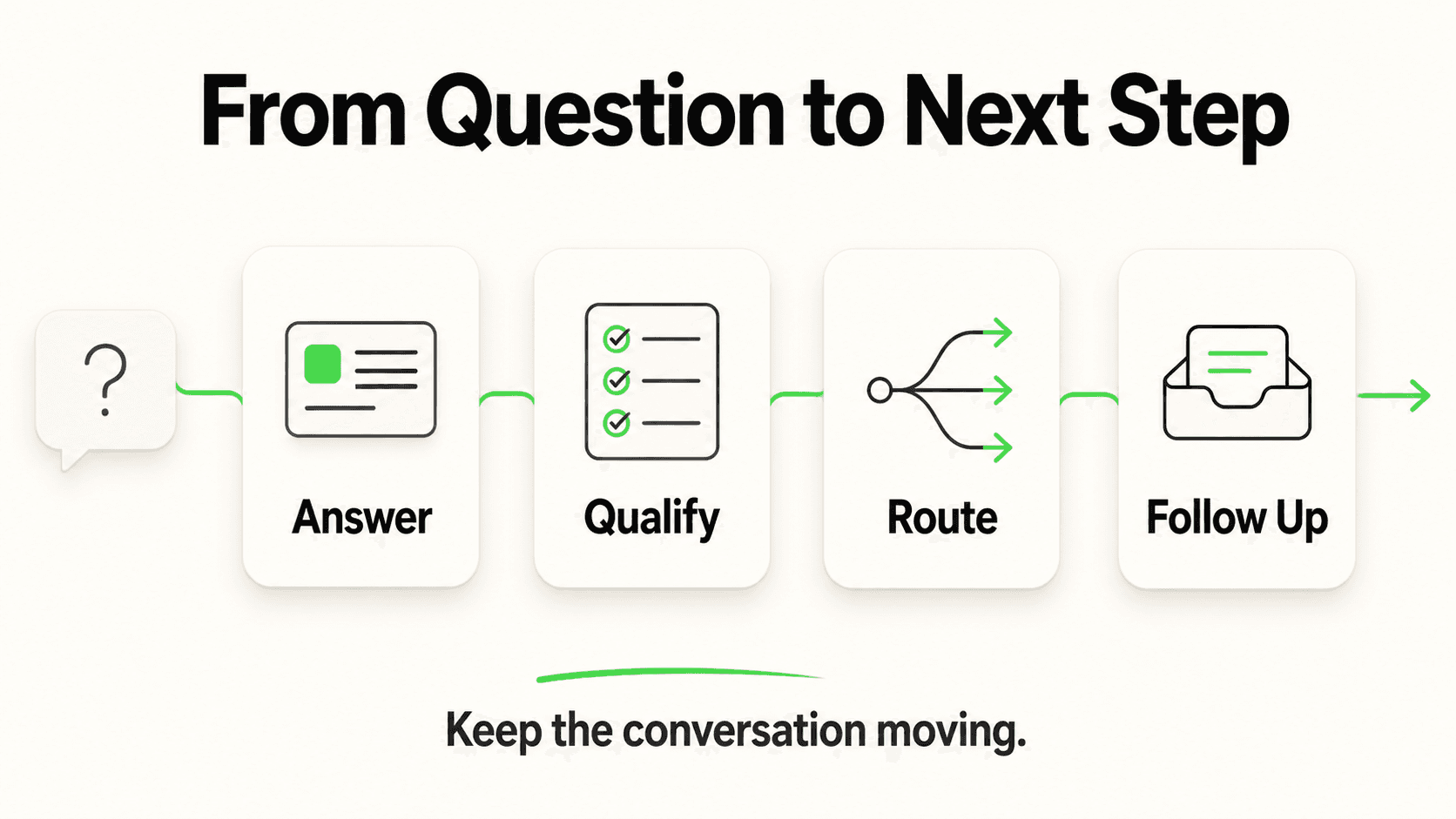
Re-upload or re-sync your knowledge base whenever your pricing, policies, hours, or product specs change. Hyperleap surfaces the documents an answer was grounded in, so you can audit what is being used and update specific files when needed.
How long does it take to set up an AI chatbot with Hyperleap?
Most SMBs go live in 3–5 days for self-serve setup. With Managed Setup ($299 Free, available on every plan), Hyperleap builds the bot for you on your content and channels. A 7-day free trial is included on every plan.
Further Reading
Authoritative external sources used and recommended for further research on this topic:
See RAG Working in a Real Business
Hyperleap AI Agents use RAG to ground every response in your knowledge base—accurate, updatable, auditable. Multi-channel. Live in under a week.
Start Your Free TrialData Sources
- Lewis et al. (2020) — "Retrieval-Augmented Generation for Knowledge-Intensive NLP Tasks" — Original RAG research paper from Meta AI (Facebook Research), published on arXiv
Related Resources
- AI Agents vs Chatbots: What's Actually Different in 2026 — How AI agents compare to rule-based systems
- Answering for the Right Location — How a chatbot keeps several similar locations, courses, or plans apart
- AI Chatbot Knowledge Base Best Practices — How to build a knowledge base that works
- What Makes AI Chatbots Actually Work — Deployment analysis from real data
- How to Choose an AI Chatbot Platform — Full evaluation framework
- AI Chatbot Statistics 2026 — Market data and benchmarks
Related Articles
Multi-variant: One Chatbot for Many Locations or Courses
How one chatbot answers for the right location, course or plan, compares across all of them, and asks which one when a question doesn't say.

Build a Read-Only Sales Agent with Hyperleap MCP
Build a scheduled sales agent on Hyperleap's read-only MCP server: the agent loop, the tools it reads, copy-paste prompts, and an Anthropic SDK example.

Hyperleap MCP API Reference: Tools, Auth, and Errors
Developer reference for the hosted Hyperleap MCP server: OAuth sign-in, every tool's parameters and response fields, pagination, and errors.
Multi-MCP Workflows: Hyperleap + HubSpot + Linear in Claude
Combine Hyperleap, HubSpot, and Linear MCP servers in one Claude workflow that turns chatbot leads into enriched CRM records and follow-up tickets.