What is an AI Chatbot? The Complete Guide for 2026
Everything about AI chatbots in 2026. How they work, types, use cases, benefits, and how to choose the right platform for your business.

TL;DR: An AI chatbot is software that uses large language models and RAG (Retrieval-Augmented Generation) to have natural conversations with customers, achieving 95-98% accuracy when properly configured. Unlike rule-based chatbots that follow scripts, AI chatbots understand context, handle variations, and work across WhatsApp, web, and social channels 24/7. Most businesses can deploy one in hours for $40-200/month.
What is an AI Chatbot? The Complete Guide for 2026
AI chatbots have evolved from simple rule-based responders to sophisticated conversational agents that understand context, learn from data, and deliver human-like interactions. In 2026, they're no longer a novelty—they're a business necessity.
This comprehensive guide explains what AI chatbots are, how they work, the different types available, and how to choose the right solution for your needs.
What is an AI Chatbot?
An AI chatbot is a software application that uses artificial intelligence to conduct conversations with humans through text or voice. Unlike traditional rule-based chatbots that follow predefined scripts, AI chatbots can:
- Understand natural language: Interpret what users mean, not just what they say
- Learn from data: Improve responses based on training and interactions
- Handle variations: Respond to the same question asked different ways
- Maintain context: Remember previous messages in a conversation
- Generate responses: Create relevant answers, not just select from templates
AI Chatbot vs. Traditional Chatbot
| Feature | Traditional Chatbot | AI Chatbot |
|---|---|---|
| Logic | Rule-based (if-then) | Machine learning |
| Responses | Pre-written templates | Dynamically generated |
| Understanding | Keyword matching | Natural language processing |
| Handling variations | Fails on unexpected input | Adapts to variations |
| Improvement | Manual updates | Learns continuously |
| Setup complexity | High (many rules needed) | Lower (train on data) |
How AI Chatbots Work
Core Technologies
Modern AI chatbots combine several technologies:
1. Natural Language Processing (NLP)
NLP enables chatbots to understand human language:
- Intent recognition: Understanding what the user wants
- Entity extraction: Identifying specific information (names, dates, products)
- Sentiment analysis: Detecting emotional tone
- Language detection: Identifying which language is being used
2. Large Language Models (LLMs)
LLMs like GPT-4, Claude, and Gemini power modern AI chatbots:
- Contextual understanding: Grasping meaning from context
- Response generation: Creating natural, relevant responses
- Multi-turn conversations: Maintaining coherent dialogues
- Knowledge synthesis: Combining information from training data
3. Retrieval-Augmented Generation (RAG)
RAG combines LLMs with specific knowledge bases:
- Document retrieval: Finding relevant information from your content
- Grounded responses: Ensuring answers are based on actual data
- Reduced hallucinations: Preventing made-up information
- Up-to-date information: Using current business data
The Conversation Flow
When a user sends a message to an AI chatbot:
- Input processing: The message is received and cleaned
- Intent analysis: The system determines what the user wants
- Knowledge retrieval: Relevant information is fetched (RAG)
- Response generation: The LLM creates an appropriate response
- Safety checks: The response is verified for accuracy
- Delivery: The response is sent to the user
Types of AI Chatbots
By Technology
Rule-Based Chatbots
- How they work: Follow decision trees and keyword triggers
- Best for: Simple, predictable interactions
- Limitations: Break on unexpected input
- Example use: Basic FAQ, menu navigation
ML-Based Chatbots
- How they work: Use machine learning to classify intents
- Best for: Moderate complexity with training data
- Limitations: Require significant training data
- Example use: Customer support classification
LLM-Powered Chatbots
- How they work: Use large language models for understanding and generation
- Best for: Complex, natural conversations
- Limitations: May hallucinate without proper grounding
- Example use: Comprehensive customer engagement
RAG-Powered Chatbots
- How they work: Combine LLMs with document retrieval
- Best for: Accurate, knowledge-based responses
- Limitations: Require good knowledge base
- Example use: Product support, information services
By Function
Customer Support Chatbots
- Answer product questions
- Handle complaints and issues
- Provide order status updates
- Route complex issues to humans
Sales and Lead Generation Chatbots
- Qualify incoming leads
- Answer pre-purchase questions
- Schedule demos and meetings
- Capture contact information
E-commerce Chatbots
- Product recommendations
- Cart assistance
- Order tracking
- Returns processing
Internal/Enterprise Chatbots
- HR policy questions
- IT support
- Employee onboarding
- Knowledge management
Benefits of AI Chatbots
For Businesses
Cost Reduction
- 80% lower cost per interaction vs. human agents (Source: IBM)
- 24/7 availability without overtime costs
- Scalability to handle volume spikes
- Reduced training costs for support teams
Improved Efficiency
- Instant responses to customer inquiries
- Consistent quality across all interactions
- Multi-language support without hiring
- Handle multiple conversations simultaneously
Better Customer Insights
- Conversation analytics reveal customer needs
- Common questions identify content gaps
- Sentiment tracking monitors satisfaction
- Behavior patterns inform product decisions
For Customers
Better Experience
- Immediate answers without waiting
- 24/7 availability on their schedule
- Consistent information every time
- No frustrating phone menus
Channel Preference
- Chat on preferred channels: WhatsApp, website, social media
- Seamless handoff to humans when needed
- Conversation history maintained
- Self-service for simple issues
Try an AI Chatbot for Your Business
See how an AI chatbot works in practice. Deploy on your website and WhatsApp in minutes, with no coding required. Start your 7-day free trial.
Try for FreeAI Chatbot Use Cases
Customer Service
Common applications:
- FAQ automation
- Order status inquiries
- Return and refund processing
- Account management
- Technical troubleshooting
Results:
- 55-75% of inquiries automated (Source: Salesforce State of Service, 2024)
- 30-40% cost reduction (Source: McKinsey)
- 82% customer satisfaction
Sales and Marketing
Common applications:
- Lead qualification
- Product recommendations
- Appointment scheduling
- Follow-up sequences
Results:
- 20-35% increase in conversions
- 25% more qualified leads
- 40% faster lead response
E-commerce
Common applications:
- Product discovery
- Size and fit guidance
- Inventory checks
- Order modifications
- Delivery tracking
Results:
- 15-25% increase in average order value (Source: Shopify / industry benchmarks, varies by implementation)
- 20% more repeat purchases
Healthcare
Common applications:
- Appointment scheduling
- Symptom checking (with appropriate disclaimers)
- Medication reminders
- Insurance queries
- Post-visit follow-up
Results:
- 35% reduction in no-shows (Source: Accenture Digital Health Survey)
- 65% of administrative inquiries automated
- 30% improvement in patient satisfaction
Education
Common applications:
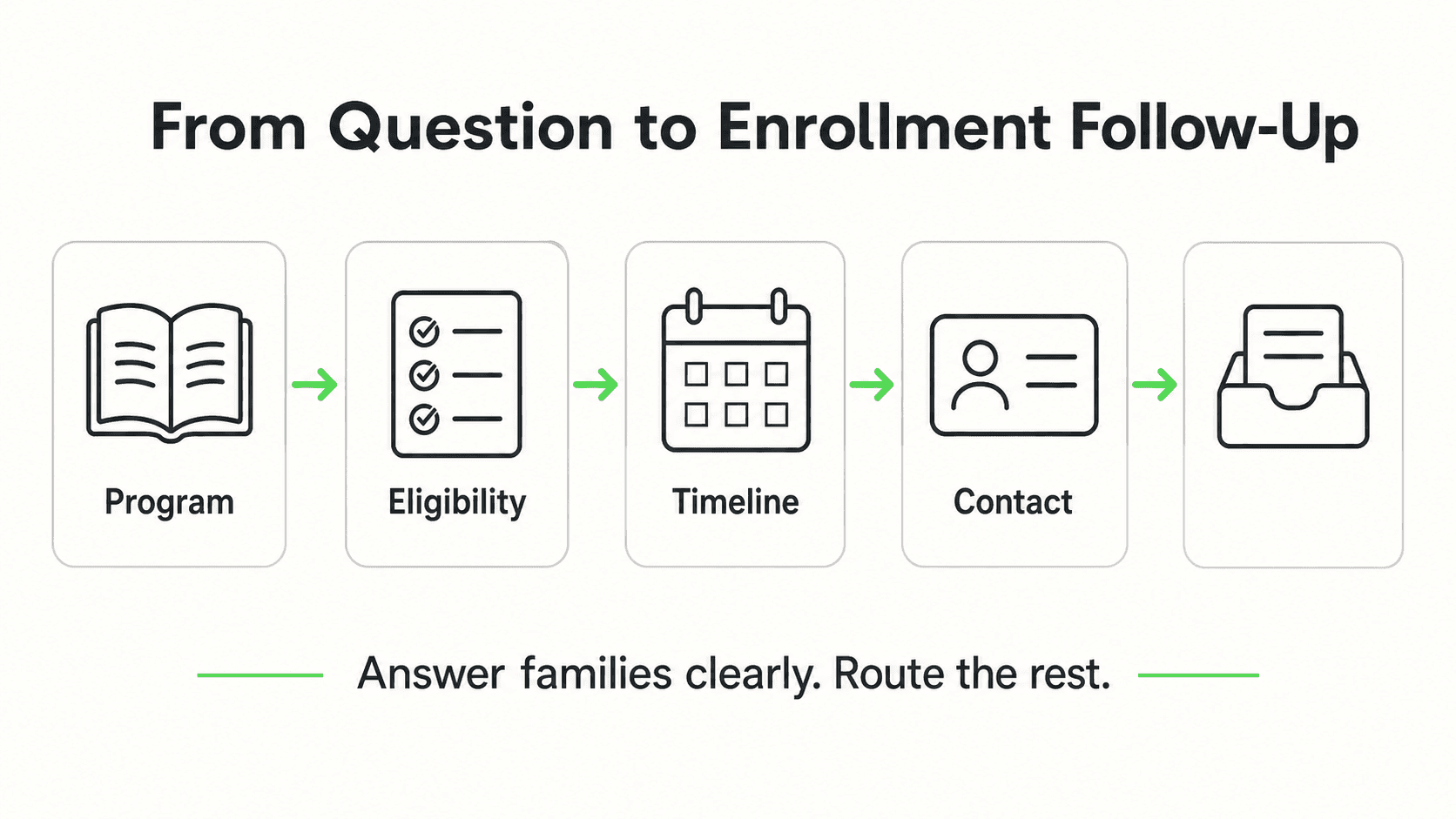
- Admissions inquiries
- Course information
- Enrollment support
- Student services
- Alumni engagement
Results:
- 50% faster response to prospective students
- 40% reduction in administrative workload
- 25% improvement in enrollment conversion
Further Reading
Authoritative external sources used and recommended for further research on this topic:
See an AI Chatbot in Action
Understand the difference an AI chatbot makes. Try Hyperleap AI on your website and WhatsApp with a 7-day free trial.
Explore AI AgentsHow to Choose an AI Chatbot Platform
Key Features to Evaluate
AI Accuracy
- Response accuracy: How often are answers correct?
- Hallucination control: Does it make up information?
- Context handling: Can it maintain multi-turn conversations?
- Language support: Which languages are supported?
Channel Support
- Website chat: Embedded widget options
- WhatsApp: Full Business API integration
- Social media: Instagram, Facebook, etc.
- Integration depth: Native vs. basic
Ease of Use
- Setup time: How quickly can you deploy?
- Training method: Upload docs vs. build flows
- Maintenance: How much ongoing work?
- Technical requirements: Coding needed?
Customization
- Branding: Match your visual identity
- Personality: Configure tone and style
- Workflows: Custom conversation paths
- Integrations: Connect to your tools
Pricing
- Pricing model: Per message, per conversation, or flat
- Scalability: How do costs grow?
- Hidden fees: Channel add-ons, features, support
- Free tier: Testing before committing
Red Flags to Avoid
- No accuracy metrics: Can't tell you how accurate they are
- Per-seat pricing: Costs escalate with team growth
- Limited channels: Website-only in a multi-channel world
- Complex setup: Requires weeks of development
- No human escalation: Can't hand off to agents
Questions to Ask Vendors
- What is your AI accuracy rate?
- How do you prevent hallucinations?
- Which channels are natively supported?
- How long does typical implementation take?
- What does pricing look like as we scale?
- How do human handoffs work?
- What analytics and reporting are included?
Implementing an AI Chatbot
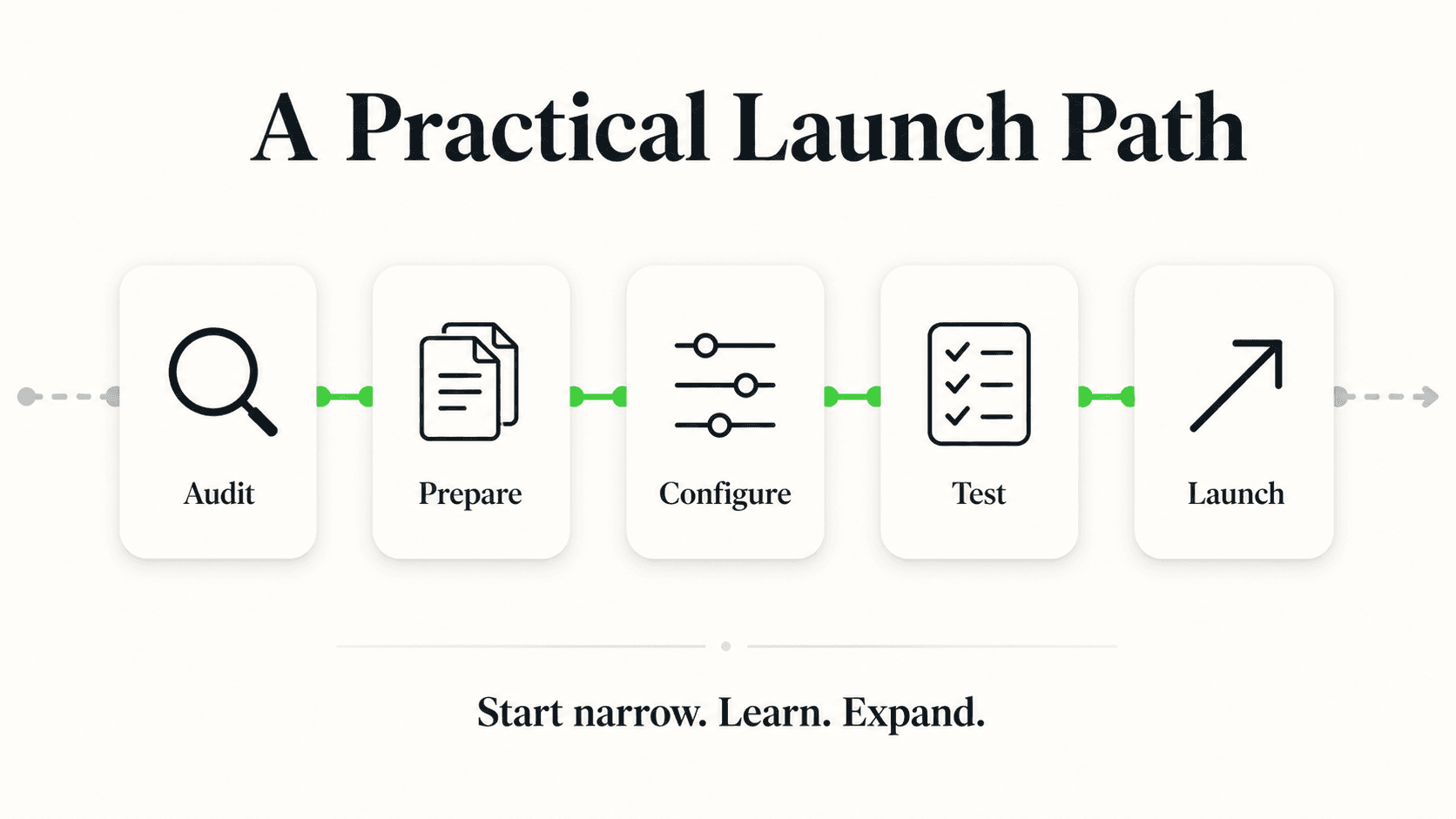
Step 1: Define Your Goals
Before selecting a platform:
- What problems are you solving? (Reduce support costs? Capture leads?)
- What channels do customers use? (WhatsApp? Website? Instagram?)
- What metrics define success? (Resolution rate? Customer satisfaction?)
- What's your budget? (Initial and ongoing)
Step 2: Prepare Your Knowledge Base
AI chatbots are only as good as their training data:
- FAQs: Common questions and answers
- Product information: Details, pricing, specifications
- Policies: Shipping, returns, privacy
- Processes: How things work step-by-step
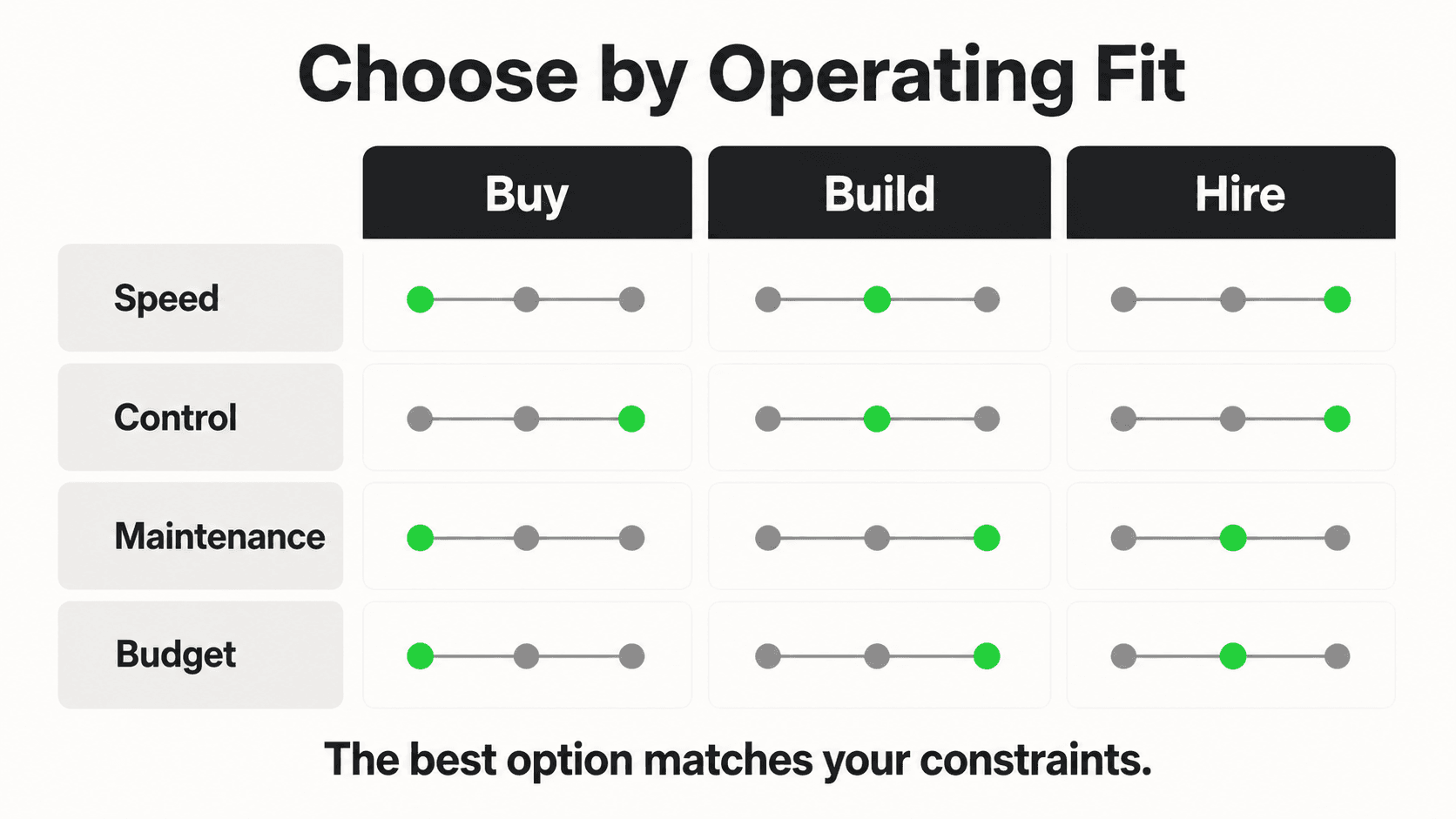
Step 3: Choose Your Platform
Based on your requirements:
- Evaluate 3-5 platforms
- Test with real scenarios
- Check reference customers
- Understand total cost of ownership
Step 4: Configure and Train
Once you've selected a platform:
- Upload knowledge base
- Configure AI personality
- Set up conversation flows
- Define escalation rules
- Test thoroughly
Step 5: Launch and Iterate
Deployment is just the beginning:
- Monitor conversations closely
- Identify improvement areas
- Update knowledge base
- Refine responses
- Expand to new use cases
"The most common misconception about AI chatbots is that they need months of setup and a technical team. In reality, modern platforms let you upload your website content, configure the tone, and go live the same day. The barrier to adoption has shifted from technology to awareness." — Gopi Krishna Lakkepuram, Founder & CEO of Hyperleap AI
Common Mistakes to Avoid
1. Expecting Perfection
AI chatbots won't handle 100% of inquiries perfectly. Plan for human escalation.
2. Neglecting Knowledge Base
Poor training data = poor responses. Invest in comprehensive, accurate content.
3. Ignoring Analytics
Use conversation data to improve. Identify where the chatbot struggles.
4. Over-Automating
Some conversations need humans. Don't frustrate customers with bot loops.
5. Set-and-Forget Mentality
AI chatbots need ongoing optimization. Schedule regular reviews.
The Future of AI Chatbots
Emerging Trends
- Voice-first interactions: More voice-based AI assistants
- Proactive engagement: AI initiating helpful conversations
- Deeper personalization: Context-aware, individual experiences
- Multi-modal: Handling text, voice, images, and video
- Emotional intelligence: Better sentiment understanding
What to Expect
- Higher accuracy: Continued improvement in LLM capabilities
- Broader adoption: Standard expectation for all businesses
- Better integration: Seamless connection to business systems
- More channels: Emerging platforms supported
- Lower costs: Democratization of AI technology
AI Chatbot Trends Shaping 2026
The chatbot landscape is shifting fast. Four trends are defining what businesses should expect and plan for this year.
Answer Engine Optimization (AEO)
Search is changing. AI-powered search engines like Google AI Overviews, Perplexity, and ChatGPT now pull answers directly from web content. Businesses that structure their knowledge base and website content for AI consumption gain visibility in these answer engines. This means your chatbot's knowledge base does double duty: it powers accurate customer conversations and feeds the structured content that AI search engines prefer. Companies investing in well-organized FAQ content and structured data today are winning traffic from both traditional and AI-driven search.
Voice-First Interfaces
Text-based chat remains dominant, but voice interfaces are maturing rapidly. Customers increasingly expect to speak naturally to AI rather than type. In hospitality and healthcare especially, voice-enabled AI agents reduce friction for users who are driving, multitasking, or less comfortable with text input. The technical challenge is maintaining the same accuracy and knowledge grounding in voice as in text, but improvements in speech-to-text models are closing the gap.
Proactive Engagement
Traditional chatbots wait for the customer to start a conversation. The next generation initiates contact based on behavioral signals. A visitor who lingers on a pricing page for 30 seconds receives a targeted message. A returning customer who previously asked about a specific product gets an update. Proactive engagement increases conversion rates because it catches prospects at their moment of highest intent, but it requires careful calibration to avoid feeling intrusive.
Deeper Personalization Through Memory
AI chatbots in 2026 are beginning to remember past interactions and customer preferences across sessions. A hotel guest who previously asked about pet-friendly rooms gets that preference noted in future conversations. An e-commerce customer who bought running shoes receives relevant accessory recommendations months later. This persistent memory transforms chatbots from transactional tools into relationship-building assets.
Common AI Chatbot Myths Debunked
Misconceptions about AI chatbots still prevent businesses from adopting them. Here are the most persistent myths and the reality behind each.
Myth: AI Chatbots Will Replace Human Support Teams
AI chatbots handle 55-75% of routine inquiries—pricing, hours, availability, FAQs. They don't handle emotionally charged complaints, complex negotiations, or situations requiring creative problem-solving. The businesses getting the best results use AI to filter and route, freeing human agents for conversations where empathy and judgment matter. Support teams don't shrink; they refocus on higher-value work.
Myth: Chatbots Frustrate Customers
This was true of rule-based chatbots that trapped users in rigid decision trees with no escape. Modern AI chatbots understand natural language, handle unexpected questions gracefully, and offer human handoff when they reach their limits. Customer satisfaction data consistently shows that well-implemented AI chatbots score higher than email support and comparable to live chat, primarily because they eliminate wait times.
Myth: Only Large Companies Can Afford AI Chatbots
Enterprise AI solutions used to cost six figures annually. Today, capable AI chatbot platforms start with free tiers and scale to $40-100 per month for most small businesses. The ROI math works at almost any scale: if your business handles more than 10 customer inquiries per day, an AI chatbot pays for itself through time savings alone. The barrier to entry has shifted from budget to awareness.
Myth: Setup Takes Months of Development
No-code AI chatbot platforms have reduced deployment time from months to hours. Upload your website URLs or PDF documentation, configure the chatbot's tone and appearance, and deploy to your website and WhatsApp. Complex enterprise integrations with CRMs and booking systems take longer, but a functional AI chatbot answering customer questions accurately can be live within a single afternoon.
Conclusion
AI chatbots have evolved from simple rule-based tools to sophisticated conversational agents. In 2026, they're essential for businesses that want to:
- Scale customer support without scaling costs
- Provide 24/7 availability on customer-preferred channels
- Improve response times from hours to seconds
- Free human agents for complex, high-value interactions
The key to success is choosing the right platform—one that offers high accuracy, multi-channel support, easy implementation, and transparent pricing.
Ready to explore AI chatbots for your business? Start your 7-day free trial of Hyperleap AI, explore AI Agents, or schedule a demo to see how it works.
AI Chatbots by Industry: Real-World Applications
While the core technology is the same, the way AI chatbots deliver value varies dramatically across industries. Each vertical has unique compliance requirements, customer expectations, and workflow integrations that shape how chatbots are configured and deployed. Here is how leading industries are putting AI chatbots to work today.
Dental & Healthcare
Patient-facing chatbots in dental and healthcare practices focus on scheduling, pre-visit intake, and follow-up communication. A well-configured chatbot can reduce no-show rates by up to 35% (Source: Accenture Digital Health Survey) through automated appointment reminders and easy rescheduling via WhatsApp or website chat. For practices handling protected health information, HIPAA-compliant platforms ensure patient data stays secure throughout the conversation. Chatbots also handle insurance verification questions and route urgent concerns directly to clinical staff rather than leaving patients waiting. The result is an AI receptionist that operates 24/7 without adding headcount.
Learn more: Dental AI Agents | Healthcare AI Agents | Why Dental Clinics Lose Patients to Slow Response
Legal Services
Law firms use AI chatbots to manage client intake with the confidentiality that legal work demands. After-hours inquiries, which represent a significant share of potential client contacts, are captured and qualified automatically instead of going to voicemail. The chatbot collects case details, checks for basic conflict-of-interest indicators based on firm-defined rules, and routes qualified leads to the appropriate attorney. This is especially valuable for practice areas like personal injury and family law where prospective clients often search for help outside business hours. Firms using AI intake report faster response times and higher conversion from inquiry to consultation.
Learn more: Legal AI Agents | How Law Firms Lose Cases from After-Hours Inquiries
Insurance
Insurance agencies handle high volumes of repetitive questions about coverage options, premium quotes, and claims status. AI chatbots streamline quote collection by gathering applicant details, coverage preferences, and risk factors through a guided conversational flow across auto, home, life, and commercial lines. For claims intake, chatbots capture incident details and documentation requirements before routing to an adjuster. Multi-line agencies benefit from chatbots that can answer questions spanning different policy types without forcing the customer to call separate departments. Agencies deploying AI chatbots typically see faster quote-to-bind cycles and fewer abandoned quote requests.
Learn more: Insurance AI Agents | Why Insurance Agencies Lose Quotes to Slow Response
Real Estate
Speed matters in real estate: studies show that responding to a lead within five minutes makes you 21x more likely to qualify them (Source: Harvard Business Review). AI chatbots ensure every property inquiry on your website, WhatsApp, or Instagram gets an instant response with relevant listing details, neighborhood information, and scheduling options. Chatbots qualify leads by asking about budget, timeline, and property preferences, then sync qualified prospects to your CRM. Integration with MLS data allows chatbots to answer availability and pricing questions accurately without agent intervention, freeing realtors to focus on showings and closings.
Learn more: Real Estate AI Agents | How Real Estate Agents Lose Leads to Slow Response
Education
Schools, universities, and coaching institutes face seasonal surges in admissions inquiries that overwhelm staff. AI chatbots handle the bulk of repetitive questions about programs, eligibility criteria, fee structures, and application deadlines, often in multiple languages to serve diverse student populations. During peak enrollment periods, chatbots can manage thousands of simultaneous conversations while maintaining consistent, accurate information. They guide prospective students through the application process step by step, collect required documents, and schedule campus visits or counselor meetings. Institutions using AI chatbots for admissions report up to 25% improvement in enrollment conversion rates.
Learn more: Education AI Agents | How Schools Lose Enrollments from Slow Admissions Response
Home Services
Plumbing emergencies, HVAC failures, and electrical issues don't wait for business hours. Home service companies use AI chatbots to capture emergency requests around the clock, collect job details like service type and location, and schedule appointments or dispatch technicians. During seasonal surges such as summer HVAC demand or winter pipe freezes, chatbots prevent missed calls from turning into lost revenue. They also handle routine scheduling for maintenance contracts and follow-up service. By qualifying job requests before they reach a dispatcher, chatbots reduce wasted truck rolls and ensure technicians arrive with the right information and equipment.
Learn more: Home Services AI Agents | Why Home Service Businesses Lose Jobs to Slow Response
Frequently Asked Questions
How much do AI chatbots cost?
Costs range from free tiers with limited usage to enterprise plans at $200+/month. Most SMBs invest $40-100/month for adequate capacity.
How long does implementation take?
Modern AI chatbot platforms can be deployed in hours to days. Complex enterprise implementations may take weeks.
Will AI chatbots replace human support agents?
No. AI chatbots handle routine inquiries (55-75% of volume), freeing humans for complex issues requiring empathy and judgment.
How accurate are AI chatbots?
Accuracy varies widely. Rule-based chatbots may be 60-70% accurate. Well-implemented RAG-based AI chatbots achieve 95-98% accuracy.
Which industries benefit most from AI chatbots?
E-commerce, SaaS, healthcare, hospitality, education, and financial services see the highest ROI, but any business with customer inquiries can benefit.
Keep exploring
- AI agents for your business - Go from understanding chatbots to launching one
- Conversational AI for customer service - The highest-ROI place most businesses start
Related Resources
- Best No-Code Chatbot Builders 2026 - Platform comparison
- Best Multi-Channel Chatbots 2026 - Omnichannel solutions
- AI Chatbot Statistics 2026 - Industry data
- Getting Started with AI Agents - Implementation guide
Industry Applications
- Best AI Chatbots for Hotels 2026 - Hospitality
- Best AI Chatbots for Healthcare 2026 - Healthcare
- Best AI Chatbots for Restaurants 2026 - Restaurants
Glossary
- What is a Chatbot? - Chatbot fundamentals
- What is an AI Agent? - AI agent capabilities
- Conversational AI - Industry overview
- RAG Technology - How AI stays accurate
Related Articles

How to Add an AI Chatbot to Squarespace (Step by Step)
Step-by-step guide to adding an AI chatbot to Squarespace via Code Injection, plus plan requirements, troubleshooting, and a pre-launch checklist.

AI Chatbot for Real Estate: Capture Leads 24/7
An AI chatbot for real estate qualifies buyers and sellers around the clock, capturing leads before agents ever pick up the phone.
How to Build an AI Chatbot for Your Business
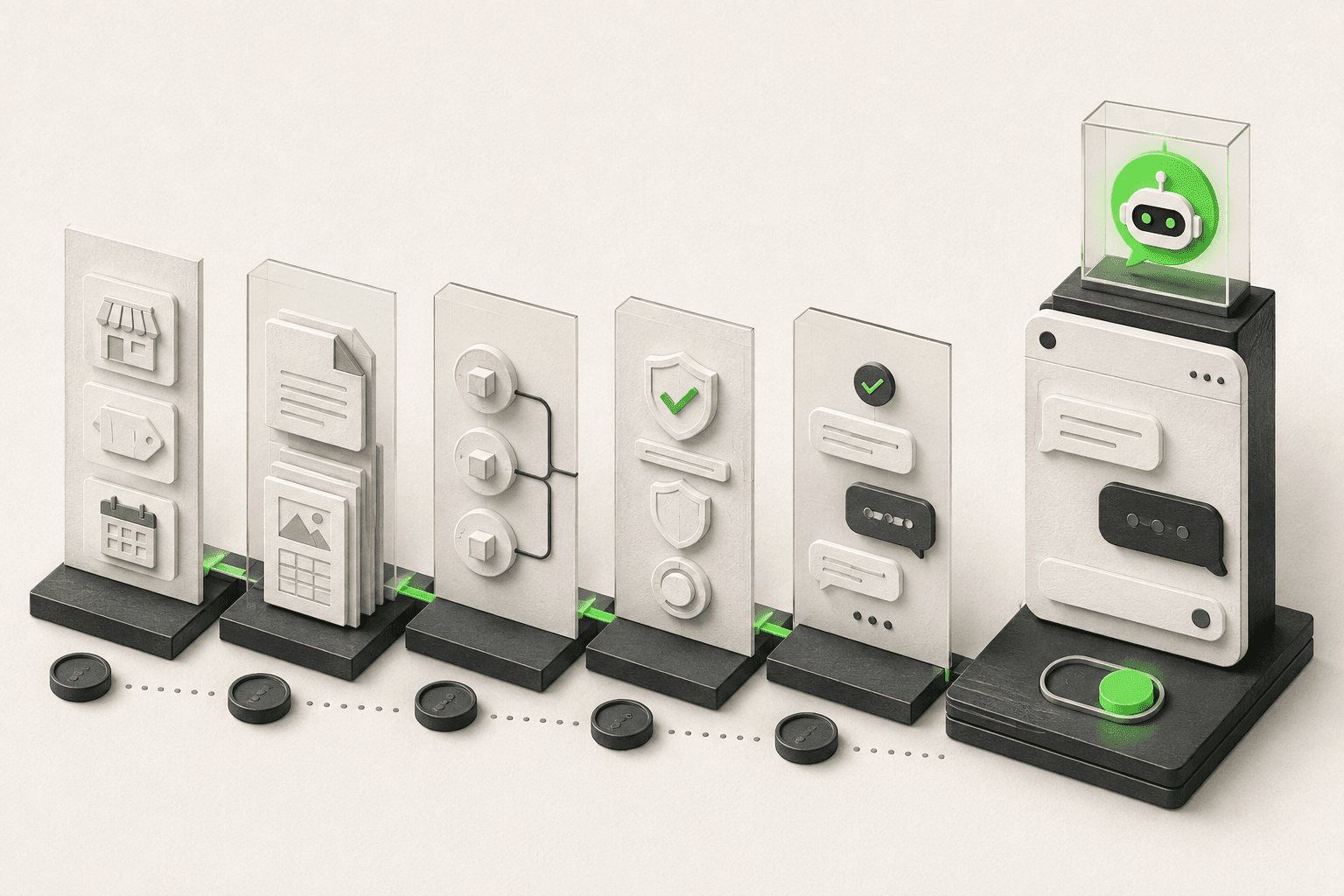
How to build an AI chatbot for your business: decide the jobs it should do, gather knowledge, choose channels, test, and go live in under 5 minutes.
How to Add an AI Chatbot to an HTML Website
Add an AI chatbot to a plain HTML site with one script tag before </body>. Step-by-step setup, testing, styling, and knowledge base tips.