AI Chatbot for Heritage & Palace Hotels (2026)
How heritage and palace hotels use AI chatbots to share their history, handle high-touch guest inquiries, and capture bookings 24/7.

A guest researching a stay at a Loire Valley château hotel does not simply want to know the room rate. They want to know which nobleman once hosted guests in the Great Hall. They want to understand whether the restoration preserved the original Venetian glass chandeliers. They want to know if the heritage dining experience is on the terrace where the family once held its harvest celebrations—or somewhere else entirely.
Heritage and palace hotels sell something no OTA algorithm can commoditize: history, story, and the visceral thrill of sleeping where royalty slept. But that very uniqueness creates a communication challenge at scale. Your guests ask questions that cannot be answered by a standard hotel FAQ page. They arrive from source markets spanning the Gulf, the UK, the US, and increasingly Southeast Asia—often in multiple languages. They expect the level of attentiveness that the setting implies, and many of their inquiries arrive at hours when your reservations team in the Loire, Lisbon, or Edinburgh is not at their desk.
At Jungle Lodges & Resorts, a Hyperleap AI customer, 35% of all inquiries arrived outside standard business hours. For a palace hotel where nightly rates start at $500 and stretch to $2,000 or more, a single unanswered inquiry from a UK couple planning their anniversary trip represents thousands of dollars in potential revenue lost—not to a price competitor, but to the indignity of silence.
The opportunity is clear: an AI chatbot trained on your property's unique history, architecture, and guest experience can deliver the storytelling and responsiveness that high-value heritage hotel guests expect—24/7, in multiple languages, without requiring your human team to be available around the clock.
Who This Guide Is For
This guide is written for general managers, reservations directors, and marketing leads at heritage hotels, palace conversions, and historically significant boutique properties in destinations like the Loire Valley, Andalusia, Lisbon, Scotland, and Istanbul. If your property's story is its primary differentiator, this guide shows you how to put that story to work at scale.
What Is an AI Chatbot for Heritage and Palace Hotels?
An AI chatbot for heritage and palace hotels is a conversational AI agent trained on the specific content that makes your property unique: its history, its architectural provenance, its restoration story, its culinary heritage, its connections to royalty or historical figures, and the detailed nuances of the guest experience you deliver.
This is fundamentally different from deploying a generic hospitality chatbot. A generic chatbot trained only on room types and policies cannot explain the difference between the King's Chamber and the Queen's Gallery in terms of their historical significance. It cannot describe the provenance of the hand-painted frescoes in the dining hall or explain why the property's restoration took twelve years and required specialist stonemasons and fresco conservators.
Heritage hotel AI chatbots are purpose-built to be brand storytellers first and booking assistants second. The distinction matters enormously for guests who are selecting a heritage property precisely because they want something irreducibly specific—not just a room, but a particular piece of history.
Deployed across website chat, WhatsApp Business, Instagram DM, and Facebook Messenger, the chatbot ensures that the first impression a prospective guest receives of your property is compelling, accurate, and consistent with the brand your property has spent decades (or centuries) building.
Why Heritage Hotels Face Distinct Communication Challenges
Heritage properties are not simply historic buildings converted to hotels. Their communication challenges arise from the very qualities that make them extraordinary.
The Story Depth Problem
A guest inquiring about a converted sixteenth-century palace in Andalusia is not asking about a hotel room. They are asking about a piece of history: who commissioned the building, which families lived in it, what survived the centuries, and how the restoration brought it back. Explaining this—accurately, engagingly, and with the level of detail that justifies a $1,000/night room rate—requires property-specific knowledge no generic chatbot has.
Scottish castle hotels face the same depth challenge. A guest asking about a Highlands castle property wants to know which century the tower was built, what the original purpose of the estate was, and whether the current structure retains original stonework. This is not information that can be pulled from a standard hotel directory. It must be painstakingly trained into the chatbot from the property's own historical documentation.
The investment in this knowledge base pays dividends: a chatbot that tells the property's story compellingly transforms a routine inquiry into an emotional connection. A guest who leaves the conversation feeling they understand the history of the property is far more likely to book—and to pay the rate the property commands.
The High-Touch Guest Expectation Problem
Heritage hotel guests are not typical leisure travelers. According to Virtuoso's Annual Luxury Travel Trends Report (2025), travelers choosing heritage and palace properties consistently rank "authenticity," "exclusivity," and "storytelling" above "amenities" and "facilities" as purchase drivers. These guests ask complex, layered questions about their upcoming stay—and they expect responses that reflect the property's commitment to individualized attention.
A château hotel in the Loire Valley might receive an inquiry asking whether the property can arrange a private heritage tour led by a member of the founding family, whether the dining room can be reserved for a private proposal dinner with a specific menu, and whether the property has access to falconry experiences as described in a travel magazine article from three years ago. Answering these questions well—and doing so within minutes at 11 PM London time—requires both deep property knowledge and 24/7 availability.
The Global Source Market Problem
Every heritage destination has its own source-market mix. Scottish castle hotels see heavy demand from North American guests, particularly from the United States and Canada, alongside domestic UK travelers. Lisbon's historic quintas draw visitors from Brazil, the UK, Germany, and Scandinavia.
Each of these source markets arrives with different language preferences, booking decision timelines, and cultural expectations. A US guest typically makes direct booking decisions quickly and values transparent pricing. A German guest tends to research comprehensively and values detailed, precise answers. A Gulf guest may have specific considerations around halal food, prayer facilities, and modesty standards for common areas.
Handling this diversity manually—in multiple languages, at all hours—is operationally intensive. An AI chatbot configured for the specific source market profile of a heritage property makes this manageable.
The Preservation Messaging Challenge
Heritage properties often need to communicate preservation commitments alongside commercial messaging. Guests who choose a heritage hotel often care deeply about conservation, responsible tourism, and the authentic preservation of historical character. The chatbot must be able to articulate the property's heritage preservation commitments—restoration methods, partnerships with heritage bodies, conservation certifications—as naturally as it discusses room amenities.
In Turkey's Ottoman heritage hotels in Istanbul, guests may specifically ask about the authenticity of the architectural interventions. In Uzbekistan's Khiva, where the historic city center is a UNESCO World Heritage site, guests want to know how the property contributes to local heritage preservation. These are not standard hospitality questions, but they are important ones for the target guest—and a well-trained chatbot handles them fluently.
7 Essential Capabilities for Heritage Hotel AI Chatbots
The Core Capabilities Heritage Properties Need
1. Heritage Storytelling and Property History
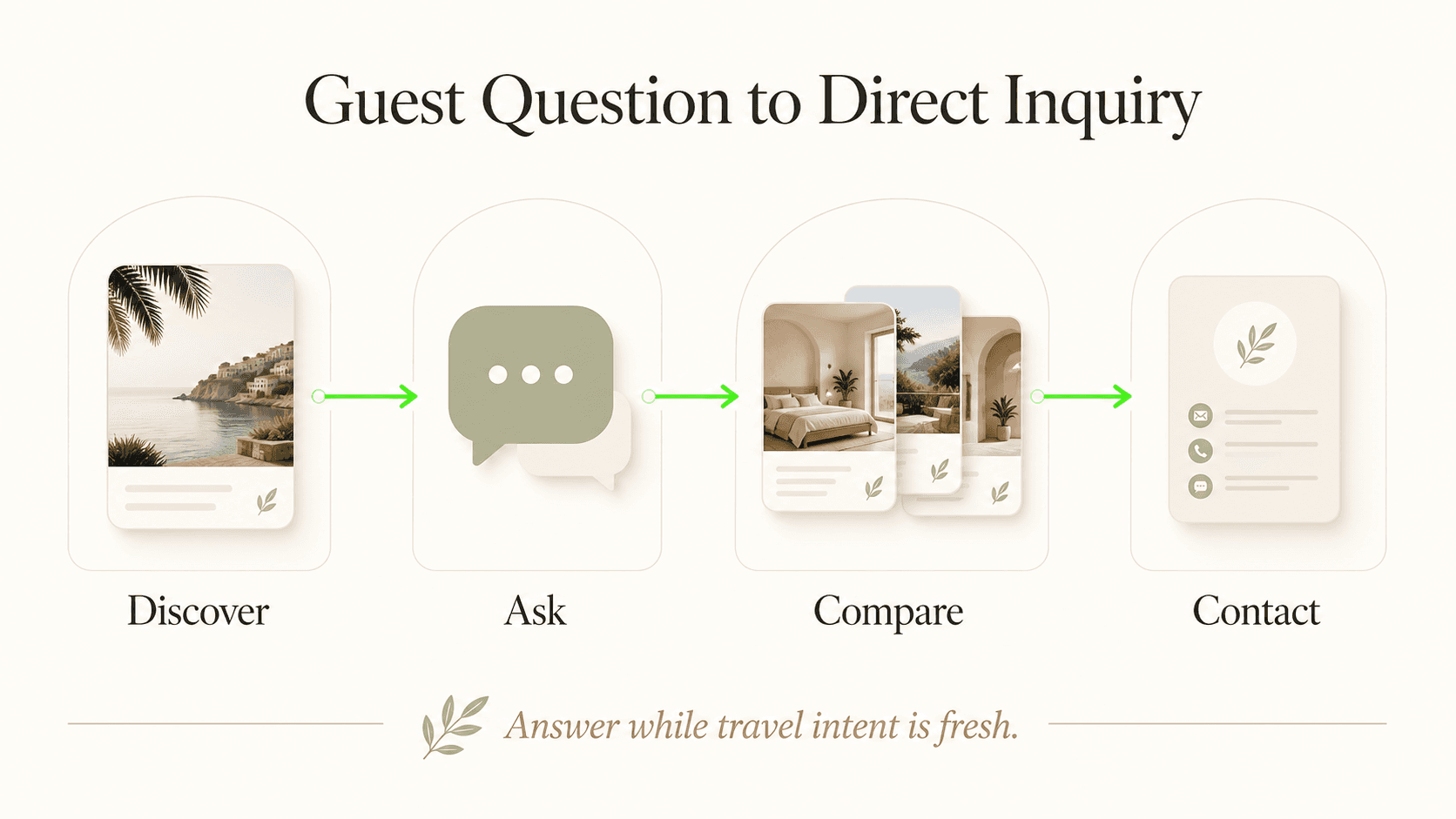
The chatbot must be able to tell your property's story as compellingly as your best sales manager—available at 2 AM when a guest in San Francisco is deep in research mode.
What this looks like in practice: A potential guest at a Scottish castle hotel asks "What's the history of the property and when was it originally built?" The chatbot delivers a rich, engaging response: the original construction date, the family lineage connected to the castle, the major historical events that occurred on the estate, the nature and timeline of the restoration, and what original architectural features were preserved. It then connects the history to the guest experience: "The library where you can have breakfast was the original estate map room—many of the 19th-century estate surveys are still displayed on the walls."
Why it works: Heritage hotel guests are pre-selecting for depth and authenticity. A chatbot that delivers this quality of response in the first interaction establishes the property as genuinely worthy of its rates. It also differentiates your property from look-alike options in the OTA search results that are listed only by stars, price, and generic amenity descriptions.
Key features:
- Chronological property history from founding to present
- Architectural heritage descriptions (original features, restoration decisions)
- Connections to historical figures, events, and cultural significance
- Storytelling tone calibrated to property brand (formal, warm, scholarly, evocative)
2. Multi-Language Support for Global Source Markets
Palace and heritage hotel guests arrive from sophisticated, well-traveled international markets that expect to communicate in their preferred language.
What this looks like in practice: A guest from Riyadh contacts a palace hotel in Granada via Instagram DM asking in Arabic about Ramadan dining arrangements, private villa availability for a family group of twelve, and whether the property can arrange an off-site Andalusian cooking class. The chatbot responds in Arabic, addresses all three questions accurately, and invites the guest to share travel dates for a tailored proposal—all without any staff involvement at what is midnight in Granada.
Why it works: For guests from the Gulf, the ability to receive accurate, culturally sensitive responses in Arabic via a familiar messaging channel like Instagram DM or WhatsApp creates an immediate trust advantage over properties that respond only in English.
Key features:
- Arabic, French, German, Spanish, Portuguese, and other source-market languages
- Culturally calibrated responses (e.g., halal food queries, modesty considerations, prayer facility information)
- Consistent accuracy across languages—trained from property-specific content, not real-time translation
3. Complex Inquiry Handling and Intelligent Escalation
Heritage hotel inquiries are rarely simple. A chatbot that handles complexity gracefully—and knows when to escalate to a human specialist—is essential for high-value properties.
What this looks like in practice: A US guest planning a Loire Valley château circuit asks about coordinating a stay at the château hotel as part of a three-property itinerary, enquires about private guiding for Chambord and Chenonceau, asks whether the property can arrange a private audience with a member of the founding family, and wants to know if there is a harvest festival during their late-September visit. The chatbot handles the itinerary coordination question, answers the guiding and festival questions from its knowledge base, and routes the private audience request to the Guest Relations Manager with full conversation context.
Why it works: Indiscriminate escalation—routing every complex question to staff—defeats the purpose of the chatbot and creates the same bottleneck as not having a chatbot at all. Intelligent escalation routes genuinely staff-required requests (special arrangements, pricing negotiations, unique experience design) while handling everything else automatically.
Key features:
- Distinction between questions the chatbot can answer and requests that require staff
- Escalation with full conversation context so staff never have to ask the guest to repeat themselves
- Priority escalation for high-value inquiry signals (large groups, wedding enquiries, extended stays)
4. Heritage Seasonal Tour and Event Management
Many palace and heritage hotels operate seasonal tour programs, cultural events, and guided history experiences that require proactive communication. The chatbot manages these without dedicated staff involvement.
What this looks like in practice: A guest at a Scottish castle hotel that operates seasonal heritage tours (available only April–October) contacts the property in January asking about the tour program. The chatbot explains the tour season, describes the content and format of the heritage walk, confirms whether advance booking is required, provides pricing, and offers to add the guest to an availability notification list for when April tour dates open—automatically capturing the lead and follow-up permission.
Why it works: Seasonal tour programs are complex to communicate: dates, availability, guide requirements, booking procedures, and cancellation policies all vary. A chatbot configured with this information prevents the common failure mode of a guest arriving during a non-tour period expecting an experience that was not clearly communicated—while also converting research-stage interest into committed bookings.
Key features:
- Seasonal program calendars (tour availability, event dates, restrictions)
- Advance booking and waitlist management via lead capture
- Event-specific information (dress code, duration, physical requirements, language of delivery)
5. Direct Booking and Rate Integrity
Heritage and palace hotels are particularly vulnerable to OTA positioning because their unique properties are difficult to convey through standard OTA content. An AI chatbot can deliver the property story that converts a guest from OTA browsing to direct booking.
What this looks like in practice: A guest who found the property on Booking.com is now on the hotel website asking about room categories. The chatbot delivers a richer description of each suite than the OTA listing provides—including the historical significance of the room, the views, the original furnishings—then gently introduces the direct booking advantage: "Our direct rate for the Queen's Suite this October includes a private heritage tour, welcome cocktails, and early check-in. Would you like to book directly?" The guest receives genuine added value unavailable through the OTA, with no need for a staff member to handle the conversation.
Why it works: Heritage hotel OTA listings typically use generic descriptions because OTA content templates do not accommodate historical narratives. The property website—and the chatbot on it—is the only place the full story is told. A chatbot that tells that story and then closes with a direct booking incentive captures the conversion before the guest leaves the site.
Key features:
- Direct booking link delivery with best-available-rate message
- Suite-by-suite storytelling that goes beyond the OTA listing description
- Direct booking advantages clearly communicated (exclusive experiences, rate advantages, flexible terms)
6. Group, Wedding, and Special Event Inquiries
Heritage and palace hotels are premier venues for destination weddings, milestone celebrations, and corporate retreats. These inquiries are high-value but complex—and they often arrive outside business hours from guests in international time zones.
What this looks like in practice: A couple planning a destination wedding in a Lisbon quinta contacts the property via Instagram DM on a Sunday evening asking about exclusive venue hire, guest capacity, catering arrangements for an international guest list with mixed dietary requirements, and whether the property can host both a civil ceremony and a traditional reception. The chatbot captures the full inquiry with all relevant details, confirms approximate capacity and availability windows, shares a wedding portfolio document (on Pro and Max), and schedules a follow-up consultation with the Events Director—all before anyone in Lisbon starts their work week.
Why it works: Destination wedding and event inquiries have long lead times—often 12–18 months. The property that responds first to a wedding inquiry, even at 11 PM on a Sunday, creates a significant advantage. An AI chatbot that captures the inquiry comprehensively, provides immediate preliminary information, and schedules a human follow-up converts initial interest into a qualified opportunity before competitors respond at all.
Key features:
- Wedding and event inquiry capture with all relevant planning parameters
- Preliminary information package delivery (capacity, catering capabilities, photography notes)
- Consultation scheduling integrated with Events Director calendar via booking link
7. Post-Stay Storytelling and Loyalty
The connection a guest forms with a heritage property can last a lifetime—if it is nurtured appropriately. An AI chatbot can manage post-stay outreach that reinforces the emotional bond and drives return visits.
What this looks like in practice: Three days after checkout from a Loire Valley château hotel, the guest receives a personalized WhatsApp message thanking them for their stay. The message includes a short narrative about an aspect of the property's history that relates to what they experienced during their visit (e.g., the fresco they photographed in the corridor), and an invitation to return for the Winter Heritage Festival in November—with a returning-guest rate and priority suite selection. Guests who respond positively are invited to leave a TripAdvisor review with a direct link.
Why it works: Heritage hotel guests are among the highest-value candidates for repeat visits precisely because their connection to the property is emotional, not merely transactional. A guest who felt the history come alive during their stay is receptive to returning for a different season, a different event, or simply to relive the experience. Personalized post-stay outreach that references their specific experience—not a generic "thank you for staying"—converts this emotional connection into a booking.
Key features:
- Personalized post-stay message referencing the guest's actual stay period and experiences
- Return booking offer with loyalty incentive
- Review invitation with sentiment detection (positive guests invited to review; dissatisfied guests escalated to management)
Put Your Heritage Story to Work 24/7
Hyperleap AI trains on your property's history, architecture, and unique experiences—delivering your story to prospective guests around the world, at any hour, in any language.
Start for freeReal Results: What Heritage Properties Are Achieving
After-Hours Lead Conversion
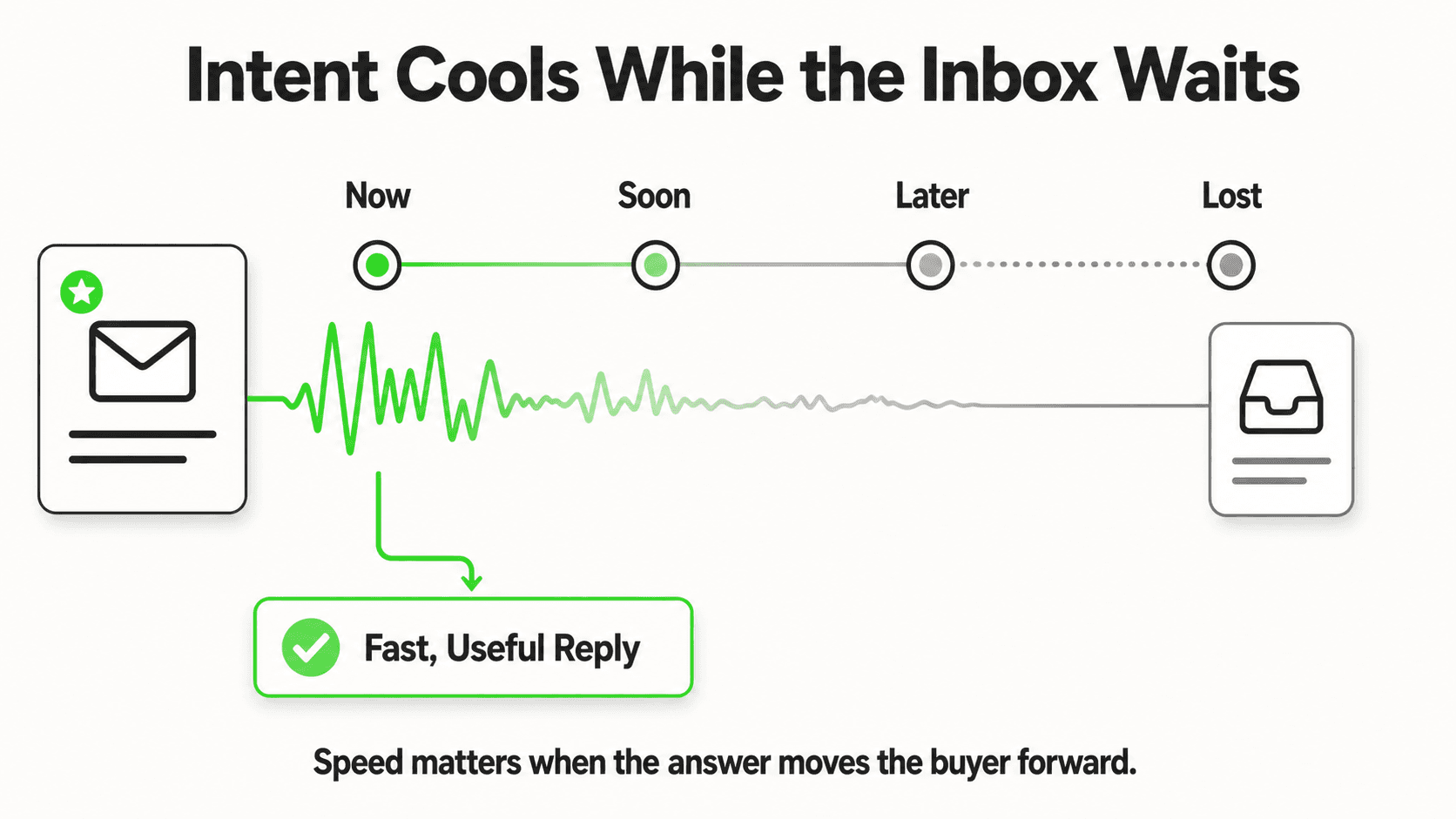
The most immediate impact of deploying an AI chatbot at a heritage property is the capture of after-hours leads that would previously have waited until morning—by which point many guests have moved on.
Jungle Lodges & Resorts—an eco-tourism operator with culturally distinctive properties and a geographically dispersed guest base—captured 3,300+ leads in 90 days with Hyperleap AI, with 35% arriving outside standard business hours. Heritage properties serving guests across North American, European, and Gulf time zones face the same after-hours pattern, though your own mix will depend on your source markets.
For a palace hotel where a single booking might represent $5,000–$15,000 in revenue, capturing after-hours leads with a consistent, compelling response is one of the highest-return investments available.
Improved Storytelling Consistency
Heritage properties with strong sales teams deliver exceptional storytelling—but only during business hours, and only to guests who get through to their most experienced reservations agents. An AI chatbot trained on comprehensive property history ensures every inquirer receives the same quality of narrative response, regardless of when they reach out or which staff member might otherwise have handled the call.
Group and Event Revenue Increase
Properties that use AI chatbots to handle initial group and event inquiries outside business hours capture more opportunities from destination wedding planners and corporate travel managers who routinely reach out during evenings and weekends. These leads, once captured and qualified, are handed to the Events team as pre-warmed opportunities rather than cold inquiries.
Review Score Improvement
Faster, more consistent responses to pre-arrival and in-stay requests translate to higher review scores on TripAdvisor and Google. Heritage hotel guests arrive with high expectations and notice when the quality of communication matches the quality of the property. Post-stay review outreach via WhatsApp, executed consistently by an automated chatbot, increases review velocity without requiring staff to manually follow up with every checkout.
Implementation Roadmap for Heritage Hotels
Phase 1: Heritage Knowledge Base Construction (Days 1–10)
Heritage hotels require a more comprehensive knowledge base than standard hotels, because their differentiation lies in historical detail. During setup, gather:
- Full property history documents (from founding to present)
- Architectural heritage records (original construction, significant renovations, preserved features)
- Guest experience descriptions for each room category (historical significance, views, original furnishings)
- Cultural and heritage programming details (tours, events, dining experiences with historical context)
- Team bios for key heritage custodians (historians, head guides, culinary heritage staff)
- FAQ documents from your reservations team—especially recurring questions about the property's history
This knowledge base investment is the core of the chatbot's capability. The more depth and specificity you provide, the more compellingly the chatbot tells your story.
Phase 2: Language Prioritization (Days 5–10)
Based on your source market analysis, identify the 2–4 languages most important for your guest profile and ensure the knowledge base includes native-language content for each. For Andalusian palace hotels serving Gulf guests, this typically means English, Spanish, and Arabic. For Lisbon quintas, Portuguese and English with German and French support. For Scottish castle hotels, primarily English with French and German as secondary markets.
Phase 3: Channel Deployment (Days 11–15)
Deploy on website chat first (highest-intent inquirers), then WhatsApp for source markets where it is the primary communication channel (the Gulf, Latin America, Southeast Asia), then Instagram DM for visual discovery markets, then Facebook Messenger.
Common Heritage Hotel Chatbot Mistake
Many heritage properties deploy a generic hotel chatbot and simply upload a brochure PDF. This does not produce the quality of storytelling that heritage hotel guests expect. The knowledge base must be purpose-built with historical depth, architectural detail, and the narrative voice your property has cultivated. A chatbot that cannot explain why a room costs what it costs—in historical and experiential terms—will not convert heritage hotel inquiries effectively.
Phase 4: Escalation Workflows (Days 15–20)
Define clear escalation triggers for requests that require human expertise:
- Wedding and group event inquiries above a threshold size
- VIP guest requests (previous guests, referred guests, media inquiries)
- Special historical arrangement requests (private access to the founding family, archival research access)
- Pricing negotiations above standard published rates
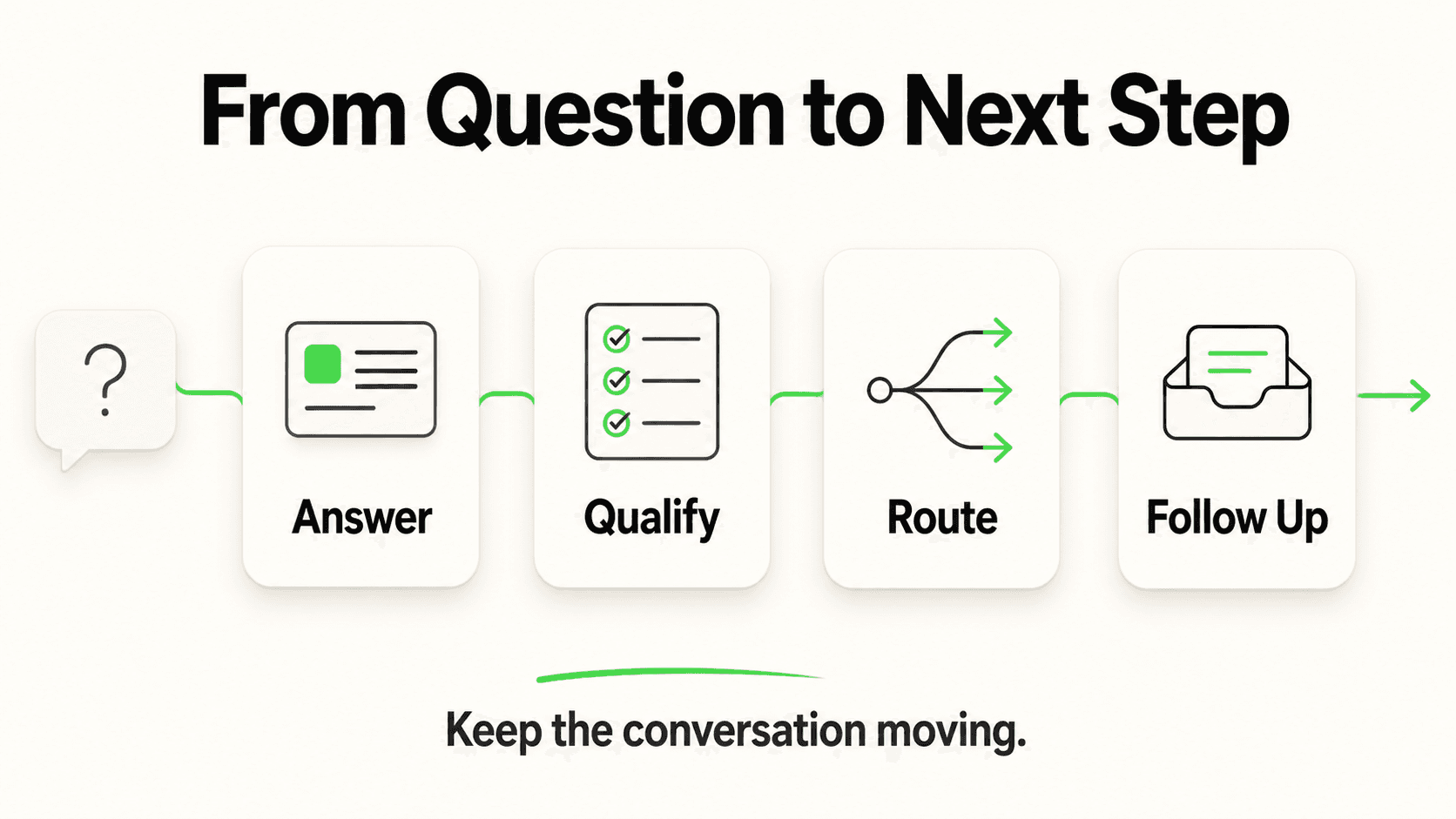
Configure the chatbot to handle everything else while routing these specific categories to the appropriate specialist with full conversation context.
Data Sources
- Hyperleap AI Jungle Lodges deployment case study (2024)
- Virtuoso, Annual Luxury Travel Trends Report (2025)
- Salesforce, State of the Connected Customer (2024)
Your Heritage, Working Around the Clock
A heritage or palace hotel is a living piece of history. Its story—the restoration decisions, the royal connections, the centuries of character accumulated in its walls—is its primary competitive asset. The challenge has always been telling that story at scale: to every inquirer, in every time zone, in every source-market language, at the moment when interest is highest.
AI chatbots purpose-trained on a heritage property's history, architecture, and guest experience turn this challenge into a competitive advantage. The property that tells its story compellingly at 2 AM London time captures the UK guest that a competitor loses to an unanswered inquiry form.
The most prestigious heritage properties in the Loire Valley, Andalusia, Lisbon, Scotland, and Istanbul are beginning to deploy this technology not to reduce the human quality of their hospitality—but to extend it beyond the hours when their human team is available. The story never sleeps. Neither should your response.
Explore the full hospitality agent capabilities or see how hotels use AI to increase direct bookings.
Further Reading
Authoritative external sources used and recommended for further research on this topic:
- Skift hospitality research
- Phocuswright travel and hospitality data
- STR / CoStar hotel performance benchmarks
Frequently Asked Questions
Can an AI chatbot really capture the voice and character of a heritage hotel brand?
Yes, when trained with the right content. The chatbot's brand voice is shaped by the language and tone of the content it is trained on. If your knowledge base is written in the evocative, storytelling style your property uses in its brochures and communications, the chatbot reflects that voice. A palace hotel that trains its chatbot with dry, corporate-sounding content will get dry, corporate-sounding responses. A property that invests in rich, historically grounded content gets a chatbot that communicates with the same depth and character as its best reservations agents. The training content determines the experience.
Will an AI chatbot handle the complex, multi-part questions that heritage hotel guests tend to ask?
Heritage hotel guests do ask more complex questions than typical leisure travelers—about history, restoration, exclusive experiences, and cultural programming. A well-configured chatbot handles the majority of these questions accurately and in depth, because it has been trained on comprehensive property knowledge. For genuinely complex requests—private audience arrangements, exclusive venue hire, multi-week itinerary coordination—the chatbot intelligently escalates to your specialist team with full context, ensuring a seamless handoff rather than an abrupt interruption.
How does the chatbot handle inquiries about experiences that vary by season or are sometimes unavailable?
The chatbot is trained with seasonal availability information and is designed to communicate accurately about what is and is not available during specific periods. For experiences with limited availability or advance booking requirements, the chatbot captures interest and schedules a follow-up rather than making commitments it cannot verify. Your team updates the chatbot's knowledge base as seasonal programs change—a straightforward process through the Hyperleap AI platform.
What languages should a heritage hotel configure the chatbot to support?
This depends on your source market profile. Palace hotels serving Gulf guests should prioritize Arabic alongside English. Properties drawing heavily from France and Germany should add French and German. Lisbon heritage properties may want to support Brazilian Portuguese separately from European Portuguese for Brazilian guests. A practical approach is to configure the 2–3 languages representing your highest-value non-English booking markets first, then expand. Learn more about multi-channel hospitality AI capabilities.
Does the chatbot work for both marketing (storytelling) and operational (booking) conversations?
Yes, and the best heritage hotel chatbots do both simultaneously. The same conversation that begins with a guest asking about the property's history naturally flows into a discussion of room options, package pricing, and ultimately a direct booking link. The storytelling is not separate from the sales process—it is the sales process. A guest who understands and feels the history of the property is the guest most likely to pay the rate that reflects it, and most likely to book directly rather than through an OTA where that story is never told.
How do we maintain the chatbot as our heritage programming and seasonal offerings change?
The Hyperleap AI knowledge base is updated through a straightforward content management interface. When your heritage tour schedule changes, a new seasonal package launches, or restoration work adds a new property feature worth telling guests about, your team updates the relevant content. The chatbot immediately reflects the change across all channels. For most heritage properties, this amounts to a few hours of knowledge base maintenance per month. See hospitality agent capabilities for more detail.
What happens if the chatbot makes an error about historical facts or property information?
Hyperleap AI chatbots are document-grounded, meaning they answer from the content in your knowledge base rather than generating information from general AI training data. This design minimizes the risk of the chatbot inventing historical details or making claims your property cannot support. If the chatbot is not confident it has accurate information on a specific question, it acknowledges the uncertainty and routes the inquiry to staff. The foundation is your property's own verified content—not speculative AI generation.
Tell Your Heritage Story 24/7, in Any Language
Hyperleap AI trains on your property's unique history and deploys across all your guest channels—turning every inquiry into a storytelling moment and every conversation into a direct booking opportunity.
Start for freeIndustry Solutions
See how AI chatbots work for these industries:
Related Articles
AI Chatbot for Luxury Hotels: Service at Scale
Luxury city hotels use AI chatbots to deliver personalized concierge experiences at scale, handle VIP inquiries, and maintain white-glove service 24/7.
AI Chatbot for Golf Resorts: Tee Time Guide
Golf resorts use AI chatbots to handle tee time inquiries, membership questions, and high-net-worth guest service without response delays.
AI Chatbot for Serviced Apartments (2026 Guide)
Serviced apartments use AI chatbots to handle extended-stay inquiries, corporate account questions, and self-check-in coordination 24/7.

AI Chatbot for Honeymoon Resorts (2026 Guide)
Honeymoon resorts use AI chatbots to respond to romantic inquiries 24/7, coordinate special requests, and capture couples before they book elsewhere.