AI Chatbot for Mountain Resorts: Manage Ski Demand 24/7
Mountain and ski resorts in the Alps, Himalayas, and Rockies use AI chatbots to handle seasonal booking surges, activity inquiries, and après-ski guest needs.
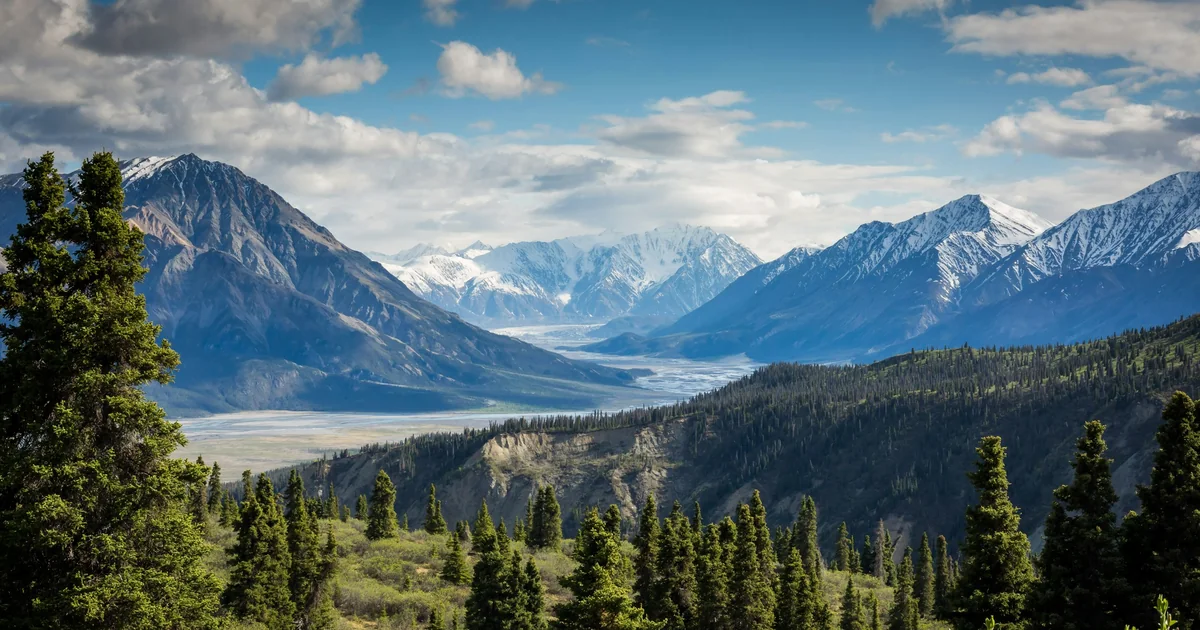
TL;DR: Mountain and ski resorts face an extreme version of hospitality's core challenge: 90% of annual revenue packed into a 10–14 week window, with inquiries arriving from a dozen time zones before guests even know which resort they'll choose. AI chatbots handle the seasonal surge in booking inquiries, ski pass questions, equipment rental logistics, and weather-related concerns around the clock — converting interest into bookings faster than any front-desk team can during peak season.
AI Chatbot for Mountain Resorts: Manage Ski Season Demand 24/7 (2026)
Ski season opens in Zermatt, and the messages start within hours. A family in Sydney asks about Christmas week availability. A group from Houston wants to know if they need ski experience to visit Park City in January. A couple in New York is trying to book Niseko for February and can't find clear answers about equipment rental on the website. It's 11 PM in Switzerland, 3 PM in Utah, and 5 PM in New York simultaneously.
Mountain resorts operate in a paradox: the most inquiries arrive before season opens — when guests are planning 3–6 months ahead — and staff are either scaled back or preparing for the season, not yet at full capacity. According to Skift Research's 2025 Mountain Tourism Report, 58% of ski resort bookings are made more than 60 days in advance, and a substantial share of those bookings begin with an inquiry that tests whether the property responds quickly enough to hold the guest's attention.
For resorts in the Swiss Alps (Zermatt, Verbier, St. Moritz), Utah (Park City, Deer Valley, Snowbird), the Colorado Rockies (Aspen, Vail, Breckenridge), Queenstown New Zealand, and Niseko Japan, the commercial stakes during peak season are enormous. A 10-room chalet filling up during Christmas–New Year week can generate more revenue than the same property earns over the entire shoulder season. Missing an inquiry during that window is not a minor operational gap — it's a significant revenue event.
AI chatbots built for mountain resorts handle the complexity that makes this vertical uniquely demanding: activity bundles, weather-contingent planning, altitude safety questions, multi-nationality guest bases, and the unique rhythms of après-ski guest behavior.
Who This Guide Is For
This guide is for mountain resort GMs, ski lodge owners, chalet operators, and revenue managers at properties in alpine destinations across Asia, Europe, North America, and Oceania. Whether you operate a 10-room boutique chalet in Verbier or a 150-room ski hotel in Aspen, the AI communication challenges — and solutions — are the same.
What Is an AI Chatbot for Mountain and Ski Resorts?
An AI chatbot for mountain resorts is a conversational AI agent deployed across your digital touchpoints — website chat, WhatsApp, Instagram DM, Facebook Messenger — that handles the specialized, high-complexity inquiries that define mountain hospitality at any hour, in any time zone.
Unlike generic hospitality chatbots, a mountain resort AI is trained on the specific operational realities of alpine tourism: ski pass pricing and lift access, equipment rental inventory and fitting procedures, ski school booking and instructor availability, altitude acclimatization guidance, weather and trail condition protocols, and the seasonal rhythms that make mountain properties fundamentally different from beach or city hotels.
For mountain resorts specifically, AI chatbots address:
- Ski pass inquiries (type, duration, access zones, pricing, included lifts)
- Equipment rental logistics (skis, snowboards, boots, helmets, poles, sizing)
- Ski school and lesson inquiries (beginner packages, private lessons, children's programs)
- Weather and snow condition questions (current conditions, upcoming forecast, trail status)
- Activity bundle questions (what's included, what costs extra, how to add on)
- Altitude and safety questions (acclimatization, medical considerations, guest fitness requirements)
- Transfer and transport logistics (airport distance, road conditions, transfer booking)
- Summer season activity inquiries (mountain biking, hiking, paragliding, via ferrata)
- Family vs. adventure segment differentiation (appropriate activities by age and ability)
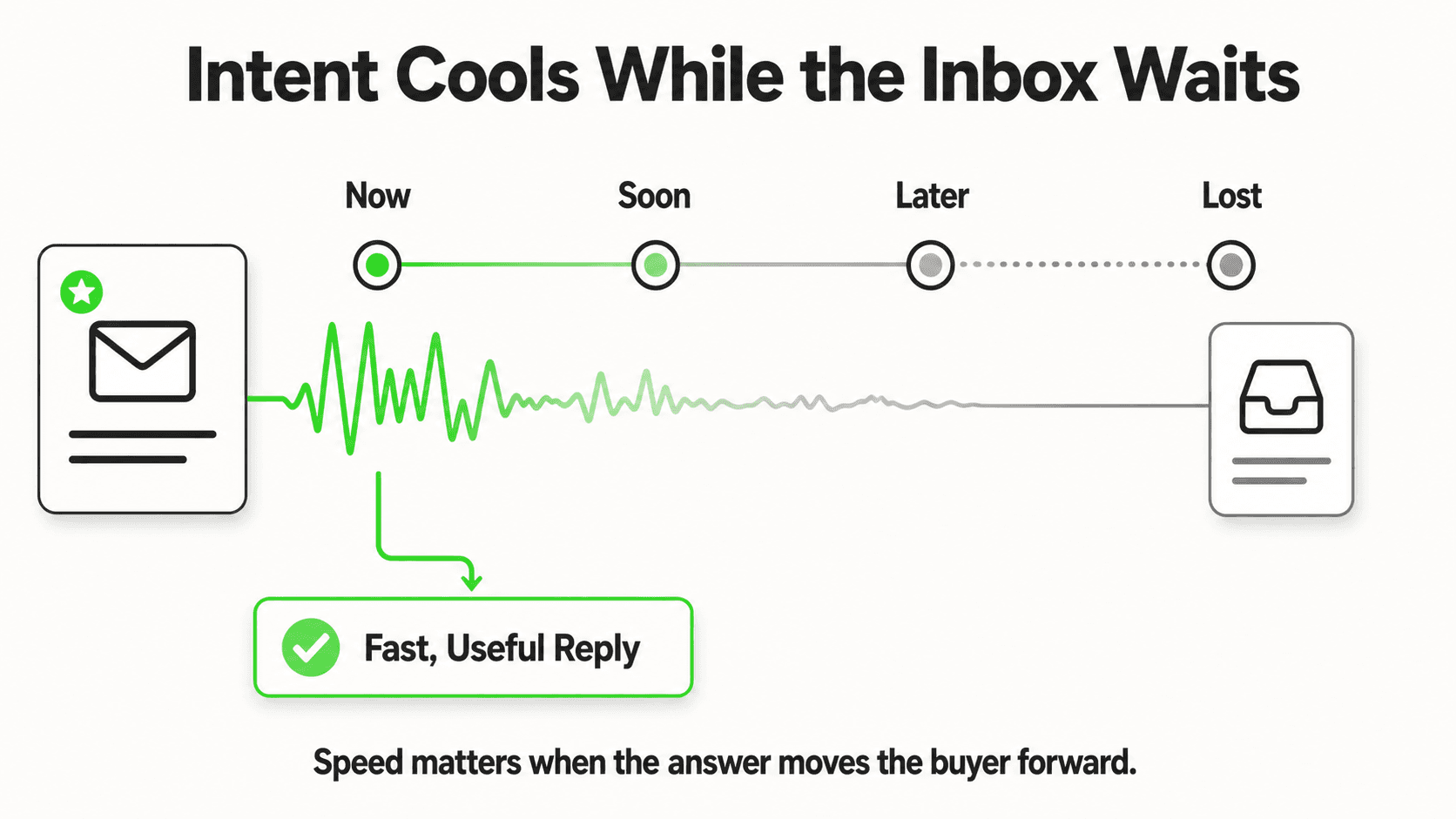
The operational leverage is significant. During peak ski season, a mountain property's inquiry volume can increase 4–6× compared to shoulder season. AI absorbs that surge without requiring proportional staffing increases — and does so at 3 AM when guests in distant time zones are doing their research.
Why Mountain Resorts Face Unique Communication Challenges
Extreme Seasonality Concentrates Pressure
Ski resorts operate on a compressed annual calendar that few hospitality verticals match. Most European alpine resorts have a winter season of 16–20 weeks and a summer season of 8–12 weeks; some properties close entirely during spring and fall. This means 90% of annual revenue — and the associated inquiry volume — arrives in a fraction of the year.
According to Euromonitor International's 2025 Winter Tourism Report, peak week occupancy at leading Alpine resorts regularly exceeds 95%, and advance booking windows have extended to 4–6 months for popular Christmas and New Year periods. Guests who begin their research in September for a January trip expect responses in September — when many mountain properties are still in pre-season mode with skeleton staffing.
Activity Complexity Creates Inquiry Volume
A beach resort guest primarily asks about room type and amenities. A mountain resort guest asks about the room — and also about ski pass pricing, whether beginners are welcome, whether the rental shop has equipment in size 46 boots, how far the gondola is from the property, whether there's a children's ski school, and what happens if it rains.
This complexity means each mountain resort guest inquiry generates 2–4× the message volume of a typical hotel inquiry. Staff who can handle 15 hotel inquiries per hour might handle only 5–7 mountain resort inquiries with equivalent quality — because each requires more detailed, property-specific knowledge.
Multi-Timezone, Multi-Nationality Guest Base
Niseko Japan draws guests from Australia, Hong Kong, Singapore, and the US. Park City draws guests from Los Angeles, New York, Texas, and international visitors from Latin America and Australia. Verbier draws guests from across Europe, the Middle East, and North America. All of these guests are researching in their local time zones, which means inquiry traffic arrives around the clock — not in neat business-hours windows.
For a Zermatt chalet with three front-desk staff, coverage from midnight to 6 AM is impossible without dedicated overnight staffing that few boutique mountain properties can justify economically.
Weather-Dependent Guest Behavior Intensifies Inquiry Spikes
When a major snowstorm hits a ski resort, two things happen simultaneously: guests trying to reach the property get anxious about road conditions, and prospective guests who haven't yet booked see media coverage and suddenly want to make reservations. These inquiry spikes are impossible to predict and staff for traditionally — but AI handles them without any capacity constraints.
Altitude and Safety Questions Require Reliable Answers
Guests visiting high-altitude destinations like Leh-Ladakh (3,500m+), the Swiss Alps (properties above 2,000m), or Aspen (2,400m) have legitimate questions about altitude sickness, acclimatization protocols, and physical fitness requirements. Getting these answers wrong — or not answering them at all — creates liability risk and disappointment upon arrival. AI trained on your property's specific altitude protocols provides consistent, accurate guidance.
Handle Peak Season Demand Without Adding Staff
Mountain resorts using Hyperleap AI respond instantly to activity inquiries, ski pass questions, and booking requests — at 3 AM in Tokyo or 6 PM in London.
See How It Works7 Essential Capabilities Mountain Resorts Need in an AI Chatbot
1. Ski Pass and Lift Access Clarification
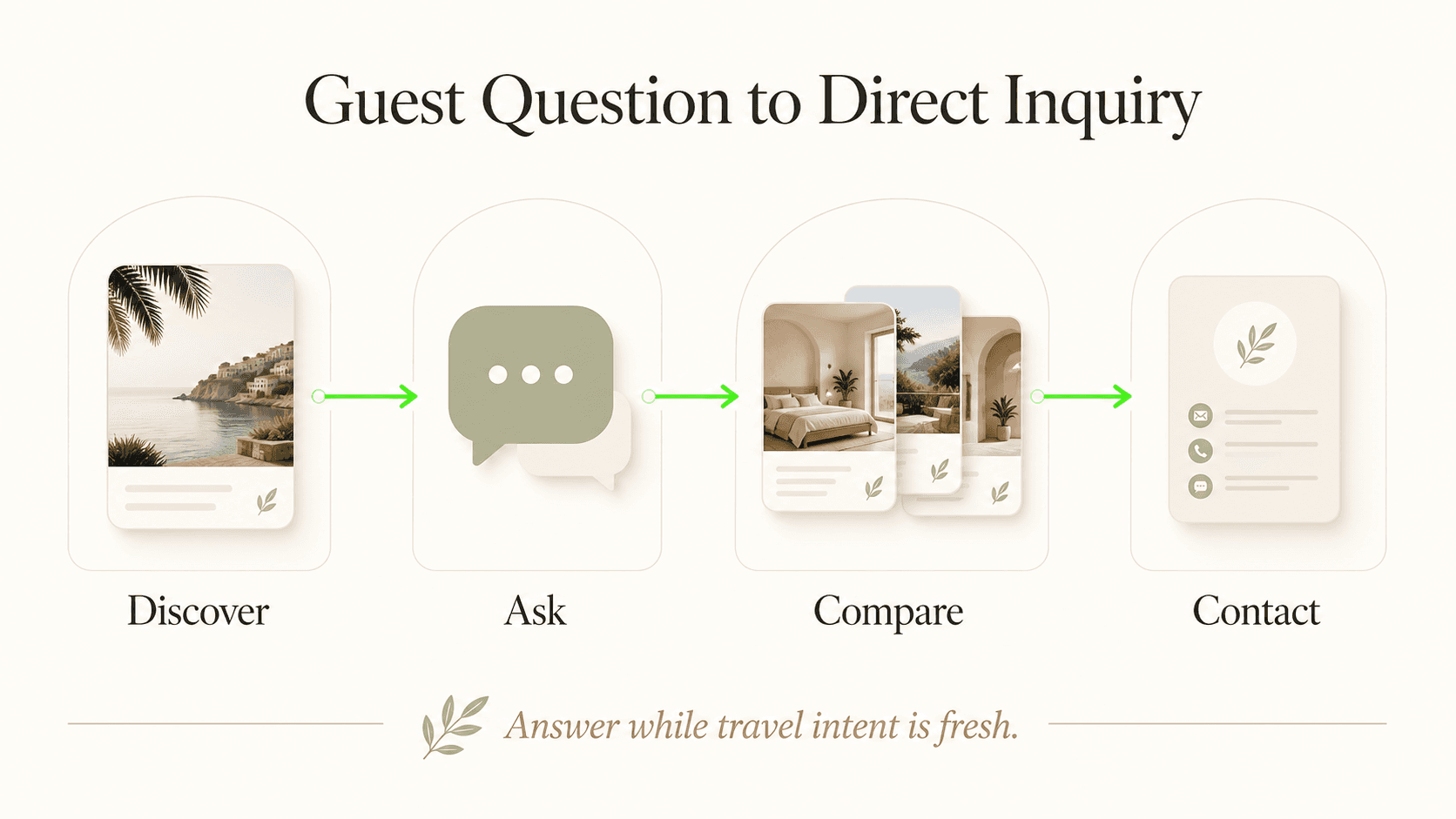
What this looks like in practice: A guest in Singapore messages your Verbier chalet at 10:30 PM local time (3:30 AM Swiss time): "Does the package include ski passes? How many lifts do we get access to? Is the 4 Vallées pass included?" The AI provides a clear breakdown of exactly what's included in the package they've inquired about, what's available as an add-on, the pricing for each option, and how to pre-purchase passes for the best rate.
Real-world impact: Ski pass ambiguity is one of the leading sources of booking abandonment at mountain resorts. Guests who can't get a clear answer on exactly what their trip will cost (including passes) will move to a property that provides that clarity upfront.
Why it works: The AI is trained on your exact package inclusions, the lift network your property accesses, seasonal pass pricing, and upgrade options. It removes the uncertainty that causes prospects to delay booking.
Key features:
- Package-level pass inclusion clarification
- Lift network and access zone explanation
- Pricing for pass add-ons and upgrades
- Multi-day vs. single-day pass guidance for different trip lengths
2. Equipment Rental Inquiry and Pre-Booking
What this looks like in practice: A family of four asks: "We're beginners — do we need to bring our own equipment? What size skis does a 9-year-old need? Do you have helmets?" The AI confirms that full rental packages are available, explains what's included (skis, boots, poles, helmet options), guides the parent through sizing for children, and collects sizing preferences for the rental shop to prepare in advance.
Real-world impact: Equipment rental questions represent a major share of pre-arrival inquiries at mountain resorts that offer rentals or have rental partners. Pre-collecting sizes and preferences reduces arrival-day chaos at the rental shop and creates a better first impression.
Why it works: Parents planning ski trips for young children are often anxious about logistics — particularly equipment. An AI that provides clear, reassuring answers and actively helps prepare reduces that anxiety and increases booking confidence.
Key features:
- Equipment type and quality tier explanation (beginner vs. performance)
- Sizing guidance for adults and children
- Pre-arrival sizing collection for rental preparation
- Helmet and safety gear availability confirmation
3. Ski School and Lesson Booking Assistance
What this looks like in practice: A guest who has never skied before asks: "Can a complete beginner join a group lesson? My wife skied once 10 years ago — which class is right for her? Do you have English-speaking instructors?" The AI explains the lesson structure, recommends the right level for each guest's experience, confirms instructor language availability, and provides pricing and booking options.
Real-world impact: First-time and beginner skiers are one of the largest growth segments in mountain tourism — but they have the highest anxiety levels about their ability to participate. An AI that confidently answers "yes, complete beginners are very welcome, here's exactly what the first day looks like" converts hesitant inquiries into bookings.
Why it works: Ski lesson inquiries require property-specific knowledge: your school's structure, instructor certifications, group lesson sizes, private lesson availability, and any beginner packages or guarantees. The AI delivers this context consistently.
Key features:
- Ability level assessment and class recommendation
- Group vs. private lesson comparison
- Children's ski school and supervision details
- Instructor language availability
- Lesson pricing and booking process
4. Weather, Snow Conditions, and Trail Status Communication
What this looks like in practice: It's mid-January and a guest arriving in three days messages: "How's the snow right now? Will the runs be open?" The AI provides current snow depth and conditions (from your resort's official report), the status of key runs relevant to the guest's ability level, and the forecast for their arrival window.
Real-world impact: Weather anxiety is real for mountain resort guests. Guests who booked expecting a specific experience need reassurance — or honest communication about conditions — before they arrive. AI that provides timely, accurate condition updates builds trust and reduces disappointment-driven reviews.
Why it works: Condition updates are repetitive but time-sensitive. Rather than staff answering the same "how's the snow?" question 20 times a day, AI handles it consistently using the most current information you've provided — with the understanding that dynamic conditions require regular knowledge base updates.
Key features:
- Current snow depth and quality communication
- Run and trail status by ability level
- Upcoming forecast integration
- Conditions-based activity alternative suggestions (e.g., "if snowfall is heavy this week, here are our indoor recommendations")
5. Altitude and Safety Information for New Visitors
What this looks like in practice: A guest planning to visit a high-altitude Himalayan resort asks: "I have mild hypertension — is it safe for me to come? What altitude is the resort at?" The AI provides the resort's elevation, clearly explains that it cannot provide medical advice, recommends the guest consult their physician, and shares the resort's standard acclimatization guidance (rest on arrival day, hydration, avoiding strenuous activity for 24 hours).
Real-world impact: Altitude queries are common at Himalayan, Andean, and some Alpine destinations. Getting them wrong creates real risk — both to guest health and to the property's reputation. AI trained to give accurate elevation information, appropriate safety guidance, and clear medical referrals manages this category responsibly.
Why it works: The AI delivers consistent, legally appropriate responses to medical and safety questions — acknowledging limitations, providing factual property information, and routing sensitive cases appropriately.
Key features:
- Property elevation and altitude context
- Standard acclimatization protocol guidance
- Medical referral for guests with health concerns
- Emergency contact and local hospital information
- Fitness requirement guidance for specific activities
6. Multi-Activity Summer Season Inquiry Handling
What this looks like in practice: A guest in July asks: "We're not skiers — what is there to do in summer? Is it worth visiting?" The AI explains the resort's summer activity portfolio — mountain biking trails, hiking routes, paragliding, via ferrata, mountain pools, spa facilities — and positions summer as a distinct and compelling experience rather than a lesser version of winter.
Real-world impact: Many mountain resorts generate 20–30% of annual revenue in summer. Converting skiing-unfamiliar guests into summer visitors extends the commercial season and reduces dependence on winter weather variability.
Why it works: Summer mountain tourism is a different product requiring a different conversation. AI trained on your summer offering can speak enthusiastically and specifically about the experiences available — not just list them generically.
Key features:
- Summer activity portfolio explanation
- Trail difficulty and suitability guidance
- Family vs. adventure segment routing
- Seasonal event and festival awareness
- Package comparison (winter vs. summer inclusions)
7. Transfer, Transport, and Arrival Logistics
What this looks like in practice: A group of six guests arriving from London ask: "Is there a shuttle from Geneva airport? How long does it take? Can you book it for us?" The AI confirms transfer options (shared shuttle, private transfer, rental car, train connection), provides approximate journey times and costs, and shares the booking link or collects their flight details to arrange the transfer.
Real-world impact: Mountain resort transfers are logistically complex and often involve significant guest anxiety — particularly for international visitors unfamiliar with Alpine or Himalayan road conditions in winter. AI that proactively handles this removes a major friction point from the booking process.
Why it works: Transfer questions are among the most repetitive inquiry categories for mountain resorts with international guests. AI handles them at scale, 24/7, in all time zones — and ensures guests arrive with confidence rather than confusion.
Key features:
- Transfer option explanation (shuttle vs. private vs. public transport)
- Journey time and road condition guidance (including winter road warnings)
- Transfer booking assistance or escalation
- Arrival time and check-in timing coordination
- Road closure and chain/cable requirement communication for winter arrivals
Real Results: What Mountain Resorts Are Achieving
Booking Surge Management Without Staffing Spikes
Mountain resort operators who deploy AI chatbots consistently report that the system's most immediate value appears when inquiries spike — typically at season announcement, when early snowfall generates media coverage, and during school holiday booking windows. Inquiry volumes during these spikes can reach 5–10× normal levels over 48–72 hours. AI absorbs the surge without queues, without degraded response quality, and without emergency staffing calls.
For comparison: Jungle Lodges & Resorts in Karnataka captured 3,300+ leads in 90 days with Hyperleap AI, with 35% of those inquiries arriving outside regular business hours. Mountain resorts with international guest bases in multiple time zones can expect even higher after-hours inquiry proportions — often 40–50% of total inquiry volume.
International Guest Conversion
Mountain resorts with international guest bases report that AI's multilingual capability and 24/7 availability particularly benefits international conversion. A Tokyo-based guest researching Niseko at 8 PM Japan time (midnight for most Western properties) gets an instant response rather than waiting until morning for a reply that may arrive after they've booked a competitor.
Activity Upsell Through Conversation
Properties that train their AI to proactively discuss activity packages — ski lessons, guided tours, spa treatments — report higher ancillary revenue per booking. When the AI naturally mentions "Would you like to add a beginner ski lesson package? Our guests who are new to skiing find they have more confidence and enjoyment with a lesson on day one" during a booking inquiry conversation, the upsell conversion is meaningful because it's contextually relevant, not a generic pop-up.
Reduced Cancellations from Better Pre-Arrival Communication
Mountain resorts that use AI to proactively communicate conditions, transfers, and arrival logistics see reduced cancellation rates from guests who arrived uncertain or anxious about what they'd find. When guests arrive knowing exactly what to expect — and having already organized their ski pass, lesson, and transfer — their satisfaction from the first hour is higher.
Implementation Roadmap for Mountain Resorts
Pre-Season Setup (8–12 Weeks Before Opening)
Begin building your knowledge base during the shoulder season when staff have capacity. Document:
- Complete pricing for all packages, room types, and activity add-ons
- Ski pass details: type, access zones, pricing, and purchase process
- Equipment rental process and sizing guidance
- Ski school structure, levels, and instructor language availability
- Transfer options with journey times and booking process
- Altitude information and acclimatization guidance (if applicable)
- Snow and weather condition communication protocols
Connect AI to your WhatsApp Business API and website chat. Configure escalation rules for your peak season team — who receives alerts for group bookings, who handles medical inquiries, what happens when a guest requests a booking the AI can't confirm.
Season Launch (Weeks 1–3)
Deploy the AI in parallel with your human team for the first two weeks. Review every conversation daily. Mountain resort guest inquiries are often highly specific ("Is run 14 open for intermediates?" or "Can a 7-year-old join the children's ski school?") and your knowledge base will need refinements based on actual inquiry patterns.
Identify the 10 most common questions in week one and ensure the AI answers each with property-specific precision. Vague or generic answers in mountain hospitality destroy trust quickly — guests are making significant travel investments and need confident, specific responses.
Mid-Season Optimization
By week four, inquiry patterns will be clear. Use conversation analytics to identify:
- Questions being escalated that AI could handle with better knowledge base content
- Seasonal patterns in inquiry types (pre-arrival condition questions spike 72 hours before arrival)
- Language distribution of inquiries (useful for staffing translation support during overflow)
- Activity upsell opportunities being missed in conversations
Update the knowledge base weekly during season with current conditions, pricing changes, and any operational changes.
Post-Season Review and Summer Preparation
At season close, review the full season's AI conversation data. Identify the knowledge base gaps that caused the most escalations. Use this data to build a more comprehensive knowledge base for next season — and to configure a summer-season knowledge base if your property operates year-round.
Pricing for Mountain Resorts
Hyperleap AI plans start at $40/month (Plus) with a 7-day free trial. The Pro plan at $100/month supports 2 chatbots and 8 channels, useful for mountain resorts managing both a website chat and a WhatsApp number, or operating more than one property. Credit card required; no free plan.
Frequently Asked Questions
Can an AI chatbot handle the complexity of ski pass and activity bundle inquiries?
Yes — provided the AI is trained on your specific product portfolio. The key is a comprehensive knowledge base that covers your exact pass types, access zones, inclusion/exclusion details, and pricing. AI trained on this detail provides more consistent, accurate answers than front-desk staff who may not have memorized every package permutation. The AI doesn't guess; it only answers from what you've configured.
How does AI handle last-minute condition inquiries during season?
AI handles condition inquiries based on the information in its knowledge base. For mountain resorts with rapidly changing conditions, this means updating your knowledge base regularly — ideally daily or per official resort report during season. Many properties build a simple protocol: the morning team updates the AI's conditions section each morning, and the AI handles all condition inquiries throughout the day from that updated information. For real-time integration, the platform's REST API can be used to push condition updates automatically from your resort management system.
What about altitude safety questions — is it risky to have AI answer those?
AI should be configured to handle altitude questions responsibly: provide factual elevation information, share standard acclimatization guidance, and clearly recommend that guests with specific health concerns consult their physician. The AI should not attempt to provide individualized medical advice. When configured correctly, this approach is both safer and more consistent than leaving the question to front-desk staff who may have varying knowledge of appropriate guidance.
How do mountain resorts handle multilingual guests with AI?
Modern AI platforms handle multilingual conversations naturally — detecting the language the guest is writing in and responding in the same language. This is particularly valuable for mountain resorts with international guest bases. A Park City property receiving inquiries in English, Spanish, and occasional Portuguese can be served by the same AI system without separate language setups.
What channels should a mountain resort prioritize for AI deployment?
Website chat and WhatsApp are the highest-priority channels for most mountain resorts globally. WhatsApp is dominant in India and much of Asia, Europe, and Latin America; website chat captures inquiry traffic from guests who found the property through Google or a booking site. Instagram DM is important for resorts with strong social presence, as mountain photography drives significant social discovery. Facebook Messenger is secondary but worth adding as it requires minimal additional setup.
Does the AI require technical staff to maintain?
No. Updating the knowledge base, refining responses, and adding new question-answer pairs is designed for non-technical operations staff. The platform provides a content management interface where you add and edit information. No coding is required. For API integrations with booking systems, initial setup may require a brief technical engagement, but day-to-day maintenance is entirely operations-driven.
The Commercial Case for 24/7 Mountain Resort AI
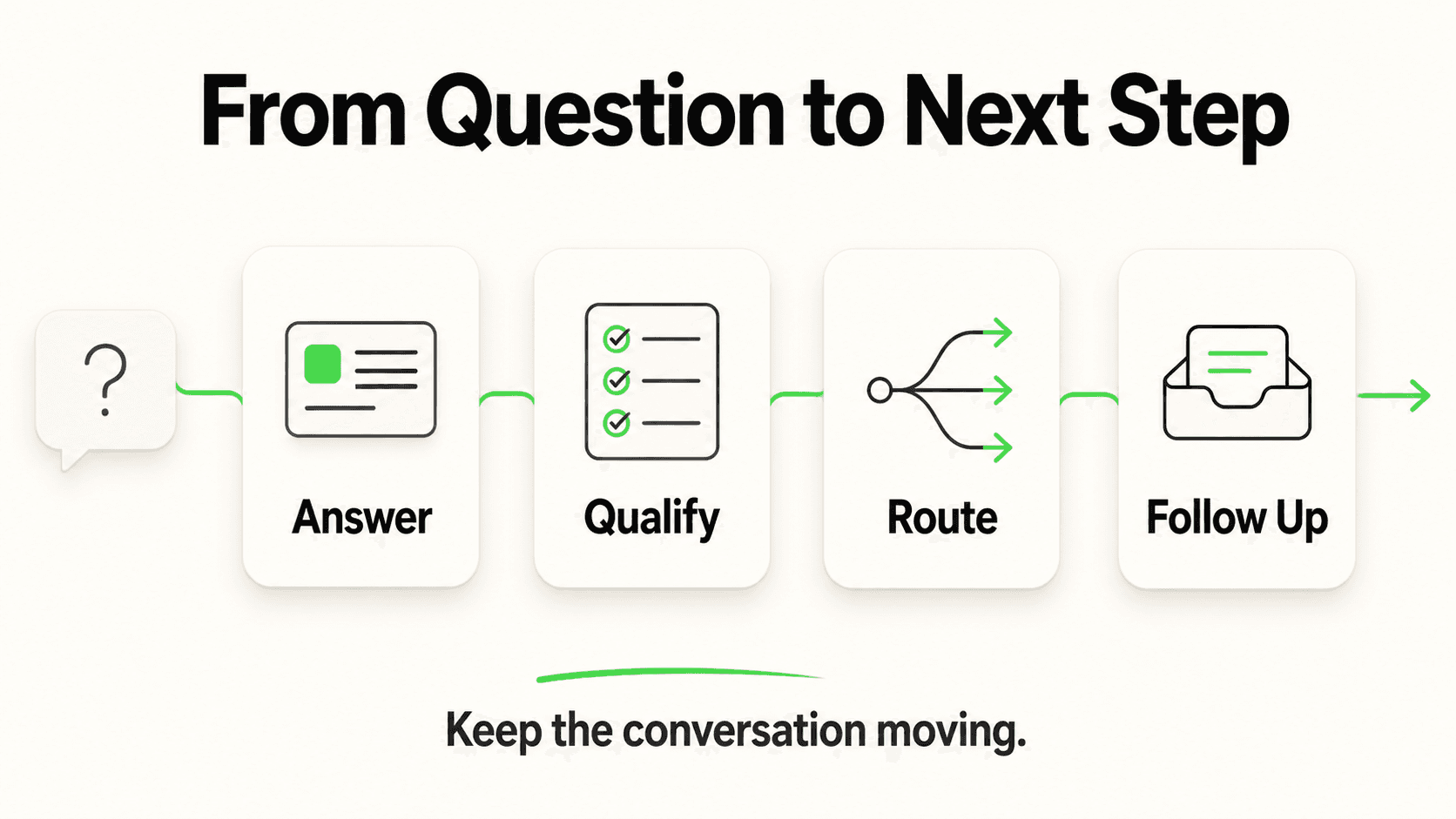
Mountain tourism is a high-stakes, time-compressed business. Every week of peak season represents a disproportionate share of annual revenue. Every inquiry that arrives at 2 AM from a Tokyo family and receives no response until the next afternoon is a booking that went somewhere else — or didn't happen at all.
AI chatbots don't replace the human expertise that defines great mountain hospitality. The ski instructor relationship, the concierge who knows the best off-piste routes, the front-desk team that remembers returning guests — these remain irreplaceable. What AI does is ensure that no inquiry falls through the gaps that extreme seasonality, time zone distribution, and activity complexity create.
Properties that have deployed AI across hospitality operations consistently discover that the after-hours capture alone — the inquiries that arrive when no staff is available — justifies the investment. Learn more about how hotels use AI to increase direct bookings and explore our pricing options to find the right plan for your mountain property.
Can the chatbot handle bookings and availability questions?
Yes — it answers room and rate questions, captures booking inquiries with check-in / check-out / party-size details, and shares your direct-booking link or routes serious bookers to your reservations team. It does not replace your PMS — it sits in front of it as a 24/7 inquiry desk.
Further Reading
Authoritative external sources used and recommended for further research on this topic:
- Skift hospitality research
- Phocuswright travel and hospitality data
- STR / CoStar hotel performance benchmarks
Ready to Handle Ski Season Demand 24/7?
Mountain resorts using Hyperleap AI capture inquiries at any hour, from any time zone — converting ski season interest into bookings before guests move on.
Start Free TrialRelated Resources
- AI for Hospitality Businesses — Complete guide for property operators
- Hotels Lose Revenue from After-Hours Inquiries — The cost of missed inquiries
- WhatsApp Automation for Hotels and Resorts — WhatsApp strategy for mountain properties
- 7 Ways Hotels Use AI to Increase Direct Bookings — Revenue strategy
- Jungle Lodges Case Study — First-party deployment results
- Pricing — Plans starting at $40/month
Glossary
- WhatsApp Business API — High-priority channel for international mountain resort guests
- What is a Chatbot? — AI chatbot fundamentals
- Multi-variant (locations, courses, etc) — How the chatbot answers for the right property when you run several
Related Articles

AI Chatbot for Luxury Hotels: Service at Scale
Luxury city hotels use AI chatbots to deliver personalized concierge experiences at scale, handle VIP inquiries, and maintain white-glove service 24/7.

AI Chatbot for Golf Resorts: Tee Time Guide
Golf resorts use AI chatbots to handle tee time inquiries, membership questions, and high-net-worth guest service without response delays.

AI Chatbot for Serviced Apartments (2026 Guide)
Serviced apartments use AI chatbots to handle extended-stay inquiries, corporate account questions, and self-check-in coordination 24/7.

AI Chatbot for Honeymoon Resorts (2026 Guide)
Honeymoon resorts use AI chatbots to respond to romantic inquiries 24/7, coordinate special requests, and capture couples before they book elsewhere.