AI Chatbot for Wellness & Spa Retreats: 24/7 Guidance
Wellness retreats and spa hotels worldwide use AI chatbots to match guests to the right programs, answer sensitive health questions, and fill retreat schedules.

TL;DR: Wellness retreats and spa properties operate on a guest journey that begins weeks or months before arrival — with detailed health intake questions, program selection anxiety, and sensitive personal health disclosures. AI chatbots trained on Ayurvedic protocols, detox program structures, practitioner availability, and retreat scheduling handle this pre-arrival journey 24/7, converting curious inquiries into committed bookings while routing genuinely sensitive health concerns to qualified staff.
AI Chatbot for Wellness & Spa Retreats: Guide Guest Journeys 24/7 (2026)
A guest in Chicago is considering a 14-day Panchakarma retreat in Sedona. She has questions — many of them. Is Panchakarma appropriate for her thyroid condition? What is the difference between the classical and modern protocols? Can she continue her daily meditation practice? What does a typical day look like? Will she feel worse before she feels better? Are vegetarian dietary restrictions fully accommodated? Can she bring her partner who isn't interested in Ayurveda?
She will ask these questions at 8 PM on a Sunday. If the Sedona resort answers by Monday morning, she'll book. If the answer doesn't arrive until Tuesday, she's already had a 45-minute consultation call with a Bali property that responded Sunday night.
Wellness retreats face a distinctive version of the hospitality communication challenge: their guests' questions are more personal, more complex, and more time-sensitive than almost any other hospitality segment. A guest considering a detox retreat has anxieties that go beyond "is there parking" — they want to know if this experience is safe for them, right for them, and worth the investment. Getting the first response right — and getting it quickly — is often the difference between a booking and a lost prospect.
According to Global Wellness Institute's 2025 Wellness Tourism Report, the global wellness tourism market reached $1.4 trillion in 2024, with average spend per wellness trip approximately 60% higher than conventional tourism. These are high-value guests making considered, research-intensive decisions — and the first property to provide substantive, thoughtful answers to their specific questions earns a disproportionate share of those bookings.
AI chatbots trained on a wellness property's specific programs, protocols, practitioner expertise, and guest journey architecture handle this inquiry depth at any hour — while knowing precisely when to route a genuinely sensitive health question to a qualified Ayurvedic physician or senior therapist.
Who This Guide Is For
This guide is written for wellness retreat directors, Ayurveda resort operators, spa hotel managers, yoga and meditation retreat organizers, and therapeutic wellness property owners in Arizona, California, Bali, Switzerland, Tuscany, the Maldives, and globally. If your property operates a health-focused guest journey with complex program selection, this guide addresses your specific challenges.
What Is an AI Chatbot for Wellness and Spa Retreats?
An AI chatbot for wellness and spa retreats is a conversational AI agent trained on your property's specific therapeutic programs, treatment protocols, practitioner expertise, dietary philosophy, and contraindication guidelines — deployed across website chat, WhatsApp, Instagram DM, and Facebook Messenger to guide prospective guests from initial curiosity through committed booking.
Unlike general hospitality AI, a wellness retreat chatbot understands the vocabulary, concerns, and decision-making process of health-conscious travelers. It can explain the difference between Panchakarma and Rasayana, the progression of a detox program from day one to day seven, why a Kativasthi treatment might be recommended for lower back concerns, or what a typical day at a yoga-focused retreat includes from sunrise to evening.
For wellness and spa properties specifically, AI chatbots address:
- Program selection guidance (matching guest health goals to appropriate programs)
- Treatment explanation and protocol clarification
- Practitioner qualification and experience communication
- Pre-arrival health intake preparation
- Dietary accommodation and fasting protocol explanation
- Contraindication screening (routing genuinely medical questions to qualified staff)
- Long stay vs. day spa vs. residential retreat clarification
- Seasonal retreat scheduling and availability
- Couples and group inquiry handling
- Post-retreat maintenance protocol communication
- Booking process, deposit, and cancellation policy guidance
The central design principle: AI handles the breadth of information and reassurance that wellness guests need, while routing genuine medical consultations to qualified practitioners.
Why Wellness Retreats Face Distinctive Communication Challenges
The Guest Journey Begins Long Before Arrival
A guest booking a 7-night yoga retreat typically researches for 3–6 weeks before committing. A guest considering Panchakarma may research for 2–3 months. This extended pre-booking journey generates sustained inquiry volume — often across multiple channels, as the guest moves from initial website research to WhatsApp conversation to Instagram DM questions about the property's visual aesthetic.
Most wellness properties have a small guest experience or reservations team responsible for this extended pre-booking journey. That team is also managing current guests, coordinating practitioners, and handling the operational complexity of running a therapeutic property. The result: pre-booking communication is inconsistent, delayed, and often insufficient for the depth of questions wellness guests ask.
Health Questions Require Both Knowledge and Sensitivity
Wellness guests ask personal health questions as a normal part of the booking process. "Is this program appropriate for someone with high blood pressure?" "I've been dealing with chronic fatigue — what would you recommend?" "Can I do a fasting protocol if I'm on antidepressants?" These questions require thoughtful responses — accurate enough to be genuinely helpful, careful enough not to constitute medical advice, and warm enough to honor the vulnerability in the asking.
Generic hospitality AI cannot handle this balance. AI trained specifically for wellness properties, with clear protocols for when to answer and when to route to a practitioner, handles it well.
Program Selection Complexity Is Inherently Consultative
A wellness retreat's product is not a room type — it's a carefully designed therapeutic experience. Recommending the right program requires understanding the guest's health goals, timeline, previous experience, physical condition, and expectations. This is inherently a consultative process that traditionally required a long email exchange or phone call before a booking could even be initiated.
AI can handle the initial consultation layer: asking the right questions, presenting the appropriate program options with clear descriptions, and either converting the conversation to a booking or escalating to a practitioner for a deeper consultation on complex cases.
Seasonal and Multi-Season Program Scheduling
Ayurveda retreats schedule their most intensive programs (classical Panchakarma) around seasonal transitions, which Ayurvedic tradition considers optimal, and desert resorts in Arizona run their peak programming October through April. Yoga retreats have different programming in summer vs. winter. Swiss thermal spas have different peak seasons than Bali wellness properties.
Availability questions for seasonal programs are both complex and high-stakes — getting them wrong (promising availability that doesn't exist, or failing to communicate the optimal season) affects both bookings and guest outcomes.
Privacy and Sensitivity Are Non-Negotiable
Wellness guests are sharing health information — sometimes very personal — in the process of booking. They need to trust that this information is handled with discretion. AI interactions for wellness properties must be configured with clear privacy commitments and must never ask for more personal health detail than necessary for program selection. Sensitive medical disclosures should be routed to qualified staff through secure channels, not handled in open chat.
Long-Stay Guest Logistics Are Complex
A guest booking a 21-day Panchakarma residency has logistics needs that differ fundamentally from a weekend spa guest: what to bring and what to leave at home, how to prepare the body in the two weeks before arrival, what dietary adjustments to begin pre-arrival, whether to arrange travel insurance for wellness travel, and how to communicate the commitment to family members who may be skeptical.
AI can handle all of this pre-arrival guidance systematically, ensuring every long-stay guest arrives fully prepared.
Guide Every Wellness Guest Journey From First Inquiry
Wellness retreats using Hyperleap AI match guests to the right programs, answer detailed protocol questions, and fill retreat schedules — around the clock.
See How It Works7 Essential Capabilities Wellness Retreats Need in an AI Chatbot
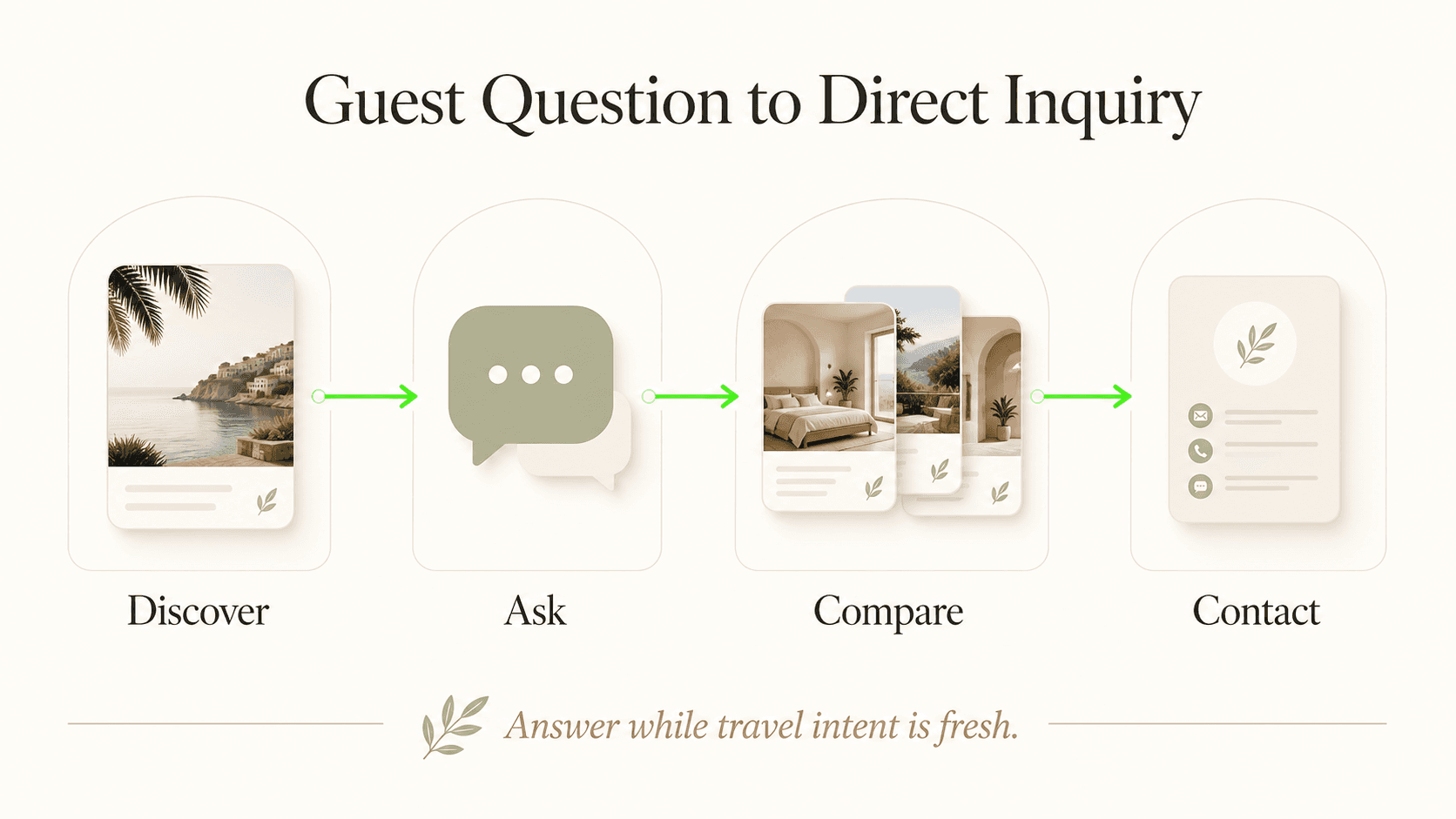
1. Program Matching and Recommendation
What this looks like in practice: A prospective guest messages: "I've been dealing with stress and sleep issues for two years. I want a genuine reset, not just a spa vacation. What would you recommend?" The AI asks 2–3 clarifying questions (duration available, any medical conditions, previous retreat experience), then presents 2–3 program options with clear descriptions of what each addresses, typical day structure, duration, and expected outcomes — with a recommendation based on the guest's stated situation.
Real-world impact: Program selection anxiety is the single biggest pre-booking barrier for wellness retreat guests. A guest who doesn't know whether they need Panchakarma, a detox program, a yoga retreat, or simply a spa holiday will default to no booking rather than the wrong choice. AI that guides this decision converts hesitant interest into committed bookings.
Why it works: The AI is trained on your complete program portfolio — not just descriptions, but the specific health concerns each program addresses, the appropriate guest profiles, and the outcomes past guests have experienced. It asks the right questions and presents relevant options rather than listing everything available.
Key features:
- Health goal-based program filtering and recommendation
- Comparative program descriptions with specific differentiation
- Duration and intensity options within each program type
- Expected outcomes and typical guest experience
- Escalation to practitioner consultation for complex health situations
2. Ayurveda and Treatment Protocol Explanation
What this looks like in practice: A guest asks: "What exactly is Panchakarma? I've read conflicting things about it — some sites say it's quite intense. What happens during the detoxification phase?" The AI provides a clear, accurate explanation of Panchakarma's five classical components, explains how your property implements the protocol (classical vs. modified), describes the Purva Karma (preparatory phase), what the detoxification experience typically involves, and what guests can expect to feel during each phase.
Real-world impact: Guests who understand what they're booking — including the challenging aspects — arrive better prepared and have higher satisfaction outcomes. Guests who arrive surprised by the intensity of classical Panchakarma write negative reviews about experiences that are actually standard practice.
Why it works: The AI is trained on your property's specific protocol implementation, the Ayurvedic tradition it follows, and the language that accurately represents both the benefits and the genuine challenges of therapeutic treatments. It is knowledgeable enough to be useful without overstepping into individual medical advice.
Key features:
- Treatment-by-treatment explanation (Abhyanga, Shirodhara, Virechana, Basti, etc.)
- Program phase descriptions (preparatory, main treatment, rejuvenation)
- Realistic experience-setting for guests unfamiliar with Ayurveda
- Distinction between classical and modified protocols
- Property-specific practitioner qualification explanation
3. Health Intake and Contraindication Screening
What this looks like in practice: A guest asks: "I have Type 2 diabetes — can I still do the detox program? Are there any modifications?" The AI acknowledges the question thoughtfully, explains that the property welcomes guests with various health conditions when properly screened, clarifies that a formal health intake with the on-site Ayurvedic physician is required before program confirmation, and asks for basic details to determine whether an advance consultation is needed before booking.
Real-world impact: Wellness retreats that handle contraindication questions poorly either accept guests who shouldn't be on certain programs (creating safety and satisfaction risks) or reflexively discourage guests who could safely participate with minor modifications (leaving revenue on the table). AI that applies appropriate screening logic routes cases correctly.
Why it works: The AI is configured with your property's contraindication guidelines — which conditions require physician screening, which are absolute contraindications, and which are manageable with program modifications. It handles these questions without either inappropriate medical advice or unnecessary refusals.
Key features:
- Standard contraindication screening questions
- Clear routing protocol for complex medical situations
- Physician consultation scheduling for borderline cases
- Privacy-appropriate handling of health disclosures
- Program modification option presentation
4. Retreat Scheduling, Availability, and Seasonal Guidance
What this looks like in practice: A guest asks: "When is the best time to do Panchakarma? We're flexible on timing and want to maximize the benefit." The AI explains the Ayurvedic seasonal principle (Karkidaka Masam as optimal; the value of seasonal change junctions generally), gives your property's program calendar for the year, notes which periods are in high demand for early booking, and provides availability for the guest's flexible window.
Real-world impact: Wellness guests who are flexible on timing often choose based on which property provides the best guidance about optimal timing. AI that demonstrates genuine traditional knowledge — not just listing available dates — builds credibility and differentiation.
Why it works: Seasonal scheduling guidance is a knowledge-intensive task that requires understanding both Ayurvedic tradition and your specific program calendar. AI trained on both delivers this guidance consistently to every guest who asks.
Key features:
- Seasonal program optimization guidance (Ayurvedic, yoga, detox seasonality)
- Real-time or regularly-updated availability calendar
- High-demand period early booking encouragement
- Waitlist management for fully-booked periods
- Optimal duration recommendation by program type
5. Pre-Arrival Preparation and Lifestyle Guidance
What this looks like in practice: A guest who has booked a 14-day Ayurveda program asks: "What should I be doing in the two weeks before I arrive? Is there anything I should avoid?" The AI provides a structured pre-arrival protocol: dietary adjustments to begin (reducing processed food, alcohol, and caffeine; timing of last non-vegetarian meal), mental preparation suggestions (reducing screen time, beginning a sleep routine), items to bring and items to leave at home, and how to communicate the upcoming commitment to family.
Real-world impact: Guests who arrive well-prepared for an intensive wellness program achieve better outcomes, are more satisfied with their experience, and write better reviews. Pre-arrival guidance is an investment in guest outcomes that pays returns in satisfaction and advocacy.
Why it works: Pre-arrival preparation is systematic — the same guidance applies to every guest on a given program type. AI delivers it comprehensively and proactively rather than waiting for guests to ask, ensuring no guest arrives unprepared because they didn't know what to ask.
Key features:
- Program-specific pre-arrival dietary protocol
- Lifestyle preparation recommendations
- Packing list for wellness travel (what to bring, what to leave)
- Mental preparation and expectation-setting guidance
- Pre-arrival contact point for last-minute questions
6. Couples, Group, and Corporate Wellness Inquiry Handling
What this looks like in practice: A corporate HR manager messages: "We want to do a corporate wellness retreat for 15 people. Some are very into wellness; others are skeptics. Can you accommodate both?" The AI presents your property's corporate wellness program structure, addresses the skeptic concern directly ("our programs include accessible entry points that don't require prior wellness experience"), provides a program format overview for mixed-experience groups, and collects dates, group size, and objectives for the corporate programs team.
Real-world impact: Corporate wellness retreats represent high-value multi-room bookings that are increasingly common as organizations invest in employee wellbeing. AI that handles these inquiries professionally and collects the right details ensures no corporate inquiry falls through the gap.
Why it works: Corporate inquiry handling requires different communication than individual guest inquiries — more structured, more outcome-focused, less personal. AI configured to recognize corporate inquiry signals and shift register accordingly handles this segment effectively.
Key features:
- Individual vs. couple vs. group program differentiation
- Mixed-experience group accommodation explanation
- Corporate retreat structure and customization options
- Group size capacity and accommodation configuration
- Lead collection for corporate programs team escalation
7. Post-Retreat Maintenance and Return Visit Cultivation
What this looks like in practice: A guest who completed a 7-day detox program six weeks ago messages: "I felt amazing for three weeks after leaving, but some of my old habits are creeping back. What should I do? Should I come back?" The AI provides the post-retreat maintenance protocol relevant to their completed program, suggests specific daily practices, answers questions about managing the transition back to regular life, and presents options for a follow-up retreat (short maintenance visit vs. full program repeat).
Real-world impact: Post-retreat engagement converts one-time guests into returning guests. Wellness retreat guests who experience genuine benefits are highly motivated to maintain them — but need guidance. AI that provides ongoing post-retreat support builds the kind of ongoing relationship that drives loyalty and referrals.
Why it works: Post-retreat inquiries arrive at unpredictable times and are frequently missed because they don't look like booking inquiries. AI ensures every post-retreat question is answered promptly — and every answered question is an opportunity to deepen the guest relationship.
Key features:
- Program-specific post-retreat maintenance protocol
- Daily practice recommendations by program type
- Return visit scheduling and program recommendation
- Ongoing lifestyle guidance for common maintenance challenges
- Anniversary and seasonal retreat outreach triggers
Real Results: What Wellness Properties Are Achieving
Higher Booking Conversion Through Consultative AI
Wellness retreat properties that deploy AI report improved inquiry-to-booking conversion because the AI handles the consultative layer that previously required a staff member's time for every inquiry. When a guest can get substantive, personalized program guidance at 9 PM on a Sunday, they convert during that research session rather than going into a 3-day email exchange that often ends without a booking.
Jungle Lodges & Resorts in Karnataka — a nature and wildlife hospitality property — captured 3,300+ leads in 90 days of AI deployment, with 35% arriving after regular business hours. For wellness properties with international guests researching across time zones, the after-hours proportion is consistently high — often making the difference between capturing or losing an inquiry.
Read the full Jungle Lodges case study for detailed deployment results from a hospitality context directly comparable to wellness lodge operations.
Reduced Consultation Burden on Senior Practitioners
Wellness retreat properties frequently involve senior Ayurvedic physicians, yoga teachers, or therapists in the pre-booking consultation process. When AI handles the initial information layer — program explanations, scheduling, general wellness orientation — the physician's consultation time is reserved for genuinely complex health questions that require their expertise. This improves both practitioner efficiency and consultation quality.
Better-Prepared Guests, Better Outcomes
Properties that use AI for pre-arrival preparation communication report that guests arrive better prepared for intensive programs — having followed dietary guidelines, adjusted expectations appropriately, and packed correctly. Better-prepared guests have more positive early-program experiences, which reduces the "day three crisis" (when Panchakarma guests often feel worse before they feel better) — or at minimum, means they're prepared for it rather than surprised.
International Booking Growth
Sedona and Scottsdale wellness resorts, Bali wellness retreats, and Swiss thermal spas with strong international audiences report that AI deployment specifically helps international conversion — guests in the UK, Germany, Australia, and across the US who research during their own evenings get substantive responses to their wellness questions without waiting for the time zone to align. This is the same dynamic documented in the Jungle Lodges deployment: 35% of leads captured outside business hours, a segment that was previously lost.
Implementation Roadmap for Wellness Retreats
Phase 1: Program and Protocol Documentation (3–4 Weeks)
The wellness retreat knowledge base is more complex than a conventional hotel's — and more important to get right. A shallow knowledge base produces unhelpful generic answers that damage credibility with informed wellness guests. Invest time in:
Program documentation:
- Complete description of each program: target conditions, duration, typical day structure, expected experience arc, appropriate guest profile
- Contraindication guidelines per program: which conditions require physician screening, which are absolute contraindications, which allow modified protocols
- Treatment menu with accurate descriptions (using correct traditional terminology)
- Practitioner credentials and specializations
Scheduling and availability:
- Seasonal program calendar
- Availability management process (real-time or regularly updated)
- High-demand period identification for early booking encouragement
Pre-arrival and post-retreat protocols:
- Program-specific pre-arrival dietary and lifestyle guidance
- Packing lists per season and program type
- Post-retreat maintenance protocols per program
- Return visit program recommendations
Sensitivity and privacy protocols:
- Routing rules for medical questions requiring physician consultation
- Privacy commitment language
- Appropriate and inappropriate questions for AI vs. human handling
Phase 2: Channel Selection and Testing (1–2 Weeks)
For wellness retreats, WhatsApp and website chat are the highest-priority channels. Instagram DM is important for properties with strong visual presence — wellness content performs extremely well on Instagram, and guests frequently move from Instagram discovery to DM inquiry.
Test the AI specifically on:
- Complex program comparison questions
- Contraindication scenarios (configure carefully before going live)
- Sensitivity of language around health topics
- Handling of guests in vulnerable emotional states who may be seeking retreat as part of a health crisis
Phase 3: Supervised Launch (Weeks 3–6)
Go live with close supervision. Wellness AI requires more careful monitoring in the first weeks than conventional hospitality AI because the stakes of wrong answers are higher. Review every escalated conversation daily. Pay particular attention to:
- Are contraindication questions being routed correctly?
- Is the AI maintaining appropriate privacy around health disclosures?
- Are program recommendations matching the intent behind the inquiry?
Set a protocol: any guest who mentions a serious health condition (cardiac issues, active cancer, pregnancy, severe psychiatric conditions) is immediately escalated to a qualified practitioner, never handled autonomously by AI.
Medical Routing Is Non-Negotiable
Configure your AI with clear escalation triggers for serious health disclosures. The AI should acknowledge the question warmly, explain that this type of question is best addressed by your on-site physician, and offer to schedule a consultation. Never configure AI to provide individualized medical advice or treatment recommendations for serious health conditions.
Frequently Asked Questions
How does AI handle sensitive health disclosures from wellness guests?
Wellness AI should be configured with clear routing protocols for health disclosures. Questions about general program suitability (e.g., "Is yoga appropriate for someone with back pain?") can be handled with informational responses and appropriate qualifications. Questions involving specific medical conditions, medications, or chronic disease management should be routed immediately to a qualified practitioner. The AI's role is to acknowledge the question with warmth, explain why a practitioner consultation is appropriate, and facilitate that consultation — not to provide individualized health advice.
Can AI explain Ayurvedic and traditional wellness concepts accurately?
Yes — when trained on accurate, traditional source material. The knowledge base should be developed in collaboration with your senior practitioners, using the correct traditional terminology and your property's specific protocol language. AI trained on accurate traditional content provides more consistent explanations than front-desk staff who may have varying levels of traditional knowledge. For properties with deep traditional protocols, the AI becomes a consistent voice of the tradition.
How do we handle the emotional aspect of wellness guest communication?
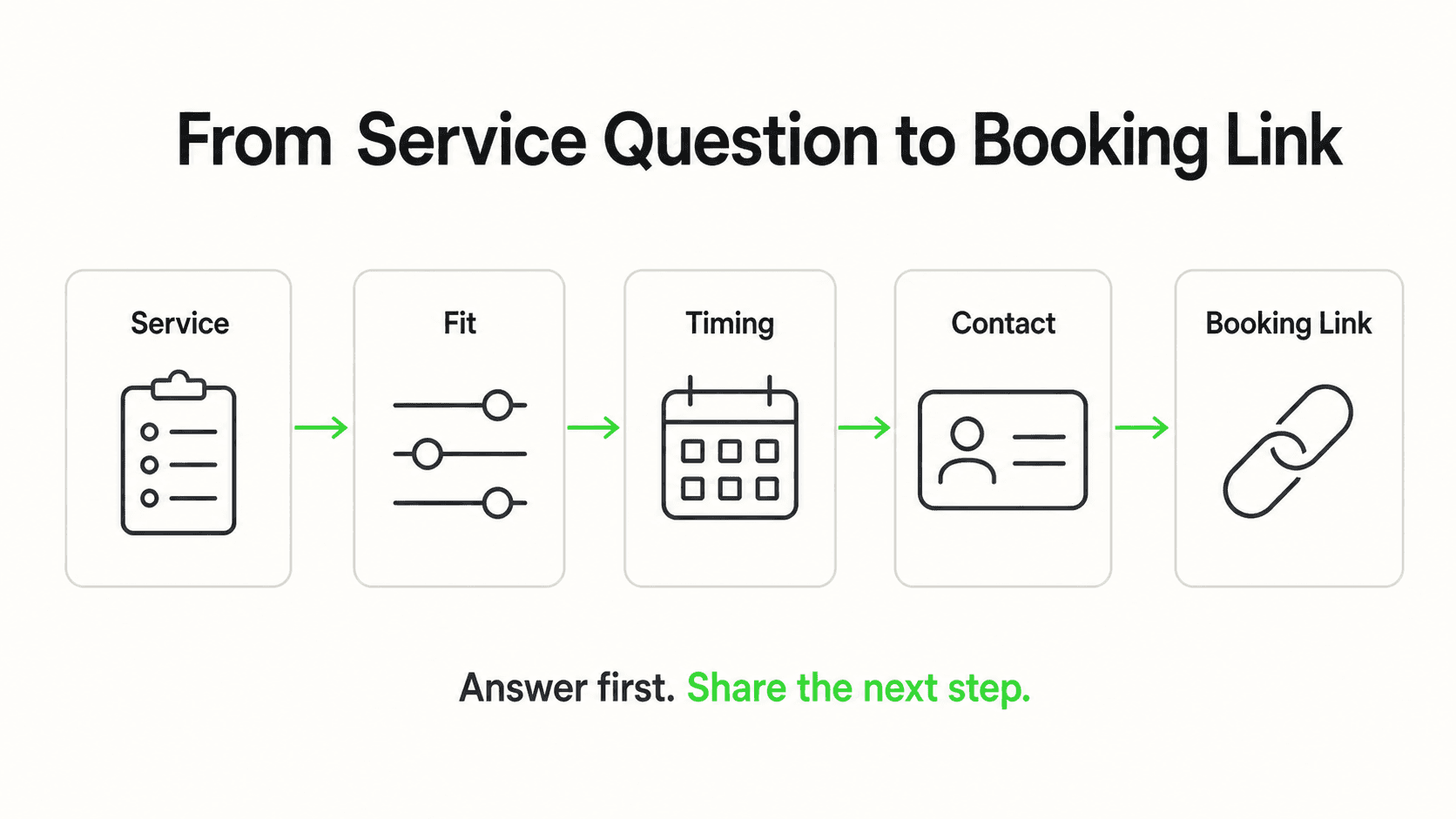
Many wellness retreat guests are reaching out at emotionally significant moments — dealing with burnout, chronic illness, life transitions, or grief. AI for wellness properties should be configured to recognize these signals and respond with warmth, patience, and genuine care — not efficiency language. When guests signal emotional vulnerability, the AI should slow down, acknowledge the feeling, and gently guide toward a human connection if appropriate. This requires thoughtful prompt configuration, not standard hospitality AI defaults.
What's the difference between AI for day spas vs. residential retreats?
Day spa AI focuses primarily on appointment scheduling, treatment menu explanation, pricing, and availability. Residential retreat AI handles a far more complex guest journey: multi-week program selection, health screening, pre-arrival preparation, stay logistics, and post-retreat maintenance. The knowledge base, conversation architecture, and escalation protocols differ significantly. Properties that offer both day spa and residential programs may need to configure different AI conversation flows for each context.
How long does it take for wellness AI to start capturing bookings?
Most wellness properties see meaningful inquiry capture within the first week of going live, as the AI begins responding to inquiries that previously waited hours or days for human response. Booking conversion improvement is typically visible within 2–4 weeks as the AI refines its program recommendations and the knowledge base is updated based on actual inquiry patterns. Full optimization typically takes 6–8 weeks, after which conversion rates stabilize at a meaningfully improved level.
Can AI support multiple wellness modalities at the same property?
Yes. Properties offering Ayurveda, yoga, detox, thermal spa, and meditation programs can configure the AI to handle each modality with appropriate vocabulary and program logic. The AI asks clarifying questions to understand which modality is most relevant to the guest's inquiry and then draws from the relevant section of the knowledge base. Multi-modality properties often find AI particularly valuable because the breadth of offerings creates more decision complexity for guests — which is exactly what AI-guided program matching resolves.
The Wellness Journey Starts With the First Message
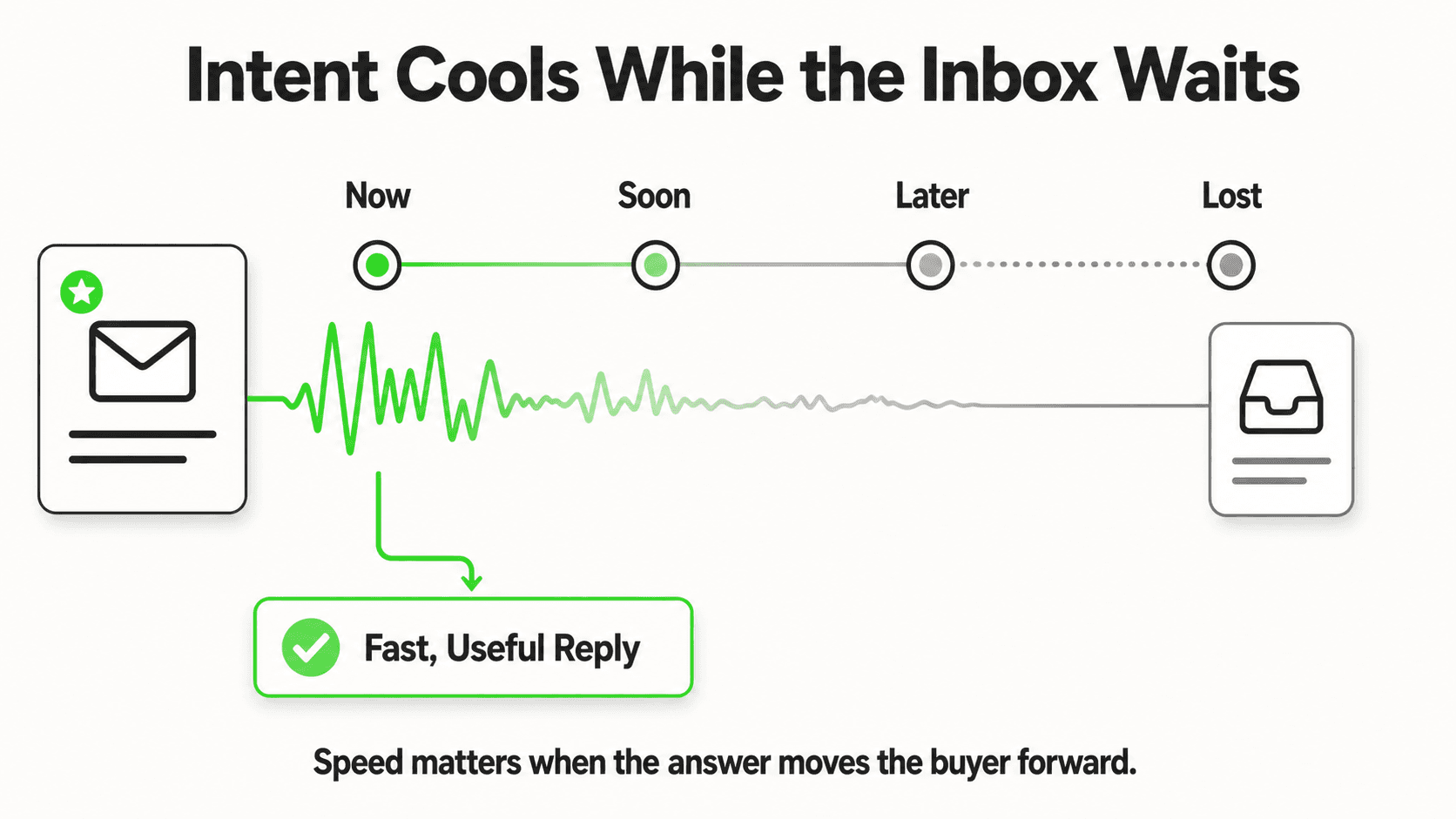
The decision to attend a wellness retreat is rarely made casually. It emerges from a real need — a body that's depleted, a mind that needs quiet, a chronic condition seeking relief, a life that needs resetting. Guests who are considering your property are asking questions that matter to them deeply. The quality of your first response shapes their entire perception of the property's care and expertise.
AI doesn't replace the human relationships that define great wellness hospitality — the Ayurvedic physician who understands a guest's constitution, the yoga teacher whose guidance creates a breakthrough, the therapist whose hands release years of tension. What it does is ensure that every prospective guest — wherever they are, whatever time they're researching — receives a response worthy of your property's healing tradition.
For Sedona and Scottsdale wellness resorts, Bali wellness retreats, Swiss thermal spas, Tuscany yoga retreats, and Maldives wellness overwater properties serving guests from across the globe, 24/7 AI communication isn't a luxury feature. It's the difference between reaching the guest during their research window and missing them entirely.
Explore how Hyperleap AI helps hospitality properties manage the full guest journey, review our pricing options, or read about how hotels increase direct bookings for additional revenue strategy context.
Can the chatbot handle bookings and availability questions?
Yes — it answers room and rate questions, captures booking inquiries with check-in / check-out / party-size details, and shares your direct-booking link or routes serious bookers to your reservations team. It does not replace your PMS — it sits in front of it as a 24/7 inquiry desk.
Further Reading
Authoritative external sources used and recommended for further research on this topic:
- Skift hospitality research
- Phocuswright travel and hospitality data
- STR / CoStar hotel performance benchmarks
Ready to Guide Every Wellness Guest Journey 24/7?
Wellness retreats using Hyperleap AI match guests to the right programs, answer treatment questions, and fill retreat schedules — at any hour, in any time zone.
Start Free TrialRelated Resources
- AI for Hospitality Businesses — Complete guide for wellness and resort properties
- Hotels Lose Revenue from After-Hours Inquiries — The cost of unanswered pre-booking questions
- WhatsApp Automation for Hotels and Resorts — WhatsApp strategy for wellness properties
- 7 Ways Hotels Use AI to Increase Direct Bookings — Revenue strategy for hospitality
- Jungle Lodges Case Study — 3,300+ leads in 90 days from a live hospitality deployment
- Pricing — Plans starting at $40/month
Glossary
- WhatsApp Business API — High-priority channel for international wellness guests
- What is a Chatbot? — AI chatbot fundamentals
- Multi-variant (locations, courses, etc) — How the chatbot answers for the right retreat when you run several
Industry Solutions
See how AI chatbots work for these industries:
Related Articles

AI Chatbot for Luxury Hotels: Service at Scale
Luxury city hotels use AI chatbots to deliver personalized concierge experiences at scale, handle VIP inquiries, and maintain white-glove service 24/7.

AI Chatbot for Golf Resorts: Tee Time Guide
Golf resorts use AI chatbots to handle tee time inquiries, membership questions, and high-net-worth guest service without response delays.

AI Chatbot for Serviced Apartments (2026 Guide)
Serviced apartments use AI chatbots to handle extended-stay inquiries, corporate account questions, and self-check-in coordination 24/7.

AI Chatbot for Honeymoon Resorts (2026 Guide)
Honeymoon resorts use AI chatbots to respond to romantic inquiries 24/7, coordinate special requests, and capture couples before they book elsewhere.