Top 10 Conversational Marketing Platforms for SMBs (2026)
Find the best conversational marketing platforms for your SMB. Our 2026 guide compares 10 top tools on features, pricing, channels, and ideal use cases.
It's 10 PM. A guest wants to know if your hotel allows late check-in. A patient is trying to confirm insurance before booking. A homebuyer asks for a tour on Instagram and expects an answer before they contact the next agent. If no one replies until morning, the lead often disappears.
Conversational marketing platforms help capture that demand after hours, across web chat, SMS, WhatsApp, and social DMs. In practice, the value is not “having a chatbot.” It is routing the right inquiry fast, answering common questions accurately, filtering junk leads, and getting a real person involved when the conversation has buying intent. Teams comparing tools should also understand the difference between basic scripted bots and AI agents that can handle more context. This guide on AI agents vs chatbots is useful background if you are sorting through that distinction.
The upside is clear, but setup quality decides whether a platform produces booked appointments or just more inbox noise. Small businesses and multi-location operators usually run into the same problems: fragmented messaging across channels, stale location data, limited staff coverage, and too many platforms built mainly for venture-backed SaaS sales teams. A dental group, restaurant chain, property team, and local service business do not need the same system, even if every vendor claims broad coverage. Firms focused on lead generation in local service categories already know channel fit and response speed drive revenue. You can see a parallel in Transactional LLC on landscaper SEO, where local buying behavior shapes what ultimately converts.
That is the lens for this shortlist.
These are the conversational marketing platforms I would seriously evaluate for SMBs and multi-location brands in hospitality, healthcare, real estate, local services, and lean ecommerce. The goal is simple: choose the platform that fits your business model, your staffing reality, and your channel mix, so conversations turn into verified leads, scheduled visits, and revenue.
Table of Contents
- 1. Hyperleap AI
- 2. Intercom
- 3. Drift
- 4. HubSpot Live Chat and Chatbots
- 5. Qualified
- 6. Tidio
- 7. Manychat
- 8. Crisp
- 9. Birdeye Webchat plus Chatbot AI
- 10. Landbot
- Top 10 Conversational Marketing Platforms, Feature & Pricing Comparison
- Start the Conversation Your Next Steps
1. Hyperleap AI
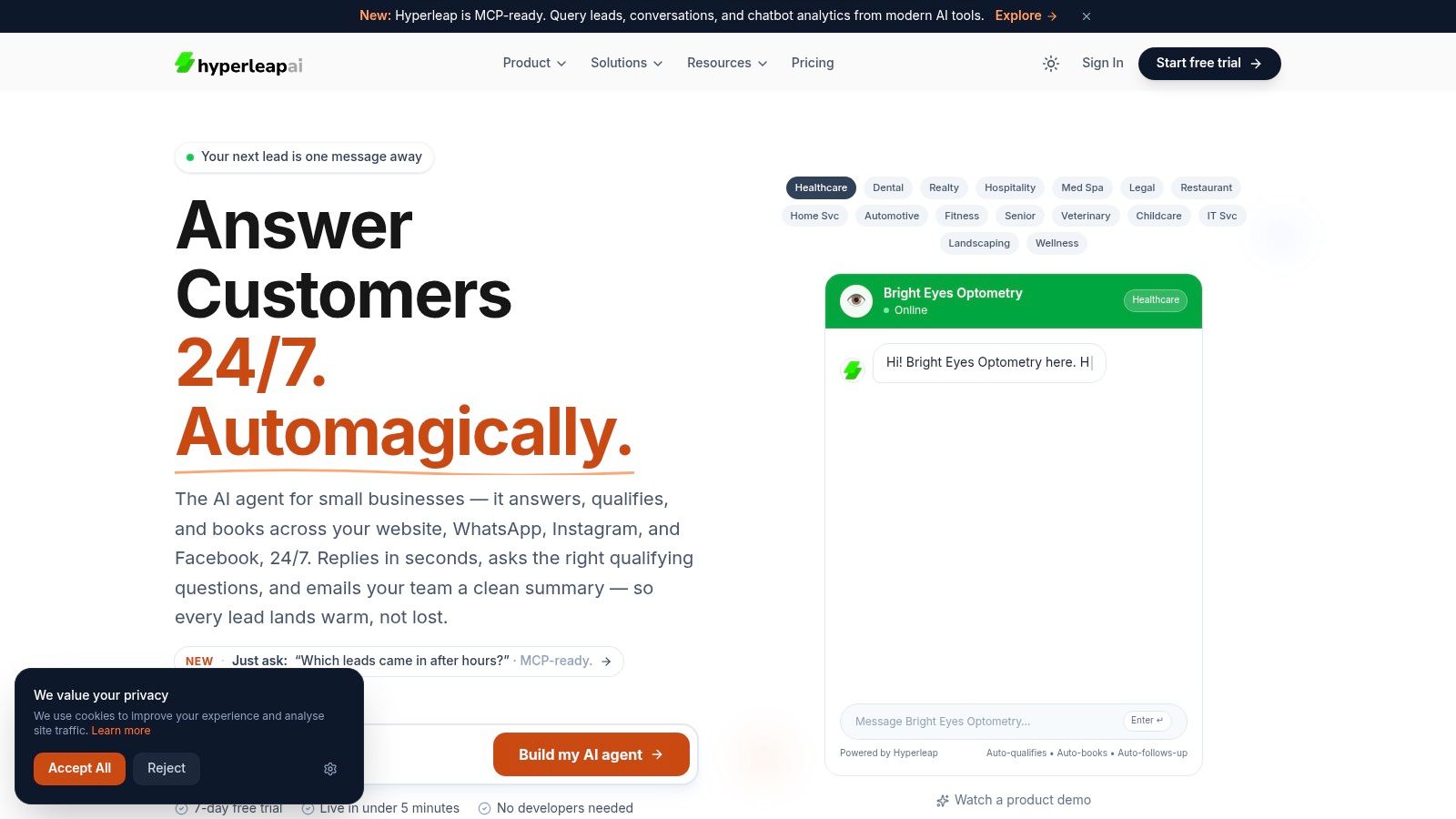
Hyperleap AI is the one I'd put first for SMBs that need an actual booking and lead-capture system, not just a chat widget. It was clearly built around a problem many small businesses have: visitors ask detailed questions after hours, teams miss the message across website chat, WhatsApp, Instagram, and Facebook, and by the time someone follows up the opportunity is gone.
The setup is unusually practical. You can start with an industry template, paste your site URL or upload documents, and launch across website chat plus Meta channels without needing a developer. For service businesses, that matters more than enterprise feature sprawl.
Why Hyperleap AI stands out for SMBs
The biggest difference is control over accuracy and lead quality. Hyperleap grounds responses in uploaded knowledge, which is a direct answer to a gap many conversational marketing guides still leave open around hallucinations, compliance, and maintaining accurate knowledge for smaller teams, as discussed in Sinch's overview of conversational marketing gaps.
It also handles the operational mess that breaks most SMB implementations:
- Verified leads: OTP phone verification helps block fake submissions before they hit your sales or front-desk team.
- Unified messaging: Website, WhatsApp, Instagram, and Facebook conversations land in one place with export options.
- Booking workflow: Calendly and Cal.com routing means the bot can move from Q&A to confirmed appointment without hand-typed follow-up.
- Multi-location control: A central knowledge base with location-specific overlays is far more useful than cloning separate bots for every branch.
Practical rule: If you run clinics, hotels, real estate offices, or home services across multiple locations, don't buy a chatbot that forces you to update each branch manually.
For businesses comparing a rule-based flow to a more capable assistant, the difference becomes obvious once questions stop being predictable. Hyperleap sits closer to the AI agent side of the line, which matters if you're weighing an assistant that can qualify and schedule against a simple scripted bot. This breakdown on AI agent vs chatbot differences is useful if you're deciding where your team stands.
Best fit by business model
Hyperleap is strongest for hospitality groups, healthcare and dental clinics, med spas, real estate teams, agencies managing client messaging, and e-commerce brands that want rich media, guided product answers, and straightforward deployment.
Its pricing is also refreshingly clear: Plus at $40 per month, Pro at $100 per month, and Max at $200 per month, with a 7-day trial. That transparency matters because a lot of competing conversational marketing platforms hide pricing until you're already in a sales process. If you're a local service business already investing in lead generation, pairing a conversion-focused chat layer with strong acquisition work such as landscaper SEO strategies from Transactional LLC makes practical sense.
The main trade-off is simple. Hyperleap helps you capture and convert existing demand. It doesn't create traffic by itself, so low-traffic businesses still need distribution, ads, SEO, or social reach.
2. Intercom
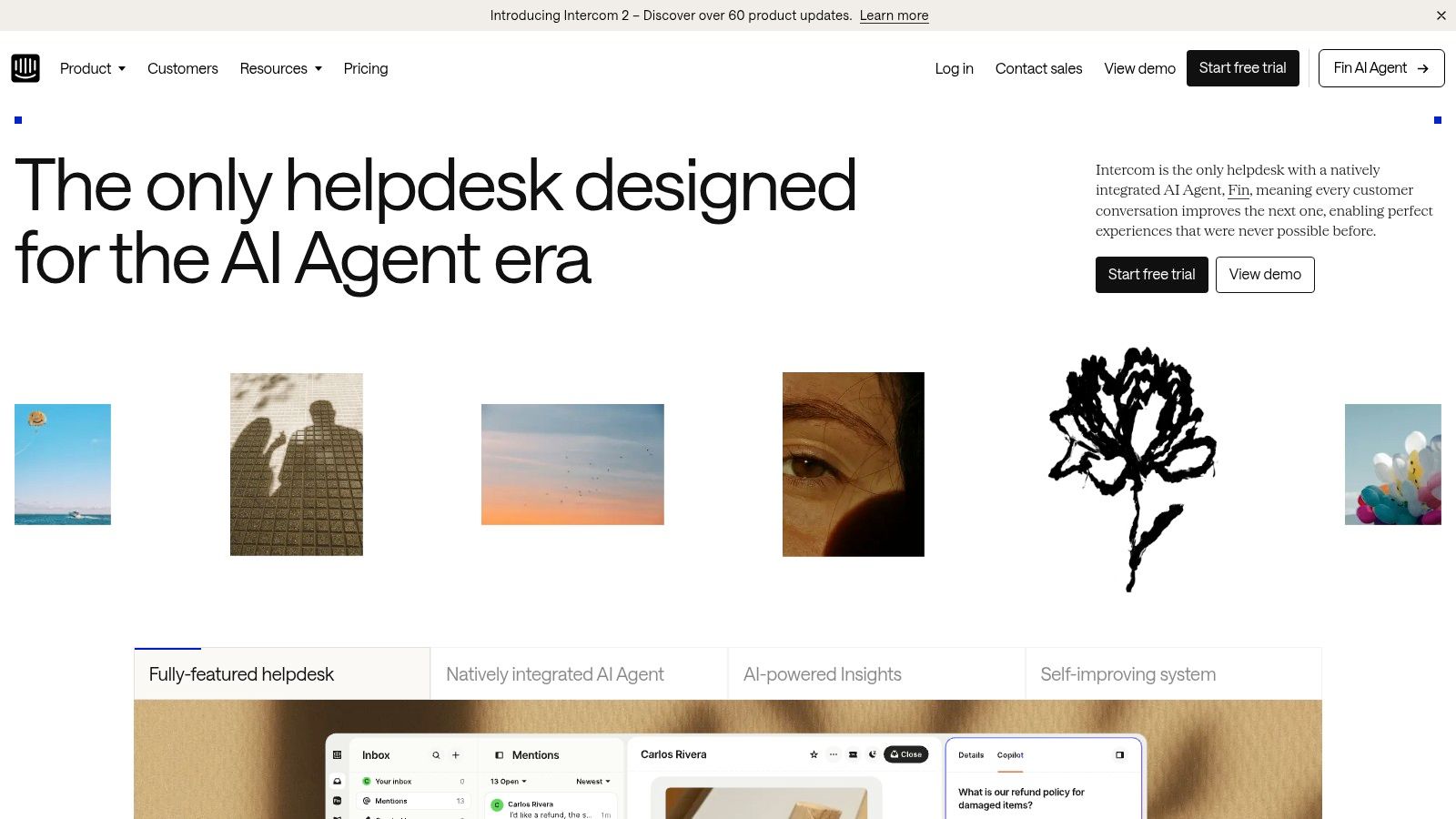
Intercom works best when marketing, sales, and support all need to touch the same conversation stack. It's not the simplest tool on this list, but it is one of the most mature if you want web chat, email, SMS, WhatsApp, Instagram, and automation under one roof.
I usually recommend Intercom to businesses that have already outgrown a basic chat widget and now need routing, inbox discipline, AI support resolution, and stronger reporting. It can handle demand generation and service use cases in the same environment, which saves a lot of tool switching.
Where Intercom fits best
Intercom's main strength is breadth. Fin, its AI agent, sits alongside a multichannel inbox and established workflow automation, so you can build an experience that resolves routine questions, qualifies leads, and escalates when needed.
That said, broad capability comes with planning overhead.
- Best for blended teams: Good when support and revenue teams share the same customer conversation history.
- Strong channel mix: Web, email, SMS, WhatsApp, Instagram, and phone coverage make it flexible.
- Cost needs modeling: Outcome-based AI pricing is attractive, but total spend can grow once seats, channels, and usage stack up.
Intercom is rarely the cheapest option. Teams choose it when they need a mature operating system for conversations, not just a bot.
For healthcare groups and hospitality brands, I'd only pick Intercom if the business already has someone who can own setup quality. Left unmanaged, it can become a powerful but expensive inbox. Used well, it's one of the few platforms that can support both pre-sale and post-sale conversations without feeling bolted together.
Its website is Intercom. For teams building AI experiences on top of scraped or synced knowledge, this Web Scraping API for RAG from Context.dev is relevant if you're handling your own retrieval pipeline outside a packaged platform.
3. Drift
A buyer lands on your pricing page, asks whether your platform integrates with their stack, and wants time with sales today, not next week. That is the situation Drift was built for. It is still one of the clearer choices for B2B teams that treat the website as a pipeline channel and care about qualification, routing, and meeting booking more than broad customer support coverage.
I would shortlist Drift for SaaS companies, agencies, and B2B service firms with consistent inbound traffic and named reps who need the right conversations sent to them fast. I would not pick it first for a dental group, hotel operator, or real estate team managing many locations. Those businesses usually need appointment handling, local inquiry management, and channel coverage that extends beyond a sales-led web chat motion.
Best for sales-led websites with enough inbound volume
Drift works best when a business already knows who it wants to talk to. The platform is built around identifying intent, qualifying visitors, and pushing high-fit prospects into booked meetings or rep handoff paths. For teams designing chat around revenue stages instead of general customer service, that focus matters.
The setup effort is real. Someone has to define routing rules, qualification criteria, calendar logic, and ownership across territories or segments. Without that work, Drift can collect conversations without improving pipeline speed very much. Teams evaluating this category should also compare Drift's sales-first model with a broader view of conversational AI for customer service teams, especially if the same site also needs to answer operational questions after the lead is captured.
A few practical strengths stand out:
- Built for qualification: Strong fit for demo requests, account-based routing, and meeting booking workflows.
- Useful for RevOps teams: Webhooks, routing logic, and event triggers help with attribution, enrichment, and handoff control.
- Better for focused B2B motions: It delivers more value when inbound traffic is steady and sales capacity already exists.
The trade-off is fit and cost. Pricing is not transparent, and smaller SMBs often end up paying for a sales workflow engine that is heavier than they need. For multi-location operators in hospitality, healthcare, or real estate, Drift is usually too centered on rep-routed pipeline unless the business runs a true centralized inside sales team. If the goal is to book local appointments, answer location-specific questions, or manage high volumes of service inquiries, other platforms in this list tend to match the operating model better.
Its website is Drift.
4. HubSpot Live Chat and Chatbots
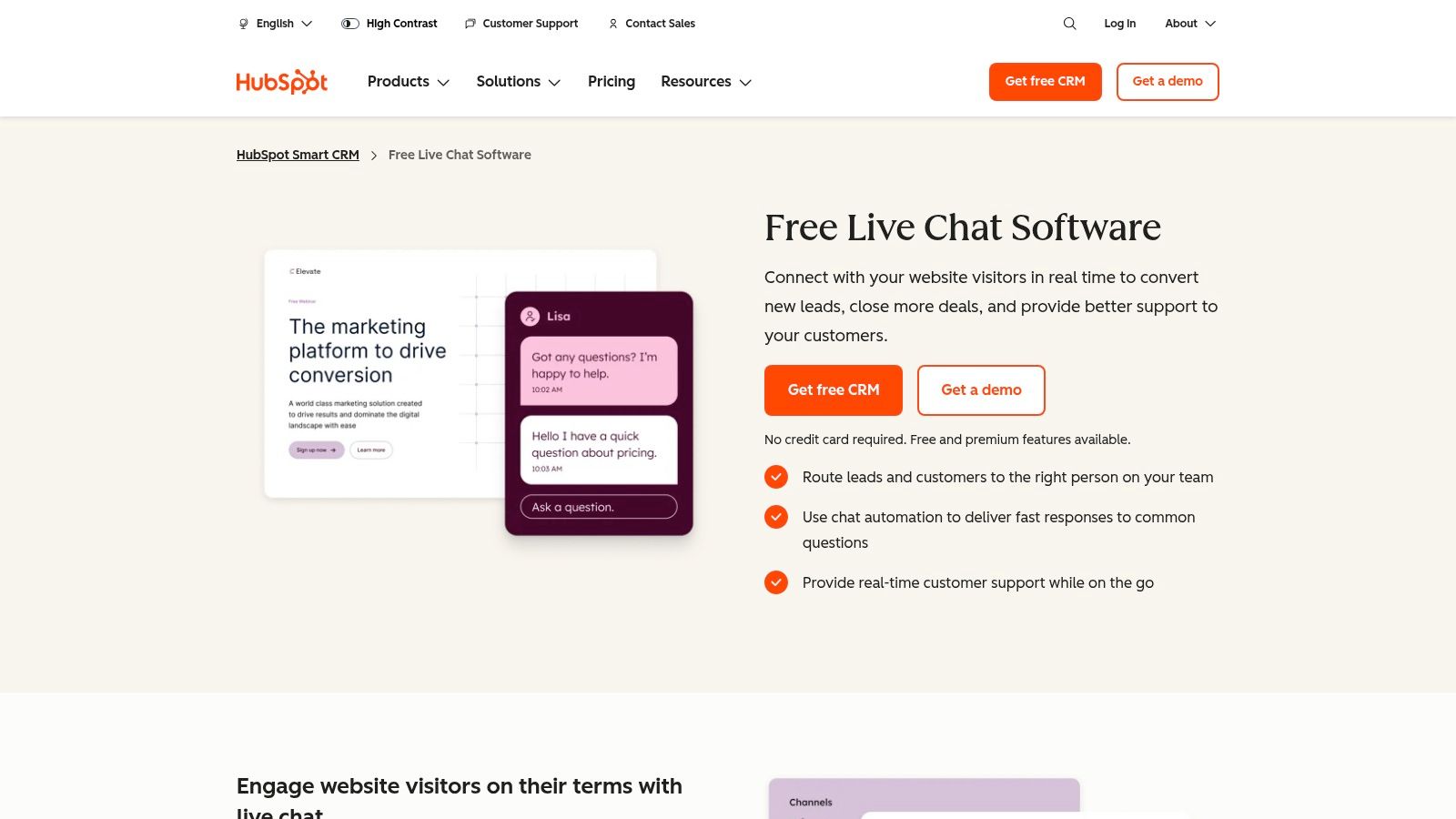
HubSpot is the practical default when the CRM is already your source of truth. If your contacts, forms, lifecycle stages, and email automation already live there, adding live chat and chatflows is usually the fastest low-risk way to start using conversational marketing platforms.
The big advantage isn't novelty. It's continuity. A visitor chats, their data lands in the CRM, your team sees context immediately, and follow-up doesn't rely on manual exports or middleware.
Best for teams already inside HubSpot
HubSpot's live chat and chatbot builder are easy to launch, and for many SMBs that's enough to validate whether conversational capture is worth deeper investment. The universal inbox also reduces the usual friction between marketing and service teams because everyone is reading from the same record.
Where teams get frustrated is maintenance. Rule-based chatflows are fine for routing, FAQs, and simple lead capture, but once people ask nuanced questions the logic tree starts growing fast.
- Low barrier to entry: Great first step if you're already paying for HubSpot.
- CRM-native handoff: Sales and service teams inherit the full conversation context.
- Limits show up with complexity: Advanced automation often pushes you into paid hubs, and rigid flows need upkeep.
For small healthcare practices, property teams, and local service brands, HubSpot works best when the website is the main lead channel and the questions are predictable. If you're trying to support richer AI conversations across multiple messaging channels, you'll likely outgrow basic chatflows and need something closer to a dedicated conversational AI customer service setup.
Its website is HubSpot live chat and chatbots.
5. Qualified
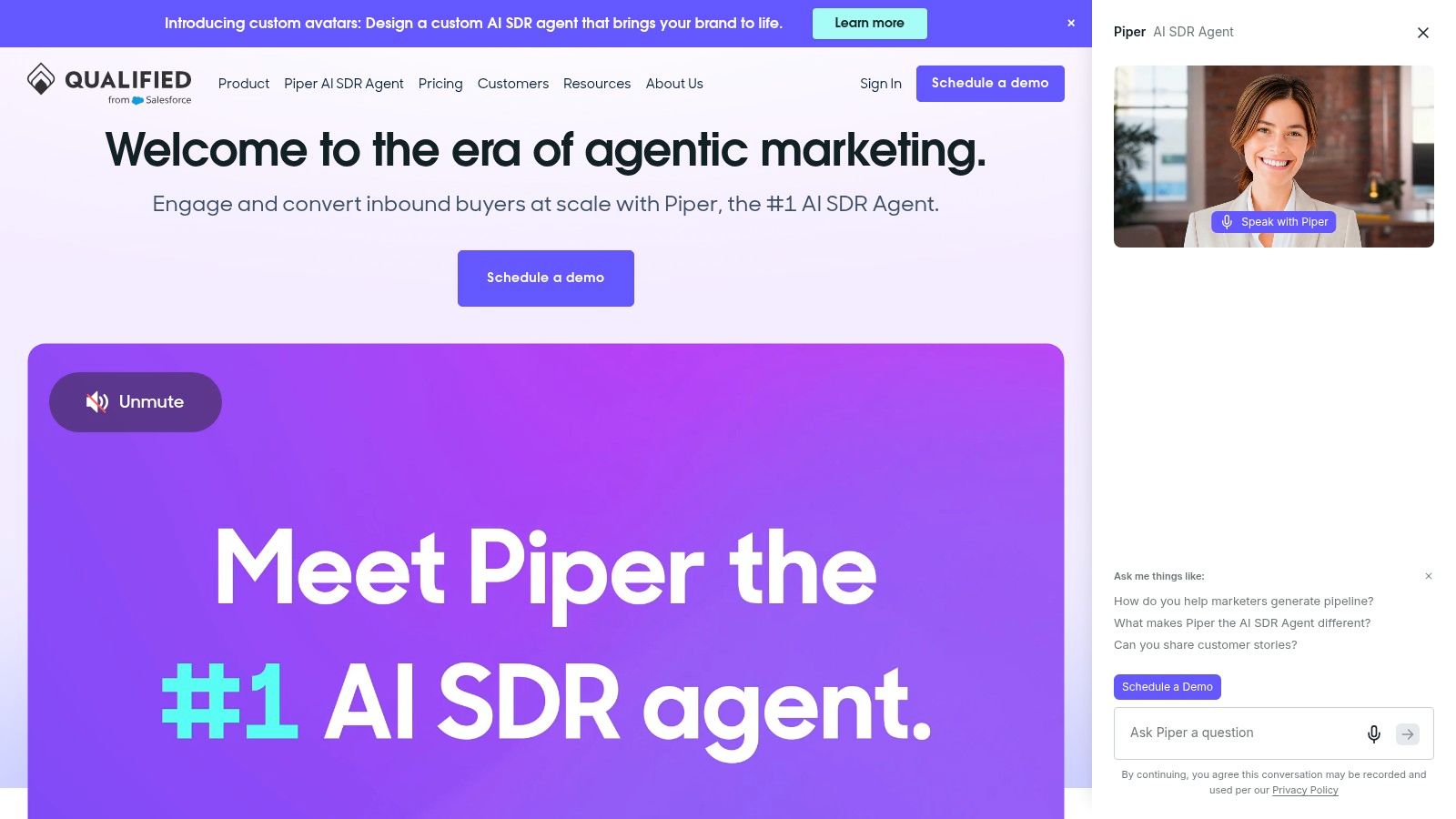
A visitor from a target account hits your pricing page, asks a product question, and your rep wants that conversation routed by territory, account owner, and pipeline stage. That is the job Qualified was built for.
Qualified fits teams that already run Salesforce as the operating system for revenue. Its value comes from using CRM data in real time so website conversations can reflect named accounts, open opportunities, rep ownership, and ABM rules instead of a generic chatbot script.
Best for Salesforce centered revenue teams
I recommend Qualified for B2B companies with longer sales cycles, SDR coverage, and a real account-based motion already in place. In that setup, the website becomes part of pipeline generation, not just a lead capture form. Reps can prioritize the right visitors faster, and marketing gets tighter control over how high-value accounts are handled.
The trade-off is setup effort and fit. To get real value, teams need clean Salesforce data, clear routing rules, and agreement between marketing and sales on who should see what. Smaller businesses, multi-location operators, and appointment-driven teams usually will not get enough from that complexity.
- Strong for ABM execution: Best when pipeline is driven by named accounts, territories, and SDR handoff.
- Built around Salesforce workflows: CRM sync, routing logic, and personalization are the main reason to buy it.
- Poor fit for local and service-led models: Hospitality groups, clinics, and real estate teams usually need booking flows, broader messaging coverage, and faster rollout than Qualified is designed for.
That industry fit matters. For a multi-location healthcare group, I would prioritize intake questions, location routing, and appointment handling. For hospitality, I would care more about reservation and service inquiries across web chat and messaging apps. For real estate, speed to lead and simple routing by property or office often matter more than account-based website personalization.
Its website is Qualified.
6. Tidio
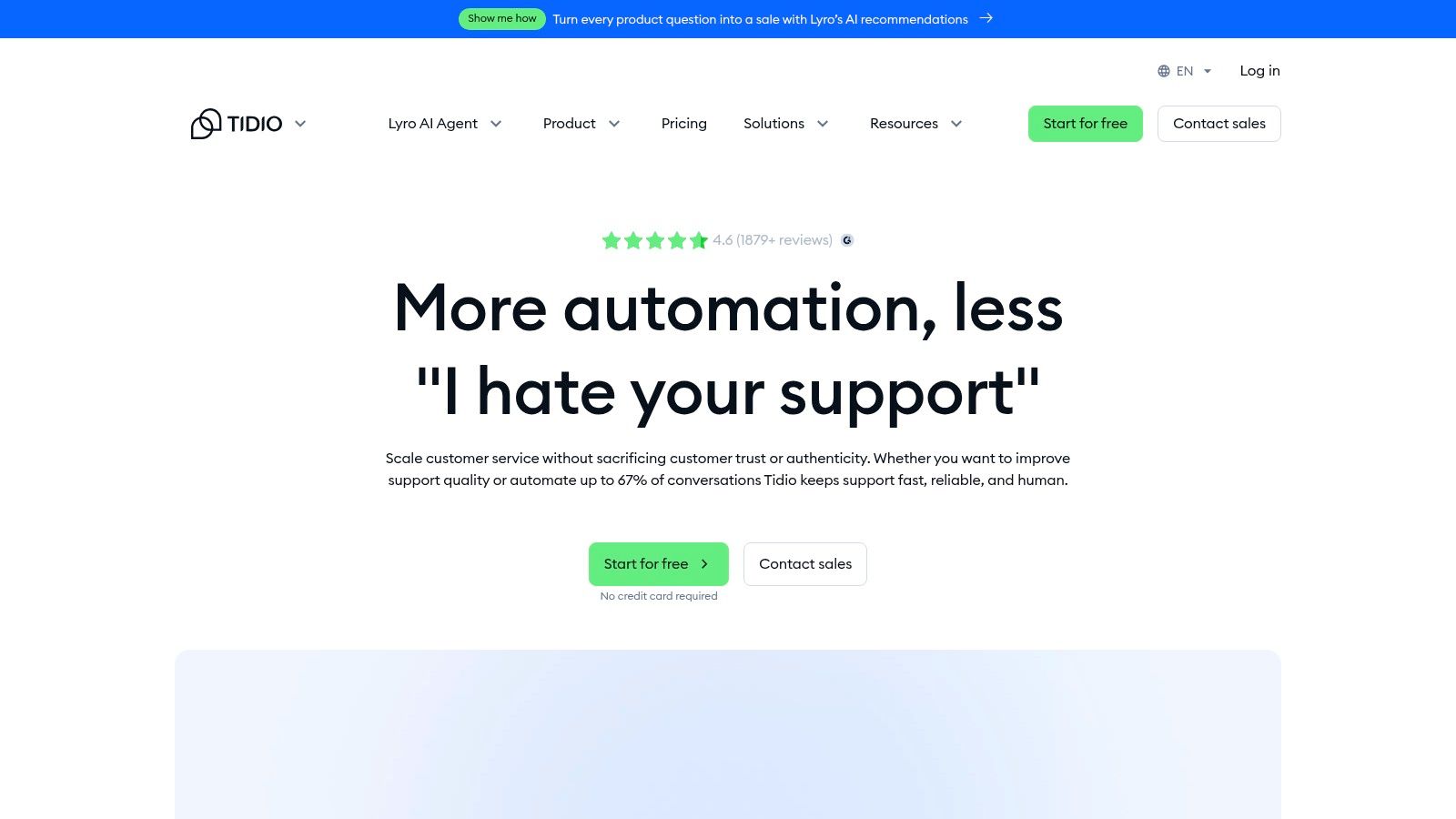
A two-person marketing team, a busy front desk, and messages coming from the website, Instagram, and WhatsApp is a common SMB setup. Tidio fits that situation well because it gets chat, basic automation, and shared inbox management live fast without a long implementation project.
I usually recommend it for smaller operators that need better response speed more than advanced orchestration. That includes local service businesses, independent e-commerce brands, smaller hospitality groups, and real estate teams that want one place to catch inbound conversations and route them quickly. For a single clinic or a small practice, it can also work for simple FAQ handling, though healthcare buyers need to be much stricter about compliance and data handling before using any chat workflow for patient communication.
Best for lean SMB support and sales
Tidio's appeal is straightforward. The interface is easy to learn, the Flows builder covers common use cases, and connecting channels into one inbox solves a real operational problem on day one. Teams stop losing leads in scattered DMs and can set up simple qualification, after-hours replies, and handoff rules without developer help.
The limits show up once the business gets more complicated. Multi-location brands often need tighter control over routing by location, stronger permissions, more mature reporting, and cleaner connections to booking or CRM systems. Tidio can cover the basics, but it is usually a first system or a lighter-weight system, not the platform I would choose to run a complex chain of clinics, a large hospitality group, or a brokerage with many offices.
A practical fit by business model:
- Best for small hospitality operators: Good for handling common pre-booking questions and service inquiries when volume is moderate.
- Useful for real estate teams that need speed: Helps centralize website and social inquiries, then route them to an agent or office fast.
- Less suitable for healthcare groups with multiple locations: Basic automation is helpful, but governance, intake complexity, and compliance review can become blockers.
The broader trend is clear without repeating the same source link again. Smaller businesses keep adopting no-code chat and automation tools because they are easier to set up, easier to staff, and easier to justify than heavier enterprise platforms. Tidio sits squarely in that part of the market.
Its website is Tidio.
7. Manychat
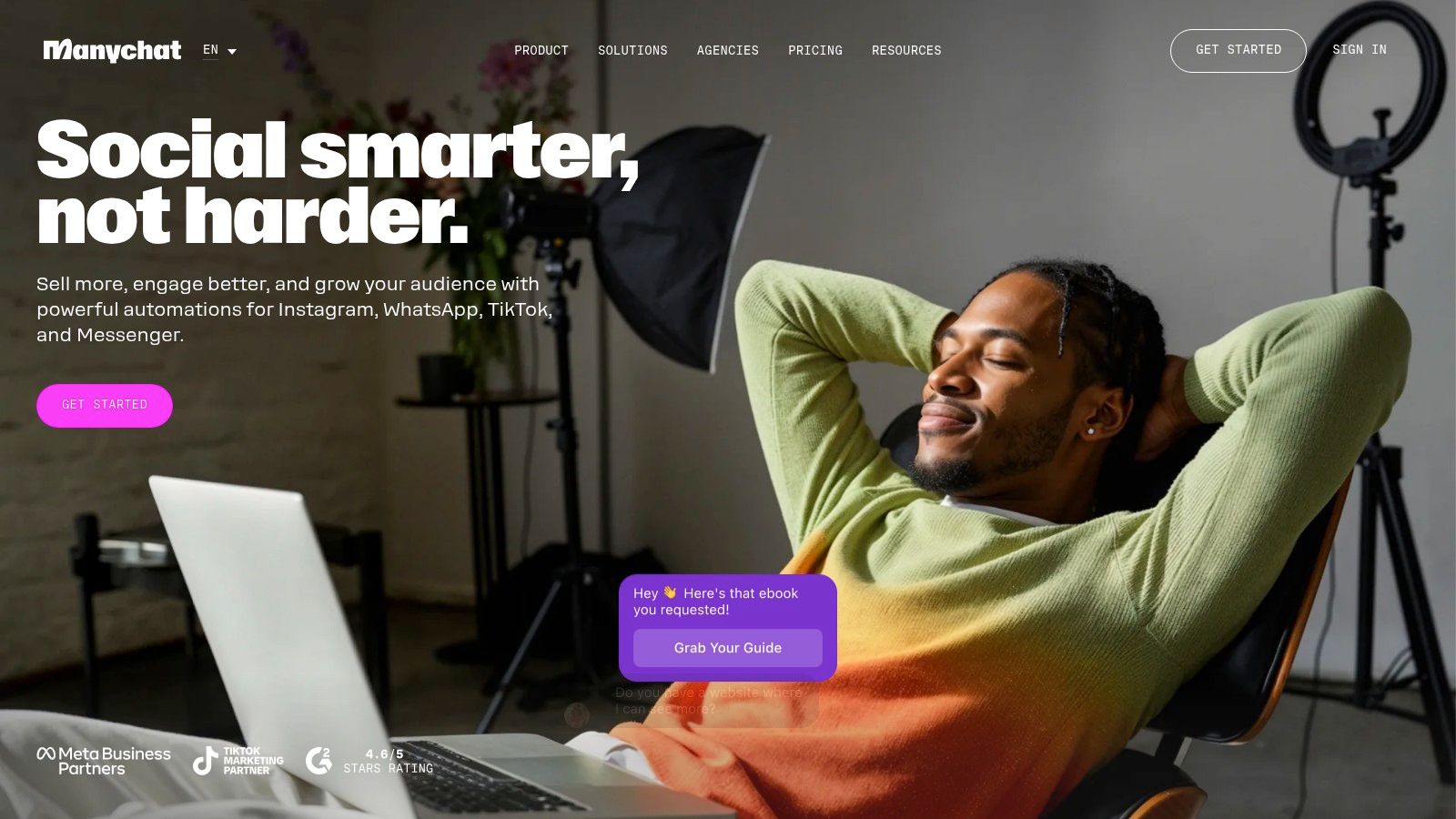
Manychat is the social-first pick. If your lead flow starts in Instagram comments, DMs, TikTok activity, Messenger, or creator-style campaigns, Manychat is often the fastest route from engagement to opt-in.
This isn't the platform I'd choose for a regulated clinic or a multi-location knowledge management problem. It shines when your business grows through content, short-form social, promotions, and repeat DM interactions.
Best for social first lead capture
The product is built around triggers that marketers use every day: comment-to-DM flows, broadcasts, simple nurture sequences, and AI-assisted replies. For e-commerce brands, creators, and social-led coaches or service businesses, that's valuable because the funnel starts where attention already exists.
What works well:
- Comment automation: Great for turning public engagement into private conversation.
- Fast campaign execution: Templates and social playbooks shorten launch time.
- Broad social coverage: Useful for brands that treat messaging as a growth channel, not just support.
What doesn't work as well is deep qualification. Manychat can collect intent and route action, but it isn't the strongest option when you need grounded answers from a business knowledge base, location-aware booking, or complex handoff logic. For social commerce and audience nurture, though, it earns its place.
Its website is Manychat.
8. Crisp
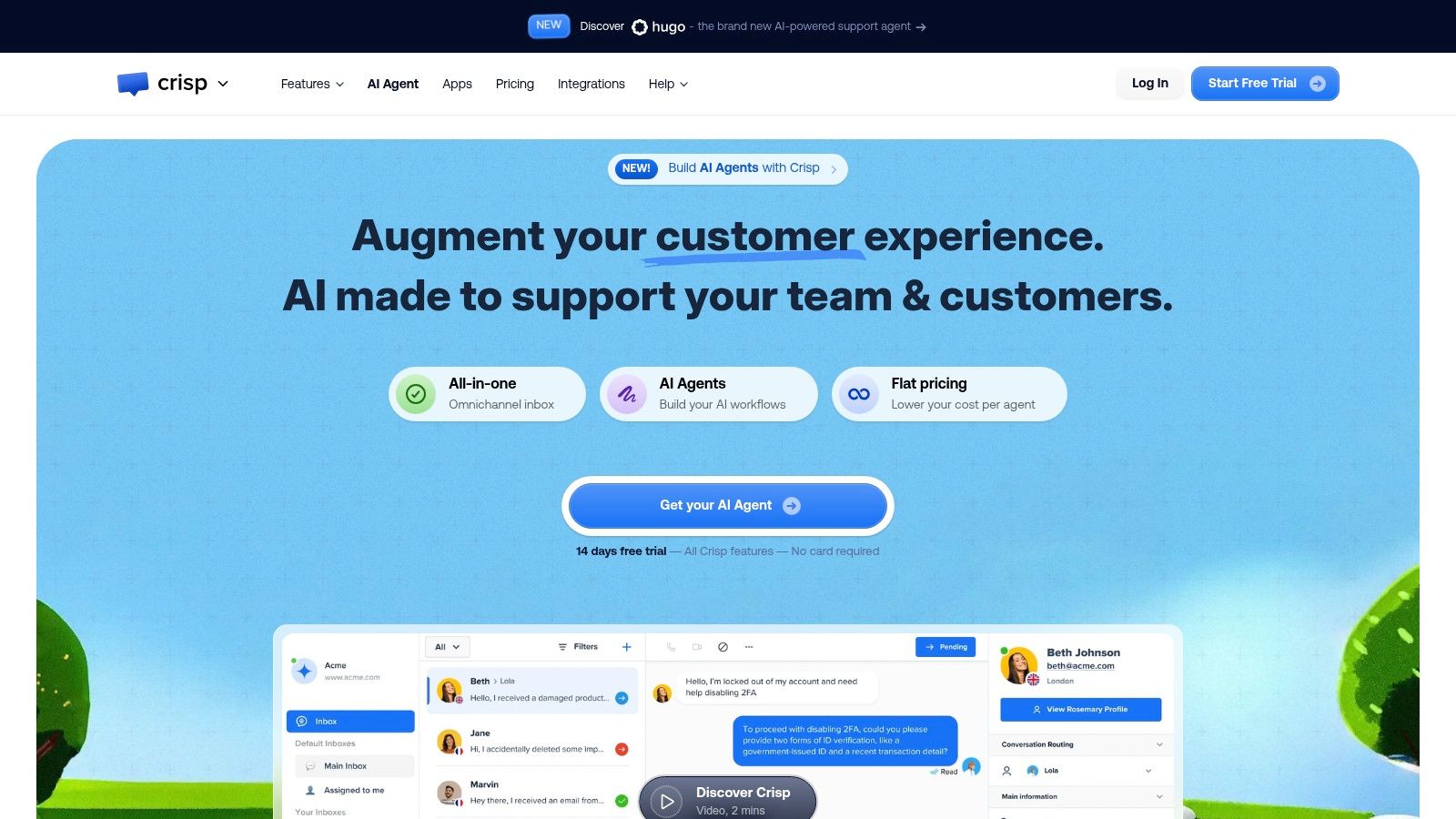
Crisp is what I reach for when a business wants omnichannel coverage but hates unpredictable pricing. A lot of conversational marketing platforms get expensive as contacts, seats, or usage increase. Crisp's flat per-workspace approach is appealing for teams that need cost clarity.
That pricing model changes the buying conversation. Instead of asking whether every extra conversation will push you into another bracket, you can focus on whether the inbox and automation suite are good enough for your workflow.
Best for predictable omnichannel operations
Crisp covers website chat, email, SMS, Instagram, WhatsApp, and more, with both no-code and developer-friendly options. That makes it flexible for SMBs that want one shared customer conversation environment without signing up for a heavier enterprise product.
The main strengths are practical:
- Budget predictability: Better fit for teams that need stable software costs.
- Wide channel support: Good for businesses handling a mix of web and messaging conversations.
- Solid WhatsApp path: Especially useful for SMBs that lean on WhatsApp but still want a broader inbox.
Flat pricing doesn't automatically mean lower total cost. It means finance can plan around it.
The main caution is setup depth. Advanced branding and enhanced limits live higher in the plan stack, and the best WhatsApp experience may still require extra configuration around the business connection. For agencies and service brands managing steady cross-channel volume, though, Crisp is one of the cleaner trade-offs on this list.
Its website is Crisp.
9. Birdeye Webchat plus Chatbot AI
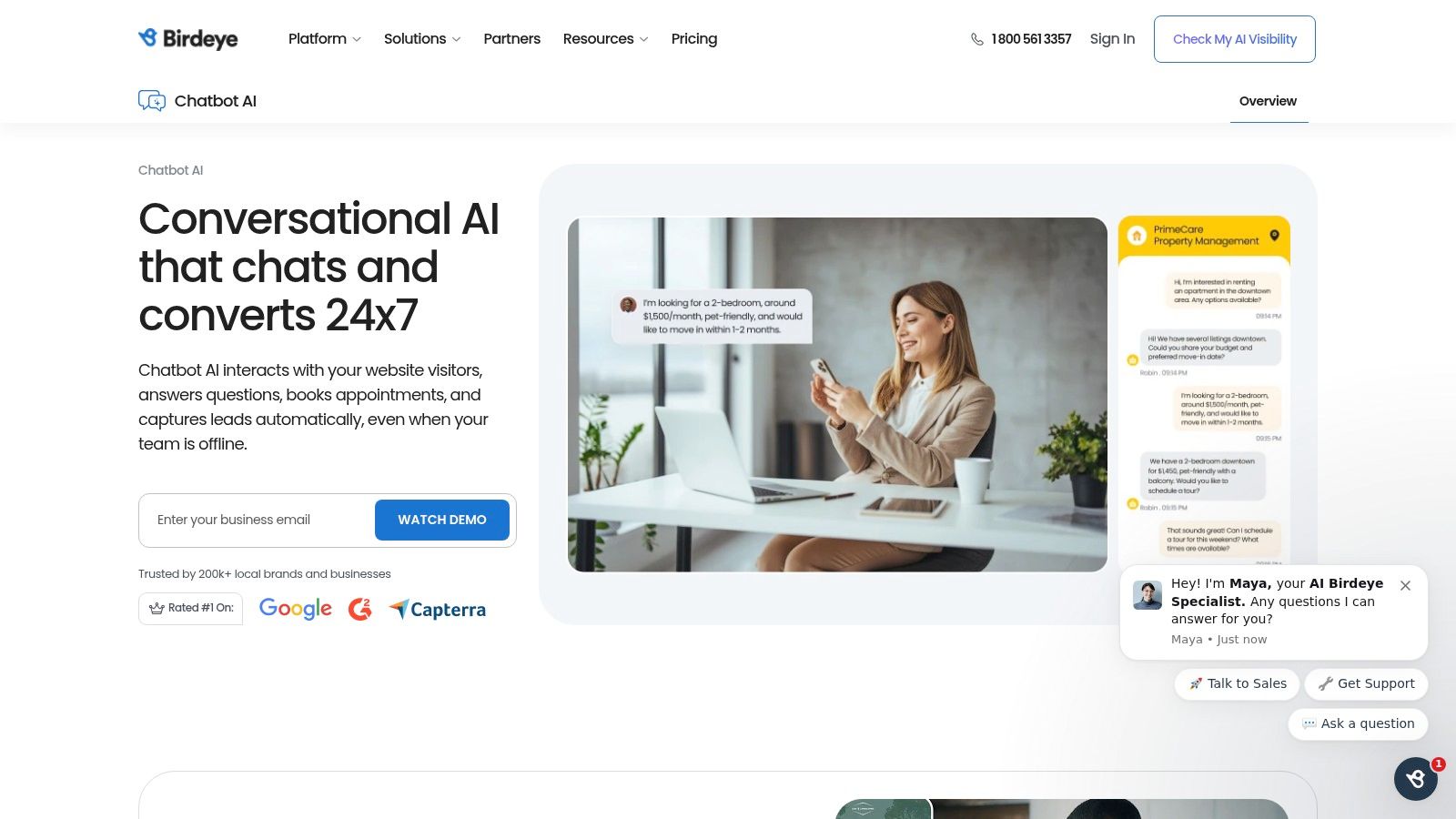
Birdeye makes more sense when your business is local, review-driven, and spread across multiple branches. Think dental groups, auto services, home services, med spas, and franchises. In those setups, the challenge isn't just chat. It's routing the inquiry to the right location, continuing the conversation by text, and keeping the lead from disappearing.
That local bias is what makes Birdeye different from generic live chat vendors. It's built around the reality that branch-level businesses live and die on responsiveness, reviews, and local conversion.
Best for local brands and franchises
Birdeye's webchat and chatbot AI plug into a broader local business suite, which is both a strength and a limitation. If you're already using Birdeye for reputation and messaging, adding AI webchat can feel natural. If you only want a standalone conversational layer, it may feel bundled.
The features that matter most here are straightforward:
- Local routing: Useful for brands that need branch-specific handoff.
- SMS continuation: Helps rescue conversations after someone leaves the website.
- Central inbox: Good operationally for multi-location oversight.
A lot of comparison content misses this exact pain point. Perspective's analysis of conversational platforms points out that current content often fails to explain how SMBs handle autonomous lead capture and appointment fulfillment across channels like WhatsApp and Instagram, especially when unified inbox management and location-specific knowledge are essential for multi-location operations in its platform comparison for 2026.
That gap is why Birdeye belongs on this list. Its website is Birdeye Webchat.
10. Landbot
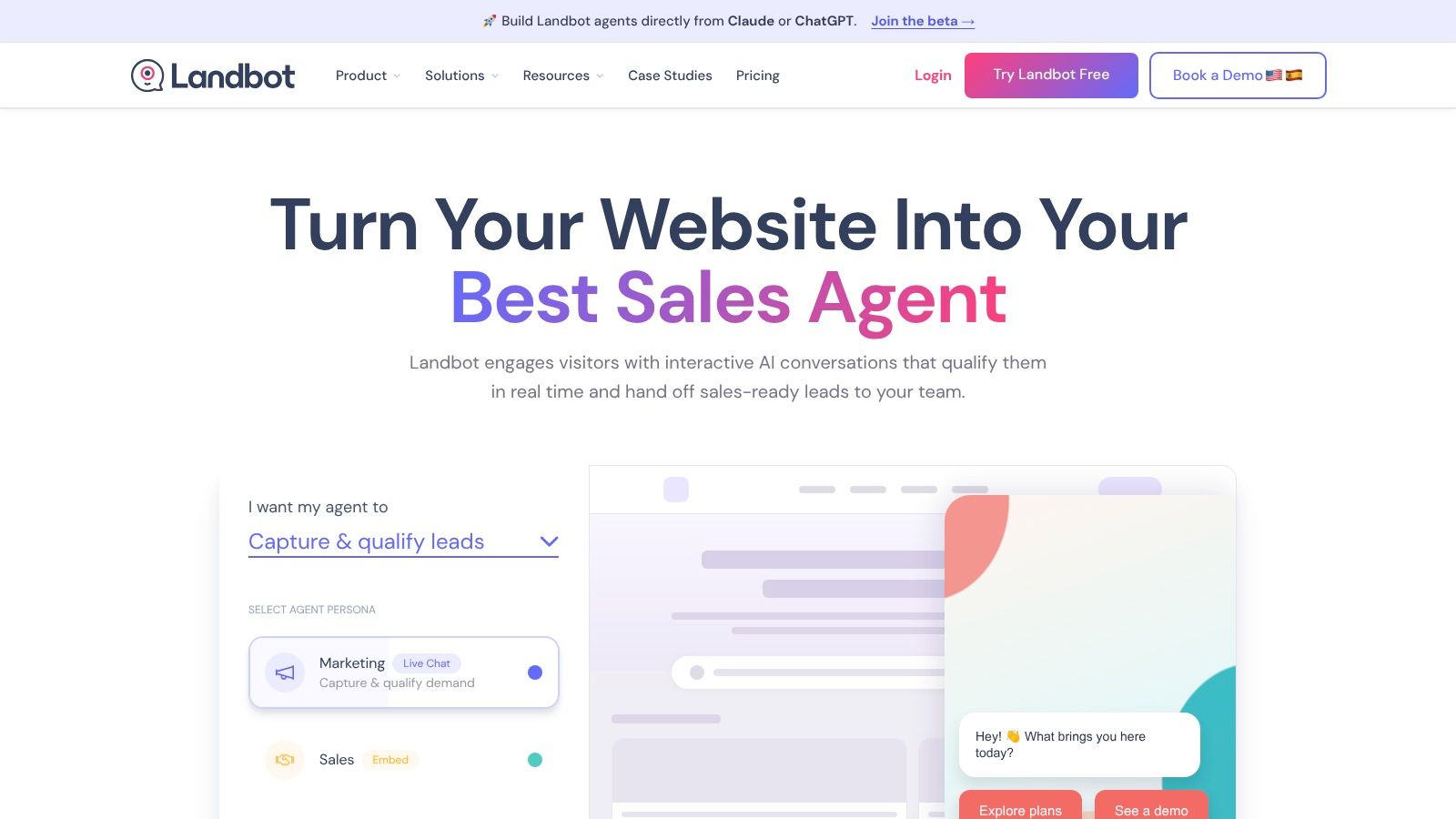
Landbot is the visual-builder choice for teams that want to design conversational flows themselves. If your process is structured, your team likes drag-and-drop builders, and WhatsApp is a priority channel, Landbot is a strong contender.
I like it for marketing teams that think in funnels. If you want to shape exactly how a lead moves from question to qualification to handoff, Landbot gives you that control.
Best for WhatsApp led funnels
The visual builder is the selling point. Conditional logic, rich media, opt-in tools, and campaign-style flows make it useful for lead generation, onboarding, and simple qualification sequences. It also plays well with tools like Calendly, Zapier, Make, and Salesforce.
Where it falls short is native intelligence depth. You can build polished experiences, but more advanced AI and NLP often rely on external services, which adds another layer to manage.
- Strong builder experience: Great for teams that want to control conversation design without code.
- Good WhatsApp orientation: Better fit than generic chat tools for WhatsApp-heavy journeys.
- Extra AI complexity: Advanced conversational behavior may require outside systems.
The larger market context helps explain why tools like Landbot keep gaining ground. The global conversational marketing platform market is projected to reach $25 billion by 2033, expanding at a projected 22% CAGR, according to Strategic Revenue Insights on the conversational marketing platform market. Landbot benefits from that broader shift toward real-time, channel-native buying experiences.
Its website is Landbot.
Top 10 Conversational Marketing Platforms, Feature & Pricing Comparison
| Solution | Core features | UX & reliability (★) | Value & pricing (💰) | Best for (👥) | Unique selling points (✨) |
|---|---|---|---|---|---|
| Hyperleap AI 🏆 | Omnichannel bots (Web, WhatsApp, IG, FB), OTP-verified leads, unified inbox, multilingual, BYOK | ★★★★☆, GDPR-grade, 99.9% uptime, fast 5‑min launch | 💰 Plus $40/mo; Pro $100; Max $200, 7‑day trial | 👥 SMBs, multi-location hospitality, real estate, clinics, agencies, e‑commerce | ✨ OTP lead verification, auto-scheduling, single KB with location overlays, Meta-certified APIs |
| Intercom | Multichannel inbox, Fin AI, workflows, outcome billing | ★★★★☆, mature workflows, broad channel support | 💰 Outcome‑based AI pricing; can scale with seats/channels | 👥 Mid-market & enterprise marketing & support teams | ✨ Outcome-based billing, advanced automation, native IG/WhatsApp |
| Drift | AI chat for qualification, playbooks, developer hooks | ★★★★☆, optimized for meeting booking & pipeline | 💰 Sales-led pricing (no public rates) | 👥 B2B revenue teams and enterprise sales | ✨ Playbooks for proactive outreach & pipeline acceleration |
| HubSpot (Live Chat & Chatbots) | CRM‑native chatflows, free live chat, unified inbox | ★★★★☆, seamless CRM handoff; easy to start | 💰 Free tier; paid Hubs add advanced automation | 👥 Teams using HubSpot CRM; SMBs testing chat | ✨ Native CRM context, free tools for quick experiments |
| Qualified | Salesforce‑native AI SDR, ABM routing, real‑time personalization | ★★★★☆, enterprise-grade Salesforce sync | 💰 Sales-led enterprise pricing | 👥 Salesforce-centric B2B & ABM teams | ✨ Deep Salesforce integration & ABM experiences |
| Tidio | Live chat, ticketing, AI agent (Lyro), visual Flows | ★★★☆☆, SMB-friendly, fast onboarding | 💰 Quota-based plans; affordable entry-level | 👥 Small teams, ecommerce, SMBs | ✨ Rapid self-serve launch, visual flow builder |
| Manychat | DM automations, comment-to-DM, broadcasts, social commerce | ★★★★☆, social-first, high engagement | 💰 Tiered by active contacts; costs rise with volume | 👥 Creators, social-first marketers, ecommerce | ✨ Comment-to-DM, broadcast & commerce playbooks |
| Crisp | Omnichannel inbox, multilingual AI, flat workspace pricing | ★★★★☆, predictable costs, solid WhatsApp support | 💰 Flat per-workspace pricing (scales simply) | 👥 SMBs seeking predictable billing | ✨ Flat pricing model, strong WhatsApp capabilities |
| Birdeye Webchat + Chatbot AI | AI webchat (Robin), lead capture, SMS follow-up, multi-location | ★★★☆☆, local business focus, inbox + SMS follow-up | 💰 Sales-led (bundled in Birdeye suite) | 👥 Local & franchise businesses, service providers | ✨ Web-to-text follow-up, review-driven features |
| Landbot | No-code visual builder, WhatsApp-native blocks, integrations | ★★★☆☆, great for funnels; external NLP for advanced AI | 💰 Flexible tiers; WhatsApp-focused plans available | 👥 SMBs & SMEs building WhatsApp/web funnels | ✨ Visual builder with WhatsApp-native blocks and templates |
Start the Conversation Your Next Steps
It is 8:40 p.m. A prospect lands on your site, asks whether you take their insurance, wants a price range, or needs to book a tour before they forget. If nobody answers until morning, that lead often goes cold. Conversational marketing works when it closes that gap with accurate answers, clear routing, and a next step the customer can complete right away.
The shortlist should match the business model.
Hospitality teams usually need after-hours booking help, reservation changes, and channel coverage across web chat, WhatsApp, and Instagram. Clinics, med spas, and other healthcare operators need tighter knowledge control, careful intake flows, and a system staff can review without digging through scattered inboxes. Real estate groups need speed, lead qualification, and fast handoff to the right agent or location. Multi-location businesses across all three categories also need location routing, shared visibility, and setup that does not turn into a month-long project.
For revenue-driven B2B teams, Drift and Qualified still make sense when the website's main job is meeting creation and pipeline generation. Intercom is a better fit when support, onboarding, and sales need to work from the same conversation history. HubSpot is the practical choice if the CRM, forms, and lifecycle reporting already live there. Manychat fits social-first acquisition. Tidio, Crisp, and Landbot fit SMB teams that care more about launch speed, cost control, or custom funnel design than enterprise workflow depth. Birdeye stands out for local service brands that need web chat tied to texting and location-level operations.
AI expectations have changed buyer behavior. Customers now expect a useful reply in minutes, not a form submission and a callback the next day. That does not mean every company needs the most advanced AI stack on the market. It means the tool has to answer common questions correctly, capture contact details cleanly, and move the conversation toward a booking, consult, demo, or qualified handoff.
Start with one workflow and measure it hard.
After-hours lead capture is usually the cleanest starting point for SMBs and multi-location operators because the result is easy to see. Missed chats become booked appointments, qualified inquiries, or at least a verified contact record your team can act on in the morning. The second strong use case is repetitive question handling. Pricing basics, service availability, insurance checks, tour requests, and location-specific FAQs eat up front-desk time fast.
The evaluation criteria should stay practical. How long will setup take? Who maintains the knowledge base after launch? Can location managers use it without breaking routing rules? Will the bot collect real phone numbers or emails, not junk submissions? Can staff step in from one inbox when the conversation gets nuanced?
For many SMBs and multi-location service brands, Hyperleap AI is a strong starting option because it covers the operational pieces that usually block adoption. It supports lead capture, appointment booking, channel consolidation, and controlled knowledge management in one system. That matters more than having the longest feature list.
If you want a practical way to capture more leads after hours, answer questions across website, WhatsApp, Instagram, and Facebook, and turn conversations into verified bookings without adding headcount, try Hyperleap AI. It's built for SMBs and multi-location teams that need fast setup, grounded answers, OTP-verified lead capture, and one inbox their staff can manage.