AI Chatbot for Restaurants: Reservations, FAQs & Orders
How AI chatbots handle reservations, menu questions, and private dining inquiries 24/7 so front-of-house focuses on seated guests.
TL;DR: A group of eight texts three restaurants on a Saturday afternoon. The first to confirm availability and share a reservation link wins the whole table — drinks, appetizers, entrees, dessert. An AI chatbot for restaurants responds in seconds regardless of whether your host stand is packed or your dining room is closed. It handles reservations, menu questions, and private dining inquiries without pulling staff away from the floor.
AI Chatbot for Restaurants: Reservations, FAQs, and Orders in 2026
The family planning a birthday dinner doesn't send one reservation request and patiently wait. They open Instagram, find a few restaurants with the right vibe, and message all of them. The first restaurant to confirm a table wins the booking — and the $400+ spend that comes with a party of six. If your host stand is slammed with walk-ins, your phone goes to the bar, and your Instagram DMs go unread for three hours, you've already lost that reservation to a competitor who had a chatbot running.
AI chatbots for restaurants in 2026 aren't novelties — they're practical tools that handle the front-of-house communication volume that your team can't keep up with during service. This guide covers how they work, what they handle, and how to set one up without disrupting your existing reservation workflow.
What an AI Chatbot for Restaurants Actually Does
An AI chatbot for restaurants is a customer-facing assistant deployed on your website, WhatsApp, Instagram DM, or Facebook Messenger that handles guest inquiries instantly, around the clock.
Unlike a simple FAQ bot that matches keywords, a modern AI chatbot understands conversational language. A guest who types "hey do you have anything available this friday around 7 for like 5 people" gets a useful response — not a "I didn't understand that" error.
Core capabilities for restaurant use:
- Confirming reservation availability and sharing your booking link
- Answering menu questions (dietary restrictions, ingredients, allergy flags)
- Providing hours, location, parking, and dress code information
- Handling private dining and event inquiries with qualification questions
- Taking takeout order inquiries or directing to your online ordering platform
- Following up post-visit to request reviews
The chatbot doesn't replace your reservation system — it integrates with your workflow. It shares your booking link (whether that's OpenTable, Resy, your own system, or a simple Calendly-style scheduler) and captures the lead. Your host team manages the actual reservation.
Important Clarification on Ordering
An AI chatbot handles order inquiries and redirects customers to your ordering platform. It does not process payments or integrate with your POS system. Think of it as a front-of-house communicator, not an ordering system replacement.
Why Restaurants Lose Reservations They Don't Even Know About
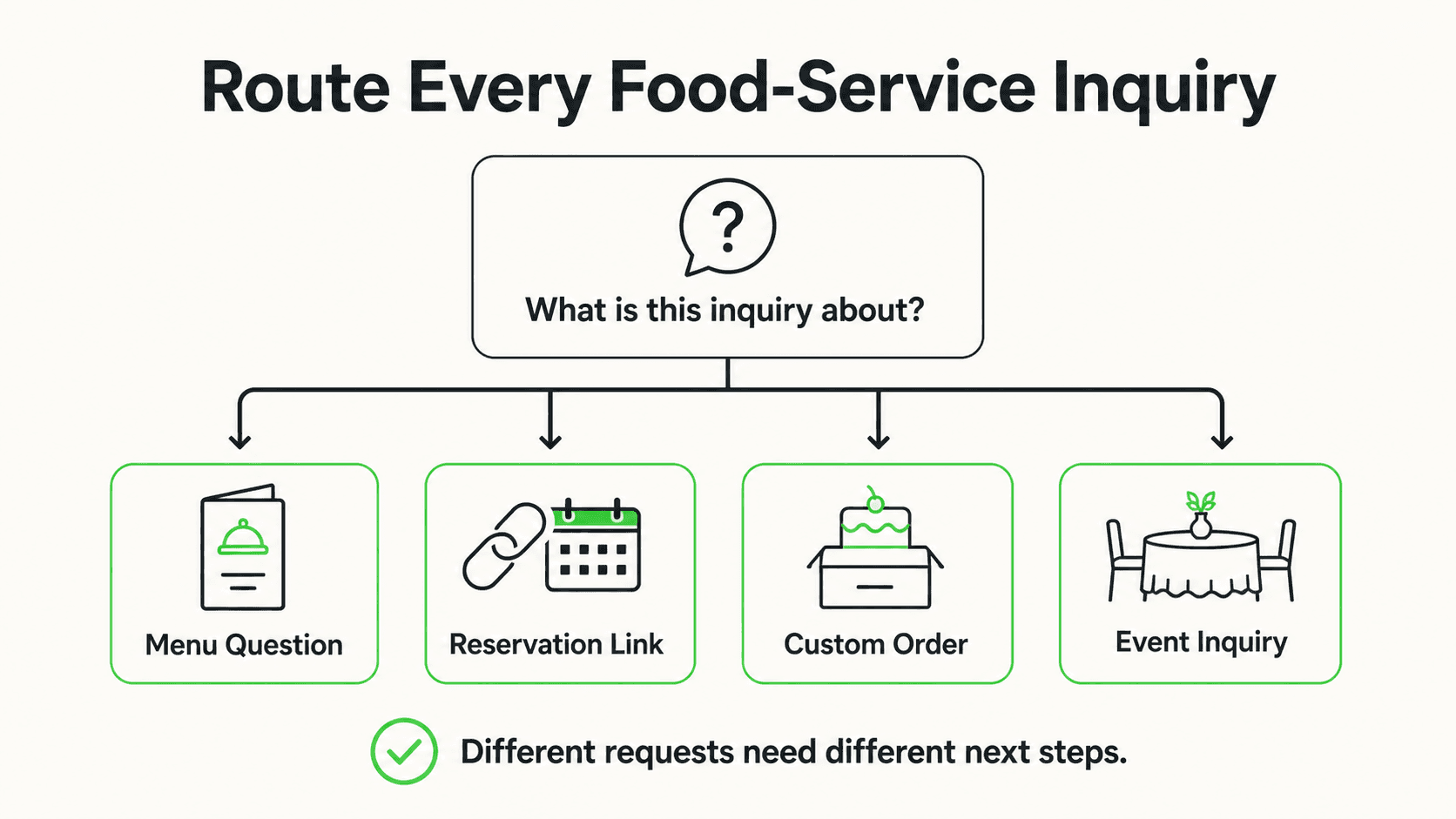
The pattern of restaurants losing reservations to faster competitors is well-documented by hospitality operators: customers contact multiple restaurants simultaneously and book with whoever responds first.
During service, no one can answer the phone. When the dining room is full and service is firing, your host stand is managing walk-ins, your server staff is on the floor, and the phone rings to nobody. The group calling at 7:30 PM on a Friday has already booked somewhere else by 7:45.
Instagram DMs pile up for hours. Restaurants with strong visual brands get significant inquiry volume through Instagram. Those DMs often sit unread until someone has a free moment — which during a busy service is never.
Private event inquiries require back-and-forth that nobody has time for. A corporate team looking to book a private dining room sends an inquiry. Without a chatbot, that inquiry sits in an inbox until someone has 20 minutes to write a detailed response about menu options, minimum spends, and AV capabilities. With a chatbot, the qualification questions are answered automatically and the inquiry is warm when your events coordinator picks it up.
After-hours is when planners plan. Birthday dinners, anniversary reservations, and work events are researched and booked during off-peak times — evenings and weekends when decision-makers have time to think. These are exactly the windows when restaurants have no staff monitoring incoming messages.
5 Scenarios Where a Restaurant Chatbot Earns Its Keep
1. The Saturday Night Reservation
A couple wants a table for two on Saturday at 7 PM. They find you on Google, click through to your website, and send a message. Your chatbot responds in seconds: "Hi! We'd love to have you — Saturday evenings are popular, let me share our reservation link so you can secure your table." They book. Your host team has a confirmed reservation. No phone call, no hold music, no missed connection.
2. The Private Dining Inquiry
A corporate event planner is researching venues for a team dinner of 15. She sends an Instagram DM at 2 PM on a Tuesday asking about private dining options, minimum spend, and AV setup. Your chatbot responds immediately with your private dining overview, the minimum party size for exclusive use, and a link to request a detailed proposal. She's captured and warm when your events manager follows up the next morning.
3. The Allergy and Menu Question
A customer with a nut allergy is considering your restaurant for a family dinner. They message your WhatsApp number asking which dishes are nut-free. Your chatbot — trained on your menu — answers specifically. Trust is built. The reservation is made. This is a conversion that wouldn't have happened without the immediate, accurate response.
4. The After-Hours Birthday Booking
A customer planning a surprise birthday dinner is researching at 11 PM — the only time they have without their partner around. They find your website and ask about availability for a group of eight next Saturday. Your chatbot confirms availability for the date, shares your reservation link, and mentions your birthday cake pre-order option. Booking complete. You wake up to a confirmed reservation in your inbox.
5. The "Where Are You Exactly" Question
"I've been to your neighborhood a few times but not to your restaurant — where exactly are you located, and is there parking?" This question takes a staff member 2 minutes to answer over the phone. The chatbot answers it in 2 seconds, every time. Multiply across 20 similar questions per week and you've recovered a meaningful amount of staff time.
Handle Every Reservation Inquiry Instantly
Deploy a restaurant chatbot on your website, WhatsApp, and Instagram DM — and never miss a Saturday night booking again.
Try for FreeSetting Up Your Restaurant Chatbot: A Practical Approach
Step 1: Build your knowledge base. This is the most important step. Document your hours (including holiday variations), address and parking instructions, reservation policy (deposit required? cancellation window?), menu highlights with allergen information, private dining options and minimum spend, and your most common FAQs. The chatbot's quality is directly proportional to the quality of this input.
Step 2: Configure your reservation flow. Decide how the chatbot handles reservation requests. The most practical approach: the chatbot asks for date, time, and party size, confirms your general availability for that window, and shares your booking link to complete the reservation. Your host team manages the actual seating.
Step 3: Deploy on your highest-traffic channels. Start with your website and Instagram DM — these typically generate the highest inquiry volume for restaurants with strong digital presence. Add WhatsApp if you have customers who already message you there. Facebook Messenger is worth adding if you run Facebook ads or have an active Facebook page.
Step 4: Handle private event inquiries separately. Create a specific flow for private dining: collect party size, date, occasion type, and budget range. This qualifies the lead enough for your events coordinator to have a useful first conversation rather than starting from scratch.
Step 5: Test against real scenarios. Before going live, test the following: a Saturday night reservation request, an allergy question, a private dining inquiry, an after-hours question about hours, and a complaint or negative experience message. Make sure each scenario generates a response you'd be proud to send.
See related guidance on AI chatbot knowledge base best practices for structuring your restaurant's information effectively.
Channels That Matter for Restaurants in 2026
| Channel | Best For | Priority |
|---|---|---|
| Website widget | General inquiries, first-time visitors | High — start here |
| Instagram DM | Discovery-stage bookings, event inquiries | High if you run social content |
| Repeat customers, markets with WhatsApp preference | Medium | |
| Facebook Messenger | Facebook ad audiences, older demographics | Medium |
The multi-channel chatbot strategy most restaurants benefit from is website + Instagram first, then expanding to WhatsApp and Facebook as volume grows.
Frequently Asked Questions
Will a chatbot work with my existing reservation system (OpenTable, Resy, etc.)?
The chatbot shares your booking link — whether that's your OpenTable profile, your Resy page, or your own scheduling system. It doesn't integrate directly with these systems at the reservation management level. Think of it as the inquiry handler that gets customers to your booking link; your reservation system handles the actual booking management.
How does the chatbot handle a customer complaint about their last visit?
Train the chatbot to recognize negative sentiment and respond empathetically: "I'm so sorry to hear about your experience — I'd like to make sure our manager hears about this directly. Can I get your contact information so we can follow up?" This routes complaints to your team for personal handling rather than trying to resolve them through automation, which often makes things worse.
Can the chatbot take reservations directly without a booking link?
It can collect reservation details (name, party size, date, time, phone number) and log them for your host team to confirm. However, this manual approach requires your team to review and confirm each request. For higher volume, using a booking link that integrates with your reservation system is more reliable.
What if a customer asks for a specific menu item that's been 86'd tonight?
The chatbot works from your knowledge base, which you control. For seasonal or frequently changing menus, train the chatbot to say "Our menu highlights include X and Y — for the most current availability, our team can help when you arrive or call during service hours." It won't guess about 86'd items; it routes that question appropriately.
How much does an AI chatbot for restaurants cost?
Hyperleap AI plans start at $40/month (Plus plan) with a 7-day free trial. A credit card is required for the trial. Given the average revenue of a covered table on a Saturday night, a single additional reservation per month covers the subscription cost. See pricing details.
Do I need technical knowledge to set it up?
No. The setup process is designed for restaurant managers, not developers. You write your knowledge base in plain language, configure your channels, and test before going live. Most restaurant operators complete initial setup in a few hours spread across 2–3 days. The Managed Setup add-on is available if you'd prefer a specialist to handle the build.
Every Unread DM Is a Table Someone Else Is Filling
The best restaurants in 2026 aren't necessarily the ones with the best food or the most Michelin stars. They're the ones that respond first, confirm fastest, and make it easy to book. When your dining room is full of happy guests, the last thing your host should be doing is typing responses to Instagram DMs.
An AI chatbot for restaurants handles the inquiry volume while your team handles the hospitality. It works the shift your staff doesn't — and it never misses a Saturday night booking because the bar was busy.
Can the chatbot handle bookings and availability questions?
Yes — it answers room and rate questions, captures booking inquiries with check-in / check-out / party-size details, and shares your direct-booking link or routes serious bookers to your reservations team. It does not replace your PMS — it sits in front of it as a 24/7 inquiry desk.
Will guests get frustrated talking to a bot instead of a person?
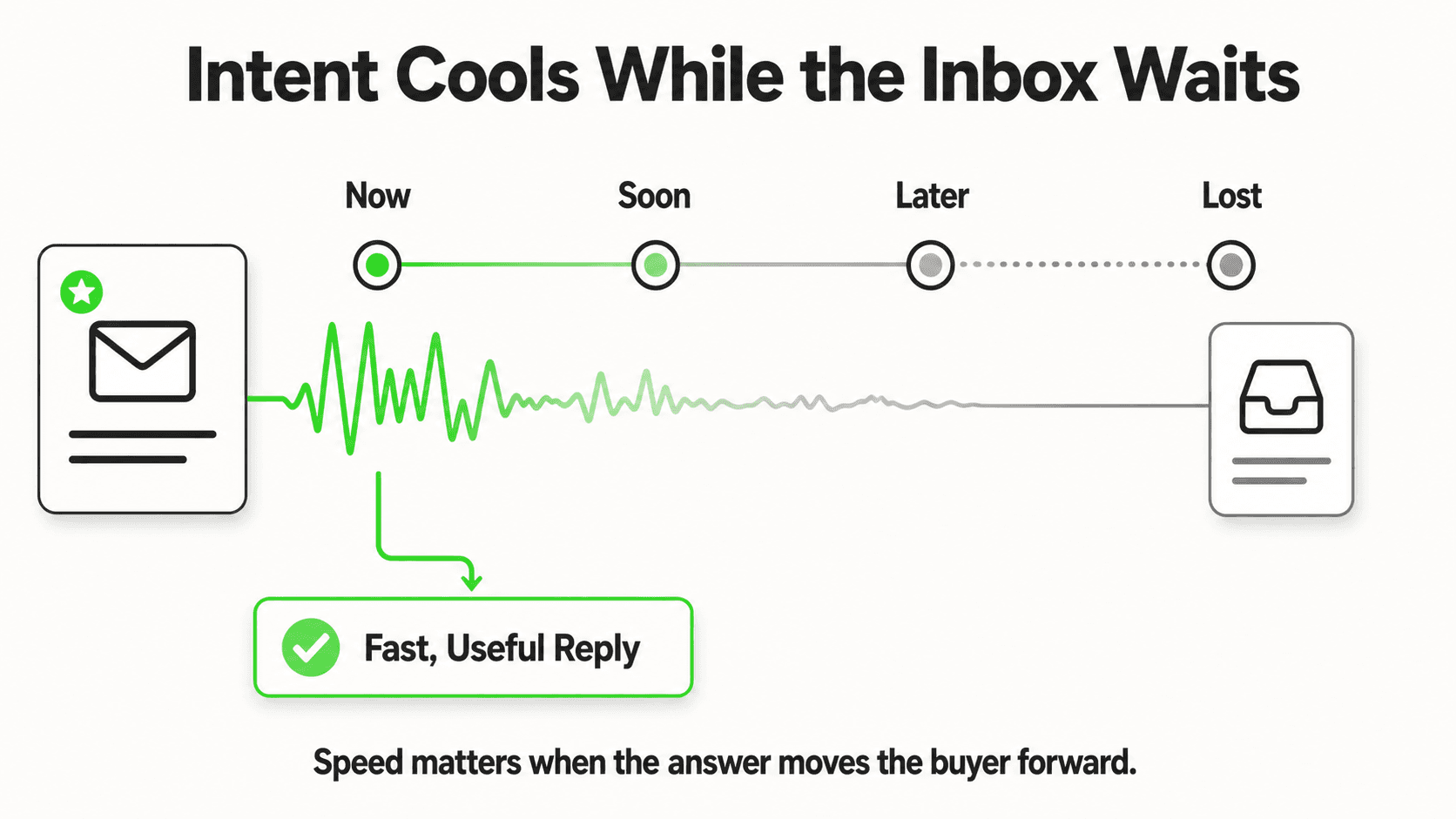
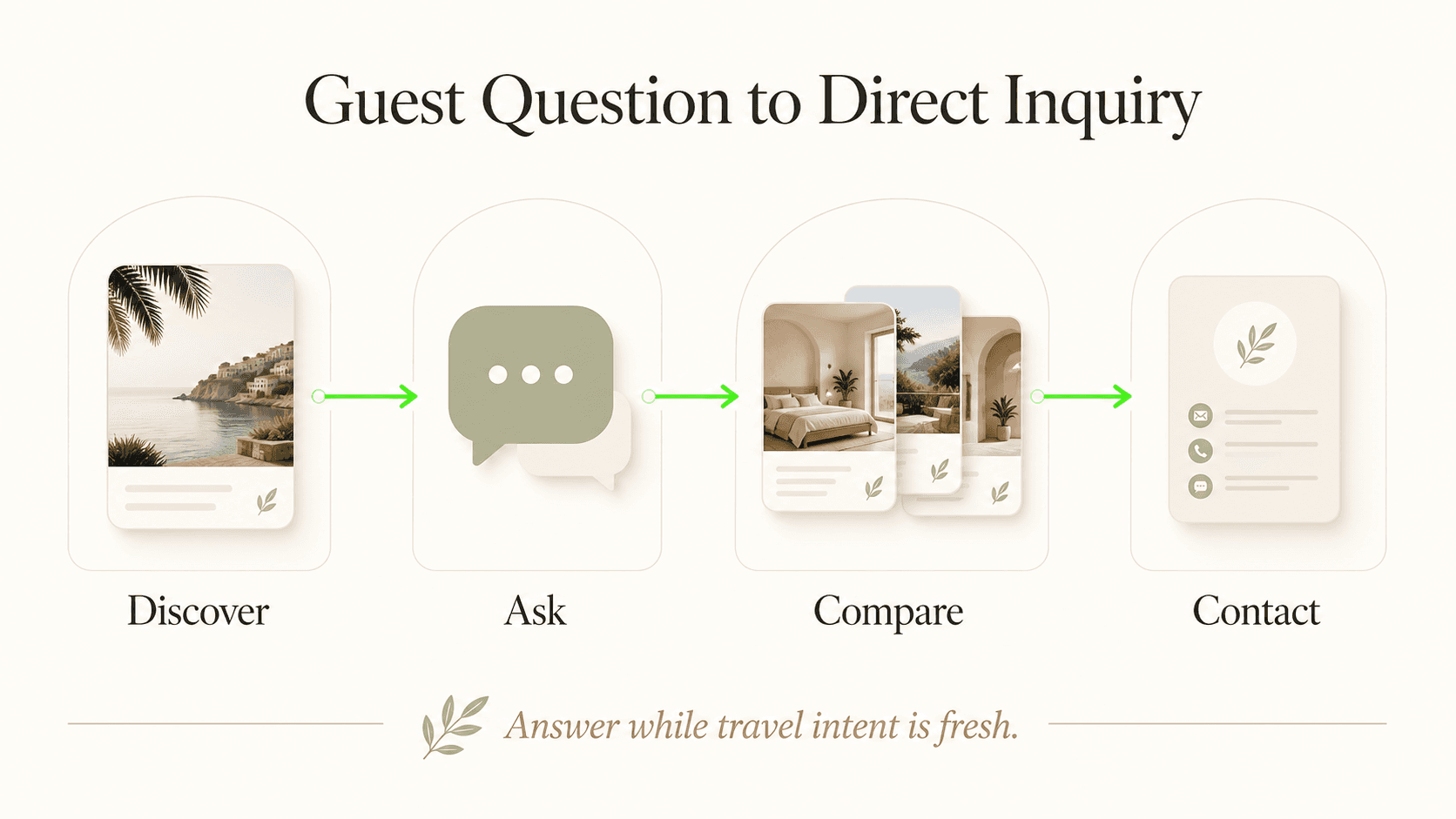
Modern AI agents handle the vast majority of routine guest questions naturally and escalate to a human when needed. Guests get instant answers at 2 AM instead of waiting until the next business day, which most properties find improves satisfaction rather than hurting it.
Does the chatbot work for non-English-speaking guests?
Yes. Hyperleap supports 100+ languages and detects the guest's language automatically, so an Arabic-speaking guest from Dubai and a German guest from Munich both get answers in their own language from the same deployment.
Further Reading
Authoritative external sources used and recommended for further research on this topic:
- Skift hospitality research
- Phocuswright travel and hospitality data
- STR / CoStar hotel performance benchmarks
Fill Your Tables, Not Your Inbox
Start a 7-day trial and deploy a restaurant chatbot that handles reservations, FAQs, and private dining inquiries — around the clock.
Get StartedIndustry Solutions
See how AI chatbots work for these industries:
Related Articles
AI Receptionist for Restaurants: Chat-First Guide
An AI receptionist for restaurants answers menu and hours questions, qualifies reservation and private-dining requests, and shares your reservation link 24/7.

Hotel Late-Arrival Questions: An Approved Answer Pack
Prepare accurate hotel late-arrival replies with public policy sources, private-access boundaries and a clear route to your reception team.
Hotel Cancellation Answers: A Source-Check Checklist
Build hotel cancellation answers around booking channels, rate terms and stay dates, with a source-check worksheet and clear staff-review boundaries.
Hotel Group Enquiry Scripts: From Question to Handoff
Use practical hotel group enquiry scripts to gather dates, room needs and event context, then hand a clear brief to your reservations team.