
Content Personalization: A Guide for SMBs in 2026
Learn what content personalization means for your SMB. Our guide covers strategies, tools, and a roadmap to increase sales and customer loyalty.
You're probably sitting on a website, inbox, or social feed that treats every visitor almost the same. A first-time visitor sees the same homepage message as a repeat buyer. Someone browsing one service gets the same follow-up email as someone interested in another. Your business may be working hard to attract attention, but the experience still feels generic.
That's where content personalization becomes useful. Not as a big enterprise project. Not as a complicated AI program. Just as a practical way to make your marketing feel more relevant to the person in front of you.
For a small business, that matters because wasted attention is expensive. If your website, emails, and chat flows can respond to what people care about, you make it easier for them to take the next step.
Table of Contents
- What Is Content Personalization and Why It Matters
- Core Strategies and Segmentation Tactics
- An Actionable Roadmap for Small Businesses
- Conversational Personalization with AI Chatbots
- Measuring Success and Avoiding Common Pitfalls
- Your Next Steps and Personalization FAQ
What Is Content Personalization and Why It Matters
A good local shopkeeper doesn't greet every customer the same way. They remember who buys the premium option, who needs a quick answer, and who usually asks for a discount before deciding. That memory changes the conversation.
Content personalization works the same way in digital marketing. It means adjusting the content, offer, message, or path based on what you know about the visitor or customer.

Think like a local shopkeeper
If someone lands on your pricing page after reading three service pages, they probably need reassurance, not a broad brand story. If a past customer returns, they may need support content, not a generic welcome banner. Personalization means your business responds to those differences instead of ignoring them.
That's why this matters beyond convenience. Fast-growing companies generate 40% more revenue from personalization efforts than slower-growing competitors, and 80% of businesses report increased consumer spending from personalized experiences, with an average 38% rise in purchases when content is adapted to individual preferences, according to Contentful's summary of personalization statistics.
Practical rule: Personalization isn't about impressing people with technology. It's about removing irrelevant friction.
What personalization is and what it is not
Many small businesses hear “personalization” and think of inserting a first name into an email subject line. That's not enough. Name merges are surface-level customization. Real personalization uses context.
A few examples make the difference clearer:
| Approach | What it looks like | Why it matters |
|---|---|---|
| Simple customization | “Hi Sarah” in an email | Polite, but limited |
| Content personalization | Showing service-specific FAQs based on the page Sarah visited | More relevant and more useful |
| Journey personalization | Sending a follow-up offer only after Sarah requested a brochure | Better timing |
Good personalization answers three questions:
- Who is this person likely to be
- What are they trying to do right now
- What's the most helpful next step
For SMBs, the win is simple. You don't need a giant data stack to become more relevant. You need a few useful signals and the discipline to act on them.
That could mean changing homepage copy for returning visitors, showing different calls to action by service category, or sending different follow-up messages based on a form answer. Small changes count when they match real intent.
Core Strategies and Segmentation Tactics
Personalization gets easier when you stop thinking about “every individual” and start thinking about small, useful groups. That's segmentation. It helps you decide which message belongs to which visitor.

The four segments that matter most
Most SMBs can start with four practical segmentation types.
Demographic segmentation groups people by baseline traits. For a local business, that may mean homeowner versus renter, parent versus non-parent, or business buyer versus consumer buyer. A dental clinic might show family dentistry content to one audience and cosmetic treatment content to another.
Psychographic segmentation looks at interests, priorities, and motivations. A budget-focused buyer needs a different message than a buyer who wants speed or premium service. This is often gathered through intake forms, surveys, or chatbot questions.
Behavioral segmentation uses actions people take. This is often the fastest route to useful personalization because behavior shows intent. If someone visits your pricing page repeatedly, downloads the same brochure, or abandons a booking flow, you can respond with a more specific message.
Contextual segmentation uses the visitor's immediate situation, such as device type, time of day, or referral source. A mobile visitor may need a shorter page and a tap-to-call prompt. A visitor coming from Instagram may need faster trust signals than someone arriving through branded search.
The best segment is the one your team can actually use this week.
Start with data you already own
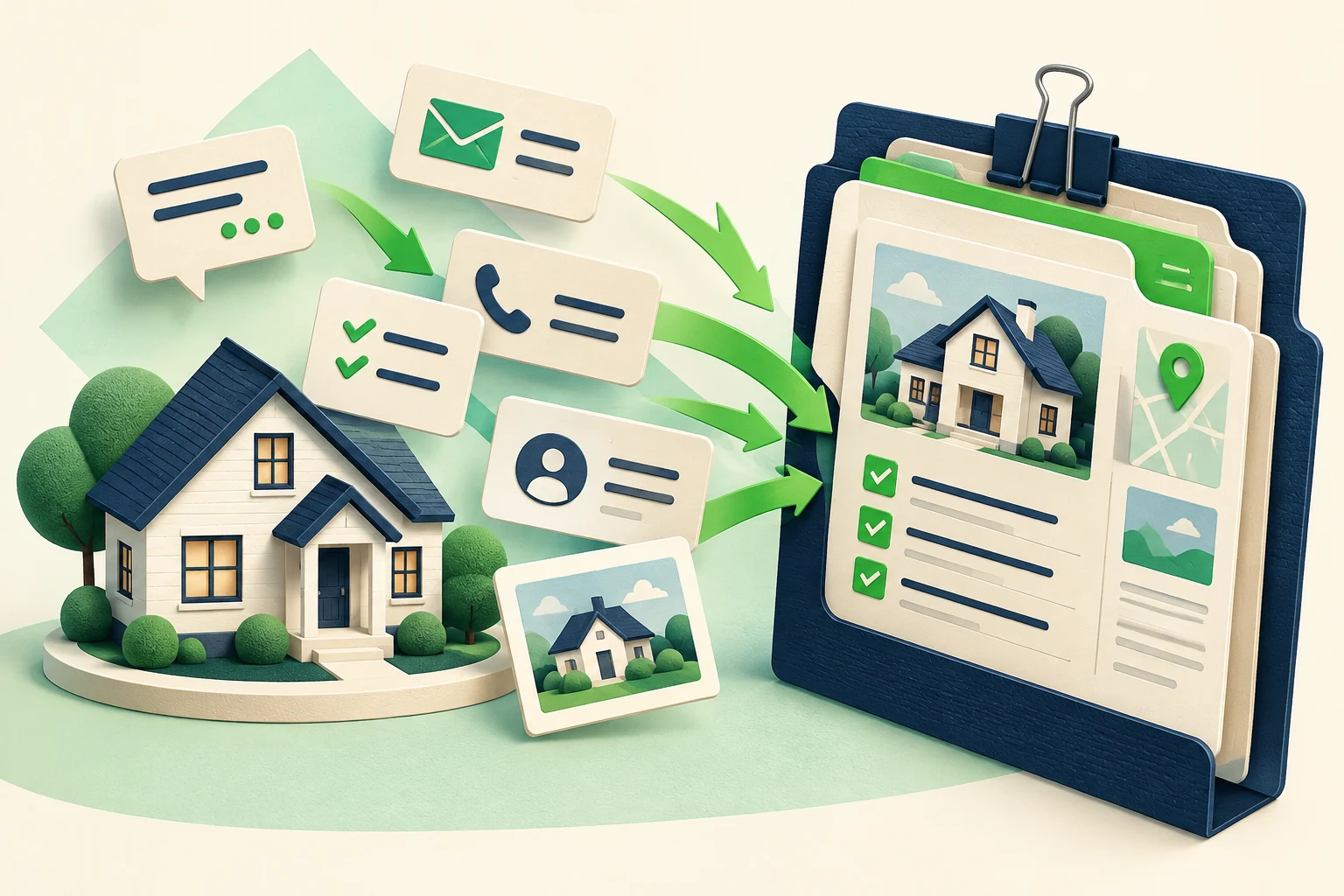
Small businesses often assume personalization starts with expensive software. Usually it starts with data you already have but haven't organized.
A useful first-party and zero-party data mix can come from simple sources:
- Website behavior such as pages viewed, repeat visits, and form starts
- Purchase or inquiry history from your CRM, booking system, or spreadsheet
- Stated preferences collected through short forms, quizzes, or chat questions
- Lead source such as Google Ads, Facebook, organic search, or referral traffic
A message's impact grows when its segment is well-defined. In B2B, personalized calls to action convert 202% more visitors into leads than default CTAs, according to Instapage's personalization statistics. That's a strong reminder that generic calls to action often underperform because they ignore context.
If you're already building campaigns, this connects closely with broader marketing automation for small businesses. Automation handles the timing. Segmentation makes the message relevant.
A small example:
- Visitor A reads “commercial cleaning” pages
- Visitor B reads “residential deep cleaning” pages
If both visitors see the same CTA, you're forcing them into a generic path. If each sees a service-specific CTA, the next step feels obvious.
That's the whole point of segmentation. Better grouping leads to better relevance. Better relevance usually leads to better action.
An Actionable Roadmap for Small Businesses
Most SMBs fail with personalization because they try to do too much too early. They imagine a fully dynamic website, custom email journeys, predictive recommendations, and a new analytics setup. Then nothing launches.
A better approach is narrower. Pick one channel. Use a few signals. Improve one decision point.

A simple rollout plan
Start with this sequence.
Choose one high-impact channel
Your website is usually the best starting point because that's where buying intent becomes visible. If your list is engaged, email can also work. Don't start with every channel at once.Define one audience split
Keep it simple. New versus returning visitors. Residential versus commercial leads. Existing customers versus prospects. One clean split is enough to learn from.Collect a few usable signals
Use form fields, page visits, service interest, referral source, and chat responses. You don't need perfect profiles. You need enough context to change the next message.Personalize one asset, not your whole funnel
Change a homepage banner, a CTA block, a chatbot greeting, or a follow-up email. Small wins are easier to measure and maintain.Test and refine
If the personalized version helps people move forward more often, expand carefully. If it doesn't, adjust the segment or the message.
A low-cost rollout often looks like this:
| Business type | Easy first personalization move | Tool examples |
|---|---|---|
| Service business | Show different CTA text by service page | Website builder, chat widget |
| Clinic | Tailor intake or FAQ prompts by treatment page | Form tool, chatbot |
| B2B firm | Change lead magnet or consultation CTA by industry page | CRM, popup tool, email platform |
| Local retailer | Recommend categories based on previous browse behavior | Ecommerce platform, email tool |
For many teams, useful data collection starts with better lead capture. A practical way to think about that is through AI lead capture and first-party data for small businesses, where the exchange of information is clearer and more intentional.
How to keep it privacy-conscious
Privacy is where many SMB owners freeze. They know personalization can help, but they're worried about collecting data the wrong way.
That concern is valid. 73% of small businesses lack resources for complex compliance, and 42% of SMBs are turning to AI agents for real-time consent management, but practical guidance is still limited, based on the verified data provided for this topic.
The simplest approach is operational, not legalistic:
Ask only for what you'll use
If a form asks six questions but you act on only two, cut the rest.Explain the value clearly
If you ask for a service preference or timeline, tell people why. Relevance feels fair when the exchange is obvious.Use consent-aware tools
Favor tools that support clear opt-ins, consent capture, and verified lead collection workflows.Store less, organize better
Clean, limited first-party data is usually more useful than messy overcollection.
Collect context with permission, then use it to be helpful. That's a better operating standard than chasing every possible data point.
Conversational Personalization with AI Chatbots
A chatbot is one of the most practical ways to apply content personalization without rebuilding your whole website. Instead of forcing visitors to hunt through menus, it can adapt in real time based on the page they're on, what they ask, and what they've already told you.
How a personalized conversation feels to a visitor
A visitor lands on your med spa page after clicking an ad about skin treatments. They scroll, hesitate, and open chat. A generic bot says, “How can I help you today?” That's functional, but weak.
A personalized chatbot can do better. It can recognize the page context and open with a treatment-specific prompt. It can offer a brochure related to that service. It can ask whether the visitor wants pricing, eligibility, or appointment availability. Each answer narrows the path.
That same logic works in B2B. Someone browsing your commercial HVAC page doesn't need the same conversation as someone on your residential repair page. A bot can ask one or two qualifying questions, route the visitor to the right information, and capture lead details without making the interaction feel like a form disguised as chat.
Where chatbots fit for SMBs
Chatbots are especially useful when your business has repetitive pre-sales questions, mixed-intent traffic, or limited staff availability.
They can help with:
- Lead qualification by asking short, relevant questions before handing the lead to your team
- Content delivery by sharing the right brochure, PDF, image, or FAQ based on the topic
- Appointment routing by sending qualified visitors to a booking link at the right moment
- After-hours coverage so visitors still get useful answers when your team is offline
A practical option in this category is chatbot marketing with Hyperleap AI. It supports no-code deployment, document-grounded responses, OTP-verified lead capture, and booking handoff workflows, which makes it relevant for SMBs that want personalized conversations without building a custom system.
A key advantage of conversational personalization is speed. A page can only show a few fixed messages. A chatbot can adjust its next question based on the last answer. That makes it a natural fit for small businesses that need relevance but don't have time to redesign every page.
A personalized conversation often does what a longer webpage can't. It helps the visitor state their need in their own words.
Measuring Success and Avoiding Common Pitfalls
If you can't tell whether personalization is helping, it turns into extra work with no discipline behind it. The fix is to measure a small set of outcomes tied to real business movement.

What to measure first
Start with metrics that reflect intent and action, not vanity.
- Conversion rate on key pages tells you whether the customized experience gets more people to inquire, book, or buy
- Lead quality shows whether your personalized paths attract the right prospects, not just more form fills
- Engagement on decision pages helps you judge whether visitors are finding the content more relevant
- Bounce reduction on high-intent pages can reveal whether the message matches visitor expectations more closely
There's also useful benchmark context. Personalized digital advertising performs 3X better than the average, and personalized emails see a 29% higher open rate and 41% higher click-through rate compared with non-personalized emails, according to the Omni-channel Personalization Benchmark Report.
Those numbers don't mean every SMB will produce the same lift. They do mean relevance tends to outperform generic outreach when the underlying data is sound.
The consistency problem most guides ignore
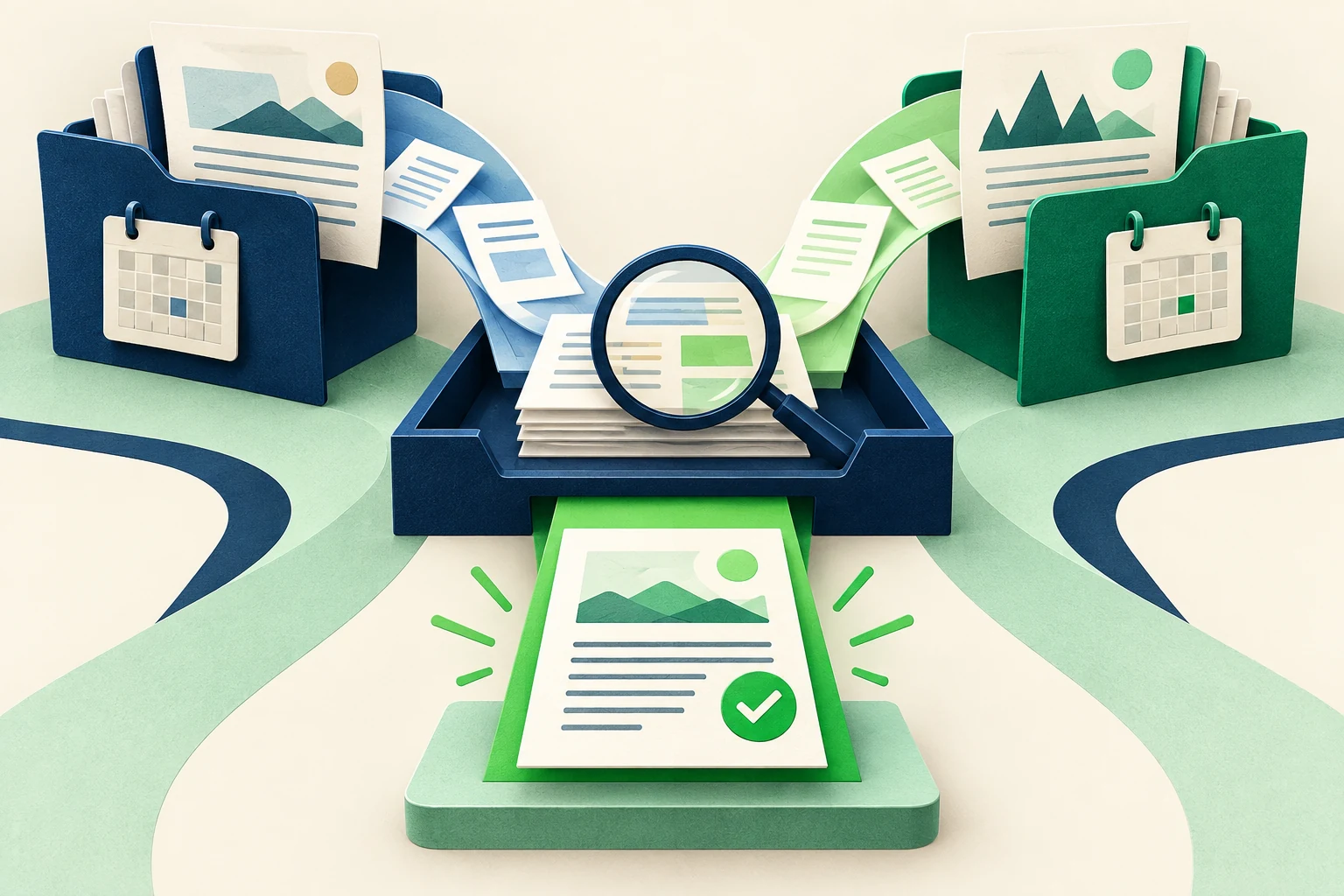
There's another risk that gets less attention. Personalization can improve relevance while damaging your brand if each message starts sounding like it came from a different company.
This is the content consistency paradox. AI and automation let teams tailor messages quickly, but without content governance, tone, claims, and positioning start drifting. The result is confusion. Your homepage sounds premium. Your chatbot sounds casual. Your follow-up email sounds aggressive. The pieces no longer fit.
Verified data for this topic notes that 68% of brands face declining trust when hyper-personalized content deviates from core messaging without governance frameworks.
A simple safeguard helps:
| Risk | What it looks like | Better practice |
|---|---|---|
| Poor data quality | Wrong offer, wrong segment, wrong follow-up | Clean up forms, tags, and source tracking |
| Personalizing for its own sake | Unnecessary variations that don't help the visitor | Tie each change to a clear decision point |
| Brand drift | Inconsistent tone and promises across channels | Use approved messaging rules and a central knowledge base |
Keep the message consistent, then personalize the route into it.
Your Next Steps and Personalization FAQ
Content personalization is more accessible than most SMBs think. You don't need a huge budget, a data scientist, or a complicated stack. You need a focused use case, a few trustworthy signals, and a system for improving what the visitor sees next.
A short tool selection checklist
When you evaluate tools, keep the checklist practical.
Ease of setup
Can your team launch it without a developer?Channel fit
Does it work where your leads actually arrive, such as your website, email, WhatsApp, or social messaging?Data simplicity
Can it use first-party inputs like page visits, form answers, and chat responses without heavy integration work?Consent support
Does it help you collect and manage data in a way your team can realistically maintain?Content control
Can you keep responses and messaging aligned with your actual offers and brand voice?
FAQ
Budget is tight. Can a small business still do this
Yes. Start with one page, one segment, and one personalized call to action or chatbot flow. Narrow personalization usually beats ambitious, unfinished personalization.
Is content personalization only for ecommerce
No. It works well for clinics, agencies, local service businesses, real estate teams, hospitality groups, and B2B firms. Any business with different customer intents can benefit.
What's the easiest place to begin
Begin where intent is already visible. For most SMBs, that's a service page, pricing page, lead form, or website chat.
How do I avoid making personalization feel intrusive
Ask for useful information, explain why you need it, and use it to reduce friction. If the data collection feels excessive, it probably is.
What if my brand voice gets messy across channels
Use a shared message library, approved answers, and a central source of truth for offers, policies, and positioning. Personalize the delivery, not the core identity.
If you want a practical way to apply content personalization without stitching together multiple tools, Hyperleap AI gives small businesses a no-code way to answer questions, capture OTP-verified leads, share documents, and route people to booking flows across website and messaging channels while keeping responses grounded in your own content.