Lead Nurturing Automation: An SMB's Guide to Growth
Master lead nurturing automation to convert more prospects. This guide shows SMBs how to build automated workflows across email, chat, and social media.
Leads are coming in. A few from your website form. A couple from Instagram DMs. One person asks for pricing on WhatsApp. Another downloads a brochure, then disappears. You mean to follow up with all of them, but the day gets crowded with client work, team questions, and the thousand small tasks that keep an SMB running.
So the follow-up system becomes a patchwork. Some leads sit in your inbox. Some get added to a spreadsheet. Some get one email and never hear from you again. Others are ready to buy, but they don't get a fast answer, so they move on.
That gap is where a lot of growth gets lost. Lead nurturing automation fixes it. Not by turning your business into a robot, but by making sure each lead gets the right next step without your team having to remember every message, every time, in every channel.
Table of Contents
- The Leaky Funnel Problem Every SMB Faces
- What Is Lead Nurturing Automation Really
- Why Automation Is a Game Changer for SMBs
- The Four Pillars of a Lead Nurturing Machine
- Omnichannel Nurturing Workflows You Can Steal
- How Hyperleap AI Automates Nurturing Without Code
- Measuring What Matters Nurturing KPIs and Metrics
The Leaky Funnel Problem Every SMB Faces
A local service business owner gets a lead from Facebook in the morning, a website chat at lunch, and a WhatsApp question right before closing time. None of those people think of themselves as “channels.” They're just trying to reach a business in the easiest way possible.
But inside the business, those conversations often live in separate places. One person checks email. Someone else watches Instagram. WhatsApp gets answered when there's time. The spreadsheet is already outdated by Wednesday.
That's the leaky funnel. Leads aren't being rejected. They're being forgotten, delayed, or handled inconsistently.
The channel shift makes this worse. While 73% of marketers use email for lead nurturing, only 22% effectively integrate social media, SMS, and chat platforms. At the same time, 68% of consumers prefer those channels for initial inquiries, and chat-based nurturing shows 40% higher conversion rates than email-only strategies, according to Salesgenie's lead nurturing statistics roundup.
Where the leak usually happens
- Slow first response: A lead asks a simple question, waits too long, and moves to a competitor.
- No follow-up path: A person downloads information, but nobody sends the next helpful message.
- Channel mismatch: Your team answers by email while the buyer wants to stay in chat.
- No prioritization: A casual browser and a ready-to-buy prospect get treated the same way.
Practical rule: If a lead depends on someone remembering to follow up manually, your process will break under pressure.
Many owners already feel this problem. They know response speed matters. They know conversations get missed. If that sounds familiar, this piece on how slow response times cost businesses is worth reading because it captures the hidden cost of delayed follow-up in plain terms.
Lead nurturing automation starts where this chaos starts. It gives every inquiry a path, so your funnel stops leaking just because your team got busy.
What Is Lead Nurturing Automation Really
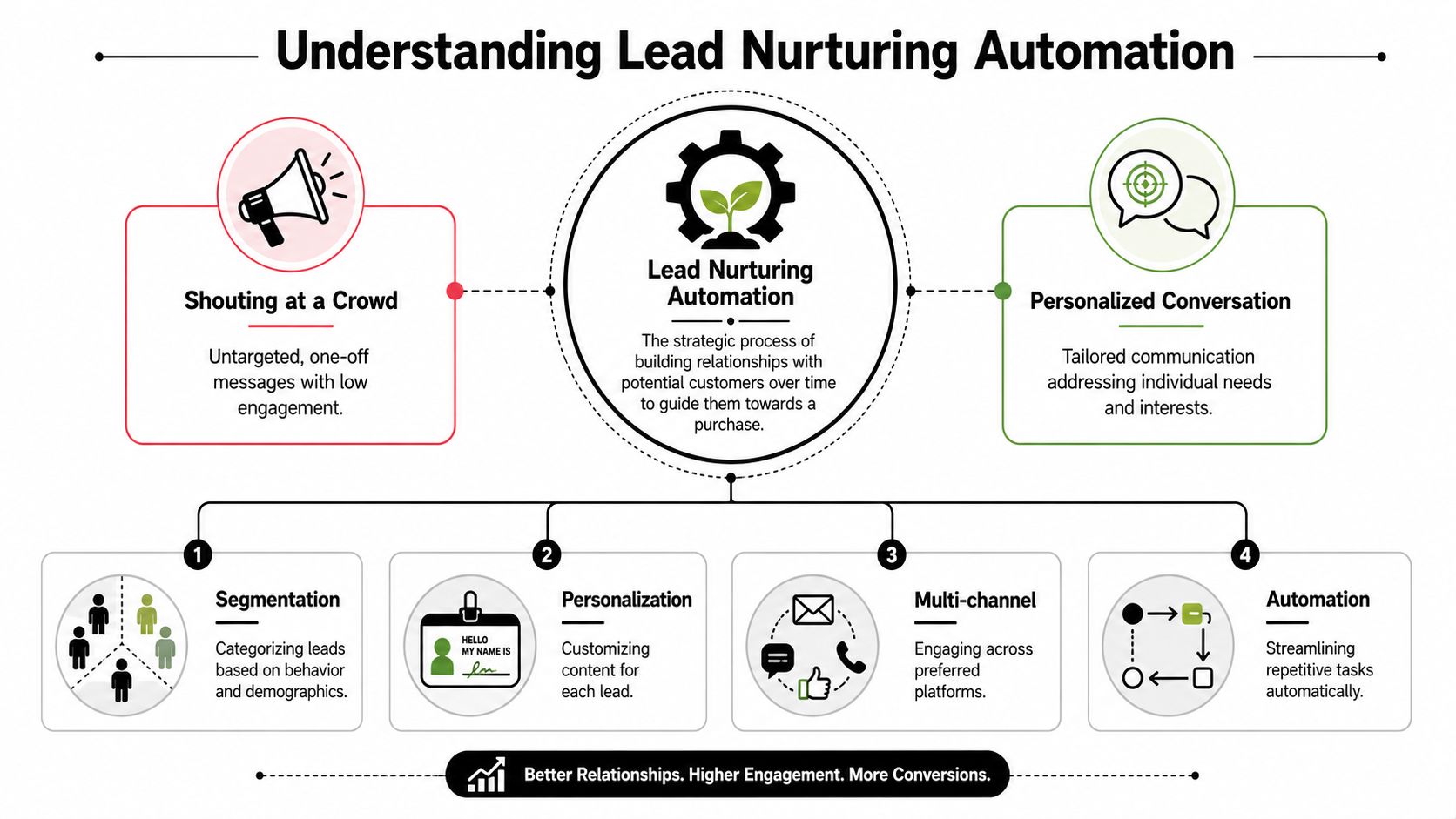
Lead nurturing automation is a system that keeps a conversation moving after someone shows interest. It watches for signals, sends the next relevant message, and helps your team step in at the right moment.
The easiest way to understand it is to compare two sales environments.
One is a loudspeaker. Everyone hears the same message at the same time, whether it fits or not. That's the classic batch email blast.
The other is a helpful store assistant. When a shopper asks about one product, the assistant responds with information that matches that interest. If the shopper comes back later, the assistant picks up where the conversation left off. That's what lead nurturing automation is trying to do at scale.
What it is
Lead nurturing automation is the process of guiding a prospect over time with timely, relevant follow-up based on what they do and what they need.
That can include:
- Behavior-based messages: Someone visits your pricing page or asks for a brochure.
- Educational follow-up: A lead gets answers before they're ready for a sales call.
- Qualification: High-intent prospects get routed to a person. Lower-intent prospects stay in a nurture sequence.
- Multi-channel communication: The conversation can continue by email, website chat, WhatsApp, Instagram, or Facebook.
What it isn't
Automation isn't just scheduling emails. And it isn't impersonally spamming people faster.
A real nurturing system doesn't say, “Send message three days later no matter what.” It says, “If this person asked about pricing, do this. If they only browsed a blog post, do something lighter. If they requested a demo, notify sales now.”
Good automation feels less like software and more like memory. It remembers what the lead did, what they asked, and what should happen next.
That's why “marketing automation” and “lead nurturing automation” aren't the same thing. Marketing automation is the broad category. Lead nurturing is the relationship part inside it. It's focused on building trust, answering objections, and moving people forward instead of just pushing out campaigns.
For SMBs, that distinction matters. You don't need a giant automation stack to start. You need a practical system that keeps good leads warm and helps your team avoid dropped conversations.
Why Automation Is a Game Changer for SMBs
For a small team, the biggest benefit of automation isn't novelty. It's relief. You stop depending on memory, inbox triage, and good intentions.
A salesperson shouldn't have to manually check whether a lead clicked a brochure yesterday. A front-desk person shouldn't have to remember who asked for pricing last week. Automation handles the repeatable parts so your people can focus on judgment, timing, and closing.
It creates more sales opportunities
At this stage, lead nurturing automation stops sounding like a process improvement and starts looking like a growth lever.
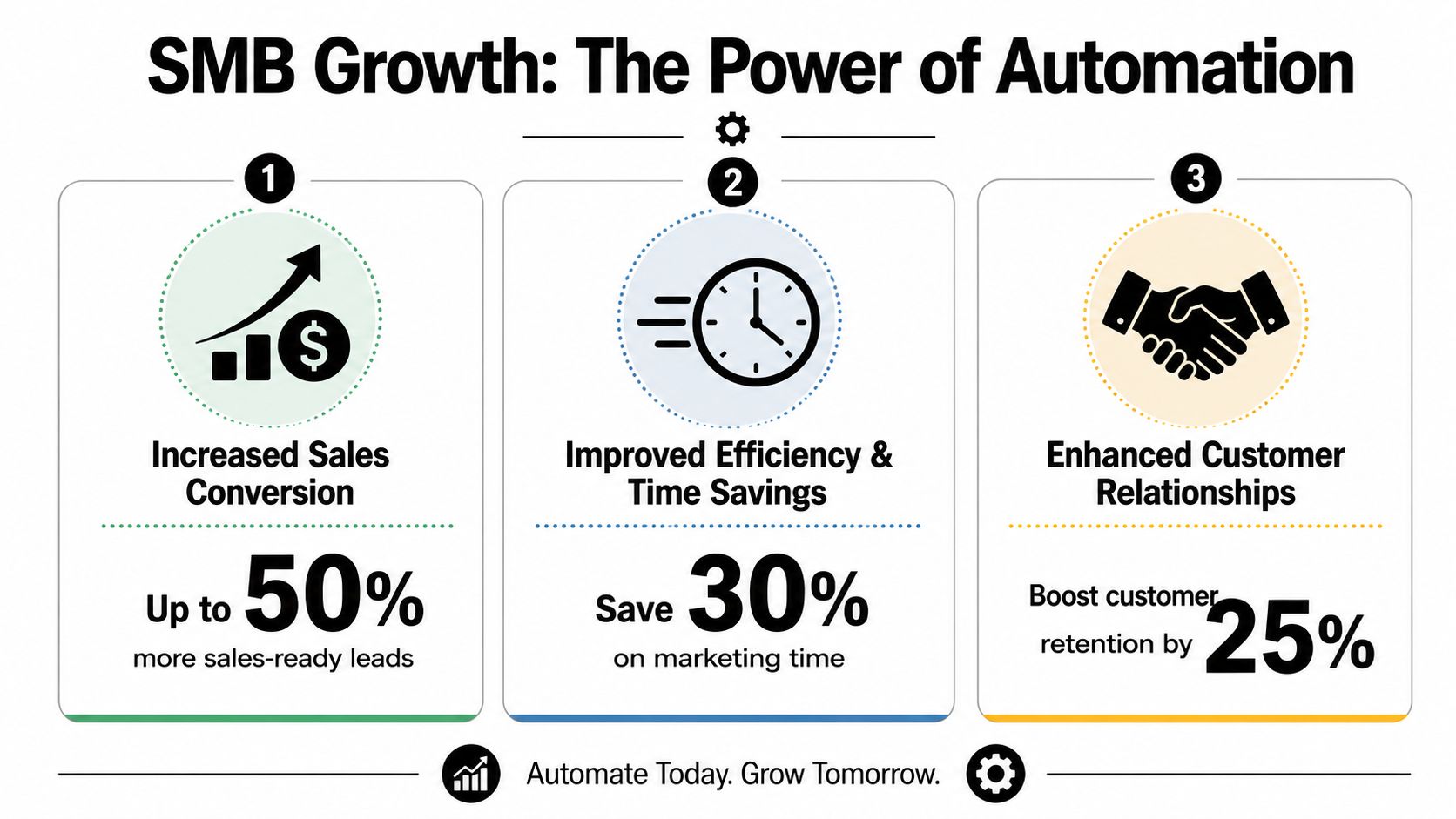
B2B marketers who use lead nurturing automation see a 20% average increase in sales opportunities, and 15% report a lift of 30% or more, based on Emailmonday's overview of marketing automation statistics.
For an SMB, that means the same traffic, the same ad spend, and the same inquiry volume can produce more pipeline if follow-up improves.
It improves efficiency without adding headcount
A manual process doesn't scale well. As soon as leads increase, quality drops. Replies get delayed. Notes get missed. Handoffs get messy.
Automation creates a repeatable response layer:
- First contact happens immediately
- Basic questions get answered consistently
- Low-intent leads keep receiving useful follow-up
- Sales gets notified when someone is ready
That matters even more if you're already exploring broader marketing automation for small businesses, because nurturing is one of the clearest places where automation pays off in day-to-day operations.
It gives sales warmer conversations
There's a big difference between calling a cold lead and talking to someone who has already engaged with helpful content, asked a few questions, and signaled interest.
Sales teams work better when they receive context, not just names. A nurtured lead usually arrives with a clearer problem, more familiarity with your offer, and a stronger reason to keep talking.
Takeaway: Automation doesn't replace your sales process. It improves the quality of the lead before sales steps in.
That's a major shift for SMBs. Instead of treating every inquiry like a race to manually follow up, you build a system that qualifies, educates, and advances people in the background.
The result is a business that feels more responsive to buyers and more manageable to your team.
The Four Pillars of a Lead Nurturing Machine
A good lead nurturing system isn't magic. It's a machine with a few clear parts working together. Once you see those parts, the whole topic becomes much less intimidating.
Triggers start the motion
A trigger is the event that tells your system to do something.
It can be a form submission, a chatbot question, a brochure download, a pricing-page visit, or a reply on WhatsApp. Think of triggers as doorbells. They don't do the whole job. They only signal that someone needs attention.
Some triggers are obvious, like “booked a demo.” Others are softer, like “visited the FAQ page twice in one week.” Both can be useful.
Segmentation decides what happens next
Not all leads should get the same follow-up. Segmentation is how you sort people based on behavior, intent, source, or fit.
A clinic might separate cosmetic inquiries from urgent booking questions. A B2B software company might split agency leads from in-house marketing teams. A real estate group might treat a buyer inquiry differently from a rental question.
Effective lead nurturing automation uses real-time behavioral tracking and predictive lead scoring to segment prospects. High-intent leads are routed directly to sales, while others enter automated drip campaigns, resulting in a 2–3x increase in conversion rates compared to manual outreach, according to LeadsBridge's lead nurturing automation guide.
That sounds technical, but the logic is simple. If someone raises their hand strongly, route them to a human. If they're still exploring, keep helping them.
Content keeps the relationship alive
This is the part many businesses underbuild. They create the trigger and the workflow, but the actual messages are weak.
Your nurture content should answer the next natural question. Not every message needs to sell. In fact, many of the best ones don't.
A few examples:
- After a pricing question: send a clear pricing explainer or booking link
- After a guide download: send one practical use case related to that topic
- After repeated browsing: send a short summary of your process or differentiators
If your follow-up feels like pressure before trust, the workflow is working against you.
Channels determine where the conversation feels natural
This is the pillar many old guides skip. They assume everything belongs in email.
For modern SMBs, channel choice matters because buyer behavior has changed. Some leads want email. Others will never reply there but will answer a WhatsApp message in minutes. Some start on Instagram and expect the business to continue there.
A simple way to think about channels:
| Channel | Best use | Common mistake |
|---|---|---|
| Longer explanations, documents, summaries | Using it for urgent first contact | |
| Website chat | Fast qualification, FAQs, booking prompts | Leaving it disconnected from follow-up |
| Quick responses, reminders, casual sales conversations | Treating it like a one-off support inbox | |
| Instagram or Facebook | Early inquiries and product questions | Failing to move the lead into a structured workflow |
When these four pillars work together, automation stops being abstract. It becomes a clear operating system for lead handling.
Omnichannel Nurturing Workflows You Can Steal
The easiest way to grasp omnichannel nurturing is to see it in motion. These aren't complicated enterprise sequences. They're practical workflows an SMB can put in place with common tools and a bit of planning.

Organizations that use automated nurturing with behavioral triggers see Marketing Qualified Lead to Sales Qualified Lead conversion rates that are 30% to 50% higher than teams using generic batch-and-blast email strategies, according to Digital Applied's marketing automation statistics report. That lift makes sense because behavior-triggered workflows react to what the lead did, not what your calendar says to send.
Workflow one website inquiry to booked call
A visitor lands on your services page and opens the chatbot with a question like, “Do you work with multi-location businesses?”
The workflow could look like this:
- Instant chat response: The bot answers the question using your business information.
- Qualification step: It asks one or two useful follow-ups, such as location count or service type.
- Lead capture: If the visitor wants details, the system collects contact info.
- Resource delivery: It shares a brochure or service overview right in the conversation.
- Escalation: If answers indicate high intent, the system offers a calendar link or alerts sales.
This sequence works because it removes dead time. The lead doesn't need to wait for your team to come online just to get the first useful answer.
Workflow two content download to sales conversation
A prospect downloads a buying guide from your site. In many SMBs, that's where the interaction ends.
A better sequence looks like this:
- Message one: Confirm the download and deliver the asset by email.
- Message two: A day later, send one short takeaway related to the guide.
- Message three: If the lead clicks through to a pricing or case-study page, send a personalized follow-up or alert sales.
- Message four: If there's no action, shift to a lighter nurture rhythm instead of forcing a hard pitch.
If you're building the email side of this flow, Grumspot's guide on email flows is a useful resource because it helps map messages to lifecycle stages rather than sending generic follow-ups.
After your email sequence is running, you can connect it to broader acquisition and qualification with tools in the AI lead generation tool category, especially if you want your chatbot, forms, and messaging channels feeding the same nurture process.
A simple workflow table to copy
| Lead action | Channel | Automated response | Human handoff |
|---|---|---|---|
| Asks a product question on website chat | Website chat | Answer question, ask one qualifier, offer brochure | Route to sales if the lead asks for pricing or demo |
| Downloads a guide | Send guide, then educational follow-up | Notify sales if the lead clicks high-intent pages | |
| Sends an Instagram DM | Reply with short answer and next step | Handoff when the prospect requests consultation | |
| Messages on WhatsApp | Answer, capture details, share booking option | Assign to rep if inquiry is urgent or purchase-ready |
A short video can help if you want to see this logic in a visual format:
The important part isn't copying these workflows word for word. It's noticing the pattern. Each one responds quickly, uses the lead's actual behavior, and keeps the conversation in the channel that feels natural.
How Hyperleap AI Automates Nurturing Without Code
For many SMBs, the hard part isn't understanding lead nurturing. It's implementing it without stitching together five tools and waiting on a developer.
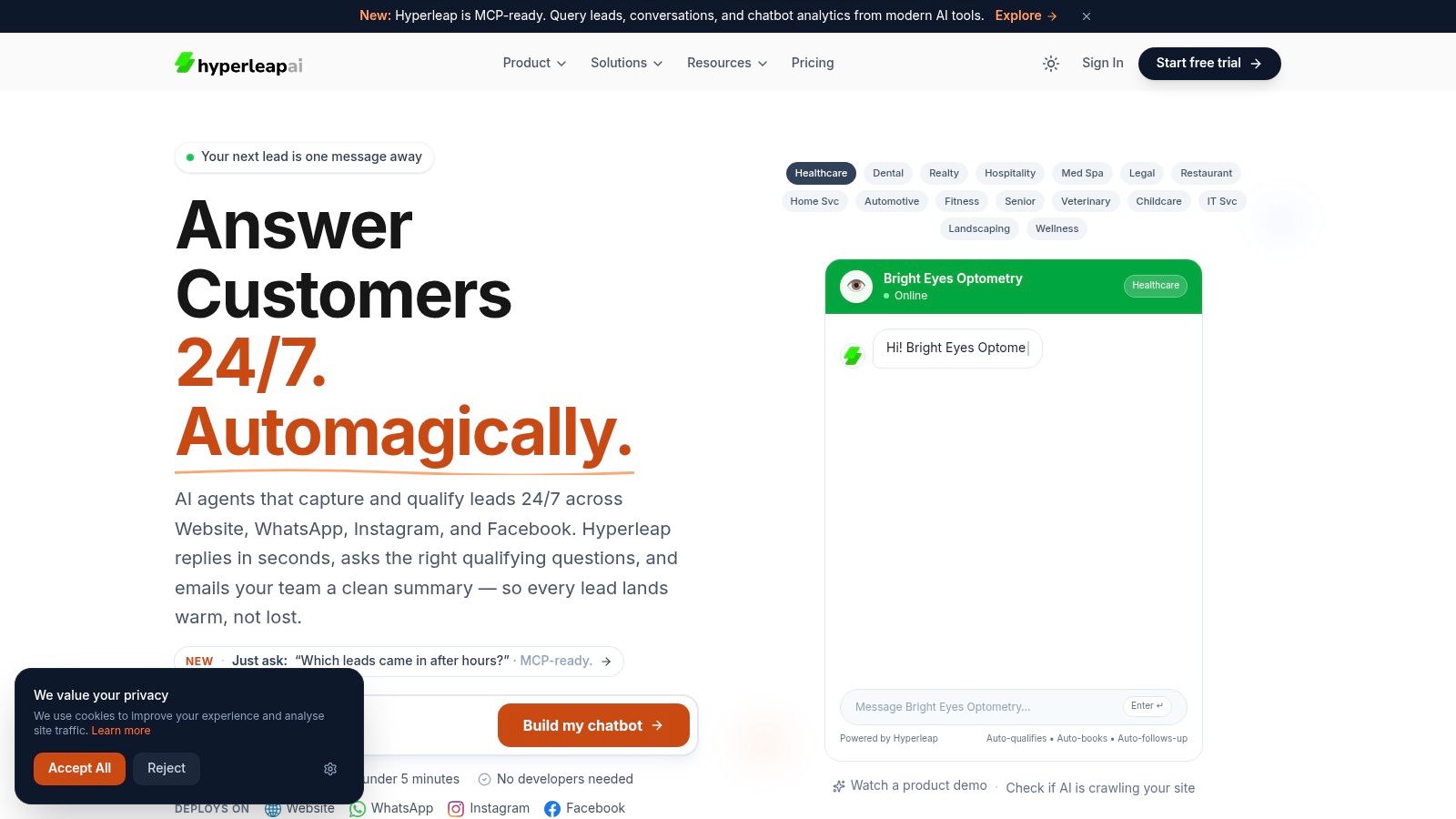
One option in this space is Hyperleap AI. It's built for small businesses that want to capture leads, answer questions, and book appointments across website chat, WhatsApp, Instagram, and Facebook from one system.
What the setup looks like in practice
A typical setup starts with your business knowledge. You choose an industry template, paste your website URL or upload documents, and the assistant uses that material to answer questions. That matters because nurturing only works when answers are accurate and relevant to your business.
From there, the workflow becomes practical:
- Capture the lead: The assistant engages visitors and collects contact details.
- Filter bad data: OTP-verified lead capture helps reduce fake or low-quality submissions.
- Continue across channels: The same business can respond on website chat, WhatsApp, Instagram, and Facebook.
- Keep context in one place: A unified inbox stores the conversation history so your team doesn't lose the thread.
- Move to booking: When a prospect reaches the right stage, the system can route them to Calendly or Cal.com.
That closes a gap many SMBs struggle with. The lead doesn't just get an answer. The lead gets a path.
Why no code matters for SMBs
No-code sounds like a convenience feature, but for small teams it's an execution feature. If a workflow requires technical help every time you want to change a message, add a qualifier, or update a booking step, the system quickly becomes stale.
A no-code setup makes it easier to do the work that improves nurturing:
- Update messaging when offers change
- Adjust qualification questions
- Add a new channel when customers shift behavior
- Roll out the same knowledge base across locations with local variations
The best automation for an SMB is the one your team can actually maintain on a Tuesday afternoon, not the one that looks impressive in a demo.
This kind of setup is also useful for service businesses that need after-hours coverage. A clinic, real estate group, med spa, or local service brand often gets inquiries outside business hours. If the assistant can answer common questions, collect verified contact details, and steer qualified prospects to the right next step, your nurture process stays active even when your team is offline.
That's the practical promise of no-code lead nurturing automation. Fewer dropped inquiries. More consistent follow-up. Less dependence on manual handoffs and scattered inboxes.
Measuring What Matters Nurturing KPIs and Metrics
If you only track opens and clicks, you'll miss whether your nurture system is helping the business. The better question is simple: are nurtured leads moving faster and becoming more valuable?
Three metrics matter most.
Lead to customer conversion rate
This tells you whether your nurture flow is turning interest into actual business. If a certain workflow produces lots of responses but few customers, the issue may be poor qualification or weak follow-up content.
Sales cycle length
Track how long it takes a lead to move from first inquiry to meaningful sales progress or purchase. Shorter cycles usually mean your messaging is answering objections earlier and routing buyers at the right moment.
Revenue per customer or user
This helps you see whether nurtured leads arrive better informed and more ready to buy the right offer, not just the cheapest one.
Companies using AI-assisted lead nurturing with behavior-triggered sequences achieve a 47% higher average revenue per user and a 20% reduction in sales cycle duration, according to Oracle's explanation of lead nurturing.
A simple rule helps here. Track fewer metrics, but tie them to business outcomes. If a workflow doesn't improve conversion quality, cycle speed, or customer value, it's probably noise.
Lead nurturing automation isn't just a marketing upgrade anymore. For SMBs, it's a way to stop losing good leads between channels, keep follow-up consistent, and turn scattered conversations into a system.
If your business gets inquiries through website chat, WhatsApp, Instagram, or Facebook and your team is still following up manually, Hyperleap AI gives you a no-code way to centralize conversations, capture verified leads, answer questions from your own business knowledge, and route qualified prospects to booking without adding another fragmented tool.