Get Leads on Instagram: The Ultimate 2026 Playbook
Generate high-quality leads on Instagram with our 2026 guide. Learn actionable steps for Reels, Stories, DMs, and compliant automation.
Most advice about getting leads on Instagram is behind the platform you're using. If your strategy still revolves around pushing people to a link in bio or sending outreach DMs to people who never asked to hear from you, you're running an old playbook on a very different app.
That matters because Instagram is too large, too commercial, and too behavior-driven to treat as a lightweight awareness channel. As of September 2025, Instagram had surpassed 3 billion monthly active users, with 90% following at least one business account, which is why it remains a serious channel for discovery and lead generation according to this Instagram usage breakdown. The opportunity is huge. The gap is execution.
The big shift is simple. Instagram now rewards brands that keep conversion inside the app, especially through content, Stories, native forms, and inbound conversations. That's one reason more teams are rethinking channel mix and comparing modern ad platforms based on how each one handles discovery, intent, and conversion flow instead of just CPMs. It's also why customer response speed and conversational handoff matter more than a polished profile ever did, particularly as SMB customer messaging expectations keep rising.
Table of Contents
- Why Your Instagram Lead Strategy Is Probably Outdated
- Build Your Organic Lead Generation Funnel
- Mastering Instagram Lead Ads for Direct Conversions
- Automate Compliant Lead Capture in Your DMs
- Optimize Your Link-in-Bio for High-Intent Leads
- How to Measure and Scale Your Instagram Leads
Why Your Instagram Lead Strategy Is Probably Outdated
The oldest bad advice is still the most common. Post consistently. Build engagement. Tell people to click the link in bio. Wait for leads.
That flow breaks in two places. First, it asks users to leave the app before they've built enough intent. Second, it treats Instagram like a traffic source when it increasingly behaves like a closed conversion environment. If someone sees a Reel, taps your profile, opens your Stories, and sends a DM, that path is shorter and more natural than forcing a browser jump to a generic landing page.
Cold DM tactics are even more outdated. They're not just inefficient. They can create compliance risk now that unsolicited outreach is off the table on Instagram. Brands that still run manual prospecting scripts in DMs are training teams on a workflow that no longer fits the platform.
Practical rule: If your lead process starts outside Instagram, you're usually adding friction too early.
The better model is content that triggers intent, then captures that intent natively. That could mean a Story that invites a reply, a Reel with a keyword CTA, or a lead ad tied to an instant form. The important part is this. The user raises their hand first.
There's also a mindset problem. Many teams still optimize for visible engagement because it's easy to report. Likes look good in a dashboard. Leads on Instagram come from a different chain of events: attention, response, qualification, follow-up, and handoff. That's less glamorous, but it's what creates pipeline.
Build Your Organic Lead Generation Funnel
Organic Instagram content should qualify interest before a sales conversation starts. If a post gets attention but doesn't move the right people into replies, DMs, or form submissions, it's branding content, not lead generation content.

Stop posting for reach alone
The strongest organic funnels on Instagram don't ask for a hard conversion in the first touch. They create a useful micro-commitment. A viewer watches a Reel, taps through a Story, replies with a keyword, or saves a post because the next step feels easy.
Stories matter more here than many brands admit. Fifty percent of Instagram users have visited a website to make a purchase after seeing a product in a Story, and posts with location tags achieved 79% higher interaction rates based on Instagram commercial intent data. That doesn't mean every Story should push a sale. It means Stories are a strong place to trigger action, especially when the offer is clear and local relevance matters.
Use a simple content ladder:
- Top of funnel Reels build curiosity around a problem. A broker might post a short walkthrough of a listing and end with “DM FLOORPLAN for details.”
- Mid funnel Stories answer objections. A med spa can use Stories to explain treatment fit, then invite “Reply CONSULT” for eligibility info.
- Bottom funnel posts or carousels package the offer. A service business can turn common buying questions into a carousel and ask users to DM a keyword to get the checklist or booking link.
The post doesn't need to sell the service. It needs to earn the next action.
For site owners who also want the off-platform side to convert cleanly, these strategies for Divi users are useful because they focus on reducing friction after Instagram traffic arrives instead of treating the website as a dumping ground.
Match the CTA to the format
A lot of weak Instagram funnels fail because the CTA doesn't fit the content format. A Reel can carry momentum. A static post often needs more specificity. Stories work best when the ask is short and immediate.
Here's a practical map:
| Format | Best CTA style | What it should do |
|---|---|---|
| Reel | Keyword DM CTA | Start a conversation while attention is high |
| Story | Reply CTA or lead form CTA | Capture intent in the fastest possible step |
| Carousel | Save and DM CTA | Pre-qualify users who want the deeper resource |
| Profile grid post | Profile visit CTA | Move users to your bio or current Story sequence |
Write CTAs like a next step, not a slogan.
- Weak CTA: “Learn more in bio.”
- Better CTA: “DM AUDIT and I'll send the checklist.”
- Better for local services: “Reply with your area and I'll tell you if we cover it.”
- Better for B2B: “DM TEMPLATE for the version we use internally.”
One more thing. The lead magnet has to be narrow enough to attract a buyer, not a freebie collector. “Free guide” is often too broad. “Vendor shortlist checklist,” “pricing prep worksheet,” or “new patient intake guide” usually qualifies intent better because the user signals a specific need.
Mastering Instagram Lead Ads for Direct Conversions
Organic gets attention. Paid gives you control. If you want predictable leads on Instagram, lead ads are still one of the cleanest ways to do it, but only when the setup matches the conversion goal.

The settings that actually matter
Most wasted spend happens before the ad ever runs. Teams pick the wrong objective, optimize toward cheap clicks, then wonder why sales says the leads are weak.
If you're running lead campaigns, the campaign objective needs to be native lead capture. To target a cost per lead under $15 in major markets for 2026, marketers need Meta Ads Manager set to the optimization event “Leads” and the attribution window “7-day click / 1-day view,” according to this Instagram lead ad setup guide. Those settings matter because they tell the system what outcome to pursue and how to measure it accurately.
A practical workflow looks like this:
- Choose the lead objective first. Don't run awareness or traffic and expect lead economics to sort themselves out.
- Start broad enough for delivery. Let placements gather signal before you narrow too early.
- Wait through the learning period. Premature edits reset performance signals.
- Use backend tracking. If your CRM or downstream conversion data isn't connected, you'll optimize against incomplete information.
- Review lead quality with the ad data. Cheap form fills can still be expensive leads.
Teams using automation in other parts of the stack often pair ad capture with a follow-up layer such as an AI lead generation tool so the handoff from form fill to qualification happens quickly.
What a high intent lead form looks like
The form should feel easy, but not loose. If you ask for too much, completion drops. If you ask for almost nothing, your sales team spends time sorting noise.
Use native forms to collect only what your next step requires. In many cases that means contact details plus one qualifying question. Good qualifiers depend on the sale:
- For local services: service area or urgency
- For B2B: company size, use case, or current tool
- For clinics: treatment interest or preferred location
- For real estate: budget range or buying timeline
A lead form should answer one question for sales: is this person worth contacting now?
Creative needs to line up with that form. If the ad promises a pricing guide, the form and thank-you flow should continue that promise. Don't bait with educational content and then route the user into a generic “book a call” ask with no context.
A good lead ad campaign is boring in the right way. Clear offer. Native form. Tight qualification. Fast follow-up.
Automate Compliant Lead Capture in Your DMs
The center of gravity has shifted. DMs aren't just for support or casual conversation anymore. They're where a lot of intent shows up first. But the way you use them now has to be compliant.

Inbound beats outreach now
The old DM playbook was simple and sloppy. Find a prospect, send a message, hope they respond. That's no longer the right operating model. Because Instagram banned unsolicited DM outreach in 2025, businesses need inbound approaches instead, and keyword-triggered automated flows are already generating reply rates in the 22% to 28% range, as noted in this discussion of the 2025 outreach change.
That one change forces a strategic reset. You can't treat DMs as a cold acquisition channel. You have to earn the conversation in public content first, then continue it privately after the user initiates.
That's why “DM me GUIDE,” “comment DEMO,” or “reply PLAN” work so well when used correctly. The trigger is voluntary. The intent is explicit. The conversation starts with context.
Here's what doesn't work anymore:
- Manual cold outreach scripts sent to followers or scraped lists
- Generic “hey, noticed your profile” intros that create no reason to engage
- Link drops in the first reply before the user gets any value
- Unqualified inbox chaos where every conversation lands in the same pile
And here's what does work:
- Content-led keyword triggers tied to a specific asset or next step
- Instant automated replies that deliver the promised item without delay
- Short qualifying questions before routing to sales or booking
- Verified data capture so the team isn't chasing fake or incomplete contacts
How the DM workflow should run
A compliant Instagram DM funnel should feel like a concierge, not a blast campaign.
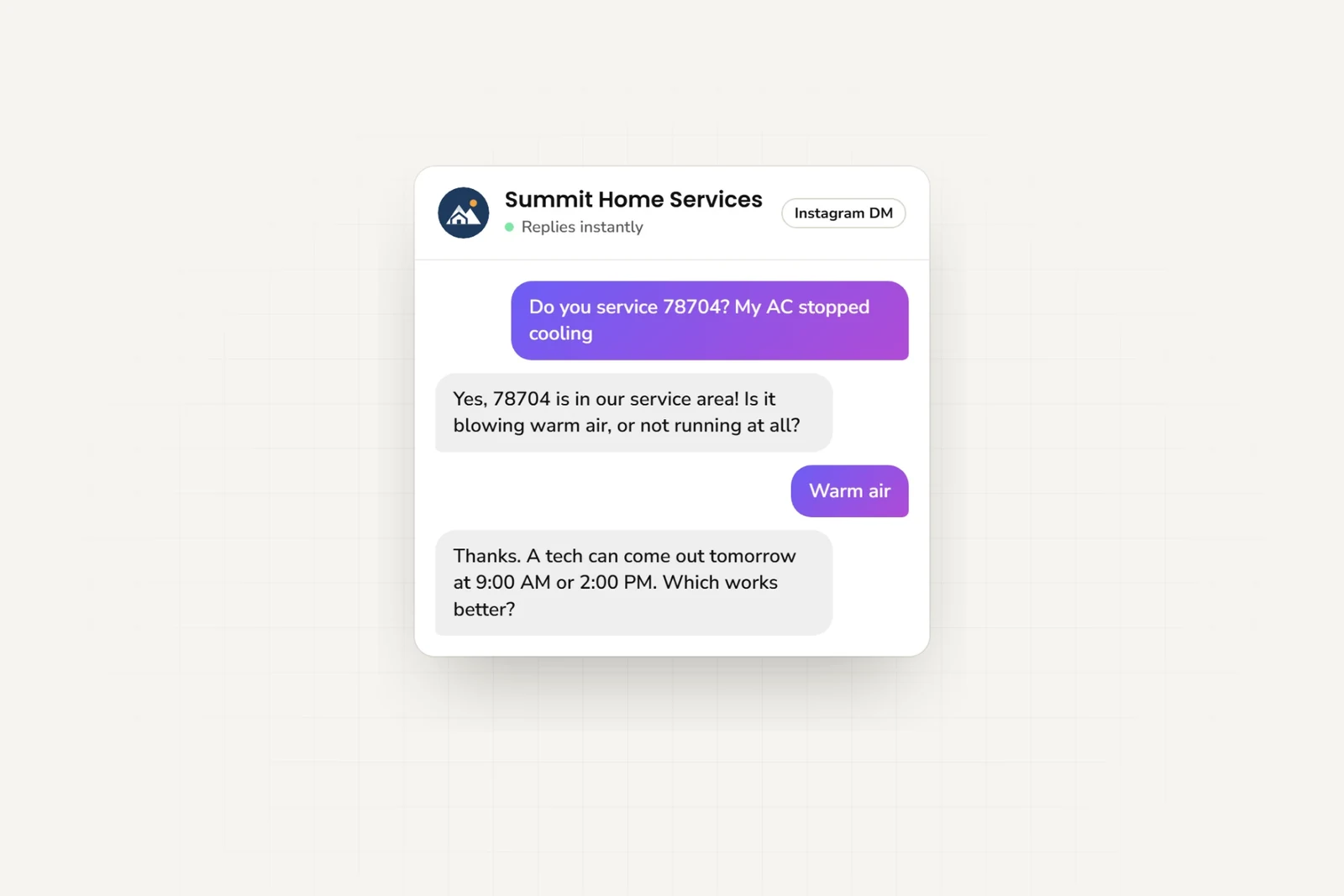
Start with a public asset. A Reel explains a problem. A Story offers a checklist. A carousel breaks down a process. The CTA asks for a keyword. Once the user sends it, the automation replies immediately with the promised resource and one or two questions that help route the lead.
That workflow usually includes these stages:
| Stage | What happens | Why it matters |
|---|---|---|
| Trigger | User sends a keyword | Consent is clear |
| Delivery | Bot sends the resource or next step | The promise is fulfilled fast |
| Qualification | Bot asks a small number of questions | Sales gets usable context |
| Verification | Contact capture is confirmed | Reduces fake or low-quality submissions |
| Handoff | Team gets notified or booking link is offered | Momentum isn't lost |
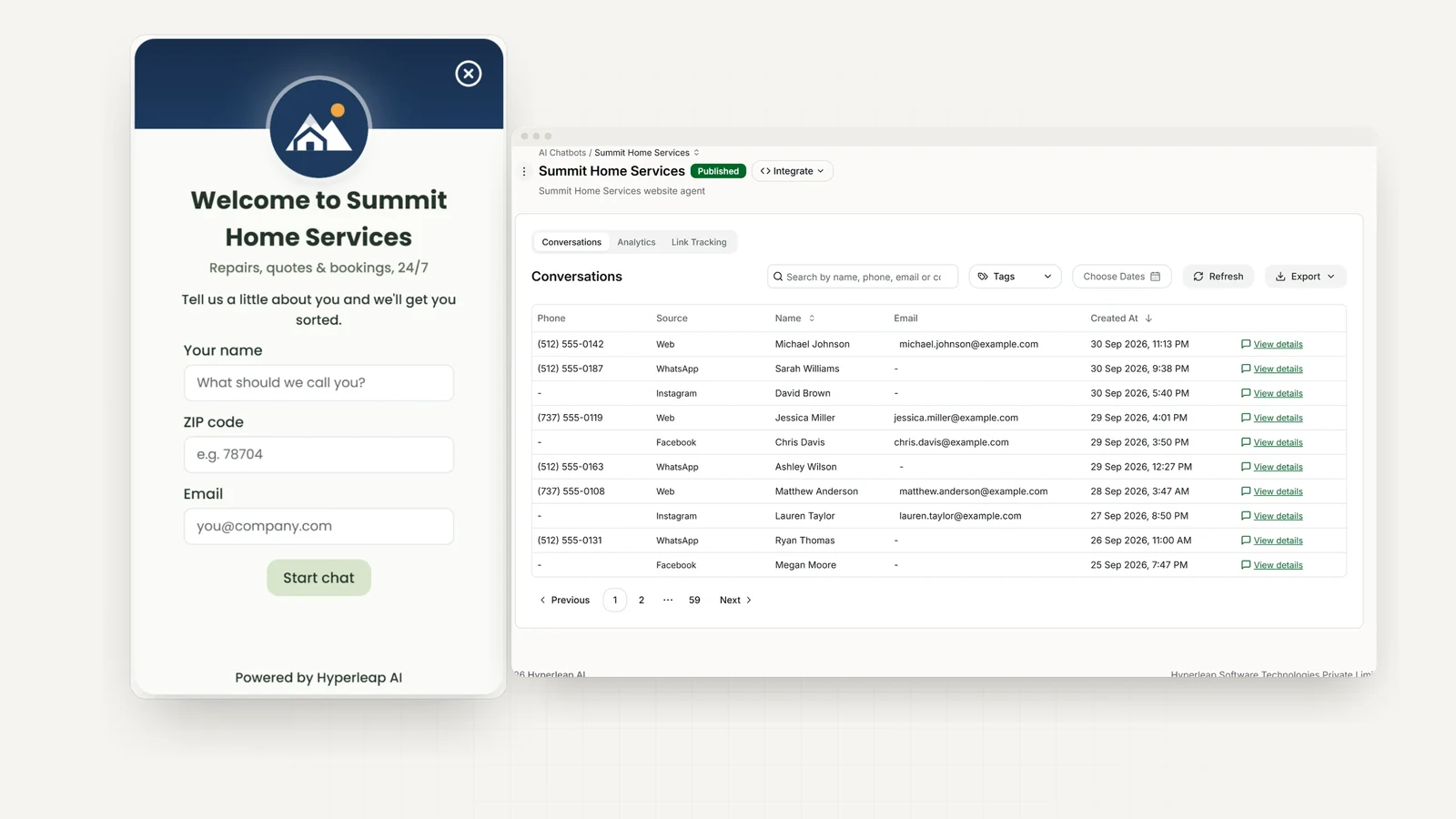
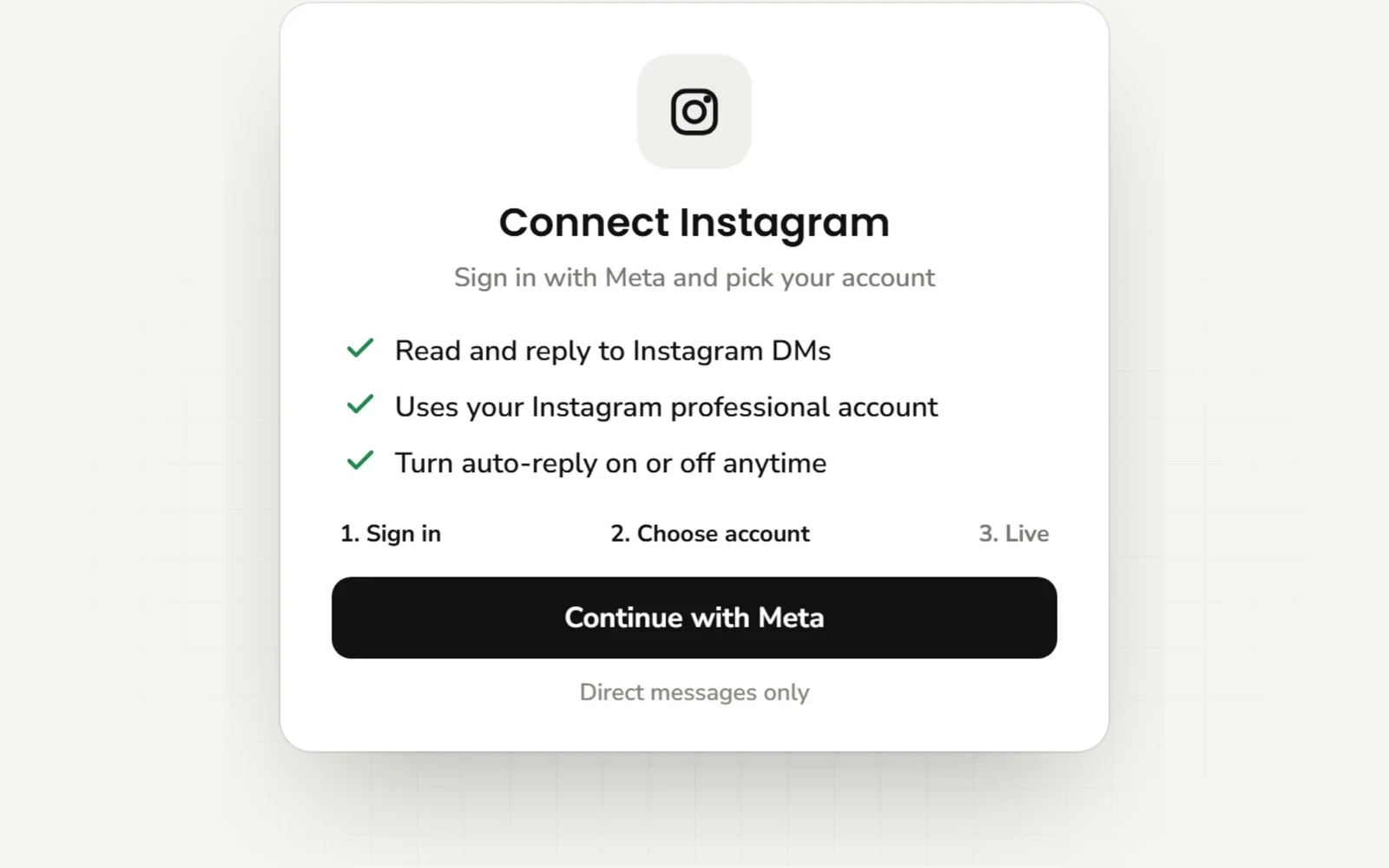
This is where tooling matters. Platforms such as Manychat handle trigger-based DM flows. Hyperleap AI adds a different layer by combining Instagram automation with OTP-verified lead capture, appointment routing, and a unified inbox, which is relevant if you want one workflow across Instagram, WhatsApp, Facebook, and your site. If you want a deeper look at that setup, this guide to Instagram DM automation with an AI chatbot walks through the mechanics.
A short demo helps if you're building this for the first time.
The most important design choice is restraint. Don't build a twenty-message chatbot maze. Deliver the offer. Ask what sales needs to know. Then route the person to the right next step.
Keep the DM flow short enough that a real buyer finishes it on a phone without friction.
Optimize Your Link-in-Bio for High-Intent Leads
The link in bio isn't dead. It's just been demoted.
That's a good thing, because most bio links were doing too many jobs badly. They tried to be a mini website, content hub, store menu, media kit, and booking page all at once. High-intent users don't need a directory. They need a clear path.

Your bio link needs one job
Treat your bio link like a decision page for the people who are already leaning in. These are profile visitors who checked your posts, watched your Stories, and want one deeper action.
That means the page should usually emphasize a single primary offer:
- Book a consultation
- Register for a webinar
- Start a trial
- Request pricing
- Get the buyer guide
The design should support that one action. Clear headline. One promise. Minimal competing exits. Optional secondary link if absolutely necessary.
A cluttered multi-link page often creates the same problem as a weak homepage. Too many choices spread intent thin. If DMs are your main conversion path, the bio link should handle the users who want a more formal step, not everyone.
What to remove from the page
Audit the page like a buyer, not like the business owner who built it.
Remove or reduce:
- Old campaign links that no longer match current content
- Too many navigation choices that dilute the main offer
- Unlabeled buttons like “Learn more” that say nothing useful
- Mismatch between bio copy and page content which creates drop-off
A good bio link page often works best when it mirrors the language used in your profile and content. If your Reel says “Get the vendor checklist,” the page should say that too. Not “Explore our resources.”
Use the bio for profile traffic with high intent. Use DMs for active conversion. Those roles are complementary, not interchangeable.
How to Measure and Scale Your Instagram Leads
If you can't tell which conversations become qualified opportunities, you can't scale leads on Instagram with confidence. Reach won't answer that. Follower growth won't answer that either.
The metrics that matter sit across three places. Instagram Insights tells you what content earned action. Meta Ads Manager tells you what paid campaigns captured leads efficiently. Your CRM or chatbot backend tells you whether those leads were usable.
Track conversation quality, not just volume
Promotional content should create interaction that signals buying intent, not passive approval. Engagement rate above 1.5% on promotional content correlates with a 25% higher lead conversion probability from resulting DMs or clicks, based on these lead generation benchmarks. That makes engagement useful, but only when you connect it to what happens next.
Track your funnel in layers:
- Content layer measures saves, replies, profile visits, Story exits, and keyword-trigger activity.
- Capture layer measures form completion, DM qualification completion, and verified contact capture.
- Sales layer measures booked calls, qualified opportunities, and closed customers.
A post with modest reach can outperform a viral post if it starts better conversations.
In this regard, disciplined review helps. Teams that borrow from data-driven CRO strategies usually get sharper faster because they stop asking “Which post got attention?” and start asking “Which path created the highest-intent next step?”
How to decide what to scale
Scaling isn't posting more. It's repeating the content and capture systems that produce qualified demand.
Use a simple decision model each month:
- Find the entry points. Which Reels, Stories, or ads started the most relevant conversations?
- Check completion. Which DM flows or lead forms were completed?
- Review lead quality. Which source produced leads that sales wanted to speak with?
- Fix the bottleneck. If content gets replies but qualification stalls, shorten the DM flow. If forms fill but follow-up lags, tighten routing.
- Scale the winner carefully. Increase budget, volume, or creative variations only after the handoff works.
You also need source discipline. Don't merge all Instagram leads into one vague bucket. Tag them by origin. Reel keyword. Story reply. Lead ad form. Bio link page. Without that, you'll keep spending on the wrong step because the reporting hides where quality came from.
A mature Instagram lead engine is simple to describe. Content earns intent. Native capture collects it. Automation qualifies it. Sales follows up with context.
If your team wants to turn Instagram conversations into verified, routed, and trackable leads without relying on cold outreach, Hyperleap AI is built for that workflow. It handles AI chat across Instagram and other channels, captures OTP-verified leads, routes prospects to booking links, and keeps the conversation history in one inbox so follow-up doesn't fall through.