Qualify Leads in Claude Desktop with Hyperleap MCP
Stop scoring leads from gut feel. Connect Claude Desktop to Hyperleap via MCP and qualify every chatbot-captured lead on real intent signals — prompts, a scoring workflow, and how to prioritize who gets called first.

TL;DR: Most lead scoring is gut feel dressed up as a number. With Hyperleap's MCP server connected to Claude Desktop, you can qualify leads on what they actually said to your chatbot — their questions, objections, and timing signals — instead of a guess. This guide shows you the qualification workflow: how to pull a fresh batch of leads, surface intent signals with extract_lead_insights, score them against a simple framework, and hand your reps a ranked call list. Everything is read-only and runs in plain English. No filters, no exports, no SQL.
Lead Scoring Is Usually a Guess
Here is how lead qualification works on most small sales teams. A batch of leads comes in over the week. Someone — a founder, a sales lead, a rep with a spare hour — opens the CRM and starts triaging. They glance at the company name, maybe the email domain, maybe a one-line note from the chatbot. They mark a few as "hot," a few as "cold," and move on. The score is a vibe.
The problem is not effort. It is that the richest qualification signal — the actual conversation the lead had with your chatbot — is the hardest thing to read at scale. To qualify a lead properly you would need to open each lead, click into conversations, read the transcript, note what they asked about, check whether they mentioned a timeline or a budget, and then form a judgment. Multiply that by forty leads a week and nobody does it. So scoring stays shallow, and your best reps spend their time calling leads who were never going to buy.
This is exactly the kind of work the Model Context Protocol (MCP) was built to fix. MCP is an open standard that lets Claude Desktop connect directly to external data and call tools on your behalf. Hyperleap ships a native MCP server with nine read-only tools — and two of them, extract_lead_insights and get_lead_conversations, turn lead qualification from a guess into a read of real evidence.
This guide is the companion to the sales standup workflow. Where that post covers your weekly pipeline review, this one is narrower and deeper: how to actually qualify and rank a batch of leads so your reps call the right people first.
If you have not connected Claude Desktop to Hyperleap yet, start with the five-minute setup guide. Come back once Claude Desktop is connected and your API key is in the config file.
What MCP Surfaces from a Chatbot Conversation
Before the workflow, it helps to know what Claude can actually see. The qualification signal lives in the chatbot conversation, and three tools expose it:
get_lead_conversationsreturns the list of conversations a lead has had with your bot — each with a channel, timestamp, message count, and a short summary. This tells you how engaged a lead is: one quick session versus three sessions across two channels is a different buyer.get_conversationreturns the full verbatim transcript of a single conversation. This is where the real signals live — the exact pricing question, the integration concern, the "we need this by Q3."extract_lead_insightsis the analytical workhorse. It takes a lead's full history — conversations, activities, and notes — runs it through an LLM, and returns structured output: inferred buying intent (high / medium / low), the objections raised, the topics of interest, and a suggested next-best-action.
Why this beats a static lead score
A traditional lead score weights fields you can capture in a form — company size, job title, email domain. Those are proxies. What a lead asked your chatbot is the signal itself. A 10-person company that asked detailed pricing and integration questions with a stated deadline is a better lead than a 500-person company that bounced after one message — and only the conversation tells you that.
Everything below composes these three tools with list_leads (to pull the batch) and get_pipeline_stages (to scope by stage). All five are read-only, so you can run this during a live session with a teammate watching — Claude can read your pipeline but cannot change a thing.
The Qualification Workflow
Here is the full workflow, from opening Claude Desktop to handing your reps a ranked call list. Plan for 15–25 minutes depending on batch size.
Open one Claude Desktop conversation and name it. Something like "Lead qualification — week of May 27." The session keeps context across turns, so you can say "now do the same for the WhatsApp leads" without repeating yourself.
Pull the batch you want to qualify. Ask Claude for the leads that need triage — typically new, uncontacted leads from a recent window. Claude calls list_leads filtered by status and date and returns the set with IDs, channels, and stages.
Get the intent read on each. Ask Claude to surface buying intent and objections for the batch. Claude calls extract_lead_insights on each lead and returns intent level, objections, and interests. For a large batch, qualify the most recent or highest-engagement leads first — extract_lead_insights is the most expensive tool, so you spend it where the payoff is highest.
Score against your framework. Ask Claude to rank the leads using an explicit rubric you provide (the next section gives you one). Because Claude has the intent data in context, it can apply the rubric consistently across the whole batch — no rep fatigue, no drift.
Spot-check the top of the list. For the two or three highest-scored leads, ask Claude to pull the actual conversation so you can read the evidence yourself before committing rep time. Claude calls get_conversation and returns the verbatim transcript.
Hand off the ranked list. Copy Claude's ranked output into Slack, a doc, or your CRM as your call queue for the day. Your reps now work the list top-down instead of guessing.
A Simple Qualification Rubric
The trick to consistent scoring is giving Claude an explicit framework so it is not inventing one per session. A lightweight version of the classic intent rubric works well — paste it into the conversation and ask Claude to apply it:
Score each lead 0–100. Weight the signals:
- Stated need / specific use case described .... up to 30
- Budget or pricing engagement .................. up to 25
- Timeline urgency (deadline, "soon", "this quarter") .. up to 20
- Authority signals (mentions team, decision, sign-off) .. up to 15
- Engagement depth (multiple sessions or channels) ...... up to 10

Then bucket:
- 70–100 = Hot — call today
- 40–69  = Warm — nurture, follow up this week
- 0–39   = Cold — automated nurture only
Use ONLY what the lead actually said or did. If a signal is absent, score it zero — do not infer.
The last line matters most. You want Claude scoring on evidence, not optimism. A lead who never mentioned budget gets zero on the budget line, full stop. This keeps the score honest and means a "Hot" label actually corresponds to a lead who showed real signals.
Tune the weights to your business
The weights above are a starting point. If your product has a short sales cycle, weight timeline urgency higher. If you sell into teams, weight authority signals up. Save your tuned rubric in a text file and paste it at the start of every qualification session so scoring stays consistent week over week.
Seven Prompts for Qualifying Leads
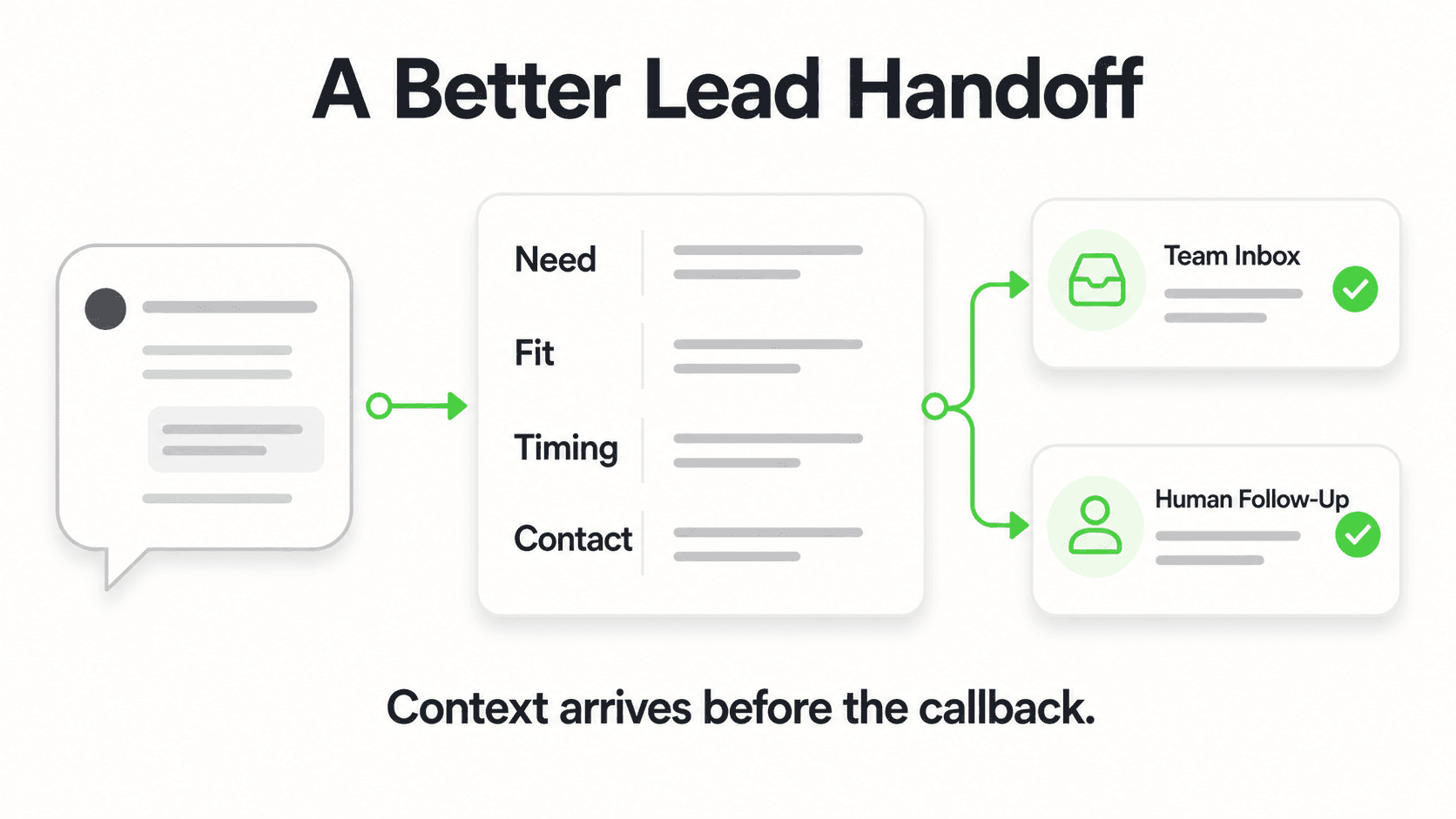
For each prompt below, the italicized sketch describes what Claude does under the hood and what the answer looks like. All names and figures are illustrative.
1. Pull the Triage Batch
Show me all new, uncontacted leads from the last 7 days.
Claude calls list_leads filtered to status: new and the trailing week. The response is the raw batch — lead name, channel, created date, current stage — that you are about to qualify. Illustrative: "18 new uncontacted leads: 9 from website, 5 from WhatsApp, 3 from Instagram, 1 from Facebook."
2. Intent Read on the Batch
For each of those leads, give me their buying intent and main objections.
Claude calls extract_lead_insights on each lead and returns a compact line per lead. Illustrative: "Acme Corp — HIGH intent. Asked enterprise pricing + integration with existing tools, mentioned Q3 deadline. Objection: wants a demo first. Riverside Dental — LOW intent. One message asking 'do you do appointment reminders?', no follow-up."
3. Score and Rank
Using the rubric I pasted above, score each lead 0–100 and rank them. Show the score breakdown.
Claude applies your rubric to the intent data already in context and returns a ranked table with the per-signal breakdown so you can see why each lead scored what it did. This is the core qualification artifact — a defensible ranking, not a gut call.
4. Read the Evidence on a Top Lead
Pull the full conversation for the top-ranked lead so I can see what they actually said.
Claude calls get_lead_conversations to find the conversation, then get_conversation for the transcript. You read the verbatim exchange and confirm the score holds up before you assign the lead to a rep.
5. Flag the "Looks Good on Paper, Weak on Signal" Leads
Which leads have a strong company or title but weak actual conversation signal?
Claude cross-references the lead profile (get_lead_details) against the intent read. The response flags leads that a traditional score would rank high but whose conversation shows little real intent — exactly the leads that waste rep time. Illustrative: "GlobalEdge (500-person company) only sent one message and never returned — deprioritize despite the size."
6. Group by Objection for Routing
Group the hot and warm leads by their main objection.
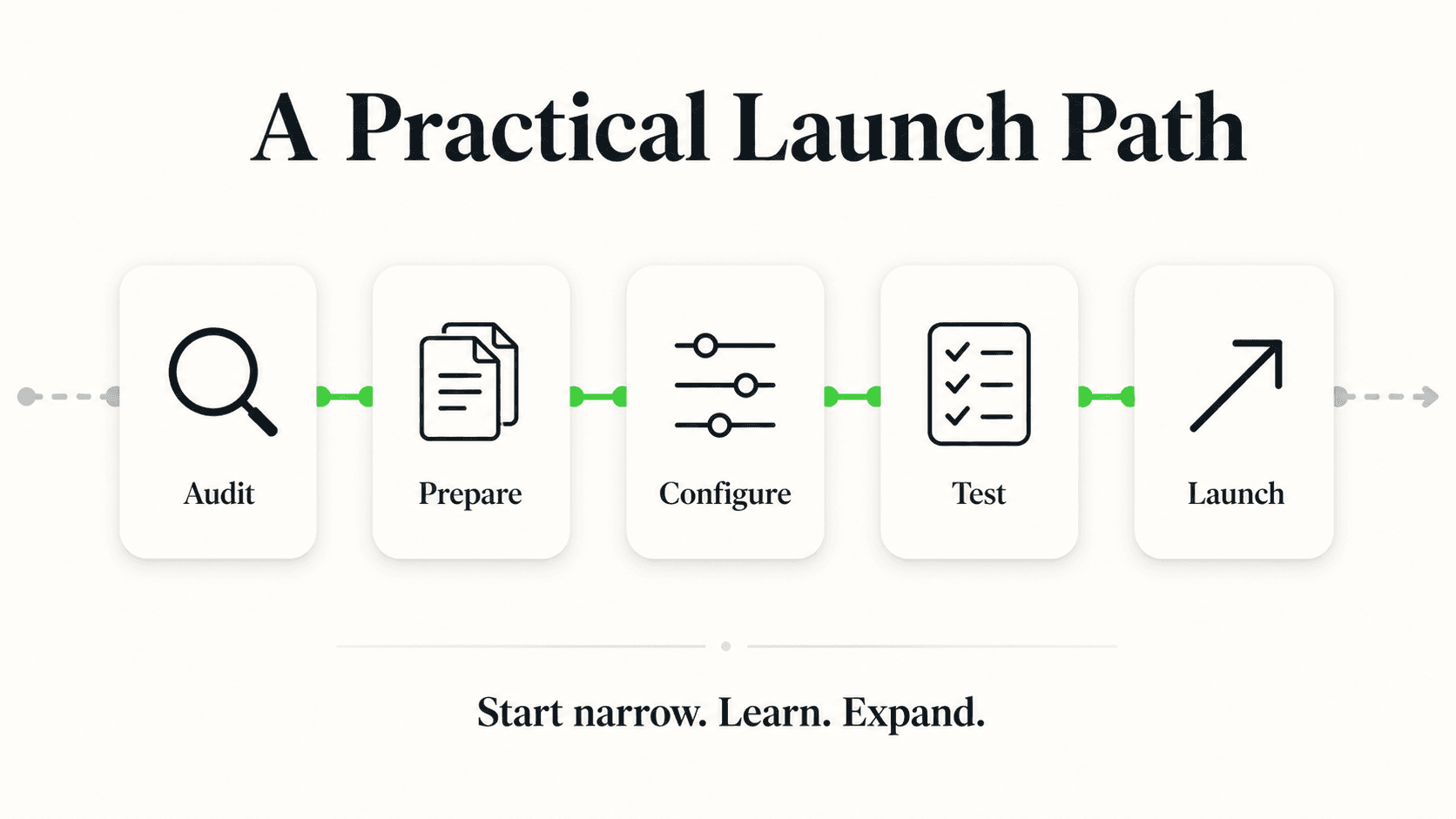
Claude clusters the objections from extract_lead_insights across the batch. Illustrative: "Pricing concerns: 5 leads. Integration questions: 4 leads. Timing ('not yet'): 3 leads." Now you can route pricing objections to a rep who handles those well, and put the "not yet" leads on a nurture track instead of a call list.
7. Build the Final Call List
Give me a clean call list of the hot leads, ordered by score, with a one-line reason and suggested opener for each.
Claude composes the ranked hot list with a next-best-action drawn from extract_lead_insights. Illustrative: "1. Acme Corp (88) — approved budget, Q3 deadline. Opener: 'I saw you asked about our enterprise tier and integrations — want to walk through a 20-minute setup?'" This is the artifact you hand your reps.
Where Qualification Stops and Action Begins
The Hyperleap MCP server is intentionally read-only. All nine tools observe; none of them write. That is worth being direct about, because it shapes where this workflow ends.
What you cannot do via Claude Desktop MCP:
- Update a lead's status from "New" to "Qualified"
- Move a lead to a different pipeline stage
- Assign a lead to a specific rep
- Add the qualification note to the lead record
- Trigger a follow-up message or chatbot flow
What this means: the qualification session is a read-and-decide activity. You surface the signals, apply the rubric, and produce the ranked list. The state changes that follow — marking leads qualified, assigning owners, logging the score — happen in the Hyperleap dashboard or through the Hyperleap REST API directly.
Treat the read-only constraint as a safety feature. Claude cannot accidentally mis-qualify a lead in your system of record, reassign the wrong person, or fire an unintended flow. It can only look and reason. The practical setup most teams land on: Claude Desktop in one window producing the ranked list, the Hyperleap dashboard in another window where you action it. For teams that want AI to also take the action — "mark these five qualified and assign to Maria" — the right architecture is an automation built on the REST API and webhooks, not the MCP server.
The full MCP tools reference documents every tool's parameters and the read-only rationale in detail.
Make It a Weekly Ritual
Qualification is most valuable when it is consistent. A few habits that make this stick:
Run it on a fixed cadence. A 20-minute qualification pass twice a week beats a heroic three-hour session once a month. Fresh leads get scored while their conversations are still recent, and your reps always have a current ranked list.
Reuse the same rubric. Paste your tuned scoring rubric at the start of every session so the score means the same thing every week. Drift in the rubric is drift in your pipeline math.
Close the loop on outcomes. Once a month, ask Claude to pull the leads you marked "Hot" weeks ago and check what happened to them via get_lead_activities. If your "Hot" leads convert and your "Cold" ones do not, your rubric is calibrated. If not, adjust the weights. This is how a gut-feel process becomes a measured one.
This pairs naturally with the broader AI-native sales workflow, where the same MCP connection drives standups, lead qualification, and call prep from one Claude Desktop session.
Qualify your leads on real signals, not guesses
Hyperleap's MCP server is included on every plan. Connect Claude Desktop in under five minutes and qualify your next batch of leads on what they actually said.
See PlansFrequently Asked Questions
How is this different from a built-in lead score?
A built-in lead score weights form fields and proxies — company size, title, email domain. This workflow scores on the actual chatbot conversation: what the lead asked, the objections they raised, and the timing signals they gave. The conversation is the real evidence; the form fields are guesses about it. You can combine both, but the conversation-based read is usually the stronger predictor for chatbot-captured leads.
Does the data Claude qualifies on stay current?
Yes. Claude calls the Hyperleap MCP server in real time — there is no cache or pre-pulled snapshot. When you ask for "new leads from the last 7 days," Claude calls list_leads at that moment and the response reflects your live data. The only lag is the network round-trip, typically under two seconds.
Can Claude mark leads as qualified for me?
No. The MCP server is read-only, so Claude can surface signals and rank leads but cannot change anything in Hyperleap. You apply the resulting status changes, owner assignments, and notes in the Hyperleap dashboard or via the REST API. This is a deliberate safety design — Claude cannot mis-qualify a lead in your system of record.
Which Hyperleap plans include MCP?
MCP is included on every Hyperleap plan — Plus ($40/mo), Pro ($100/mo), and Max ($200/mo). It is not gated behind a higher tier. There is a 7-day free trial (credit card required) and no free plan. Confirm API access is enabled under Settings → Developer in your workspace.
How many leads can I qualify in one session?
extract_lead_insights is the most expensive tool in terms of latency, so qualifying 15–30 leads per session is comfortable. For larger batches, qualify the most recent or highest-engagement leads first, or split the work across two sessions. If you routinely need to score hundreds of leads at once, build a batch process on the Hyperleap REST API instead of the interactive MCP flow.
Can I use this in Cursor or another MCP client?
Yes. Hyperleap's MCP server is client-agnostic — it implements the open MCP standard, so any compatible client (Cursor, Raycast, Continue.dev) can run these prompts. Setup differs per client; the tools reference covers the server configuration, and the Claude Desktop setup guide walks through the specific config.
Related Articles

Run Sales Standups in Claude Desktop with Hyperleap MCP
Replace your Monday pipeline review with a 15-minute Claude Desktop session. 10 natural-language prompts that pull live data from your Hyperleap chatbot.

Coach Sales Reps with AI Chatbot Transcripts (via MCP)
Use Claude Desktop to find chatbot conversations matching any coaching theme — objections, discovery, closing — and turn transcript review into a weekly ritual.

Lead Qualification Chatbot: Questions, Fields, and Handoff Rules
A lead qualification chatbot turns raw contacts into ranked, routed leads — before a rep wastes the first call. Here's the question stack, scoring, and handoff logic that works.

Connect Hyperleap to Claude Desktop in 5 Minutes (MCP Setup Tutorial)
Step-by-step guide to connecting Hyperleap AI to Claude Desktop using MCP. Query your chatbot leads, conversations, and pipeline in plain English.