AI Chatbot for Plumbers: Stop Losing Emergency Jobs
Plumbing emergencies don't wait for business hours. An AI chatbot captures and qualifies burst pipe calls, drain backups, and water heater failures 24/7.

TL;DR: A burst pipe at midnight generates a panicked homeowner who will book the first plumber who picks up — or texts back. An AI chatbot for plumbing businesses captures that lead, qualifies the emergency level, and routes it to your on-call tech or your dispatch inbox. The job that would have gone to a competitor stays yours.
AI Chatbot for Plumbing Businesses: Stop Losing Emergency Jobs
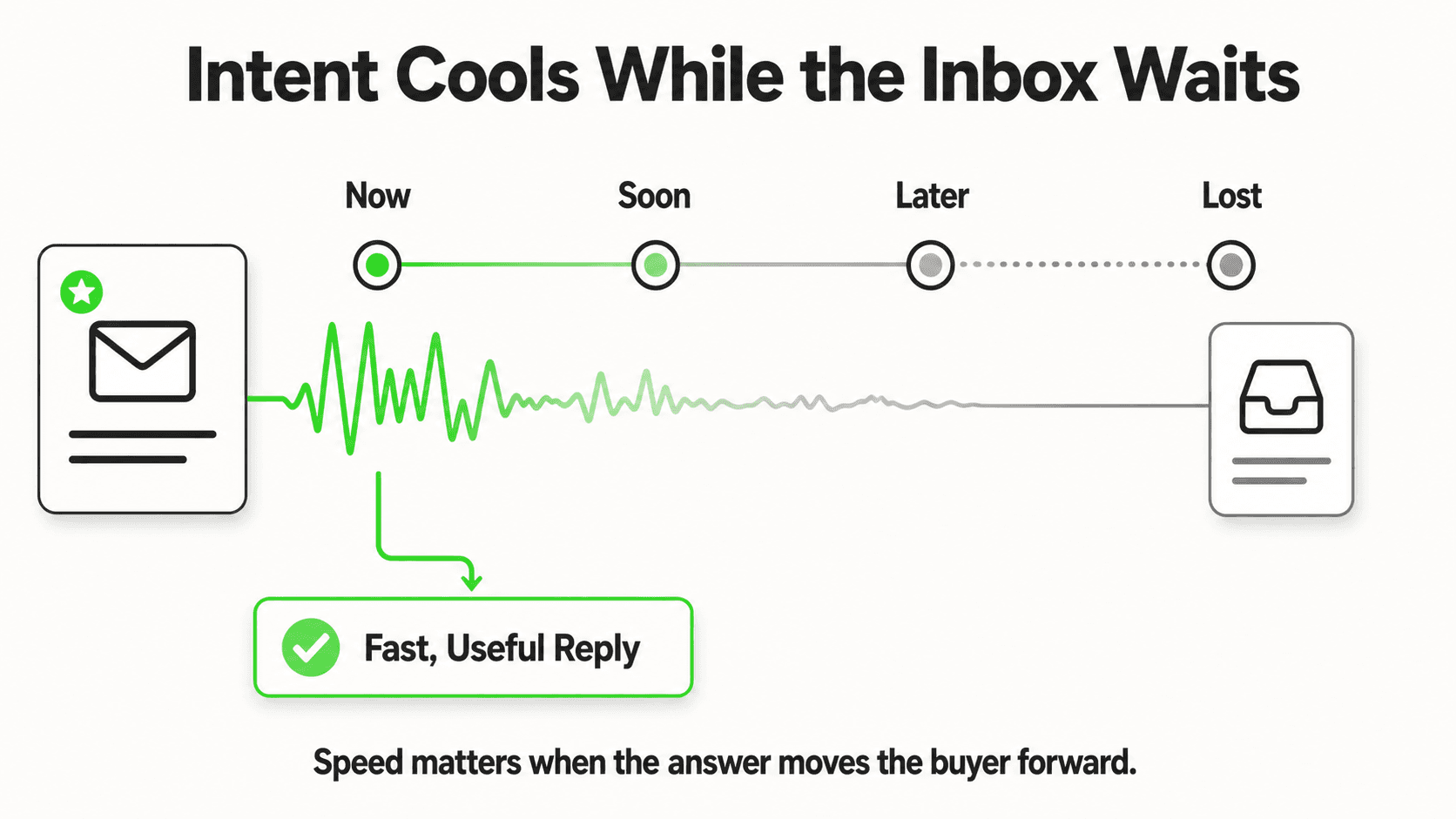
A burst pipe doesn't care that it's 11 PM on a Sunday. The homeowner with water spreading across their kitchen floor isn't thinking about price — they're thinking about who will answer right now. They'll search Google, find three plumbers, and hire whoever responds first. According to research by InsideSales, leads contacted within five minutes are far more likely to convert than those reached hours later. For plumbing, that gap isn't hours — it's minutes.
If your business line goes to voicemail after 5 PM, you're handing emergency jobs to competitors every single night. An AI chatbot for plumbing businesses fixes that without requiring you to hire a night dispatcher or stay tethered to your phone.
What Emergency Plumbing Leads Actually Need
Emergency plumbing customers have a specific set of needs that differ from routine service inquiries. Understanding the pattern helps you configure a chatbot that converts, not just collects.
They need confirmation that someone received their message. Silence after submitting a contact form or leaving a voicemail is conversion poison. An immediate "Got it — we're looking into availability for you now" dramatically reduces the chance they keep calling competitors.
They need basic guidance while they wait. A homeowner with a burst pipe needs to know: shut off the main water valve, move valuables off the floor. Your chatbot can provide these instructions automatically — adding genuine value and building trust before a tech is even dispatched.
They need a committed time window. "We'll call you back" loses to "Our on-call tech is typically available within 90 minutes for active leaks — can I confirm your address?" Specificity wins emergency jobs.
They need to know you're local. Out-of-area results rank on Google too. A quick zip code check in the chatbot flow filters out leads outside your service area before your dispatcher wastes time calling back non-viable leads.
The Four Job Types Your Chatbot Should Triage
Configure your chatbot to distinguish between:
| Job Type | Example | Urgency Routing |
|---|---|---|
| Active water emergency | Burst pipe, flooding | Flag for immediate on-call review |
| Functional but urgent | Drain backup, no hot water | Same-day dispatch queue |
| Scheduled repair | Slow drain, running toilet | Next-available booking |
| Estimate request | Bathroom remodel rough-in | Sales follow-up queue |
This four-category routing means your dispatcher's inbox has clear priority signals, not a flat list of undifferentiated leads.
Who This Guide Is For
This guide is for plumbing business owners with 2–20 employees who want to capture more leads after hours without hiring a night dispatcher. The setup process takes 3–5 days and requires no technical background.
Why Plumbers Lose Jobs They Never Knew Were Available
The most expensive leads are the invisible ones — the homeowner who landed on your site at 10 PM, saw no response option, and called the next plumber on the list. You'll never see that lead in your CRM. You'll never know the job went elsewhere. But it did, and it happens repeatedly.
After-hours demand is highest precisely when coverage is lowest. Plumbing problems surface when people are home — evenings, weekends, and holidays. These are the same windows when your phone coverage is thinnest.
The first response wins, not the best price. In a plumbing emergency, the homeowner's primary filter is speed. The company that responds in two minutes gets the job at full emergency rate. The company that calls back four hours later finds the situation resolved and the customer gone.
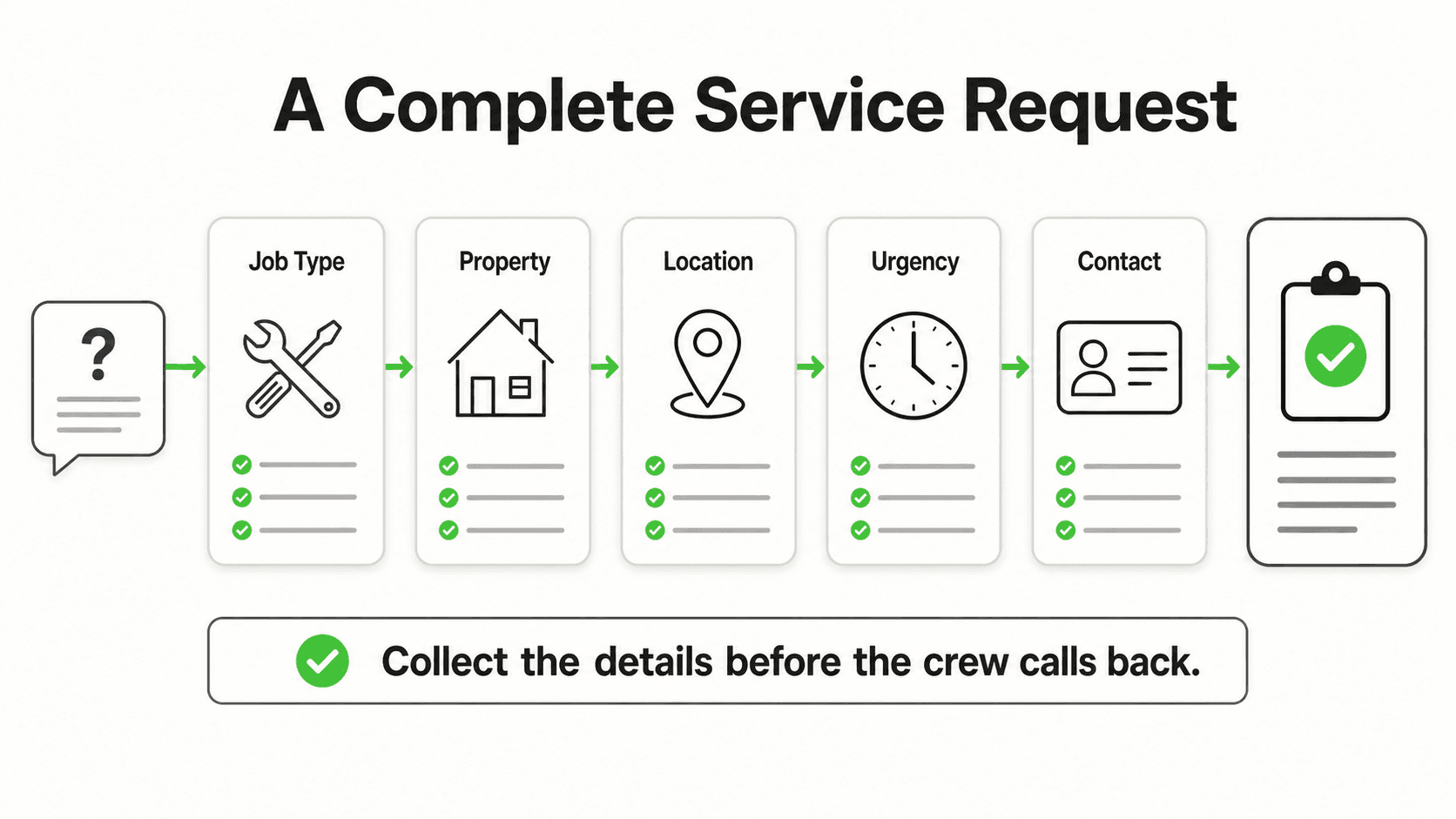
Intake calls are expensive for small shops. Every qualification call — "What's the issue? What's your address? Are you in our service area? When are you available?" — takes 5–8 minutes of a dispatcher's time. A chatbot pre-qualifies all of that and delivers a complete lead record. Your dispatcher makes one confirmation call instead of four intake calls.
5 Ways a Chatbot Pays for Itself Fast in Plumbing
1. Captures After-Hours Emergency Leads
Deploy your chatbot on your website and WhatsApp number. When an emergency contact arrives at 11 PM, the chatbot responds instantly, collects the job type and address, confirms your service area, and either flags for immediate on-call dispatch or queues for same-day service — based on urgency level you've defined.
This alone is the primary ROI driver. Even one additional emergency job per week at a $400–$800 ticket pays for the entire chatbot subscription many times over.
2. Pre-Qualifies Leads Before Dispatcher Time Is Spent
Your chatbot asks the intake questions so your dispatcher doesn't have to:
- What's the problem?
- Is there active water / flooding?
- What's your address (and is it in our service area)?
- Is the water shut off?
- What's the best number to reach you?
- When are you available for service?
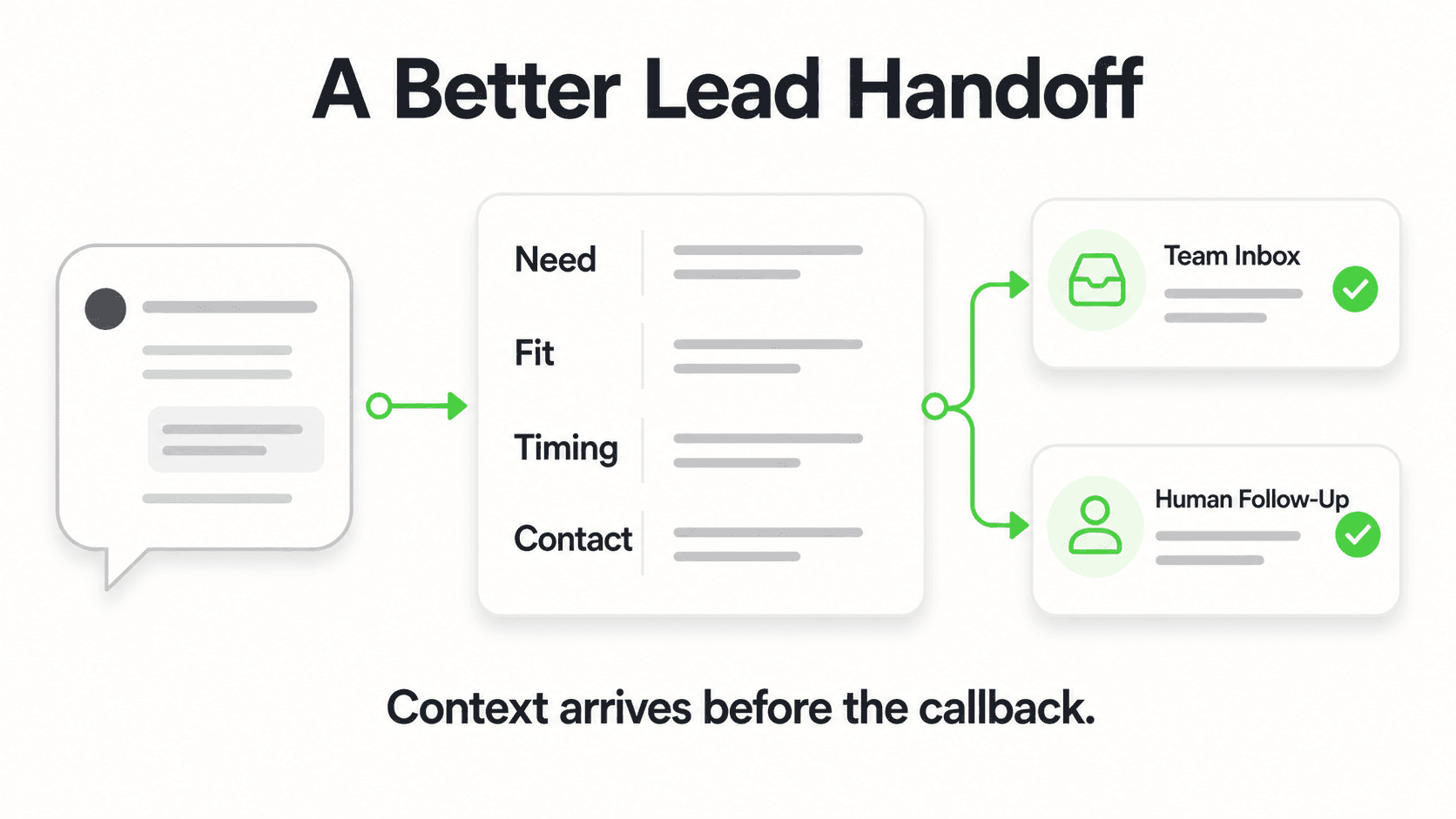
The dispatcher receives a complete, pre-qualified lead record. They confirm and dispatch — no full intake call needed.
3. Handles FAQ Volume Without Staff Time
"Do you work on Saturday?" "What's your diagnostic fee?" "Do you handle gas lines?" "What brands of water heaters do you install?" Train your chatbot on these answers and it handles them 24/7. Staff time is freed for dispatch and customer relationship work.
4. Provides Safety Guidance for Active Emergencies
A burst pipe at midnight is a stressful situation. Your chatbot can provide immediate value: "Turn off the main water shutoff valve — it's typically near the water meter or where the main line enters the house. Move electronics and valuables off the floor. We're on it." This builds trust, reduces damage, and differentiates you from competitors who just take a message.
This guidance should be general and instructional, not prescriptive — and should always encourage the customer to confirm with your tech when they arrive.
5. Generates After-Service Reviews
After a completed job, a follow-up message via WhatsApp or web asking about the experience — and routing satisfied customers to your Google Business Profile — builds review volume over time. For local plumbing businesses where Google Maps ranking determines new customer volume, review velocity matters.
Implementation: Your First Week
Before you start: Write a one-page FAQ covering your service area (list zip codes or neighborhoods), hours, emergency service availability, diagnostic fees, and brands you work with. This is your chatbot's knowledge base — the more accurate and specific, the better.
Setting up your intake flow: Keep it to 5 questions maximum. Job type → active water/flooding (yes/no) → address → contact number → preferred service window. Anything beyond 5 questions adds friction and reduces completion rates.
Deploying your channels: Start with your website widget. If you have a Google Business Profile or run local ads, make sure the chatbot is live on those landing pages. WhatsApp is valuable if customers are already messaging you there — connect it as a second channel.
Configuring urgency routing: Define what "emergency" means for your business and what the response should be. Does the chatbot display your emergency line number? Does it send an alert to your on-call tech's number? Does it flag the conversation for immediate review? Set this up before launch, not after.
See the Hyperleap AI setup guide for a step-by-step walkthrough of the knowledge base and channel configuration process.
Further Reading
Authoritative external sources used and recommended for further research on this topic:
Stop Losing Emergency Plumbing Jobs After Hours
Deploy a chatbot that captures burst pipe calls, qualifies the urgency, and routes to your on-call tech — starting tonight.
Start Free TrialFrequently Asked Questions
Will the chatbot replace my dispatcher?
No. The chatbot handles the intake and qualification step — collecting job details, confirming service area, assessing urgency. Your dispatcher still makes the routing and scheduling decisions. Think of it as an always-on intake specialist that delivers pre-qualified leads to your team rather than replacing anyone.
What happens if the chatbot can't answer a customer's question?
Configure a fallback: "I'll flag this for our team to follow up with you directly — can I get the best number to reach you?" The chatbot captures the contact, your team handles the question. No lead is lost just because a question is outside the chatbot's knowledge base.
How do I handle customers who want an immediate quote?
The chatbot can provide range guidance: "Diagnostic visits typically run $X–$Y; your tech will assess the specific job and confirm before work begins." This sets expectations without committing to a price that might not be accurate before the tech arrives. Final quotes always come from your technicians on-site.
Is customer data secure?
Hyperleap AI is built with data security as a foundation. Customer information collected through the chatbot is stored securely and accessible only to your team. For plumbing businesses, the main data being collected is contact information and job details — standard CRM-type data with no special regulatory requirements.
How much does it cost?
Plans start at $40/month (Plus plan) with a 7-day free trial. A credit card is required. See pricing details. Even one additional emergency job per month typically covers the annual cost of the subscription.
Can I use it with my existing dispatch software?
Hyperleap AI connects via REST API and webhooks, allowing custom integrations with your existing tools. For simple setups, the chatbot delivers leads to your email or team inbox without any integration required — your dispatcher reads the lead record and follows up using your existing system.
The Plumber Who Answers at Midnight Gets the Job
Plumbing is a trust and speed business. The homeowner with a basement filling with water isn't comparing your service history with a competitor's — they're calling whoever answers. Right now, at midnight, that might not be you.
An AI chatbot for your plumbing business changes the equation. It answers at midnight, at 6 AM on Sunday, during the busiest stretch of the day when your dispatcher can't pick up every line. It doesn't replace your team — it makes sure your team never misses a lead that was ready to book.
The home services businesses that capture the most leads aren't necessarily the biggest or the cheapest. They're the ones who respond first. Start your 7-day trial and make sure that's always you.
Can the chatbot dispatch a technician?
It captures the job details (problem, address, urgency, preferred time window) and routes to your dispatcher or scheduling tool. The bot does not directly assign technicians — it removes the inbound-call bottleneck so your team can dispatch faster.
Does it handle emergency calls outside business hours?
Yes. The bot runs 24/7, captures emergency calls when your team is asleep, and routes urgent jobs to your on-call number based on rules you configure. After-hours capture is one of the most-cited reasons home service operators deploy a chatbot.
How long does it take to set up an AI chatbot with Hyperleap?
Most SMBs go live in 3–5 days for self-serve setup. With Managed Setup ($299 Free, available on every plan), Hyperleap builds the bot for you on your content and channels. A 7-day free trial is included on every plan.
Related Articles

AI Chatbot for Electricians: Stop Losing Panel Jobs
A chatbot for electricians captures burning-smell emergencies and EV charger quote requests 24/7, routing urgent calls fast and qualifying leads.

AI Receptionist for Plumbers: Never Miss a Call Again
An AI receptionist for plumbers answers burst-pipe calls at 2am, qualifies emergencies, and routes jobs to your on-call tech — no night-shift hire needed.
AI Receptionist for Landscaping Businesses
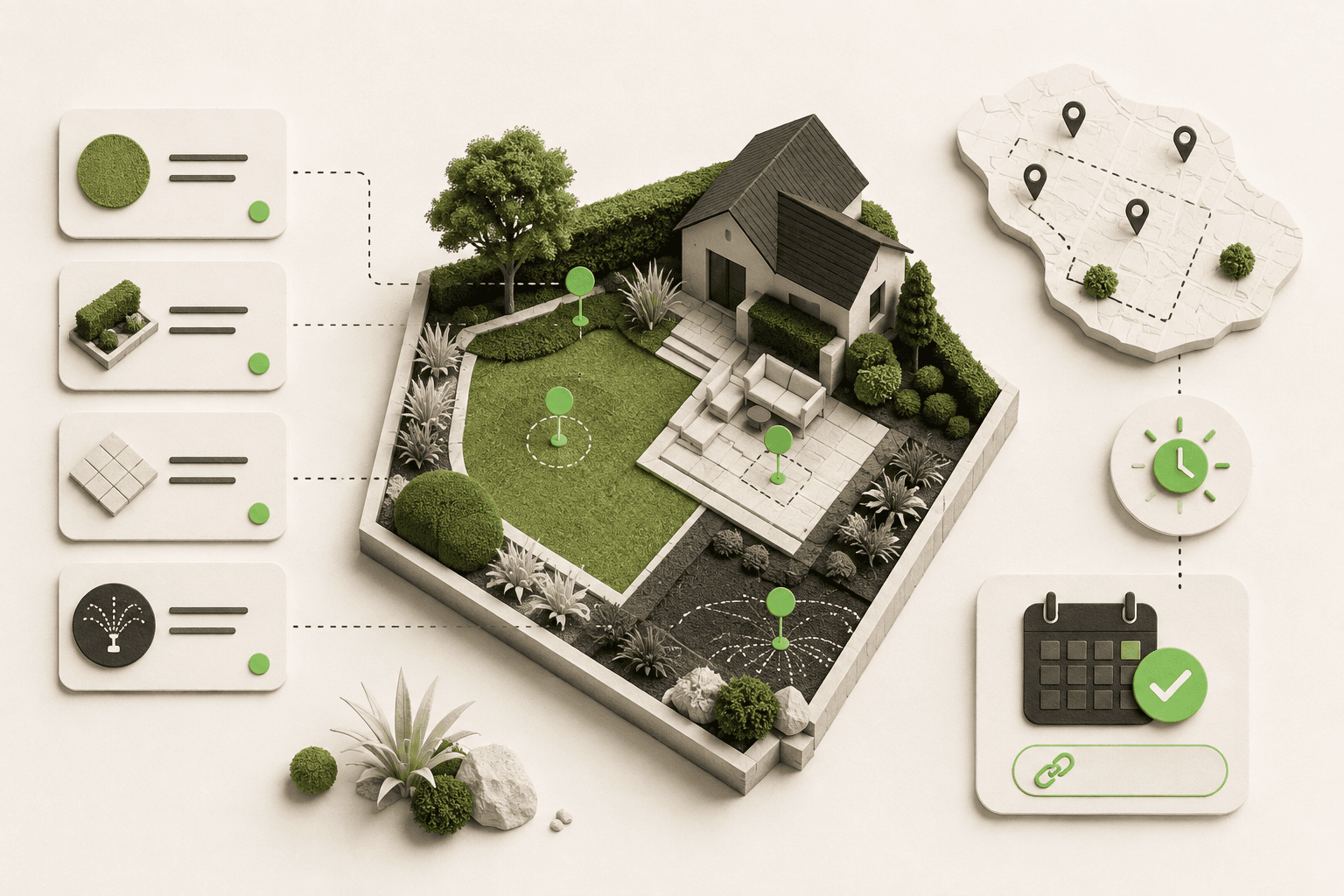
An AI receptionist for landscaping businesses answers quote and service questions 24/7, qualifies property details, and shares your booking link.
AI Receptionist for Roofing Companies: Never Miss a Lead
An AI receptionist for roofing companies answers storm-damage and estimate questions 24/7, qualifies homeowners, and routes leads to your team.